Tag: black voters
Why That Same Old Pundit Is Wrong About Democrats' 2024 Defeat

Why That Same Old Pundit Is Wrong About Democrats' 2024 Defeat

When the primary for the 2020 presidential contest was just beginning, an acquaintance — an intelligent, wealthy, white Democrat — shared her sure-fire prediction as we shared dinner. “It’s going to be Michael Bloomberg,” she said. “He’s the logical choice” to be the party’s nominee for president. She seemed shocked when I told her, “It will never happen.”

My explanation was a simple one, and it had not crossed her mind because, I realized, it had never affected that particular New Yorker nor any member of her family. The most loyal base of the Democratic Party had for some time been Black voters, and for many of them, the former New York City mayor would always be associated with three words: “Stop and frisk.” Stopping mostly Black and brown young men as a means to reduce crime was, after all, his signature.

When the tactic was questioned, when data showed minorities frisked by police were no more likely to possess guns, Bloomberg did not budge, and said: “I think we disproportionately stop whites too much and minorities too little.” He vetoed city council bills that curbed the practice and railed against a federal judge who ruled it unconstitutional.

For any person of color, especially one with a family member stopped more than once, that was a pretty insulting stand from your mayor — and the feeling never faded away, even after potential candidate Bloomberg embarked on an apology tour in front of Black audiences.

Though it was Massachusetts Sen. Elizabeth Warren’s debate takedown that is credited with the demise of Bloomberg’s presidential hopes, in truth, he had turned off the party’s base long before.

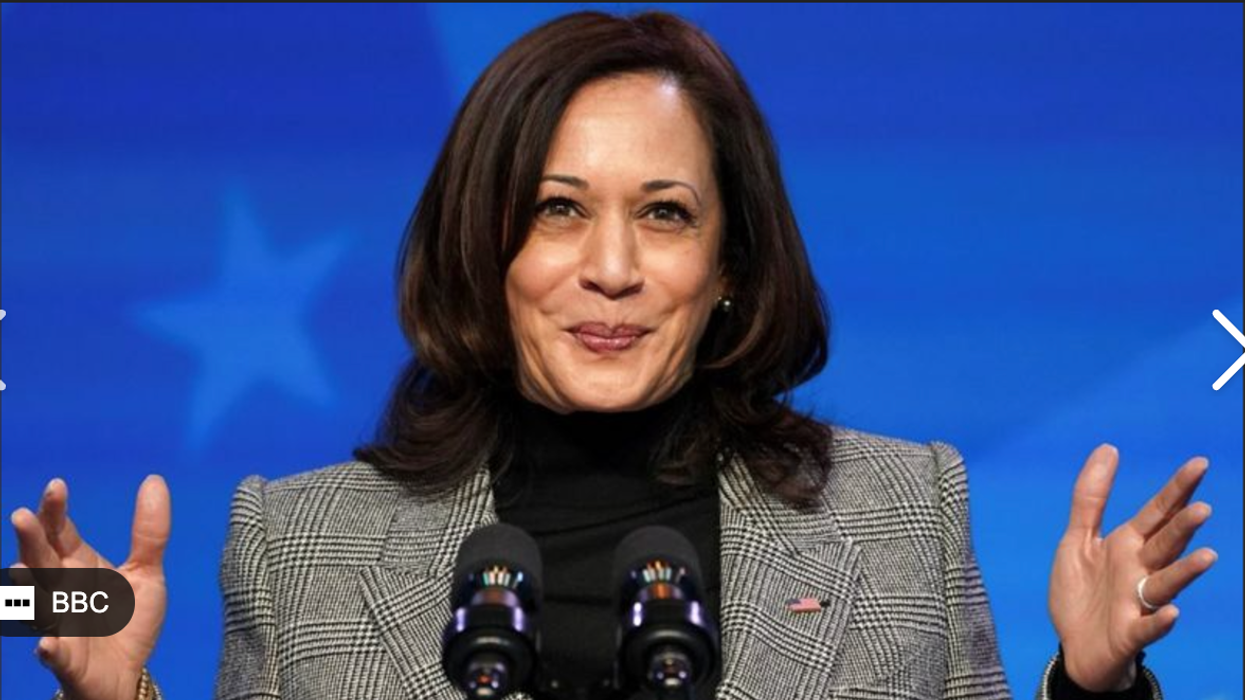
To see all the hot takes, the recriminations, the second-guessing pouring in after the defeat of Vice President Kamala Harris at the hands of Donald Trump, is a little infuriating.

Those who would lead the Democratic Party out of the wilderness still don’t get it, not completely, anyway. You’ve seen the pundits across cable TV and the blogosphere, familiar faces — mostly white and male and stuck in the past.

It’s not that Democrats should turn away from trying to woo the white voters of every age and income bracket who would all but guarantee victory, or get better at the messaging game the GOP has mastered, or figure out a way to connect popular and successful policies with their party. But the party also has to be clear-eyed about the complicated reasons those voters have turned away, instead of turning to solutions that lecture Black voters and dismiss their concerns, figuring they have no place else to go.

A majority of white voters in the U.S. have not voted for a Democratic presidential nominee — white or Black, win or lose — since Lyndon Johnson in 1964, at a time when President Johnson was both praised and reviled for his signature on landmark civil rights legislation.

To study that 1964 campaign is to note familiar themes, with the GOP conjuring visions of violent Black Americans breaking laws and stealing “white” jobs. It makes sense, despite progress, that racial unease and fear of change can still be used as a hammer in 2024.

But instead, many are placing blame where it doesn’t belong. There’s the “identity politics” excuse, the opinion that the Democratic Party erred by leaning too much into considerations of minorities, despite the fact that Vice President Harris did not. In fact, she avoided mentioning race or gender, even her own.

Her proposed policies — and yes, she had plenty — were focused on all Americans on issues from health care to housing, ones critics insisted she ignored.

Could the campaign have done a better job of countering a tsunami of misinformation and misleading ads? Of course. Would it have solved that problem if the Harris team had thrown diverse members of the party’s coalition under the bus? Probably not.

So, why this particular attack against Harris, who talked about pride in her country and values like patriotism? Apparently being a woman of color was enough to get many opponents, and some who were supposed to be on her side, to use her identity to define her.

It was Trump who used identity politics with gusto. He actually talked about his “white, beautiful white skin” at a Michigan campaign rally and raised fear in speeches and ads about criminal Black and brown immigrants and pet-eating Haitians.

Diversity, equity and inclusion are not fair to whites, according to the wealthy son of wealth, though loyalty, not qualifications, marks many of his Cabinet picks so far.

Yet, in America, where white is the default, the identity politics label did not stick to him.

Many Democrats, with Sen. Bernie Sanders of Vermont leading the choir, fault the party for forgetting the working class, though he seems to always forget that Black Americans make up a big chunk of that constituency. The economic concerns cited by Americans historically have hit them harder than most. Yet a majority of African Americans who voted did not see Donald Trump as their savior.

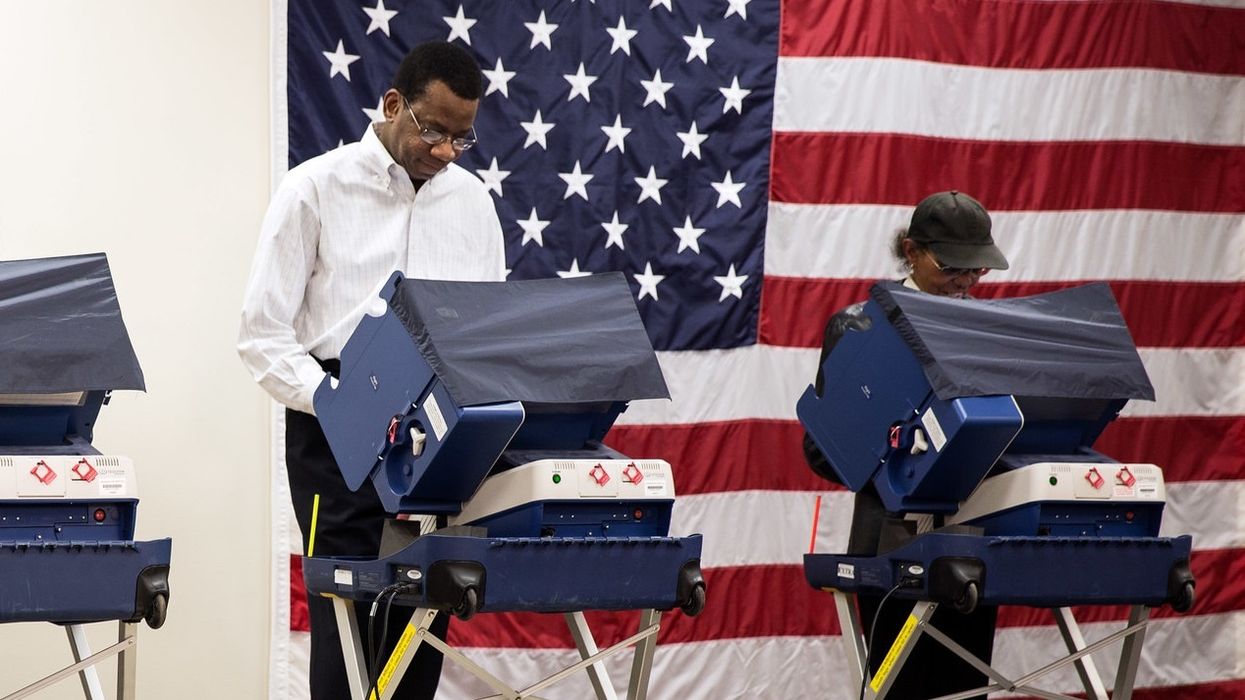
When narratives of what went wrong for Democrats in 2024 overlook the constituency that has stuck with it, it’s not hard to understand why many don’t see the use of voting at all. Getting them off the couch and into the voting booth, enthusiastically, won’t happen if the Democratic Party’s only move is to pine after voters who deserted them long ago.

I shook my head when I heard former Democratic consultant David Axelrod and others float the name Rahm Emanuel as the perfect choice to chair the Democratic National Committee. Thankfully, Emanuel seemed to remove himself from the mix, though in a recent interview, he didn’t rule out a future run for office.

My mind immediately went back to that Bloomberg conversation with my clueless friend.

Former Chicago mayor Emanuel, who closed schools in mostly minority areas and withheld information about the police killing of Black teen Laquan McDonald, is exactly the wrong person to convince skeptical Black voters that the Democratic Party cares about them. In fact, there was resentment when he slid into a gig as ambassador to Japan in the Biden administration.

The enthusiasm in some quarters for Emanuel to head the DNC did prove one thing — that too many Democratic leaders still have a lot to learn about motivating the voters they have taken for granted, voters who have started to have their doubts.

Reprinted with permission from Roll Call.
Joe Biden

It's Time For Biden To Put Country First

"Pride goeth before destruction, and an haughty spirit before a fall." — Proverbs 16:18

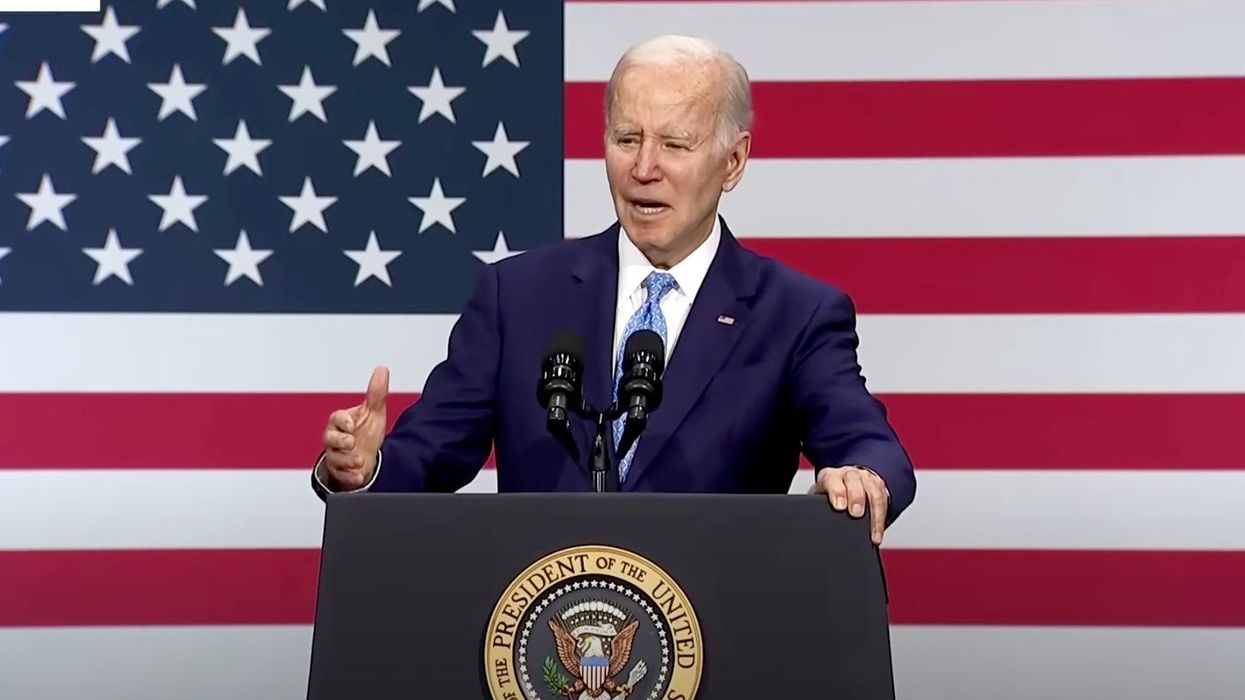
President Joe Biden, who earned our respect and affection over the past four years, is now trying our souls. In an interview on a Philadelphia radio show, he mumbled that he was proud to be "the first Black woman to serve with a Black president." Later, word leaked that campaign aides had submitted proposed questions to the radio hosts in advance. Was that a vote of no confidence from the staff?

In his interview with George Stephanopoulos, which was intended to calm worries about his debate performance — which itself was intended to calm worries about his deteriorating mental condition — the president was asked how he would feel if Donald Trump were sworn in for a second term in January 2025. "I'll feel," he said, "as long as I gave it my all, and I did the good as job as I know I can do, that's what this is about."

Biden's word jumble is disturbing in two ways. In the first place, it's yet further evidence that the president's verbal fluency (and very possibly his mental functioning) is declining. But that was not the worst part. This election isn't about Biden giving it one more college try. It's about ensuring that Trump cannot return to the Oval Office. Biden refused to think of the stakes for the country and made it all about himself.

Biden's interview answers are consistent with everything else we've seen from him since the catastrophic debate — denial, selfishness and appalling judgment. He's elevated his son, Hunter, to a key adviser role. Hunter is apparently attending White House meetings and strongly advocating that his father stick it out. The younger Biden (like Jared Kushner and Ivanka Trump) has no qualifications to serve in the White House. How diminished must Joe Biden be not to see that Hunter may have ulterior motives?

When Stephanopoulos noted that no president with a 36 percent approval rating has ever been reelected, Biden snapped, "That's not what our polls show ... all the pollsters I talk to tell me it's a toss-up." Later, he seemed to discount polling altogether, asking, "Do you think polling is as accurate as it used to be?"

Dismissing polls is easier than accounting for the loss of support Biden has clocked since the debate, and the huge percentage of Democrats who say, even in our ultra-polarized time, that Biden should step aside.

Apparently, Biden is willing to risk the future of the country on the bet that the polls are wrong.

Some protest that it's unfair to be focusing on Biden's limitations when his opponent is a criminal would-be autocrat. But the threat Trump poses cuts the other way: When the alternative is so dire, the Democrats should be fielding a candidate who is unassailably electable. No candidate is without flaws, of course, and Biden has many advantages, but voters have consistently reported for years that they think he's too old. Before the debate, it was possible to imagine that the 2020 Biden would show up for key moments and that voters' misgivings would be overcome. But that hope was shattered on June 27, and there is no returning to the status quo ante. Voters' worst fears have been confirmed and then some.

When it comes to a president's mental and physical health, voters are unforgiving. At a primitive level, they are choosing someone to be able to respond to a natural disaster or military attack. A potential president must clear this bar. It's the primate part of our brains. No doubt millions of Americans would vote for a comatose Biden over Trump, but there aren't enough voters like us to be certain of victory. As Bill Clinton is reported to have said, "Strong and wrong beats weak and right every time."

Some Biden stalwarts object that Kamala Harris is just as unpopular as the president. That is true, but it's also the case that she hasn't had many opportunities to improve her standing with voters. If she were suddenly thrust into the spotlight, she might enjoy a surge of support.

Similarly, many worry that an open convention would devolve into chaos. It might. But it seems equally likely that it would be the first political convention in decades to generate a true contest and accordingly intense public interest.

There was one answer Biden offered to Stephanopoulos that may signal the way things must go in the coming days. Stephanopoulos asked whether, "If Chuck Schumer and Hakeem Jeffries and Nancy Pelosi come down and say, 'We're worried that if you stay in the race, we're gonna lose the House and the Senate,' how will you respond?" Biden said he'd already spoken to many of them, and they hadn't asked him to step down. Stephanopoulos asked again, "But if they do?" Biden smiled and asserted, "They're not going to do that."

Those words could be interpreted as marching orders.

Reprinted with permission from Creators.

Senator Warnock Explains Why Trump Won't Win Over Black Voters

Senator Warnock Explains Why Trump Won't Win Over Black Voters

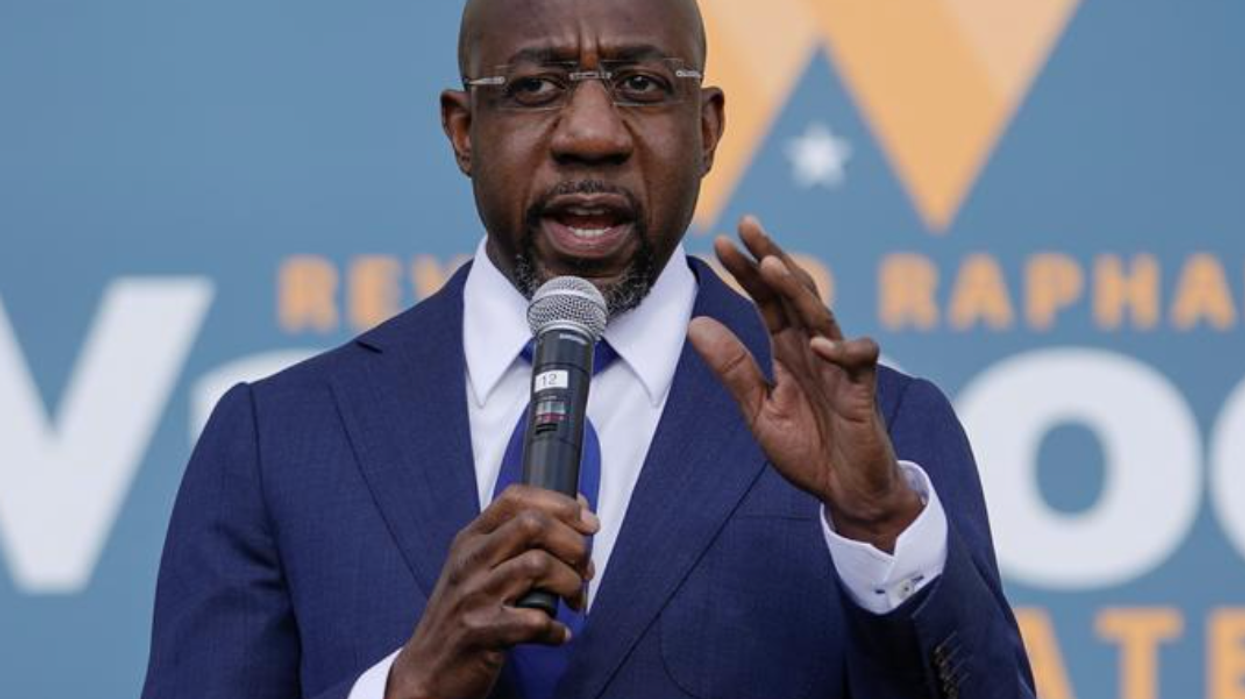
Former President Donald Trump is hoping to attract a new segment of the American electorate that's typically been a reliable cornerstone of the Democratic base — Black voters. But one Black U.S. senator is doubtful Trump's outreach will yield any significant results.

In a recent interview with Semafor, Sen. Raphael Warnock (D-GA), who won five elections over two years largely due to African American turnout, said that Black voters are too smart to fall for the ex-president's efforts to court them. However, he acknowledged that high Black voter turnout will determine whether Democrats keep the White House and the U.S. Senate in November.

"This idea that throngs of Black folks are going to vote for Donald Trump, it’s just not true," Warnock said. "It’s not going to happen."


"[Black voters] recognize the existential threat that Donald Trump represents," he continued. "What we’ve got to do is help people see between now and November that this is going to be a close election, and if we don’t turn out, we could see this man, this dangerous man, back in the White House."

One example Warnock cited of Black Americans' skepticism for Trump was his handling of the Covid-19 pandemic, which a 2020 study from the Health and Human Rights Journal found disproportionately impacted Black people. According to the study, nearly 98 out of every 100,000 African Americans who tested positive for Covid-19 died, which is full third higher than the mortality rate for the Latino population (64.7 per 100,000) and more than double the mortality rate for whites (46.6 per 100,000) and the Asian population (40.4 per 100,000).

“What I remember is a feckless president standing in front of the American people, lying on a regular basis, every day, downplaying the tragic impact of all of this, saying that when it got warm, it was just going to go away, disappear like magic,” the Georgia Democrat told Semafor. “Well, it didn’t disappear like magic.”

Health policy may come up in tonight's debate in Atlanta, Georgia, which will be the first between President Joe Biden and his predecessor of the general election season. Warnock said he was "looking forward" to the event because "it’s going to be a good reminder for people of what they had in Donald Trump."

“The man’s got 34 felony counts. He’s got 91 charges. He’s a little bit busy trying to take care of himself," Warnock said. "And as I talk to Georgians in general and Black Georgians in particular, they’re thinking about their family. They’re thinking about their concerns.”

Trump's efforts to appeal to Black voters have largely been panned for being disingenuous and casually racist. During a February rally prior to the South Carolina Republican primary, Trump said his multiple criminal indictments were a reason why "the Black people like me," and argued that his prosecutions help him with Black people "because they have been hurt so badly and discriminated against and they actually viewed me as being discriminated against, it's — it's been pretty amazing."

Reprinted with permission from Alternet.

Black And Hispanic Voters

Pew Data Disproves Reported Trump Advance Among Minority Voters

The Pew Research Center released polling this week that casts serious doubt on recent surveys showing Donald Trump making significant gains among Black and Latino voters.

The Pew survey suggested majorities of Latino, Black, and Asian voters continue to largely favor the Democratic Party. The results show very little change among Black and Latino Americans since the early 1990s, while white voters remain almost exactly as aligned with the Republican Party as they were in the early ‘90s.

"Not much 'racial realignment' in these Pew numbers," Vanderbilt political science professor John Sides tweeted, attaching a series of Pew graphs tracking party alignment over three decades.

On Latinos specifically, Pew’s 2023 data showing Democrats with a 61 percent to 35 percent edge seemed to counter recent New York Times/Siena polling showing Trump with a 46 percent to 40 percent edge over Biden—6 points above George W. Bush's 40 percent share of the Latino vote in 2004, the high-water mark for Republicans.

Pew puts considerable effort into surveying the U.S. Latino population, and some political analysts consider it the gold standard on Latino polling. The differences in outcomes between the Pew and Times polls are due to a number of variables, including the fact that Pew asked about party affiliation while the Times polled Trump-Biden support.

But another factor—and a potential cautionary tale about polling Latinos—might be differences in the way the polls were conducted. In the fine print of its graph, Pew explains why its data for Latino voters only dates back to the mid-aughts while information for its other three demographic graphs date back to the 1990s.

"Data for Hispanic voters shown only for years with interviews in English and Spanish," the text reads. In other words, the polling organization didn't view polling of Latinos conducted in English as sufficiently representative, even if the sample sizes were technically large enough.

The Times poll conducted just three percent of its interviews of self-identified Latino voters in Spanish—a fact that UCLA political science professor, Democratic pollster, and Biden campaign adviser Matt Barreto currently highlights in his pinned tweet.

"Let's look at their brilliant Latino methodology: 97 percent English," Barreto tweeted incredulously last month, when the poll was released. Barreto added emphatically that Trump's 6-point advantage in the Times survey "does not match ANY actual bilingual large-n polling of Latinos. ZERO CHANCE. Are people frustrated? Yes. Is Trump +6. ZERO CHANCE."

Even the Times piece detailing the poll's findings among Latino voters warned, "For a subgroup that size, the margin of error is 10 percentage points."

But if Barreto's tweet sounds urgent, it's because Biden's share of Latino voters matters. Latinos, who now account for roughly 15 percent of eligible voters, can be difference-makers in 2024. That is particularly true in a swing state like Arizona, where Latinos are expected to account for around one-quarter of voters this year.

There's good reason to question polling suggesting such a dramatic shift among a group of voters who present unique challenges to pollsters.

As Republican political consultant and Lincoln Project co-founder Mike Madrid tweeted, Pew's "numbers are much more in line with where Hispanics will likely end up. Lower for GOP than most current polls but high historically."

Trump's big purge of old-school and more moderate Republicans, such as supporters of his primary rival Nikki Haley, has also put more pressure on him to overperform among groups that typically haven't favored Republicans—including Latinos.

The smartest reporting out there on the topic of Trump's potential gains with minority voters this cycle comes from CNN analyst and The Atlantic senior editor Ronald Brownstein, who has been at the forefront of tracking demographic trends since coining the term "the blue wall" in 2009.

As Brownstein points out, one underreported trend in this cycle's polling is Biden's relative strength among white voters. In most state and national polls, Biden is "matching or even exceeding" his winning 2020 share of the white vote.

So with Biden and Trump running roughly even in national polling now, Biden's continued strength with white voters puts the onus on Trump to win over a historically high share of voting groups that don't typically lean Republican.

As Brownstein tweeted, "Trump's gains w/Black & Hispanic voters have drawn justified attn. But w/little notice, Biden is matching or beating his 2020 # w/Whites in most ntl & state polls. That means to win,Trump may need to hold more minority votes than any GOP nominee in 60+ yrs."

That's going to be a tall order, particularly among Latinos, given the full-court press the Biden campaign rolled out last week with its new targeted outreach strategy, "Latinos con Biden-Harris."

The conventional wisdom over the past few months has been that Biden is in trouble because he's bleeding support among Latinos (and potentially Black voters, too).

But with current polling showing Biden and Trump relatively evenly matched at this stage of the contest, it's entirely plausible for the Biden campaign to woo back some voters who are more naturally predisposed to voting for Democrats, as the Pew polling suggested.

As Democratic strategist Joe Trippi recently explained on his podcast, “That Trippi Show,” "We don't have to gain back 20 points with Blacks, we don't have to gain back 20 points with Latinos, or with young people. If we're in a dead heat when we've lost 20 points with all those folks across the board, you get 2 points, 3 points, 4 points of them back, and Trump is dead."

It's another case of: We'd much rather be us than them.

Reprinted with permission from Daily Kos.

Shop our Store

Headlines

Editor's Blog

Corona Virus

Trending

World