Tag: contraception mandate
Democratic Lawmakers Move To Upend Ruling On Birth Control

Democratic Lawmakers Move To Upend Ruling On Birth Control

By Kyung M. Song, The Seattle Times

WASHINGTON — Taking up advice from Supreme Court Chief Justice John G. Roberts Jr., congressional Democrats Wednesday introduced legislation to get around the court’s decision last month to exempt private corporations from having to provide coverage for birth-control pills and devices that violate the companies’ religious beliefs.

The companion bills — the Senate version co-authored by Patty Murray of Washington and Mark Udall of Colorado — are perhaps the sharpest pushback against judicial authority since the 2010 Citizen United ruling that green-lighted unlimited independent campaign spending by corporations and unions.

The Murray-Udall bill would address the court’s June 30 opinion that Hobby Lobby Stores and other closely-held for-profit companies can opt out of providing contraceptive coverage. Birth control coverage without co-pays is among mandatory preventive services that employers must provide under the federal Affordable Care Act.

A companion bill in the House is being introduced by Representatives Louise Slaughter and Jerrold Nadler of New York, and Diana DeGette of Colorado.

Democrats said they are channeling widespread anger and fear that the ruling will embolden employers to deny coverage for vaccines, HIV treatment and other services that violate their values.

In January, Murray, Senator Maria Cantwell of Washington state and 17 other Senate Democrats filed an amicus brief with the Supreme Court to argue that secular for-profit companies had no right to impose their owners’ religious beliefs on people on their payrolls.

“Women across the country are outraged” that CEOs can interfere with health-care decisions, Murray said at a news conference Wednesday at the Capitol, where she was flanked by lawmakers and reproductive-rights advocates.

Women are “tired of being targeted and are looking to Congress to right this wrong by the Supreme Court,” Murray said.

Justice Roberts himself suggested a legislative remedy during oral arguments in March. Roberts pushed back against Solicitor General Donald Verrilli’s argument that the 1993 Religious Freedom Restoration Act that prohibited the government from “substantially burden(ing) a person’s exercise of religion” was never intended to apply to for-profit corporations.

“Well, if Congress feels as strongly about this as you suggest, they can always pass an exemption,” Roberts said.

Murray said the bill had support from about 40 senators, all Democrats. The legislation would ban employers from refusing coverage for any benefits guaranteed under the Affordable Care Act. It also specifies that the Religious Freedom Restoration Act is not grounds for such refusal.

Hobby Lobby, a family-owned national craft-store chain, objected to coverage for emergency contraceptives known as morning-after pills. The company argued the pills, sold under brand names Plan B and ella, worked by aborting fertilized eggs. However, researchers believe the pills prevent conception by keeping the egg and sperm from meeting.

A second, Christian family-owned company, Conestoga Wood Specialties, made the same challenge.

In a 5-4 opinion, the justices said requiring such coverage created substantial burden on the companies’ religious liberty.

Cecile Richards, president of Planned Parenthood Action Fund, said her group was mobilizing women across the country. Richards said women use contraceptives for medical reasons as well as to guard against pregnancies, and denying them coverage was gender discrimination.

Ilyse Hogue, president of NARAL Pro-Choice America, said the Obama administration allowed “reasonable” exemptions under the health-care law for churches and religious nonprofits. But private corporations, she said, deserve no such accommodation, and their owners’ personal beliefs should not impinge on their workers’ rights.

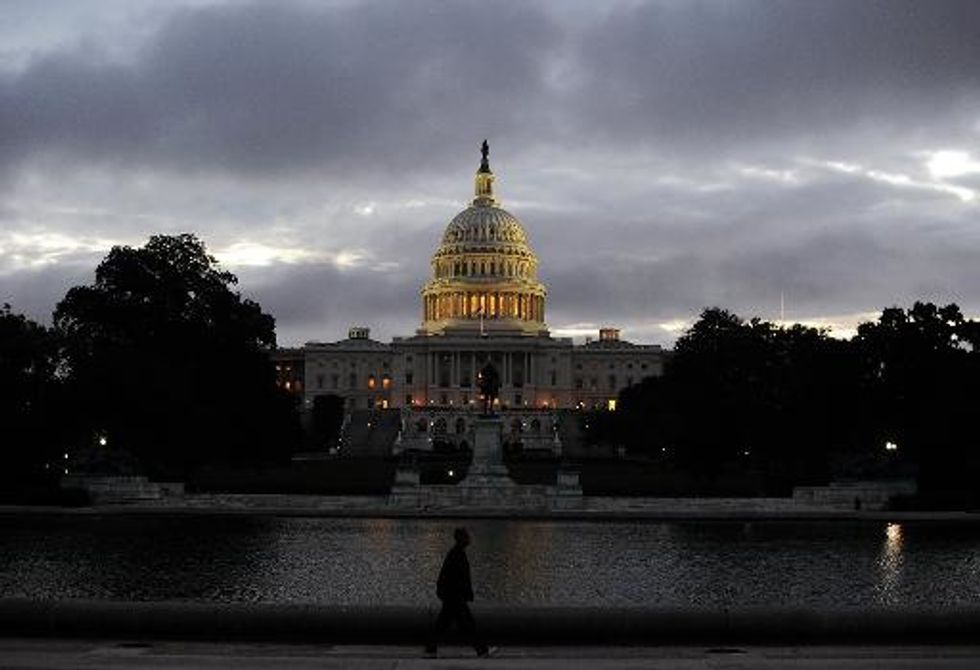
AFP Photo/Jewel Samad
Supreme Court Says Some Businesses Can Ignore Birth Control Mandate

Supreme Court Says Some Businesses Can Ignore Birth Control Mandate

By Stephanie Haven and Michael Doyle, McClatchy Washington Bureau

WASHINGTON — A divided Supreme Court on Monday extended religious-freedom protections to certain for-profit corporations, exempting them from providing birth-control services that are required under the 2010 health care law.

In a groundbreaking 5-4 decision, the court concluded that closely held corporations may claim religious rights similar to those enjoyed by individuals. The decision expands exemptions from the so-called contraceptive mandate imposed by the Affordable Care Act. It doesn’t affect other insurance provisions in the law, such as blood transfusions or vaccinations.

“Protecting the free-exercise rights of closely held corporations thus protects the religious liberty of the humans who own and control them,” Justice Samuel Alito said, writing for the majority.

While the ruling struck a blow to the Affordable Care Act, it explicitly says the decision can’t be used as a “cloak” to mask “illegal discrimination as a religious practice.”

In her dissent, Justice Ruth Bader Ginsburg called the decision one of “startling breadth” and stressed the targeted implications of the ruling on women.

“The exemption sought by Hobby Lobby and Conestoga would override significant interests of the corporations’ employees and covered dependents,” Ginsburg wrote. “It would deny legions of women who do not hold their employers’ beliefs access to contraceptive coverage that (the health care law) would otherwise secure.”

Hobby Lobby, an Oklahoma City-based chain of arts and crafts stores, and Conestoga Wood Specialties, a Pennsylvania furniture maker, brought the legal challenge.

The owners of Hobby Lobby, who employ 13,000 people in more than 500 stores nationwide, claimed that the Affordable Care Act’s contraception mandate violated their rights under the First Amendment and the Religious Freedom Restoration Act. The latter law, created in 1993, says the government “shall not substantially burden a person’s exercise of religion” unless the action is the least restrictive means to serve a compelling purpose.

The court ruled that providing contraceptives without cost is not the “least restrictive” means to achieve its goal, thus violating the religious freedom law.
Employees from corporations with religious exemptions aren’t barred from seeking other insurance for contraceptives. The government, for one, could cover the free medications guaranteed under the contraceptive mandate.

“If the government wants to, on its own, go around providing people with benefits, that’s not something most of the plaintiffs object to,” Hobby Lobby lead counsel Mark Rienzi, of the Becket Fund for Religious Liberty, a nonprofit public-interest law firm, said in a conference call afterward.

The response to the decision was immediate and appeared to fall largely along partisan lines. Democrats and liberal social groups criticized the decision as a step backward in protecting women’s health; Republicans and conservative social groups said it championed the protection of religious freedoms.

The highly anticipated ruling marks the first time the high court has taken up the Affordable Care Act since it upheld in June 2012 the law’s important mandate that most people have health insurance.

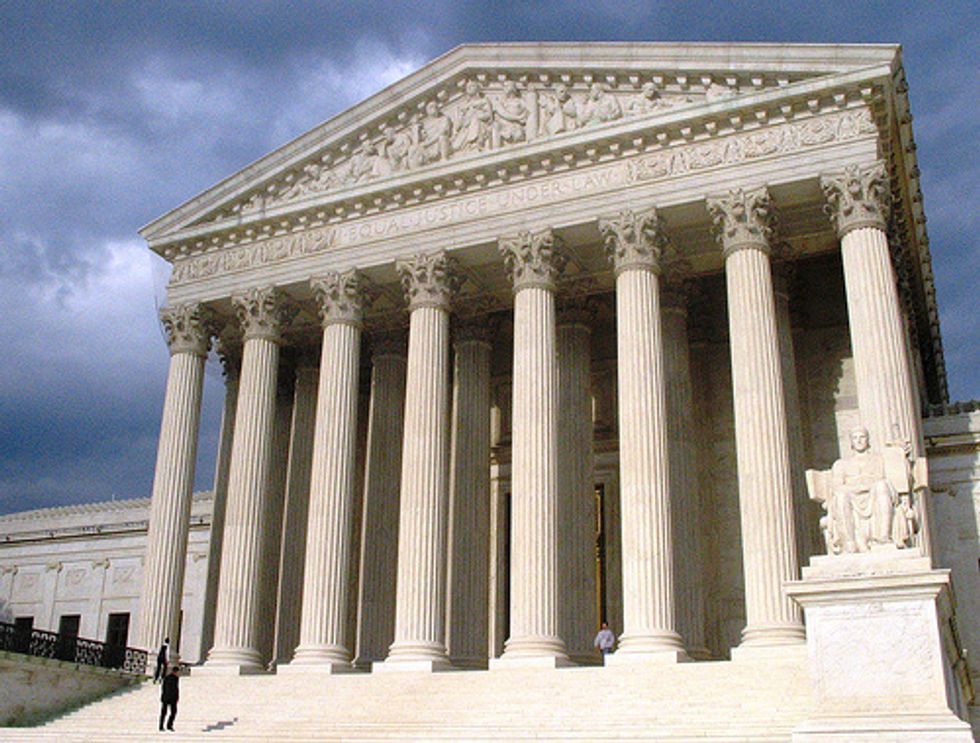
Photo: OZinOH via Flickr

Hobby Lobby Case Is A Slippery Slope

Hobby Lobby Case Is A Slippery Slope

Your right to swing your fist ends where my nose begins.

That bit of live-and-let-live wisdom, usually attributed — some say misattributed — to Oliver Wendell Holmes, provides a useful framework for considering a high-profile case argued before the Supreme Court last week. The Affordable Care Act requires businesses, if they provide health insurance for their employees, to include contraceptive care in that coverage.

Hobby Lobby, a chain of arts and crafts stores, and Conestoga Wood Specialties, a cabinet maker, say doing so would require them to violate their religious beliefs. Both argue — erroneously, according to medical experts — that drugs and devices sanctioned by the FDA for contraception actually induce abortions.

This is only the latest of a series of incidents in recent years in which it has been argued that religious conscience ought to give people and businesses exemption from providing ordinary and customary services to the general public.

In 2005, pharmacists in a number of states refused to fill prescriptions for women seeking contraception. Some specifically declined to serve unmarried women; some confiscated the prescriptions and would not give them back. They cited religious conscience.

In 2007, Muslim cab drivers in Minneapolis-St. Paul fought for the right to reject passengers carrying alcohol or being assisted by seeing-eye dogs. They cited religious conscience.

This year, legislators in Arizona, Kansas and other states tried or are trying to pass laws allowing businesses to refuse service to gay men and lesbians. They cite religious conscience.

Now there is this. And the crazy part? The companies do not even have to offer their employees medical insurance. Under the ACA, they could opt out and allow workers to buy their own insurance from an exchange. Instead, they have gone before the top court, arguing religious conscience.

And court watchers say the justices — or at least the conservative wing — gave that argument a sympathetic hearing in last week’s session. That is an ominous sign.

There is nothing wrong with religious conscience, with saying there are things that, as a matter of faith, you will not do. If a cabbie does not wish to drink alcohol or own a dog, that’s his business. If some state legislator does not wish to be involved in a same-sex relationship, that’s her prerogative. If a Hobby Lobby executive has no interest in contraceptive care, good for her.

But they do not get to make those decisions for everybody else.

One hopes the Supremes get that. Because slopes do not get much slipperier than this one. If we carve out an exemption for businesses claiming religious conscience to refuse services, where does it end? What happens when some corporation claims its religious scruples prevent it from hiring women or people of other faiths — or of no faith — or from paying for health care that includes vaccinations or blood transfusion?

There is something intrusive and even faintly Talibanesque about the idea of religious values shared by some of us being imposed on thousands of us because of where they happen to work. An employee owes an employer an honest day’s work. She owes it to the company to represent it to the best of her ability. She does not owe it veto power over her most intimate medical decisions. A woman’s contraceptive choices are none of her employer’s business.

Moreover, the notion that the company should have a say in such matters is anathema to our ideals of individual liberty and, yes, religious freedom.

One hopes, albeit against hope, that the Supremes will recognize this and rein in these overreaching corporations. Tell them on behalf of us all:

Watch where you’re swinging your fists.

(Leonard Pitts is a columnist for The Miami Herald, 1 Herald Plaza, Miami, Fla., 33132. Readers may contact him via email at lpitts@miamiherald.com.)

Photo: OZinOH via Flickr

Shop our Store

Headlines

Editor's Blog

Corona Virus

Trending

World