Tag: drug trafficking
Why Congress Must Investigate Trump's Lies About The Hernandez Pardon

Why Congress Must Investigate Trump's Lies About The Hernandez Pardon

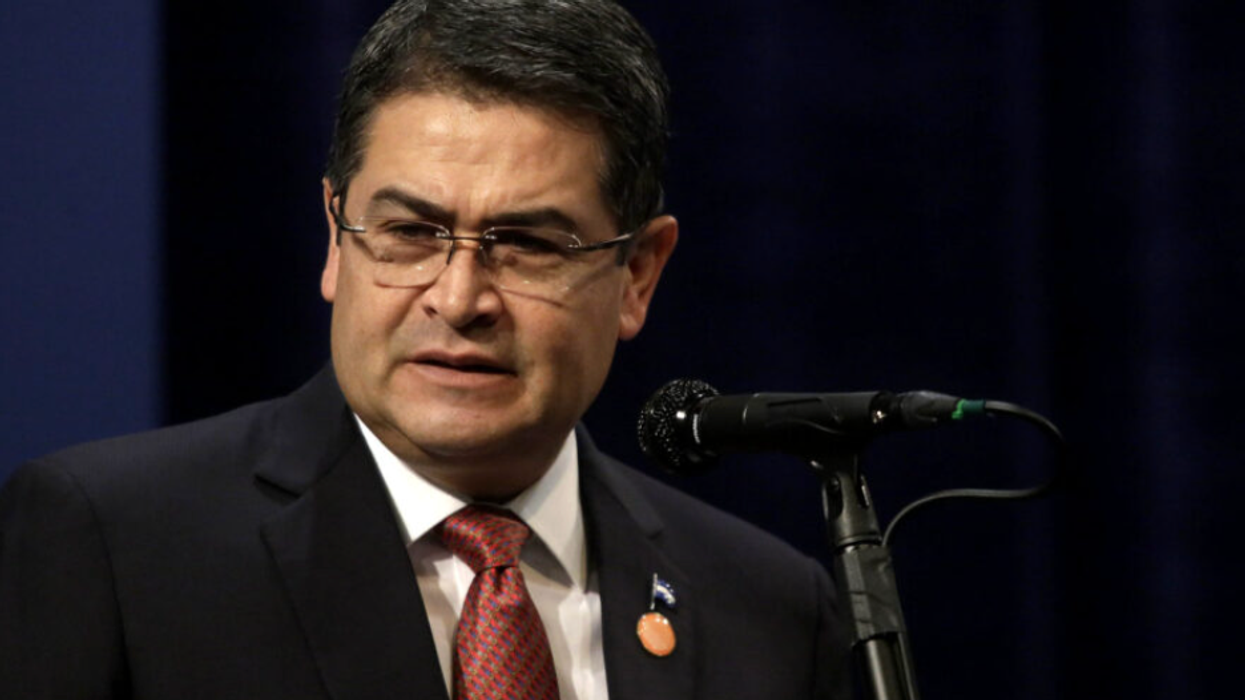
To ordinary MAGA voters in the American heartland — who may have witnessed the ravages of narcotics up close in their own families — the recent conduct of their favorite president must be troubling. While they may not know all the details, many have heard by now that President Donald Trump ordered deadly missile strikes against boats suspected of transporting drugs to the United States from Venezuela — and that he simultaneously pardoned Juan Orlando Hernandez, the former Honduran president serving 45 years in an American prison for trafficking tons of cocaine to our shores.

Even Fox News commentators have noticed a contradiction between Trump's wanton killing of alleged drug smugglers and his merciful beneficence toward the ex-boss of the biggest narco-state in the hemisphere. Yet Trump lapdogs in the right-wing media have tastefully refrained from examining exactly how this strange juxtaposition occurred, or the real reasons behind his actions.

So far, neither Trump himself nor Pete Hegseth, his self-styled secretary of war, have provided any evidence that the boats blown apart in the Caribbean and Eastern Pacific were transporting cocaine, fentanyl or any other narcotics — or that the people killed aboard them had committed any crimes at all. To label these attacks as "war crimes" when we have no declared hostilities with any state in the region is to elevate them above incidents of piracy and murder, which they in fact appear to be.

And while polls show that many Americans would like to see proof of White House assertions about the boat strikes, even including Congressional Republicans, too many Americans are content to see distant and foreign individuals' rights violated in the name of "fighting drugs."

Yet if Trump wants to fight drug smuggling, why did he pardon and release a convicted gangster like Hernandez, whose crimes range from election tampering and official corruption to trafficking and murder? Well, Trump and his minions — including the pardoned MAGA felon Roger Stone, who successfully advocated Hernandez's release — insist that he was a victim of "lawfare" by the Biden administration.

Indeed, Trump has repeatedly claimed that the Biden Justice Department treated Hernandez "very unfairly," without specifying how exactly he was wronged, and further explained that "many people" had urged him to issue the pardon because the prosecution was a "horrible witch hunt."

Trump's account, echoing Stone, reflects precisely none of the known facts concerning the felonious Hernandez. Not long before his indictment, his brother Juan Antonio (Tony) Hernandez, a former Honduran congressman, was convicted in a massive cocaine trafficking conspiracy. Among the charges against brother Tony, aside from assorted assassinations, was accepting a million-dollar bribe — on behalf of his presidential sibling — from kingpin Joaquin Guzman, better known as "El Chapo." Nobody has suggested pardoning Tony yet.

Perhaps that's because Tony's indictment was brought during the first Trump administration, with a prosecution team led by Emil Bove III, who represented Trump himself in private practice and was lately appointed to a lifetime position on the federal bench by his former client after serving several months in a top Justice Department position.

The enormous trove of evidence against both Juan Orlando Hernandez and his brother extended far beyond the testimony of the drug lords, killers and thugs who had sponsored their political careers. Verified exhibits included ledgers kept by the traffickers with entries of payoffs and drug transactions with "JOH," identified as Hernandez by his initials; taped phone calls and other data that discussed cash payments to him in exchange for his protection of drug routes; plus photo albums of Hernandez with cartel leaders at soccer games and other events.

To believe Trump's fantasy version is to discount all the evidence compiled by his trusted attorney Bove — and to assume that the Republican judges who oversaw the indictments and prosecutions were all somehow corrupted by former President Joe Biden. The hard truth is that Biden and the State Department in his administration coddled Hernandez, just as previous U.S. presidents had tolerated Honduran corruption for "geopolitical" reasons. There was no persecution or witch hunt.

So why did Trump pardon Hernandez? The right-wing narco boss had powerful friends close to the U.S. president, far more powerful than the loudmouthed gadfly Stone. Top industrial and tech leaders, including Peter Thiel and Marc Andreessen, and oil baron Kelcy Warren, all major Trump donors, have major interests in Honduras that benefit from Hernandez's National Party political machine.

It is a shadowy network that merits much deeper scrutiny — and possibly a congressional investigation when responsible and honest leadership returns to power.

Joe Conason is founder and editor-in-chief of The National Memo. He is also editor-at-large of Type Investigations, a nonprofit investigative reporting organization formerly known as The Investigative Fund. His latest book is The Longest Con: How Grifters, Swindlers and Frauds Hijacked American Conservatism (St. Martin's Press, 2024).

Reprinted with permission from Creators
Dallas A Hub For Boom In Heroin

Dallas A Hub For Boom In Heroin

By Tristan Hallman, The Dallas Morning News

DALLAS — The Dallas Police Department’s interdiction squad is still doing what it always has: using surveillance and human intelligence to stop smugglers coming into and through the city.
But what squad members have been uncovering recently reflects a growing national trend: heroin, and lots of it.

Law enforcement officials say heroin use has soared across the United States as the drug has become cheaper and more available. And Dallas — with its highways, railways, airports, and proximity to the southern border — is both a major layover point and a destination for heroin and other illicit drug trafficking.

The Dallas Police Department has a squad of 10 officers and a sergeant devoted to stopping smugglers on train lines, bus routes, and at Dallas Love Field. Acting Assistant Chief Christina Smith, who oversees the department’s narcotics division, said using local officers is useful for stopping international smugglers.

“They’re not always just passing through,” Smith said. “Sometimes we are the final destination, and sometimes we’re not. But as law enforcement officers, we’re here to enforce the laws of the state, and occasionally, these types of arrests lead to larger investigations that lead us to the sources and the suppliers, which ultimately would benefit everyone.”

The drugs are often on their way to the Northeast. Robert Mazur — a retired Drug Enforcement Agency operative who wrote a book, The Infiltrator, about his years as an undercover officer with Colombian cartels — said Dallas has “a great highway system” for drug traffickers to use.

“From a highway perspective, you guys are really in a pretty important setting,” he said. “You can go up to the Midwest, you can go to major cities in the East.”

Chicago is a popular destination for smugglers of heroin and other drugs coming through Dallas, Smith said.

For instance, Jorge Garcia, who was at a bus station on his way to Chicago from San Antonio, got busted in May when officers found a white trash bag at the bottom of his duffel bag. The bag contained 6.6 pounds of marijuana.

Two months before, police arrested Maria Aramburo, 48, at the same Buckner Terrace bus station after they said they found more than seven pounds of heroin in her bag. She was on her way to Chicago from Brownsville and was waiting to board another bus in Dallas.

The officers talked with Aramburo after they spotted her “watching detectives closely without turning her head” while walking through the terminal, according to an arrest warrant affidavit.

She let the interdiction officers search her bags, according to the affidavit. The officers found what appeared to be large cans of food. But inside the heat-sealed cans was white powder heroin.

Aramburo remains in Dallas County jail on a drug dealing charge in lieu of $500,000 bail.

In June, the officers caught another man, Eduardo Ordonez, at the same bus station heading for Chicago from Brownsville. They saw six cans similar to Aramburo’s in his bag. As they suspected, the cans were also filled with white powder heroin, police said.

Dan Salter, the special agent in charge of the DEA’s Dallas Division, said the uptick in heroin use is attributable to a rise in prescription drug addiction.

“What you have is a productive citizen who at one time may have had a righteous entry into pain medicine through prescription and is ultimately addicted. And once the doctor no longer prescribes that medicine, often these individuals are going to heroin, which is just as strong and cheaper,” he said. “It’s really almost to epidemic proportions.”

The heroin the agencies see is now more of a white or tan powder that can be snorted rather than a black tar heroin that is meant to be injected, Salter said. That makes the heroin less intimidating to entry-level users who might be spooked by needles, he said. The falling price of powdered heroin also makes it more attainable than it once was.

Salter said the DEA has launched more heroin investigations in the last year than in the prior 15 years combined. Methamphetamine remains popular in Texas, but he said Mexican drug cartels are responding to an increased demand for heroin. And a kilo of heroin is just as easy to get in the country as any other drug, he said.

While cars and trucks are effective, buses and trains are also a cheap and simple way to move drugs, said Robert Taylor, a University of Texas at Dallas criminal justice professor. There is less security on buses and at bus stations, which are often associated with criminal activity and sex trafficking. And there isn’t as big of a chance of getting pulled over.

Meanwhile, Salter said, airports are rarely used as a way to move drugs because of stepped-up airport security.

Law enforcement officials declined to talk specifics about their tactics for catching smugglers.

Sometimes luck and experience plays a factor. In July, Dallas police arrested Richard Limas, 45, at a bus station because Limas had apparently fallen asleep and missed the bus. Officers found strange beltlike objects that Limas said were back braces. The officers initially walked away from the strange objects, but came back and cut open the braces to find about a pound and a half of methamphetamine.

But Taylor, the founding executive director of the Caruth Police Institute, said using informants is the most effective interdiction strategy. Turning small and midlevel dealers into informants to find the suppliers pays off in a lot of cases.

AFP Photo/Andrew Burton

Interested in national news? Sign up for our daily email newsletter!

United States Slams Release Of Venezuelan Ex-Intel Chief

United States Slams Release Of Venezuelan Ex-Intel Chief

Washington (AFP) — The United States said Monday it was “deeply disappointed” after Aruba released a former Venezuelan military chief wanted in the United States for drug trafficking charges.

A State Department spokesperson said Washington had made a “legitimate request” for the arrest of retired major general Hugo Carvajal in line with its extradition treaty with Aruba and the Netherlands and was “disturbed by credible reports” that the Venezuelan government had threatened both territories to win Carvajal’s release.

“This is not the way law enforcement matters should be handled,” the spokesperson said in a statement, asking not to be identified.

“Carvajal is under indictment in the United States, and is alleged to have used his former position as head of Venezuelan military intelligence to assist the activities of narcotics traffickers,” the spokesperson said.

“He has been on the Department of Treasury’s kingpin list since 2008. Carvajal used his official position to protect narcotics traffickers.”

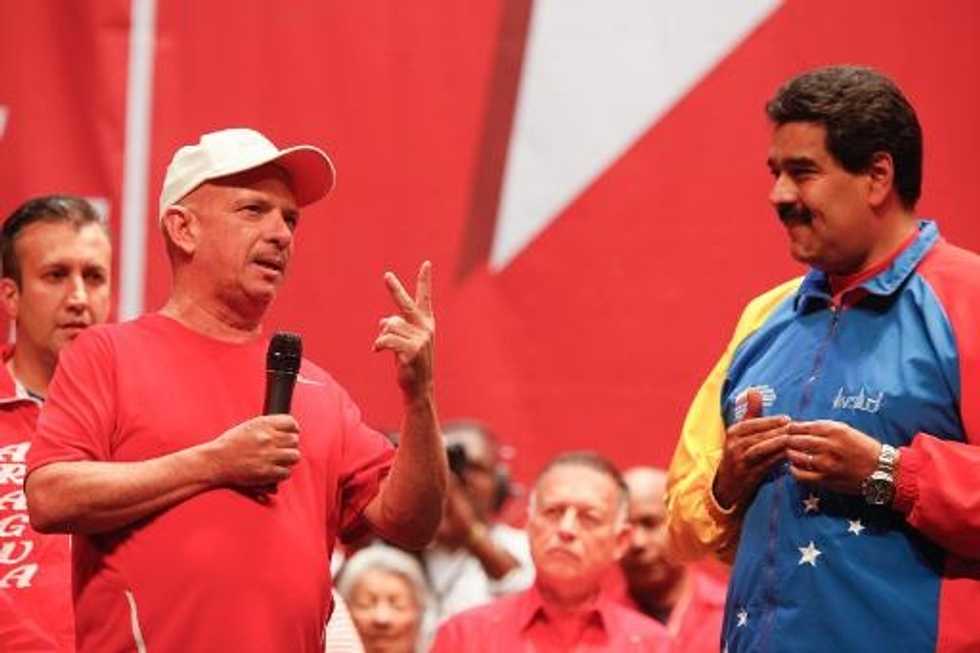
A long-time supporter of the late Venezuelan president Hugo Chavez, Carvajal was arrested Wednesday on the Dutch island off Venezuela. But he flew home Sunday to be greeted with a hug by President Nicolas Maduro at a Socialist Party meeting in Caracas.

“We welcome our comrade the major general and thank God, who allowed us to clear up this brewing conflict by diplomatic means,” Maduro told party loyalists.

Aruban officials on Sunday said Carvajal had diplomatic immunity, but nevertheless declared him persona non grata and said he would be arrested if he returns to any territory of the Netherlands.

“The United States is deeply disappointed at the decision of the government of the Netherlands to order the release of wanted narcotics trafficker Hugo Carvajal on the basis of claims of immunity that are beyond established international norms,” the State Department spokesperson said.

“We are disturbed by credible reports that have come to us indicating the Venezuelan government threatened the governments of Aruba, the Netherlands, and others to obtain this result,” the official added.

AFP Photo

Interested in world news? Sign up for our daily email newsletter!

Mexico Confirms Confrontation With Border Patrol Agents

Mexico Confirms Confrontation With Border Patrol Agents

By Richard A. Serrano and Tracy Wilkinson, Tribune Washington Bureau

WASHINGTON — Two heavily armed, camouflaged Mexican soldiers crossed 50 yards inside Arizona in January and drew their guns against U.S. Border Patrol agents who confronted them in a tense standoff, according to documents obtained by the Los Angeles Times and Tribune Washington Bureau.

U.S. officials said it was one of nearly two dozen border incursions by Mexican soldiers into southern Arizona in the last four years.

The Jan. 26 confrontation, described in a Border Patrol foreign military incursion report and confirmed in a separate letter from U.S. Customs and Border Protection Commissioner R. Gil Kerlikowske, ended when the Mexican soldiers retreated back over the border after U.S. agents — who also drew their weapons — summoned assistance. The soldiers, who misidentified themselves to border agents, claimed to be pursuing drug smugglers, documents show.

U.S. officials characterized the incident as one of the most serious incursions in recent years. Though gunfire was averted, the 35-minute confrontation underscored the continuing friction between the U.S. and Mexico when it comes to policing the often chaotic and violent Southwest border. It also raised questions among some U.S. officials about whether the Mexican soldiers were chasing drug smugglers, as they claimed, or protecting cartels as they used drug routes to Arizona.

Early Tuesday, officials at the Mexican Embassy in Washington — as they had for the last two weeks — denied that Mexican soldiers were involved, suggesting that the men were smugglers in military uniforms. But when presented with the U.S. confirmation of the incident, the embassy later called a Times/Tribune reporter and confirmed that the men were soldiers.

“Those individuals were part of a counternarcotics operation, which had taken place a few minutes prior on the Mexican side of the border,” said Ariel Moutsatsos, minister for press and public affairs at the Mexican Embassy. “The two members of the Mexican army did not see any sign notifying them that they were crossing the border.”

He called the incident “an isolated and unintended occurrence.” He noted that U.S. border agents also crossed the border from time to time.

“Both U.S. and Mexican agents have sporadically and accidentally crossed our common border during their patrols,” he said. “Both countries understand that this is something that happens as part of normal activities.”

Eduardo Sanchez, a spokesman for President Enrique Pena Nieto’s security Cabinet, confirmed the January incident and said the Mexican soldiers spotted what they believed to be men carrying backpacks with drugs. They pursued the men and recovered the backpacks, only to find themselves on the U.S. side of the border.

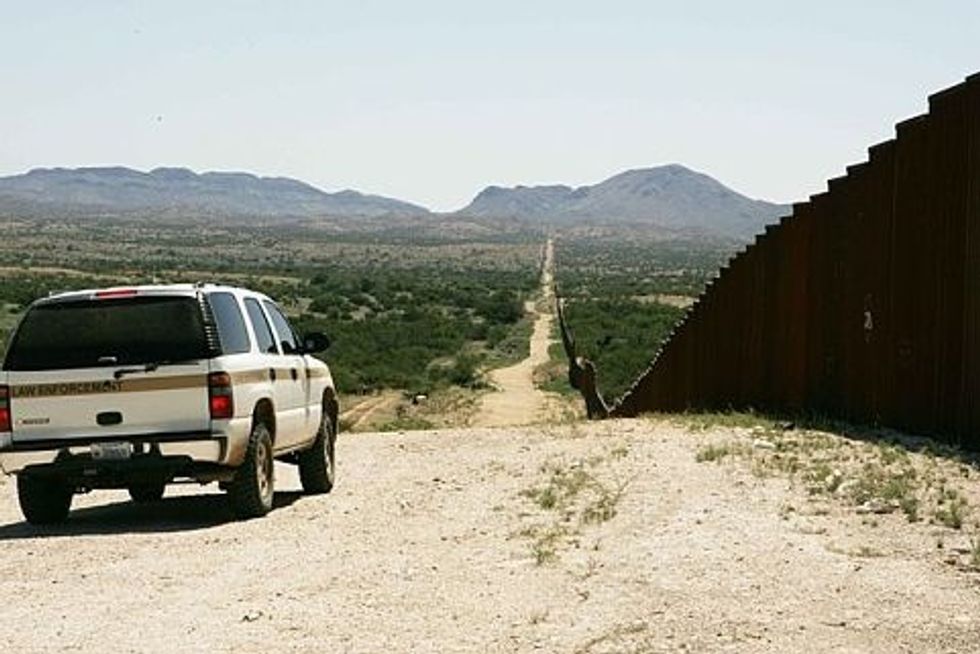
“It’s desert there, there are no fences, no walls,” Sanchez said in explaining how the soldiers could have crossed unawares. He said the error was realized within minutes, and the soldiers returned. Their commanders spoke to U.S. officials in Tucson to explain, and it was chalked up as an error.

Kerlikowske, in his letter to Sen. Tom Coburn (R-OK), the ranking Republican on the Senate Homeland Security and Governmental Affairs Committee, said military incursions from Mexico were infrequent. But his letter cited 23 such incidents in the Tucson and Yuma sectors of Arizona since 2010, including three in this fiscal year.

The January incursion was reported the same day to the commissioner’s situation room and generated a “significant incident report.” But U.S. border officials deemed that no further action was necessary, Kerlikowske wrote.

Nevertheless, disclosure of the incursion is likely to cause border advocates such as Sen. John McCain (R-AZ), and others to demand a stronger U.S. defense along the four states that constitute this side of the 1,000-mile U.S.-Mexico border.

In July 2011, the Mexican Defense Ministry confirmed that its soldiers had crossed into Texas over the Donna-Rio Bravo International Bridge. The crossing was unintentional and the soldiers were trying to find their way back into Mexico while on routine patrols, the ministry said. The U.S. Border Patrol apparently accepted the explanation.

The latest encounter began at 8:53 a.m., when Border Patrol Agent Justin Hays spotted “two subjects entering the United States approximately 2.5 miles west of the Sasabe (Ariz.) Port of Entry,” according to the report. Agent David Olaya responded to the area and reported seeing subjects who appeared to be Mexican military personnel about 50 yards north of the border.

At 9:20 a.m., Olaya said, he “positively identified the two individuals in tan, digital camouflage uniforms, on foot traveling westbound, on the United States side of the International Boundary Fence Line,” the report states.

Confronting them, “both parties drew their weapons,” the report said. The Mexican soldiers were carrying what was described as “G3 long arms” — an apparent reference to assault-style weapons — and identified themselves as members of the Mexican military’s 80th Battalion.

The report said the men identified themselves as Carlos Antique Juarez and Jorge Alberto Hernandez-Morales. But Olaya noted that the name tapes on their uniforms “did not coincide with the names provided. One, in fact, was partially covered.” Juarez’s name tag said “Diaz”; Hernandez-Morales’ tag showed only “Rue.”

The soldiers told U.S. agents that they had been pursuing three suspects from Mexico. But when Olaya called for backup from the Border Patrol’s Tucson sector, the two Mexicans retreated over the border.

In his letter, Kerlikowske noted that Border Patrol agents at that time had been actively pursuing three suspects in the isolated, rugged terrain, and had recovered three bundles of marijuana. But he said no arrests were made and the three subjects escaped.

Kerlikowske said the U.S. later determined that the two Mexican soldiers were “confirmed members of the Mexican military.”

In response to a question from Coburn about whether the soldiers might have been providing security to drug smugglers, Kerlikowske said his agency “does not have intelligence that directly connects (Mexican military) personnel to criminal activity.”

But border experts say that Mexican soldiers have frequently been hired to assist drug smugglers.

“It’s pretty easy to co-opt them,” said James Phelps, a border and homeland security professor at Angelo State University in San Angelo, Texas. “Many are essentially a functional asset of the cartels.”

He recalled an incident a few years ago in which a Mexican army captain was helping to transport a five-ton truck loaded with methamphetamine until he stopped just before reaching El Paso.

Photo by Steve Hillibrand via Wikimedia Commons

Shop our Store

Headlines

Editor's Blog

Corona Virus

Trending

World