Behind No Campaign To Stop Virginia Redistricting Are Usual MAGA Suspects
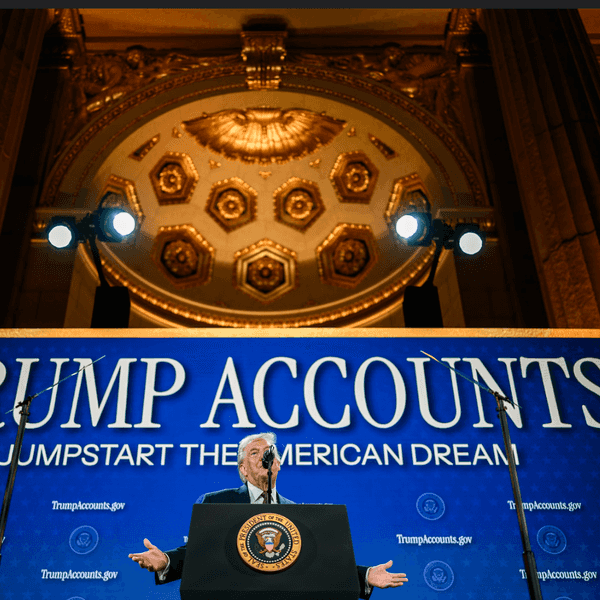
President Donald Trump ignited a nationwide redistricting battle when he directed Republicans in the Texas Legislature in 2025 to redraw their congressional map in a bid to maintain GOP control of the U.S. House of Representatives and pick up seats in the 2026 midterm elections.
Now some of Trump’s supporters and fellow Republicans in Virginia are helping to lead the fight against Democrat lawmakers’ efforts to redraw districts in the commonwealth in response.
On April 21, Virginia will hold a special election referendum on a temporary constitutional amendment that would allow the commonwealth’s Democratic-led General Assembly to draw a new congressional map. Early voting on the amendment has been ongoing since March 6.
If the amendment passes, it would create new district boundaries that could change Virginia’s House delegation from six Democrats and five Republicans to 10 Democrats and one Republican. Nationwide, Republicans so far have a slight edge over Democrats in the number of House seats that could be picked up in the midterms following redistricting efforts.
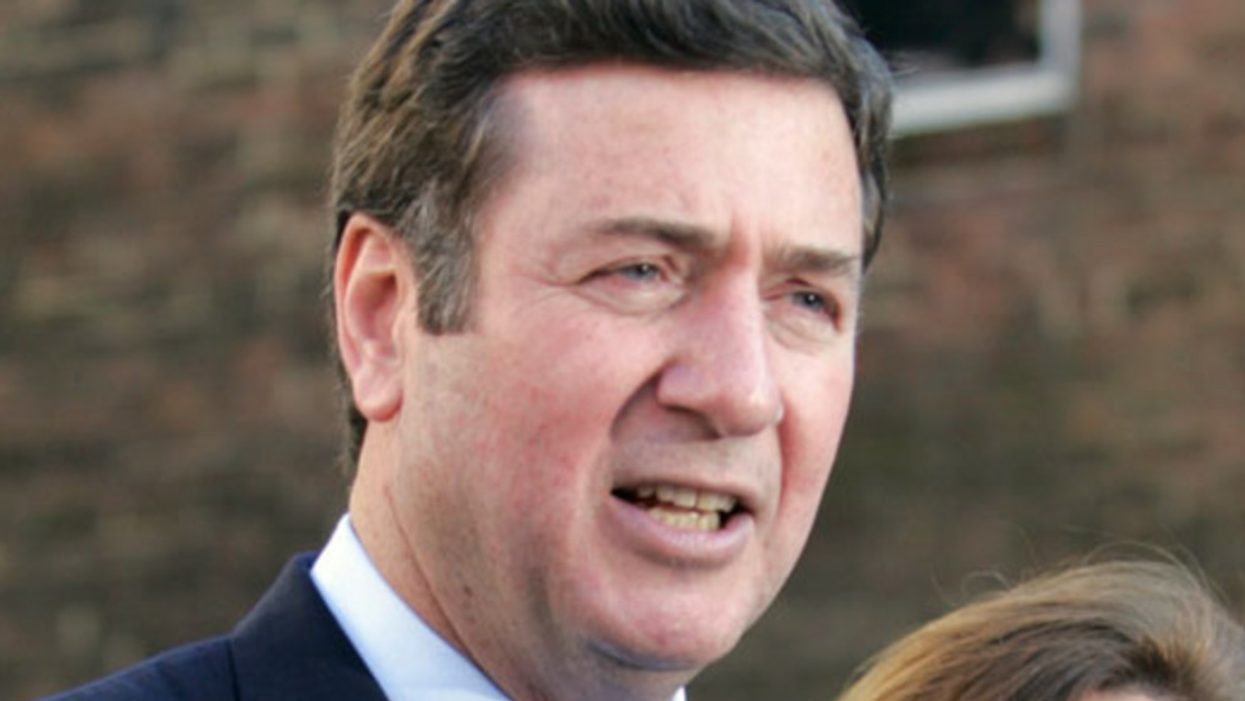
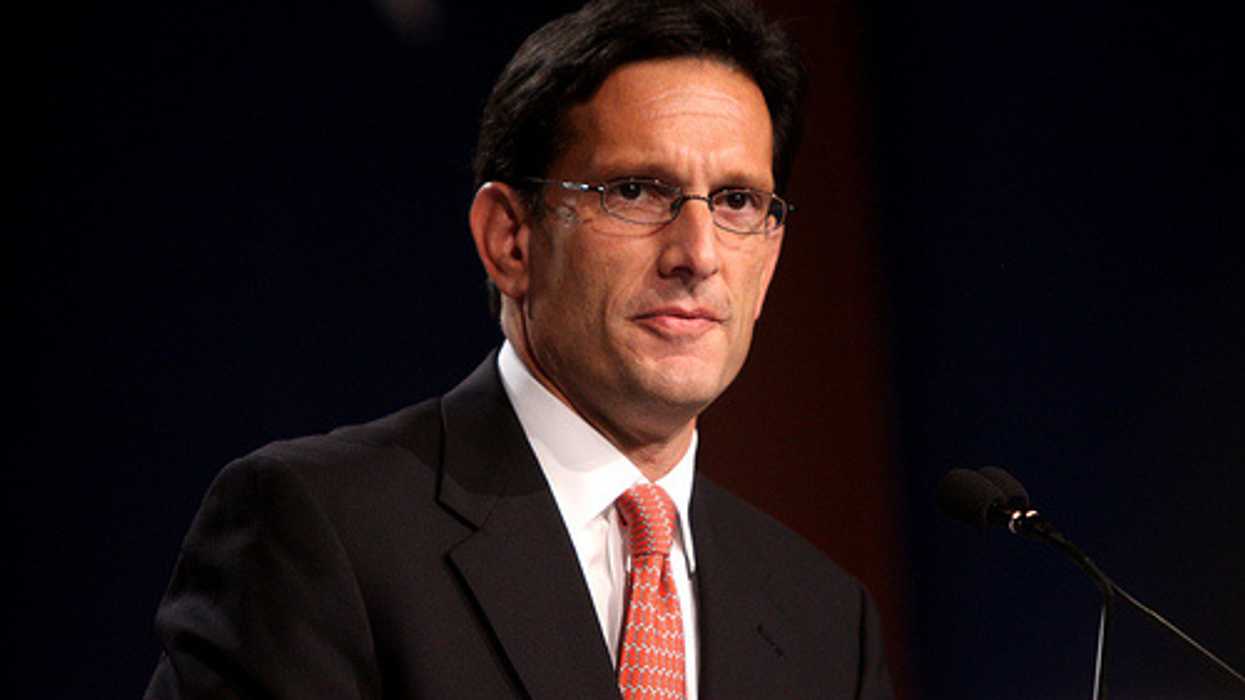
Republican anti-redistricting advocates like Gov. George Allen and former state House Speaker Bill Howell, who lead the group No Gerrymandering Virginia, and former Rep. Eric Cantor (R-VA) and former state Attorney General Jason Miyares, who head up Virginians for Fair Maps, have characterized the redistricting campaign in the commonwealth as antidemocratic. However, they have remained silent on Trump’s original push for the GOP to gerrymander in Texas, said Dan Gottlieb, the spokesperson for Virginians for Fair Elections, a pro-redistricting group.
“I’m going to call them collectively the ‘No’ effort, because I think they’re all part of the same kind of, at this point, MAGA misinformation machine,” Gottlieb said.
“They’re trying to sort of make it this kind of disparate but very clearly coordinated effort to deliberately mislead voters, outright confuse voters, specifically Democratic voters, about what this measure is, about why it’s so important to actually take action to level the playing field, what Trump’s power grab is actually going to mean in practice, and, frankly, who’s funding this misinformation,” Gottlieb continued.
Brian Cannon, a Democrat who helps to lead No Gerrymandering Virginia, said the anti-redistricting efforts are not about misinformation but about calling out gerrymandering on both sides of the political spectrum. He said Democrats could pick up an additional 40 House seats in November and don’t need to gerrymander to achieve that number.
“I’m a Democrat, and I’ve teamed up with other Democrats and Republicans on No Gerrymandering Virginia to specifically call out the Donald Trump mid-decade redistricting push, as well as the Democrats’ mid-decade redistricting push in response; both are wrong,” Cannon said.
“There’s lots of ways to fight back against Trump, whether it’s keeping ICE out of the polls or whether it’s protecting ballot chain of custody and supporting our Election Day poll workers better,” Cannon continued. “There’s lots of things we can do to make sure our elections are free and secure. Rigging them is something we don’t need to do.”
Proponents of redistricting say that, had Trump never pushed Texas Republicans to change their map in an attempt to pick up five GOP House seats in the November midterms, there would be no current campaign for redistricting in Virginia.
Gov. Abigail Spanberger, who voted in favor of the ballot measure on March 26, told reporters, “This amendment is temporary and responsive to this moment in time where we have a President who has gone to other states seeking additional congressional seats saying he is quote ‘entitled to them.”
“We have an opportunity in Texas to pick up five seats,” Trump told CNBC’s Squawk Box in August. “We have a really good governor, and we have good people in Texas. And I won Texas. I got the highest vote in the history of Texas, as you probably know, and we are entitled to five more seats.”
Currently, a bipartisan redistricting commission made up of eight lawmakers and eight citizens redraws the map of Virginia’s 11 congressional districts once every 10 years, following the national census. The map was last redrawn in 2021 and will be redrawn again in 2031. That bipartisan commission would resume redrawing the maps after Oct. 31, 2030, should the amendment pass.
“There’s no more democratic process than putting these maps directly to the voters, putting this process directly in front of them and saying, You decide. Nothing goes into effect without your say,” Gottlieb said. “And we’re going to hold a public election out 45 days of early vote for you to decide. Whether you agree with it or not, it is actually the most democratic process there is for something that, frankly, I think we all should hopefully be able to agree shouldn’t be a decision that we have to make, but that Trump and MAGA Republicans have forced the commonwealth of Virginia to make.”
To get their message out, anti-redistricting advocates have sent out mailers critics call misleading and offensive. Some of them compare support for the ballot measure to voter suppression efforts against Black people during the Civil Rights Movement of the 1960s, using imagery from the Jim Crow era; others take quotes out of context to imply that figures such as Spanberger and former President Barack Obama oppose the measure, while both of them have in fact appeared in advertising urging a yes vote.
Gottlieb criticized the mailers: “To take something as painful as the imagery that they deliberately chose to come out the gates with and send to, by our estimates, a couple thousand, if not tens of thousands, of folks their very first weekend they could go vote was a choice made out of fear, both of their fear of losing and their hope that they could scare people, specifically Black and brown folks who have been historically disenfranchised and targeted with fear tactics, with scare tactics.”
‘Trump is the general’
Jon Baker, a Richmond resident and retired chemistry professor at Virginia Commonwealth University, said anti-redistricting leaders are doing Trump’s bidding.
“Those are simply soldiers in the battle, but Trump is the general,” said Baker, who voted for the redistricting amendment. “Trump issued his orders, and they’re his allies, and they’re trying to carry it out. … To me, it’s a referendum on the Trump administration, on the Trump presidency.”
Should the amendment not pass, Trump’s power would remain unchecked by Congress, Baker said.
“I feel we need to have some balance,” he said. “I’m a strong opponent of the Trump administration. There needs to be oversight. There needs to be committees that are able to do investigations, have hearings, to have some check on what I perceive as a really out-of-control executive branch.”
J. Miles Coleman, an associate editor at Sabato’s Crystal Ball, a nonpartisan political analysis newsletter run by the University of Virginia Center for Politics, said: “I think, at the end of the day, this is going to get turned into an up-or-down vote on, basically, Donald Trump. This is a state that he lost three times.”
Coleman said he’s not sure how much it will matter to voters that Trump allies are working against the redistricting measure — or how much the general public is even aware of their involvement. Cantor, for example, resigned his seat in Virginia’s 7th Congressional District in 2014 after a defeat in the Republican primary, which may be long enough ago that the general public isn’t giving him very much thought, Coleman said.
“He does have a good network, but in some ways, I feel like anything pre-Trump now in politics is just ancient history,” Coleman said.
Leslie Caughell, a political science professor at Virginia Wesleyan University, said it is Trump who is playing the major role against Virginia’s redistricting amendment.
“The real important person for the Republican Party is going to be President Trump and how much attention he’s able to draw to this,” she said. “Because I don’t think most Virginians know about this, and it’s also a complicated issue.”
Trump has not yet made a public statement about redistricting in Virginia.
Reprinted with permission from The Virginia Independent