Tag: music
Shrinking American Culture To Fit Those Small MAGA Minds

Shrinking American Culture To Fit Those Small MAGA Minds

So much of the American character is in peril, including the cultural touchstones I often reference, probably more often than my column editors would like. But I believe most Americans’ lives are enriched by the TV shows and music, theater and films that make skeptics and even hate-watchers tune in for the Academy Awards or Super Bowl halftime show.

I long ago embraced the fact that the arts (high and low) bring joy, knowledge and — often, just in time — an escape. But to Donald Trump they have become yet another part of American life he can control.

His administration is eviscerating the division that preserves and maintains more than 26,000 art pieces across the country, including renowned paintings and sculptures, owned by the government.

Under Trump’s influence, museums are canceling exhibits that feature diverse artists, films are stripping out characters that represent the underrepresented, and internships and scholarships that expose all communities to the arts are ending.

In just one example, the young musicians who auditioned for and won a coveted learning experience with the U.S. Marine Band were disappointed when an executive order canceled their workshop and “Equity Arc Wind Symphony.” This time, military band veterans stepped up, and the story and tuneful results were seen by the millions who watched and listened on “60 Minutes” on CBS.

However, not every Trump-induced nightmare has a fairy tale ending.

In Washington, the John F. Kennedy Center for the Performing Arts, under the new Trump-appointed management and a board that shockingly elected him chair, intends to narrow the kinds of work it will present in the future, a scary thought even if you adore the Trump-favored musical “Cats.” How many times can a person hear “Memory”?

Isn’t the beauty of culture choice? With diverse offerings available, there is bound to be something that’s appealing to every individual taste.

The president gave away the game when he admitted that in all his years in Washington, he had not been a fan of the Kennedy Center. “I didn’t go,” he said when asked. “There was nothing I wanted to see.”

Nothing piqued the president’s curiosity? Nothing that might inspire, surprise or simply entertain?

Maybe that’s why Trump never laughs, or hardly smiles, unless it’s that weird smirk that spreads across his face when he thinks his sophomoric insults are somehow witty. A hint: Just because sycophants guffaw, it doesn’t mean you’ll be the next recipient of the Mark Twain Prize for American Humor, awarded from that Kennedy Center stage.

Oh, wait a minute.

So, exactly what “woke” shows did the president reject, sight unseen? Perusing the programming when he was in office, I wondered. Was it touring productions of The Book of Mormon or Hello, Dolly! ? Maybe On Your Feet! the story of Cuban American musicians Emilio and Gloria Estefan? Didn’t Cuban Americans turn out for him in Florida?

Considering Trump’s coziness with Vladimir Putin, you’d have thought Shakespeare’s Measure for Measure, performed in conjunction with the English company of Cheek by Jowl and the Pushkin Theatre Moscow, would have caught his eye.

But, no. With all those varied shows on the schedule, as well as the National Symphony Orchestra and the Washington National Opera, the uninterested Trump mostly decided to pass.

In 2017, he did attend a Fourth of July concert at the Kennedy Center hosted by First Baptist Church Dallas, reported NPR. But when the main event is a performance by the choir and orchestra of a song that includes the lyrics “Make America Great Again” and Trump squeezes in a slam on the “fake media,” I’m not sure that counts.

Now, he wants to deny everyone else, dictating what Americans will see and hear, starting but I fear not ending at the Kennedy Center.

The insistence on seeing art and culture through Trumpian eyes means Kennedy Center audiences will miss the MacArthur “genius” and Grammy-winning singer, songwriter and instrumentalist Rhiannon Giddens, who has canceled her show in response.

Having seen Giddens with the Carolina Chocolate Drops delightfully play an eclectic brand of roots music, which elevates the contributions of African Americans, I can say missing a Giddens performance is Trump’s loss.

Giddens has the rare gift of entertaining while teaching you something — in her case, something about America.

I count myself lucky to have had parents who found every free concert, lecture or film at the library. Community programs offering dance and music lessons are disappearing, I fear. Theater and opera tickets didn’t put too much strain on the purse — if you were willing to sit up in the nosebleed section.

My young life included arts and culture, things that I loved and hated and had questions about, that were interesting and fun, that enhanced rather than distracted from the reading, writing and arithmetic many of our leaders would like to solely revert to in public schools.

Though lacking the wealth of the Trump family, my parents realized the importance of a complete education.

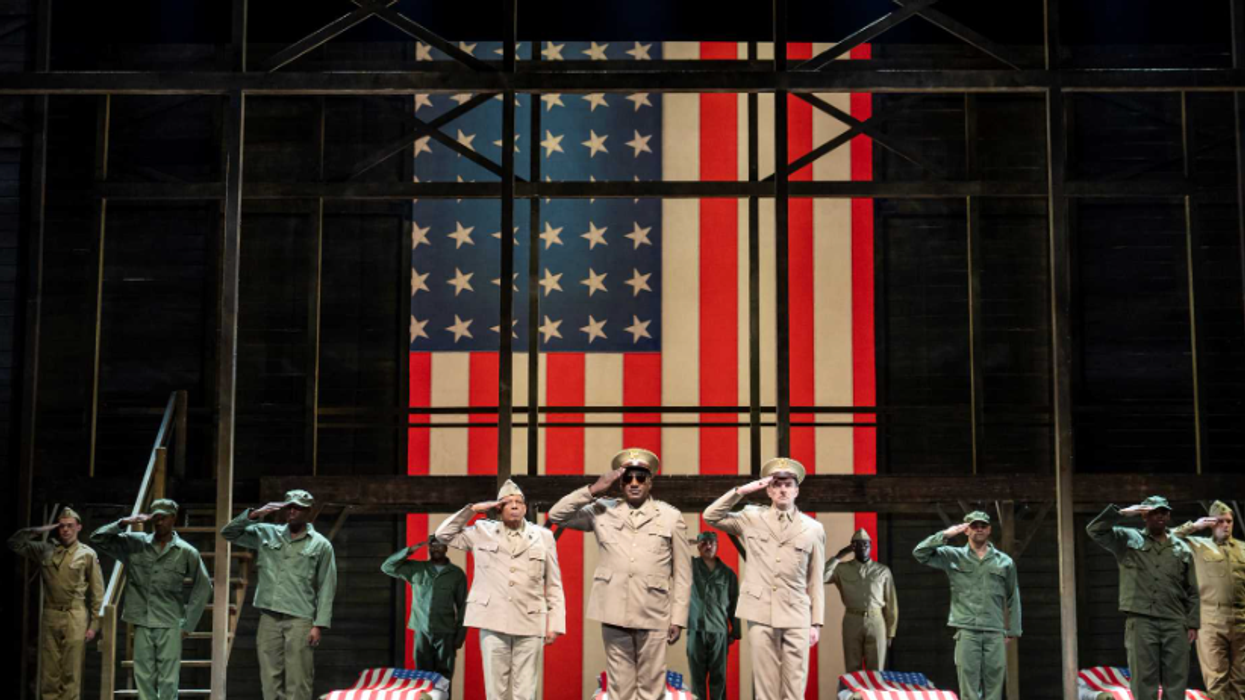
I’m certain the president would not have approved of the last show I saw at the Kennedy Center, A Soldier’s Play, Charles Fuller’s Pulitzer Prize-winning drama, set on a segregated Army base in the South during World War II. It’s grounded in the history Trump and his followers are trying to erase.

Yet, a packed audience was thrilled, a difference in opinion on what is and is not proper art that should be allowed in anyone’s America, even Trump’s.

Mary C. Curtis has worked at The New York Times, The Baltimore Sun, The Charlotte Observer, as national correspondent for Politics Daily, and is a senior facilitator with The OpEd Project. She is host of the CQ Roll Call "Equal Time with Mary C. Curtis" podcast. Follow her on X @mcurtisnc3.

Reprinted with permission from Roll Call

Trump Loyalists Seething After 'Hamilton' Cancels Kennedy Center Run

Trump Loyalists Seething After 'Hamilton' Cancels Kennedy Center Run

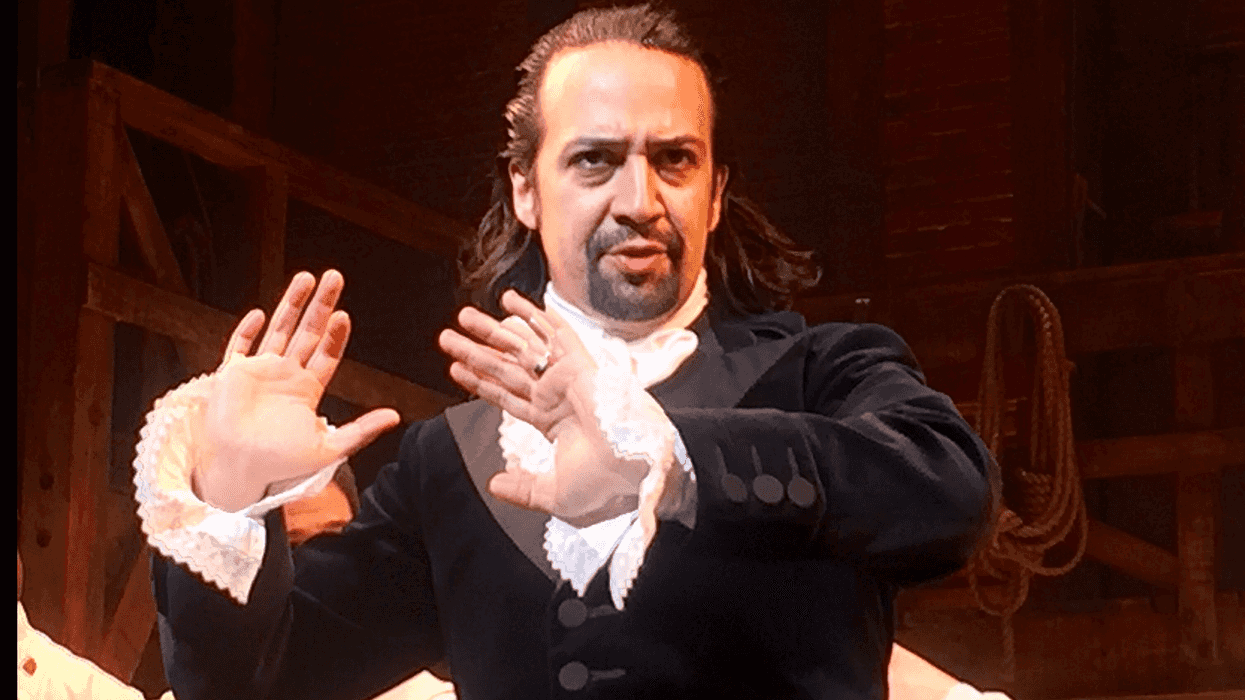
The creators of Hamilton refuse to let their hit musical be performed next year at the Kennedy Center, where a now-canceled eight-week run was slated to help celebrate the 250th anniversary of the signing of the Declaration of Independence—and this snub has MAGA acolytes seeing red.

President Donald Trump purged the board of the performing arts center in February and has since been made chairman, which caused an exodus of board members and performers.

“This latest action by Trump means it’s not the Kennedy Center as we knew it,” show creator Lin-Manuel Miranda said in a joint interview via The New York Times with lead producer Jeffrey Seller. “The Kennedy Center was not created in this spirit, and we’re not going to be a part of it while it is the Trump Kennedy Center. We’re just not going to be part of it."

And while Seller pointed out in a separate statement that their decision had to do with the “partisan policies of the Kennedy Center” and not with the Trump administration itself, the president’s loyalists aren’t very happy.

"Let's be clear on the facts," Richard Grenell, a Trump administration diplomat, said in a post via X. "Seller and Lin Manuel first went to the New York Times before they came to the Kennedy Center with their announcement that they can’t be in the same room with Republicans. This is a publicity stunt that will backfire."

Grenell—who recently campaigned on behalf of accused sex traffickers Andrew and Tristan Tate—then argued that arts are for both sides of the aisle and "not just for the people who Lin likes and agrees with."

"The American people need to know that Lin-Manuel is intolerant of people who don’t agree with him politically. It’s clear he and Sellers don’t want Republicans going to their shows," he added.

Grenell’s comments come at an interesting time, given that Miranda and Seller pulled the show partly because of Trump’s sudden ousting of Democrats from the previously bipartisan board at the Kennedy Center.

“Our cancellation is also a business decision," Seller wrote in a statement posted to Instagram. "'Hamilton' is a large and global production, and it would simply be financially and personally devastating to the hundreds of employees of 'Hamilton' if the new leadership of the Kennedy Center suddenly canceled or re-negotiated our engagement."

He added, "The actions of the new Chairman of the Board in recent weeks demonstrate that contracts and previous agreements simply cannot be trusted."

It’s likely Seller was referring to Trump’s firing of Deborah Rutter, the center’s longtime president. Trump also fired multiple board members, replacing them with his own supporters.

"At my direction, we are going to make the Kennedy Center in Washington D.C., GREAT AGAIN," Trump wrote via Truth Social in February.

"Just last year, the Kennedy Center featured Drag Shows specifically targeting our youth—THIS WILL STOP. The Kennedy Center is an American Jewel, and must reflect the brightest STARS on its stage from all across our Nation,” Trump added, though he’s admitted to never having seen a Kennedy Center show.

As Trump has brought his loyalists, those on the other side of the aisle have made their exit.

Singer-songwriter Ben Folds resigned from his role as artistic advisor to the center’s National Symphony Orchestra, as did TV legend Shonda Rhimes as a board member.

Hamilton has a history of butting heads with the Trump administration, with cast members personally pleading to former Vice President Mike Pence onstage in mid-November 2016 to do right by the American people.

“We, sir—we—are the diverse America who are alarmed and anxious that your new administration will not protect us, our planet, our children, our parents, or defend us and uphold our inalienable rights,” actor Brandon Victor Dixon, playing Vice President Aaron Burr, said to Pence from the stage. “We truly hope that this show has inspired you to uphold our American values and to work on behalf of all of us.”

While Hamilton won’t be gracing the stage and several other performers have canceled in protest, most of the Kennedy Center’s schedule appears to remain intact.

One other play, The Story of a Rose, however, relocated to Northern Virginia. The World War-I themed concert was said to have been moved due to seating capacity, per the New York Times.

However, one performer later told the outlet, “I’m glad at how it turned out. I wanted to do a show that everyone could attend—left, right, and center.”

Reprinted with permission from Daily Kos.

Jason Aldean

Country Singer Jason Aldean Says His Lynching Song Isn't About Lynching (VIDEO)

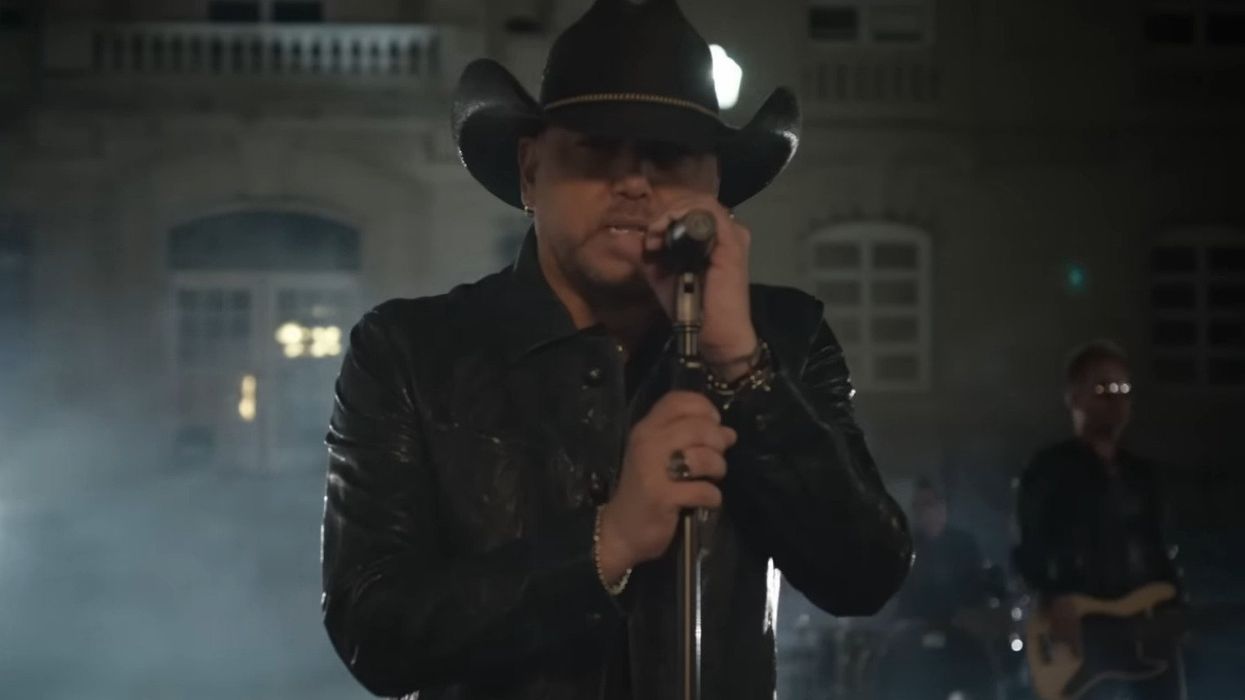
Country singer Jason Aldean is denying that his vigilante violence anthem “Try That in a Small Town” is specifically an ode to lynching after filming the video for the song outside a courthouse that was the site of a brutal lynching in 1927. According to Aldean’s video production team, the Maury County Courthouse was merely a “popular filming location outside of Nashville” with no historical reference intended. But go figure, when a rabidly right-wing musician stands in front of the site of a lynching and sings about using his granddad’s gun in response to a litany of offenses including, “Cuss out a cop, spit in his face/Stomp on the flag and light it up,” he doesn’t get the benefit of the doubt.

Despite his various protestations of innocence, Aldean is likely thrilled with how this whole thing is going as he gets to play the victim while watching a frankly terrible song shoot to the top of the country charts. (It’s one of the less rousingly anthemic anthems you’re going to find—the tone is more of a whine. Honestly, when I first read about it I was imagining a much better, if still repugnant, song. Songs that make you want to sing along and simultaneously make you feel dirty about that are well within the wheelhouse of country.)

Aldean and his wife have repeatedly sought right-wing hero status, with his wife posting social media pictures of herself and their kids wearing anti-Biden clothes. In today’s political environment, with the Republican base defining itself through “own the libs” politics and flagrant bigotry, a song threatening violence in response to protests against the police is a sure winner, and one that almost guarantees Aldean a role at an inauguration concert if a Republican wins in 2024. He’s already drawn a defense from Florida Gov. Ron DeSantis.

Aldean is implicitly invoking right-wing white identity politics—not that he’d ever call it that—in which only small towns and rural areas are real America; religious affiliation, specifically as an evangelical Christian, is more about partisanship than faith; and where country musicians have cultural cachet because of their perceived association with rural areas (and whiteness).

And the song’s threats highlight the ties between right-wing white identity politics and violence. The two are basically inseparable, with the violence framed by narrators like Aldean as the right to self-defense of a people under attack, but in reality serving to affirm that they are the only group with a right to violence, and that violence to preserve their role as the embodiment of real America is legitimate and indeed necessary.

CNN’s coverage of a critical tweet by Sheryl Crow uncovers another dimension of this: “I’m from a small town. Even people in small towns are sick of violence. There’s nothing small-town or American about promoting violence. You should know that better than anyone having survived a mass shooting,” Crow tweeted. “This is not American or small town-like. It’s just lame.”

CNN noted, “Crow grew up in Kennett, Missouri, which has a current population of roughly 10,200. Aldean was born in Macon, Georgia, which has a population of about 156,000.” Wikipedia adds the context that Aldean spent summers with his father in Homestead, Florida — population 80,000. These are not small towns. Aldean is a poser trying to lay claim to the title of defender of small-town whiteness, even though he grew up in a fair-sized city and summered in a large suburb of Miami. But his effort shows the cultural power of the small-town narrative.

”There is not a single lyric in the song that references race or points to it- and there isn’t a single video clip that isn’t real news footage -and while I can try and respect others to have their own interpretation of a song with music -- this one goes too far,” Aldean tweeted in response to the parallels being drawn between his lynching-flavored song and the actual historical lynching that took place where he shot the video.

About that: Michael Harriot dissected the claim that “[t]here is not a single lyric in the song that references race or points to it,” showing how the specific types of violence Aldean frames as reasonable cause to pull out granddad’s gun draw on longstanding myths about Black violence. Aldean didn’t have to work “Black people, I mean Black people” into his already tortured lyrics to get the point across.

And “there isn’t a single video clip that isn’t real news footage”? Sorry, Jason! Activist Destinee Stark found two examples in just the first 30 seconds of the video. One is a real picture of someone giving police the middle finger, but it happened not during a protest in the United States but at a May Day festival in Berlin, Germany. Another is an image of someone lighting a Molotov cocktail, but that one was professionally created as stock footage. In Bulgaria, by the way.

Aldean, like Crow, referred to his personal history as a survivor of a mass shooting. He was on stage at the Route 91 Music Harvest Festival in Las Vegas in 2017 when Stephen Paddock shot and killed 60 people and injured hundreds more. That’s not a kind of violence Aldean talks about wanting to run out of his imaginary small-town home. For one thing, it’s a lot harder to do macho posturing about how tough you’d be in response to violence if you admit that you can be killed from hundreds of feet away by someone you never see. For another thing, Aldean is committed to treating guns as the solution, not part of the problem.

It would not be possible to lift the history of lynching out of how Aldean’s song is received, either by its fans or its critics. But even if you could do that, it remains a promotion of vigilante violence. It remains a valorization of the protest of small towns, which are coded as white, in contrast to the protest of urban areas, which are coded as not-white, where the former has a legitimate right to violence that the latter can never have, even if the violence is simply words directed at a police officer. So even if you believe Aldean’s denials that he was intentionally invoking lynching, the song remains a gross, violent piece of white identity politics by a ridiculous poser.

Check out Destinee Stark’s breakdown of the imagery in Aldean’s video. It’s worth a watch:

Reprinted with permission from Daily Kos.

'Fill The Silence': Grammy Artists Welcome Zelensky Speech With Music (VIDEO)

'Fill The Silence': Grammy Artists Welcome Zelensky Speech With Music (VIDEO)

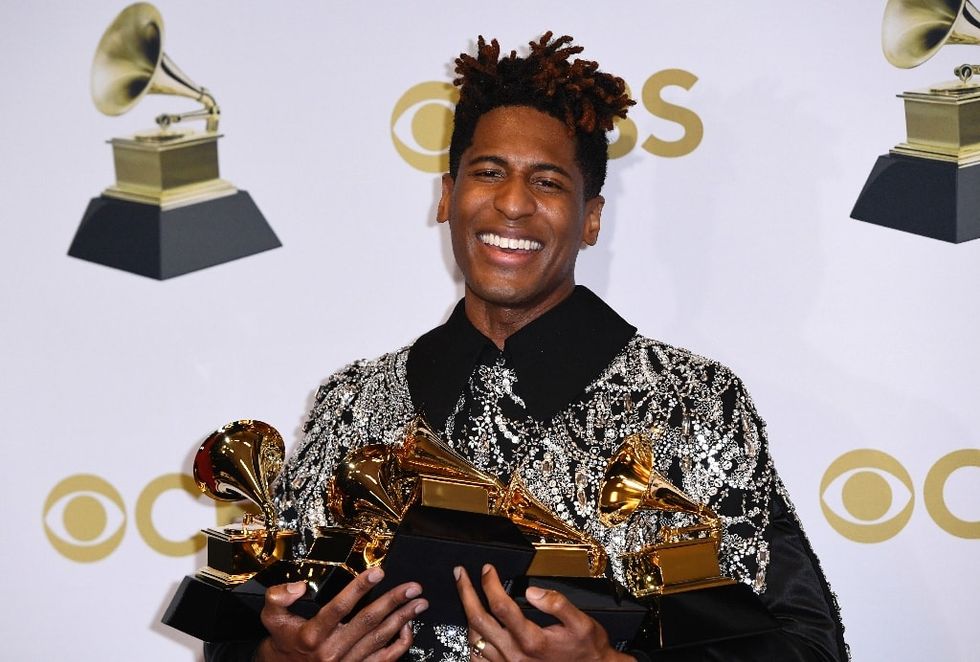
Las Vegas (AFP) - Industry watchers had tipped pop superstars as the likely big winners at Sunday's Grammys -- but jazzman Jon Batiste instead was crowned king, taking home five awards including the prestigious Album of the Year prize.

At the star-studded gala, held for the first time in Las Vegas, Silk Sonic -- the 70s revival project of Bruno Mars and Anderson .Paak -- won all four of their potential prizes, including both Record and Song of The Year for their single Leave The Door Open.

Olivia Rodrigo didn't win as many awards as predicted -- but the Filipino-American pop phenom did scoop the coveted prize for Best New Artist, and two trophies in the pop category.

That meant the winners of all four top Grammys were people of color -- a milestone for the Recording Academy, which for years has faced criticism that it disproportionately honored white men.

The night was heavy on performances but also held a number of somber moments -- most notably when Ukrainian President Volodymyr Zelensky delivered a pre-taped plea for support.

Zelensky's message led into a performance by John Legend of the song Free, with the help of Ukrainian singer Mika Newton, musician Siuzanna Iglidan and poet Lyuba Yakimchuk.

"On our land, we are fighting Russia, which brings horrible silence with its bombs. The dead silence," Zelensky said.

"Fill the silence with your music, fill it today to tell our story."

Despite being among the night's most nominated artists, pop juggernauts Billie Eilish, Justin Bieber and Lil Nas X were shut out completely.

But they all staged impressive performances: Eilish belted out "Happier Than Ever" in a lightning-backed downpour, Bieber delivered a crooned-up version of "Peaches," and Lil Nas X hosted an unabashed celebration of sexuality and queerness set to a medley of his songs including "MONTERO (Call Me By Your Name)."

Rodrigo also gave an impressive rendition of her viral teen breakup hit "drivers license," showcasing her impressive vocals against a set mimicking a gloomy night in suburbia.

"This is my biggest dream come true," the 19-year-old said as she accepted the gramophone for Best New Artist.

Big winner Batiste also performed, showcasing his elasticity as an artist by starting at the piano for a classical piece before transitioning to a rhythmic dance number.

The night's leading nominee with 11 nods, Batiste had already scooped four ahead of his big sleeper win for the year's best album.

But he looked shocked when presenter Lenny Kravitz declared him the night's big hit.

"I really don't do it for the awards," the 35-year-old Batiste told journalists backstage. "Music is something that's so subjective."

Earlier onstage, the artist born into a prominent New Orleans musical dynasty told a cheering audience: "I believe this to my core: there is no best musician, best artist, best dancer, best actor."

"I just put my head down and work on the craft every day," he continued. "It's more than entertainment for me -- it's a spiritual practice."

Diverse field

The timing of the Grammys just one week after Will Smith stunned the world by slapping Chris Rock on stage at the Oscars added an extra layer of unpredictability to what is already usually one of the edgier nights on the showbiz awards circuit.

That fiasco prompted some gentle zings over the course of the night Sunday, but antics were virtually non-existent at what ultimately proved to be a heavily scripted show.

Music's chaos agent Kanye West stayed home even as he won two Grammys, one of which he shared with Jay Z.

Among the diverse crop of winners was Doja Cat, who took home her first ever Grammy in the pop category -- which she had to sprint back to accept after dipping out of the gala for a bathroom break.

The Brooklyn-based Pakistani vocalist Arooj Aftab, who won her first Grammy for Best Global Music Performance for "Mohabbat," and had also been in the running for Best New Artist, told journalists the win left her "beyond thrilled."

And it was a special night for folk icon Joni Mitchell, who won the prize for Best Historical Album days after being honored at a moving tribute gala Friday.

She made a rare public appearance onstage, looking fly in a red leather beret, sunglasses and floral pants, her long blonde hair in pigtails.

Shop our Store

Headlines

Editor's Blog

Corona Virus

Trending

World