Reprinted with permission from TomDispatch
As a Navy spouse of 10 years and counting, my life offers an up-close view of our country's priorities when it comes to infrastructure and government spending.
Recently, my husband, a naval officer currently serving with the Department of Energy, spent a week with colleagues touring a former nuclear testing site about 65 miles north of Las Vegas. Between 1951 and 1957, the U.S. conducted more than 1,000 nuclear tests in those 680 square miles of desert and only stopped when scientists began urging that the tests be halted because of soaring cancer rates among the downwind residents of Arizona, Nevada, and Utah.
My spouse's trip was a kind of ritual Department of Energy personnel undertake to learn about nuclear weapons as they maintain our country's vast and still wildly expanding arsenal.
Meanwhile, unable to afford to take time off from my job as a therapist, I found myself once again working double shifts. After all, I was also watching our two young children (ages four and six), shuttling them to appointments and activities along the narrow roads of our rural town, handling a sudden school shutdown due to flooded roads that halted school buses, while working. And mine is really the usual story for so many of the partners of this country's 1.3 million active-duty military personnel when they are sent elsewhere on assignment.
My six year old typically woke me at night to ask whether his dad was shooting at people and started throwing the sort of tantrums that had become uncharacteristic since his father stopped serving months-long deployments on submarines. Once recently, he even conned his already overworked bus driver — our county, one of the richest in the country, has a deficit of such drivers, thanks to the Covid-19 pandemic — into taking him home rather than to his after-school program. He let himself into our house and appeared at my office door to "make sure you haven't left, too."
It was hard to miss the irony of being overstretched at home by poor infrastructure and gaps in care (even as I went into debt to pay for the most affordable childcare center in the area) at a moment when the government was perfectly happy to fund my spouse to tour a mothballed nuclear testing site. His trip came on the heels of two 14-hour days he spent at the Capitol displaying a collection of model warheads to members of Congress. They then chatted with one another and him in a rare bipartisan moment that we as a couple witnessed.
At that time, members of the House of Representatives had yet to even vote on the $1.2 trillion infrastructure bill to fund our country's roads, bridges, buses, and electric grid, which to our relief would pass two weeks later. And when it comes to President Biden's shrinking Build Back Better bill, who knows if it will ever be passed?
It's about time! was all I could think when I heard that the first bill was about to be signed into law. I couldn't help imagining how useful so much of what's packed into both of them would be for people like me — not least of all things in the Build Back Better plan like universal pre-K and some paid family leave, four weeks of which I could have used over the past two months of my husband's military travels and my own late nights. And mind you, as someone with a great job and a relatively high family income, I have it much better than the vast majority of Americans, military or not.
Twenty Years Of War
Meanwhile, as I'm sure you know, Congress has been blindly supporting wars and counter-terror operations in dozens of countries globally from Afghanistan and Iraq to Somalia, Syria, Yemen, and beyond for two decades now. Joe Manchin, Kyrsten Sinema, and other congressional representatives in the House and Senate have been quibbling for months over whether to allow Medicare to negotiate lower prescription drug prices or pay for dental and vision benefits on the premise that such expenditures might add to our high national debt.
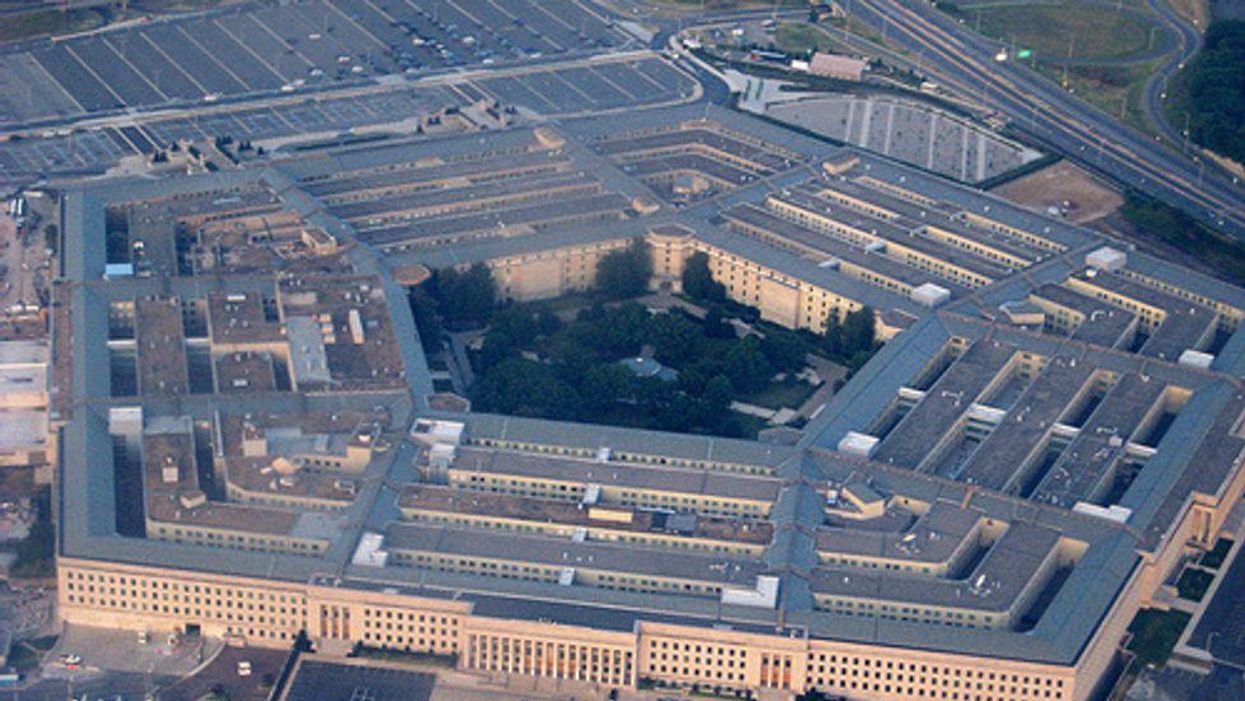
Yet they've voted repeatedly and without quibble or question to fund a Pentagon that has run a failing $8 trillion (and counting!) war on terror financed on just such debt. In fact, both of our recent infrastructure bills could have been paid for at their original higher funding levels with money to spare, had we not decided to go to war after 9/11 in a big-time fashion or even stopped the fighting after killing Osama bin Laden in 2011.
Finally — can you hear my sigh of relief? — President Biden actually cited the more than $2 trillion cost of the Afghan War in his defense of his administration's decision to pull out of that country. That the cost of such a failed war wasn't common knowledge, even then, should be (but isn't) notable.
How could that be when "a trillion dollars" for infrastructure work here at home is a commonplace figure in debates everywhere, regardless of which side you're on? How can the cost of that bill be labeled as the "communist takeover of America" by Republican Congresswoman Marjorie Taylor Greene of Georgia and resisted tooth and nail by so many others like her when they say nothing about the costs of war?
The good news is that, whether you know those war figures or not, the difficult legwork of tracking down where those trillions of federal dollars have gone has actually been done and is available to anyone. In 2010, I was one of about two-dozen people — including social scientists, an Iraqi medical doctor, a journalist, and two human-rights lawyers — who started the Costs of War Project at Brown University's Watson Institute for International Studies.
We were nearly a decade into the U.S.-led wars in Afghanistan, Iraq, and Pakistan, initiated in response to the September 11, 2001, attacks by President George W. Bush and being carried on at the time by President Barack Obama. Anthropologist Catherine Lutz, political scientist Neta Crawford, and I were then concerned that Americans weren't paying enough attention to what those wars were costing in lives and dollars.
Nor was the government helping. Costs of War economist Winslow Wheeler found that the Pentagon frequently failed to keep track of the money it spent, while its officials often entered made-up numbers in logs supposedly tracking supplies (like weaponry) to make budgets balance more comfortably and so influence future congressional funding. As we were soon to discover, the Department of Defense routinely failed even to keep track of whom it owed money to, no less how much.
What's more, congressional funding for additional expenses unrelated to overseas wars, while stuffed into the Pentagon base budget, was regularly justified by this thing called "terrorism" that was everywhere (and nowhere) at once. Those terror wars of ours increased that base budget by at least $884 billion from 2001 to 2022.
We relied on all kinds of sources from government watchdog agencies like the Special Inspector General for Afghanistan Reconstruction (SIGAR) to local doctors and journalists in the distant lands our country was disrupting to fill in our gaps in knowledge until we gained a clearer picture of just how much those wars of ours had cost.
Some 10 years after the Costs of War Project's initial launch, the project, now led by Stephanie Savell, Catherine Lutz, and Neta Crawford, is 50-people strong and has tracked so many things, including the more than 929,000 people killed in those wars of ours, almost half of them civilians, and the $8 trillion spent on them. That figure, however, doesn't even include future interest payments on war borrowing, which we have estimated may total $6.5 trillion by the 2050s.
Yep, you got it! The interest alone that this country will fork over for those wars would have undoubtedly been more than enough to fund both infrastructure bills in their original forms.
Spent On America?
But it's all for a good purpose, right? After all, in a Congress in which the two parties are now eternally at each other's throats, the Fiscal Year 2021 National Defense Authorization Act managed to pass in January by an overwhelming margin of 377-48 in the House and 86-8 in the Senate. That act authorized $731.6 billion, including $635.5 billion for the Department of Defense, $26.6 billion for Department of Energy national security programs (which presumably includes pilgrimages to ancient nuclear testing sites), $69 billion for overseas military operations, and $494 million for other "defense-related" activities. Included in that bill, to be sure, were some modest increases in military health care for families, including a few hours of "respite care" for military family members supporting someone with a developmental disability. But essentially none of that money went to improving the American quality of life. Want to guess if Senators Manchin and Sinema supported it? No need to even ask, is there?
Under the circumstances, I'm sure you won't be surprised to learn that the Pentagon's total assets, as measured by its ships, aircraft, buildings, vehicles, computers, and weapons, have risen steadily since 2000 even as government investment in non-military infrastructure continued at a paltry rate — unchanged since the 1970s. Of course, those hundreds of billions of dollars "invested" in military infrastructure during just the first decade of the war on terror would have led to strikingly greater capital improvements if invested in education, health care, and green energy at home.
If you take a closer look at how our money has been spent on infrastructure in these years, everything just gets uglier and uglier. For example, more than half of the money the U.S. government spent on what were called "reconstruction efforts" in Afghanistan, Iraq, and Pakistan actually went to funding and arming local security forces. In Afghanistan, we recently saw just how well that turned out.
Beyond that, examples abound of so-called development money poorly spent or not accounted for. As a 2011 SIGAR report made all too clear, for example, one federally funded project in Afghanistan, the Commander's Emergency Response Program, was tasked with building roads in that country. The investigation found that of 11 road projects surveyed, nine lacked plans or resources for future maintenance.
Similarly, according to a paper by Costs of War Project co-director Lutz and grassroots organizer Sujaya Desai, a 2012 SIGAR report revealed that the U.S. Army Corps of Engineers could not account for 95% of the materials it purchased that year to construct roads and other infrastructure in Iraq, including, for example, $1.3 billion in fuel that it had theoretically paid for. In 2011, the Commission on Wartime Contracting in Iraq and Afghanistan estimated that $31 billion to $60 billion were squandered in both war zones in incidents of waste, fraud, and abuse. Even the lower estimate would have covered about a year of paid family leave for working Americans.
Nor has all of this war spending made us safer. Stephanie Savell, for instance, did a case study of the U.S. war on terror security assistance to the African country of Burkina Faso. What she showed was how our ongoing security operations in the name of counterterrorism actually tend to do just the opposite of keeping us or anyone else safe. According to Savell, security assistance to foreign governments in just 36 of the 79 countries where we've recently conducted such operations cost the U.S. a total of $125 billion between 2002 and 2016. Yet the effect of such assistance, as she made all-too-vividly clear in one country, has been to bolster an authoritarian government, repress minority groups through violence, and facilitate war profiteering, while failing to provide needed humanitarian aid of any sort in the contested areas.
$8 Trillion (And Counting)
Our problem in this country, folks, isn't lack of funds, no matter what the Republicans, Manchin, and Sinema may claim. Our problem is that we're not paying attention to where our money actually goes or truly thinking about how it might be better spent.
As Pentagon experts William Hartung and Mandy Smithberger explained recently, even an exceedingly modest reduction in Pentagon spending of $1 trillion, or 15 percent of total current expenditures over the next decade (as recommended recently by the Congressional Budget Office), would still leave the Pentagon with a staggering $6.3 trillion to spend in those same years. Unfortunately, everything's moving in the other direction. As those two authors remind us, only recently the Biden administration requested $750 billion for the next Pentagon budget and for nuclear weapons development at the Department of Energy. The Democratic-controlled House promptly responded (with, of course, strong support from the Republicans there) by voting to add $25 billion to that already stunning sum, even as the arguments only continued about how little to spend on us here at home.
If there's one thing that's reminiscent of overseas adversaries like Russia from which we theoretically seek to defend ourselves, it's a tendency to spend increasing amounts of money on military assets at the expense of the general population, while demonizing those who would dare challenge that way of cutting up the national pie.
Every American should check out the Costs of War Project website to see how much money we're still spending on military operations and decide for themselves whether it might not be better spent domestically. And if you think it might, Hartung and Smithberger's article on cutting fat from the Pentagon budget is an excellent place to start. Send it to your elected representatives and ask them why we've spent $8 trillion on these endlessly failing wars of ours when we could have been building a social safety net here at home instead.
In the meantime, let me tiptoe into my son's bedroom and make sure he's truly sound asleep and then catch a few winks myself.
Copyright 2021 Andrea Mazzarino
Andrea Mazzarino, a TomDispatch regular, co-founded Brown University's Costs of War Project. She has held various clinical, research, and advocacy positions, including at a Veterans Affairs PTSD Outpatient Clinic, with Human Rights Watch, and at a community mental health agency. She is the co-editor of War and Health: The Medical Consequences of the Wars in Iraq and Afghanistan.