Tag: politicians
Raging Musk Now Threatens Members Of Congress Who Support Trump Budget

Raging Musk Now Threatens Members Of Congress Who Support Trump Budget

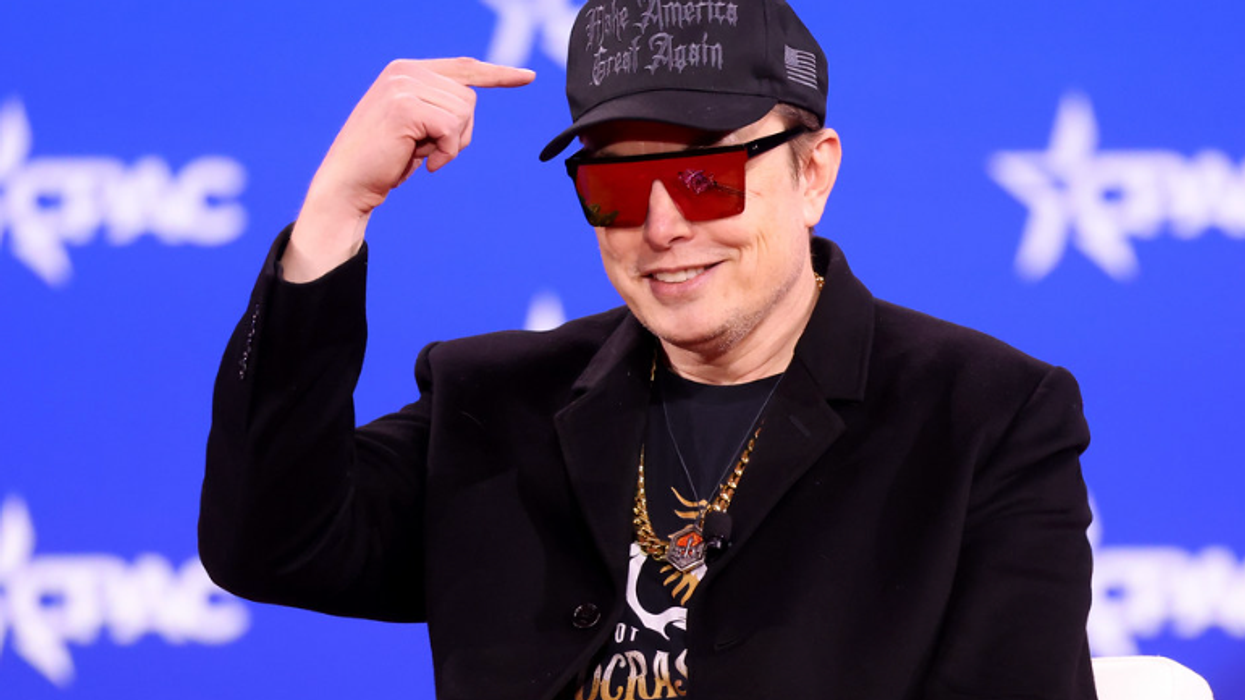
Billionaire Elon Musk is threatening to target members of Congress for defeat if they support President Donald Trump’s “One Big, Beautiful Bill” after campaigning on promises to cut government spending. Although Musk did not specifically name a party, no Democrat is expected to back the budget measure.

“Every member of Congress who campaigned on reducing government spending and then immediately voted for the biggest debt increase in history should hang their head in shame!” Musk wrote late Monday afternoon, as the Senate began voting on the legislation. “And they will lose their primary next year if it is the last thing I do on this Earth.”

Musk’s threat comes after his numerous attacks on the bill—which is critical to Trump’s agenda—based largely on its massive increases to the federal debt.

“It is obvious with the insane spending of this bill, which increases the debt ceiling by a record FIVE TRILLION DOLLARS that we live in a one-party country – the PORKY PIG PARTY!!” Musk declared one hour earlier. “Time for a new political party that actually cares about the people.”

New York magazine’s Intelligencer reported on Monday that Musk is “not done” fighting Trump.

“How can you call yourself the Freedom Caucus if you vote for a DEBT SLAVERY bill with the biggest debt ceiling increase in history?” Musk also wrote, lashing out at the far-right caucus, and mentioning two Members by name: Reps. Andy Harris of Maryland, the group’s chairman, and Chip Roy of Texas.

On Saturday, Musk had warned, “The latest Senate draft bill will destroy millions of jobs in America and cause immense strategic harm to our country! Utterly insane and destructive. It gives handouts to industries of the past while severely damaging industries of the future.”

“Polls show that this bill is political suicide for the Republican Party,” he also warned.

New York noted that “Trump, presumably, isn’t thrilled about Musk’s last-minute attempt to sink his signature legislative package. But so far he’s refrained from hitting back.”

Reprinted with permission from Alternet.

The Real Problem With Politicians Like Joni Ernst

The Real Problem With Politicians Like Joni Ernst

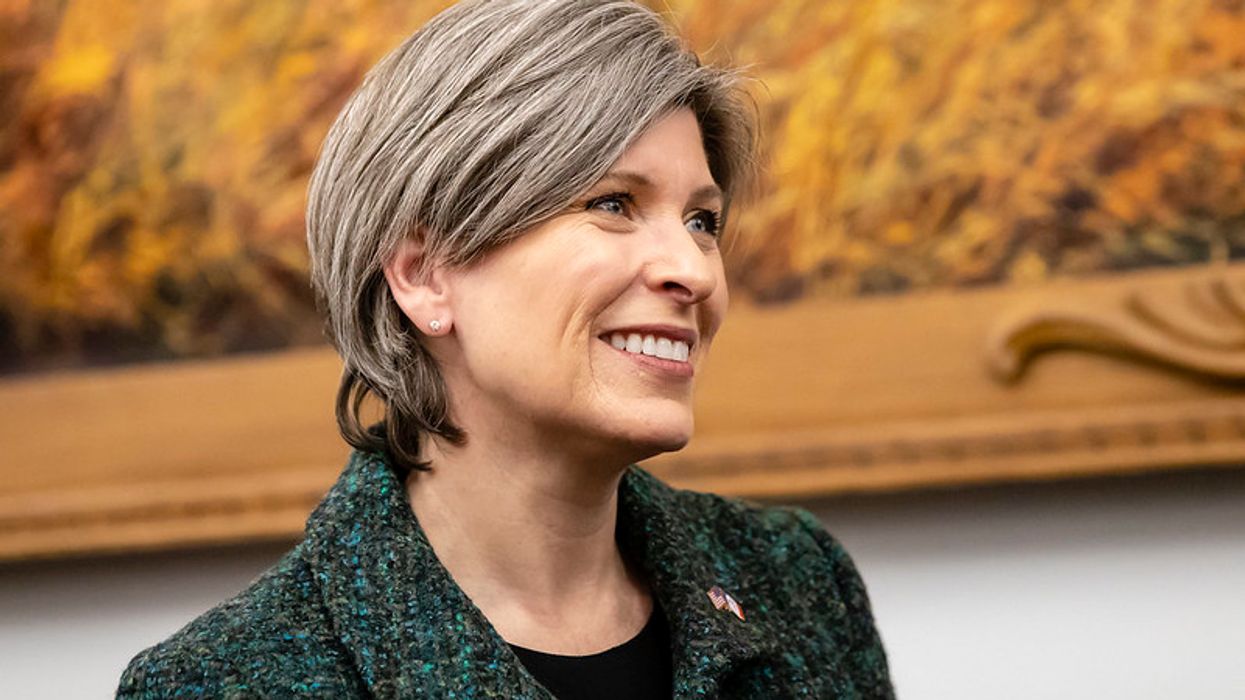
What do you do about Joni Ernst? The Republican senator from Iowa is being mocked by liberal media and beyond for her snarky response to a question about cuts in Medicaid: "We all are going to die."

That clumsy remark has been skewered for its insensitivity, but its greater significance lies in the bigger issue. Ernst answers to Donald Trump and no one else.

She is not alone in this. Bowing down to Trump's demands and caving in to MAGA threats have turned several Republicans against the people who voted for them.

Elon Musk has just called Trump's tax-and-spending bill a "disgusting abomination," thus freeing more Republicans to express their doubts. Some House members now express regrets about voting for it. Their excuse is that they didn't quite read it.

Think about that. They regard not doing their job as less politically damaging than owning up to their vote.

More than one in five Iowans receive Medicaid benefits. Rural hospitals will be especially hard hit by the cuts, but so will other medical centers serving large Medicaid populations. Even before the Republican House voted to chop over $700 billion from the program, 28 Iowa hospitals were at risk of closing, according to Becker's Hospital Review.

As the Senate considered the nomination of Pete Hegseth for Defense secretary, Ernst was riding high as one of the holdouts. A handful of other Senate Republicans wouldn't go along, giving Ernst the power to ditch a candidate known for sexual assault, drunkenness and abuse of corporate funds. Worse, Hegseth had little experience relevant to heading the department tasked with defending America from foreign attack. He was just a pretty boy on Fox News.

A combat veteran, Ernst made some impassioned objections to the appointment. But when the MAGA brigade threatened her reelection with a primary challenge, she forgot all about national security.

She explained her decision to cave as follows: "I will be supporting President Trump's pick for secretary of defense, Pete Hegseth." In other words, she was doing it for Trump.

American soldiers risk their lives for the country. Ernst was one. But then she changed shape into a politician who wouldn't even risk reelection, that is, a job, for the country.

In her service to Trump, she turned out to be not very good at politics either. Ernst's attempted recovery from her unfortunate "we are all going to die" comment was a not-very-clever video on Instagram, foolishly staged in a cemetery. Screwing her face up in a look of pain, she apologized for any misunderstanding. Then she made a failed stab at humor, saying, "I'm really, really glad that I did not have to bring up the subject of the Tooth Fairy as well."

She further insulted the audience by stating, "I made an incorrect assumption that everyone in the auditorium understood that, yes, we are all going to perish from this Earth." That also diverted attention from the issue at hand. The voters weren't demanding immortality, just medical care that would enable them to live longer, healthier lives.

If she really wanted fuller recovery from some awkward moments Ernst could have looked straight at the camera and say, "You know? I'm going to vote against a bill that would deprive so many of my constituents of the most basic health care." And if she wanted to nail down her conservative bona fides, she should have added, "I'm also not voting for tax cuts that blow up federal deficits by trillions."

Chances are excellent that she will vote for whatever Trump wants. That's the real problem with Joni Ernst. It's not a stray comment. It's straying from her duty to her constituents and the country.

Froma Harrop is an award winning journalist who covers politics, economics and culture. She has worked on the Reuters business desk, edited economics reports for The New York Times News Service and served on the Providence Journal editorial board.

Reprinted with permission from Creators.

Crypto Is A Criminal Enterprise That Now Controls Our Government

Crypto Is A Criminal Enterprise That Now Controls Our Government

I spent my very early years in Utica, New York. I was too young to know anything about the city’s reputation — I left when I was 8 — but I would later learn that it was known at the time as “Crime City,” because it was reportedly controlled by the Mob.

Stories of towns infiltrated by organized crime or ruled by blatantly corrupt politicians used to be fairly common. These days you hear tales of blatant personal corruption at the local level less often.

But who could have imagined raw corruption determining policy for the United States as a whole?

Unless there’s a sudden outbreak of conscience and rationality on Capitol Hill, Congress is about to pass, with (alas) wide bipartisan support, the GENIUS Act, which will legitimize and normalize “stablecoins” — cryptocurrency tokens that, unlike the original tokens such as Bitcoin and its imitators, are supposed to be protected against wild fluctuations in their purchasing power, because they’re backed by conventional assets like Treasury bills.

I’ll talk in a minute about why encouraging stablecoins is such a bad idea. But first let’s talk about crypto in general.

Crypto’s early enthusiasts may well have been idealists, imagining that they could create something that was better and safer than traditional money. But as the years have gone by — Bitcoin was introduced in 2009! — crypto keeps failing to find legitimate uses. There is, to a first approximation, nothing you can legally buy with crypto assets except other crypto assets.

The journalist Zeke Faux, who wrote “Number Go Up,” a portrait of the crypto industry, went around the world both studying cryptocurrencies and trying, when he could, to use them. In the end, he wrote, “Traveling around the world investigating crypto had given me a new appreciation for my Visa card.”

So why do ordinary people keep buying crypto? Part of the answer is intense marketing; as I mentioned in a recent post, my Venmo app (which is actually useful) is constantly trying to sell me crypto. But the most compelling explanation why people buy crypto is that there is a clear affinity between the psychology of buying crypto and the psychology of gambling. Retail crypto looks, in particular, a lot like the “numbers racket,” which siphoned millions of dollars from generations of working-class Americans until it was largely supplanted by state lotteries.

The numbers racket was illegal, but flourished anyway because the criminal organizations paid off police and politicians.

But they were pikers by today’s standards. According to Public Citizen, crypto companies accounted for almost half of all corporate spending during the 2024 election. Donald Trump and his family have made billions off the $Trump and $Melania “meme coins,” but I wouldn’t be surprised to learn that other politicians have also been the beneficiaries of crypto largesse.

And what the crypto industry wants out of today’s politicians, above all, is legislation that gives a veneer of legitimacy to stablecoins like Tether.

What is a stablecoin? It’s a digital token like Bitcoin — that is, an asset that “belongs” to whoever has the secret numerical key that unlocks it. But unlike Bitcoin, whose value in dollars fluctuates wildly day to day, a stablecoin is supposed to retain a fixed value in dollars. The stablecoin issuer maintains that stability by standing ready to buy its tokens back, holding reserves of conventional assets like Treasury bills for that purpose.

One way to think about this is that stablecoin issuers are like banks back in the days before the Civil War, when gold and silver coins were the only official forms of money. Many banks issued paper currency, which they promised to redeem for gold and silver coins on demand. Similarly, stablecoin firms issue tokens that they promise to redeem for dollars.

Antebellum banks that issued their own notes served a useful function, because the federal government wasn’t yet issuing its own paper currency. So bank notes played an important role in ordinary, legitimate commerce. For example, the $10 “Dixie” notes issued by the Citizens Bank of Louisiana (they were printed in French on one side) circulated widely across the lower Mississippi. Yet some of these early, unregulated banks were “wildcat banks”: banks that were specifically set up to defraud anyone foolish enough to accept their bank notes as payment.

So like antebellum bank notes, which were privately issued currencies supported by the claim that they were backed by gold and silver, stablecoins are privately issued tokens supported by the claim that they are backed by dollars. Unlike antebellum bank notes, however, stablecoins don’t serve any clearly useful function. They can’t be used to make ordinary purchases, and there’s nothing you can do with them that can’t be done more cheaply and more easily with debit cards, Venmo, Zelle, wire transfers etc. That is, why not just use dollars instead of tokens that are supposedly backed by dollars?

The answer to that question is that the ownership and disposition of stablecoins, unlike the ownership and distribution of bank deposits, is anonymous. This is a highly valuable feature for those who want to engage in money laundering, extortion, purchase of illegal drugs, and so on. In other words, the only economic reason for stablecoins is to facilitate criminal activity.

Do the politicians backing the GENIUS Act not understand this? Some of them probably do. As for the rest, well, it’s difficult to get someone to understand something when their campaign contributions and, in some cases, their personal wealth depends on their not understanding it.

But wait, there’s more. As I’ve already explained, stablecoin issuers are teched-up versions of antebellum banks, which were for the most part unregulated and, when they failed, provided no safety net for people who placed their money in their care (or accepted their notes.) As a result of this lack of regulation, the antebellum banking system repeatedly experienced “panics” — mass runs on banks perceived as risky.

Today, however, the federal government is deeply involved in banking, for very good reasons. After the devastating bank runs of the 1930s, in particular, officials realized that they needed to guarantee the value of deposits via the FDIC, while at the same time requiring banks to limit the kinds of risks they take. The goal was to limit the risk of financial crisis. While we did have a nasty crisis in 2008, that mostly involved “shadow banks” that evaded precautionary regulation. And stablecoins are, among other things, a new kind of shadow bank.

Recognizing that they could suffer the equivalent of self-fulfilling bank runs, the biggest stablecoin issuers are trying to reassure holders of their solvency by accumulating large reserves of U.S. government debt. But the flip side of this is that a run on stablecoins could turn into a run on U.S. government debt! That is, if the owners of stablecoins were to rush to convert their holdings into dollars, this would force stablecoin issuers into a fire sale of U.S. Treasury bills, driving up interest rates.

The fundamental point is that the growth and legitimation of stablecoins poses new risks to overall financial stability — all in the name of making it easier for criminals to do their business.

It's an amazing, depressing story, one that many readers may find hard to accept. But the truth is that when it comes to crypto (and other issues, but I’ll talk about them another day), Washington has become Utica on the Potomac: A town that, if not entirely controlled by the digital Mob, has at least been largely bought and paid for.

Paul Krugman is a Nobel Prize-winning economist and former professor at MIT and Princeton who now teaches at the City University of New York's Graduate Center. From 2000 to 2024, he wrote a column for The New York Times. Please consider subscribing to his Substack, where he now posts almost every day.

Reprinted with permission from Substack.

Donald Trump Jr.

Don Jr. Accused Of Killing Yet Another Protected Animal

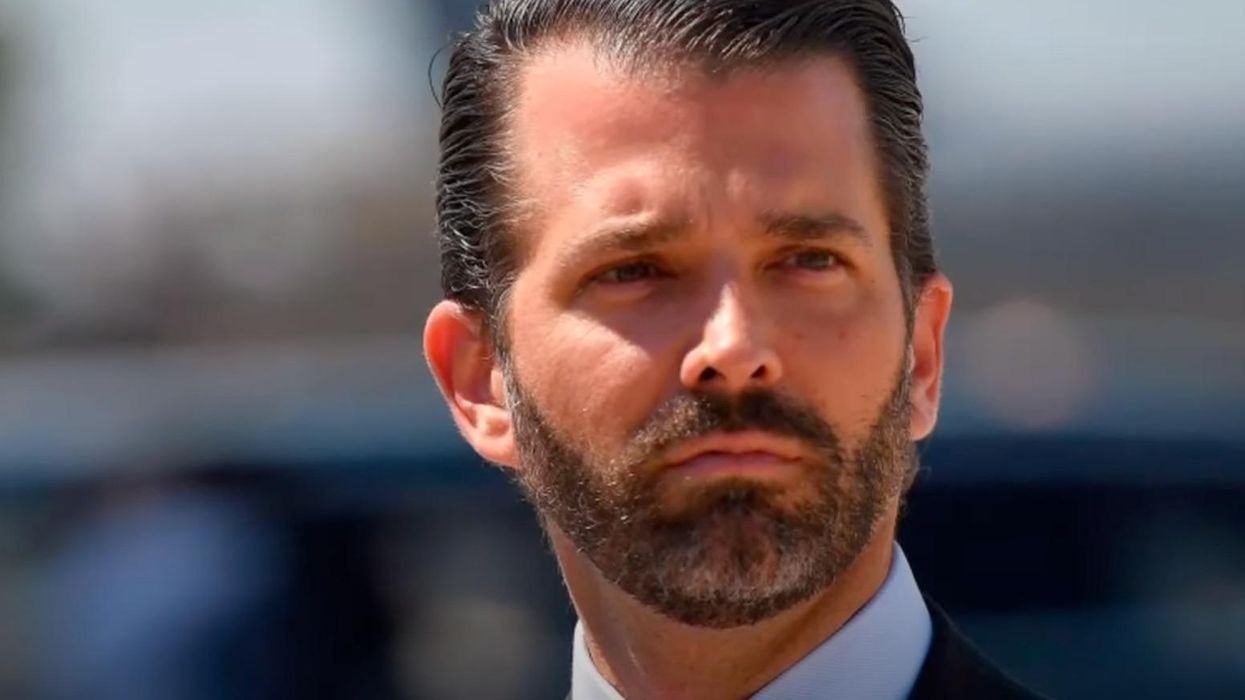
Italian politician Andrea Zanoni accused Donald Trump Jr. of killing a protected species of duck while on a hunting trip near Venice in December.

Zanoni reportedly told authorities that a video shows Trump Jr. with what appears to be the dead body of a rare ruddy shelduck.

“This is actually a rather uncommon duck for the area. Not even sure what it is in English, but incredible shoot,” he says in the video.

“This is a species protected throughout Europe by the EU birds directive and of course by Italian law … [which] criminally punishes its killing and possession,” Zanoni said.

“The bird in the video is a female casarca, or ruddy shelduck. It’s highly protected and under Italian law you cannot hunt them,” Roberto Tinarelli, president of the Association of Ornithologists in Emilia-Romagna, told The Times of London.

Trump Jr. has a history of hunting questionable game. In 2019, he made headlines during a trip to Mongolia, where he shot an endangered argalis mountain sheep. It was later reported that U.S. taxpayers footed the bill for the rare animal hunting extravaganza.

The rich do not believe in laws—at least when applying them to themselves—and this clearly extends to recreational pursuits like hunting. Trump Jr.’s predilection for shady big-game hunting is shared by fellow Republican and former Montana Gov. Greg Gianforte, who also has a history of dubious hunting practices.

The general irresponsibility of Trump Jr.’s actions are reminiscent of Secretary of Health and Human Services nominee Robert F. Kennedy Jr., whose bizarre bear “prank” epitomizes the kind of corrupt privilege and glib immorality embodied by the wealthy.

Reprinted with permission from Daily Kos.

Shop our Store

Headlines

Editor's Blog

Corona Virus

Trending

World