Tag: profits
Big Pharma

How Trump Is Hustling Consumers To Protect Pharma's Excess Profits

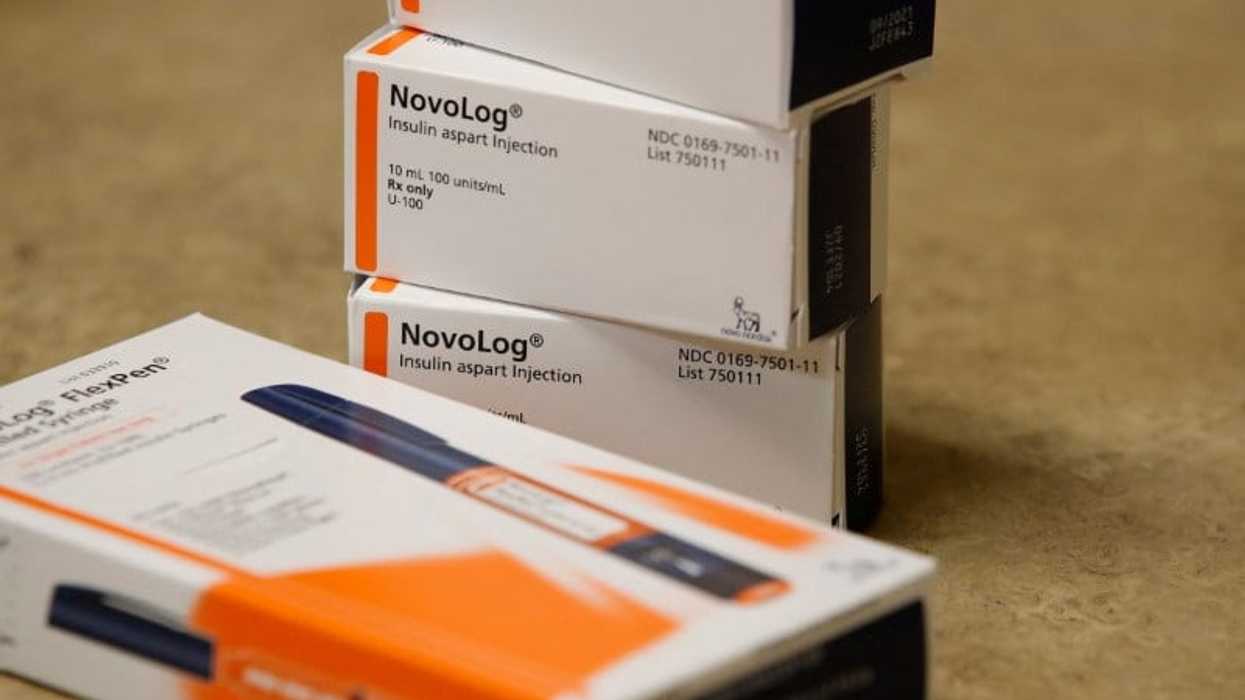
Pegging drug prices to rates paid abroad, a great idea as proposed during the first Trump administration, is getting a second life — this time as a tool for preserving Big Pharma’s earnings power.

The president on Thursday sent letters to the CEOs of every major drug company demanding they sell their products in the U.S. at what he called “most favored nation” (MFN) prices. The original rule, proposed in late 2020, set those prices at the average prices paid by more than a dozen advanced industrial economies. The letter only calls for equalization of prices without specifying what those prices should be.

Trump gave the companies 60 days to comply. The move came about 85 days after he signed an executive order demanding drug companies lower their prices or face the consequences.

International indexing, or reference pricing as it is sometimes called, would be meaningful if it left foreign prices alone. But reading between the lines of Trump’s latest dictat, the real goal is to get the reference group — mostly Europeans — to raise their prices.

This would effectively:

  1. Raise the collective MFN price for U.S. consumers above what it would be had foreign prices stayed low; and
  2. Undermine policies used by foreign countries to set prices based on drugs’ realistic medical value.

From the drug industry’s perspective, this is the best of all possible worlds: They get to maintain more of their current sales and profitability levels while being freed from the shackles of other countries using medical value to negotiate reasonable prices.

Industry executives were quick to notice the change. During an earnings call on Friday morning, Regeneron CEO Leonard Schliefer, one of the letter’s recipients, agreed with the president that foreigners need to pay more for drugs before U.S. consumers can pay less. “Europeans are not paying their fair share of innovation, and some way that needs to change,” he said.

However, he expressed concern about the letter’s demand that industry engage in a “collaborative effort towards achieving global pricing parity” as “the most effective path for companies.” In other words, Trump wants drug companies to demand or impose higher prices.

It has “to be done at a trade and policy level, because it can’t be done at an individual company level,” Schliefer countered. “The solution is simply not to lower cost prices in the U.S. without some equilibrating in Europe, because then there’ll be no innovation.”

Trump echoed the industry’s rhetoric. He claimed in his letter that foreigners are “getting a free ride on American innovation.” The reality is that foreigners are paying what are closer to appropriate prices, while the U.S. pays too much.

The drug industry remains highly profitable under the current pricing structure. They are not losing money in Europe, Canada or Japan. The higher prices paid in the U.S. mostly go to support the industry’s massive direct-to-physician marketing budgets, direct-to-consumer advertising and the high-priced lawyers who engage in patent manipulation to prevent generic competition. These behaviors are enabled by U.S. policy, and are either banned or discouraged abroad.

Drug companies could choose to reduce those marketing budgets should U.S. prices fall to the international pricing levels now in existence. Unfortunately, past experience shows individual companies in the industry cuts R&D just as much as they cut other budgets when revenue falls.

At the end of his letter, Trump threatened to implement international reference pricing if the drug companies failed to win higher prices in those countries. Given the small chance that the companies will succeed in those negotiations, much less move unilaterally to raise prices (which will result in many countries simply saying no thanks), what we’ll see after 60 days will be either a watered down proposed rule or another threatening letter.

The most likely outcome over the long-term? Here’s my guess: Another pilot project that won’t put a dent in industry revenue. Why? There is bipartisan support in Congress for not jeopardizing “innovation,” even though the Congressional Budget Office estimated the drug price negotiations enacted by the Biden administration will have almost no impact on the number of new drugs coming to market.

Merrill Goozner is a former editor of Modern Healthcare, where he wrote a weekly column. He is also a former reporter for The Chicago Tribune and professor of business journalism at New York University.

Reprinted with permission from Gooznews Substack. Please visit and consider subscribing.


Tesla Musk cybertruck

Tesla Admits Musk's Politics Behind 71% Revenue Crash

On automaker Tesla's first quarterly earnings call of 2025, the electric vehicle manufacturer made a stunning admission that public animus toward CEO Elon Musk has directly contributed to its abysmal profits.

The New York Times reported Tuesday that Tesla's first-quarter revenue was just $409 million, which is a 71 percent decrease from the $1.4 billion the company made in the first three months of 2024. And the company told investors on the call that the significant decrease in sales is partially due to "changing political sentiment" that "could have a meaningful impact on demand for our products in the near term" — an apparent reference to Musk.

Musk's public role in President Donald Trump's administration has resulted in widespread protests at Tesla dealerships across the country as part of the "Tesla Takedown" movement. That movement — launched by actor Alex Winter of the Bill & Ted franchise — has also caught on around the world, with protesters in Europe and Australia also demonstrating outside of Tesla dealerships in response to Musk's role in the Trump White House.

The electric vehicle company is also taking a beating as a result of Chinese competitors like BYD, which saw its sales jump by roughly 60 percent in the first three months of 2025. Additionally, established automakers like General Motors, Ford and BMW, along with newer companies like Rivian and Polestar have made a dent in Tesla's sales by rolling out competing vehicles that could be seen as more appealing to liberal and centrist buyers.

Musk has signaled that he intends to leave the Trump administration soon, after his Department of Government Efficiency (DOGE) — with Trump's blessing – has made deep cuts to multiple federal agencies and fired thousands of public workers. He indicated multiple times that he sought to cut Social Security to the tune of hundreds of billions of dollars, alleging without evidence that the agency was illegally giving money to undocumented immigrants and helping them register to vote (undocumented immigrants do not qualify for Social Security and voting while undocumented is already a felony crime).

But even if Musk walks away from his role in the Trump White House, Tesla investors may still be eager to oust him as the company's CEO. Last month, a longtime Tesla investor called for Musk to resign as CEO or be dismissed by the company's board.

"The company's reputation has just been destroyed by Elon Musk," investor Ross Gerber told Sky News in March. "Sales are plummeting so, yeah, it's a crisis. You literally can't sell the best product in the marketplace because the CEO is so divisive."

Reprinted with permission from Alternet.

New York Times To Slash 100 Newsroom Jobs In Streamlining

New York Times To Slash 100 Newsroom Jobs In Streamlining

New York (AFP) — The New York Times said Wednesday it plans to cut 100 newsroom jobs in the latest move by the prestigious daily to adapt to industry upheaval.

“The job losses are necessary to control our costs and to allow us to continue to invest in the digital future of The New York Times, but we know that they will be painful both for the individuals affected and for their colleagues,” according to a note to employees cited by the daily.

The note from publisher Arthur Sulzberger and chief executive Mark Thompson also said that a mobile app dedicated to opinion content was shutting down because it lacked enough subscribers.

The job cuts represent around 7.5 percent of the newsroom staff of 1,330 — which according to the newspaper is a record high. The Times has been adding jobs over the past year for online and video news initiatives.

The Times will be offering buyouts to journalists and will resort to layoffs if it cannot get enough people to leave voluntarily, according to the note.

The daily has been struggling to remain profitable in recent years and has been pushing harder to emphasize digital content as print subscriptions decline. The Times has also been selling off “non-core” assets including the Boston Globe newspaper and websites unrelated to its news operations.

But even as the Times shifts its focus, it is being challenged by a new breed of all-digital news operations with lower costs.

Executive editor Dean Baquet, in a separate note to the staff said he would use the opportunity “to seriously reconsider some of what we do — from the number of sections we produce to the amount we spend on freelance content.”

The news comes following a tumultuous period which saw the dismissal of executive editor Jill Abramson, who was replaced by Baquet.

Abramson’s dismissal in May unleashed a polemic in the media world amid speculation that she was fired for complaining about being paid less than her male counterparts — an allegation denied by the company.

In the most recent quarter, the New York Time Co. reported a sharp drop in profits as lower advertising revenues offset gains in digital subscriptions.

Net profit for the second quarter fell to $9.2 million from $20.1 million in the same period a year ago. Total revenues fell slightly to $389 million, with circulation revenues up 1.4 percent and ad revenues down 4.1 percent.

The bottom line was also hurt by higher operating costs, which the company attributed to increased investments in boosting the digital profile of the prestigious newspaper publisher.

Digital advertising revenues were up 3.4 percent but that failed to offset a 6.6 percent drop in print advertising revenue.

AFP Photo/Ramin Talaie

Interested in more national and economics news? Sign up for our daily email newsletter!

ExxonMobil Profits Up Despite Lower Oil And Gas Output

ExxonMobil Profits Up Despite Lower Oil And Gas Output

New York (AFP) — U.S. oil giant ExxonMobil Thursday reported higher second-quarter profits despite pumping less oil and gas than it did a year ago.

Exxon, the biggest U.S. oil company and the second-largest U.S. company in terms of market capitalization after Apple, said earnings came in at $8.8 billion, up 28 percent from the year-ago level.

Production of oil and gas declined 5.7 percent, but profitability in the exploration and production segment rose 25 percent to $7.9 billion. Exxon said “higher realizations” for its output added $580 million.

Lower oil and gas volumes is often seen as a red flag in the oil business. But Exxon has emphasized that it will not sacrifice profitability for higher output, meaning it will not produce oilfields unless they are highly profitable.

Exxon’s downstream earnings rose nearly 80 percent to $711 million, while chemicals earnings rose 11.2 percent to $841 million.

“ExxonMobil’s financial results were achieved through strong operational performance and portfolio management,” said chief executive Rex Tillerson.

“We continue to enhance shareholder value by funding capital projects and delivering robust shareholder returns through dividends and share purchases.”

Results translated into earnings per share of $2.05, 19 cents above analyst forecasts.

Revenues rose 4.7 percent to $111.65 billion, above the $108.38 billion analyst forecast.

Shares of the Dow component fell 1.4 percent to $101.85 in pre-market trade.

AFP Photo/Karen Bleier

Interested in economic news? Sign up for our daily email newsletter!

Shop our Store

Headlines

Editor's Blog

Corona Virus

Trending

World