Tag: recovery
Joe Biden

Democrats Can Recover From A Bad Debate (If They Make The Effort)

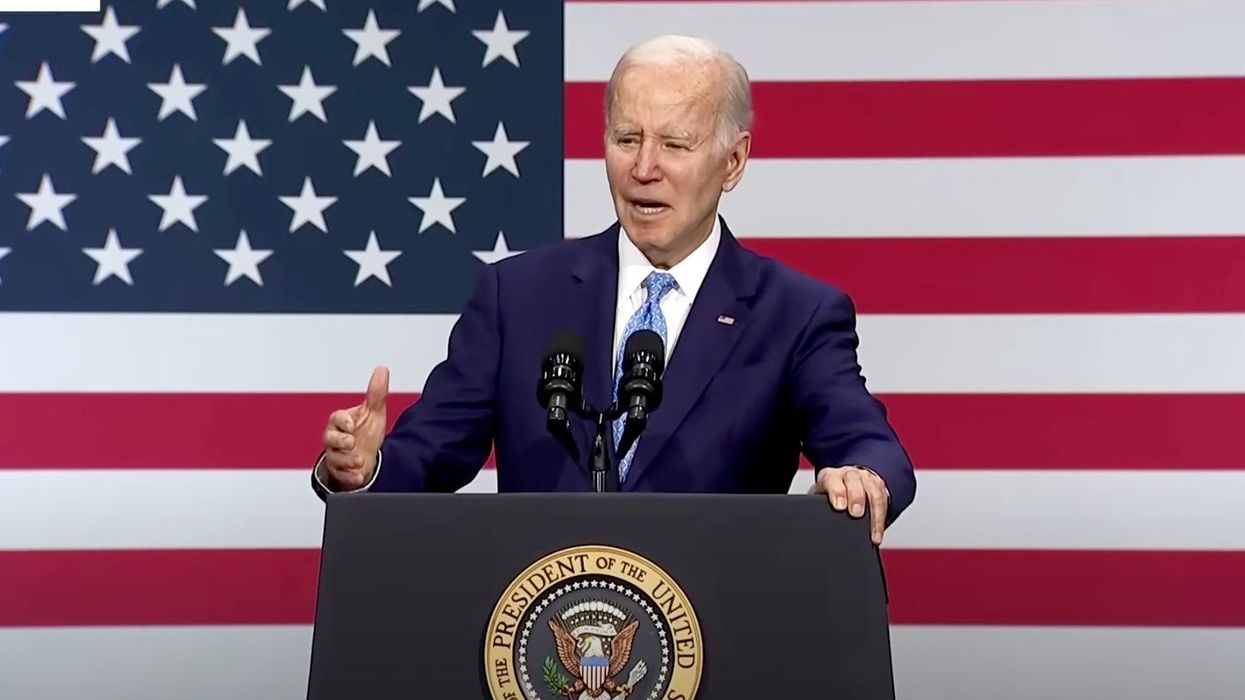
Bad debates happen, as Joe Biden's supporters say. But that wasn't a debate. Biden stood there in an apparent cloud of fatigue, while Donald Trump lied his way throughout, ignoring the uncomfortable questions, of which there were several.

Biden says he's staying in the race, and for Democrats, that should be that. Here's what his campaign should do:

Let the ads do the talking. Biden has the money to run a marathon of ads touting his achievements and highlighting Trump's lack of same.

Compare Biden's bipartisan infrastructure bill to Trump's plodding parade of infrastructure weeks that the former president couldn't get into first gear. Let's see the bridges under repair, lead pipes being replaced, high-speed internet being expanded and airports getting dragged into this century.

We don't just elect a president; we elect an administration. For example, Biden's super competent Commerce secretary, Gina Raimondo, is overseeing the CHIPS Act, putting America on track to excel in the semiconductor race with China.

On a related topic, Biden has presided over the creation of 15 million jobs. The U.S. added 272,000 jobs in May alone, according to J.P. Morgan, "sharply beating expectations."

Stock prices under Biden are hitting records never seen in Trump's term. The numbers don't lie.

As for national security, Trump ran through five secretaries of Defense. One of them, Gen. James Mattis, said "Donald Trump is the first president in my lifetime who does not try to unite the American people — does not even pretend to try. Instead, he tries to divide us."

Flatter veterans as he tries, Trump can't hide his contempt for Americans who serve in the military. Asked in the debate about the crude things he's said on this subject, Trump lied about not having said them.

It's true that Trump didn't want to visit the graves of American soldiers buried at Aisne-Marne American Cemetery in France, saying, "Why should I go to that cemetery? It's filled with losers." And it's true that he referred to the 1,800 U.S. Marines killed in World War I's Battle of Belleau Wood as "suckers" and "losers."

The source of that quote? A retired four-star general.

Trump went to Arlington Cemetery with his secretary of Homeland Security, John Kelly, to see the gravesite of Kelly's son, Robert, who was killed in Afghanistan. Trump surveyed the field of buried U.S. servicemen and told Kelly, "I don't get it. What was in it for them?"

As president, Trump called former President George H.W. Bush a "loser" for being shot down as a Navy pilot in World War II. And his denigration of war hero John McCain, mocking the sacrifices he made was, simply put, disgusting.

Kelly, himself a retired four-star Marine Corps general, said this about Trump: "The depths of his dishonesty is just astounding to me. The dishonesty, the transactional nature of every relationship, though it's more pathetic than anything else. He is the most flawed person I have ever met in my life."

Biden's ads could write themselves.

On the subject of aging, Democrats should fight fire with a firestorm. Trump is already running ads of Biden looking feeble. Run ads of Trump not only sounding utterly incoherent, but also old. There are lots of videos showing Trump barely able to walk on stage without help.

There's no sugar-coating Biden's dismal debate performance. And there's no denying that he has slowed down with age. But there's also no doubt that his accomplishments put Trump's in the shade. The Democrats should both fight and explain.

Americans love stories of defeat turned into victory. Bill Clinton did fine as "The Comeback Kid." Right? Let's call Biden "The Comeback Elder."

Reprinted with permission from Creators.

Aftershocks Keep Nepalese On Edge, But Rescue Provides Glint Of Hope

Aftershocks Keep Nepalese On Edge, But Rescue Provides Glint Of Hope

By Julie Makinen and Shashank Bengali, Los Angeles Times (TNS)

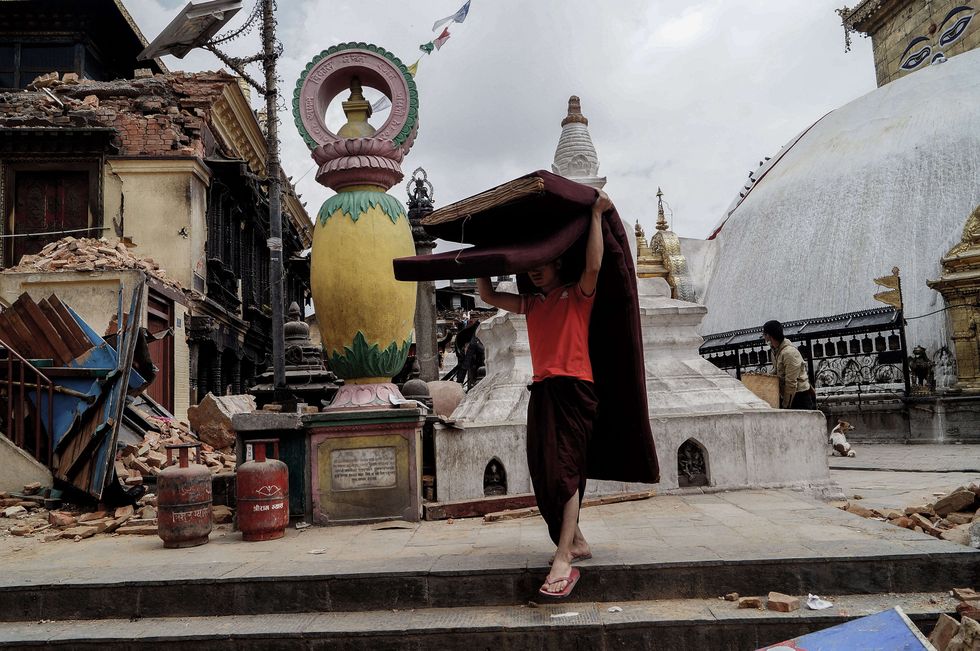
KATHMANDU, Nepal — A rare jolt of good news brought cheers to earthquake survivors Thursday, even as aftershocks continued to rattle nerves and the government said the death toll had risen to 5,489 in Nepal alone.

The number of injured closed in on 11,000, officials said, a day in which the gloomy news was overshadowed, if only for the moment, by the rescue of a 15-year-boy, pulled alive from the rubble of a hotel.

Aid continued to flow into hard-hit areas northwest of the capital. In Gorkha, near the epicenter, trucks delivering relief supplies plied the winding mountain roads and Swiss and Indian doctors scurried about the bare brick main hospital — signs that the pace of humanitarian assistance was beginning to pick up.

The number of dead and wounded has been rising steadily as relief teams access more villages and fresh patients reach medical facilities. The government has announced that it will provide about $1,000 to families of the deceased.

But an estimated 75,000 people were still camping outside in the Katmandu Valley alone, the U.N. said, either because their homes are uninhabitable or because people feared returning to their cracked structures. Engineering professors from a local university announced Thursday that they were forming an 18-member task force to help evaluate the structural integrity of buildings in the city.

With officials facing criticism over a slow response to the crisis, Bijan Pant, an adviser to Prime Minister Sushil Koirala, flew into Gorkha on a helicopter and toured the hospital, which was not damaged in the quake. It was the first time a senior government official had visited the area, where the death toll stands at 405.

“It’s a huge project,” Pant said. Asked whether the death toll will rise, he said: “That is for sure. We haven’t been able to get into the center of these areas. We’ve only gone to the periphery.”

In a dirt soccer field where the adviser’s helicopter was parked, quake victims said they were not impressed by the official visit.

“It’s just a formality,” said Prem Dhitar, whose home was damaged in the magnitude-7.8 temblor.

As many as five families were sharing a single tent, he said, and food and water shortages were developing in nearby villages. “Aid is coming but it’s being distributed haphazardly,” Dhitar said. “We have major needs.”

Around midday, three patients — including a teenage boy with apparently serious leg injuries — arrived at the hospital in an ambulance from the village of Panch Kuwa Deurali, a short car ride away. Swiss relief workers and Nepalese police officers loaded one woman onto a stretcher, covering her grimacing face with a scarf to shield her from the sharp sunlight.

Boxes of plaster, IV bags, oxygen tanks, and other medical supplies were piled up outside the main ward, but beds were scarce. Several recently arrived patients lay on blue mattresses in the concrete courtyard, including Chij Maya Gurung, 35, who had arrived by helicopter a day earlier with injuries to her leg, hand and face.

She had survived the collapse of her home in the village of Simjung, but it had claimed the life of her seven-year-old son and two other relatives who were inside. All 20 houses in the village were destroyed in the quake. For three nights, she slept in a cornfield because there were no tents, said a cousin, Dhan Maya Gurung.

“No one was there to help her,” she said as Gurung’s daughters, ten and nine, knelt beside her, quietly combing their hair.

Hospital workers said they had treated 260 injury victims through Wednesday, 11 of whom had not survived. The vast majority suffered head injuries and fractures.

The 15-year-old boy rescued in Katmandu, Pemba Lama, had been entombed on the ground floor of a hotel where he worked. A USAID disaster response team comprising search and rescue specialists from the Los Angeles County Fire Department and Virginia’s Fairfax County Fire Department, along with Nepalese Armed Police Force units, helped extricate the teenager.

In an interview with the Los Angeles Times from an Israeli field hospital where he was being treated for dehydration and scrapes, he said he survived by eating some ghee — clarified butter — that he found in the space where he was trapped.

Photo: Ivan Castaneira via Zuma Press/TNS

Search Efforts Continue As Death Toll For Nepal’s Earthquake Tops 4,600

Search Efforts Continue As Death Toll For Nepal’s Earthquake Tops 4,600

By Molly Hennessy-Fiske, Los Angeles Times (TNS)

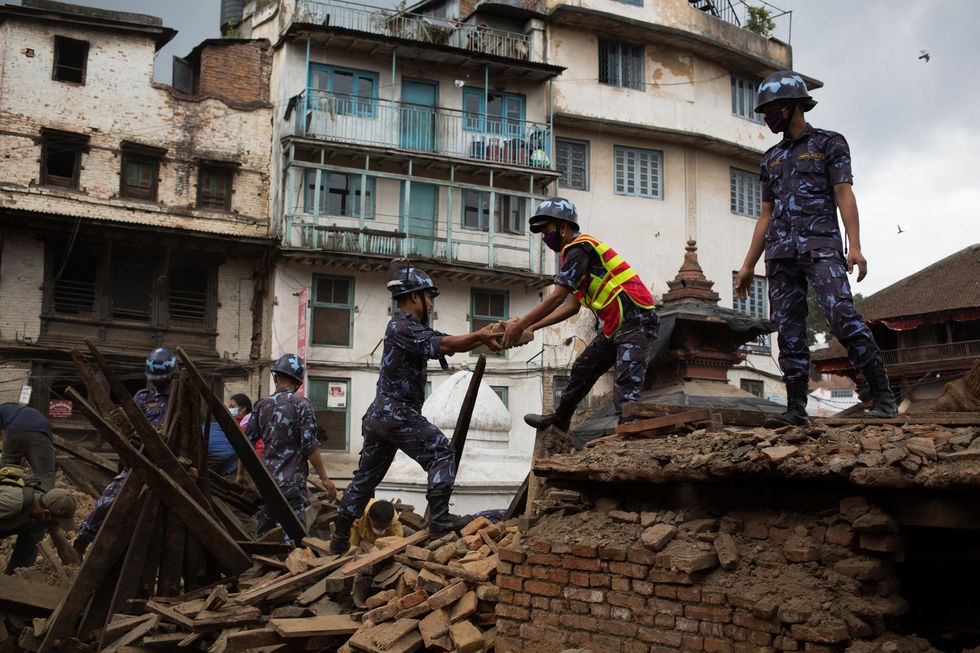
KATHMANDU, Nepal — With the death toll from Nepal’s massive earthquake topping 4,600 on Tuesday, police, soldiers, and a Chinese rescue team searched for signs of another body as construction equipment dug deep into the wreckage of the Budget Hotel in Kathmandu.

Police said about 25 people were in the five-story brick hotel Saturday when the 7.8 quake struck. At least 15 fled to safety, while one was saved from the rubble that day.

Searchers have since recovered nine bodies. On Tuesday, they were still looking for at least one more.

The missing hotel receptionist was a friend of Parwan Yadav, 21, a college student waiting anxiously among the crowd watching the recovery effort.

“In many places, people are missing still,” Yadav said.

Three days after the earthquake struck, the death toll in Nepal reached 4,680 with more than 9,000 people injured, according to a government spokesman. At least 10 of the dead were foreigners, including four Americans.

Scores more were killed in neighboring India and China’s Tibet region.

The quake triggered an avalanche on Mount Everest that killed at least 18 climbers and guides. The last of those stranded at camps on the world’s highest mountain have been airlifted to safety, mountaineering groups reported Tuesday.

In an address to the nation, Nepal’s Prime Minister Sushil Koirala said the country would observe three days of mourning for the victims beginning Tuesday.

Koirala said the government would learn from its mistakes and institutionalize disaster management. In the meantime, he said authorities were making maximum use of the country’s limited resources and thanked world leaders for rushing to help them.

Aid has poured into Nepal from more than 15 nations. Rescue teams and army trucks sped past the hotel Tuesday, and helicopters aiding the effort flew overhead.

Much of the recovery, however, still appeared to be hampered by shortages, outages, storms, and the ongoing uncertainty that comes with repeated aftershocks.

About eight million people have been affected by the quake and 1.4 million are in need of food, the United Nations said Tuesday.

A 130-member U.S. disaster response team arrived during the day to assist with the recovery efforts, bringing 45 tons of cargo. The group includes urban search and rescue teams from the counties of Los Angeles and Fairfax, Va.

The United States is providing ten million dollars in humanitarian assistance to Nepal, which now has 16 camps for internally displaced persons in the Kathmandu Valley.

Near the epicenter of the earthquake — in Gorkha, about 90 miles northwest of Kathmandu, the capital — helicopters arrived Tuesday to deliver emergency supplies and carry the injured back to clinics, according to news reports.

Gorkha has become a staging area for those sending rescuers and supplies to remote mountain areas, some reachable only by air after roads were blocked by landslides. At the Katmandu airport, helicopters arrived with both foreign trekkers and local villagers plucked from quake-struck areas.

Another landslide Tuesday in an area north of the capital popular with trekkers left 200 people unaccounted for, including ten Nepalese soldiers, the area’s chief district officer told PahiloPost, a Nepalese-language news site.

The Nepalese government created a hotline Tuesday to route aid where it’s most needed after residents complained they were not receiving relief fast enough.

“There is no power since Saturday afternoon, and we have only received one tarpaulin sheet where 40 families have been cramped for the last three nights,” said Bhumaeshwor Ranjit of Bhaktapur, a town six miles east of the capital, where more than 200 people were reported killed in the earthquake.

His house is among dozens reduced to mounds of bricks and splintered wood in the historic town known for its temples.

“Where is all the relief and aid material we keep hearing the authorities say they have received?” he asked Tuesday while examining earthquake damage to his house. “Looks like we will die from the absence of food and water rather than the earthquake tremors.”

Hospitals serving the injured in Kathmandu and neighboring areas also were starting to worry about shortages.

“Lots of injured people coming here require surgeries, but we are now running short of surgical equipment and medicine,” Dr. Rajendra Koju told state-run radio, speaking of Dhulikhel Hospital, one of the few well-equipped medical facilities east of Kathmandu.

Government officials said they were doing the best they could under difficult circumstances.

Bodha Raj Dahal, 45, works for the country’s social welfare council in Kathmandu, where some of those who fled their homes after the earthquake have camped in tents on the lawn.

On Tuesday, a tanker truck arrived and Dahal supervised the distribution of water to the displaced. He said the government agency also has distributed food to about 1,000 people camped in the gardens.

“We are trying, but how can we manage this problem?” Dahal asked. “We have no choice. We have to manage it.”

Dahal said agency officials have planned to support the encampment for another ten days. But he expects it will last longer than that. The campers have no intention of leaving. And more have been arriving on foot from a mile away, he said, unwilling to stay in their homes in the wake of persistent aftershocks.

Yadav, the college student, pitched a tent Saturday with his 18-year-old twin sisters and classmates, some of whom lost their homes.

Sagar Bhatta, 22, a business student, said his family lost their home in Gorkha. It has been raining there for days, and many people do not have tents and food, he said.

“The government can’t even provide tents — we are managing ourselves,” Yadav said.

He and his sisters were among the better off. Their home was still standing, with no major cracks. They had planned to return there Tuesday. But Yadav, a physics major, said his sisters were alarmed by aftershocks overnight and refused to go back.

Members of his group said they have not received food from the government. Rice and noodles are in short supply, available only at a 50 percent markup, they said. There is no electricity in the camp, so they eat their meals from makeshift cook stoves. Garbage cans were overflowing.

Most nearby businesses were still shuttered — including the Pizza Hut and Ice Cream Bell on Durbar Marg, a tourist thoroughfare still littered in places with broken glass from shattered store windows. Some of the hotels that had opened lost power and by evening did not even have functioning generators.

Standing outside his storefront there, Sri Rajbhandari said he had tried unsuccessfully to reopen. But 18 of his 20 staff members lost their homes in the quake. One employee called to report that his entire village had been leveled.

“They are very desperate. They don’t even have tents there; they are living in open space. The entire village is flattened,” said Rajbhandari, who runs a medical supplies business. “It’s very difficult for the staffs. They’re facing problems with food, problems with water. Water is a big crisis now.”

Rajbhandari said he was unable to find vegetables at the market Tuesday.

“The international community coming here is very important,” he said. “The government alone cannot do it. This type of crisis the government hasn’t faced before.”

Police Sargent Inspector Roshan Shah, who was supervising the Budget Hotel recovery effort, said they had brought in different types of construction equipment, a forensic expert from the Netherlands, and now the Chinese search and rescue team to help find those trapped and killed.

“We tried lots of things and lots of things didn’t work,” Shah said as he stood at the edge of the pit of debris under gray skies threatening rain.

Suddenly, a giant construction shovel stopped — they had found something.

It was not a body. Instead the scoop dropped a backpacker’s bag at the feet of police and soldiers. Recovery workers added it to a stack they plan to return to the embassies of the dead and missing.

Some of the contents spilled out into the dirt: a deck of playing cards, a red Lululemon yoga store bag, a sleeping bag still neatly packed and a Budget Hotel receipt.

As Yadav and others looked on, the shovel went back to work for a few minutes — until a downpour and hailstorm forced police and soldiers to abandon work and seek cover under the remains of the hotel gate.

Sheltering with them, Yadav thought of his sisters and friends back in the now waterlogged tents, and so many others across the country.
“This will be more problems,” he said.

Photo: Sunil Pradhan via NurPhoto/Zuma Press/TNS

U.S Economy Grew At Robust 4.2 Percent Pace In Second Quarter

U.S Economy Grew At Robust 4.2 Percent Pace In Second Quarter

Washington (AFP) – The U.S. Commerce Department raised its estimate for U.S. economic growth to 4.2 percent Thursday, confirming the solid rebound from the first quarter’s steep contraction.

The department said a fuller set of data showed a higher level of fixed investment by companies and the government, contributing to the 0.2 point upward revision from July’s number.

It also showed strong gains in corporate profits, possibly boosting the prospects for more hiring that would remove some of the persistent slack in the labor market.

Analysts said the revision improved the picture of the U.S. economy for the rest of 2014, when added to recent monthly data on industry, hiring and general confidence.

“While the impact of the revision on the IHS forecast is relatively small, the changes have positive implications for growth in the second half of this year,” said Doug Handler at economic consultancy IHS Global Insight.

The 4.2 percent annual pace in the April-June period followed a 2.1 percent contraction in the first quarter, the consequence mainly of unusually severe winter storms that had battered the eastern half of the United States, depressing economic activity.

In the second quarter, the revised data showed pickups in consumer spending and business investment, and improved government spending and home building.

On the other hand, gross domestic product was dampened by an increase in imports, not surprising given the rebound in activity after the first quarter, analysts say.

The new report left its key inflation indicator unchanged: the price index for gross domestic purchases stayed at 1.9 percent, up from 1.4 percent in the first quarter.

The threat, or lack of, inflation has been key to debates over whether the Federal Reserve needs to tighten monetary policy sooner rather than later to prevent price increases from getting out of hand.

The report also showed that corporate profits and spending mostly recovered from the first quarter downturn.

Jay Morelock of FTN Financial called that “a welcome development that will hopefully lead to hiring in the second half of the year.”

“Once wages follow the upward trend in business spending, a prosperous cycle could lift the economy toward the 3.0 percent trend that remains a fixture of consensus forecasts and stock price assumptions.”

The economy’s rebound has not been uniform, as Federal Reserve Chair Janet Yellen has repeatedly pointed out.

Though job creation has picked up, there remain a huge number of people underemployed or out of the labor market, and wages have remained fairly flat in the recovery from the 2008-2009 recession.

Jim O’Sullivan of High Frequency Economics pointed out that the revised data showed lower nominal growth in wages in the second quarter than previously estimated, 4.7 percent year-on-year instead of 4.9 percent.

However, he said, “the data suggest that average hourly earnings are understating the extent to which tightness in the labor market is putting upward pressure on costs and boosting consumer spending power.”

Economists took the report and other fresh data — including a pickup in pending home sales in July that demonstrated the resilience of the housing comeback — and projected that the economy in the third quarter would grow at pace of 3.0 percent or better. IHS stuck to its high 3.6 percent forecast.

Markets, which after a runup to record levels have been looking for any sign of growth at a pace that would ignite inflation and force the Fed to raise rates, fell slightly. The S&P 500 was down 0.2 percent around midday; Treasury bond prices fell only marginally.

AFP Photo/Mandel Ngan

Shop our Store

Headlines

Editor's Blog

Corona Virus

Trending

World