Tag: science
As Trump Regime Attacks Science, China Is Set To Dominate Future Research

As Trump Regime Attacks Science, China Is Set To Dominate Future Research

This week, two items related to the future of medical research, and the prices that Americans will pay for drugs, caught my eye.

First, the Trump regime’s proposed budget for 2026 will slash $18 billion or nearly 40 percent from the 26 institutes that make up the National Institutes of Health. The National Cancer Institute and the National Institute for Allergy and Infectious Diseases, both of which have been on the forefront of medical innovation over the past half century, are slated for nearly one-third of those cuts, reducing their budgets (unadjusted for inflation) to levels not seen since 2003.

Second, U.S.-based Bristol-Myers Squibb on Monday struck a $11 billion deal with Germany-based BioNTech to co-develop a drug aimed at fighting advanced lung, breast and other solid-tumor cancers. The drug candidate, now in clinical trials, was developed in China using technologies originally invented by scientists working on NIH grants.

Viewed together, these events exemplify how the scientific infrastructure for medical innovation and the scientists involved in discovery are gradually moving abroad. This trend will be expedited by the Trump regime’s incessant attacks on U.S. universities, where most of the cutting edge medical research historically took place.

They also show how Americans — both as patients and consumers — will eventually pay a hefty price for this destructive nihilism. The Trump minions in charge of HHS, NIH and the FDA are doing nothing to prevent the biotech and pharmaceutical industries from losing the seed corn for future medical breakthroughs, even as the companies within those industries impose exorbitant prices that put profits over health while remaining agnostic about the sources of their next products.

A big deal

Let’s start by taking a closer look at the players behind the Bristol-Myers - BioNTech announcement. Bristol-Myers is deeply engaged in bringing new cancer therapeutics to market. Some of its products come from its own investments in research and development. But a hefty share of its current drug portfolio was discovered on Wall Street, where it either financed or bought out smaller, often financially challenged biotech firms with promising drug candidates.

The BioNTech deal fits that mold. Bristol-Myers will provide capital to finance the final stages of the drug’s development in exchange for the right to manufacture and co-market the product.

BioNTech is hardly struggling. It rose to fame and fortune by forging a similar partnership with Pfizer to rapidly produce one of the two COVID-19 vaccines that used mRNA technology, among the few positive achievements of the first Trump administration. The technology had been developed during the previous decade with funding from NIH. Today, mRNA technology stands accused of causing more harm than good by HHS Secretary Robert F. Kennedy Jr. despite having saved an estimated 20 million lives.

BioNTech made billions of dollars/euros selling the vaccines through guaranteed government contracts during the pandemic. But it did not use that windfall to invest in the R&D that produced the drug candidate that was the subject of this week’s announcement. Rather, it paid nearly $1 billion last year to acquire Biotheus, a Chinese company that developed the drug candidate in the Bristol-Myers deal.

Biotheus, based in Zhuhai, China, is headed by Xiaolin Liu. Liu did his graduate work at Brandeis University and post-doctoral work at Harvard Medical School. He learned the drug industry ropes by spending two decades in the R&D labs at Abbott, Bristol-Myers and Adimab before returning to his home country.

When young, Liu stood on the leading edge of the wave of immigrants that has transformed the STEM (science, technology, engineering and math) fields in the U.S. Today, foreigners fill about one-third of all slots in America’s graduate research programs, including 40 percent in the biomedical fields. Every one of them now lives in daily fear of deportation. Most are probably leaning toward returning to their home countries to work once they’ve completed their education.

So what this deal represents is two western pharmaceutical firms flush with cash looking to places like China to buy what they hope will be their next big blockbuster drug, while that country is rapidly building its capacity to serve that demand. It is only a matter of time before the Chinese government begins making heavy investments in basic research, and becomes the leading provider of basic science discoveries that will eventually lead to the next generation of new drugs, medical devices and other advanced medical technologies. The advice I would give today to any young American who is a prospective STEM researcher is to learn Mandarin.

That’s the educational/research/financial side of this week’s announcement. It also reawakened the medical science reporter in me.

The government-funded tools behind innovation

The drug involved in the Bristol-Myers-BioNTech deal, now dubbed BNT327 (it was PM8002 under Biotheus), was created using CRISPR gene-editing technology, which was invented at the University of California at Berkeley in 2012 with NIH funding. It won its co-inventors, Emmanuelle Charpentier and Jennifer Doudna, the 2020 Nobel Prize for chemistry.

CRISPR, which stands for Clustered Regularly Interspaced Short Palindromic Repeats (this won’t be on the test), is a gene-editing technique that allows scientists to modify DNA sequences. It has been likened to a molecular scissors that can cut DNA at specific locations, allowing for the insertion, deletion, and/or replacement of genetic material.

Biotheus used CRISPR to bioengineer PM8002/BNT327, an antibody that simultaneously targets two cell receptors that play roles in rapid tumor growth. One snippet on the antibody inhibits the PD-1/PD-L1 pathway, which prevents a person’s own cells (whether normal or cancerous) from being recognized as foreign by the immune system; a second snippet blocks the signaling proteins VEGF-A and VEGFR2, which promote growth of the new blood vessels that the rapidly growing tumor needs.

The companies hope this drug candidate will become the go-to complement for a broad range of solid tumor chemotherapy regimens. In Wall Street terms, successfully winning FDA approval will allow BNT327 to become a multi-billion-dollar-a-year blockbuster. “The future standard of care for the treatment of advanced cancers will be combinations with novel immuno-oncology backbones,” Özlem Türeci, chief medical officer of BioNTech said in the company press release.

(Türeci and Uğur Şahin, the co-founders of BioNTech, are both of Turkish decent and educated in Germany, whose technology-driven industries benefit enormously from the expertise developed by immigrants and their offspring, just like the U.S.)

Another me-too drug?

There are still many milestones to pass before BNT327 proves worthy of the hype. The early safety trials did not generate efficacy data, and the first Phase II/III efficacy trial is still several years away from completion. But BioNTech investigators recently reported early results for BNT327 that “demonstrated encouraging efficacy” among patients with advanced lung cancer.

There’s good reason to think it will pass the safety and efficacy tests and win FDA approval. Why do I say that? There are already several drugs on the market that target the same pathways, only individually. AstroZeneca’s Imfinzi (generic name durvalumab) and Roche/Genentech’s Tecentriq (atezolizumab) target the PD-1/PD-L1 pathway, which encourages a patient’s natural immune system to attack the cancer. Genentech’s Avastin (bevacizumab) and its generic biosimilars inhibit the VEGF receptors, which prevents the blood vessel growth that feeds a tumor.

However, it’s important to note that these drugs, when added to chemotherapy, are far from curative, especially when given in the latter stages of lung, breast, colon and other solid tumor cancers. Imfinzi and Tecentriq extended life by an average of 2 to 3 months on average (although in late stage cancer among people who had never received any previous treatments, Imfinzi with chemotherapy compared to chemotherapy alone increased life expectancy by about 13 months).

Anti-angiogenesis Avastin and its biosimilar copies have never lived up to their initial hype as the cure-all for all cancers (see this 1998 story on the front page of the New York Times, one of the more egregious examples of journalistic overhype). Clinical trials that add Avastin to chemotherapy for non-small cell lung cancer and metastatic colon cancer, its two primary uses, show an improvement in overall survival over chemotherapy alone of anywhere from 2 to 4 months. The drug lost its FDA approval for breast cancer in 2012 when it failed to improve overall survival.

(For a comprehensive investigative report on the limited efficacy of recently approved anti-cancer drugs, see this excellent article that appeared last weekend on Bloomberg, “Cancer Drugs Cost More Than Ever. They Often Don’t Extend Lives.”)

There’s another reason why it’s unlikely this new drug, if and when it is approved, will be far from a miracle cure. There is already something just like it on the market. In 2020, the FDA approved Roche’s application to treat advanced liver cancer patients with a combination of Tecentriq and Avastin, thereby targeting both pathways at the same time with two different drugs. Compared to the standard of care, which was a single chemotherapy drug, it improved life expectancy by 42% or about 5 1/2 months, according to the Roche press release.

All these modest gains come with significant side effects, which can be debilitating to the quality of life for patients living through the final stages of a fatal disease. Nearly two-thirds of patients in the BNT327 safety trials experienced serious side effects, including hair falling out (alopecia) and sharp decreases in white and red blood cell counts (leukocytopenia and anemia).

Will this drug ever become an important add-on to the wide range of cancer chemotherapy regimens? Or will it, in essence, become a two-in-one “me too” drug, one that will compete with drugs already on the market, all of which have fairly limited efficacy?

What we do know is that these intravenously administered drugs will provide its benefits at a tremendous cost to patients, both physical and financial. Ditto for taxpayers, who pick up most of the tab for the elderly and poor who together make up a disproportionate share of cancer patients. An estimated 54% of patients who are diagnosed with cancer each year are on Medicare, while about 10% of people on Medicaid either have or had cancer. The cost of these bioengineered therapies ranges into the many hundreds of thousands of dollars.

Silence of the lions

Pharmaceutical companies and their trade groups have long been among the most powerful and influential lobbying forces in Washington. Until the Biden administration passed drug price negotiating authority, they managed to fend off every attack on their pricing power, patent gaming and similar tactics that enable the industry to remain one of the most profitable in America.

Yet my search of the latest press releases on the websites of both PhRMA (the Pharmaceutical Research and Manufacturers Association) and BIO (the Biotechnology Innovation Organization) turns up zero statements taking the Trump regime to task for gutting government-funded biomedical research.

Research!America, the long-time lobbying group created to expand NIH budgets (its greatest success was the doubling of agency budgets in the 1990s), had this to say about the pending budget cuts: “If the proposal is enacted, Americans today and tomorrow will be sicker, poorer, and die younger. American research has a proven track record of increasing survival, reducing the burden of illness, and creating jobs. Cutting research funding helps no one; instead, it hurts everyone.”

Everyone, that is, except the Chinese.

Reprinted with permission from Gooz News.
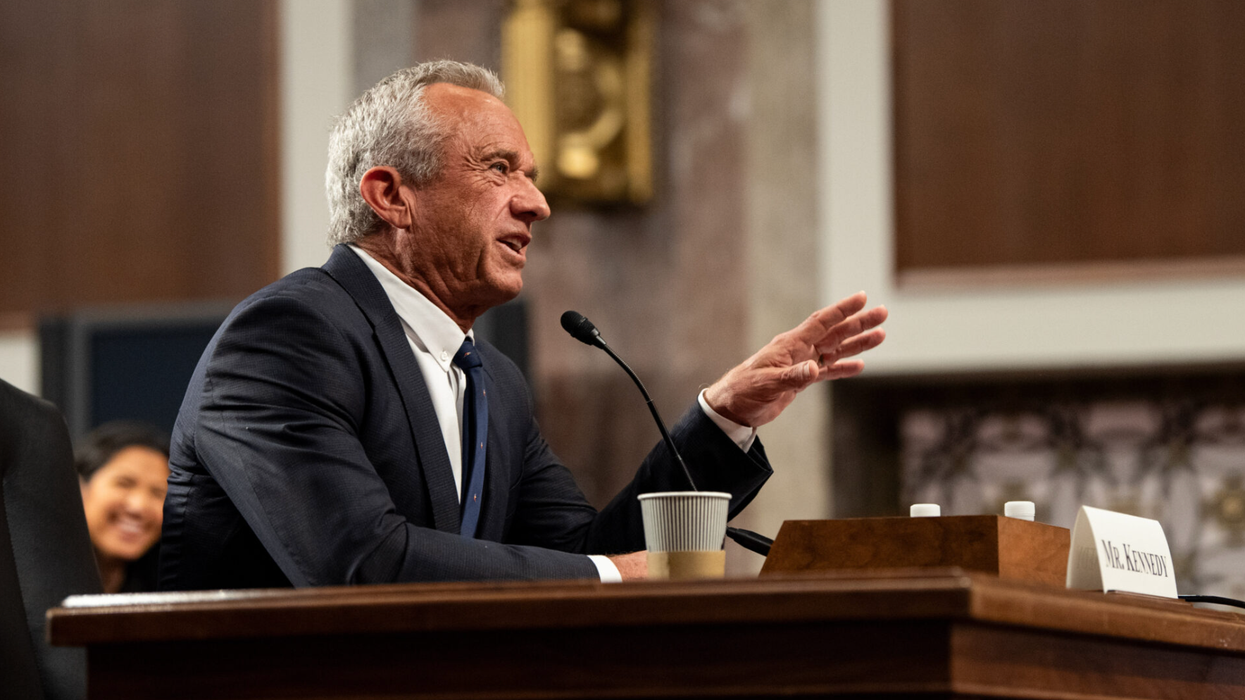
Kennedy's Ruinous Science Funding Choices Will Devastate Red States

Kennedy's Ruinous Science Funding Choices Will Devastate Red States

The National Institutes of Health’s sweeping cuts of grants that fund scientific research are inflicting pain almost universally across the U.S., including in most states that backed President Donald Trump in the 2024 election.

A KFF Health News analysis underscores that the terminations are sparing no part of the country, politically or geographically. About 40% of organizations whose grants the NIH cut in its first month of slashing, which started Feb. 28, are in states Trump won in November.

The Trump administration has singled out Ivy League universities including Columbia and Harvard for broad federal funding cuts. But the spending reductions at the NIH, the nation’s foremost source of funding for biomedical research, go much further: Of about 220 organizations that had grants terminated, at least 94 were public universities, including flagship state schools in places such as Florida, Georgia, Ohio, Nebraska, and Texas.

The Trump administration has canceled hundreds of grants supporting research on topics such as vaccination; diversity, equity, and inclusion; and the health of LGBTQ+ populations. Some of the terminations are a result of Trump’s executive orders to abandon federal work on diversity and equity issues. Others followed the Senate confirmation of anti-vaccine activist Robert F. Kennedy Jr. to lead the Department of Health and Human Services, which oversees the NIH. Many mirror the ambitions laid out in Project 2025’s Mandate for Leadership, the far-right playbook for Trump’s second term.

Affected researchers say Trump administration officials are taking a cudgel to efforts to improve the lives of people who often experience worse health outcomes — ignoring a scientific reality that diseases and other conditions do not affect all Americans equally.

KFF Health News found that the NIH terminated about 780 grants or parts of grants between Feb. 28 and March 28, based on documents published by the Department of Health and Human Services and a list maintained by academic researchers. Some grants were canceled in full, while in other cases, only supplements — extra funding related to the main grant, usually for a shorter-term, related project — were terminated.

Among U.S. recipients, 96 of the institutions that lost grants in the first month are in politically conservative states including Florida, Ohio, and Indiana, where Republicans control the state government or voters reliably support the GOP in presidential campaigns, or in purple states such as North Carolina, Michigan, and Pennsylvania that were presidential battleground states. An additional 124 institutions are in blue states.

Sybil Hosek, a research professor at the University of Illinois-Chicago, helps run a network that focuses on improving care for people 13 to 24 years old who are living with or at risk for HIV. The NIH awarded Florida State University $73 million to lead the HIV project.

“We never thought they would destroy an entire network dedicated to young Americans,” said Hosek, one of the principal investigators of the Adolescent Medicine Trials Network for HIV/AIDS Interventions. The termination “doesn’t make sense to us.”

NIH official Michelle Bulls is director of the Office of Policy for Extramural Research Administration, which oversees grants policy and compliance across NIH institutes. In terminating the grant March 21, Bulls wrote that research “based primarily on artificial and nonscientific categories, including amorphous equity objectives, are antithetical to the scientific inquiry, do nothing to expand our knowledge of living systems, provide low returns on investment, and ultimately do not enhance health, lengthen life, or reduce illness.”

Adolescents and young adults ages 13 to 24 accounted for 1 in 5 new HIV infections in the U.S. in 2022, according to the Centers for Disease Control and Prevention.

“It’s science in its highest form,” said Lisa Hightow-Weidman, a professor at Florida State University who co-leads the network. “I don’t think we can make America healthy again if we leave youth behind.”

HHS spokesperson Emily Hilliard said in an emailed statement that “NIH is taking action to terminate research funding that is not aligned with NIH and HHS priorities.” The NIH and the White House didn’t respond to requests for comment.

“As we begin to Make America Healthy Again, it's important to prioritize research that directly affects the health of Americans. We will leave no stone unturned in identifying the root causes of the chronic disease epidemic as part of our mission to Make America Healthy Again,” Hilliard said.

Harm to HIV, Vaccine Studies

The NIH, with its nearly $48 billion annual budget, is the largest public funder of biomedical research in the world, awarding nearly 59,000 grants in the 2023 fiscal year. The Trump administration has upended funding for projects that were already underway, stymied money for new applications, and sought to reduce how much recipients can spend on overhead expenses.

Those changes — plus the firing of 1,200 agency employees as part of mass layoffs across the government — are alarming scientists and NIH workers, who warn that they will undermine progress in combating diseases and other threats to the nation’s public health. On April 2, the American Public Health Association, Ibis Reproductive Health, and affected researchers, among others, filed a lawsuit in federal court against the NIH and HHS to halt the grant cancellations.

Two National Cancer Institute employees, who were granted anonymity because they were not authorized to speak to the press and feared retaliation, said its staff receives batches of grants to terminate almost daily. On Feb. 27, the cancer institute had more than 10,800 active projects, the highest share of the NIH’s roughly two dozen institutes and centers, according to the NIH’s website. At least 47 grants that NCI awarded were terminated in the first month.

Kennedy has said the NIH should take a years-long pause from funding infectious disease research. In November 2023, he told an anti-vaccine group, “I’m gonna say to NIH scientists, ‘God bless you all. Thank you for public service. We’re going to give infectious disease a break for about eight years,’” according to NBC News.

For years, Kennedy has peddled falsehoods about vaccines — including that “no vaccine” is “safe and effective,” and that “there are other studies out there” showing a connection between vaccines and autism, a link that has repeatedly been debunked — and claimed falsely that HIV is not the only cause of AIDS.

KFF Health News found that grants in blue states were disproportionately affected, making up roughly two-thirds of terminated grants, many of them at Columbia University. The university had more grants terminated than all organizations in politically red states combined. On April 4, Democratic attorneys general in 16 states sued HHS and the NIH to block the agency from canceling funds.

Researchers whose funding was stripped said they stopped clinical trials and other work on improving care for people with HIV, reducing vaping and smoking rates among LGBTQ+ teens and young adults, and increasing vaccination rates for young children. NIH grants routinely span several years.

For example, Hosek said that when the youth HIV/AIDS network’s funding was terminated, she and her colleagues were preparing to launch a clinical trial examining whether a particular antibiotic that is effective for men to prevent sexually transmitted infections would also work for women.

“This is a critically important health initiative focused on young women in the United States,” she said. “Without that study, women don’t have access to something that men have.”

Other scientists said they were testing how to improve health outcomes among newborns in rural areas with genetic abnormalities, or researching how to improve flu vaccination rates among Black children, who are more likely to be hospitalized and die from the virus than non-Hispanic white children.

“It's important for people to know that — if, you know, they are wondering if this is just a waste of time and money. No, no. It was a beautiful and rare thing that we did,” said Joshua Williams, a pediatric primary care doctor at Denver Health in Colorado who was researching whether sharing stories about harm experienced due to vaccine-preventable diseases — from missed birthdays to hospitalizations and job loss — might inspire caregivers to get their children vaccinated against the flu.

He and his colleagues had recruited 200 families, assembled a community advisory board to understand which vaccinations were top priorities, created short videos with people who had experienced vaccine-preventable illness, and texted those videos to half of the caregivers participating in the study.

They were just about to crack open the medical records and see if it had worked: Were the group who received the videos more likely to follow through on vaccinations for their children? That’s when he got the notice from the NIH.

“It is the policy of NIH not to prioritize research activities that focuses gaining scientific knowledge on why individuals are hesitant to be vaccinated and/or explore ways to improve vaccine interest and commitment,” the notice read.

Williams said the work was already having an impact as other institutions were using the idea to start projects related to cancer and dialysis.

A Hit to Rural Health

Congress previously tried to ensure that NIH grants also went to states that historically have had less success obtaining biomedical research funding from the government. Now those places aren’t immune to the NIH’s terminations.

Sophia Newcomer, an associate professor of public health at the University of Montana, said she had 18 months of work left on a study examining undervaccination among infants, which means they were late in receiving recommended childhood vaccines or didn’t receive the vaccines at all. Newcomer had been analyzing 10 years of CDC data about children’s vaccinations and had already found that most U.S. infants from 0 to 19 months old were not adequately vaccinated.

Her grant was terminated March 10, with the NIH letter stating the project “no longer effectuates agency priorities,” a phrase replicated in other termination letters KFF Health News has reviewed.

“States like Montana don’t get a lot of funding for health research, and health researchers in rural areas of the country are working on solutions to improve rural health care,” Newcomer said. “And so cuts like this really have an impact on the work we’re able to do.”

Montana is one of 23 states, along with Puerto Rico, that are eligible for the NIH’s Institutional Development Award program, meant to bolster NIH funding in states that historically have received less investment. Congress established the program in 1993.

The NIH’s grant terminations hit institutions in 15 of those states, more than half that qualify, plus Puerto Rico.

Researchers Can’t ‘Just Do It Again Later’

The NIH’s research funds are deeply entrenched in the U.S. health care system and academia. Rarely does an awarded grant stay within the four walls of a university that received it. One grant’s money is divvied up among other universities, hospitals, community nonprofits, and other government agencies, researchers said.

Erin Kahle, an infectious disease epidemiologist at the University of Michigan, said she was working with Emory University in Georgia and the CDC as part of her study. She was researching the impact of intimate partner violence on HIV treatment among men living with the virus. “They are relying on our funds, too,” she said.

Kahle said her top priority was to ethically and safely wind down her nationwide study, which included 418 people, half of whom were still participating when her grant was terminated in late March. Kahle said that includes providing resources to participants for whom sharing experiences of intimate partner violence may cause trauma or mental health distress.

Rachel Hess, the co-director of the Clinical & Translational Science Institute at the University of Utah, said the University of Nevada-Reno and Intermountain Health, one of the largest hospital systems in the West, had received funds from a $38 million grant that was awarded to the University of Utah and was terminated March 12.

The institute, which aims to make scientific research more efficient to speed up the availability of treatments for patients, supported over 5,000 projects last year, including 550 clinical trials with 7,000 participants. Hess said that, for example, the institute was helping design a multisite study involving people who have had heart attacks to figure out the ideal mix of medications “to keep them alive” before they get to the hospital, a challenge that’s more acute in rural communities.

After pushback from the university — the institute’s projects included work to reduce health care disparities between rural and urban areas — the NIH restored its grant March 29.

Among the people the Utah center thanked in its announcement about the reversal were the state’s congressional delegation, which consists entirely of Republican lawmakers. “We are grateful to University of Utah leadership, the University of Utah Board of Trustees, our legislative delegation, and the Utah community for their support,” it said.

Hilliard, of HHS, said that “some grants have been reinstated following the appeals process, and the agency will continue to carry out the remaining appeals as planned to determine their alignment.” She declined to say how many had been reinstated, or why the University of Utah grant was among them.

Other researchers haven’t had the same luck. Kahle, in Michigan, said projects like hers can take a dozen years from start to finish — applying for and receiving NIH funds, conducting the research, and completing follow-up work.

“Even if there are changes in the next administration, we’re looking at at least a decade of setting back the research,” Kahle said. “It’s not as easy as like, ‘OK, we’ll just do it again later.’ It doesn’t really work that way.”

Methodology

KFF Health News analyzed National Institutes of Health grant data to determine the states and organizations most affected by the Trump administration’s cuts.

We tallied the number of terminated NIH grants using two sources: a Department of Health and Human Services list of terminated grants published April 4; and a crowdsourced list maintained by Noam Ross of rOpenSci and Scott Delaney of the Harvard T.H. Chan School of Public Health, as of April 8. We focused on the first month of terminations: from Feb. 28 to March 28. We found that 780 awards were terminated in total, with 770 of them going to recipients based in U.S. states and two to recipients in Puerto Rico.

The analysis does not account for potential grant reinstatements, which we know happened in at least one instance.

Additional information on the recipients, such as location and business type, came from the USAspending.gov Award Data Archive.

There were 222 U.S. recipients in total. At least 94 of them were public higher education institutions. Forty-one percent of organizations that had NIH grants cut in the first month were in states that President Donald Trump won in the 2024 election.

Some recipients, including the University of Texas MD Anderson Cancer Center and Vanderbilt University Medical Center, are medical facilities associated with higher education institutions. We classified these as hospitals/medical centers.

We also wanted to see whether the grant cuts affected states across the political spectrum. We generally classified states as blue if Democrats control the state government or Democratic candidates won them in the last three presidential elections, and red if they followed this pattern but for Republicans. Purple states are generally presidential battleground states or those where voters regularly split their support between the two parties: Arizona, Michigan, Nevada, New Hampshire, North Carolina, Pennsylvania, Virginia, and Wisconsin. The result was 25 red states, 17 blue states, and eight purple states. The District of Columbia was also blue.

We found that, of affected U.S. institutions, 96 were in red or purple states and 124 were in blue states.

Reprinted with permission from Daily Kos.

sean spicer dancing with the stars

Sean Spicer Gets Owned After Whining About Covid Science Changes

After serving as Donald Trump's favorite footstool in his very brief time as White House Press Secretary, Sean Spicer is certainly no stranger to humiliation. Best known for hiding in bushes like an infant in timeout, Spicer (or "Spicy) has since taken his penchant for public embarrassment to ABC's "Dancing with the Stars."

Sean Spicer doing his best Homer Simpson Impression 

sean spicer bushesSean Spicer Bushes GIFGiphy


Most recently, the former White House Press Secretary weighed in on Covid-19 and, incredibly enough, complained about the changing science of COVID-19. Not surprisingly, Spicer was met with a ruthless smackdown.

“I’d hate to be an elementary school science teacher these days and to explain how quick ‘science’ changes," tweeted Spicer.

One Twitter user was quick to point out how science actually works, including uploading a photo of the Scientific Method.

Others took a more amusing approach to explain how science actually works.


Spicer's complete and utter lack of understanding basic scientific principles is perfectly in keeping with his party's virulently anti-science stance. His willingness to spread outright lies was markedly demonstrated during his brief stint as former President Trump's press secretary. It's really only a matter of time when he starts hawking his own discredited and insane covid "cures" like the rest of the right-wing clown show.

hurricane Sally

Disdain For Science — Trump’s And Ours — Is Literally Drowning Us

Hurricane Sally has just pummeled the Florida Panhandle and the coasts of Mississippi and Alabama. Though it landed as "only" a Category 2, what made it disastrous was its slow crawl, drowning Gulf of Mexico communities in Book of Genesis-type flooding. Hurricanes these days have slowed down, science says, as temperatures warm.

Science also says that climate change helps feed the fiery apocalypse now tormenting California, Oregon and Washington. Asked about this when visiting the region, President Donald Trump responded, "I don't think science knows."

Read NowShow less

Shop our Store

Headlines

Editor's Blog

Corona Virus

Trending

World