Tag: sec
Trump Family Wants A Piece Of Shady Binance Crypto Grift

Trump Family Wants A Piece Of Shady Binance Crypto Grift

Trump family representatives have been in discussions to take a financial stake in the U.S. arm of crypto exchange Binance, whose founder served four months in prison for money laundering.

Binance, along with former CEO Changpeng Zhao, pleaded guilty to charges of money laundering, unlicensed money transmitting, and sanctions violations in 2023.

A deal with the Trump family would allow the previously banned company to return to the United States.

Billionaire New York real estate developer and Trump’s Middle East envoy Steve Witkoff has reportedly been involved in the talks with Binance.

This is just the latest example of President Donald Trump’s willingness to align himself with the shady—and often illegal—crypto world. Trump’s billionaires club is filled with tech bros who have both made and been floated by considerable amounts of money in the crypto space.

Trump has seen how much more lucrative a grift of the barely policed crypto world is in comparison to previous ventures, like selling shiny gold sneakers.

Trump launched his own meme coin $TRUMP shortly after inauguration in a clear money grab, pulling in millions while exploiting hundreds of thousands of suckers. But more importantly it was a naked pay-to-play scam, allowing foreign agents and fellow grifters to curry favor with the president—like Tron founder Justin Sun, who was facing a civil fraud case started under the Biden administration.

After Sun “invested” tens of millions into Trump’s meme coin, he was rewarded by the U.S. Securities and Exchange Commission cutting a deal and dropping the case.

As the Trump family continues talks with Binance, the potential investment—and whether or not it would include one of Trump’s patented pardons—remains to be seen.

Reprinted with permission from Daily Kos
Feds Launch Multiple Probes Of Trump Media Venture's Strange Financing

Feds Launch Multiple Probes Of Trump Media Venture's Strange Financing

Reprinted with permission from AlterNet

The Securities and Exchange Commission and another federal regulatory agency are conducting investigations into Donald Trump’s new “media” company, including a planned merger “with a so-called blank-check company that raised nearly $300 million in an initial public offering in September,” The New York Times reports.

The S.E.C. and the Financial Industry Regulatory Authority “are looking for information regarding the trading in shares of Digital World. The S.E.C. is also looking into ‘documents and communications’ between Digital World and Trump Media.”

According to the Times, “Digital World said it was cooperating with the requests for information and ‘the investigation does not mean that the S.E.C. has concluded that anyone violated the law or that the S.E.C. has a negative opinion of D.W.A.C. or any person, event, or security.'”

Noted attorney George Conway weighed in, noting that DOJ has the ability to criminally prosecute violations of federal securities law:

The New York Times’ Maggie Haberman called it “The inevitable.”

And the Times’ David Enrich calls it a “high-stakes development for Trump.”

Trump To Nominate Wall Street Lawyer Clayton To Lead SEC

Trump To Nominate Wall Street Lawyer Clayton To Lead SEC

(Reuters) – President-elect Donald Trump said on Wednesday he intends to nominate Walter “Jay” Clayton, an attorney who advises clients on major Wall Street deals, to lead the U.S. Securities and Exchange Commission.

“Jay Clayton is a highly talented expert on many aspects of financial and regulatory law, and he will ensure our financial institutions can thrive and create jobs while playing by the rules at the same time,” Trump in a statement.

“We need to undo many regulations which have stifled investment in American businesses, and restore oversight of the financial industry in a way that does not harm American workers.”

Clayton is a partner in the New York office of law firm Sullivan & Cromwell who specializes in advising clients on public and private mergers and acquisitions and capital-raising efforts. He also helps companies navigate regulatory and enforcement actions, including a number of cases that involved mortgage securities.

Clayton has worked for high-profile clients, including the initial public offerings of Alibaba Group Holding Company and Oaktree Capital Group.

During the height of the 2008 financial crisis, Clayton also worked on major deals involving big banks, including Barclays Capital’s acquisition of Lehman Brothers’ assets, the sale of Bear Stearns to JP Morgan Chase, and the U.S. Treasury Department’s capital investment in Goldman Sachs, according to his law firm’s website.

By selecting an attorney who is deeply steeped in capital-raising deals, Trump is likely signaling that the SEC will be looking to scale back regulations that some critics see as burdensome and may be hindering corporate growth.

Many Republicans in recent years have criticized the SEC for focusing too much on enforcement, and not enough on its other missions, which include writing rules that help promote capital formation.

“In light of Jay’s vast experience in capital formation, his appointment as SEC Chair is a strong positive signal the economy is a top priority of President-elect Trump and his team, and that the SEC will work together with Main Street to meet the country’s economic goals of full employment and healthy growth,” said Jonathan Macey, a professor at the Yale Law School.

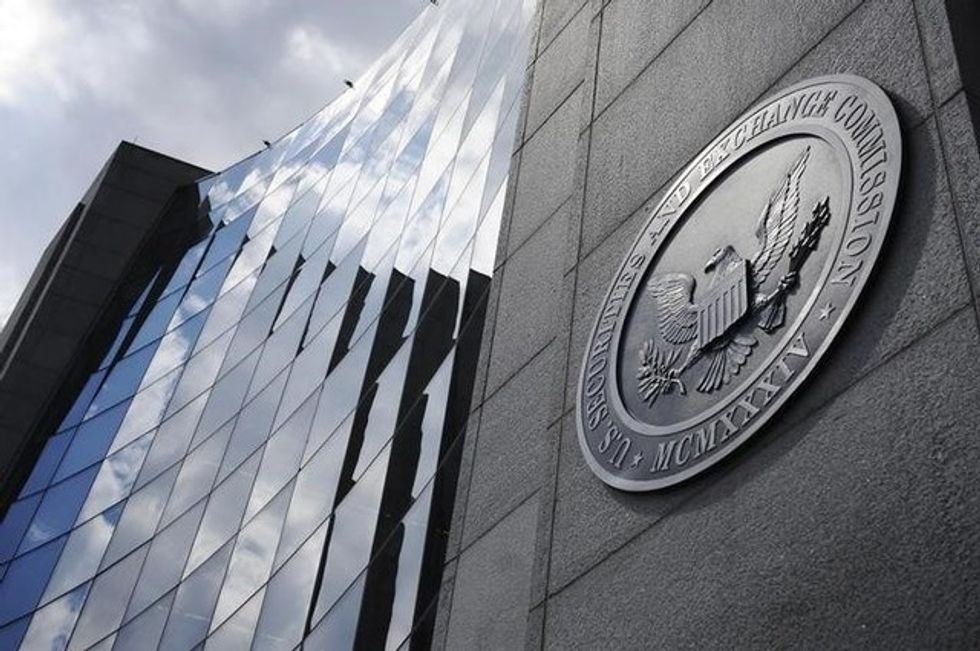
IMAGE: A general exterior view of the U.S. Securities and Exchange Commission (SEC) headquarters in Washington, June 24, 2011. REUTERS/Jonathan Ernst

U.S. SEC Adopts Rules Mandating Disclosure Of CEO-Worker Pay Ratios

U.S. SEC Adopts Rules Mandating Disclosure Of CEO-Worker Pay Ratios

By Sarah N. Lynch

WASHINGTON (Reuters) — Companies will have to provide investors with a ratio showing how the median pay of their workforce squares with their chief executive officers’ compensation, according to new rules adopted by U.S. securities regulators on Wednesday.

Under the Securities and Exchange Commission’s final rules, companies will get some flexibility in how they find the median. For instance, they can exclude 5 percent of their overseas workers when arriving at the number and use statistical sampling.

In addition, only larger and mid-sized companies will need to comply, while smaller ones are exempt.

However, those changes did not assuage corporate trade groups, which have opposed any rule and are widely expected to file a legal challenge.

The SEC has been under mounting pressure by Democrats, like Massachusetts Senator Elizabeth Warren and unions such as the AFL-CIO, who support the rule and have lamented delays in its adoption.

The measure was tucked into the 2010 Dodd-Frank law amid concerns about the growing disparity between compensation for chief executives and their corporate workers.

“Pay ratio disclosure should provide a valuable piece of information to investors,” Democratic Commissioner Kara Stein said.

Republicans and trade groups like the U.S. Chamber of Commerce have fought back against the measure at every turn, saying it will be too expensive, could mislead investors and is not material to a company’s financial statements.

The Chamber has urged the SEC to defer working on the rule at all, and it called for permitting companies to disclose the ratio in an addendum instead of formal filings in order to reduce their liability.

“This rule is more harmful than helpful,” David Hirschmann, head of the Chamber’s Center for Capital Markets Competitiveness, said in a statement. He said the Chamber would explore options to “clean up the mess” it believes the rule has created.

Both SEC Republican commissioners also opposed the rule on Wednesday.

“To steal a line from Justice Scalia: This is pure applesauce,” said Republican Commissioner Daniel Gallagher.

Companies will have to start reporting the new pay ratio disclosures in the first fiscal year beginning on or after Jan. 1, 2017.

Heather Slavin Corzo, a director at the AFL-CIO, said she was pleased that the SEC completed the rule but remained concerned about “weaknesses that could lead to loopholes,” including letting companies exclude a portion of their overseas workers from the median.

(Reporting by Sarah N. Lynch; Editing by Lisa Von Ahn and Bernard Orr)

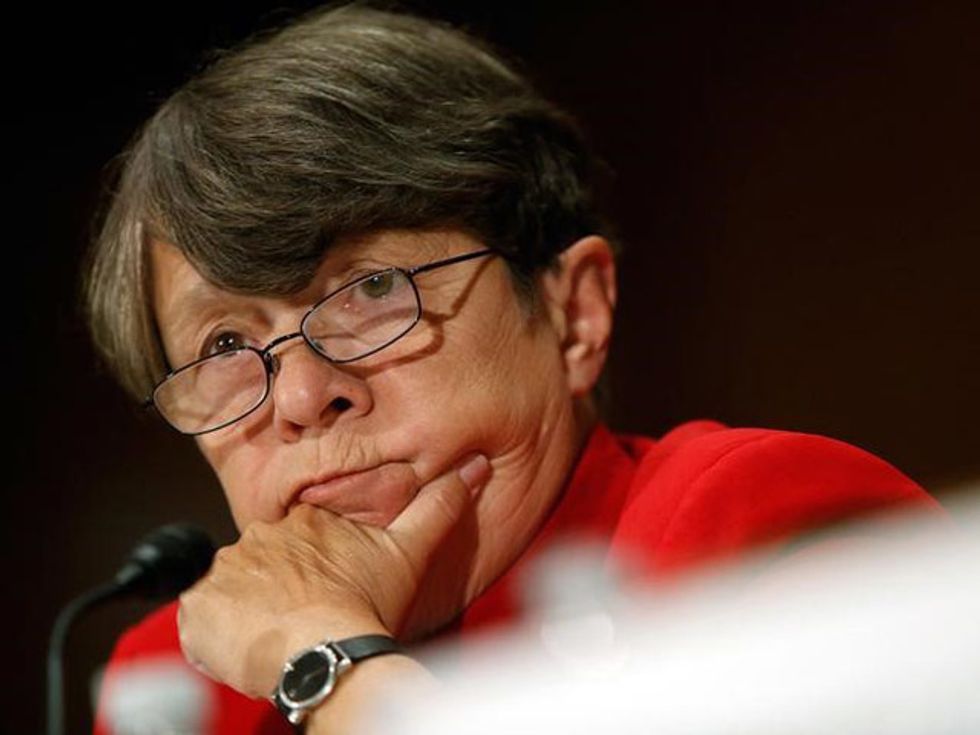
U.S. Securities and Exchange Commission Chair Mary Jo White testifies about Wall Street reform before a Senate Banking Committee hearing on Capitol Hill in Washington September 9, 2014. (REUTERS/Jonathan Ernst)

Shop our Store

Headlines

Editor's Blog

Corona Virus

Trending

World