The Questions Hegseth Refused To Answer At Confirmation Hearing
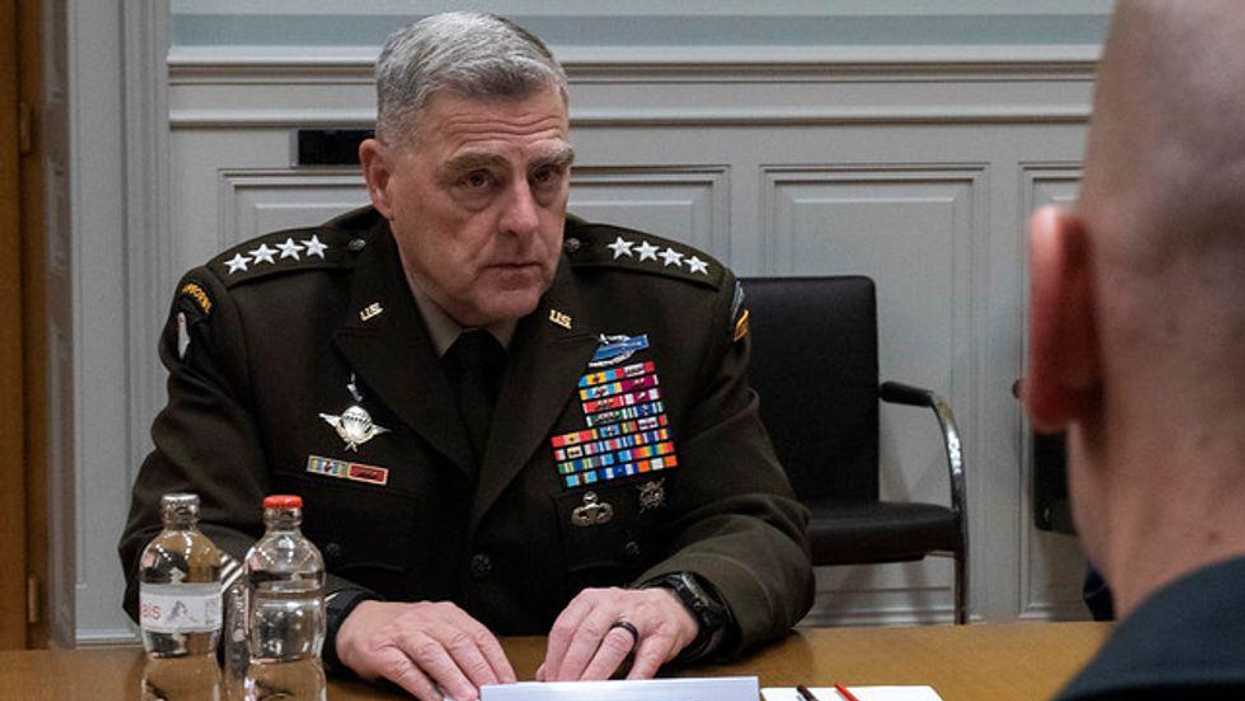
Pete Hegseth, President-elect Donald Trump’s controversial and, many say, unqualified nominee to lead the millions of people serving in the U.S. Armed Forces and oversee the Pentagon’s $842 billion budget, refused to give straight answers to numerous questions posed by senators during his short, four-hour-and-fifteen-minute confirmation hearing before the Senate Armed Services Committee on Tuesday.
Democrats on the committee had requested multiple rounds of questions so they could follow up with the nominee, a former Fox News weekend host who has been accused of sexual assault, “aggressive drunkenness,” sexism, mismanaging two veterans’ non-profits, and an apparent embrace of Christian nationalism. Chairman Roger Wicker (R-MS) refused, despite precedent with multiple nominees before the committee over many years. Wicker also refused to allow the FBI’s report on Hegseth to be made available to all members of the committee.
Hegseth, at times combative, frequently battled Democratic Senators, talking over them and refusing to answer numerous questions, while often praising Donald Trump — and invoking his name as a shield. Questions he did answer often came from Republicans on the committee. They included questions like, How many genders are there? How many pushups can you do? What do you love about your wife?
But Hegseth refused to give straight answers to a large number of basic questions, such as: Would you submit to an expanded FBI background check? Agree to use the military to seize Greenland or the Panama Canal? In each of your weddings you’ve pledged to be faithful to your wife? Should allegations of spousal abuse be disqualifying?
One question Hegseth initially refused to answer was what his use of the apparent slur, “jag off” means.
“I don’t think I need to, sir,” he told the ranking member, Jack Reed, when politely asked.
“Why not?” Reed, surprised, asked.
“Because the men and women watching understand,” Hegseth replied.
He only explained it when Reed reminded him that “perhaps some of my colleagues don’t understand.”
“It would be a JAG officer who puts his or her own priorities in front of the war fighters,” Hegseth finally said. (JAG is Judge Advocate General, a military attorney.)
Hegseth’s history of comments against women and LGBTQ service members is well-documented. Sen. Jeanne Shaheen (D-NH) repeatedly pressed him on his beliefs on women in the military.
“Will you commit to preserving the Women, Peace, and Security Law at DOD and including in your budget the requisite funding to continue to restore and resource these programs throughout the DOD?” Senator Shaheen asked, referring to this law.
“I, Senator, I will commit to reviewing that program and ensuring it aligns with America First, national security priorities, meritocracy, lethality and readiness. And if it advances American interests, it’s something we would advance,” Hegseth smugly replied. “If it doesn’t, it’s something we would look at.”
“Well since former President Trump signed it into the law, I hope that he agrees with you,” Shaheen responded.
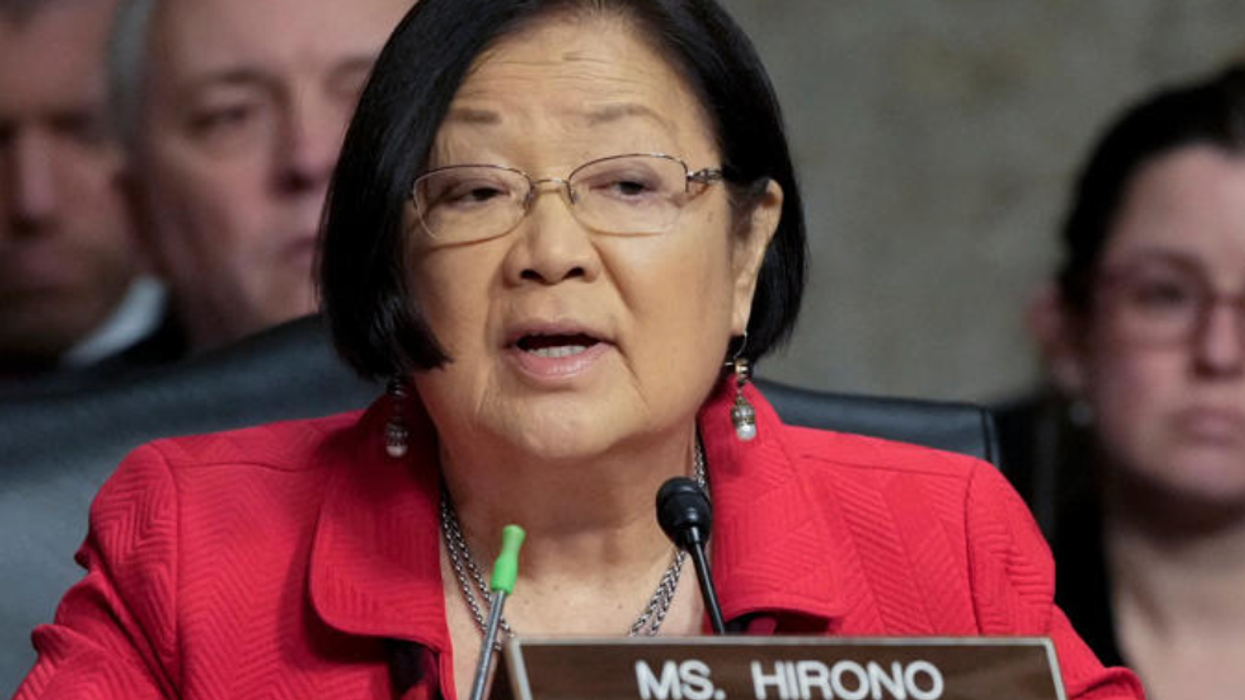
At one point, when Hegseth grew combative, he talked over Sen. Mazie Hirono (D-HI), forcing her to repeatedly say, “I’m not hearing the answer to my question.” He then refused to answer if he would “resign if you drink on the job, which is a 24/7 position?”
Senator Hirono also asked Hegseth if he would comply with an order from the Commander-in-Chief, who will be Donald Trump, to shoot protestors. He refused to give a straight answer.
“In 2020, then President Trump directed former Secretary of Defense Mark Esper to shoot protesters in the legs in downtown D.C., an order Secretary Esper refused to comply with. Would you carry out such an order from President Trump?” she asked.
Hegseth launched into what appeared to be a defense of Trump’s order, but would not answer, leading Hirono to say, “Sounds to me that you would comply with such an order, you will shoot protesters in the leg.”
Asked, again by Hirono, if he would “carry out an order from President Trump to seize Greenland, a territory of our NATO ally Denmark, and, “comply with an order to take over the Panama Canal,” Hegseth again refused to give a straight answer.
“Senator, I will emphasize that President Trump received 77 million votes to be the lawful Commander-in-Chief —” Hegseth replied.
“We’re not talking about the election,” Hirono reminded him.
“Senator, one of the things that President Trump is so good at is never strategically tipping his hand,” Hegseth, again lavishing praise on Trump, replied, again not giving a straight answer.
In a similar vein, Hegseth refused to give a straight answer to Sen. Elissa Slotkin (D-MI), who asked if there are any orders a commander-in-chief could give that would be unlawful and violate the Constitution.
“I reject the premise that President Trump is going to be giving illegal orders,” he exclaimed.
He also refused to give a straight answer when asked if he has been in conversations about using active duty military within the U.S., and using active duty military in U.S.-based detention camps.
Hegseth’s back-and-forth with Sen. Tim Kaine (D-VA), however, were among the most damaging, as veterans’ advocate Paul Rieckhoff noted.
At one point, Hegseth refused to answer whether spousal abuse would be disqualifying for someone to be secretary of defense, after refusing to say he would release his former wives from NDAs if there were any.
“Did you ever engage in any acts of physical violence against any of your wives?” Kaine asked.
“Senator, absolutely not,” Hegseth replied.
“But you would agree with me that if someone had committed physical violence against the spouse, that would be disqualifying to serve as Secretary of Defense, correct?” Kaine continued.
“Senator, absolutely not have I ever done that,” Hegseth stressed.
“You would agree that would be a disqualifying offense, would you not?” Kaine pressed.
“Senator, you’re talking about a hypothetical,” Hegseth responded, again refusing to answer.
“I don’t think it’s a hypothetical. Violence against spouses occurs every day,” Kaine insisted. And if you as a leader are not capable of saying that physical violence against a spouse should be a disqualifying fact, for being Secretary [of Defense] of the most powerful nation in the world, you demonstrating an astonishing lack of judgment.”
The liberal Super PAC American Bridge put out this clip, saying, “Pete Hegseth refuses to say he doesn’t support waterboarding, torture, or abandoning the Geneva Conventions. This guy has dangerous ideas that have no place at the Department of Defense.”
In that exchange with Senator Angus King (I-VT), Hegseth also declared, “what an America First national security policy is not going to do is hand decisions over to international bodies.”
And when asked to give just true or false answers to questions about numerous alleged instances of intoxication, Hegseth repeatedly replied, “anonymous smears.”
Reprinted with permission from Alternet.