Tag: taxpayers
Trump's 'Donor-Funded' Ballroom Is Quickly Turning Into A Scam On Taxpayers

Trump's 'Donor-Funded' Ballroom Is Quickly Turning Into A Scam On Taxpayers

Some years ago, I was president of an organization called the Association of Opinion Journalists. Every year we would run a convention in a different city and end it with a celebration in the hotel's ballroom space. Our speaker on that closing night was usually some well-known political opinionator.

Members often talked about inviting the president to give that address, as had happened before. In 1947, Harry Truman spoke to the group (formerly called the National Conference of Editorial Writers), as did Lyndon Johnson in 1966. Other prominent government officials included Vice President Richard Nixon, then-Gov. Ronald Reagan and former Secretary of State Henry Kissinger.

In later years, however, members argued against having the president as speaker because it would subject the attendees to oppressive security checks. After slogging through days of seminars, they wanted to cut loose. The party was for us.

Now consider the recent White House Correspondents' Association Dinner, cut short by an apparent assassination attempt. The target appeared to be the evening's speaker, President Donald Trump, who used the fiasco to hawk his controversial $400 million White House ballroom as a more secure alternative to the Washington Hilton.

A federal judge has frozen the construction for lacking clear legal authority and congressional approval. Congress now has an opportunity to ditch the grandiose plan, saving taxpayers hundreds of millions.

Yes, Trump said it would be paid for by donations, not the taxpayers. The known donor list is heavy with big Wall Street, tech and law firm names. All have business before the federal government. Trump repaying their "kindness" could end up costing taxpayers a great deal. More troubling, some donor identities have been kept secret.

Of course, any events at a palatial White House ballroom would require extra security, and who would pay for that? The taxpayers, of course.

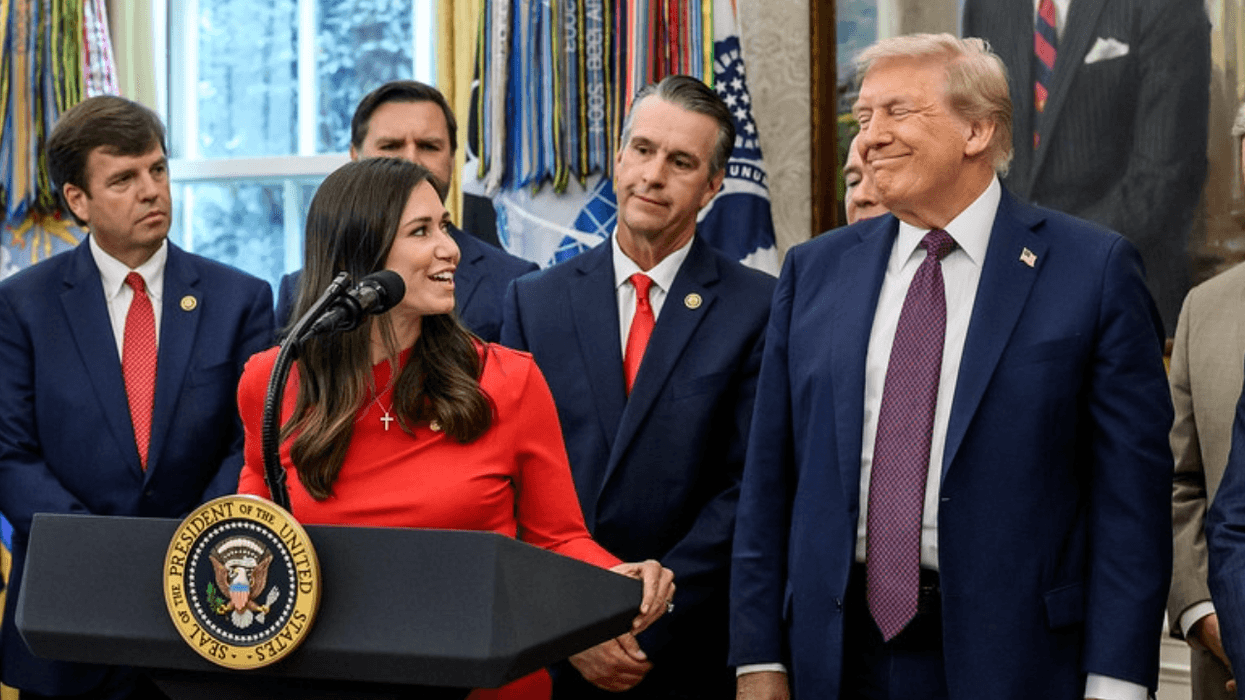
Enter Sen. Lindsey Graham. The South Carolina Republican is pushing a bill to tack another $400 million to the national debt to finish what donors were to pay for — and build a security infrastructure, a Secret Service annex, underneath the ballroom.

As Alabama Republican Sen. Katie Britt, a co-sponsor, explained unconvincingly, "This is about our nation having a place to gather."

The White House already has a State Dining Room that seats about 140 guests, and if more room is needed, the East Room can accommodate as many as 300. Why must the president's residence include a ballroom able to hold, according to Trump, nearly 1,000?

The biggest indoor banquet space at the French royal palace of Versailles — the Gallery of Battles — can serve "only" 650 diners max. That happens to be a lot of people.

Meanwhile, why must taxpayers be billed to provide a catering hall big enough for the White House correspondents' annual bash? They are an independent organization, just like the Association of Opinion Journalists was. We paid for our convention space, the big dinner and, yes, security, through dues, contributions, and participation fees. Had the taxpayers funded us, I'm sure several members would have written editorials or columns and nowadays produce TikToks condemning the use of public money for a private group.

A word about the correspondents' dinner itself. Over the years, it's morphed into a red-carpet event crafted to glamorize what should be working journalists who cover the president. Now there's a ton of "pregame" coverage of who is going, who is not, who got invited to the Vanity Fair magazine party. And don't leave out the Hollywood celebrities.

In his 1678 Christian allegory, The Pilgrim's Progress, John Bunyan introduced Vanity Fair as an unseemly marketplace for pleasure, status and worldly ambition. "The name of that Town," Bunyan wrote, "is Vanity."

Sounds a lot like Washington, D.C.

Froma Harrop is an award winning journalist who covers politics, economics and culture. She has worked on the Reuters business desk, edited economics reports for The New York Times News Service and served on the Providence Journal editorial board.

Reprinted with permission from Creators.
How Trump Promoted A Multi-Billion Dollar Medicare Fraud

How Trump Promoted A Multi-Billion Dollar Medicare Fraud

One of the largest Medicare fraud schemes in program history began to unravel several years ago when accountable care organizations created under the Affordable Care Act began noticing most of their savings, which they share with taxpayers, were vanishing due to the exorbitant cost of a single product — wound care bandages made mostly from dried placenta cells.

By April 2024, the National Association of Accountable Care Organizations (NAACOS) had enough data to notify the Centers for Medicare and Medicaid Services (CMS) about the outlandish sums being paid to physicians using “skin substitute” bandages for wound care instead of traditional bandages. The physicians, who purchased the skin substitutes at a steep discount from manufacturers, were billing ACOs at the list price and pocketing the difference.

Some patients were racking up millions of dollars for the skin substitutes used to cover their diabetic sores and other hard-to-heal wounds. According to a letter NAACOS sent to a Medicare payment contractor in June 2024, “the skin substitutes have been provided to patients who are poor candidates for specialty wound care, including hospice patients receiving significant wound care in the last three days of life, patients with inability to off-load pressure or transport without force, and patients who are unable to maintain adequate nutrition.”

This lucrative scheme for physicians was providing even larger profits for their manufacturers, almost all of which are privately-owned. Using loopholes in the law, they began charging an average of more than $6,000 per square inch for skin substitute bandages. Some products reaching over $21,000, according to a New York Times investigation in April.

Five years ago, the highest priced skin substitute bandages on the market was only $1,045 per square inch. Medicare spending on skin substitute bandages soared from about $250 million in 2019 to more than $10 billion in 2024, according to CMS.

The Biden rule

After NAACOS alerted CMS to the alleged fraud, the Biden administration began crafting a new rule that would sharply lower the maximum price paid the firms selling the expensive bandages. It also limited payments to physicians who used skin substitute bandages purchased from firms that had generated medical evidence showing they improved wound care better than much cheaper standard bandages. Many firms in the field produce no such studies since the bandages do not require FDA approval beyond meeting sterility standards. The rule was slated to go into effect this past February.

That when the Trump regime sprang into action. The rule was delayed until April 13 as part of its blanket regulatory freeze. Then, in March, Trump issued a post on his Truth Social site claiming: “‘Crooked Joe’ rammed through a policy that would create more suffering and death for diabetic patients on Medicare” — an echo of the industry’s false claims.

How did Trump know anything about an issue that at that point still had not appeared on the mainstream media’s radar screen? Last fall, when the Biden rule was in the works, San Antonio-based Extremity Care, one of the largest firms in the skin substitute field, donated $2 million to MAGA Inc., the super PAC supporting Trump’s election campaign. In February, according to post this week by journalist Judd Legum on the substack Popular Information, Extremity Care donated another $5 million to MAGA Inc.

In April, the day after publication of the Times exposé, Dr. Mehmet Oz's CMS postponed enactment of the new rule until 2026. This allowed companies to continue selling at high prices for at least another eight months.

Then, three weeks ago, the Trump regime reversed field and included a price limit for skin substitutes in the physician payment rule for 2026. The proposal sets a maximum price of $806 per square inch. “We’re making it easier for seniors to access preventive services, incentivizing health care providers to deliver real results and cracking down on abuse that drives up costs,” Oz said in a statement.

What Texans do when they’re not gerrymandering

However, nothing the Trump regime says should be taken at face value. As Legum reported, the new rule does not limit limit coverage to products that are scientifically proven to be effective. Moreover, the $806 price is higher than what many reputable firms in the industry charge.

The two biggest abusers of the loopholes in the law are based in Texas: Extreme Care and Ft. Worth-based Legacy Medical Products. Both are privately held and neither has tested their products against traditional bandages to determine if they generate superior outcomes.

And they’re not done fighting. They’ve formed the Mass Coalition to fight the new rule. They’ve also paid $320,000 a year to Brian Ballard, a Trump fundraiser who is widely regarded as the lobbyist with the most influence with the Trump administration, according to Legum. Susie Wiles, who is Trump's chief of staff, worked for Ballard. Many of the early commenters on the proposed rule are using identical cut-and-paste letters to protest the proposal, the kind of ginned up outrage that inside-the-Beltway lobbyists are expert at generating.

ACO-employed clinicians are worried that even this limited rule will be deep-sixed by the transactional Trump regime. In its July story announcing the rule’s reintroduction, the Times quoted Alex Binder, the vice president of the Parker Advanced Care Institute, a nonprofit medical practice belong to an ACO that treats older patients with chronic or terminal illnesses in New Jersey.

“There has been pushback in the past,” Binder said. “Will there be pushback again?”

Reprinted with permission from Gooz News.

Victimizing Blue State Taxpayers May Doom GOP House Majority

Victimizing Blue State Taxpayers May Doom GOP House Majority

At least six congressional Republicans are demanding a radical fix in the 2017 tax law targeting residents of high-income states. If they don't get it, they may sink Donald Trump's tax-and-spending package, his "one big beautiful bill."

And who can blame these reps from New York, New Jersey and California? At issue is the unfair cap on the state and local taxes (SALT) their constituents may deduct from federally taxable income. The SALT deduction, unlimited before 2017, was set at a maximum $10,000.

What made it sweet to other Republicans was that it paid for some of those tax cuts by milking taxpayers in wealthier Democratic states. And that has made voters in key suburban districts sore.

What makes this attack on the SALT deduction outrageous? For starters, it taxes income that Americans have already paid in taxes. Secondly, incomes in these states are higher because their everyday costs are higher. Teachers, road workers and other public employees must be paid more just to maintain the living standards enjoyed elsewhere.

Defenders of the cap argue piously — and wrongly — that the SALT deduction is a tax break only for rich people. It's true that taxpayers with higher incomes tend to get the most out of the deduction, but a cop married to a nurse in New York, New Jersey or California can easily have a combined income of $200,000 — and no one would call them rich given housing prices.

In decidedly middle-class Levittown, on Long Island, homeowners typically pay a property tax of about $16,000. Then there are state income taxes.

If Washington's objective is to raise more revenue from higher-income Americans, then fine. Just raise the federal tax brackets for high incomes everywhere in the U.S.

The most obnoxious argument for the SALT cap is that it forces "profligate" state governments run by Democrats to restrain their own taxes. What state and local governments levy in taxes should be no business of Washington's. Americans unhappy with their local tax regimes can move elsewhere, and some do.

But many regard superior education systems and other public amenities worth the higher taxes. Republicans should note that making it harder to pay good salaries to police is, in essence, a form of defunding the police.

Raising the cap on this deduction may require Washington lawmakers to find the revenues elsewhere. Well, that's too bad.

House Ways and Means Committee Chair Jason Smith represents the most rural district in Missouri. It's easy for him to say Republicans from high-tax states may have to settle for an "unhappy" compromise on the SALT deduction. By that, he means raising the cap to a meager $30,000.

Republican reps from these swing districts are having none of it, frankly, because their jobs are at stake. They know that the Republican brand has already fallen for their voters, given the toll tariff chaos has taken on their businesses.

There's a reason President Donald Trump retreated on naming New York Rep. Elise Stefanik as United Nations ambassador. He doesn't want to risk a special election that may replace her with a Democrat. After 2022, Republicans flipped at least four New York districts, without which they wouldn't now enjoy a House majority.

New York Republican Nick LaLota spoke for others when he told reporters that the SALT talks are far apart, on the 25-yard line with 75 yards to go. LaLota's district covers eastern Long Island.

If House Republicans think they can threaten these "SALT Caucus" members for killing one of Trump's top priorities, they need hearing aids. The general election, not primary challenges, is what these politicians should worry about most. Democrats already see opportunity, and the elected Republicans know it.

Reprinted with permission from Creators.

FEMA

Blue States That Finance Government Need Less Federal Help

"Move it back to the states," Donald Trump says about education, about FEMA and, as will probably happen, about Medicaid. What that would mean to Americans depends on what state they live in. As the federal government moves forward on this, it's a good bet that high-income states can handle the changes better than low-income ones.

Yes, it's true: Taxpayers in high-income states, largely blue ones, have been subsidizing residents of less wealthy red states.

A few years ago, there was an interesting feud between Joe Manchin, senator from West Virginia, and Mikie Sherrill, who represents a well-heeled congressional district in New Jersey. Funds for a federal child care subsidy were to be cut, and Manchin wanted the plan rejiggered to send a bigger chunk to the many low-income families of West Virginia. That would have meant less help for suburban parents in New Jersey.

Sherrill responded: "New Jersey already pays more than $10 billion in taxes than we receive in federal spending, and I will not let another federal program pay less to New Jersey taxpayers than it does to all other Americans."

According to Trump's vision of New Federalism, services provided by the federal government would be better handled by states. But the bills for these services would also largely go to the states. Obviously, states with high incomes and high taxes are better equipped to replace Washington dollars.

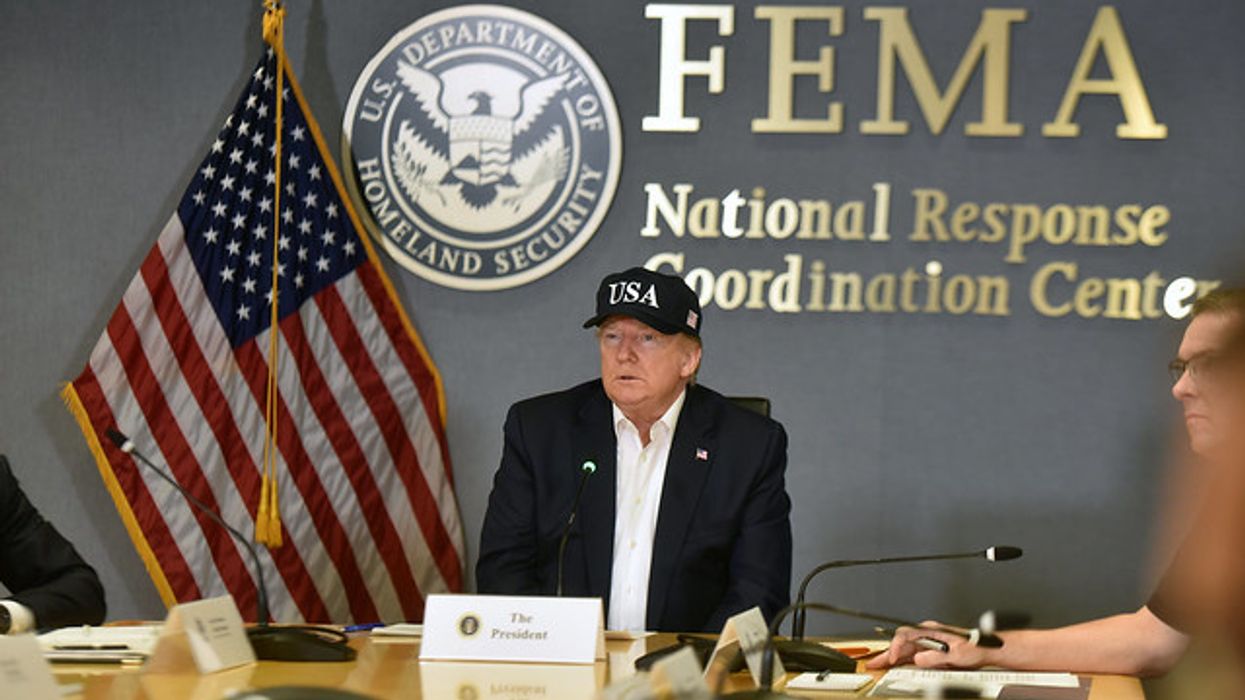
Florida may have attracted a lot of rich people seeking low taxes, but if the Federal Emergency Management Agency stopped showering money for hurricane relief every time a big blow tears up the coastline — forcing Floridians to bear more of the cost — well, good luck with that.

FEMA's core principle for disaster relief has been "locally executed, state managed and federally supported." Home insurance costs have already skyrocketed in Florida. Add to that the economic fallout of making the people living there pay more for building back?

Public schools are mostly funded by state and local taxpayers. The Department of Education does give money to schools with high percentages of low-income students, many in rural areas, and pays for special education. Over 23% of Mississippi's school district revenue comes from federal funding. By contrast, the feds account for only about 7% of New York state's.

Meanwhile, look at outcomes. The top state for test scores is Massachusetts, followed by New Jersey, Connecticut, New Hampshire and New York. These states would probably do OK without a Department of Education.

The House budget resolution targets cuts to Medicaid of up to $880 billion or more over 10 years. Medicaid is jointly financed by states and the federal government but administered by the states. If a state wants to make up for lost Medicaid funds, it can raise taxes. Or it could cover fewer people, cut benefits or pay doctors less.

Despite a much-publicized movement of rich people from high-tax places like New York and California to lower-tax Florida and Texas, the big money has largely remained in the urban centers where it was originally made.

"The Ultra-Rich are Flourishing and Sticking Around in California," Bloomberg News reports. Despite mesospheric housing prices, some corporate departures and high taxes, Bloomberg writes, "it remains one of the most popular places for global wealth."

And the state is run by Democrats. Texas may be a red state, but its economic engines are the blue cities of Austin, Dallas and Houston.

Trump's 2017 tax cuts overwhelmingly went to the upper incomes. Extending them now would do more of the same. Where do those upper incomes live? (See above.)

I may be the thousandth pundit to note that Trump-o-nomics hurts working people most, that is, his voters. What can you say except that elections have consequences.

Reprinted with permission from Creators.
Shop our Store

Headlines

Editor's Blog

Corona Virus

Trending

World