Tag: violence
Donald Trump

What Presidents Must Do When Violence Erupts -- And What Trump Did Instead

On the evening of April 4, 1968—barely two hours after Martin Luther King Jr. was assassinated on a motel balcony in Memphis—President Lyndon B. Johnson addressed the nation from the White House. His words were brief, solemn, and unmistakably presidential:

“America is shocked and saddened by the brutal slaying tonight of Dr. Martin Luther King.”

Johnson condemned the assassination in unambiguous moral terms. He called on “every citizen to reject the blind violence that has struck Dr. King, who lived by nonviolence.” And then he offered a prayer that King’s death would “strengthen the determination of all men of good will to work for understanding, and for justice, and for the rule of law.”

In the same breath, Johnson turned his remarks outward. He urged Americans to “stand against the poison of hatred which has led to this tragedy.” And he reminded a country reeling from yet another political murder that “we can achieve nothing by violence. We can achieve everything by working together.”

The Johnson who delivered those words was in profound political trouble. Just a week earlier, battered by public opposition to the Vietnam War and facing revolt from within his own party, he had stunned the country by announcing that he would not seek reelection. The very man who now appealed to nonviolence had spent much of the previous year clashing bitterly with King over the war in Southeast Asia.

By any cynical calculus, Johnson might have tried to spin the assassination into political advantage. He might have underscored the rupture between himself and King, or cast the tragedy as vindication of his own beleaguered presidency. Instead, he rose to the occasion.

And, not incidentally, the Democrats lost the bitterly divided election to Richard Nixon, who ran on a program of law and order. (Nixon too was appropriately mournful, suspending all political activity in the two weeks after the assassination.) Historians often point to this moment as marking the country’s political transition—from the broad consensus of the Great Society to the bitter polarization of the Southern strategy and its aftermath that afflicts us still. Yet Johnson, the consummate political animal, chose a higher road.

The following day, Johnson spoke again, this time in longer form. His message was consistent:

“Together, a nation united, a nation caring, a nation concerned, and a nation that thinks more of the Nation’s interests than we do of any individual self-interest or political interest—that nation can and shall and will overcome.”

Johnson passed the test of presidential leadership. It is, in truth, not a very high bar: every American president, faced with a national tragedy born of violence, has understood the duty to call for unity and reject violence.

Nearly 100 years earlier, Lincoln set the template in his second inaugural, conjuring “malice toward none” amid the carnage of civil war. Chester Arthur, elevated by Garfield’s assassination, called for calm. John F. Kennedy, after the murder of Medgar Evers, urged reconciliation.

Bill Clinton, in the wake of Oklahoma City, urged Americans: “Let us teach our children to resolve their conflicts with words, not weapons.” It was classic presidential cadence—words that sought not only to soothe the nation but to call out the better angels of our national character. These are the moments when Americans look to the president not as a partisan combatant but as a custodian of the national soul and a healer of bitter divides.

That is, until Trump.

After last week’s shooting of Charlie Kirk, Trump delivered what was likely the pettiest and most hateful presidential response to a national tragedy in American history. Instead of rising above partisanship, he canonized Kirk as a martyr for “truth and freedom.” He rattled off a list of supposed right-wing martyrs without acknowledging that political violence has touched all sides. He cast his own base as uniquely persecuted and left deliberately unmentioned the victims of hate crimes and political violence outside his camp. So in the days following the assassination of Minnesota Speaker Melissa Hortman and her husband earlier this year, Trump couldn’t even bother to offer condolences to Governor Tim Walz, saying, “I could be nice and call, but why waste time?”

Worse, Trump moved directly to assign blame: not to the shooter, not to the broader forces of hatred, but to his political adversaries. “Radical left” forces, Trump declared, had created the climate that encouraged this violence. In one press exchange he went further:

“We have radical left lunatics out there, and we just have to beat the hell out of them.”

The words, far from a call to calm and shared purpose, were an incitement to further confrontation. They came from the same place as his refusal on January 6, 2021, to condemn the insurrectionists who stormed the Capitol on his behalf. His instinct then, as now, was not to quell chaos but to feed it. Where other presidents have instinctively sought to dampen the flames, Trump reaches for gasoline.

Other presidents have stumbled at critical junctures. Nixon in the heat of Vietnam, Grant amid Reconstruction violence, Hoover during the Depression. But Trump’s embrace of hate and division is unerring and bottomless. He never fails to take the worst choice.

Trump is a dark figure, and this is a dark moment for America. Never before has a commander in chief so thoroughly conflated the nation’s needs with his own political fortunes, so reflexively exploited tragedy to sow greater discord. At a time when the country needs a call to unity, he supplies a fresh wave of division.

And he is not alone. Trump’s champions amplify his message. Hungarian Prime Minister Viktor Orbán, a favorite of the Trump right, echoed the line almost verbatim: “Charlie Kirk’s death is the result of the international hate campaign waged by the progressive-liberal left.” In the U.S., figures like Laura Loomer and others in Trump’s orbit repeated the script: blame the opposition, stoke grievance, sow chaos all while ignoring the political violence committed against their so-called enemies. It is a vile lie, but one that patriots are forced to fight against day after day.

The presidency has never been the province of saints. Johnson himself, brilliant and venal, lied relentlessly about Vietnam. Nixon resigned in disgrace. Grant’s administration was mired in scandal. Yet when tragedy struck, even flawed presidents understood the difference between personal ambition and national duty. Trump is the singular exception. He is simply incapable of unifying the country he proclaims to want to make great again. His compass points only toward division, hatred, and self-interest.

The question for the country is how to respond when the highest officeholder is the one modeling the worst instincts. Americans cannot rely on the president to supply the words of unity that once seemed automatic. That responsibility falls to us, and to leaders outside the Oval Office on all sides of the political spectrum who are willing to say plainly that violence is never an answer.

We already have our hands full trying to parry Trump’s weekly outrages against the Constitution.

But this is the added tragedy of the Trump presidency: in the moments when America most needs a voice of unity, it receives only the echo of its own divisions, amplified and distorted by the man charged with healing them.

And so we are left with the questions that Johnson and other presidents answered correctly without hesitation: Will America stand united against the poison of hatred? Will it reject violence as a political tool, even as it embraces diversity of thought? Will it choose the difficult path of working together? The answers, this time, must come not from the president, but despite him.

Reprinted with permission from Harrylitman.
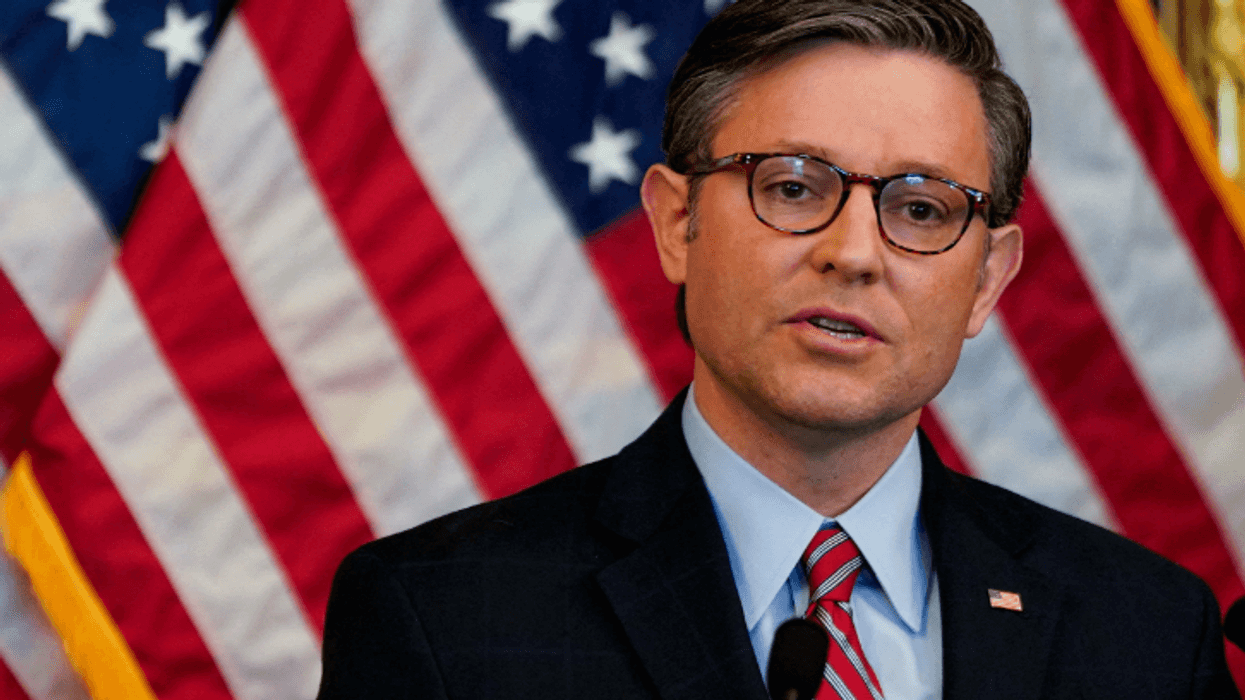
U.S. House Speaker Mike Johnson

Johnson Flip-Flops On Pardons For Violent January 6 Felons

After Speaker Mike Johnson (R-LA) said that January 6 rioters who committed acts of violence should not be let off the hook — he's standing by President Donald Trump's move to pardon hundreds of rioters, according to Politico.

Politico's Kyle Cheney reported via Bluesky, "This morning, Speaker Johnson said he won't 'second-guess' Donald Trump's pardons of Jan. 6 defendants and said 'We’re not looking backwards, we’re looking forwards.' Then he ordered up an investigation of the Jan. 6 committee."

Per Cheney's report, Johnson has "announced plans to appoint a new select subcommittee — led by Rep. Barry Loudermilk (R-GA) — to take aim at the work of the previous January 6 subcommittee that first" investigated the Capitol attack.

"The president’s made his decision; I don’t second guess those," the speaker said. "We move forward, there are better days ahead of us, that’s what we’re excited about."

Loudermilk, according to Cheney, had a different perspective.

The Georgia lawmaker "told reporters Wednesday that 'looking backwards' was a key aspect of the panel’s ability to make changes for the future."

Loudermilk added, "You’ve got to look backwards to look forward."

Reprinted with permission from Alternet.

Sean Hannity

Fox Stars Said Don't Pardon Violent J6 Offenders, But Trump Did Anyway

Fox News stars have spent the months since President Donald Trump’s election assuring their audiences that Trump’s long-stated promise to pardon what he termed the “J6 hostages” would be limited only to nonviolent offenders who participated in storming the U.S. Capitol on January 6, 2021. But on his first day in office, Trump pardoned or commuted to time served every person convicted in connection to their actions that day, including those who violently assaulted law enforcement and participated in seditious conspiracies.

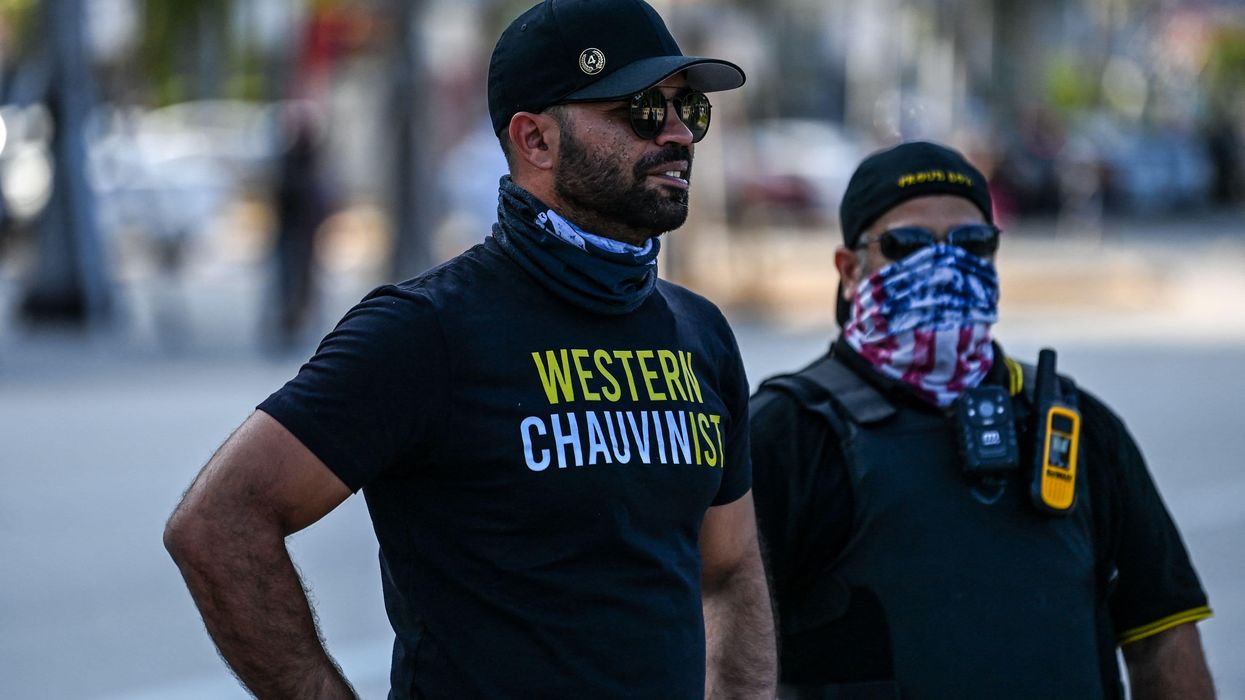
Trump’s Tuesday night grant of clemency “to all of the nearly 1,600 people charged in connection with the attack” includes pardons for “for violent offenders who went after the police on January 6 with baseball bats, two-by-fours, and bear spray and are serving prison terms, in some cases of more than a decade,” The New York Times noted. He also pardoned or commuted the sentences of several leaders of the Proud Boys and Oathkeepers who had been convicted of seditious conspiracy.

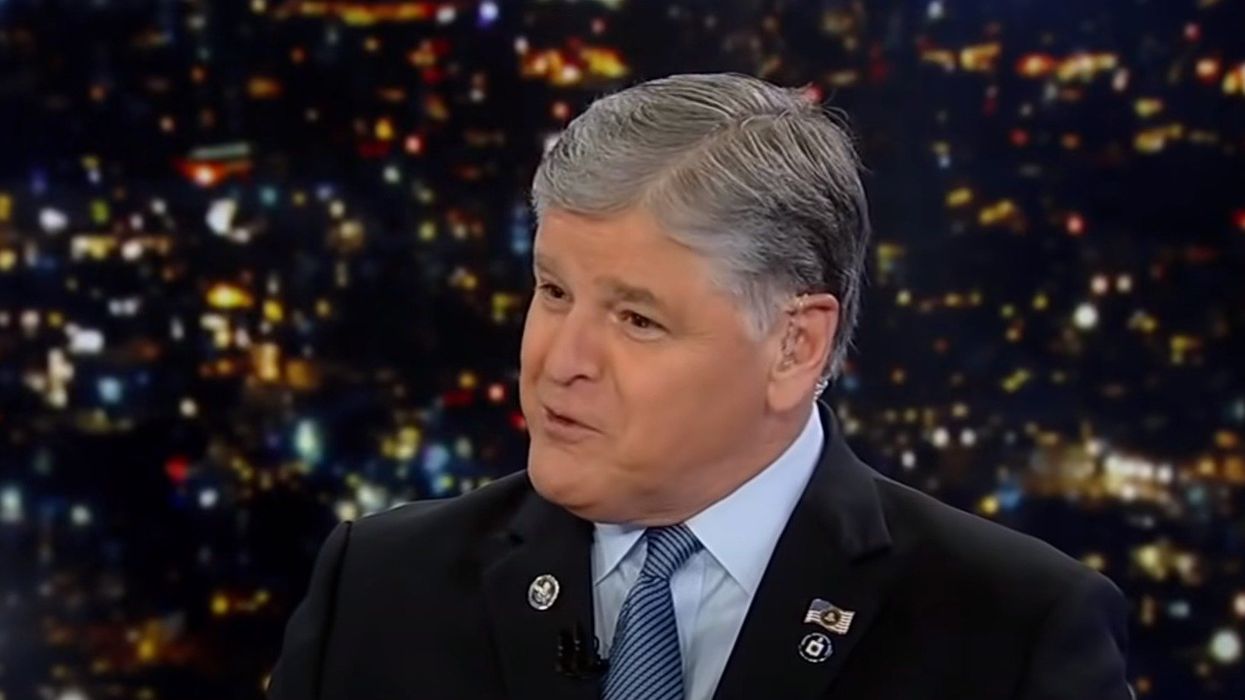
This is precisely what Fox hosts and loyal Trump propagandists Sean Hannity and Jesse Watters explicitly said should not happen.

Numerous Fox personalities condemned the Trumpist violence at the Capitol in its immediate aftermath and called for the perpetrators to face consequences, even as they avoided assigning Trump culpability for encouraging the mob to come to D.C. and inciting it with lies about the 2020 election being stolen from him.

“Those who truly support President Trump … we do not support those that commit acts of violence,” Hannity said on his show that night, adding that people should not “be vandalizing our nation's Capitol, attacking the brave men and women that keep us safe in law enforcement,” and concluding that “all of today's perpetrators must be arrested and prosecuted to the full extent of the law.”

“I want to speak to the people that think it wasn't that big of a deal,” Watters said on The Five the next day. “Yes, you’re allowed, as a member of the public, to go into the people's house, but you have to go through the front door and you have to pass through a metal detector. You can't smash windows, spray police with chemical agents, assault police officers, loot, and vandalize.”

Over time, as Trumpists led by former Fox host Tucker Carlson challenged the initial consensus around the events of January 6 with a conspiratorial counternarrative that the rioters had been victims, the right came to excuse or downplay their crimes. But as Trump floated pardons for January 6 convicts, Hannity and Watters continued to maintain that violent offenders would not and should not receive clemency.

Asked by a listener on his December 3 radio broadcast about Trump potentially pardoning all January 6 convicts, including violent offenders, Hannity commented that some had received excessive sentences “for trespassing.” But he highlighted “the few people that were involved in violence against police, or whatever,” and said that “the people that are responsible for acting in ways that were absolutely irresponsible and law-breaking, they’ve got to be held accountable.”

“Donald Trump, he has said those people that did not commit acts of violence on January 6, is he's going to pardon them,” Hannity added two days later. “Why were they sentenced to five years in jail? Doesn't it seem, like, a little excessive?”

Watters has likewise repeatedly said that presidential pardons should be limited to nonviolent January 6 offenders. “If I were president, I don’t think I would pardon January 6ers who were slugging cops,” he told his Fox audience last December. In May 2023, he similarly advised Trump “to be careful here. You can't pardon anybody that committed an act of violence.”

How can Trump’s loyal propagandists square the circle between their own explicit statements that Trump should not pardon people convicted of attacking police officers and the reality that he did just that? One option appears to be simply lying about what he did.

“He made it clear, and JD Vance kind of doubled down on it — if you didn't attack officers, if there wasn't any actual violence and you were caught up within the system, you were overcharged, you’ve done enough time,” Fox & Friends co-host Lawrence Jones said on Wednesday morning. “And promises made, promises kept on Day One.”

Reprinted with permission from Media Matters.

Trump's 'Law And Order' Means Freeing Terrorists And Neo-Nazi Criminals

Trump's 'Law And Order' Means Freeing Terrorists And Neo-Nazi Criminals

Donald Trump is being slammed for granting pardons to more than 1,500 people who violently attacked the U.S. Capitol on Jan. 6, 2021. While Trump and other Republicans have frequently touted the Republican Party as the party of “law and order,” one of his first acts in the presidency gave a green light to the criminal element.

Trump’s pardon unravels hundreds of prosecutions that made their way through the Department of Justice and the criminal courts. Trump called the people who attacked Capitol police officers and were attempting to overturn the presidential election he lost “patriots” and “hostages” in the order.

Before taking office, Vice President JD Vance claimed that people who engaged in violence on January 6 would not be given a pass by Trump. “If you committed violence on that day, obviously you shouldn’t be pardoned,” he told Fox News Sunday on January 12.

That turned out to be a lie.

Among those who will be released thanks to Trump’s actions is former Proud Boy leader Enrique Tarrio. Tarrio was convicted of seditious conspiracy against the United States and sentenced to 22 years in prison in September 2023. U.S. District Judge Timothy Kelly, who was appointed by Trump, oversaw Tarrio’s case and found that he had engaged in an official act of terrorism. He is expected to be a free man soon.

Another figure helped by Trump’s action is Robert Keith Packer, who attacked the Capitol while wearing an antisemitic shirt reading “Camp Auschwitz,” referencing the infamous death camp where thousands of Jewish people were executed by Nazis during the Holocaust.

Former Capitol Police Officer Aquilino Gonell, who served at the Capitol on Jan. 6, spoke out against Trump’s action.

“One of the first things that he does is pardon the criminals who nearly took my life,” Gonell told HuffPost. “It’s a desecration to our service and the sacrifices made to keep everyone safe. It’s a violation to our democracy and a disgrace to the title he holds once again.”

Gonell sent reporter Sam Stein photographs showing the pro-Trump mob attacking him on Jan. 6, as well as pictures depicting the serious injuries he received.

Former U.S. Capitol Police Sgt. Aquilino Gonell sent me these pics of what happened to him on Jan. 6 as well as the injuries he endured that day

[image or embed]

— Sam Stein (@samsteindc.bsky.social) January 21, 2025 at 1:29 PM

Harry Dunn, another former Capitol Police officer, told the outlet, “This decision is a betrayal to the officers who were severely injured—and died—as a result of the insurrection. This decision puts Americans at risk as these violent criminals return to their communities. These pardons are a reflection of what abuse of power looks like and what we the people are bound to witness over the next four years.”

Democratic Rep. Maxwell Frost criticized Trump’s pardons, writing, “President Trump pardons Nazi & white supremacist that tried to overthrow the government. Fascists look out for fascists.”

President Trump pardons Nazi & white supremacist that tried to overthrow the government. Fascists look out for fascists.

[image or embed]

— Maxwell Frost (@maxwellfrost.bsky.social) January 21, 2025 at 4:39 AM

One the same day Trump issued the pardons, his administration released an executive order purportedly showing his opposition to criminal activity, promising to restore the federal death penalty. He criticized former President Joe Biden for commuting the sentences of 37 facing the federal death penalty and that his administration would take action to ensure that “these offenders are imprisoned in conditions consistent with the monstrosity of their crimes and the threats they pose.”

The administration also released a list of priorities claiming that crimes against law enforcement would be punished with the death penalty.

Simultaneously, Trump appointed conservative activist Ed Martin to serve as Washington, D.C.’s interim U.S. attorney. Martin served on the board of the Patriot Freedom Project, which advocated for the release of Jan. 6 offenders.

Despite the criticism from law enforcement and members of Congress, the administration continues to stand by the assistance Trump delivered to convicted criminals.

In an appearance on the pro-Trump Fox News Channel, White House press secretary Karoline Leavitt said, “I don't think it's causing much controversy.” She later added, “President Trump is restoring faith in our justice system.”

Brian Kilmeade: Does that have anything to do with President Trump pardoning all the J6ers, which is causing some controversy? Trump spox Karoline Leavitt: I don't think it's causing much controversy! ... President Trump is restoring faith in our justice system.

[image or embed]

— Justin Baragona (@justinbaragona.bsky.social) January 21, 2025 at 1:23 PM

Trump is the first convicted felon to be elevated to the presidency. On his first day in office, criminals convicted at the highest levels of the justice system received a gift from the most powerful position in the American government.

Reprinted with permission from Daily Kos.

Shop our Store

Headlines

Editor's Blog

Corona Virus

Trending

World