Tag: sherrod brown
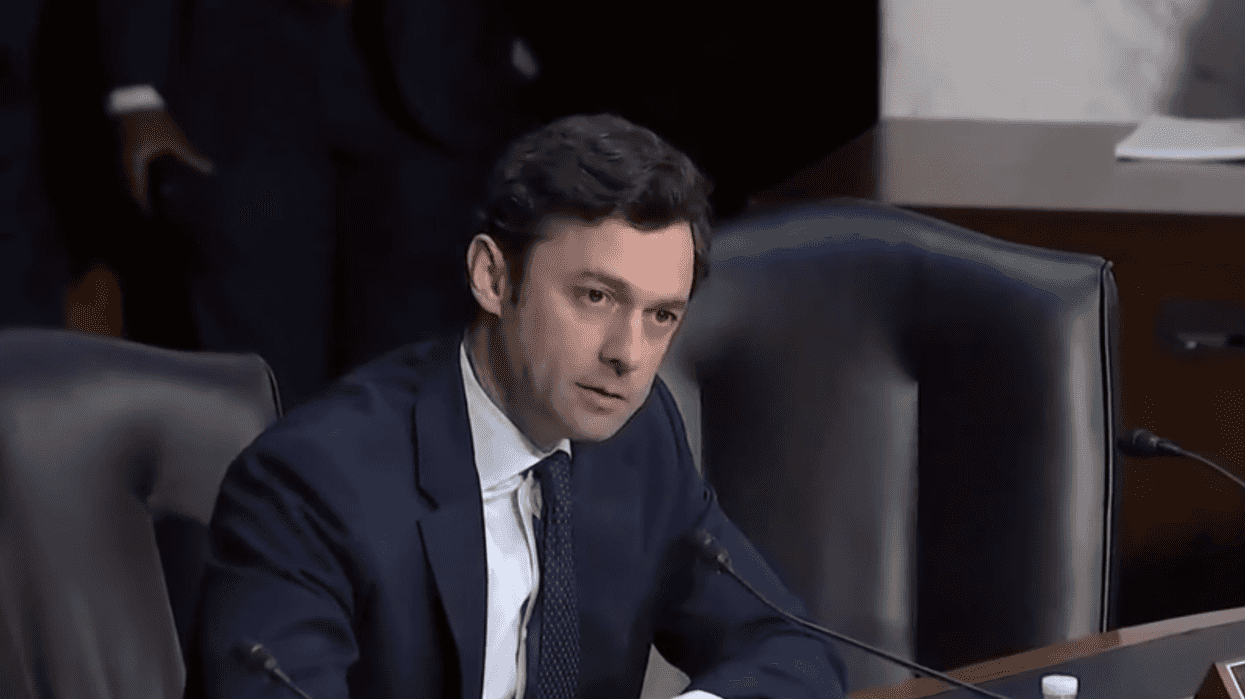
U.S. Senator Jon Ossoff (D-GA).

What Will It Take For Democrats To Flip The Senate? A State-By-State Cheat Sheet

The House of Representatives will be a Democratic-led institution after this November’s midterm elections. The big question is whether Democrats can also recapture the Senate—a chamber that, under any rational circumstances, shouldn’t be competitive.

It’s a brutal map for Democrats. Yet, thanks to President Donald Trump’s toxic incompetence and his obsequious party, it’s now in play. This is the first in a regular feature tracking the most competitive races throughout this election season.

Republicans hold 53 seats in the Senate, meaning Democrats need to net four to get past Vice President JD Vance’s tiebreaking vote.

1. North Carolina (R-open, Lean D)

Former Democratic Gov. Roy Cooper has led in every single poll so far as he faces former Republican National Committee Chair Michael Whatley in this open-seat race.

Time after time, Democrats have come close in recent Senate contests in the Tar Heel State. In 2020, the race appeared within reach until a late scandal derailed the Democratic nominee, who ultimately lost by less than two percentage points. In 2022, Republicans won again by about three points. Those margins mirror the state’s Republican lean at the presidential level, underscoring just how evenly divided North Carolina is.

Nothing can be taken for granted. But Democrats have shown they can win statewide, and Cooper remains a popular figure after two terms as governor. He also has a shockingly strong record, having run in six statewide races and won all of them.

2. Maine (R-incumbent, Lean D)

How tough is this cycle for Democrats? This is a Republican-held seat in a state won by Democratic presidential nominee Kamala Harris in 2024.

Once again, Republican Sen. Susan Collins is at the center of one of the most competitive races on the map as she seeks a sixth term in a state that consistently leans Democratic at the presidential level.

This is one of Democrats’ best pickup opportunities, but the path isn’t straightforward. Collins has survived tough races before—most notably in 2020, when she won reelection even as Joe Biden carried the state at the presidential level. Collins continues to benefit from a reputation as a moderate willing to break with her party. At the same time, she’s the only Republican senator representing a state that has largely rejected Trump in every election.

The Democratic primary is still taking shape, with Gov. Janet Mills and oyster farmer Graham Platner facing off in an establishment-vs.-insurgent battle. Emerson College’s latest poll of the race shows Platner dominating both the primary and general. But Collins is a survivor, and history says she can’t be counted out.

At this point, if Democrats can win their two best pickup opportunities, it lifts them to 49 seats in the Senate. For a majority, Democrats need to hold the next two seats, in Georgia and Michigan, and then flip two more.

3. Georgia (D-incumbent, Lean D)

Sen. Jon Ossoff is the most vulnerable Democratic incumbent on the map, defending a seat in a reddish-purple state.

Margins here are razor-thin. Ossoff won his 2021 runoff election by just over 1 point, while fellow Democratic Sen. Raphael Warnock won both his races in 2021 and 2022 by less than 3 points.

Republicans are coalescing around Rep. Mike Collins and will invest heavily. The only public poll released this year, from Emerson College, gives Ossoff a lead of 48 percent to Collins’ 43 percent. In this climate, that should be enough—but there’s little room for error.

4. Michigan (D-open, Lean D)

Democratic Sen. Gary Peters’ retirement has created an open-seat race in Michigan, one of the most important battlegrounds in the country.

The Great Lakes State has leaned Democratic in recent cycles, with the party scoring big wins in state-level races, like the governorship. But federal contests remain competitive. Trump carried the state in 2016, narrowly lost it in 2020, and won it back in 2024, the same year that Democrat Elissa Slotkin won her Senate race by 0.3 points.

Both parties have competitive primaries that won’t be settled until Aug. 4, unusually late in the cycle. Three Democrats—state Sen. Mallory McMorrow, U.S. Rep Haley Stevens, and progressive activist Abdul El-Sayed—are polling neck and neck right now. And without clarity on the candidates, this is currently Lean D, largely due to the broader political environment. It’s difficult to see a Republican fully escaping the drag of Trump’s tariffs, wars, and inflation.

If Democrats hold Georgia and Michigan, they remain at 49 seats in the Senate. But to win a majority, they need to pick up two more among Alaska, Iowa, Nebraska, Ohio, and Texas. See how tough this task is? Yet, thanks to Trump, it’s not out of arm’s reach.

5. Alaska (R-incumbent, Toss-up)

Republican Sen. Dan Sullivan is seeking reelection in Alaska, a state that defies easy categorization—solidly Republican on paper but with a strong independent streak. For example, the state legislature is run by a bipartisan coalition that sidelines MAGA hard-liners.

Alaska consistently votes Republican at the presidential level—a Democratic nominee has won it only once since it became a state—but its large independent electorate and political culture reward candidates who distance themselves from party orthodoxy. That’s helped figures like moderate Republican Sen. Lisa Murkowski repeatedly win. Ranked-choice voting also adds another layer of unpredictability.

Former Democratic Rep. Mary Peltola, who defeated former Gov. Sarah Palin in Alaska’s 2022 House race, is the Democrats’ dream candidate. Public polling shows a tight race, with recent surveys giving her a narrow edge. It’s always difficult to defeat an incumbent, especially one aligned with the state’s partisan lean. But Peltola is a strong candidate, and this is a favorable climate.

6. Ohio (R-incumbent, Lean R)

Ohio shouldn’t be in play. Trump has carried this onetime battleground by eight points or more in all three of his campaigns. It was remarkable that liberal Democratic Sen. Sherrod Brown survived as long as he did, holding office for eighteen years. And even in defeat in 2024, he lost by less than four points while Trump won in the state by 11 points.

Brown is thankfully back this year, running in the special election for the seat vacated by Vice President JD Vance. His opponent is appointed Republican Sen. Jon Husted.

Husted’s lack of true incumbency, combined with Brown’s crossover appeal, gives Democrats a real pickup opportunity. Polling shows a tight race, with both candidates in the mid-40s. That’s a dangerous place for Brown since undecided voters tend to break in favor of the state’s partisan lean. He may be strong enough to defy that, and the national environment helps. But for now, this remains the GOP’s race to lose.Republican

7. Texas (R-incumbent, Likely R)

Republican Sen. John Cornyn is seeking reelection in a longtime GOP stronghold. But MAGA has a habit of sabotaging themselves, and Texas Republicans are flirting with exactly that by rallying around Ken Paxton, the unbelievably corrupt state attorney general who was impeached by members of his own party. (The state Senate acquitted him, so he has remained in office.)

Polling shows a familiar pattern: Talarico in the mid-40s. That usually means undecideds will lean Republican. The question is whether the current climate disrupts that pattern. A Paxton nomination would make that more plausible. For now, though, this remains likely Republican.

8. Nebraska (R-incumbent, Likely R)

Dan Osborn, a political independent and former union leader, nearly pulled off a shocker in 2024, coming within 7 points of upsetting Republican Sen. Deb Fischer, even as Trump carried the state by over 20 points. That’s the value of running without a “D” beside your name in a state as red as Nebraska.

Running again, Osborn faces ultrarich Republican Sen. Pete Ricketts, who is an imperfect fit in a moment defined by economic anxiety. Trump’s tariffs, deportations, and cuts are hitting rural Nebraska especially hard.

The only recent poll comes from the Osborn campaign and shows a tight race, as you’d expect it to. In 2024, undecided voters did the thing and broke toward Republicans on Election Day. Osborn faces that same challenge this year. Still, if anyone can make this competitive, it’s Osborn—and this environment gives him a shot.

Other states to watch

Republicans believe they can make the Democratic open seat in New Hampshire competitive. And there’s a plausible scenario where Iowa joins this list as well.
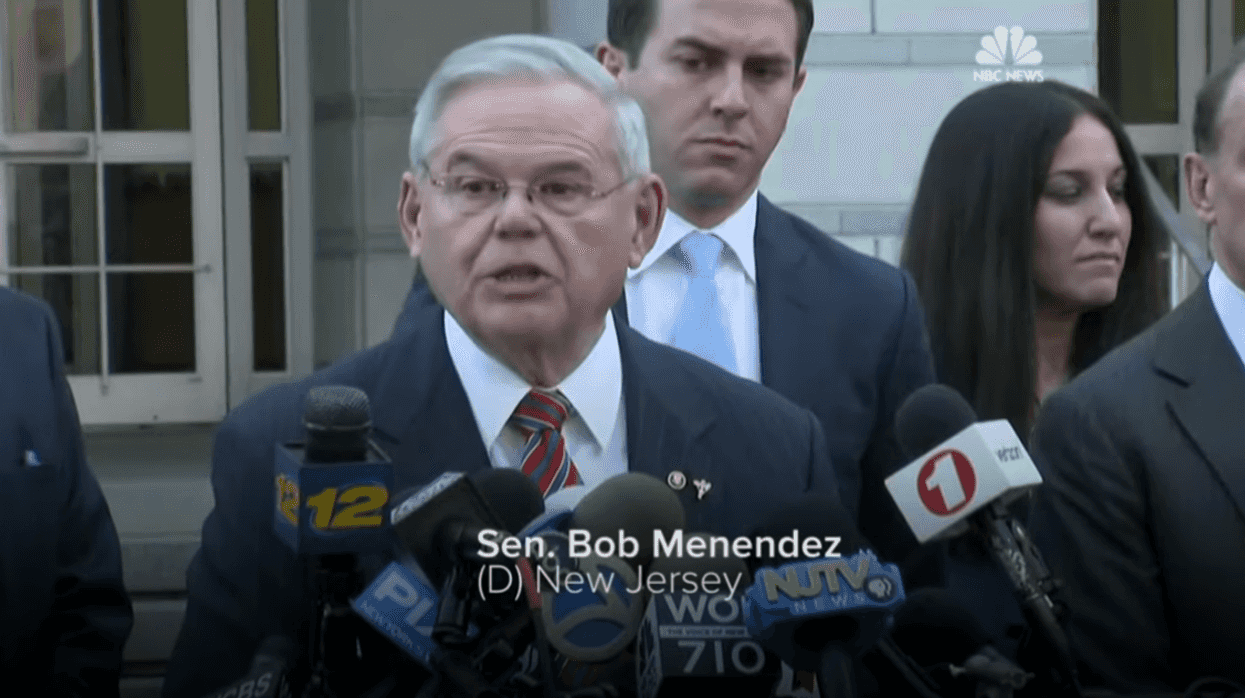
Bob Menendez

Growing Chorus Of Democratic Senators Demands Menendez Resignation

Sen. Bob Menendez (D-NJ) is losing support as more of his Senate Democratic colleagues formally call on him to resign after he was indicted again, this time on federal bribery charges that included allegations of receiving hundreds of thousands of dollars in cash and gold bars.

As of Tuesday morning, at least ten Democratic U.S. Senators have now called on the twice-indicted senior Democratic Senator from New Jersey to resign, as they cite the gravity of the charges against him.

Sen. John Fetterman (D-PA) was the first to call on Menendez to resign, on Monday. Senators Sherrod Brown (D-OH) and Peter Welch (D-VT) followed later that day.

On Tuesday morning, Senators Tammy Baldwin (D-WI), John Tester (D-MT), and Bob Casey (D-PA) all called on Sen. Menendez to resign. By 11 AM, Senators Martin Heinrich (D-NM), Jacky Rosen (D-NV), and Elizabeth Warren (D-MA) also called for him to resign.

Minutes later, Sen. Cory Booker, Menendez’s Democratic New Jersey colleague, also called for him to resign. The New York Times reported Booker’s decision “to condemn Senator Robert Menendez underscores the deepening crisis Mr. Menendez faces after his indictment.”

According to the Department of Justice, Menendez, along with his wife Nadine Menendez, not only are alleged to have received bribes, he is charged with doing so in a scheme “to use his official position to protect and enrich” those he allegedly accepted funds from, and “to benefit the Government of Egypt.”

“Among other things,” the DOJ alleged, Senator Menendez “agreed and sought to pressure a senior official at the U.S. Department of Agriculture in an effort to protect a business monopoly granted to” a New Jersey businessman “by Egypt, disrupt a criminal case undertaken by the New Jersey Attorney General’s Office related to associates of” another New Jersey businessman, “and disrupt a federal criminal prosecution brought by the U.S. Attorney’s Office for the District of New Jersey against” a third New Jersey businessman.

Former DOD Special Counsel Ryan Goodman on Sunday called Menendez “a walking national security threat.”

“Imagine US official charged with selling US secrets, embassy security, US defense policy – and showing up for work the next day,” he added.

“From a purely legal perspective, Menendez appears to be a dead man walking,” Goodman continued. “The kind of forensic and documentary evidence in the Indictment is exceptionally strong for these types of cases. It looks inevitable that he will be going to prison.”

Reprinted with permission from Alternet.

Abortion rights supporters

Ohio Voters Torch GOP Scheme To Kill Abortion Rights Amendment

Ohio voters on Tuesday rejected a Republican-backed measure called Issue 1, a proposed constitutional amendment that would have made it difficult to ever change the state's constitution again. The proposal was failing 62-38 with 36% of the estimated vote tallied when the Associated Press called the race. The result means that pro-choice advocates will need to win a simple majority on Nov. 7 in order to pass their own amendment to enshrine abortion rights into the state's governing document instead of the 60% supermajority that Issue 1 would have imposed.

The outcome also ensures that activists seeking to pass other amendments opposed by Ohio's GOP-dominated state government will not need to contend with the dramatically increased signature requirements that Issue 1 would have required in order to qualify measures for the ballot. (Republicans in numerous other states have also been trying to make it tougher to pass progressive ballot change at the ballot box, mostly without success.) That's good news for a 2024 effort to create an independent redistricting commission in place of a broken bipartisan board that tilts heavily to the GOP, as well as a campaign to raise the minimum wage from its current level of $10.10 per hour.

Both sides, however, chiefly viewed Tuesday's contest as a proxy fight over abortion rights, with Republican Secretary of State Frank LaRose outright declaring in June, "This is 100 percent about keeping a radical, pro-abortion amendment out of our constitution." The "no" side ran a barrage of ads highlighting those comments from LaRose, who is seeking the GOP nomination to challenge Democratic Sen. Sherrod Brown, warning that "[c]orrupt politicians and special interests" were "trying to rig the rules to lock in Ohio's extreme abortion ban and stop efforts to restore our rights."

Conservative groups, though, seem to have decided that abortion rights were too popular to directly attack in a state where, according to Civiqs, voters agree 55-40 that the procedure should be legal in all or most cases. The "yes" side instead resorted to transphobia by insisting, "Out-of-state special interests that put trans ideology in classrooms and encourage sex changes for kids are hiding behind slick ads." (Neither Issue 1 nor the abortion amendment has anything to do with any of these issues.)

Other right-wing ads insisted that Issue 1 was necessary to stop "radical groups" from "tak[ing] away parents' ability to be informed and to make decisions for their children," even though the November abortion amendment wouldn't impact the state's parental consent laws.

The pro-Issue 1 side further claimed it was trying to stop out-of-state interests from changing the state's governing document for their own ends, despite the fact that much of their money came from one out-of-state billionaire, Illinois megadonor Richard Uihlein. But Uihlein's deep pockets were not enough: AdImpact reports that the "no" side outspent its rivals $15.9 million to $10.7 million on TV and radio ads.

None of the GOP's messages helped avert defeat on Tuesday, but it remains to be seen whether conservatives will adopt different tactics heading into the fall. And another expensive battle looms: The groups backing abortion rights tell NBC they'll spend at least $35 million to pass their amendment, while their opponents at Protect Women Ohio say they've already booked $25 million in ad time.

Reprinted with permission from Daily Kos.

'Fix That Damn Bridge': Biden And McConnell Hail Bipartisan Rebuilding

'Fix That Damn Bridge': Biden And McConnell Hail Bipartisan Rebuilding

President Joe Biden, Senate Republican Leader Mitch McConnell, and other bipartisan leaders gathered Wednesday in Cincinnati to tout recently passed infrastructure that will allocate $1.6 billion to help pay to replace the aging Brent Spence Bridge. The move comes after Biden vowed to “fix that damn bridge” during a town hall in July 2021. Biden is now delivering on that promise.

Built in 1963, the Brent Spence Bridge which connects Cincinnati to Kentucky has been considered “functionally obsolete” for years. It has become a symbol of the nation’s declining infrastructure, with several presidents vowing to not only work on it but create better roads and bridges across the country.

While several issues have vied to gain bipartisan support, infrastructure bills and bridge projects bridge the political divide, with Congress approving the Infrastructure Investment and Jobs Act.

"I believe it sends a message, an important message, to the entire country," Biden said, referring to the law that made the bridge project possible, according to The Cincinnati Enquirer. "We can work together. We can get things done. We can move the nation forward."

"After years of politics being so divisive, there are bright spots across the country," Biden added. "The Brent Spence Bridge is one of them."

According to The Enquirer, the $1.6 billion in federal grants will help repair the Brent Spence Bridge and build a new bridge adjacent to it.

“It connects Michigan and Florida,” former Cincinnati Mayor John Cranley said in 2021 of the bridge, according to NBC News. “It's one of the most-traveled highways in the country. And if we're gonna be competitive with China and other countries, we've got to have vibrant, working infrastructure.”

According to WLWT, the project is expected to begin by 2023, but additional details (outside of the project expecting to last until 2030) are unknown at this time.

“I am thrilled that the President is choosing to visit Ohio and Kentucky to highlight how our economy and infrastructure continues to grow stronger because of his work,” Cincinnati Mayor Aftab Pureval said in a statement regarding the visit.

“The historic amount of money going towards this project is proof of what can be accomplished through strong regional, bipartisan collaboration. This is just the beginning.”

While several people also questioned whether Biden’s stop in Kentucky was about highlighting his relationship with Mitch McConnell, who was one of 19 Senate Republicans to support the infrastructure law, Biden and McConnell dismissed such claims.

“This is a bridge that has been a major national issue for 25 years, my top transportation project for decades. And it’s going to be fully funded by the infrastructure bill, which I supported," McConnell told reporters Tuesday according to the Associated Press. “It's important for me to be there.”

The Brent Spence Bridge isn’t the only one Biden’s administration is planning to work on. According to the Federal Highway Administration, $400 million of the $1 trillion federal infrastructure package approved in 2021 has been allocated to the Golden Gate Bridge, in order to complete the third and final phase of the seismic upgrades that will allow it to withstand earthquakes.

"This project is as important as any transportation infrastructure project you can find in America," said Rep. Jared Huffman of San Rafael.

"Can you imagine the calamity and the damage if a major earthquake hit and the Golden Gate Bridge was seriously damaged or destroyed?" he continued. "That's the scenario you have to think about and plan for."

Reprinted with permission from Daily Kos.

Shop our Store

Headlines

Editor's Blog

Corona Virus

Trending

World