Americans Reject Monarchy, But We Admire The King For Upholding Democracy
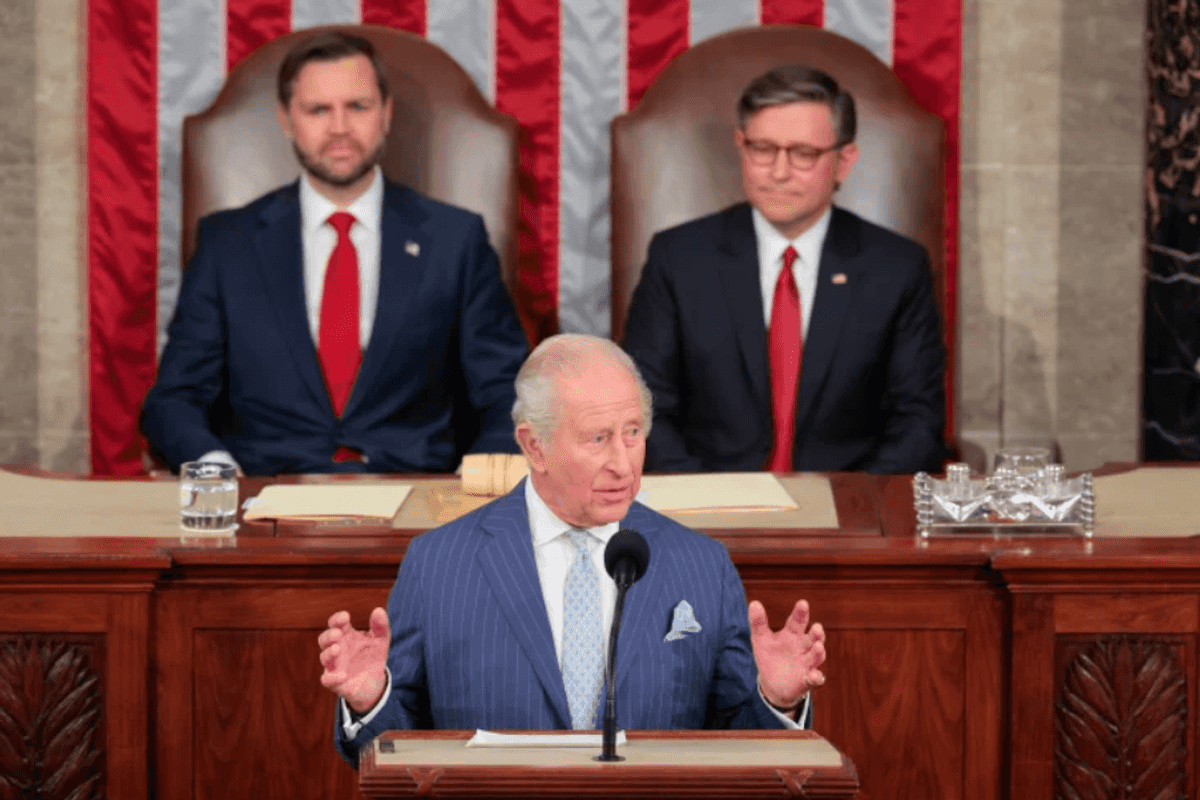
King Charles III addressing a joint session of Congress in Washington, D.C. on April 28, 2026
I've always been both a small-r republican and an Anglophile, so I looked upon the British monarchy with at least a pinch of smug superiority. The Windsors are revered for nothing more than birth — not talent, nor accomplishments, nor virtue. It's all a throwback to an earlier stage of human development, when people were not mature enough for representative democracy.
I wasn't feeling smug as I watched King Charles III address Congress the other day. Quite the opposite. Though I remain a small-r republican, I couldn't help but be embarrassed at what we supposedly mature, self-governing Americans have wrought.
Seated behind Charles were the vice president and speaker of the House, among the highest officers of the land. But befitting our descent from mature self-government, they were both bedecked in the MAGA uniform — blue suits, white shirts and red ties. Everything about them — every word, every gesture and even their clothing — attests to their fealty to their liege lord. Ditto for more than half of the representatives and senators in attendance. While they didn't all wear the uniform (they weren't on camera), the Republicans in Congress have surrendered their self-respect and independent judgment to the man who would be king. They are far more subservient to Trump than any member of Parliament is to Charles.
Trump revels in the servility of his vassals. The White House tweeted a picture of the two men with the caption "two kings." Yes, this tweet is partly a troll to enrage the "libs," but frankly, it doesn't go far enough. Trump aspires not just to be a king but to be a god-emperor. Look around — the massive Trump banners defacing official buildings, the renaming of the Kennedy Center and U.S. Institute of Peace, the coins, the proposed triumphal arch, the Trump ballroom, the reflecting pool (which will now look like Mar-A-Lago north), the new passports, the Trump class battleships, the national park passes, to say nothing of sidelining Congress, disregarding court orders, making unilateral war, and attempting to criminally prosecute his critics — all of it flagrantly un-American. And this from the party that garlands itself in flags and showy patriotism.
King Charles had a tricky task. His government (did you notice the way he referred to Kier Starmer as "my" prime minister?) and our other European allies are both horrified and scared about what Trump is doing to the transatlantic relationship. They've been adopting different tactics — concessions, flattery, toughness — to deal with the unhinged president who has stooped even to threatening military action against a NATO ally. Are the British questioning the "special relationship" with the United States?
Oh, yeah. In contrast to King Charles' soothing words, the Financial Times reports that Britain's ambassador in Washington, Sir Christian Turner, told a visiting group of students in early February that the phrase "special relationship" was "quite nostalgic, quite backward looking" and that the only country that currently enjoys a special relationship with the United States is "probably Israel." He did add that "there is a deep affinity between us, particularly on defense and security," but the message was clear. Trump has strained, if not quite ruptured, relations.
The king's visit can thus be interpreted as one more effort by the spurned Europeans to keep Trump on their side. Starmer, aware of Trump's imperial pretensions, played the "King Charles" card. The pomp, the state visit, the photo ops, and the speech to a joint session of Congress are all in service of both flattering and taming the disordered president.
King Charles, despite his title, is not free to say what he thinks. And yet he managed, subtly, to convey his awareness of the threat Trump poses not just to the relationship with the United Kingdom but to the values on which the Euro-American relationship is based. Referring to the shared legal traditions of the United States and Great Britain, he said:
"The U.S. Supreme Court Historical Society has calculated that Magna Carta is cited in at least 160 Supreme Court cases since 1789, not least as the foundation of the principle that executive power is subject to checks and balances."
The King also mentioned September 11, and reminded his audience that it was the first and only time that NATO invoked Article V. The allies came to our aid, not the reverse — a pointed rebuke to the president who has repeatedly disparaged Europeans' contributions to NATO and to our wars in Iraq and Afghanistan. He then added, "Today, Mr. Speaker, that same, unyielding resolve is needed for the defense of Ukraine and her most courageous people."
The king's speech closed with an invocation of Abraham Lincoln (hard to top), and a prayer:
"I pray with all my heart that our alliance will continue to defend our shared values, with our partners in Europe and the Commonwealth, and across the world, and that we ignore the clarion calls to become ever more inward-looking."
We all know who is issuing those clarion calls. One of the callers hosted the state dinner, and another was sitting over his right shoulder. The actual king has never looked better than in contrast to the American pretender to a throne.
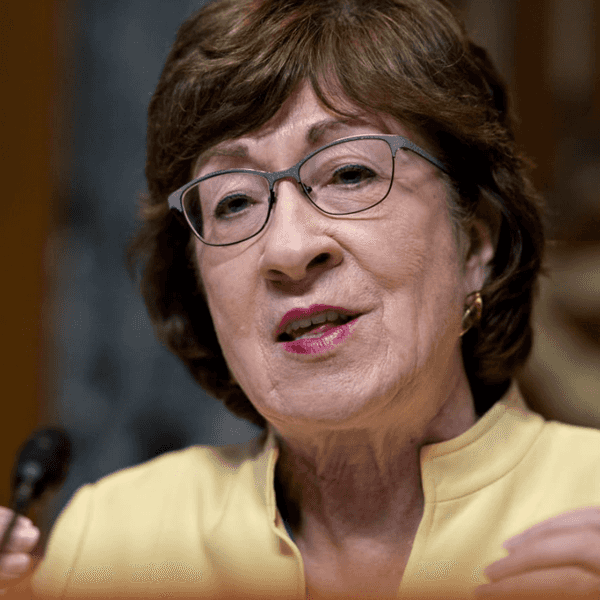
Mona Charen is policy editor of The Bulwark and host of the "Beg to Differ" podcast. Her new book, Hard Right: The GOP's Drift Toward Extremism, is available now.
Reprinted with permission from Creators
- 'He's a great king,' says Trump as he bids farewell to King Charles and Queen Camilla - BBC News ›
- 'King Charles III Delivers Joint Address to Congress ' ›
- How King Charles’s speech was written – and how to read it | King Charles III | The Guardian ›
- Read the complete transcript of King Charles III's speech to Congress ›
- Five takeaways from the King's historic address to US Congress ›