James Comey
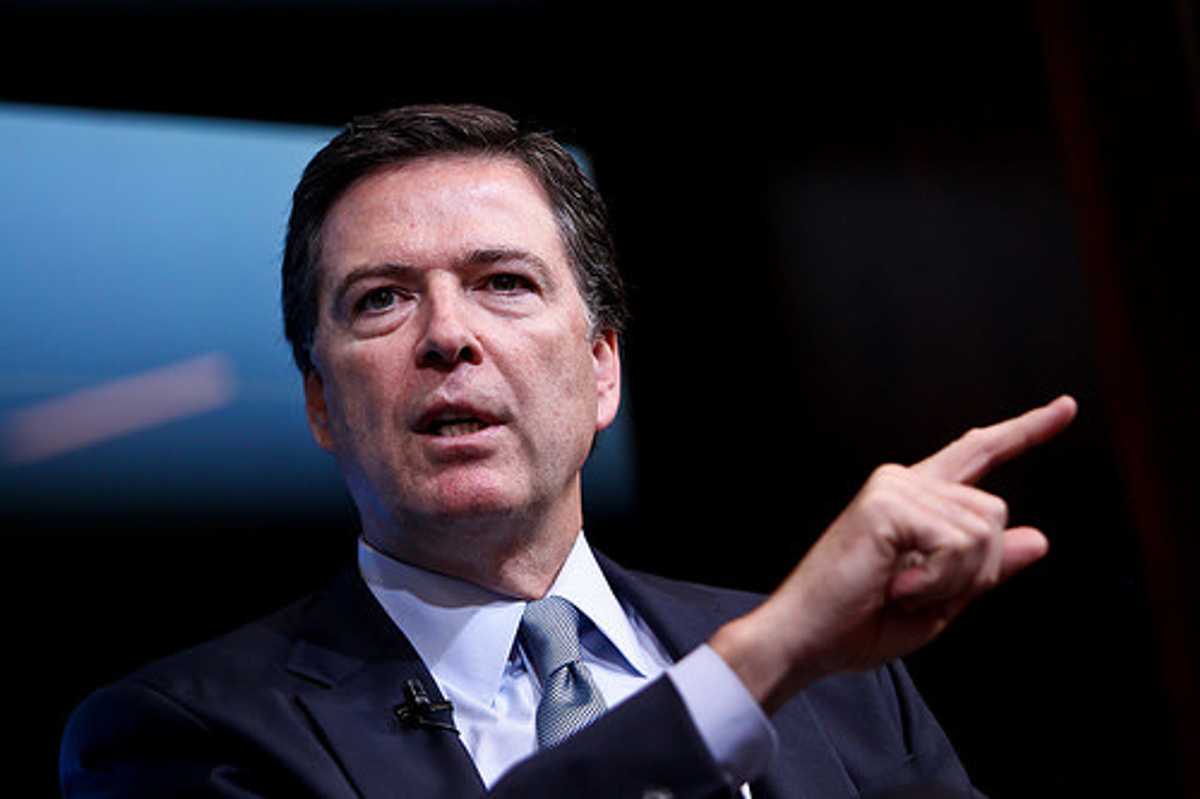
When the first James Comey indictment dropped last September, I called it the single most shameful act in the Department of Justice’s history. My singular outrage led me to devote five consecutive Substacks that week to cataloguing the wreckage: the legal infirmities, the procedural malpractice, and the naked political origins.
That case duly crashed and burned, dismissed as a legal nullity after a series of courtroom debacles that would have been farcical if the stakes hadn’t been so grave. Rather than accept the rebuke, the DOJ has doubled down with a bespoke indictment, custom-built for one defendant and one audience.
Even as that failed indictment remains technically on appeal, the DOJ now has brought a second indictment of the former FBI director in a different district on an entirely different theory. The charge, if anything, is even more bankrupt and tawdry than the first.
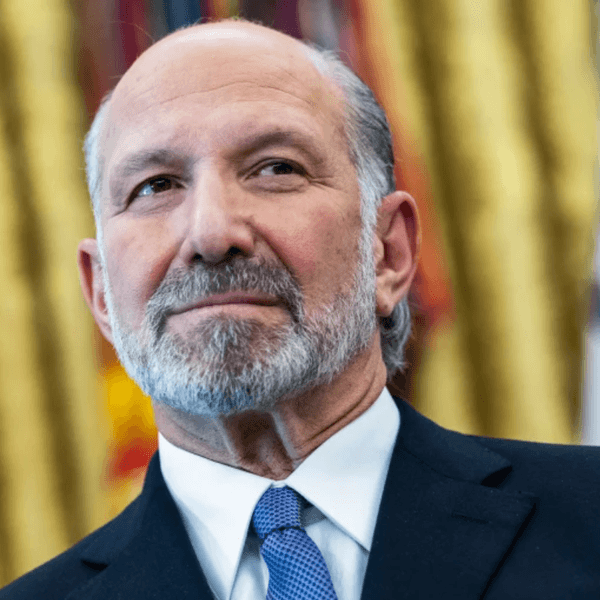
Of course, the filing does not come as the same sort of surprise this time. In his less than 4 weeks as Acting Attorney General, Todd Blanche has quickly reached new lows of lawlessness and shameless servility to the president. It was entirely predictable that he was out front at the press conference preening about the latest charges against one of Trump’s most avowed enemies.
But the charge, if less stunning, is no less appalling. And the press conference included a series of lies and half-truths that not long ago would have been stunning to hear from the lips of the nation’s highest federal law enforcement officer.
Contrary to the multiple whoppers Blanche told at his press conference Tuesday afternoon, this is decidedly not a normal case nor one the Justice Department would bring against any other defendant. Moreover, like last week’s indictment of the Southern Poverty Law Center, it offers literally no evidence of the core alleged conduct, and the theory embedded in the charging document actually contradicts what Trump and his circle of sycophants have been publicly claiming for nearly a year.
The facts are almost too silly to state with a straight face, but here they are. Last May, James Comey was on vacation on the North Carolina coast. He came upon—did not arrange, did not commission, did not construct—a collection of seashells that someone else had assembled on the beach in the pattern “86 47.” He photographed it and posted it on Instagram with the caption, “Cool shell formation on my beach walk.”
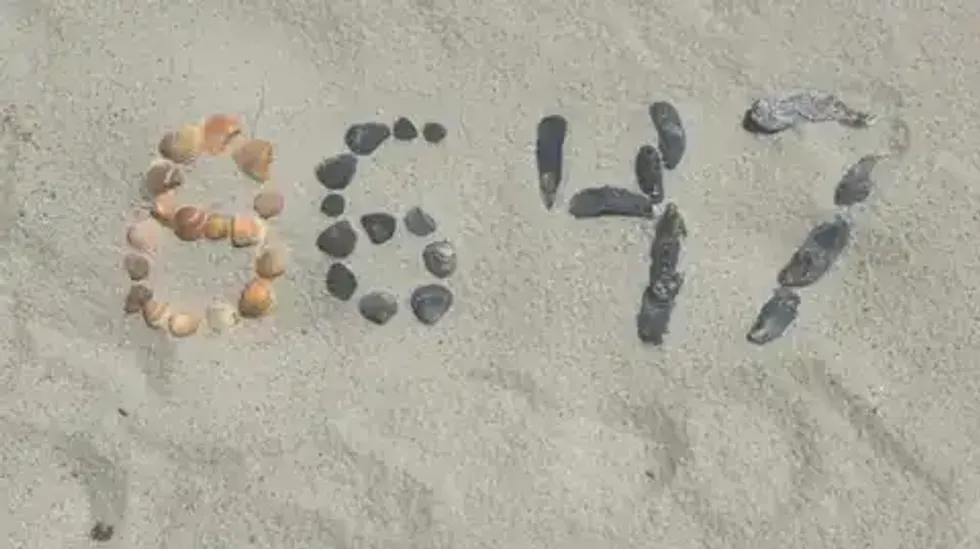
That’s the case, the entire godforsaken case.
On that filament, the Department has tried to balance a federal indictment for threatening the life of the President of the United States.
Comey responded to the indictment Tuesday with calm resolve: “I’m still innocent. I’m still not afraid. And I still believe in the independent federal judiciary. So let’s go.”
The charging statutes are 18 U.S.C. § 871(a), which prohibits knowingly and willfully threatening the life of or bodily harm to the president, and § 875(c), which prohibits transmitting such a threat via interstate commerce.
Both are real statutes that real prosecutors charge in real cases. Actual examples include the defendant who mailed President Reagan a series of letters specifying the exact date, time, and place he planned to kill him. Or the security guard who told a coworker he was going to Washington to kill President Nixon, and repeated it days later with a Secret Service agent listening from the trunk of his patrol car.
As these examples illustrate, § 871 carries a high intent requirement. To gain a conviction, the DOJ will have to prove that Comey “knowingly and willfully” transmitted a threat to kill or harm Trump.
Compare those to the wan facts in the Comey indictment. Most glaringly, the Department has not proffered a shred of evidence to suggest that in posting the found seashell pattern to his Instagram account, Comey was knowingly threatening the president.
To the contrary, the record points entirely the other way. Within hours of the post, Comey sat voluntarily with Secret Service agents and told them flatly that he had no idea the image would be read as a threat; that he understood “86 47” as a political sentiment, not a call to violence; and that he opposed violence of any kind. He deleted the post the same day.
Knowing all this for nearly a year, the government, or really Blanche, decided now to bring the charge that surely delighted Trump. But it included no evidence of the core element in the statute, namely, Comey’s intent.
Pressed on the point Tuesday, Blanche prevaricated. A reporter asked Blanche directly, how do you prove intent when Comey said he associated the numbers with politics, not violence, and took the post down immediately, Blanche had nothing to offer. He fumfered a generic, “Witnesses, documents, the defendant himself.” In other words, "beats me."
And in fact, there is no answer. I wrote about the SPLC indictment that the absence of any fraudulent statement is a hole you can drive a truck through; the same is true here of the absence of any proof of intent to threaten.
The paucity of proof of intent also puts the lie to both Blanche’s and Kash Patel’s assurances that this indictment is the fruit of a painstaking, eleven-month federal investigation marshaling the full resources of the FBI. Nonsense. Every fact necessary to evaluate this case was on the table within forty-eight hours of Comey’s post: the photograph, the caption, the deletion, and Comey’s on-the-record disavowal to federal agents. The three-page indictment adds nothing. The eleven months were not spent developing evidence. They were spent waiting for the right moment and the right acting attorney general.
No less than the first indictment, this filing is destined to go nowhere.
A brick wall stands only a few feet from the indictment in the form of the leading Supreme Court case interpreting § 871. Watts v. United States arose from the Vietnam War era. A man at a political rally declared, “If they ever make me carry a rifle, the first man I want to get in my sights is L.B.J.” The Supreme Court reversed Watts’s conviction under § 871. The Court held that Watts’s statement was political hyperbole protected by the First Amendment.
Watts presents an insurmountable barrier to the Comey charge. The government knows that full well. It knows, therefore, that it should never have brought the case, which requires (or did before the Trump DOJ shredded the Principles of Federal Prosecution) a determination that a conviction beyond a reasonable doubt is probable.
If “the first man I want in my sights is LBJ” spoken aloud at a rally does not constitute a true threat, a photograph of seashells on a public beach—arranged by a stranger, captioned as a curiosity, posted and deleted within hours, and absent any additional proof of intent—is D.O.A. The courts will never countenance it, even if the Department is banking on a sympathetic jury in the Eastern District of North Carolina.
It’s one of the more heartening signs of a broader pushback against authoritarianism that Trump’s reprisal prosecutions have consistently run aground. In this crucial area, the rule of law has, so far, withstood the rule of one. I expect it will here as well. But that has to turn on the continued vigilance of courts and all of us, even when confronting ridiculous conduct from DOJ that should, and in better times would, collapse of its own weight.
To close with the words of the unjustly charged defendant who today appeared in court and was briefly placed under arrest, “It’s really important that all of us remember this is not who we are as a country…Keep the Faith.”
Harry Litman is a former United States Attorney and the executive producer and host of the Talking Feds podcast. He has taught law at UCLA, Berkeley, and Georgetown and served as a deputy assistant attorney general in the Clinton Administration. Please consider subscribing to Talking Feds on Substack.
Reprinted with permission from Talking Feds.
- Comey Prosecution Appears Doomed After Federal Judge Eviscerates Halligan's Conduct ›
- Halligan's Retribution Prosecutions Of Comey and James Are Falling Apart Fast ›
- Ten Fundamental Flaws In The Case Against James Comey ›
- The Bitter Ironies Behind Trump's Tyrannical Indictment Of James Comey ›
- Danziger Draws - National Memo ›
- Danziger Draws - National Memo ›
- Comey’s lawyers say they will challenge threat charges as vindictive - The Washington Post ›
- Grand jury indicts former FBI director James Comey for a second time ›
- DOJ Secures New James Comey Indictment Over Alleged Threat Against Trump - The New York Times ›
- James Comey indicted over seashell photo that officials say threatened Trump ›
- Exclusive: Former FBI Director James Comey indicted over alleged ‘threat’ against Trump | CNN Politics ›