Tag: virginia
Virginia's First Female Governor Inaugurates Her 'Affordability Agenda'

Virginia's First Female Governor Inaugurates Her 'Affordability Agenda'

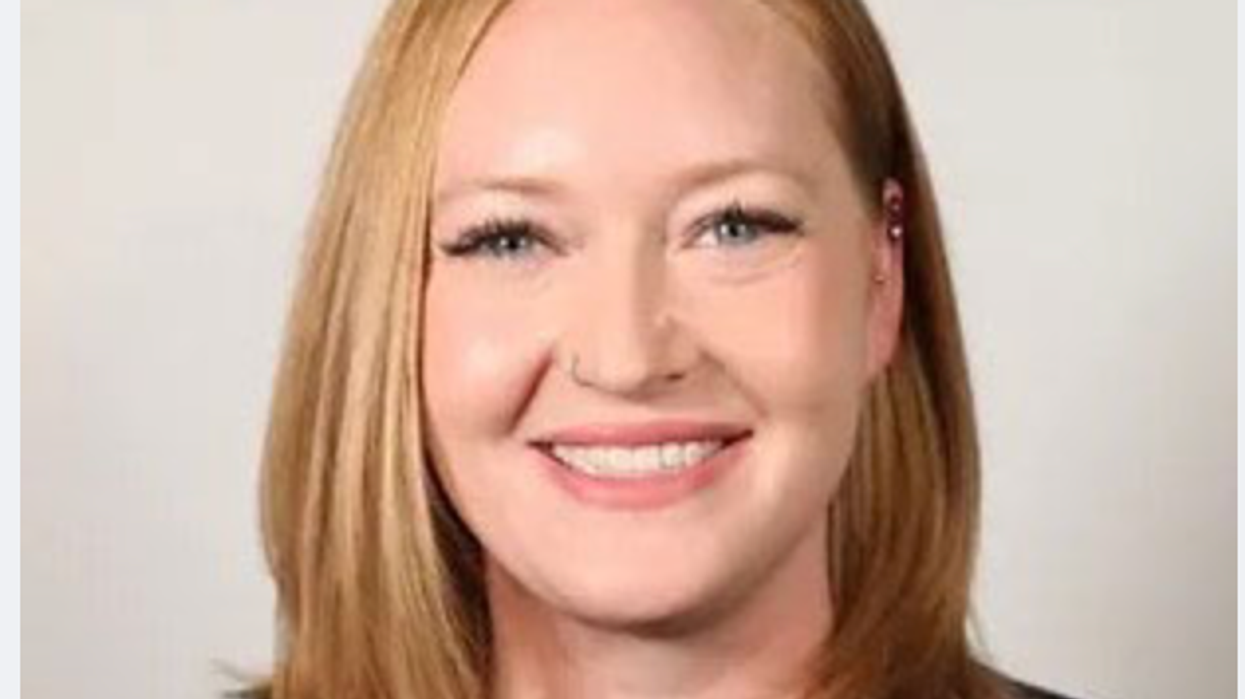
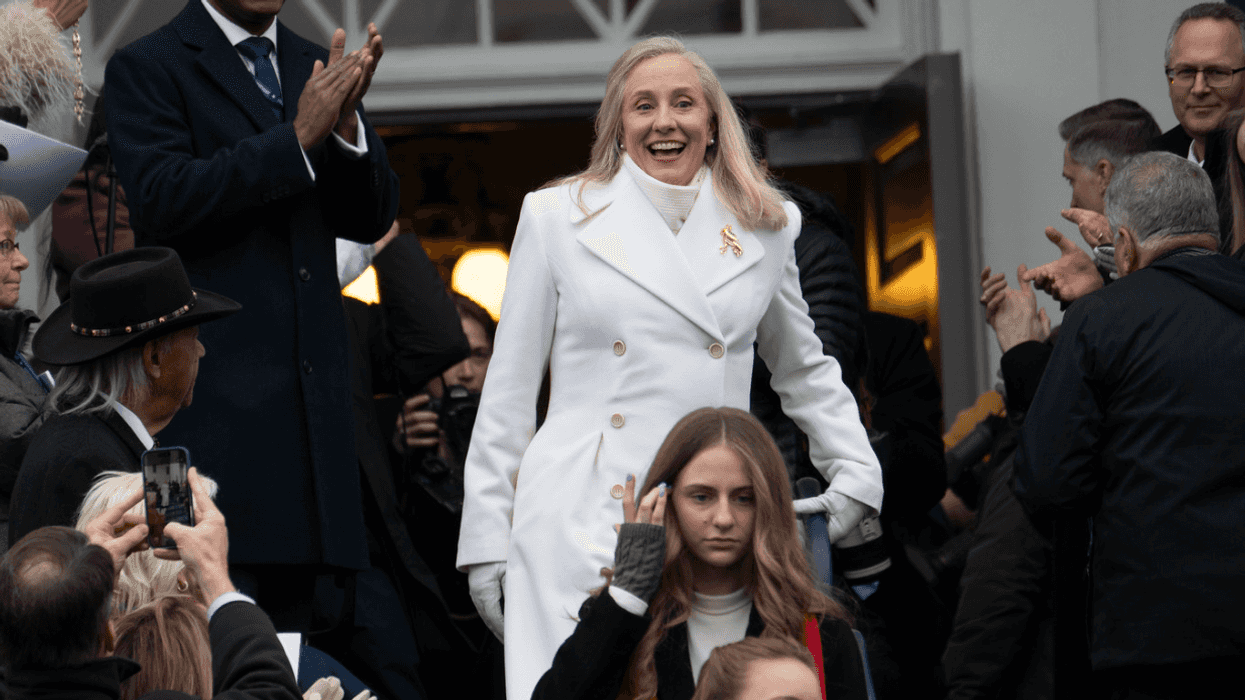
Abigail Spanberger, inaugurated on January 17 as the 75th governor of Virginia, began to implement her agenda centered around her campaign pledges to make the state more affordable, improve education, and address gun violence almost immediately after taking office.

Minutes after taking her oath of office, Spanberger signed 10 executive orders. The first order, called the Statewide Affordability Directive, ordered all Cabinet secretaries and executive branch heads to report to her within the next 90 days “identifying immediate, actionable budgetary, regulatory, or policy changes that would reduce costs for Virginians” addressing cost savings in housing, health care, energy, education, child care, and living expenses.

Other orders created an Interagency Health Financing Task Force to strengthen Virginia’s health care system, ordered a multi-agency Housing Development Regulation Review to increase the supply of housing, directed the Department of Education to strengthen literacy, math, school accountability, and assessment in the commonwealth’s public education systems.

“Today, we are responding to the moment. We are setting the tone for what Virginians can expect over the next four years: pragmatic leadership focused on lowering costs and delivering results,” Spanberger said in a press release. “My administration is getting to work on Day One to address the top-of-mind challenges facing families by lowering costs for Virginians in every community, building a stronger economy for every worker, and making sure that every student in the Commonwealth receives a high-quality education that sets them up for success. These executive orders represent the first steps in our work to create a stronger, safer, and — critically — more affordable future for our Commonwealth.”

On the campaign trail, she promised to address rising housing, health care, and energy costs and touted an eight-page plan detailing how she would do so.

Spanberger laid out her policy agenda in an address to the General Assembly on January 19, which is centered around the Affordable Virginia Agenda she and Democratic leaders in the House of Delegates and Senate are proposing in order to lower those costs.

Among her proposals was legislation to limit the profits of pharmacy benefit managers, provide targeted assistance to Virginians at risk of losing health insurance coverage due to the expiration of federal subsidies, boost energy storage, help Virginians make their homes more energy efficient, help renters avoid eviction, and build more affordable housing.

“These are not hyperpartisan proposals; they are commonsense solutions,” Spanberger told lawmakers. “And I believe they deserve support from every member of this body, Democrats and Republicans.”

Spanberger urged legislators to create a statewide paid family and medical leave program, increase subsidized child care, raise the hourly minimum wage to $15, and increase pay for teachers. She promised to sign bills, vetoed last year by then-Republican Gov. Glenn Youngkin, aimed at curbing gun violence, such as a ban on ghost guns, a law blocking convicted domestic abusers from accessing firearms, and an expansion of Virginia’s red-flag law temporarily disarming those judged to be an imminent danger to themselves or others.

Finally, Spanberger expressed her support for three constitutional amendments to be voted on by Virginians in November that would guarantee reproductive rights, automatically restore the right to vote for individuals convicted of a felony after they have completed their sentences, and codify the rights of two adults to marry.

She defended a fourth proposed constitutional amendment to temporarily change the way Virginia draws its congressional maps, likely to be considered by voters in April, saying: “Virginia’s proposed redistricting amendment is a response to what we’re seeing in other states that have taken extreme measures to undermine democratic norms. This approach is short-term, highly targeted, and completely dependent on what other states decide to do themselves.”

Giving the Republican response, Republican state Sen. Glenn Sturtevant criticized Democrats for advancing the redistricting amendment, saying it would not lower costs, according to a Cardinal News transcript. “We also need to be honest about what Democrats are proposing, because it will make life more expensive,” Sturtevant said, “Their tax-and-spend agenda would cost Virginia families billions each year, adding thousands of dollars in new burdens for the typical household.”

Reprinted with permission from the Virginia Independent
John Reid

Uh-Oh! Virginia Candidate's Blog Shared Content From Nazi Porn Accounts

A pornographic blog linked to Virginia lieutenant governor candidate John Reid shared content from accounts that fetishized Nazism and sexual violence.

The Republican candidate has denied ownership of the blog, which was hosted on Tumblr under the name JRDeux, the same handle he uses on Instagram and TikTok. Other news outlets have reported on the existence of the blog, but not its racist content or disturbing imagery.

Tumblr lets users upload and share different types of media. All of JRDeux’s posts were images reposted from other accounts. To find and share this content, JRDeux would have had to either follow the accounts that posted it, search for related material, or encounter it through Tumblr’s algorithmic recommendations.

Reid said the blog is part of a coordinated effort to smear him for being a gay Republican, even though its posts date back to 2014—before he was a political candidate and was mostly known as a local news broadcaster and media consultant.

The blog was deleted shortly after it was first reported on, but we were able to recover several posts using the Internet Archive. Please note that this article contains slurs that may be offensive to some readers.

In October 2015, JRDeux shared an image of a male college student in underwear from the user obedientn*ggerdc. That account’s bio described the user as a “subservient n*gger who knows his place in society” and included a solicitation for “superior white men” near Washington, D.C., to contact them via email.

Obedientn*ggerdc posted multiple images of shirtless men with white supremacist tattoos, including a close-up of a muscular chest emblazoned with a swastika and captioned, “fucking nice WP ink M88.” WP is an acronym for “white power,” and M88 is a neo-Nazi code phrase for “Heil Hitler.”

Other posts from this user were captioned with homophobic slurs and repeatedly referred to white men as “SSirs,” likely a reference to the Nazi Schutzstaffel, known as the SS. Another post praised the attractiveness of prominent GOP politicians it described as “conservative alpha males,” including Sens. John Thune and Todd Young.

The underwear photo was the only post JRDeux shared from obedientniggerdc.

Another post from obedientniggerdc showed a nude man being pinned down and choked, his face contorted in agony. JRDeux shared similar content from other users, including one image of a man in bondage gear using a necktie to asphyxiate someone and another of a bald man forcing someone’s face into his armpit.

Both of these images were reposted from the user slaveandy, whose profile described themselves as a “filthy faggot.” Many of the posts from this user were extremely graphic, showing men being forced to eat from dog bowls, locked in cages, or having their genitals mutilated. One depicted a man’s anus spread with a speculum and used as an ashtray.

Top state Republicans believe JRDeux is Reid. The Tumblr surfaced as part of a party assessment of candidate vulnerabilities conducted last spring. Republican Gov. Glenn Youngkin urged Reid to withdraw from the race because of the blog but did not divulge the specific content that prompted his call.

“Explicit social media content like this is a distraction,” Youngkin told reporters on April 29. “It’s a distraction for campaigns, and it’s a distraction from people paying attention to the most important issues.”

Reid has refused to leave the race and maintains the blog is not his.

While Reid identifies as a gay Republican, he has also taken several anti-LGBTQ positions. He is a vocal opponent of trans rights and signaling he would not cast a tie-breaking vote to protect same-sex marriage in Virginia.

Equality Virginia, the state’s largest gay rights organization, endorsed Reid’s Democratic opponent, state Sen. Ghazala Hashmi.

“It’s imperative that we keep that forward momentum this November by supporting pro-equality candidates willing to defend Virginia against outrageous federal overreach,” said Narissa Rahaman, the organization’s executive director.

Speculation about Reid owning the blog risks undermining his pledge to combat antisemitism, a centerpiece of his campaign platform.

A Reid campaign spokesperson did not respond to a request for comment.

Reprinted with permission from American Journal News.

In Her Own Words: Why This Doctor Fled Texas To Help Women In Virginia

In Her Own Words: Why This Doctor Fled Texas To Help Women In Virginia

Dr. Lou Rubino is just one of many physicians who’ve left Texas as a result of the state’s multiple abortion bans—laws that prevent doctors from treating pregnant women with not just abortion care, but life-saving emergency care. She’s now practicing in Virginia.

Dr. Rubino told her story to writer Bonnie Fuller for Dogwood.

I remember very clearly the moment I knew I was done. I could no longer practice as a women’s health care doctor in Texas.

I had a patient, probably 18 or 19 years old. I was doing an ultrasound, and she told me she needed an abortion for her safety. She said, “I’m too young. I don’t feel safe with my partner. I’m scared. I need an abortion.”

When a patient tells me they feel unsafe with a partner, I take that very seriously. Pregnant people are at high risk of harm from abusive partners. It’s a dangerous time. She knew what she needed, and I knew it was wrong for me to say no.

She was very early in her pregnancy, between six and eight weeks. I should have been able to prescribe abortion pills or perform a quick five-minute procedure. Instead, I had to tell her she could not get care in Texas. I explained she’d have to travel nearly nine hours to the nearest clinic.

She cried, and I cried. I told her this was wrong, that her rights were being violated, and that I couldn’t let her believe she was the one at fault. After that, I knew I couldn’t go on. I put down my things, walked out, and decided to leave Texas for good.

I asked myself: Am I the kind of doctor who does the wrong thing?
I’m not. And Texas couldn’t force me to be.

Not long after, my husband and I moved to Virginia, where I now practice.

‘I moved to Austin for something different’

I’m originally from Detroit and went to medical school at Southern Illinois University. I moved to Austin in 2015 for something different, met my husband, and did my residency at UT Southwestern in Dallas.

At first, I didn’t think of abortion as a political issue. But quickly, I realized that without abortion and miscarriage training, I’d be ignoring an essential part of women’s health.

Miscarriages are common—about 15 percent of pregnancies end that way. Abortions are also common—one in four women will have one. To ignore that would mean I wasn’t fully trained.

In Texas, there was no formal abortion training. Instead, I apprenticed with an OB-GYN in Austin and learned to perform medication abortions and procedures up to 18 weeks. I became the main doctor at the Austin Women’s Health Center for several years, and I loved it. Providing a safe abortion can completely change someone’s life.

Then came the bans. After Senate Bill 8 passed in 2021, prohibiting abortions after six weeks, I began making plans to leave. I didn’t want to abandon my patients, but I also knew the state was stripping me of my job and my oath as a physician. When the Supreme Court overturned Roe v. Wade in 2022, Texas’s trigger ban outlawed abortion from conception.

I realized I couldn’t protect my staff while breaking the law. The day I had to turn away that young patient made me understand: By following the law, I was doing the wrong thing medically. I walked out of the clinic for good.

‘We get anti-abortion patients coming in for abortions, too’

I took work in Virginia and eventually helped open Meadow Reproductive Health and Wellness Clinic in McLean, just outside Washington, D.C. I’m now its medical director. We provide abortions up to 15 weeks and hope to expand to 18 when we grow our staff. About 20 percent of our patients come from out of state—often driving through the night from places like Florida, Georgia, or Alabama. Some bring children because they don’t have childcare. We started stocking microwaveable meals because a lot of people can’t afford food while traveling.

Every out-of-state patient has a story of desperation—needing time to gather money, arrange childcare, or escape an abusive partner. Too many people who need abortions aren’t getting them at all.

Now, in Virginia, I can practice the way I was trained. I no longer have to wonder whether my medical advice could land me in court. In Texas, at one point, I even asked myself, “Am I supposed to follow state laws or a tweet from the attorney general?”

I understand at a really fundamental level that the most basic human right is bodily autonomy. Without the right to control your pregnancy, you don’t have it. And without good reproductive health care, you risk your quality of life—or your life itself.

We get “anti-abortion” and deeply religious people coming in for abortions, too. They come to us for the same reasons anyone does: financial hardship, health risks, education, safety. They’re human, too.

I was nervous to tell my conservative grandmother in Tennessee about my work. But when I did, she surprised me. She said: “If someone needs an abortion, I’d want you to be the one doing it. I’m glad you’re doing that.”

Leaving Texas has been a relief. Here in Virginia, I can focus on patients and provide care in the right ways—medically, safely. You see, I took an oath as a doctor and I take it very seriously.

From the editor: How abortion bans are impacting Virginia and its neighbors

Abortion bans in Southern states have compelled expert doctors like Dr. Lou Rubino to relocate to Virginia, where laws allow medical professionals to provide essential reproductive health care. Clinics such as Meadow Reproductive Health and Wellness now serve not only Virginians, but also a growing number of women traveling from states where access is restricted—including Texas. These patients often arrive after long and difficult journeys, seeking safe and legal abortion care that is increasingly unavailable closer to home.

Reprinted with permission from VaDogwood.

Bob Good (R-VA)

Bob Good Suggests 'Election  Fraud' By Trump-Backed Rival In GOP Primary

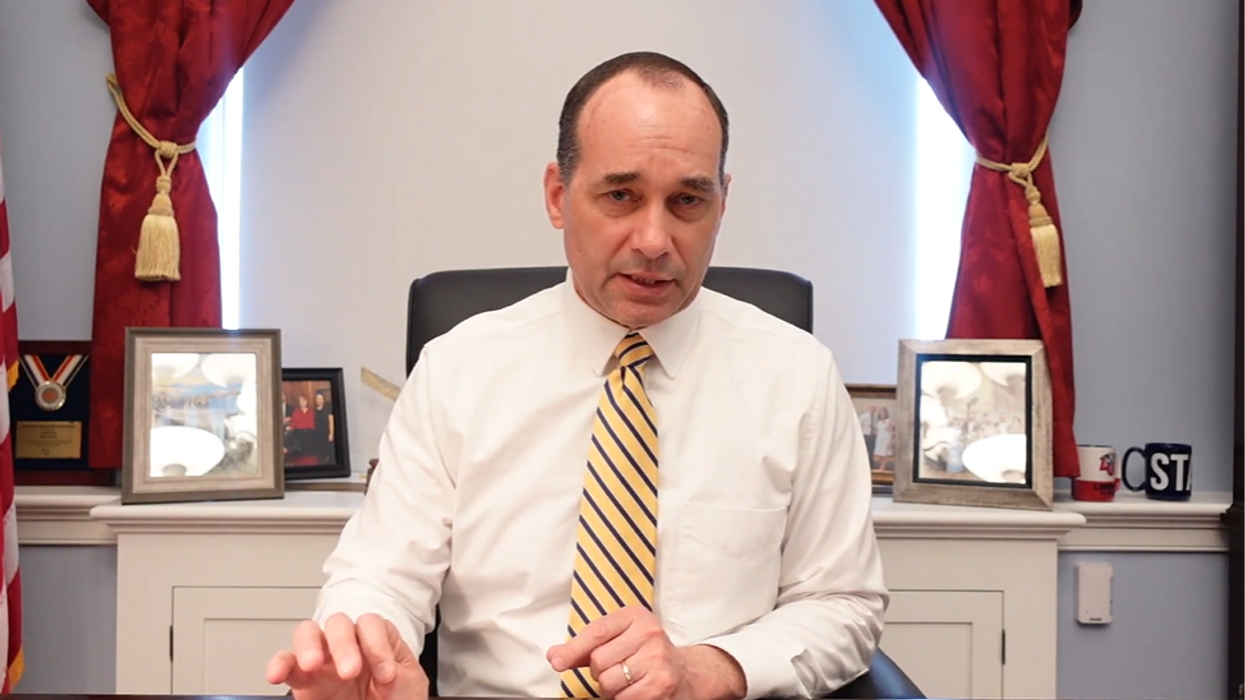
A week after Virginia’s primaries, the race between Freedom Caucus Chair Bob Good and state Sen. John McGuire remains too close to call, but Good isn’t waiting for the final results to yell fraud. Turns out, election denial works even worse if you’re not convicted felon Donald Trump. It also doesn’t garner you much support when Trump endorsed the other guy.

Good is demanding a revote in the city of Lynchburg, where he is leading in the count, and he is saying that if the revote doesn’t happen, he’ll block certification of the city’s results because, of course, conspiracy theories of fraud.

“They did not secure their drop boxes. There’s no accountability for when those boxes were open. They were apparently left to be stuffed for two or three days after the election,” Good said Monday on Steve Bannon’s War Room podcast. “There’s no accountability for who opened those, how many ballots came out.”

In the case that the ballot-stuffing and/or -stealing allegations don’t pan out, Good is also pushing a conspiracy theory about fire alarms that went off in some precincts.

“We had 3 ‘fires’ on election day in 3 precincts, all requiring the precincts to be evacuated for 20 minutes. Albemarle County, Hanover County, and Lynchburg City,” he tweeted last Thursday. “What is the probability? Does anyone recall even 1 fire at a precinct on election day?”

There were no fires, and no one was prevented from voting in any of the incidents, election officials in each county told USA Today.

All of this is being met by ridicule and worse from Good’s Republican colleagues in the House. That might have something to do with the fact that Trump has already declared McGuire the winner.

"[Of] course Bob is claiming election fraud. He is grasping at straws to help save his political career," Rep. Derrick Van Orden of Wisconsin told Axios. "If Bob had spent more time working for America and less time trying to dictate to other members of Congress how we could vote for our constituents, we would not be having this conversation. He is a bully and it is time for him to go,” he added.

"F**k Bob Good. Bob Good is a sore loser. His defeat strengthens our majority," one House Republican anonymously told Axios, while another said, "I assume Bob Good is full of s**t."

"What a loser,” Rep. Mike Lawler of New York said, noting that Good won Lynchburg but is still declaring fraud there.

Who knew that House Republicans would ridicule election denial? It seems that because Trump endorsed the other guy, the MAGA crowd just won’t back Good on this one. If Good somehow manages to eke out the win, however, all bets are off on whether they believe fraud happened.

Reprinted with permission from Daily Kos.

Shop our Store

Headlines

Editor's Blog

Corona Virus

Trending

World