Tag: biden administration
Is Trump's Promise To Slash Prices Working Out For You? No? I've Got Receipts

Is Trump's Promise To Slash Prices Working Out For You? No? I've Got Receipts

Donald Trump's assault on our democratic institutions did not stop voters from giving him a second term. The top reason they cited for reelecting him was the economy, notably their unhappiness over high prices.

During the campaign, Trump promised to "bring prices down, starting on Day One." How he would do this was left to our imagination. It seemed something along the lines of using his awesome powers to freeze prices and even make some melt. That and a pack of lies.

Two days back in office, Trump issued a "Fact Sheet" headlined "President Donald J. Trump Delivers Emergency Price Relief for American Families to Defeat the Cost-of-Living Crisis." Oh? Did you feel that instant "price relief" by virtue of Trump simply walking over the White House threshold once again?

His loyal defenders argued that, hey, that's how Trump talks. Give him some time and he'll bring the cost of living to heel. Trump has had well over a year to work his magic, and so let's see how his promises to enrich ordinary Americans have panned out.

— DOGE checks. Remember them? Trump said in February 2025 that he was "considering" a plan to send taxpayers some of the savings achieved by Elon Musk's Department of Government Efficiency. He threw out the number $5,000.

The number of DOGE checks issued: Zero.

— Tariff checks. Come August, Trump floated the idea of sharing the fruit of his trade war with the people. He talked of sending some tariff revenue back to Americans in the form of dividends.

The number of tariff dividend checks issued: Zero.

— Prescriptions 1,500 percent cheaper. Trump's negotiators did get drug companies to "promise" discounts on a small number of drugs. That led Trump to immediately announce something that was demonstrably untrue: "We now are paying the lowest price anywhere in the world for drugs."

Meanwhile, our median price for hundreds of brand-name drugs has risen four percent this year.

Not to quibble with Trump's math, but a 100 percent reduction would drive those drug prices down to zero. A 1,500 percent reduction is a mathematical absurdity.

— Credit-card interest rates capped at 10 percent. On January 10, Trump posted his call for that 10 percent limit on credit-card APRs (annual percentage rates). It was to start 10 days later and last a year. He added a threat to his decree: Credit-card companies would be "in violation of the law" if they didn't lower their rates as ordered. As it happens, presidents don't have the legal authority to force credit-card companies to slash their interest rates.

Spring is here, and the average credit-card APR is about 21 percent. That's higher than 10 percent, don't you think?

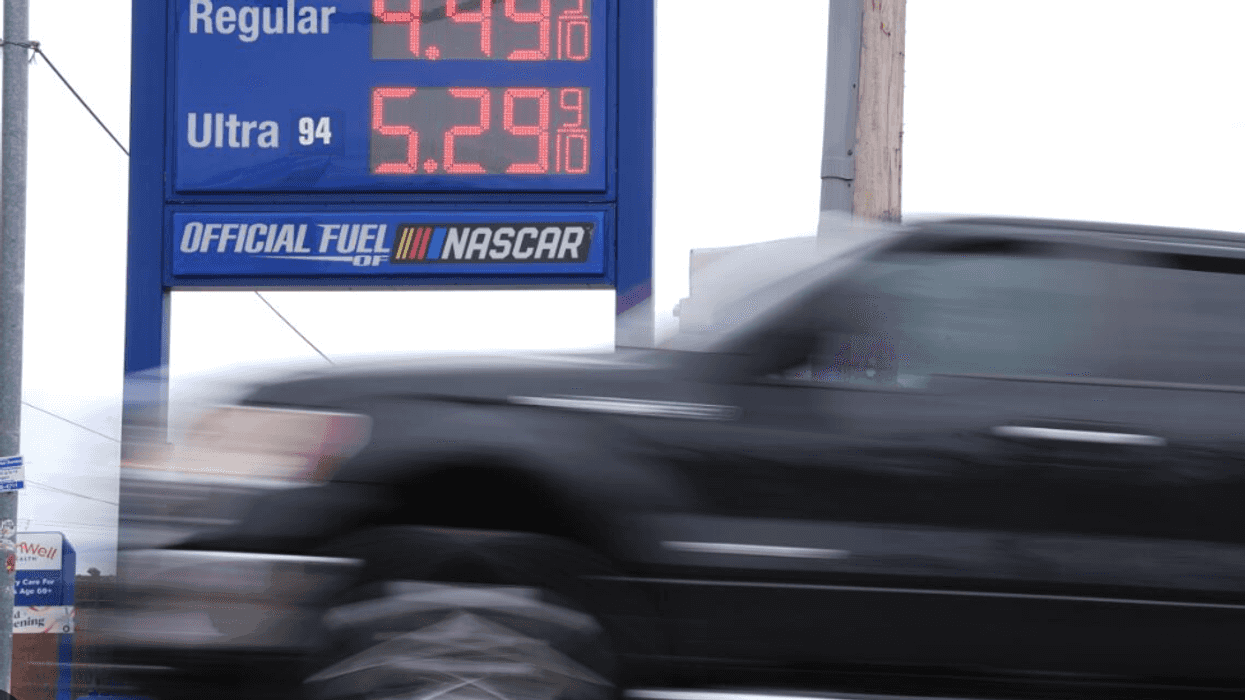
— Gas under $2.00. Trump promised that, but the war with Iran is incompatible with cheap gasoline. The U.S. average price for a gallon of regular gasoline currently stands at over $4.00.

— Lower grocery prices. On the campaign trail, Trump said, "A vote for Trump means your groceries will be cheaper." Since Trump returned to office, the consumer price index for "food at home" shows grocery prices up about 2.4 percent. That's not a huge jump, but in no way does it translate into "cheaper groceries."

Former President Joe Biden inherited messed-up supply chains in the wake of COVID. That was the main driver of his inflation numbers, though the stimulus spending didn't help. But when Biden left office, the inflation rate was down to three percent. For the record, it's now 2.4 percent.

There was much I didn't love about Kamala Harris, but Trump's attempt to violently overthrow the results of the 2020 election was the ultimate deal-killer for reelecting him. To me, the sanctity of American elections mattered more than the price of a hamburger. Many others, obviously, disagreed.

Froma Harrop is an award winning journalist who covers politics, economics and culture. She has worked on the Reuters business desk, edited economics reports for The New York Times News Service and served on the Providence Journal editorial board.

Reprinted with permission from Creators.

How Do We Make Billionaires Pay Their Fair Share Of Taxes? Beef Up The IRS

How Do We Make Billionaires Pay Their Fair Share Of Taxes? Beef Up The IRS

"The rich should pay their fair share of taxes." Who can argue with that? But then we must decide who is rich and what is meant by fair. Neither political party has distinguished itself in making such distinctions.

But Republicans play an especially outrageous game in portraying the Internal Revenue Service as the working stiff's enemy. For salaried workers, taxes come straight out of paychecks, meaning most are already paying what they owe. Owners of small businesses have more deductions at their disposal, but the neighborhood bakery that tries to follow the rules doesn't have much to fear.

When Joe Biden's Inflation Reduction Act funded the hiring of about 15,000 IRS employees, however, Republicans played the public for boobs. "Are they (the IRS) going to have a strike force that goes in with AK-15s already loaded, ready to shoot some small-business person in Iowa?" Sen. Chuck Grassley, the Iowa Republican, asked on Fox News.

In reality, criminal investigation special agents go only after serious tax cheats, and just 2,000 of them are armed. These cases involve destroying records, double-bookkeeping and the like. They aren't persecuting taxpayers whose math was innocently off or were even negligent.

And so to address Grassley's complaint: If some small business person in Iowa is engaged in money laundering, narcotics trafficking or major league fraud, then yes, armed IRS agents may come to visit.

The IRS employed about 102,000 people at the beginning of Donald Trump's second term. Staffing has been cut down to about 74,000. Not only are there fewer agents going after tax dodgers, but there are also fewer customer support workers able to answer ordinary people's tax questions.

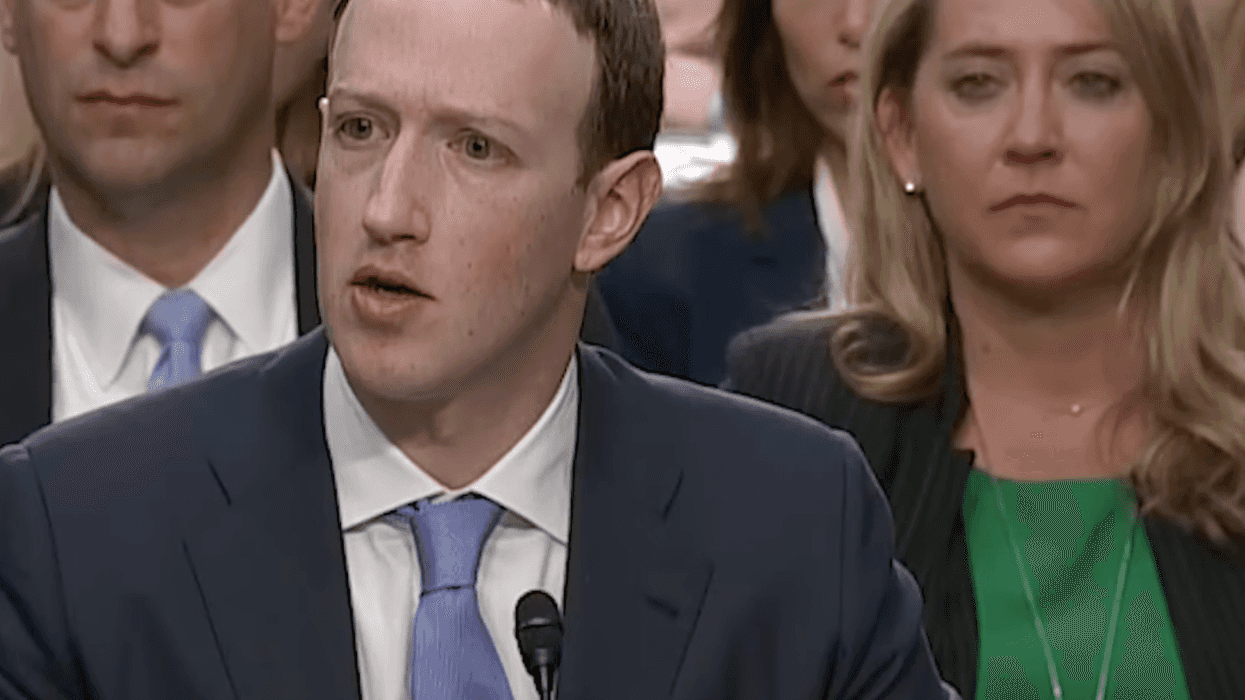
The chief beneficiaries of lax tax enforcement are the rich who employ squads of accountants to hide income or manufacture unlawful deductions. The tax code already favors them. For example, capital-gains taxes — which are paid after selling stock or other assets — can pay taxes at a lower rate than wages. That's why Meta magnate Mark Zuckerberg has himself paid a salary of only a dollar a year. He is lavishly compensated through a cargo-ship-sized pile of securities and other assets taxed at the lower capital-gains rate.

There are reasons for treating capital gains differently from earned income, but must the tax advantage for the former be so big?

Democrats crusading for more tax "fairness" have this foolish habit of targeting their own rich residents. The proposal in Democratic-controlled California to slap a one-time five percent tax on everything a billionaire owns is nuts. Democratic Gov. Gavin Newsom wisely opposes this utterly complicated scheme, which it seems would force some Californians to add up the value of their vintage watches, boats and paintings for tax purposes. New York City Mayor Zohran Mamdani, meanwhile, weaves myriad proposals for raising taxes in ways that would seep deep into the middle class.

What the California and New York tax proposals have in common is providing an incentive for the rich to move elsewhere. It's not like these places don't already tax the top incomes. Many very rich people have continued to live in these jurisdictions for their economic vitality, schools, cultural institutions and other amenities. And they pay almost all the income taxes.

But they have limits. It's one thing to tax them. It's another to portray taxing them as a means of punishment. Tax reform that closes loopholes and special deals benefiting the super-rich much be done at the national level.

The IRS doesn't make tax laws. It is federal agency that collects taxes and enforces the laws. Middle-income and "merely affluent" Americans should recognize this: The taxes that the richest among us don't pay are taxes that they pay.

Froma Harrop is an award winning journalist who covers politics, economics and culture. She has worked on the Reuters business desk, edited economics reports for The New York Times News Service and served on the Providence Journal editorial board.

Reprinted with permission from Creators.

Sorry Mr. President, But The Affordability Crisis Isn't A 'Hoax'

Sorry Mr. President, But The Affordability Crisis Isn't A 'Hoax'

It was yet another performance that left us wondering about President Donald Trump’s failing mental faculties. Speaking to supporters at a rally in Mount Pocono, Pennsylvania last week, Trump was typically unhinged.

And we have two price charts. Do you remember the last time I pointed to a chart? I don't care what these charts say. My all-time favorite chart was the chart I had in Butler. I said, "Let's look at the chart." I don't care how good that chart looks, it's shit by comparison to the one in… It's nothing. I like the Butler chart. Remember that was on how great employment was and all this, but I like it for other reasons. Look at that chart. It's good. But now that I talk about the Butler chart, I don't even want to look at it, doesn't mean anything. But look, Biden price increases and Trump price increases. Look at Biden. Up 37, 24%, 22, 21, 30.7, 30.7 again, 10.4%, 49%. Trump, the price is down 5.1, 4.2, 0.5, down 4%, 2.9. Look at that. Our prices are coming down. Their prices, it's a hoax. They're just … Remember they said the Inflation Reduction Act, remember that? Billions and billions, hundreds of billions of dollars, the inflation, and after they got it approved, because we had a few Republicans that went along with that whole hoax.

If there was a coherent thought buried in all that gibberish, he later tried to summarize it this way: “Prices are coming down very substantially. But they have a new word. They always have a hoax. The new word is affordability.”

He can call it a hoax all he wants, but Trump and his team know affordability is a real problem. That’s why he’s suddenly trying to co-opt the term, like a cringe Truth Social post declaring himself “THE AFFORDABILITY PRESIDENT.” It’s also why his team has sent him out on what it’s calling an “affordability tour,” which is how he ended up in Mount Pocono at the Mount Airy Casino Resort. The largest ballroom there holds about 1,200 people—a telling choice by a campaign clearly afraid of empty seats at a sizable venue.

What should worry Republicans is not just the optics, but the substance. A rally supposedly designed to counter Democratic attacks on affordability instead showcased Trump creating an entire alternate reality.

“We’re getting inflation,” he said. “We’re crushing it, and you’re getting much higher wages. I mean, the only thing that’s really going up big, it’s called the stock market and your 401(k)s that’s going up.”

That line should sound familiar, because Democrats already tried it—and paid the price. President Joe Biden and Vice President Kamala Harris spent much of the 2024 campaign insisting the economy was strong, that inflation was cooling, that wages were up, and that voters simply didn’t understand how good things really were.

Voters didn’t buy it. Telling people they’re wrong about their own financial stress is a losing message, no matter which party delivers it.

Trump is now making the exact same mistake, only he’s louder and more detached from the lives of the people he claims to be fighting for. Instead of acknowledging the pain people are actually feeling, he reached for a familiar crutch: bragging about the stock market, as if that is supposed to mean something to an audience in Appalachia or to anyone struggling to pay rent or buy groceries.

And he couldn’t stop.

“The stock market has set 51, this is in less than 10 months,” Trump said. “The stock market has set 51 all-time record highs. There’s never been anything like that. Bum, bum, bum, bum, bum, bum.” He repeated the claim again for good measure.

Then came a reprise of the “let them eat cake” routine he’s been workshopping for a while. After bizarrely claiming that without his tariffs “you would have no steel,” Trump explained that Americans should simply do without other consumer goods.

“You can give up certain products. You can give up pencils because under the China policy, every child can get 37 pencils. They only need one or two,” he said. “You don’t need 37 dolls for your daughter. Two or three is nice, but you don’t need 37 dolls.”

It’s remarkable watching so many cultish conservatives swing from “Don’t tread on me” to “Please daddy Trump, tell me how many dolls my daughter can have.” For the broader electorate, though, this message is political poison.

MAGA Media Knew Trump Would Wreak Economic Havoc --- And Now He Is

MAGA Media Knew Trump Would Wreak Economic Havoc --- And Now He Is

For months, MAGA sycophants and right-wing media personalities have been warning that President Donald Trump’s agenda to gut the federal government and institute widespread tariffs could devastate the economy, which they attempted to spin as an important step to restoring the balance supposedly missing from the strong economy Trump inherited from the Biden administration.

With many of Trump’s policies going into effect or scheduled to begin soon, economists, analysts, and news organizations are already pointing to new indicators of a pullback in consumer spending, weak consumer confidence, worsening inflation expectations, and higher than expected weekly jobless claims as evidence that the promised economic mayhem is already beginning.

Economists and news outlets say new economic indicators show economic trouble ahead

  • University of Michigan economist Justin Wolfers: Census Bureau data shows that “Americans responded (sharply!) to the Trump tariffs *before* they were even imposed” by importing extra goods to avoid “paying the higher prices that would occur when he was in office.” Wolfers added: “This also gives you a sense of who to blame for somewhat higher inflation in January. No, he wasn't in office yet. But suppliers know buyers need to buy ahead of future tariff-afflicted price hikes, and so likely felt little pressure to offer their usual discounts.” [Bluesky, 2/28/25, 2/28/25]
  • University of California, Berkeley economist Jesse Rothstein: “It seems almost unavoidable at this point that we are headed for a deep, deep recession” due to Trump’s policies. Rothstein wrote: “Just based on 200K+ federal firings & pullback of contracts, the March employment report (to be released April 4) seems certain to show bigger job losses than any month ever outside of a few in 2008-9 and 2020.” [Bluesky, 2/18/25]
  • Washington Post economic columnist Heather Long, citing new data from the Bureau of Economic Analysis, wrote: “Warning sign for the economy: Big drop in consumer spending in January. Personal consumption expenditures *decreased* 0.2%.” Long added: “Look at the categories with big drops -- car parts, recreational stuff, appliances, furniture, clothing -- a lot of this is ‘nice to haves’ that people cut first when times get tough.” [Twitter/X, 2/28/25]
  • Center for Economic and Policy Research senior economist Dean Baker noted that “January had the largest drop in consumption spending in four years,” and called it a “recession-type drop in spending.” [Twitter/X, 2/28/25, 2/28/25]
  • Former Council of Economic Advisers Chairman Jared Bernstein: The drop in consumer spending is “concerning and consistent with consumer angst re tariffs, uncertainty.” [Twitter/X, 2/28/25]
  • Center on Budget and Policy Priorities senior director for federal fiscal policy Brendan Duke on the drop in consumer spending: “Do wonder if a big economic effect of the Trump Administration's attacks on federal employees and contractors is that they and their families are pulling back on consumer spending because they are *worried* about losing their jobs even if they haven't lost them yet.” [Twitter/X, 2/28/25]
  • Nobel Prize-winning economist Paul Krugman on the drop in consumer spending: “Consumers already seem worried about policy madness, and they ain't seen nothing yet.” [Bluesky, 2/28/25]
  • According to two surveys, consumer confidence has slumped to a level that “usually signals a recession ahead.” Two consumer confidence surveys for February, released just days apart, indicated that public perceptions of the economy have worsened significantly since Trump took office, with fears of “tariff-induced price increases” dragging down consumer sentiment in a survey published by the University of Michigan, and nagging worries about “income, business, and labor market conditions” driving down sentiment in a survey published by The Conference Board. Both surveys were weaker than economists had expected, with the University of Michigan’s index registering the highest inflation expectations since 2023, and the Conference Board’s survey falling to a level that “usually signals a recession ahead.” [The Wall Street Journal, 2/21/25; The Conference Board, 2/25/25]
  • CNN: “The stock market had its worst week of Trump’s presidency – the Dow lost 1,200 points over the course of Thursday and Friday” as “investors grew fearful that the weakening consumer sentiment could lead to a pullback in Americans’ shopping habits.” CNN also quoted FWDBonds chief economist Chris Rupkey telling investors, “The public’s fears have soared in just the last two weeks showing the blizzard of changes coming from the president’s desk have spilled over the line between pro-growth into the realm of pro-inflation. … Once inflation expectations start moving higher it is only a matter of time before actual inflation takes off.” [CNN, 2/24/25]
  • CNBC: “Weekly jobless claims jump to 242,000, more than expected in latest sign of economic softening.” On February 27, CNBC reported that “jobless claims for the week ended Feb. 22 totaled a seasonally adjusted 242,000, up 22,000 from the previous week’s revised level and higher than the Dow Jones estimate for 225,000.” CNBC explained that “the level of claims matched the highest since early October 2024 and comes amid questions over broader economic growth and worrying signs in recent consumer sentiment surveys” and amid Trump “taking aggressive measures to reduce the federal workforce.” [CNBC, 2/27/25]
  • Bloomberg: “Trump Risks American Consumer Backlash Over Tariffs, Poll Shows.” Bloomberg reported that a Harris Poll found that “almost 60% of US adults expect Trump’s tariffs will lead to higher prices,” and “44% say the levies are likely to be bad for the US economy.” [Bloomberg, 2/27/25]
  • CNBC: “The Federal Reserve’s favorite recession indicator is flashing a danger sign again.” CNBC reported: “The 10-year Treasury yield passed below that of the 3-month note in trading Wednesday. In market lingo, that’s known as an ‘inverted yield curve,’ and it’s had a sterling prediction record over a 12- to 18-month timeframe for downturns going back decades.” [CNBC, 2/26/25]

Trump supporters have been warning that his agenda calls for “hardship”

  • Elon Musk said during an October 25 telephone town hall that Trump’s agenda “to reduce spending to live within our means … necessarily involves some temporary hardship.” Since then, Musk has become the embodiment of the so-called Department of Government Efficiency (DOGE), which is reportedly responsible for many federal firings and spending freezes. [The New York Times, 10/29/24; The Associated Press, 2/21/25]
  • Musk later agreed with an X user who wrote that there will be an “initial severe overreaction in the economy” and that the “market will tumble” as Trump enacts his agenda. Musk replied on October 29, “Sounds about right.” [The New York Times, 10/29/24]
  • Fox News host Laura Ingraham: Trump’s agenda will be “tough for the economy. There is no doubt about it.” Ingraham added: “People have to get, as my father would have said, real work, real jobs. People are going to have to get jobs and they're going to be scrambling.” [Fox News, The Ingraham Angle, 11/20/24]
  • Podcaster Jason Calacanis: “DOGE is going to require collective sacrifice.” He wrote: “Getting Americans & their representatives to decline funding the government has ALREADY promised them, and that they fought hard to get, is going to be an extremely difficult task.” [Twitter/X, 11/22/24; Vox, 11/12/22]
  • Then-Fox contributor Tammy Bruce (now a government spokesperson): People are going to lose their jobs, “and it's going to be good, because yes, more jobs will be created in the private sector for them.” [Fox News, Hannity, 12/5/24]
  • Fox host Todd Piro: “Now, admittedly, we're going to have some tariffs, and that's going to raise prices. But the overall impact on the economy, hopefully, when Trump takes over, will make people feel better. And then when people feel better, the economy is better.” [Fox Business, Varney & Co., 12/11/24]
  • Heritage Foundation economist Stephen Moore on government jobs: “I guarantee you that number is going to be down next month, because we’re already seeing the Trump administration really shred jobs in the government sector.” [Media Matters, 2/7/25]
  • Fox Business host Charles Payne: “States are going to have a lot of their own sort of comeuppance, if you will” from the Trump administration cutting spending. Payne also claimed the Biden administration “tried to goose these numbers” with “a lot of money [that] was parceled out to states.” [Fox Business, Mornings with Maria Bartiromo, 2/7/25]
  • Faulkner on DOGE gutting the federal government: “There will be some fallout, because people will be losing their jobs.” [Fox News, Outnumbered, 2/18/25]
  • MAGA radio host Dan Bongino: People need to “take it on the chin” and “sacrifice for a little bit” for Trump’s policies. Bongino said: “We’re just asking you to sacrifice for a little bit for the long-term prosperity of the United States. Now’s the time. … We’re all going to take it on the chin a little bit. Rich guys, poor guys, middle class guys, someone’s going to lose their tax cut. It is time to take it on the chin. We have to fix this thing now, not tomorrow.” [The Dan Bongino Show, 2/18/25]
  • Payne suggested it could be positive if Trump creates a recession. After a guest pointed out that President Ronald Reagan “came into office in 1981, that he slashed federal head count and actually put the economy back into the double dip recession of 1980 and 1981,” Payne responded: “I agree with you 1,000% that when you change something that's like this, lot of cash floating around, maybe there's a little temporary pain. We also end up calling it investing.” [Fox Business, Making Money, 2/26/25]

Reprinted with permission from Media Matters.

Shop our Store

Headlines

Editor's Blog

Corona Virus

Trending

World