Tag: drug war
That 'Seditious' Video By Six Congressional Democrats Is Accurate And Necessary

That 'Seditious' Video By Six Congressional Democrats Is Accurate And Necessary

The crisis exposed by the Trinidad strike is not just what U.S. forces may have done in the water. It’s what the administration did on land.

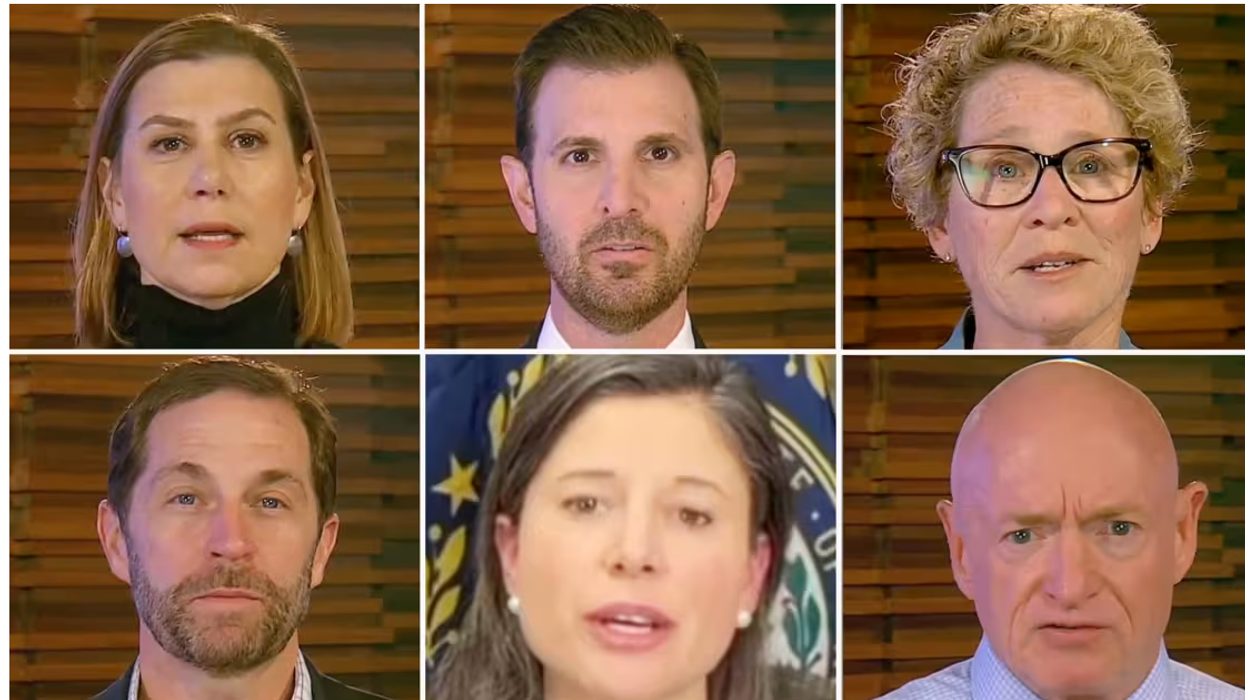
The short video released last week by six current and former service members now serving in Congress was striking for its restraint. In calm, matter-of-fact tones, the six reminded their fellow service members of a bedrock rule: lawful orders must be obeyed; patently illegal orders must not be. They did not tell anyone to disobey the Commander in Chief. They did not brand any particular directive unlawful. They simply restated what every officer learns early in training: an order that directs the commission of a crime is not merely questionable — it is one a service member has an affirmative duty to refuse.

That principle is woven into the Department of Defense Law of War manual, which specifies that “responsible commanders are required to decline to carry out orders that are contrary to the law of war.” As Sen. Mark Kelly, one of the six and a former Navy combat pilot, put it plainly: “If orders are illegal, not only do they not have to follow them — they are legally required not to follow them.”

Yet for this careful and wholly orthodox reminder, the lawmakers found themselves at the center of a political firestorm. The President denounced their message as “seditious behavior” and declared—in a now-infamous social-media post—that sedition is “punishable by DEATH.” Hegseth amplified the accusation, accusing the lawmakers of endangering military discipline. And the machinery of the national-security state followed suit: Pentagon inquiries were opened, and FBI agents began conducting “knock-and-talk” visits to the members of Congress involved.

The instinct to investigate truth-tellers rather than alleged illegality has marked some of America’s darkest constitutional moments. And it is the through-line of this one.

The video was not simply factually accurate but specifically pertinent in the context of the administration’s recent series of lethal strikes against small vessels in the Caribbean and the Eastern Pacific. Those strikes—now numbering more than twenty and resulting in at least eighty confirmed deaths—appear, based on public reporting, to rest on no clear statutory or constitutional authority.

The boats at issue were not warships. They were small fishing craft—peñeros—sometimes fitted with more powerful engines but otherwise indistinguishable from civilian vessels used throughout the region. As Marty Lederman has documented in a comprehensive analysis, neither the 2001 Authorization to Use Military Force nor any Title 10 operational authority plausibly applies. The designation of a Venezuelan gang as a foreign terrorist organization may trigger sanctions and material-support prohibitions, but it does not create a freestanding authority to kill suspected members on the high seas.

Nor can the administration rely on Executive Order 12333. Every administration since Reagan’s has maintained its prohibition on assassination and its understanding that targeted killing is lawful only in contexts of armed conflict or in truly unavoidable self-defense. Those conditions are plainly absent here, where interdiction and arrest have long been feasible alternatives.

In the most disturbing episode—first revealed by The Washington Post—Secretary of Defense Pete Hegseth allegedly issued a spoken order to “kill all” crew members aboard a suspected smuggling vessel. The initial strike sank the boat. A live drone feed later showed two survivors from the original crew of eleven clinging to the wreckage. According to multiple officials with direct knowledge, the Special Operations commander overseeing the operation then ordered a second strike—expressly to comply with Hegseth’s directive.

The survivors were killed.

The alleged order directly contradicts the Defense Department’s own Law of War Manual, which could not be clearer: “An order to fire upon the shipwrecked would be clearly illegal.” The Manual’s explanation reads as if drafted for this very scenario. Elsewhere, it reinforces the duty of subordinates to resist such commands: “Commanders must decline to carry out orders from a superior that are contrary to the law of war … [and] are bound to obey only lawful orders. An order that is manifestly illegal is void and must not be obeyed.”

That guidance is neither abstract nor academic. It embodies hard-won lessons from My Lai, Abu Ghraib, the CIA black sites, Korea, Vietnam, Iraq, and Afghanistan. In each episode, political appointees or senior leaders pushed aggressive, extralegal theories of force; units in the field internalized those signals; the unlawful conduct that followed fell onto the shoulders of the officers and enlisted personnel who carried it out.

Hegseth has denied ordering the second strike — describing the allegation as “fake news.” No real surprise. In any event, the strike itself, however it originated, fully justifies the Democrats’ video.

Of course, Hegseth’s reputation for veracity is far from solid. During his confirmation hearing, senators confronted him with a pattern of sweeping, false, or later-retracted claims:

  • His assertion that ISIS had been “totally defeated” long before Defense Department assessments said otherwise.
  • His denial that he had “ever advocated for the use of torture,” despite multiple on-air statements lauding waterboarding and “tougher” techniques.
  • His shifting explanations for a negligent-discharge shooting at a veterans’ event.
  • His promotion of debunked claims about migrant caravans and imaginary Antifa training camps.
  • His dramatic accusation that senior military leaders were “lying to the American people” about casualty counts, which he later walked back.

Add to this the administration’s refusal to release basic targeting information—names of those killed, intelligence supporting the strikes, post-strike assessments—and the broad, unsupported claim that “every trafficker we kill is affiliated with a Designated Terrorist Organization.” No evidence has been provided to substantiate that sweeping assertion.

It’s all classically Trumpian: bold claims, confident denials, next to no actual verifiable evidence.

Speaking of which, the whole episode grows darker and more tawdry in the wake of reporting from Reuters that now-Third Circuit Judge Emil Bove, then the number-two official at the Justice Department, had earlier floated the idea that it would be “more efficient” simply to “sink the boats” rather than engage in traditional interdiction. That suggestion, witnesses said, came months before the lethal strikes began.

This is precisely the kind of political pressure—originating not with JAG officers but with senior civilian officials—that military legal doctrine is designed to resist. It’s a copycat version of the post-9/11 dynamic—in which the DOD insisted on, and received, OLC memos justifying waterboarding—a conclusion that legislators on both sides and the country as a whole firmly rejected in the calm of a retrospective look.

Assume for the moment, consistent with the overwhelming view of law-of-war experts, that Hegseth’s alleged “kill all” directive was, on its face, manifestly unlawful. The obligation of the service member could not be clearer. Under the Uniform Code of Military Justice and the Manual for Courts-Martial, the presumption that an order is lawful “does not apply to a patently illegal order.” The Defense Department’s Law of War Manual puts the point even more plainly: “Subordinates are bound to obey only lawful orders. An order that is manifestly illegal is void and must not be obeyed.”

And the courts have said the same for half a century. As the military appellate court held in the Calley case after My Lai, a soldier cannot be punished for refusing an unlawful command. Taken together, the law imposes a single, bright-line duty: a service member may not carry out an order that directs the commission of a crime. The duty to refuse is mandatory. It reflects the premise that military obedience exists within the law, not above it.

The lawmakers’ video reaffirmed this basic point. It did so without rancor, without accusation, and without politics. It simply reminded service members that they are independent moral agents—not automatons—and that the law, not the whim of a civilian appointee, determines the legality of a killing.

Far from undermining morale or discipline, such reminders strengthen them. In order to obey lawful orders without hesitation, troops must know the boundary between lawful and unlawful ones. They must trust that when senior political officials push unlawful directives, the military’s internal legal framework will hold.

Every time the United States has drifted from the “patently illegal order” doctrine, the costs have been enormous—borne disproportionately by the men and women in uniform. The stain falls not on the policymakers but on the service members who acted on their cues. The doctrine exists to prevent that cycle: to stop unlawful political directives from metastasizing into operational reality and to protect the legitimacy of American force.

Reminding service members of that line was not only appropriate. It served the service members’ own best interests, and the country’s.

EDITOR’S NOTE:
This is the first in a two-part series examining the legal and constitutional issues raised by the administration’s lethal boat strikes in the Caribbean—and its escalating efforts to investigate six Members of Congress who accurately restated the military’s own rules for dealing with patently illegal orders. Part One explains why the lawmakers’ message is legally sound, and the emerging evidence that the strike was a war crime. Part Two turns to the administration’s retaliatory response and situates it in the long American pattern of overreach in moments of perceived crisis.

Harry Litman is a former United States Attorney and the executive producer and host of the Talking Feds podcast. He has taught law at UCLA, Berkeley, and Georgetown and served as a deputy assistant attorney general in the Clinton Administration. Please consider subscribing to Talking Feds on Substack.

Reprinted with permission from Talking Feds.


House Passes Marijuana Legalization, But Senate Prospects Are Dim

House Passes Marijuana Legalization, But Senate Prospects Are Dim

By Moira Warburton

WASHINGTON (Reuters) - The House of Representatives on Friday passed a bill to end the federal ban on marijuana, which has created legal headaches for users and businesses in the states that have legalized it, though the measure was seen as unlikely to pass the Senate.

It passed by 220-204, with few Republicans supporting the measure.

The Marijuana Opportunity Reinvestment and Expungement Act, sponsored by Democratic Rep. Jerrold Nadler of New York, which is in the process of legalizing the drug, removes marijuana from the list of controlled substances and eliminates criminal penalties for individuals who grow, distribute or possess it.

But the MORE act will need to gain 60 votes in the evenly divided Senate before moving to President Joe Biden's desk for his signature, an outcome widely seen as unlikely given the lack of Republican support for the measure.

The bill would "end decades of failed and unjust marijuana policy," Rep. Ed Perlmutter (D-CO) said on the House floor on Thursday ahead of the vote. "It is clear prohibition is over. Today we have an opportunity to chart a new path forward on federal cannabis policy that actually makes sense."

He added that the bill does not force any state to legalize marijuana.

Marijuana users and businesses that sell it face a complicated legal patchwork in the U.S, where 37 states have legalized it in some form -- either for recreation or medical use -- while 13 still ban it entirely.

Because federal law classifies cannabis as an illegal drug with no medical uses, researchers are severely limited in how they can study the drug and its impacts, making policy difficult to write.

Cannabis businesses are also largely blocked from the U.S. banking system because of the federal ban.

Rep. Michelle Fischbach (R-MN) called the legislation "not only flawed but dangerous," arguing on the House floor that it did not protect minors and would encourage people to open marijuana businesses.

Legalization of marijuana is extremely popular among Americans: a 2021 Pew Research Center poll found that 91% agreed that either medical or recreational use should be allowed.

Senate Majority Leader Chuck Schumer (D-NY) has proposed his own bill that would legalize marijuana, and has committed to moving forward with it in April.

(Reporting by Moira Warburton in Washington; Editing by Scott Malone and Alistair Bell)

4 Reasons Why The U.S. Needs To Decriminalize Drugs—And Why We’re Closer Than You Think

4 Reasons Why The U.S. Needs To Decriminalize Drugs—And Why We’re Closer Than You Think

Reprinted with permission from Alternet.

Half of all adults in the U.S. have used an illegal drug at some point.   If this was your loved one, family member or friend, would they deserve to be arrested, jailed, and face a lifetime of punishment and discrimination?

Ending criminal penalties for drug possession, often referred to as decriminalization, means nobody gets arrested, goes to jail or prison, or faces criminal punishment for possessing a small amount of a drug for personal use. As detailed in a new Drug Policy Alliance report, there’s an emerging public, political, and scientific consensus that otherwise-law-abiding people should not be arrested, let alone locked in cages, simply for using or possessing a drug.

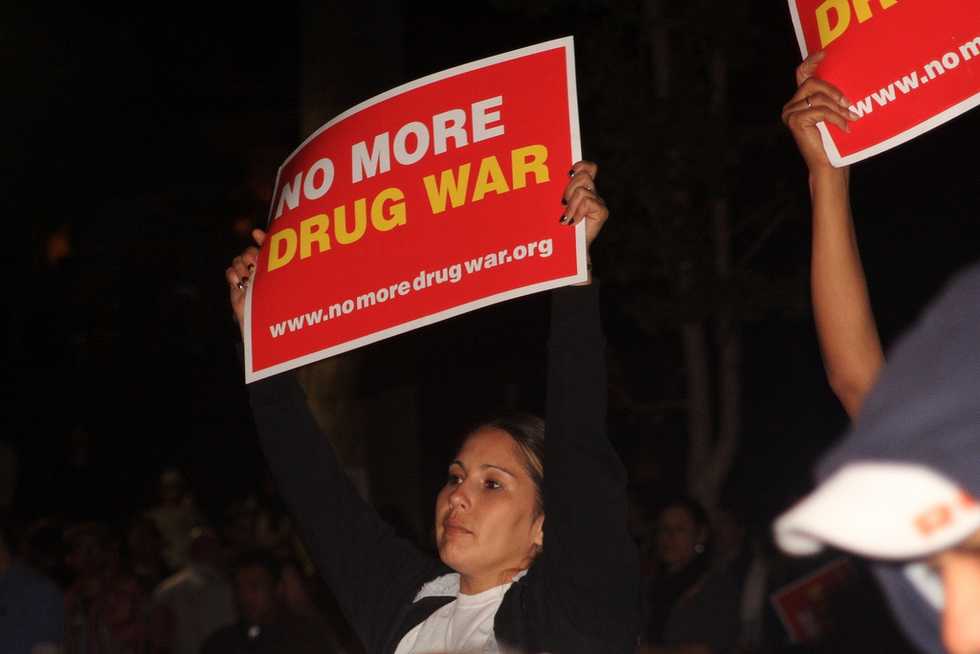
This is a pivotal moment.  Our retrograde federal administration is ramping up the war on drugs – despite widespread public support for ending it and instead focusing our limited resources on health-based approaches to drug addiction and overdose deaths.

Since most drug enforcement is carried out at the local and state levels, not the federal level, jurisdictions across the U.S. are responding to Trump and Sessions by moving drug policy reforms forward with increasing urgency.

Here’s why the U.S. needs to decriminalize drugs – and why we’re actually closer than you might think.

1. Decriminalization benefits public safety and health.

Decades of empirical evidence from around the world shows that reducing and eliminating criminal penalties for drug possession does not increase rates of drug use or crime – while drastically reducing addiction, overdose and HIV/AIDS.

Today, as overdose deaths skyrocket all over the U.S., people who need drug treatment or medical assistance may avoid it in order to hide their drug use.  If we decriminalize drugs, people can come out of the shadows and get help.

More than a million people are arrested each year in the U.S. for drug possession, but this has done nothing to reduce the purity or availability of drugs, or the harms they can cause.  What we’re doing doesn’t work – and actually makes things worse.

Our current policies are diverting law enforcement resources from serious public safety issues.  Hundreds of thousands of rape kits go unprocessed at the same time we’re spending billions of dollars arresting and punishing people for drug possession. Our limited public resources would be better spent on expanding access to effective drug treatment and other health services.

2. Drug possession arrests fuel mass incarceration and mass criminalization – not to mention institutionalized racism and economic inequality.

Criminalizing drug use hurts families and communities, compounds social and economic inequalities, and unfairly denies millions of people the opportunity to support themselves and their families.

U.S. law enforcement arrests about 1.5 million people each year for drug law violations – and more than 80% of those arrests are for simple drug possession. On any given night, there are at least 133,000 people behind bars in U.S. prisons and jails for drug possession – and 63,000 of these people are held pre-trial, which means they’re locked up simply because they’re too poor to post bail.

Discriminatory enforcement of drug possession laws has produced profound racial and ethnic disparities at all levels of the criminal justice system. Black people comprise just 13% of the U.S. population and use drugs at similar rates as other groups – but they comprise 29% of those arrested for drug law violations and 35% of those incarcerated in state prison for drug possession.

Drug criminalization also fuels mass detentions and deportations.  For noncitizens, including legal permanent residents – many of whom have been in the U.S. for decades and have jobs and families – possession of any amount of any drug (except first-time possession of less than 30 grams of marijuana) can trigger automatic detention and deportation, often without the possibility of return.  From 2007 to 2012, 266,000 people were deported for drug law violations, of whom 38 percent – more than 100,000 people – were deported simply for drug possession.

3. Other countries have successfully decriminalized drugs – and the U.S. is moving in the right direction, despite Trump.

Most drug laws exist on a spectrum between criminalization and decriminalization. Some countries have eliminated penalties for possession of all drugs, while some countries and U.S. jurisdictions have eliminated penalties only for marijuana possession. Still other countries and U.S. jurisdictions have taken steps in the right direction by reducing criminal penalties without eliminating them entirely.

Some of these efforts in the U.S. include “defelonizing” drug possession by reducing it to a misdemeanor (which the Oregon legislature just approved last week), decriminalizing or legalizing marijuana possession, establishing pre-arrest diversion programs such as Law Enforcement Assisted Diversion (LEAD), and enacting 911 Good Samaritan laws, which allow for limited decriminalization at the scene of an overdose for people who are witnesses and call for emergency medical assistance. But more ambitious efforts are needed.

Several countries have successful experience with decriminalization, most notably Portugal.  In 2001, Portugal enacted one of the most extensive drug law reforms in the world when it decriminalized low-level possession and use of all illegal drugs.  Today in Portugal, no one is arrested or incarcerated for drug possession, many more people are receiving treatment, and addiction, HIV/AIDS and drug overdose have drastically decreased.

The Portuguese experience demonstrates that ending drug criminalization – alongside a serious investment in treatment and harm reduction services – can significantly improve public safety and health.

4. The American public – as well as leading governmental, medical, public health, and human rights groups – already support drug decriminalization.

Polls of presidential primary voters last year found that substantial majorities support ending arrests for drug use and possession in Maine (64%), New Hampshire (66%) and even South Carolina (59%).  In 2016, the first state-level decriminalization bill was introduced in Maryland and a similar version was reintroduced in 2017. The Hawaii legislature, meanwhile, overwhelmingly approved a bill last year creating a commission to study decriminalization.

Just last month, the United Nations and World Health Organization released a joint statement calling for repeal of laws that criminalize drug use and possession. They join an impressive group of national and international organizations who have endorsed drug decriminalization that includes the International Red Cross, Organization of American States, Movement for Black Lives, NAACP, and American Public Health Association, among many others.

To learn more, check out DPA’s new report, It’s Time for the U.S. to Decriminalize Drug Use and Possession, which lays out a roadmap for how U.S. jurisdictions can move toward ending the criminalization of people who use drugs.

This piece first appeared on the Drug Policy Alliance Blog.

Jag Davies is director of communications strategy for the Drug Policy Alliance.

This article was made possible by the readers and supporters of AlterNet.

Shocking Conduct In South Dakota’s Drug War

Shocking Conduct In South Dakota’s Drug War

Reprinted with permission from Alternet.

The state of South Dakota is practicing a form of drug war excess tantamount to torture or sexual assault, according to a pair of federal lawsuits filed by the ACLU on June 28. One suit charges that law enforcement and medical personnel subject drug suspects to forcible catheterization if they refuse to submit to a drug test.

The second suit charges even more outrageous conduct: State social workers and medical personnel subjecting a screaming toddler to the same treatment, in a fruitless bid to bring a child abuse or neglect charge against his mother.

Let’s be clear here: We are talking about a person having a plastic tube painfully inserted in his penis without his consent and with the use of whatever physical force is necessary by agents of the state. In the name of enforcing drug laws.

Law enforcement has an incentive to coerce people into consenting to warrantless drug tests–with the realistic threat of forced catheterization–because its state laws punish not just possession of drugs, but having used them. Under the state’s “internal possession” or “unlawful ingestion” statutes, testing positive for illicit drugs is a criminal offense.

“Forcible catheterization is painful, physically and emotionally damaging, and deeply degrading,” said ACLU of South Dakota executive director Heather Smith in a statement announcing the filings. “Catheterization isn’t the best way to obtain evidence, but it is absolutely the most humiliating. The authorities ordered the catheterization of our clients to satisfy their own sadistic and authoritarian desires to punish. Subjecting anyone to forcible catheterization, especially a toddler, to collect evidence when there are less intrusive means available, is unconscionable.”

In the case of the toddler, the ACLU is suing on behalf of Kirsten Hunter of Pierre and her thee-year-old son. According to the complaint, their ordeal began on February 23, when police arrived to arrest her live-in boyfriend for failing a probationary drug test. Accompanying the cops was Department of Social Services (DSS) caseworker Matt Opbroeck, who informed Hunter that she and her children would have to take drug tests, and that if she failed to agree, her two kids would be seized on the spot.

Under such coercion, Hunter agreed to take herself and her kids to St. Mary’s Avera (SMA) Hospital to be tested the next day. Here, in the dry language of the legal filing is what happened to her three-year-old, identified as “A.Q.:”

Ms. Hunter was met by [SMA medical staff] and told that she and her children needed to urinate in cups on orders of DSS.

At the time, A.Q., was not toilet-trained and could not produce a sample in a cup.

Even though other methods, such as placing a bag over his penis, would have yielded a urine sample, [SMA medical staff] immediately began to hold him down and to catheterize him.

At the time, [they] did not inform Ms. Hunter of altemative methods of getting a urine sample or explain the risks associated with catheterizing a child.

Ms. Hunter did not know that she could object nor was she given any opportunity to object. Ms. Hunter did not speak with or see a doctor.

A.Q. was catheterized and screamed during the entire procedure.

On information and belief, A.Q. was catheterized with an adult-sized catheter.

Ms. Hunter was humiliated and upset about A.Q.’s catheterization.

A.Q. was injured physically and emotionally.

In the aftermath of the state-sanctioned assault, A.Q. had to be taken to a hospital emergency room in Huron for constipation and pain and discomfort in his penis three days later, and make another emergency room visit to ASM two days after that, when he was diagnosed with a staph infection in his penis.

Hunter and the ACLU are suing DSS caseworker Opbroeck; his bosses, Department of Social Services Secretary Lynn Valenti and DSS Division of Child Protective Services Director Virginia Wieseler; and St. Mary’s Avera, Registered Nurse Katie Rochelle, Nurse Practitioner Teresa Cass, and four unnamed SMA medical employees.

The ACLU argues that forcible catheterization of A.Q. violates the Fourth Amendment’s proscription against warrantless searches, the Fifth Amendment’s right not to be forced to testify against oneself, and the 14th Amendment’s due process clause because “it shocks the conscience, it was not medically necessary, and it was not reviewed by a judge.” The lawsuit seeks monetary relief as well as declaration that the procedure is unconstitutional.

“The Fourth Amendment guarantees people the right to be free from unreasonable government searches,” said Courtney Bowie, ACLU of South Dakota Legal Director. “There is nothing reasonable about forcibly catheterizing a child. The Constitution’s purpose is to protect people from government intrusions exactly like this.”

There is nothing reasonable about forcibly catheterizing drug defendants either—especially when the only drug use suspected is of marijuana—but the second lawsuit filed by the ACLU alleges the practice is widespread among law enforcement agencies in the state, including repeated allegations of forced catheterizations after the victims have agreed to provide urine samples, the sole reason being that police involved could “gratify their sadistic desires,” the complaint says.

“State agents, including law enforcement officers, in multiple cities and counties in South Dakota have conspired to attempt to rationalize, justify, and illegally forcibly catheterize drug suspects, and illegally coerce drug suspects to provide urine samples by threatening them with illegal forcible catheterization if they will not voluntarily provide a urine sample,” the complaint says.

The conspiracy violates the civil rights not only of those subjected to forced catheterization, but those threatened with it, the ACLU argues.

The lawsuit has five plaintiffs, all of whom were subjected to the procedure, and lists 20 unnamed police officers from Pierre, Sisseton, and the Highway Patrol, as well as one named Pierre officer, and the cities of Pierre and Sisseton. The lawsuit seeks injunctive relief to stop the practice, as well as “compensatory and punitive damages.”


Phillip Smith is editor of the AlterNet Drug Reporter and author of the Drug War Chronicle.

This article was made possible by the readers and supporters of AlterNet.

Shop our Store

Headlines

Editor's Blog

Corona Virus

Trending

World