The last time ABC played a role in the Trump 2.0 wars, it was to capitulate meekly to a dubious Trump lawsuit, one of many such acts of appeasement by the media in the early days of Trump 2.0.
But last week, ABC rejoined the battle and served notice that it’s ready for a prolonged, aggressive and direct fight against the crass bullying of the FCC under Trump acolyte Brendan Carr.
On Friday, ABC filed a 52-page petition with the FCC that is the most aggressive legal counterattack any network has launched against the Trump administration to date. The most noteworthy line in the petition may be the last one: a signature by Paul Clement, former Solicitor General under George W. Bush and the most formidable Supreme Court litigator in private practice, particularly for attracting the attention of the conservative members of the courts of appeals and the Supreme Court.
You don’t hire Paul Clement for a regulatory skirmish. You hire him when you’ve decided to gird for the long battle, and you want the other side, and the courts, to know it.
What makes ABC’s stance particularly noteworthy is its previous record of caving to legally weak demands. The network paid Trump $15 million to make a losing lawsuit go away, and it suspended Jimmy Kimmel’s show when Carr came calling. This conduct helped set the early template for media capitulation in Trump’s second term.
Trump’s defamation lawsuit grew out of an on-air statement in March 2024 by George Stephanopoulos that Trump had been found liable for rape in the E. Jean Carroll civil case. That was imprecise, which is a far cry from actionable under the First Amendment. The jury had found Trump liable for sexual abuse; the trial judge noted the distinction with rape was largely technical, and the jury, in effect, had found rape as the word is used in common parlance.
ABC initially signaled it would fight. Then, in December 2024, one day after a judge ordered both Trump and Stephanopoulos to sit for depositions, Disney, ABC’s parent company, folded. ABC paid $15 million to Trump’s presidential foundation, put in an additional million for Trump’s legal fees, and published an editor’s note declaring that ABC News and Stephanopoulos “regret statements” about the president-elect.
The legal community was unsparing. The strong consensus among defamation lawyers was that ABC’s odds of liability were minuscule. The problem that made the settlement rational, if craven and short-sighted, was that everyone understood that Trump would bring unrelated tools to bear against media companies that displeased him.
The demands, meanwhile, have kept coming regardless. Two weeks ago, the administration ordered early license renewal reviews for all eight of ABC’s owned stations, years ahead of schedule, triggered by another Kimmel joke that annoyed the president.
FCC Commissioner Anna Gomez, the lone Democrat on the three-person panel, called out her colleagues: “The targeting of a group of stations to punish a parent company has never happened in history. The irony is not lost on anyone. A joke made about an event meant to honor the First Amendment is now being used as a justification to curtail it.”
ABC has apparently concluded that appeasement of a tyrant doesn’t work; it only brings additional demands on its heels. It’s that calculation—and Carr’s latest provocation—to which the Clement filing responds.
To appreciate the full significance and stakes of ABC’s pushback, it’s important to understand what Brendan Carr has built at the FCC.
Carr was a co-author of Project 2025’s communications chapter. Since Trump appointed him to the chairmanship in January 2025, he has set about converting an ostensibly independent regulatory agency into an instrument of presidential media policy.
Within his first weeks, Carr revived complaints against ABC, NBC, and CBS that his predecessor Jessica Rosenworcel had just dismissed. Rosenworcel had warned that the complaints sought to “weaponize the licensing authority of the FCC” in a way “fundamentally at odds with the First Amendment” and that the agency “should not be the president’s speech police.”
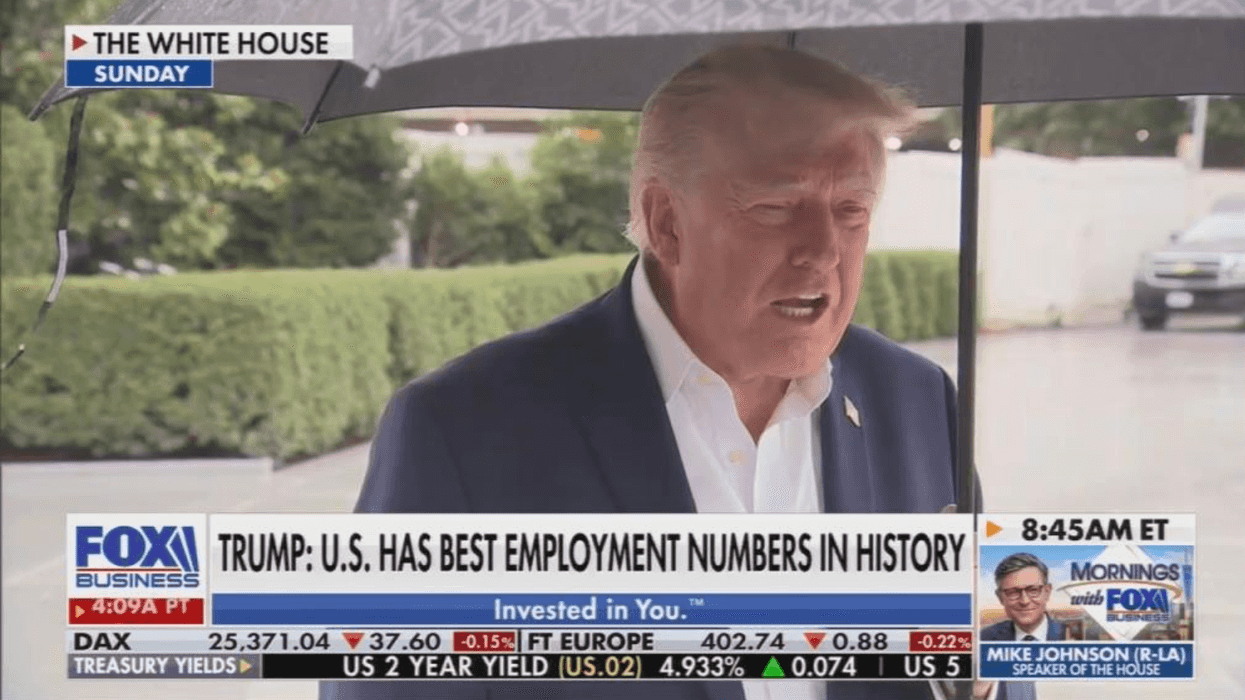
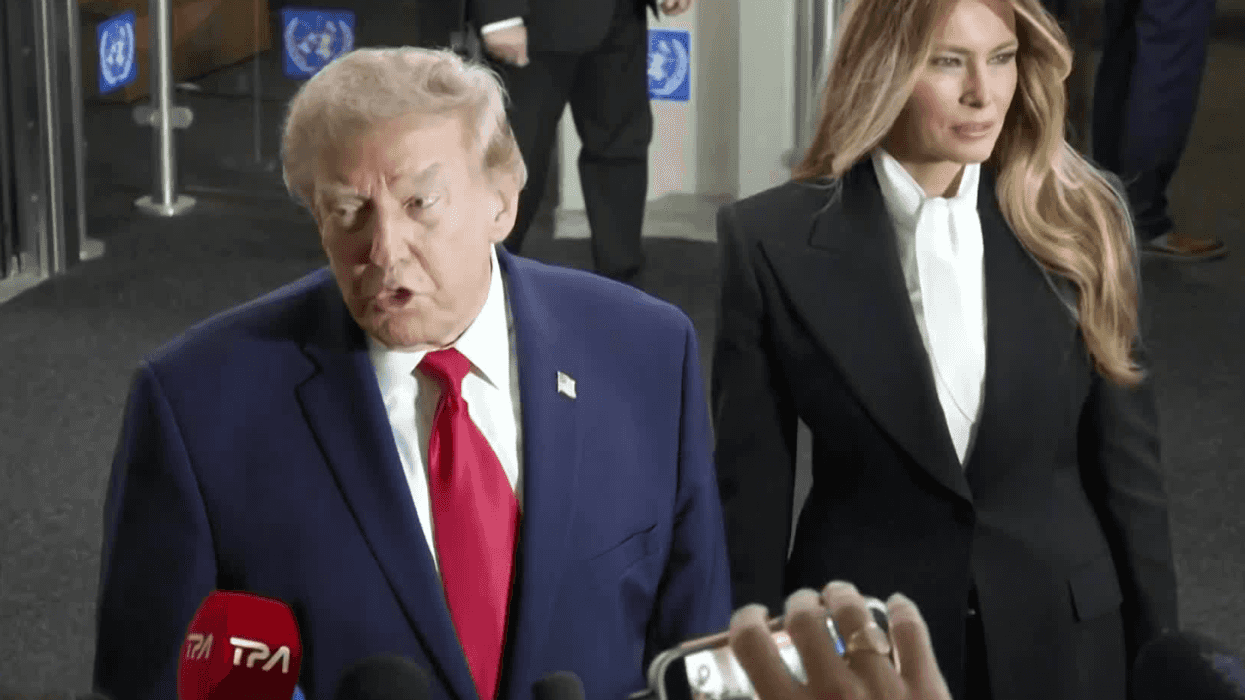
Undeterred, Carr launched a DEI investigation into Disney. He threatened Comcast’s broadcast licenses over NBC News coverage of the Kilmar Abrego Garcia deportation story. He investigated CBS’s 60 Minutes over the editing of a Kamala Harris interview—after Trump had already sued CBS personally, and while Paramount, CBS’s parent company, needed FCC approval for a merger. Paramount settled Trump’s lawsuit for $16 million and got its merger approved. He reposted Trump’s demand that NBC fire Seth Meyers. He threatened ABC over a Kimmel joke, got the show suspended, and backed off only when public protest made the pressure untenable.
Kim Zarkin, who has written the history of the FCC, told The Hollywood Reporter that Carr’s approach was “jaw-droppingly different” from normal FCC practice.
What unites every target is not a regulatory violation. It is viewpoint. NBC, ABC, CBS, PBS, NPR, the BBC—their common sin has been coverage not fawning enough over Trump.
Carr himself declared that the FCC is “not formally an independent agency,” after which all references to “independence” were quietly scrubbed from FCC.gov.
So ABC is not quibbling over regulatory technicalities. It is challenging the constitutionality of a large part of Carr’s portfolio and, at the same time, taking on government censorship of disfavored viewpoints.
On its surface, Friday’s filing is small relative to its ambitions.
The immediate focus is a single ABC-owned station in Houston, KTRK-TV, and its interview of James Talarico, then a Democratic Senate primary candidate in Texas (who has since won the primary).
The Communications Act requires broadcast stations to give equal airtime to all candidates for a given office; so an interview with one candidate generally triggers the opposing candidate to demand equal time. The Supreme Court upheld the general regime in Red Lion Broadcasting v. FCC in 1969. It held that scarcity of broadcast spectrum justified government oversight in order to protect the rights of viewers.
But the equal airtime provision is subject to several major exemptions. Most important for current purposes, Congress in 1959 carved out an exemption for “genuine news programming.” Shows that provide such programming are not required to give equal time to all candidates. A contrary regime would make it impossible to deliver the news and would put the FCC in charge of editorial decisions.
The test for programs that provide “genuine news programming” has multiple factors, but the gist is that the station has independent editorial control and is not just providing an open forum for one candidate to sound off.
The View, which presents a mix of political and pop culture news, is a down-the-middle example of genuine news programming. It has always enjoyed an exemption for genuine news programming. The show received a formal declaratory ruling confirming its exempt status in 2002, never challenged in the 24 years since.
That is, until Carr announced in January that the longstanding exemption for so-called bona fide news interview programs—the provision that has protected shows like The View for decades—would be applied far more narrowly going forward.
And narrowly, it turns out, means selectively: the new interpretation, he said, simply does not apply “on the radio side”—meaning it does not apply to the Mark Levin Show, the Glenn Beck Program, or the Guy Benson Show, conservative talk radio hosts who booked Texas candidates in the same relevant period, with no paperwork filed and no FCC inquiry forthcoming.
Carr’s Media Bureau sent KTRK escalating letters culminating in something the FCC has never done before: an order directing a licensee to file a new petition re-establishing an exemption it already held. ABC’s filing calls it “unprecedented, beyond the Commission’s authority, and counterproductive to the Commission’s stated goal of encouraging free speech.”
Clement’s brief, which certainly had to have been okayed by Disney, makes plain that nothing whatsoever has changed since the FCC previously recognized The View’s eligibility for the exemption. The program has aired in the same weekday timeslot since 1997. ABC’s executive producer controls every content and booking decision. The Talarico appearance was newsworthy: his campaign was gaining national traction, and the show had just hosted his primary opponent. On the merits of eligibility for the equal time exemption, it isn’t close.
But rather than holding fast on that narrow ground, as most regulatory lawyers would have done, the brief attacks on a much wider front. It opens with a frontal First Amendment assault on the entire statutory regime—a sharp challenge to the equal time rule that underpins Carr’s bullying.
The brief argues that Red Lion is defunct, the scarcity rationale is gone, and the equal time rule cannot survive First Amendment scrutiny in the modern media environment—an invitation to the Supreme Court to bury a fifty-year-old precedent.
It then fires a second arrow at Carr personally: even if the equal time rule is constitutional on its face, it cannot be applied to The View consistent with the First Amendment, because this proceeding is transparently driven by disapproval of the show’s viewpoint, among the most categorically forbidden actions by the government.
The factual record of viewpoint discrimination is quite strong. Carr publicly declared, before his own investigation concluded, that The View faced an “uphill climb.” The White House called the hosts “Trump-deranged wackos.” ABC’s filing lays the asymmetric enforcement record alongside those statements. The Mark Levin Show interviewed Dan Patrick on February 16, on a station Patrick himself owns. The Glenn Beck Program interviewed Chip Roy on February 18. The Guy Benson Show interviewed Roy on February 11.
In other words, conservative-leaning shows have all interviewed conservative candidates without a peep from the FCC suggesting they needed to give equal time to progressives.
The chilling effect is already real. CBS lawyers reportedly advised Stephen Colbert against booking Talarico at all. California’s upcoming gubernatorial jungle primary has more than 60 legally qualified candidates—under Carr’s interpretation, booking one means offering time to all of them, which means booking none. Less political speech on the eve of a midterm election, not more.
The equal time rule is the legal foundation for virtually all of Carr’s campaign against broadcast news. If Red Lion falls and the equal time rule is held unconstitutional as applied to news and public affairs programming, Carr retains jurisdiction over technical broadcast matters, but his ability to weaponize regulatory threats against news content is largely gone. ABC is not just fighting to protect The View. It is trying to disarm the enforcer.
The overall message to the FCC is: careful what you wish for. If you push this equal-time argument, you may wind up losing the regulatory tool altogether.
The petition sits with Carr’s Media Bureau, and from there will go to the full Commission, where Carr holds a 2-1 majority. Absent a strategic jiu-jitsu move by the Commission to cut its losses before the courts weigh in, ABC will lose at every agency level.
But that’s when the tide should turn. The review path after the full Commission is to the U.S. Court of Appeals for the D.C. Circuit, which has exclusive jurisdiction over final FCC orders. A favorable ruling there on viewpoint discrimination alone—without even reaching Red Lion—would be a severe blow to Carr’s entire operation. It also would clip his wings with respect to other broadcasters whose coverage displeases the president.
Then there is the prospect of the Supreme Court’s accepting review to hear a top-notch argument from Clement that the Court should revisit Red Lion. Several justices, including Justice Thomas, have previously signaled they would welcome the chance
Not everyone at the FCC is rooting against ABC. Gomez, responding directly to Friday’s filing, said Disney had chosen “courage over capitulation”—and that what the public will remember is “who complied in advance and who fought back.”
ABC has found its spine. It took a while, and it cost $15 million to figure out that paying tribute only invites more tribute. The previous skulkers are now the cavalry. It’s in all of our interest that they rout the enemy.
Harry Litman is a former United States Attorney and the executive producer and host of the Talking Feds podcast. He has taught law at UCLA, Berkeley, and Georgetown and served as a deputy assistant attorney general in the Clinton Administration. Please consider subscribing to Talking Feds on Substack.
Reprinted with permission from Talking Feds.