Tag: libertarians
Is Donald Trump Pro-Crypto Or Pro-Crime? (Is There Really A Difference?)

Is Donald Trump Pro-Crypto Or Pro-Crime? (Is There Really A Difference?)

On one side, the Trump administration is sinking small boats that it claims, without evidence, are smuggling drugs — and according to the Washington Post, Pete Hegseth, the self-styled Secretary of War, has personally ordered at least one follow-up strike to kill the survivors. A working group of former JAGs, that is, members of the military’s legal branch, issued a statement declaring that it

unanimously considers both the giving and the execution of these orders, if true, to constitute war crimes, murder, or both.

On the other side, Donald Trump has declared his intention to grant “a Full and Complete Pardon” to Juan Orlando Hernández, a former president of Honduras who has been convicted of conspiring to import cocaine into the United States. In fact, Hernandez was part of a cartel, including his brother, that smuggled hundreds of tons of cocaine into this country.

At first glance, the juxtaposition seems bizarre – Trump is either murdering or committing war crimes against people who are at worst small-time drug smugglers, and may be innocent fishermen, while pardoning a drug lord who was responsible for thousands of American deaths while savaging his own country, Honduras. But there is a pattern to this murderous madness, once one connects the dots between Trump’s mob-boss persona and the billionaire crypto/tech broligarchy.

First, understand that Trump’s vendetta against purported penny-ante drug smugglers is all about dominance display, an exhibition of his ability to order violence. The real object may be to set the stage for invadingVenezuela.

Second, while Trump is clearly willing to inflict gratuitous suffering on the little people, he positively revels in his association with big-time criminals, whether it’s Putin; or Saudi Crown Prince Mohammed bin Salman, who had a critical journalist dismembered with a bone saw; or Ross Ulbricht, creator of Silk Road, an underground e-marketplace known for drug trafficking, whom Trump pardoned immediately after assuming office; or Larry Hoover, a Chicago crime boss, who was sentenced to several lifetimes in prison for leading the Gangster Disciples, also pardoned by Trump. Yes, Trump really and truly cares about crime in Chicago.

Still, why would Trump, whose poll numbers are cratering, generate even more negative headlines by pardoning Hernández, who was duly convicted of conspiring to send more than 400 tons (!) of cocaine to America?

The answer is the influence of the crypto/tech broligarchy. In fact, many of Trump’s pardons of the most egregious criminals are closely linked to their influence.

A case in point is Ulbricht, whose Silk Road was an early example of what is still the main non-speculative use of Bitcoin: facilitating criminal activity. Ross Ulbricht was a darling of the tech-libertarian crowd, which includes Peter Thiel, arguably the godfather of Silicon Valley and whose financial backing was critical to JD Vance’s senate win. Trump first promised to pardon Ulbricht in 2024, as part of a pitch to win the votes of libertarians:

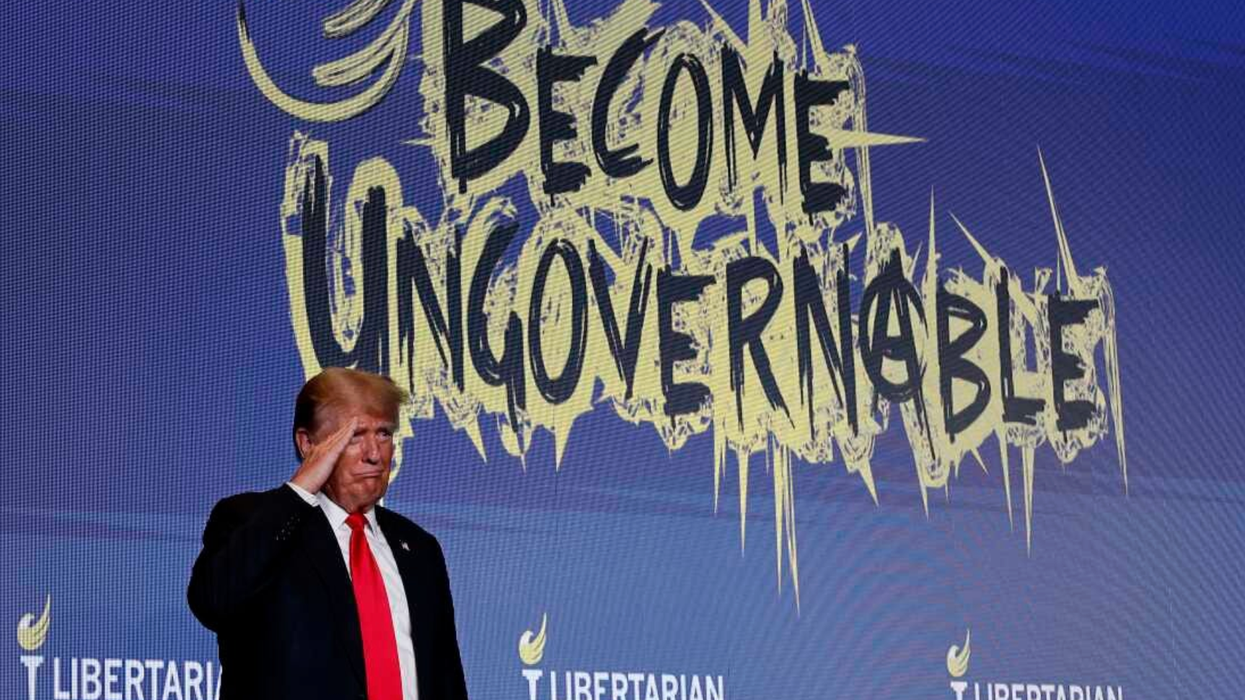
Whatever libertarians were in the past, they are now an extremist party, opposed to laws against drug smuggling, money laundering, any type of prudential government regulation, and – in the case of Thiel – opposed to democracy itself. It should not go unnoticed that Trump saluted a party that proclaims “Become Ungovernable” as its guiding principle, written with the anarchy a-symbol.

Next, Trump’s pardon of Changpeng Zhao, aka CZ, the former CEO of the cryptocurrency exchange Binance, fits the same pattern. CZ pled guilty to charges of violating U.S. laws against money-laundering and was fined $50 million, in addition to a fine of $4.3 billion against Binance. Under CZ, Binance was a major channel of worldwide money laundering. As one report put it, prosecutors charged that Binance

intentionally and purposefully ignored the transfer of money from countries and areas that are subject to sanctions -- including Syria, Iran, Cuba, Russia-occupied Crimea and the Donbas region in Ukraine. There was also trading that involved the criminal dark-web market Hydra.

And the story continues. Last week,

The families of 300 U.S. citizens hurt or killed in the Oct. 7 attack on Israel sued Binance, claiming the cryptocurrency exchange aided Hamas and other terrorist groups by transferring more than $1 billion among accounts they controlled.

However, in the world of radical libertarians, of the crypto/tech broligarchy, CZ’s crimes weren’t real crimes because crypto is designed to “free” us from the pernicious oversight of government. Yes, Trump really cares about stopping terrorism.

Finally, why pardon Hernández? What’s the connection to the crypto/tech broligarchy? It’s called Próspera.

Próspera is a for-profit city being built off Honduras’s coast. Its charter largely exempts the island from Honduran law. Instead, the city is run by a governing structure that for the most part gives control to a corporation, Honduras Próspera Inc., which is in turn funded by a familiar list of Silicon Valley billionaires including Thiel, Sam Altman and Marc Andreesen.

So while the city is being marketed as a libertarian paradise, it’s best seen as an autonomous oligarchy, government of, by and for billionaires. And you won’t be surprised to learn that within Próspera, Bitcoin is legal tender.

The 2013 Honduran law that made the creation of Próspera possible was initially ruled unconstitutional by the Honduran Supreme Court. But that ruling was reversed after Juan Orlando Hernández’s predecessor, Porfirio Lobo Sosa, managed to dismiss four of the court’s justices. Like Hernández, Sosa was a right-winger, who became president after a populist president, Manuel Zelaya, was overthrown by a military coup. Under both Hernández and Sosa, chaos reigned – corruption, criminal gangs, and drugs overran the country. The current president, Zelaya’s wife, has tried to claw back some sovereignty over Próspera, which has struck back with a mammoth lawsuit that could bankrupt the country.

Yesterday Honduras held an election in which Trump backed Nasry Asfura, a member of the same right-wing party as Hernández. Early results show the governing left-wing party well behind, but Asfura in a virtual tie with another right-wing candidate.

In any case, the point is that while Trump threatens and fulminates against Maduro in Venezuela, he is openly backing the Honduran political party that has allowed massive drug smuggling into the U.S. Why? The only logical answer is because of the influence of the crypto/tech broligarchy and their interests in Próspera.

So the announced pardon of Hernández for drug smuggling isn’t really a departure from the pardons of Binance’s Changpeng Zhao for money laundering or Silk Road’s Ross Ulbricht for facilitating illicit drug sales. In each case what’s being upheld is the principle that lawlessness in the pursuit of tech billionaires’ interests is no vice. In fact, it’s to be encouraged.

And Trump, whose only principles appear to be self-enrichment and vindictiveness, is happy to go along.

Paul Krugman is a Nobel Prize-winning economist and former professor at MIT and Princeton who now teaches at the City University of New York's Graduate Center. From 2000 to 2024, he wrote a column for The New York Times. Please consider subscribing to his Substack.

Reprinted with permission from Paul Krugman.

Harbingers Of Fascism Teach Trump-Fluffing 'Libertarian' An Ugly Lesson

Harbingers Of Fascism Teach Trump-Fluffing 'Libertarian' An Ugly Lesson

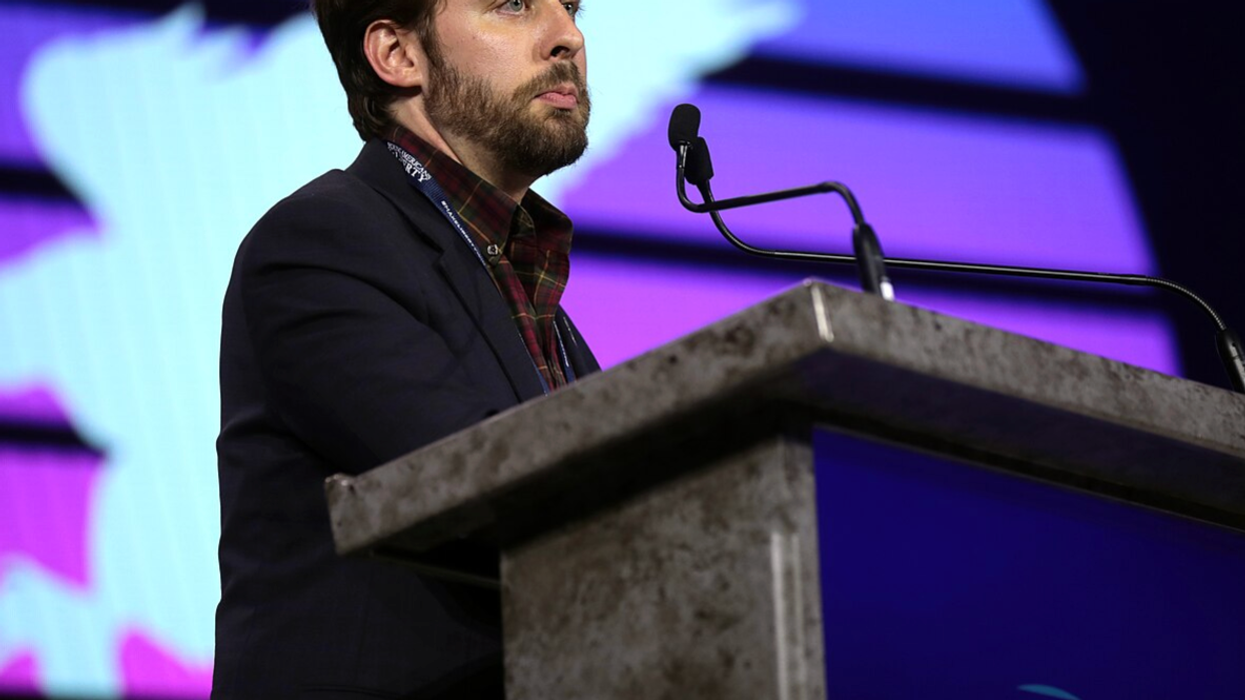
Meet Eric Brakey, the executive director of the Free State Project. Those of you who’ve read the excellent book A Libertarian Walks Into a Bear, by journalist Matthew Hongoltz-Hetling, might recognize the group—a collection of cranks who have tried (and hilariously failed) to turn New Hampshire into a libertarian utopia.

It’s a new gig for Brakey, having moved there late last year after serving in Maine’s legislature. He also ran a forgettable 2018 campaign against independent Sen. Angus King, who caucuses with Democrats, pulling a laughable 35 percent of the vote as the Republican nominee.

Ahead of Election Day last year, he tweeted, “If Trump wins NH by a single vote today, you will be glad I moved and declared my primary residence in NH.”

Trump didn’t win New Hampshire, but Brakey did get the president he wanted—which makes his recent experience all the more ironic.

On Sunday, returning to Florida from a Royal Caribbean cruise, he posted on X that he had been detained by Border Patrol for an hour and a half while agents dug through his luggage, confiscated his phone and computer, and even read his personal journal. When he’d asked what rights he had as a U.S. citizen, he’d allegedly been told that agents didn’t need a warrant to search anything in his possession, even his electronics.

Brakey said he’d had to explain, in detail, that the Free State Project was a “nonviolent, peaceful libertarian movement” and that his “Defend the Guard” activism wasn’t part of some militia or insurrection plot. Eventually they let him go, he said, but he was “shaken up and in shock.”

And he should be. There is no justification for federal agents to paw through a citizen’s private journals and devices without just cause or a warrant. But this is exactly the kind of authoritarian overreach so many of us warned about in 2024—while right-leaning libertarians like Brakey shrugged it off as liberal paranoia.

They were convinced that Democratic nominee Kamala Harris was the real threat to liberty—because she once prosecuted cases, or because she talked about public health rules, or because they imagined she’d sic the IRS on their crypto wallets, or something. Somehow, they decided that a functioning government enforcing basic laws was tyranny, but that a man who bragged about weaponizing the Justice Department was pro-liberty. They mistook accountability for oppression, autocracy for freedom—as long as the boot wasn’t on their necks.

The same people who sneered at supposed liberal hysteria over creeping fascism helped empower a movement that worships unchecked executive power—so long as it targets the “right” people.

Given his experience with Border Patrol, maybe Brakey finally understands what we meant when we said Trump’s America wouldn’t stop with immigrants or liberals. Fascism always runs out of “others” eventually—and when it does, it comes for its own believers, too.

Reprinted with permission from Daily Kos

What Makes J.D. Vance Something Far Worse Than Merely 'Weird'

What Makes J.D. Vance Something Far Worse Than Merely 'Weird'

When political observers describe J.D. Vance as “weird,” what they usually mean is the Republican vice-presidential nominee’s ranting about childless people, his extremism on questions like abortion and divorce, or perhaps his choice of eye makeup.

But there is a deeper level to Vance’s political weirdness that places him amid the most sinister forces in the nation today – and calls into question the supposed patriotism that motivates him and the “America First” movement he and Donald Trump now represent. To understand what Vance really stands for, and why his ideology is so distant from the Constitutional democracy he has sworn to uphold as a United States senator, it is necessary to examine the chief sponsor of his political and business career: a Silicon Valley billionaire named Peter Thiel.

Born in Germany and raised in South Africa, Thiel made his enormous fortune as a venture capitalist and executive in tech companies such as PayPal and Palantir. Attracted from an early age to far-right ideologues like the addled author Ayn Rand, the tech mogul has identified himself as a “conservative libertarian” and a critic of democratic systems. Not so long ago, he was heard to say that democracy and freedom – or at least his idea of “freedom” – are no longer compatible.

If that sounds ominous, it is a sentiment that Thiel has advanced for over a decade now – and that has long characterized a strain of anti-government extremism on the American right. It is a worldview that dates back at least three decades, when a self-proclaimed economic guru named James Dale Davidson began promoting it in his investment newsletters and video presentations.

Back then, Davidson’s seething enmity for President Bill Clinton and Hillary Clinton led him not only to make the preposterous claim that they were behind the death of their friend Vince Foster (who had tragically committed suicide), but to insist that Clinton’s policies would soon plunge the nation into a cataclysmic depression. The internet boom under Clinton, which boosted incomes and balanced the budget for the first time in decades, left Davidson looking foolish.

Undaunted by failure, he went on to write The Sovereign Individual, a 1997 tome that predicted the rise of digital currencies, along with other less prescient notions. It eventually won favorable attention from Thiel, who provided a gushing preface to a new edition in 2020, two decades after its original publication, that emphasized its influence on his own political outlook and urged it upon readers as “an opportunity not to be wasted.”

Why was Thiel drawn to Davidson’s obscure screed? Aside from its advocacy of what we might now call cryptocurrency – a dubious special interest promoted heavily by Vance ever since his elevation to the Senate – The Sovereign Individual foretold a world ruled by people like him. Governments, nation-states, and the social order would all collapse; digital currencies would replace all other forms of money, except among the poorest populations; taxation and regulation of corporations would become impossible. In its conclusion, Davidson and his co-author Lord William Rees-Mogg, a British peer, denigrated democracy as the twin of communism and welcomed the advent of a brutish and largely lawless world dominated by a tiny minority of the super-rich. (The fascinating tale of Davidson's checkered career is recounted in The Longest Con: How Grifters, Swindlers and Frauds Hijacked American Conservatism.)

It isn’t hard to imagine that Thiel, who has financed research aimed at human immortality, envisions himself as one of those godlike rulers. Does Vance agree with Thiel’s jaundiced view of democracy? Does he push crypto because digital finance will allow billionaires and their businesses to evade taxes and launder money? Does he look forward to a plutocratic dystopia replacing our republic?

No doubt the embattled Republican veep nominee would deny any such disturbing views. Yet Thiel isn’t the only ultra-reactionary influence on Vance. The Ohio senator has also endorsed Curtis Yarvin, a cranky computer programmer who says America needs “a national CEO, or what’s called a dictator,” and embraced Rod Dreher, an American writer who now serves the illiberal regime of Hungarian autocrat Viktor Orban.

All that makes Vance something far worse than merely weird.

Joe Conason is founder and editor-in-chief of The National Memo. He is also editor-at-large of Type Investigations, a nonprofit investigative reporting organization formerly known as The Investigative Fund. His new book is The Longest Con: How Grifters, Swindlers and Frauds Hijacked American Conservatism.

libertarians

We’ve Reached Peak Libertarianism — And It’s Literally Killing Us

This article was produced by Economy for All, a project of the Independent Media Institute.

We have now reached peak Libertarianism, and this bizarre experiment that has been promoted by the billionaire class for over 40 years is literally killing us.

Back in the years before Reagan, a real estate lobbying group called the Foundation for Economic Education (FEE) came up with the idea of creating a political party to justify deregulating the real estate and finance industries so they could make more money. The party would give them ideological and political cover, and they developed an elaborate theology around it.

Read NowShow less

Shop our Store

Headlines

Editor's Blog

Corona Virus

Trending

World