Tag: republican party
Vivek Ramaswamy

'Anti-Communist' Ramaswamy Did Business With Firm Owned By Beijing's CCP

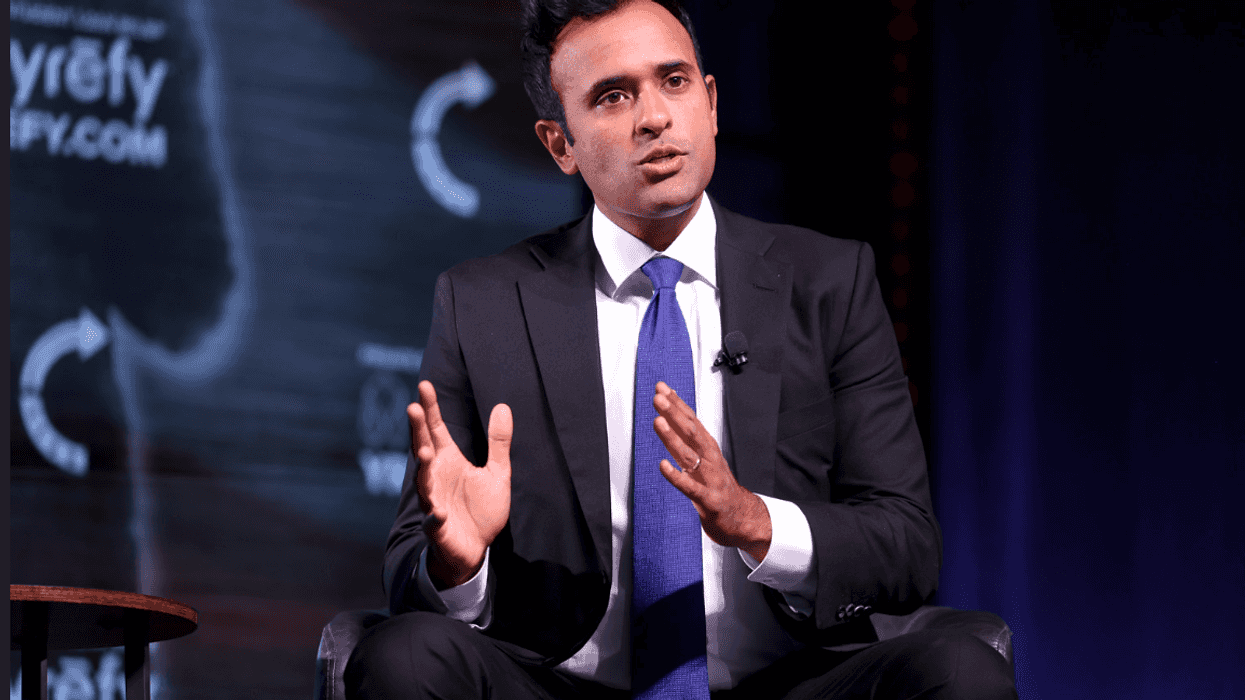
Republican Vivek Ramaswamy did business with entities tied to the Chinese Communist Party. He’s now running for Ohio governor as an opponent of China and communism.

Ramaswamy founded the biotechnology company Roivant Sciences in 2014 and served as its CEO until 2021. The company develops medicines through specialized subsidiaries.

One of those subsidiaries is the Shanghai-based Sinovant, launched in 2017. The company was partially financed by CITIC Private Equity (CITICPE), an investment firm that is part of a web of state-owned enterprises in China that are under the sway of the Chinese Communist Party.

A state-owned entity in China can be wholly or partially owned by the government. The Chinese Communist Party wields influence over these entities by setting national economic priorities, making leadership appointments, and setting strategic directions.

When Sinovant launched, CITICPE was the investment arm of CITIC Securities, which was an offshoot of the state-owned CITIC Group.

CITICPE spun off from CITIC Securities in 2018 and became CPE, but the firms remained tied through jointly managed investment funds, according to the Prague Security Studies Institute. CITICPE also retained its longtime CEO, Lieu Lefei, who is a prominent “princeling,” a term ascribed to the children of high-ranking communist officials.

Lefei’s father, Liu Yunshan, was reportedly involved in censoring online information about the Uyghur ethnic cleansing campaign.

Ramaswamy partnered with CITICPE again in 2018 to launch Cytovant Biotechnology, a Sinovant subsidiary that is also domiciled in China.

A Federal Communications Commission (FCC) report from 2021 identified national security concerns involving Pacific Networks and ComNet, two subsidiaries of CITIC Group. This followed previous reporting in 2017 that CITIC Group had provided Iran with a $10 billion line of credit. The U.S. government designates Iran as a state sponsor of terrorism.

Roivant divested from Cytovant in July 2022. As of 2023, Ramaswamy was still the sixth-largest shareholder in Roivant.

Earlier this month, Ramaswamy said his 2026 race is “probably the most important election for governor” Ohio has ever seen and that his victory would signal “success over communism, success over socialism.”

Ramaswamy’s Democratic opponent is former Ohio Department of Health Director Amy Acton. Recent polls show a neck-and-neck race.

Reprinted with permission from American Journal News

As Republicans Devastate Healthcare, Industry Keeps Financing GOP

As Republicans Devastate Healthcare, Industry Keeps Financing GOP

Does the medical industrial complex endorse health care’s status quo? Do its major players think a divided and therefore paralyzed Congress will prevent the multiple crises that will hit in full force early next year? Judging by their campaign contributions during the run-up to the mid-term elections, which is now less than two weeks away, the answers are yes and yes.

Every major sector of the industry has reasons to be upset by the actions taken by the Trump regime and the Republican-run Congress over the past 20 months. Hospitals’ and physician practices’ uncompensated care costs are surging as millions of people lose health insurance due to Medicaid’s new work rules and the GOP’s failure to renew Covid-era Obamacare subsidies.

Things are about to get a lot worse. The biggest hits begin next year when the full Medicaid cuts kick in and millions more people lose coverage.

The sector’s workforce is being hammered by the regime’s anti-immigration policies. An estimated 17 percent of all health care workers are immigrants, with the highest concentrations in critical areas like home health, nursing homes and hospital support staffs. Out-of-control ICE raids are not just chasing valued workers away, its agents’ well-publicized violence has sharply curtailed the overseas pipeline for new recruits.

Physician autonomy is under full-scale assault. The nation’s doctors are suffering from unprecedented levels of burnout and frustration, exacerbated by the insurance industry’s escalating use of prior authorization. Their professional status faces an existential threat from artificial intelligence. This year’s Medicare pay increase lagged behind inflation despite a one-time bump of 2.5 percent, which goes away next year.

Let’s move on to the two areas where, rhetorically at least, there is bipartisan support for curtailing profit-seeking overreach. Government-funded research — the pharmaceutical industry’s seed corn — has been slashed. Innovation has taken flight on an easterly wind to China. On drug pricing, while the Trump regime hasn’t done anything more than what was required under the price negotiations passed during the Biden years, it backs international reference pricing, which would sharply lower Big Pharma’s revenue.

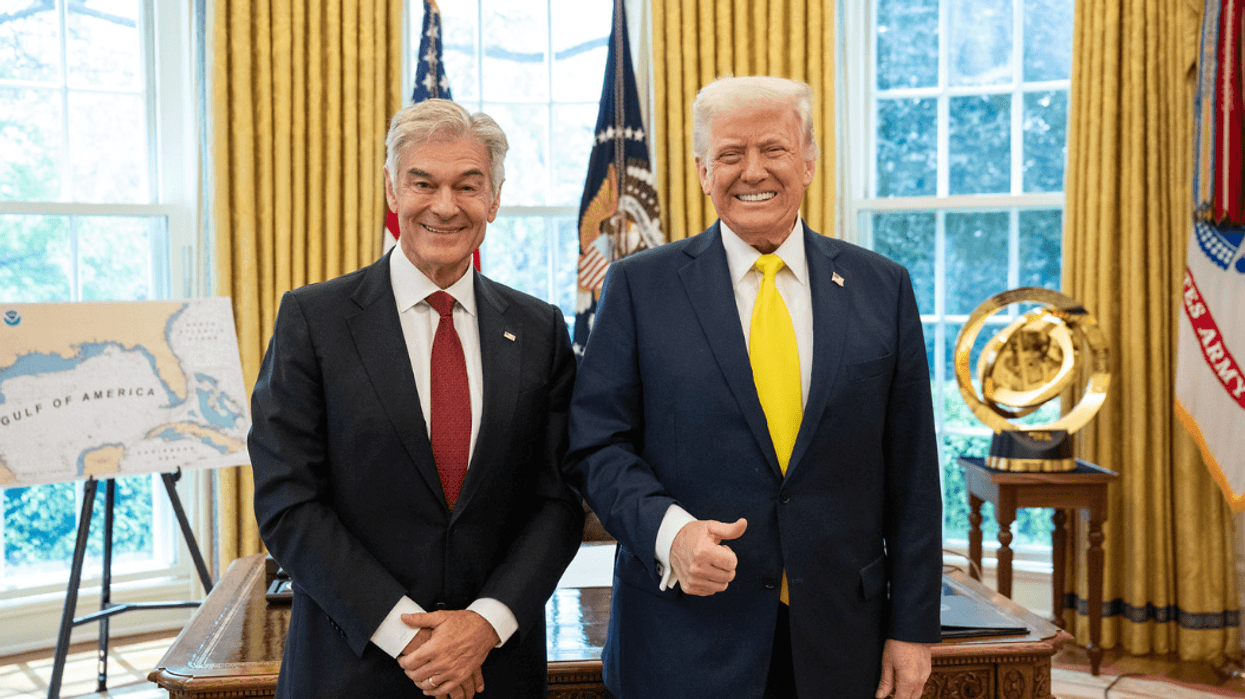
Even the insurance industry, whose biggest fan, Dr. Mehmet Oz, now sits atop the Centers for Medicare and Medicaid Services (CMS), is facing tough times. The government gave Medicare Advantage plans just a five percent bump for 2027, which was several percentage points below medical inflation. While they are being overpaid to the tune of about $80 billion a year and deserve cuts, insurers responded by raising co-pays and deductibles in next year’s plans, even as they abandoned many markets in what had been their fastest growing and most profitable segment.

Whither donations?

The nation’s pollsters and pundits are unanimous in predicting Democrats will win control of the House. They increasingly see Trump’s rock bottom popularity tipping the Senate their way, too. You would think this would be a good year for the health care sector’s major actors to punish those that have harmed their economic interests by refusing to back GOP incumbents, especially given the fact that as many as 260 candidates for House and Senate seats have declared they will not take campaign contributions from corporate political action committees (PACs). That includes most of the Senate seats in swing states that will determining who controls the upper body next year.

Health care’s major players rarely suffer when Democrats are in power, and have been major beneficiaries of each of the party’s insurance expansions (Medicare, Medicaid, the Children’s Health Insurance Program, Obamacare). Some insurers also prospered by taking on management of state Medicaid programs (they cover about three-quarters of beneficiaries in red and blue states alike).

Hospitals and doctors have dodged significant payment reforms, not just single-payer Medicare for All, but more gradualist approaches to reining in costs like single-pricing, budget-based reimbursement, and rigorous antitrust enforcement. The centrist wing of the Democratic party, like the GOP, is generally protective of the drug industry, whose headquarters and major research facilities are located in blue states.

Regular readers know I’m supportive of dramatic reforms that would move the system toward achieving what former CMS administrator Donald Berwick called the triple aim: a healthier population achieved at a lower cost with a better patient experience. His successors at the Institute for Healthcare Improvement later added workforce well-being and health equity to the mix.

Anything the Democratic Party enacts should they win Congress this year and the presidency in 2028 will move the system closer to those goals. Everything the GOP and its leader imposed over the past two years moved the system away from those goals. They hobbled Obamacare; eviscerated public health; endorsed anti-vaccine know-nothingism; assaulted Medicaid; and embraced ideological manipulation of the nation’s research enterprise.

Should the GOP retain unchecked power for the next two years, surely all the big players in health care understand that they will face daily threats to their stated public purpose.

Yet, the most recent filings by the political action committees of the American Hospital Association, AHIP (America’s Health Insurance Plans), the Pharmaceutical Research and Manufacturers Association and the American Medical Association reveal the industry is continuing to provide financial support for Republican incumbents. They are still funding the party that’s kicking them in the teeth.

Merrill Goozner, the former editor of Modern Healthcare, writes about health care and politics at GoozNews.substack.com, where this column first appeared. Please consider subscribing to support his work.

Reprinted with permission from GoozNews

Trump Voters 'Tune Out' Midterms After Wrecking The Country

Trump Voters 'Tune Out' Midterms After Wrecking The Country

The New York Times visited Republican country in Western Michigan, where it found a bucketload of disaffected conservatives.

It’s part of what political prognosticator Charlie Cook has dubbed “the red undertow,” the notion that voters aren’t voting for Democrats this year but rather are punishing Republicans—either by voting against them or by merely tuning out and skipping the election.

In its interviews, you get a picture of some of the worst people who —having voted for maniacal President Donald Trump -- are now perfectly okay with tuning out.

“People are just more focused on everyday life,” Lindsay Kronemeyer, a conservative Christian mother of two, told the Times. “I don’t hear the chatter on the Republican side of ‘Trump this, Trump that.’ He’s just not there in my head anymore.”

For starters, that’s better than the alternative; it’s a good thing that they’re not all still rabidly pro-Trump.

But think of how many people can’t just focus on everyday life because they’re being deported, losing their homes, losing their jobs, losing their farms, going hungry, and so on.

People like Kronemeyer let the arsonist into their neighborhood and are now shrugging and walking away because their house wasn’t the one set on fire.

“He’s not making sense,” 80-year-old Jim Pasek told the Times. “It confuses me, and then I just get disgusted and tune out.”

How about being disgusted and voting Democratic, given that, you know, Trump and his party are disgusting?

Pasek voted for Trump twice—helped create chaos and destruction just about everywhere—but sure, just tune out. It would be too much to ask that ol’ Jim clean up the mess he helped make.

“President Trump has been saying, ‘Vote as if I was on the ballot,’ and that’s exactly what I’m going to do—not vote,” 24-year-old Brandon Tremaine told the Times. “You do not campaign on being the ticket of peace and start a war of choice that is directly hurting Americans here at home and gotten Americans killed overseas.”

Tremaine is a graduate student, so you’d think he would know better than to believe a president who was perfectly happy with war his first term.

But sure, don’t vote—that certainly beats sticking with Republicans. But why not clean up your own mess? Tremaine’s definitely off to a fine start in life learning all about personal responsibility and accountability.

The Times also reported that Warren Stewart, a 69-year-old who works restoring old homes, said he likes to believe that Trump is working to restore the country but “is starting to have doubts.”

“Clients often get nervous when the project is only halfway through,” Stewart said, adding that he always assures them that he has a plan.

According to the Times, he “wonders if Mr. Trump does too.”

Trump doesn’t have any plan. Why are we pretending otherwise?

Stewart also told the Times that he would never vote for a Democrat, but “I just spent $60 on $30 worth of groceries and am about to go fill up for $5 a gallon. It feels like they’re stress-testing us.”

They’re not stress-testing you, Warren. That would imply that Trump and the GOP care about you. They don’t care about you enough to test you.—they don’t even care to know that you exist.

But it sure would be nice to simply shrug your shoulders and be like, “Oh well! That whole politics thing didn’t turn out, so I’ll just blissfully tune out!”

But decisions have consequences—which are life or death for many. And unlike conservatives, we actually care, even when it doesn’t directly affect us.

Markos Moulitsas is founder and editor of the blogging website Daily Kos and author of three books.

Reprinted with permission from Daily Kos

Ken Paxton

Lone Star Stress: Why Republicans Are Desperate To Hold Onto Texas

Things are undoubtedly rough for Republicans as they face the prospect of deep losses in the U.S. Senate. The map is shocking given that the Democratic Party’s path to the majority runs through states like Alaska, Iowa, and Ohio—deep red states that shouldn’t, under any normal circumstances, be competitive.

It’s particularly crazy since even redder states like Nebraska and South Carolina are also in play come Election Day.

But there is one state that looms largest among all the Senate battlegrounds: Texas. And the amount of money Republicans are sinking into this expensive state despite this massively expanded battleground map is remarkable.

“From the start of September through Election Day, Republican-aligned groups are planning to spend $166 million to boost the embattled Texas attorney general – more than they’re set to spend than on competitive Senate campaigns in Michigan, $83 million, and Maine, $61 million, combined,” reported CNN.

And that’s just part of the GOP’s Texas election bill, which CNN says “is expected to exceed $300 million.”

I have been skeptical and remain skeptical about the massive amounts spent on TV ads that no one watches, and no one is swayed by. President Donald Trump was dramatically outspent on the airwaves by both Hillary Clinton in 2016 and Kamala Harris in 2024, for all the good it did them.

And while candidates in lower-ballot races can benefit from a boost to their name recognition, how much value is GOP Texas Senate nominee Ken Paxton really getting from seeing his ad on Judge Judy 258 times in September alone, per CNN? That’s nearly 12 times per episode, assuming the show ran every weekday that month.

Paxton’s poll numbers certainly aren’t looking better as a result of the tens of millions spent saturating the airwaves, nor are Democratic nominee James Talarico’s as a result of his own massive spending. (And Democratic spending is far more efficient since our candidates don’t depend on billionaire-funded super PACs, which pay far higher ad rates.)

Those stubborn poll numbers led data maven Lakshya Jain, director of political data at The Argument and co-founder of the election forecasting site Split Ticket, to make a sensible point.

“If I was the GOP, I would just cut Texas and start focusing on Kansas, Iowa, Ohio, Maine, Alaska, Michigan, and Minnesota,” he posted on X. “They’re demographically friendlier and Texas is as expensive as all of them combined, with no evident ROI on Paxton’s slim airtime edge.”

Pollster Adam Carlston responded, “This is analytically correct, but it’s also missing how important — from a psychological perspective — holding Texas is to Republicans, including many GOP donors.”

He concluded: “Texas is the heart of 21st Century conservatism, and even one statewide loss would be a symbolic disaster for them.”

And that’s really it.

That Texas Senate seat counts just as much as the Ohio, Kansas, Nebraska, or Alaska one. There is no quantitative advantage to winning the Lone Star State over any other. And in fact, if the GOP manages to squeeze out the Texas victory but narrowly loses Kansas, Iowa, South Carolina, or others, it could very well end up materially worse off.

But there’s a very real chance Republicans would make that trade in a heartbeat—a deeper minority while holding that Texas Senate seat, rather than a narrower one without it.

Imagine Democrats on the verge of losing a California Senate seat. It’s that same energy—and it’s perhaps even worse.

There’s a sense that any Democratic victory in states like Kansas, Nebraska, or South Carolina could be a six-year rental, kind of like when Alabama Democrat Doug Jones won a 2017 Senate special election against a deeply flawed Republican opponent. Jones served three years and then Alabama voters snapped right back to conservative form.

Democrats haven’t won a statewide election in Texas since 1994. That’s more than three decades of total Republican control despite countless predictions that the state was on the verge of turning purple.

So electing Democrat Talarico wouldn’t just cost Republicans one Senate seat: It would breach the wall. It would prove that a Democrat can actually win statewide in modern Texas.

And that could have consequences that reach far beyond a single Senate term.

Texas’ demographics should give us a more competitive state than actual election results have delivered. Republicans have survived thanks to chronically weak turnout among younger and urban voters, while making enough gains with Latinos to offset Democratic growth in the state’s booming metropolitan areas.

If any of those dynamics change—and the Latino vote is certainly swinging hard against the GOP this cycle—the implications get much bigger than the Senate.

Texas would be different.

Democrats haven’t won a statewide election in Texas since 1994. That’s more than three decades of total Republican control despite countless predictions that the state was on the verge of turning purple.

So electing Democrat Talarico wouldn’t just cost Republicans one Senate seat: It would breach the wall. It would prove that a Democrat can actually win statewide in modern Texas.

And that could have consequences that reach far beyond a single Senate term.

Texas’ demographics should give us a more competitive state than actual election results have delivered. Republicans have survived thanks to chronically weak turnout among younger and urban voters, while making enough gains with Latinos to offset Democratic growth in the state’s booming metropolitan areas.

If any of those dynamics change—and the Latino vote is certainly swinging hard against the GOP this cycle—the implications get much bigger than the Senate.

Texas has 40 electoral votes. Alaska has three. Iowa and Kansas have six each.

Republicans can lose any of those smaller states and find another path to the White House. Losing Texas would blow a crater in their presidential map.

And Republicans don’t even have to actually lose Texas for that nightmare to begin. They just have to lose the luxury of assuming they’ll win it.

And we’re seeing the cost of that right now.

Republicans are on track to spend more than $300 million defending a single Senate seat in Texas while simultaneously fighting fires in Alaska, Iowa, Ohio, Kansas, Nebraska, South Carolina, Maine, Michigan, and Minnesota. Every dollar they dump into Texas is a dollar they can’t spend protecting a Senate seat somewhere else.

Now imagine that becoming the norm.

A reliably Republican Texas allows the GOP to pour its presidential election coffers (with much of that money originating from Texas itself) into Pennsylvania, Michigan, Wisconsin, Georgia, Arizona, and wherever else the battleground happens to be. A genuinely competitive Texas forces Republicans to spend enormous sums defending 40 electoral votes that previously cost them virtually nothing to secure.

This year’s Senate race is a preview of what could be. Texas has become a funding black hole, sucking Republican money away from an extraordinarily broad Senate battlefield. Even if Paxton ultimately wins, Republicans will have paid an enormous opportunity cost just to preserve something they once could simply assume was theirs.

That’s why the Republican Party’s ultimate nightmare isn’t simply losing Texas this November.

It’s having to fight for Texas every November.

Markos Moulitsas is founder and editor of the blogging website Daily Kos and author of three books.

Reprinted with permission from Daily Kos

Shop our Store

Headlines

Editor's Blog

Trending

World