Tag: susan collins
Nearly 100 Out-Of-State Billionaires Donated To Susan Collin's Re-Election Campaign

Nearly 100 Out-Of-State Billionaires Donated To Susan Collin's Re-Election Campaign

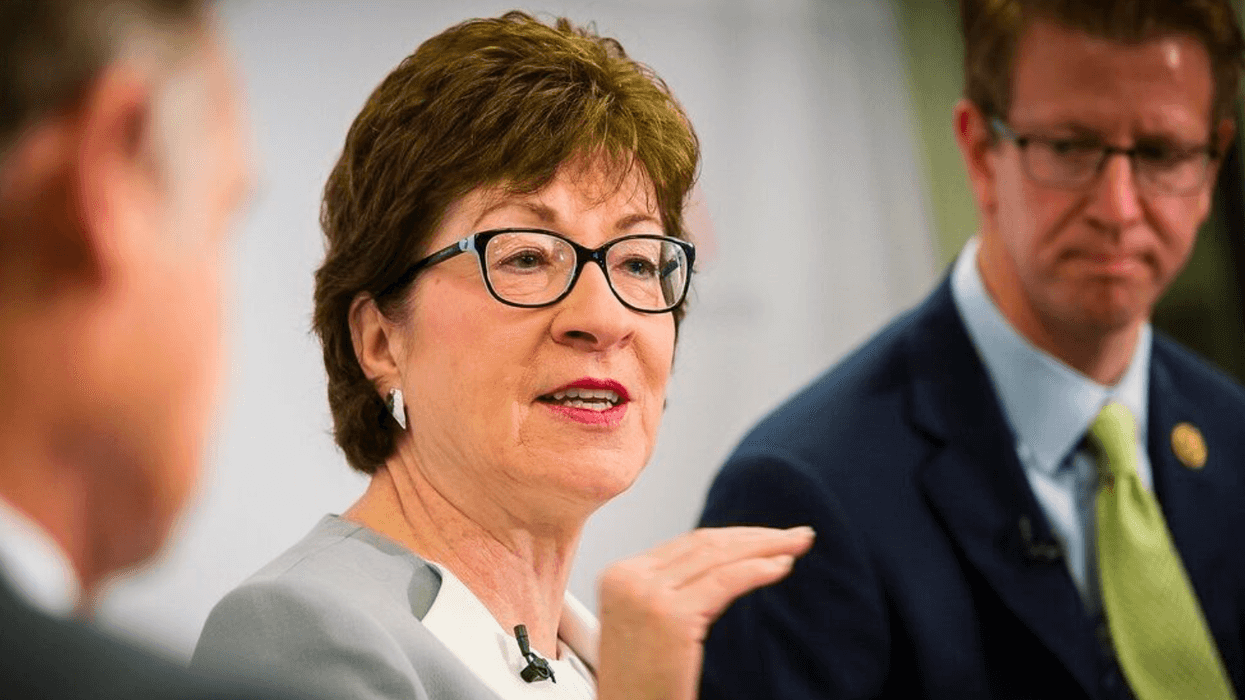
Maine Republican Sen. Susan Collins announced her reelection campaign in February by posting a video that showed her opening a box of New Balance running shoes.

“This is perfect for 2026,” she said to the camera as she held up a sneaker. “Because I’m running.”

The video didn’t mention that New Balance’s owner and chairman, billionaire Jim Davis, gave $1 million to the super PAC supporting Collins’ campaign seven months prior. The company is based in Boston and has manufacturing facilities in Maine. It was one of four donations Davis made last year to the network of committees raising money for Collins.

Davis, who is worth an estimated $6.1 billion, is one of at least 79 billionaires who donated to Collins’ network between January 2025 and May 20, 2026, according to a Maine Monitor analysis of Federal Election Commission campaign finance data. If billionaires’ spouses are included in the tally, the number rises to 97.

Collectively, the group of nearly 100 billionaires and spouses has donated $9.8 million to the Collins network since the start of 2025, representing a third of what groups supporting Collins raised from all donors.

The total from billionaires stands in stark contrast with the fundraising of her opponent, Democrat Graham Platner, whose campaign has mostly attracted smaller amounts of funds but from many more people. Platner, who won his party’s primary election Tuesday, has received at least $24,000 from five billionaires, a fraction of 1 percent of his total haul.

The breadth of billionaire funding for Collins shows how the race, which could decide control of the U.S. Senate, has drawn national interest and funding from some of the wealthiest people in the world, a group that has made up a growing share of election spending in recent years. Billionaires accounted for 19 percent of all federal election contributions in 2024, up from just 0.3 percent in 2004, according to a New York Times analysis from earlier this year.

Billionaires and their spouses gave $529,000 to the Collins campaign directly; $370,000 to the Collins Victory Committee, a joint fundraising committee that has disbursed funds to the other committees; $100,000 to Dirigo PAC, the leadership committee Collins uses to raise money for other candidates; and $24,000 to Susan Collins for Maine, a joint fundraising committee. But the billionaires have mostly opted to send their donations, nearly $9 million, to Pine Tree Results PAC, a super PAC dedicated to electing Collins that, unlike the others, is not subject to contribution limits.

Pine Tree Results PAC has financed attack ads against Platner since April and has booked $24 million in ads leading up to the general election in November, according to data from AdImpact.

The network of five groups supporting Collins is linked through a series of joint fundraising agreements, which are legal arrangements that allow them to raise money together and then disburse the funds according to a predetermined formula. For the first time in Collins’ career, a super PAC — Pine Tree Results — is linked to her fundraising apparatus through those agreements, an arrangement made possible thanks to a 2024 advisory Federal Election Commission opinion. The super PAC also shares a treasurer with the Collins Victory Committee and Dirigo PAC.

Counting all her donations, including both from billionaires and others, the Collins network has raised about $30 million since the beginning of last year, with $12 million going to her campaign.

The Platner campaign, meanwhile, raised $16.3 million over that time. The total does not include the $200,000 his campaign said it raised in the 24 hours after The New York Times published a story last week detailing what it described as Platner’s “unsettling” behavior with three former girlfriends. The Platner campaign has no joint fundraising agreements with any other committees, according to federal campaign finance filings, and no super PAC dedicated to supporting his candidacy. (Platner has said that super PACs “should be outlawed.”) Experts speculated, however, that big outside money will likely move toward Platner now that he has clinched the Democratic nomination.

The Monitor counted billionaire donors by comparing the names on the Forbes 2026 World’s Billionaire List to Federal Election Commission donor information, which included reviewing location and occupation information to eliminate the possibility of erroneous matches based on similar names.

The Collins campaign did not respond to a request from The Monitor for an interview with the senator and then declined to answer questions over email.

The amount billionaires gave in support of Collins is similar to the amount that small-dollar donors — those giving $200 or less — contributed to the Platner campaign. Billionaires gave $9.8 million in support of Collins, while small-dollar donors gave $9.6 million to support Platner. The Collins campaign raised about $980,000 from small-dollar donations.

“While Susan Collins’ campaign is backed by billionaire donors, our campaign is built on a movement funded by the people, with an average donation of $26,” wrote Ben Chin, Platner’s campaign manager, in an email.

The majority of the billionaire donations to Collins this cycle are from billionaires who made their money in alternative investments, including hedge funds and private equity. Ken Griffin, founder and CEO of Citadel LLC, donated $2.5 million to the Pine Tree Results Super PAC, the largest individual donation backing Collins since 2025. Stephen Schwarzman, the founder and CEO of Blackstone dubbed “the king of private equity,” donated $2 million. Schwarzman and the private equity industry were some of Collins’ biggest boosters in her last campaign in 2020.

Other billionaire Collins donors include Palantir co-founder Alex Karp; Melinda French-Gates, ex-wife of Microsoft founder Bill Gates; New England Patriots owner Robert Kraft; and Elizabeth Uihlein, husband of Richard Uihlein, the main financial backer of the effort to place a referendum question about trans athletes on Maine’s ballot this year.

The billionaire donors supporting Collins have a net worth of $888 billion, or nearly nine times Maine’s entire economic output in 2025. None are Maine residents.

The Platner campaign received donations from at least five billionaires. It received $1,500 from Jennifer Pritzker, a cousin to fellow billionaire and Illinois Gov. J.B. Pritzker; a total of $12,000 from Jon and Pat Stryker, heirs to the Stryker medical equipment empire; $3,500 from Christy Walton, who married into the Walton family; and $7,000 from Democratic megadonor and hedge fund founder George Soros. Together, they are worth an estimated $42.3 billion.

The difference between billionaire contributions to the two candidates is not surprising given Collins’ long Senate tenure, her position as chair of the powerful appropriations committee and Platner’s anti-billionaire message, said Mark Brewer, a political science professor at the University of Maine.

“We generally know that, in contemporary American politics, big money from wealthy donors generally tends to head in the direction of Republicans more than Democrats,” he said.

Meanwhile Democrats dating back to Howard Dean and Barack Obama have shown the possibility of raising huge sums from small-dollar donations, he added.

“It’s two different ways to get there, but you both get there,” Brewer said.

Just three percent of the total that Collins’ groups raised came from donors who gave $200 or less. In comparison, about 60 percent of donations to Platner’s campaign came from those smaller donations.

It’s not possible to track the state where smaller, “unitemized” donations came from. Committees are required, however, to provide the Federal Election Commission information about donors who contribute more than $200 across all federal campaigns, including their state of residence. These donations are called “itemized donations.” Both campaigns have relied heavily on out-of-state money for their itemized donations.

Of those larger donations to the Collins network, about 3 percent came from Maine.

Platner’s trackable donations were more likely to be from Maine: About 22 percent were from the state, according to the Federal Election Commission.

That’s actually a large percentage of in-state donations for a Senate campaign, said Nicholas Jacobs, a professor of American government at Colby College who has studied out-of-state donations in Senate campaigns. Maine contributed more itemized funding to Platner than any other state through May 20, according to the Federal Election Commission.

“That’s rare in general and exceptionally rare for a small state,” Jacobs said.

But now that Platner has won his primary, big money may start flowing his way. Jacobs predicted that Platner will likely get the backing of a super PAC at some point this summer.

“That’s just the way politics works,” Jacobs said.

In the wake of Citizens United

This is the first time that Collins has been running for reelection since the Federal Election Commission issued an advisory opinion that allowed super PACs to join joint fundraising efforts, and Collins has taken advantage of the change.

Before 2024, campaigns — which are subject to donor limits — could not be connected to super PACs, which are not subject to limits on donor contributions. Super PACs were created in the wake of the Citizens United Supreme Court decision, which ruled that groups independent of campaigns have a First Amendment right to raise and spend money supporting or attacking candidates without limits, so long as they aren’t coordinating with campaigns.

In 2024, the Federal Election Commission issued an advisory opinion allowing South Carolina Republican Sen. Lindsey Graham’s campaign to enter into a joint fundraising agreement with the super PAC supporting his candidacy. Commission members voted, 5-1, to permit the arrangement because Graham and his campaign told the commission they “will not discuss the nonpublic campaign plans, projects, activities, or needs of Senator Graham or his campaign with [the] Super PAC,” according to the advisory opinion.

Critics, including the Democratic Party’s House and Senate fundraising arms, argued the arrangement was a clear violation of the ban on coordination, a ban that they argued has been regularly circumvented since the creation of the super PAC in 2010.

In her dissent, former Democratic Federal Election Commission member Ellen Weintraub wrote that “the Commission has already created far too many holes in what should be a solid wall dividing candidates and their committees from the super PACs that support them.” In 2025, Trump fired Weintraub from the commission shortly after she became chair and didn’t name a replacement. Shortly after that, the agency lost a quorum of commissioners, effectively sidelining it from its election watchdog duties since April 2025.

The 2024 advisory opinion opened the door for the Collins campaign to connect with the Pine Tree Results Super PAC. The campaign and the PAC each have a joint fundraising agreement with the Collins Victory Committee, which has transferred funds to both organizations. Most of this money, a total of $2.4 million, has gone to the Collins campaign.

The Pine Tree Results Super PAC and the Collins Victory Committee share a treasurer, and all three groups have paid the same fundraising and event planning consultant, the Morning Group, based in Washington, D.C., Federal Election Commission records show.

Other outside groups are also spending large amounts on the race. For example, the Senate Leadership Fund, which is the main fundraising vehicle for Senate Republicans, has raised $175 million since the start of 2025 and has booked $29 million in ads for the race pitting Collins against Platner.

Many of the donors to the Senate Leadership Fund also donated to parts of the Collins fundraising network, including Schwarzman and hedge fund manager Paul Singer. Other billionaires have donated large sums to the Senate Leadership Fund as well, including casino magnate Miriam Adelson, who donated $30 million, and Elon Musk, who gave $10 million.

On the other side of the aisle, Democratic super PAC WinSenate has booked $25 million in ads in Maine’s Senate race. WinSenate is funded by the Senate Majority PAC, the main fundraising vehicle for Senate Democrats. It has raised $115 million this cycle, and includes funds from billionaires such as Cable TV magnate Amos Hostetter Jr., who gave $2 million, and Netflix cofounder and chairman Reed Hastings, who contributed $1 million.

Both the Republican Senate Leadership Fund and the Democratic Senate Majority PAC are beneficiaries of large amounts of funds contributed by 501(c)4 nonprofits that aren’t required to reveal their donors. That type of funding has been dubbed “dark money” due to the lack of transparency about its sources.

This cycle, the Senate Leadership Fund has raised $46 million from conservative dark money group One Nation, while the liberal dark money group Majority Forward has donated $33 million to the Democratic Senate Majority Fund. It’s unclear how much of that money came from billionaires.

This story was originally published by The Maine Monitor, a nonprofit and nonpartisan news organization. To get regular coverage from the Monitor, sign up for a free Monitor newsletter here.

Violating Law She Sponsored, Susan Collins Failed To Report $395K In Stock Trades

Violating Law She Sponsored, Susan Collins Failed To Report $395K In Stock Trades

Maine Sen. Susan Collins failed to report up to $395,000 in stock trades, violating a law that she helped pass.

The STOCK Act requires members of Congress and their spouses to disclose stock transactions within 45 days of a trade being ordered. A review of the Republican senator’s disclosures from 2013 to 2018 shows 24 transactions that were reported more than 100 days late.

All of these trades were made by Collins’ husband, Thomas Daffron, a former lobbyist. The late-reported items include shares of Microsoft, JPMorgan Chase, and CVS.

NOTUS reported that Collins also failed to report a purchase of Pfizer stock earlier this year.

Collins supported the STOCK Act when it was introduced in January 2012 and helped shepherd it into law by becoming the first Republican to back the measure. It ultimately passed with bipartisan support and was signed into law by President Barack Obama.

“At a time when polls show low public confidence in Congress, there is a strong desire to address the concerns that underpin the public’s skepticism and assure the American people that we put their interests above our own,” Collins said in defense of the law.

Collins has since opposed efforts to completely ban stock trading by members of Congress, an idea supported by the vast majority of voters and members of her own party. A Brennan Center survey found that 81 percent of adults support such a ban.

Collins has acquired considerable wealth as a result of her investments.

In 2001, she reported her net worth as between $111,000 and $315,000. According to Quiver Quantitative, which tracks the wealth of lawmakers, her net worth in 2013—less than a year after marrying Daffron—was $3.8 million. Today, it is $6.9 million.

Earlier this year, it was reported that Collins and Daffron had personally profited from the war in Iran through their substantial oil and gas holdings.

The STOCK Act requires lawmakers to pay a fine for every transaction reported outside the 45-day window. These fees are frequently waived by the House and Senate ethics committees. It is unclear whether Collins has been investigated or reprimanded for the infractions.

Collins is running for a sixth term this year. Her likely Democratic opponent is oysterman and veteran Graham Platner, who has pledged to support a congressional stock trading ban.

Reprinted with permission from American Journal News

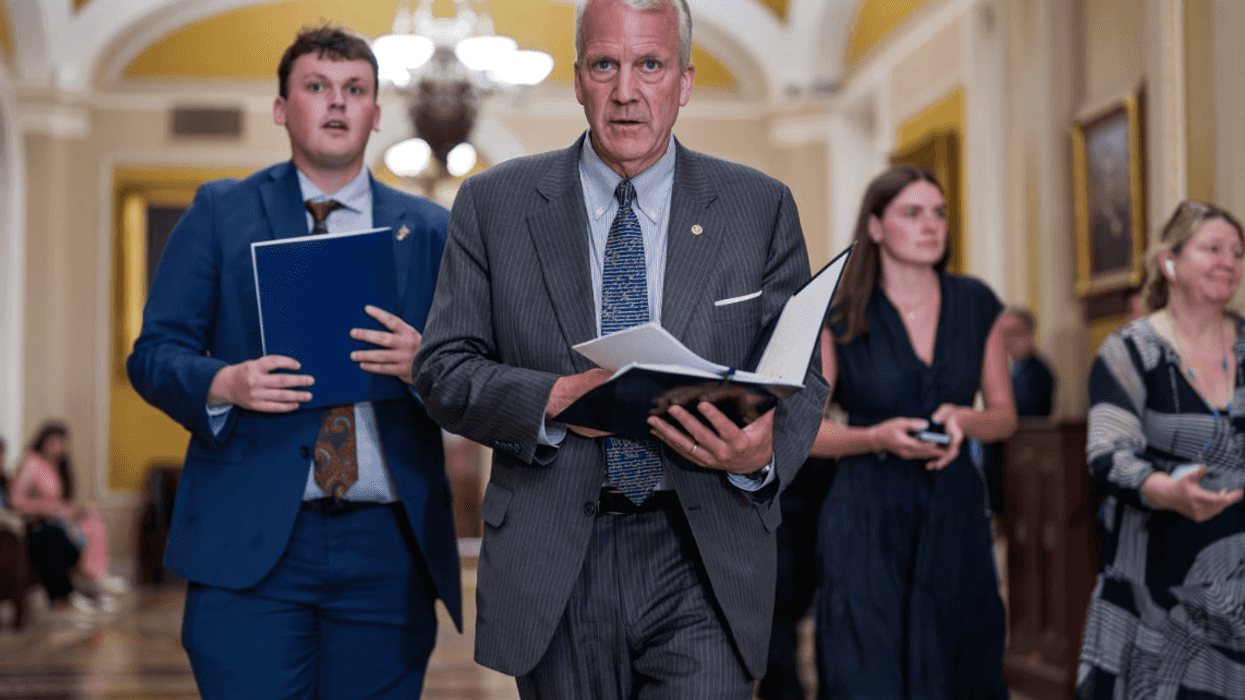
Dan Sullivan

New Research Report Accuses GOP Senate Candidates Of Self-Enrichment

A new memo from End Citizens United flags ethics concerns about five Republicans competing in marquee Senate races.

Since 2015, End Citizens United has worked to eliminate dark money in U.S. politics by calling out corruption and elevating candidates who support commonsense campaign finance reforms.

The memo alleges that Alaska Sen. Dan Sullivan, Maine Sen. Susan Collins, former Michigan Rep. Mike Rogers, former New Hampshire Sen. John Sununu, and North Carolina Republican Michael Whatley have all engaged in patterns of double-dealing and self-enrichment.

End Citizens United President Tiffany Muller says these Republicans “have spent their political careers leveraging their influence, cashing in on their connections, and abusing the public trust for personal gain instead of fighting for their constituents.”

The memo details, for example, how Sullivan has repeatedly voted to advance the interests of RPM International, a chemical manufacturing company run by his brother and in which he holds up to a $5 million stake. This includes blocking an amendment that would have allowed the EPA to crack down on cancer-causing pollutants and substances.

The memo also lays out Sullivan’s side hustle as a stock trader. He has made up to $2 million worth of trades while in office and has an estimated net worth of $8.29 million.

Collins is also a prolific stock trader, the memo says. Last year, she dodged questions from a reporter about her husband owning shares of Boeing, RTX Corporation (formerly Raytheon), and other companies regulated by Congress.

Collins claimed to have no knowledge of her husband’s financial dealings despite reporting them in her own personal financial disclosures. Both Collins and Sullivan opposed a bipartisan effort to ban stock trading by members of Congress and their spouses.

Rogers, meanwhile, left Congress a decade ago, reportedly to pursue money-making ventures. According to the memo, he leveraged his national security expertise into lucrative consulting gigs with multinational corporations, including a cell phone company that helped Venezuelan dictator Nicolás Maduro spy on civilians.

Rogers is now running for Michigan’s open U.S. Senate seat with the backing of President Donald Trump.

Sununu, another Trump-backed candidate, followed a similar trajectory. After leaving the Senate in 2009, he went to work for a lobbying firm whose clients included Pfizer, Gilead, Merck, Bayer, and Johnson & Johnson. He is now trying to return to the Senate on a platform of lowering health care costs.

Whatley also had an extensive lobbying career. He spent more than a decade advancing the interests of oil and natural gas companies. His current oil and gas investments are worth up to $1.39 million and have grown substantially as a result of the war in Iran.

“Voters expect elected officials to fight for hardworking families, not to cozy up to special interests and then walk through the revolving door to cash in,” Muller said. “We’re committed to holding these Revolving Door Republicans accountable for putting themselves and their donors ahead of the people they’re supposed to serve.”

End Citizens United has endorsed the likely Democratic candidates in these races: former Rep. Mary Peltola in Alaska, oysterman Graham Platner in Maine, Rep. Chris Papas in New Hampshire, and former Gov. Roy Cooper in North Carolina.

Michigan’s Democratic Senate candidate will be chosen in an August 4 primary.

Reprinted with permission from American Journal News

'Critical Deadline': More Republicans Breaking Ranks Over Trump's Unpopular War

'Critical Deadline': More Republicans Breaking Ranks Over Trump's Unpopular War

Today marks "a critical deadline" for President Donald Trump and his war with Iran, as The Hill reports that he is running out of time to resolve the conflict while more and more Republicans break ranks and threaten to back measures to force the fighting to stop.

As the deadline loomed, the outlet on Friday morning reported that the milestone now "stands to complicate things" with lawmakers, including a growing number of Republicans, who have "voiced concerns" about the war continuing. Per the War Powers Act, the president requires authorization from Congress for a military conflict after it reaches the 60-day mark, which it will do on May 2, though Defense Secretary Pete Hegseth claimed, dubiously, that the ongoing ceasefire paused the clock on that count.

"And such concerns already played out ahead of the deadline, with Sen. Susan Collins (R-ME) on Thursday breaking rank to vote in favor of a war powers resolution to halt military actions against Iran, along with Sen. Rand Paul (R-KY)," The Hill reported. "The resolution however, was ultimately defeated for the sixth time by Senate Republicans. Sen. John Curtis (R-UT) had previously indicated that the 60-day deadline would be a sticking point for him did not break with the GOP in the latest vote."

The White House has insisted that talks with Iran are continuing to progress, but The Hill noted that negotiations are "effectively stalled" as Trump digs in on his decision to blockade Iranian ports in response to the closure of the Strait of Hormuz. A statement from the administration also warned lawmakers against trying "to score political points by usurping the Commander-in-Chief’s authority" via a war powers vote, despite Congress having the explicit authority to do so.

"The War Powers Act intends to limit a president’s ability to conduct and continue military action without congressional approval," the outlet added. "Should the hostilities continue past Friday, however, it could prove to be another example of how the president takes another opportunity to bypass the legislative branch’s powers."In keeping with Trump's own assertions about the war, House Speaker Mike Johnson insisted that a war powers vote was not needed because, he claimed, the U.S. is not actually at war with Iran.

John Ullyot, a former spokesman for the Senate Armed Services Committee and National Security Council spokesman during Trump’s first term, suggested that historical precedent is not on Congress's side, despite the letter of the law.

"Almost every President who has used force over the last 45 years has ignored the 60-day deadline, so it’s hard for Congress to make a case to enforce it this time around,” Ullyot told The Hill. "If Congress were serious about having a voice on hostilities, it would either change the law, or get serious about its oversight responsibilities and withhold funding when the executive doesn’t cooperate. Neither of those will happen, especially whenever Congress is run by the same party that holds the White House."

Reprinted with permission from Alternet

Shop our Store

Headlines

Editor's Blog

Corona Virus

Trending

World