Tag: unions
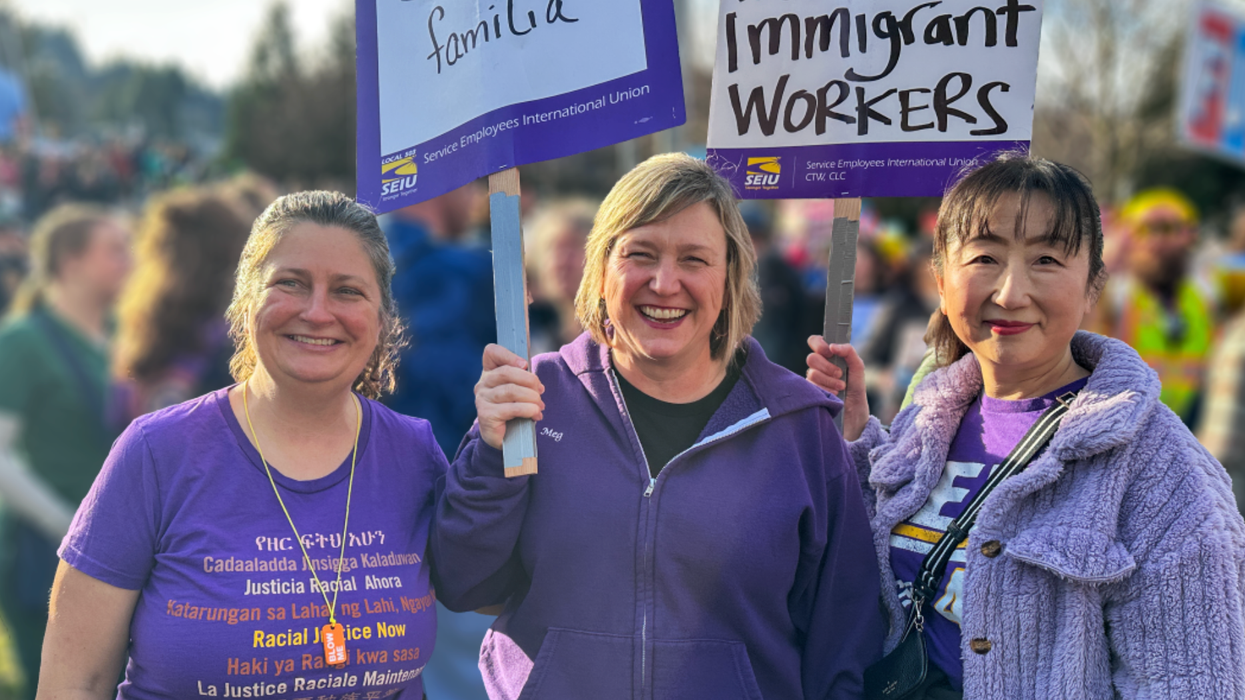
Union Organizing Surges In Oregon As Workers Seek Affordable, Decent Life

Union Organizing Surges In Oregon As Workers Seek Affordable, Decent Life

Union membership in Oregon has surged by 23 percent since 2013, placing it among the top 10 states for organized labor growth in the country.

Service Employees International Union Local 49, which represents more than 15,000 health-care, janitorial and security workers in the region, reflects this trend. Union president Meg Niemi said they added 1,500 members last year, including workers at Providence St. Vincent, Legacy Mount Hood Medical Centers, and Inter-Con Security.

She predicted that growth will continue.

"We are seeing that more and more workers do want to come together and form unions," she said, "to be able to have protections on the job and advocate for the wages that they need to be able to pay their rent, pay for groceries, and get to and from work.

Oregon is bucking the national trend, which has seen union membership fall by half since the 1980s. Around 16 percent of the state's workforce is now unionized, far exceeding the national average of 10 percent. That growth is driven by organizing in health care, education and the public sector.

Reflecting on past victories, Niemi noted that some workers at Portland International Airport unionized with SEIU Local 49 in 2016. Before that, she said. they worked for minimum wage with no benefits.

"Longtime organizer Stan described having to 'cowboy through' shifts while sick. But thanks to the contract they won, his working life now looks very different," she said. "He pointed to his new glasses that he had just gotten, and he told me he was headed to the dentist to get some dental work done that he'd been putting off for years and then leaving to go pick up his grandkids."

Niemi said labor in Oregon and across the country continues to face serious threats. She pointed to anti-union efforts by the Trump administration and what she called "corporate greed on steroids." She also criticized attacks on immigrant workers, who she said are being unfairly blamed for the hardships facing working families.

"The real crisis," she said, "is that people are struggling to be able to pay their bills, even though they are working full time. And we are going to continue to stand up against this kind of scapegoating and divide and conquer tactics."

Reprinted with permission from Public News Service
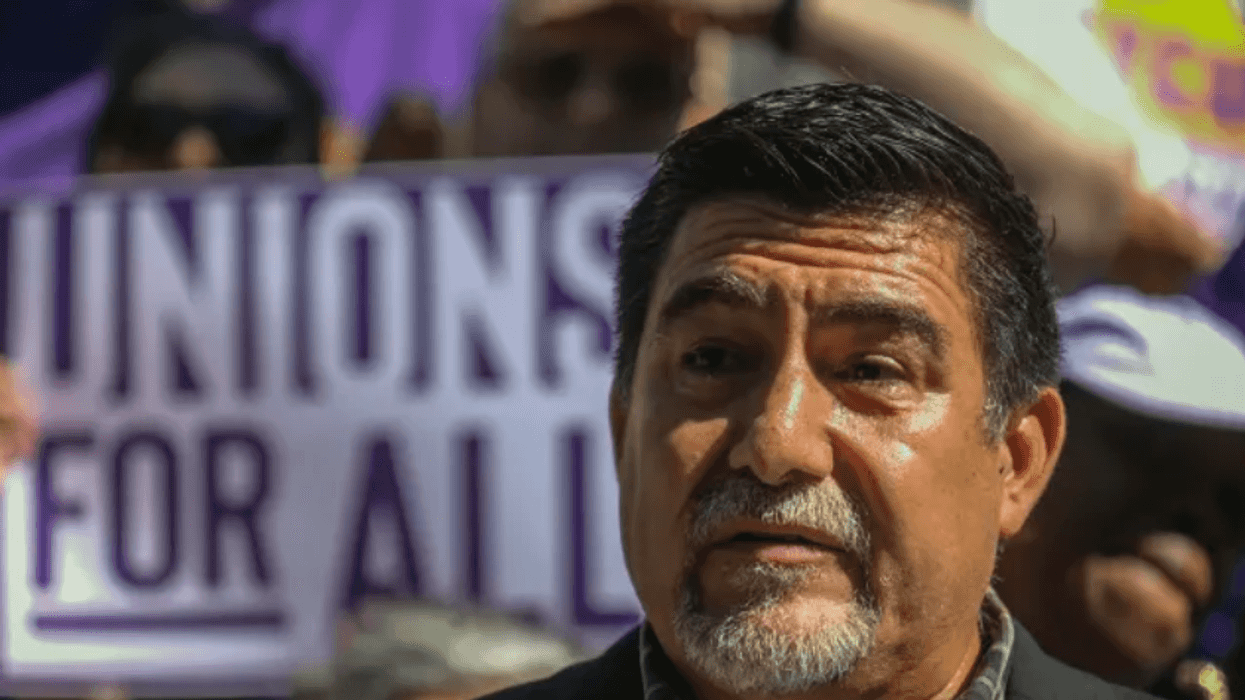
Labor Movement Enraged By ICE Arrest Of California SEIU Chief

Labor Movement Enraged By ICE Arrest Of California SEIU Chief

Unions across the United States have been rallying against the detainment of California labor leader David Huerta, who was arrested at an immigration protest on June 6 and released Monday afternoon on a $50,000 bond.

UPDATE: David Huerta was just released from custody!

[image or embed]

— SEIU California (@seiuca.bsky.social) June 9, 2025 at 10:50 PM

Huerta, president of Service Employees International Union California was injured during the arrest and charged on Monday for purportedly impeding Immigration and Customs Enforcement officers.

The Trump administration triggered protests by rounding up immigrants in the Los Angeles area in an effort to increase its deportation numbers.

“What happened to me is not about me; This is about something much bigger. This is about how we as a community stand together and resist the injustice that’s happening,” Huerta wrote in a statement on June 6. “Hard-working people, and members of our family and our community, are being treated like criminals. We all collectively have to object to this madness because this is not justice. This is injustice. And we all have to stand on the right side of justice.”

The Trump administration’s decision to arrest and charge Huerta is serving as a rallying point for labor unions, immigrants, and minority communities that are being targeted.

“They have woke us up,” Tia Orr, executive director of SEIU California, told the Los Angeles Times.

With more than 750,000 members, SEIU California called for Huerta’s immediate release during a rally in downtown Los Angeles Monday. Similar rallies also occurred in Washington, D.C., Seattle, Boston, and Chicago.

Other unions lent their voices to the cause, too.

“The nearly 15 million working people of the AFL-CIO and our affiliated unions demand the immediate release of California Federation of Labor Unions Vice President and SEIU California and SEIU-USWW President David Huerta,” the AFL-CIO wrote in a release on June 7.

Lee Saunders, president of the American Federation of State, County and Municipal Employees, accused ICE agents of violating Huerta’s First Amendment rights by arresting him in the first place.

“AFSCME stands in unwavering solidarity with our union brother David Huerta. We demand his immediate release, and we will not be silent until justice is done,” Saunders wrote in a statement on June 8.

The arrest was also condemned by lawmakers like House Minority Leader Hakeem Jeffries, who, in a statement released Sunday, said that the arrest of Huerta was “unacceptable.”

“This is the United States of America and we will not be intimidated by a wannabe dictator in the executive branch,” Jeffries wrote in a statement on June 8.

President Donald Trump spent much of the weekend attempting to escalate the situation in Los Angeles, particularly by deploying National Guard troops to the area over the objections of California Gov. Gavin Newsom and Los Angeles Mayor Karen Bass.

Trump and his border czar Tom Homan also promoted the idea of arresting Democratic leaders for opposing the Trump administration’s mass deportations.

In addition to vocal opposition from multiple unions and political leaders, other Democrats have criticized the escalating conflict created by the Trump team.

“Governors are the Commanders in Chief of their National Guard and the federal government activating them in their own borders without consulting or working with a state’s governor is ineffective and dangerous,” 22 Democratic governors wrote in a statement released on Monday.

“Further,” they continued, “threatening to send the U.S. Marines into American neighborhoods undermines the mission of our service members, erodes public trust, and shows the Trump administration does not trust local law enforcement.”

Reprinted with permission from Daily Kos.

Bridge

Biden Orders Only US-Made Steel For Infrastructure Projects


The Biden administration announced on Monday that construction projects funded under the Infrastructure Investment and Jobs Act will be required to use American-made steel and iron.

A memo issued by Office of Management and Budget Director Shalanda D. Young "for heads of executive departments and agencies" says that "none of the funds made available for a Federal financial assistance program for infrastructure, including each deficient program, may be obligated for a project unless all of the iron, steel, manufactured products, and construction materials used in the project are produced in the United States. ... This means all manufacturing processes, from the initial melting stage through the application of coatings, occurred in the United States."

The infrastructure bill was signed into law by President Joe Biden on November 15, 2021, after passing in Congress with all Democrats voting in favor of it and a majority of Republicans opposing its passage.

The American Iron and Steel Institute, an association of North American steel producers, has estimated that five million metric tons of steel will be needed for every $100 billion of direct infrastructure spending in the legislation. Based on the $550 billion allocated in the final bill, that amounts to an estimated 27.5 million metric tons of steel that would need to be manufactured in the United States.

"Passing this bill today provides a tremendous boost to our industry," Kevin Dempsey, president and CEO of the institute, said in a statement.

Infrastructure construction projects include bridge repairs across the country, as well as road construction and repair and the installation of broadband infrastructure.

Biden's direction to use steel produced in the United States could have a positive environmental impact.

Multiple studies, including one backed by the BlueGreen Alliance Foundation and ClimateWorks Foundation and another from the Climate Leadership Council, have determined that the production of steel in America is more carbon efficient than in other countries.

Both studies found that carbon output from China's production of steel notably exceeded that of American production.

American steel production companies Nucor and U.S. Steel recently announced initiatives they said were aimed at achieved "net zero carbon" goals.

In that same vein, the Biden administration has previously announced its intention to work with the European Union toward policies that limit the use of "dirty steel" from China.

"American-made steel and aluminum is produced with far fewer emissions than dirtier alternatives made in the PRC and elsewhere. To date, American steel companies and workers have received no benefit for their low-carbon production. Low-carbon steel across all production types —and the workers who make it—will be incentivized and rewarded going forward," the administration announced in an October 2021 statement. It also highlighted the value of "green steel production," which it said would ensure "a competitive U.S. steel industry for decades to come."

The United Steelworkers, the union that represents 1.2 million active and retired workers in multiple industries, praised the original passage of the infrastructure bill in November 2021, noting, "Robust investment, coupled with strong domestic procurement provisions, will help American workers, including hundreds of thousands of USW members, not only by making their communities safer but by promoting widespread job growth and economic opportunity.

"Our members stand ready to produce the essential building blocks of a modern infrastructure, as we begin making long-overdue upgrades to the nation's roads, bridges, broadband, public transit, ports, power grids, and more."

Published with permission of The American Independent Foundation.

GOP Bill Would Revive Boss-Dominated ‘Company Unions’

GOP Bill Would Revive Boss-Dominated ‘Company Unions’

Congressional Republicans are proposing a bill they claim would improve "teamwork" between workers and management. In reality, it would allow businesses to bring back the "company unions" used in the 1920s and 1930s to prevent workers from achieving meaningful gains.

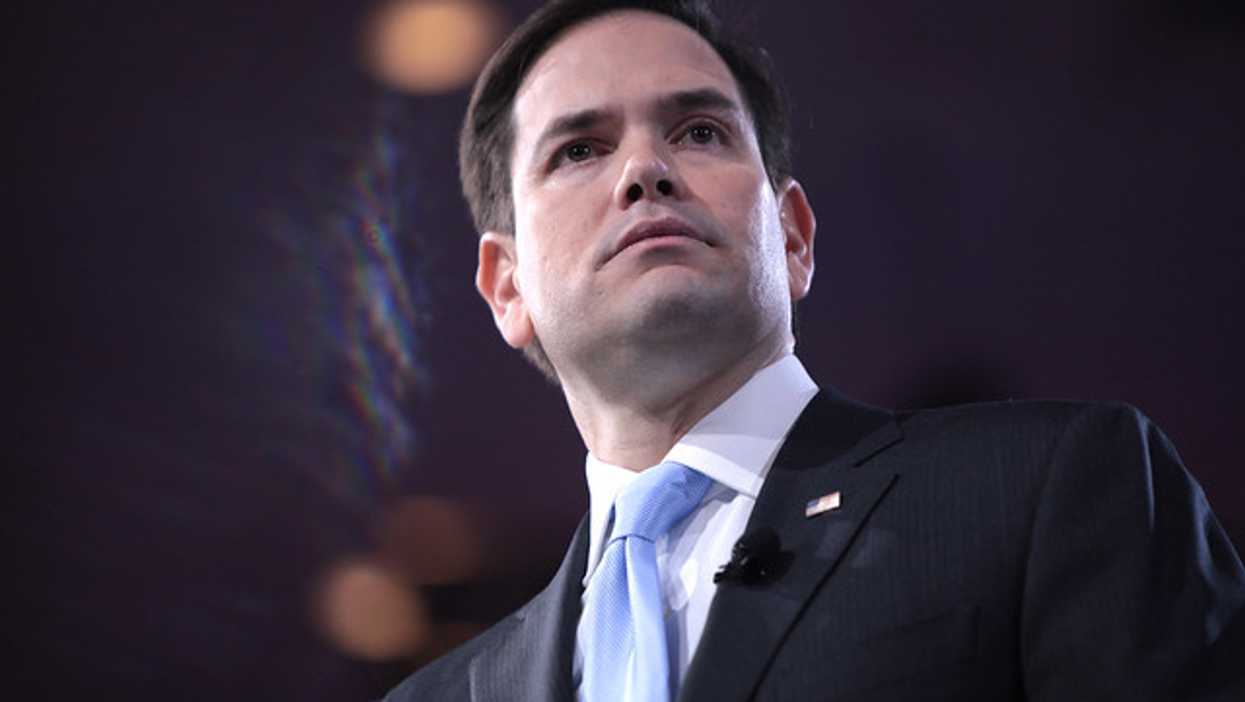
Last Thursday, Sen. Marco Rubio (R-FL) introduced the Teamwork for Employees and Managers Act of 2022, a bill "to enable an employer or employees to establish an employee involvement organization to represent the interests of employees." Rep. Jim Banks (R-IN) and 12 GOP colleagues filed the same bill in the House.

In a February 3 press release, Rubio and Banks claimed the bill "would provide workers seeking to organize with an alternative to unionization that allows both workers and managers to work together, without fearing heavy-handed legal action or bureaucratic meddling from the National Labor Relations Board (NLRB)," and noted that it is supported by "conservative labor experts."

Rubio said the bill would help protect companies from having to negotiate with their employees "by creating a pro-worker alternative to unions, which are notoriously left-wing and almost always pit workers against management, only worsening the workplace environment."

Banks claimed the bill would allow workers' voices to be heard without having to embrace "the left's woke agenda."

Labor unions have strongly opposed so-called "company unions," arguing that they allow businesses to run roughshod over their workers.

According to an issue brief by the International Association of Machinists and Aerospace Workers, "In the 1920s and 1930s, large numbers of employers established management-dominated employee organizations — known as 'company unions' — to thwart the efforts of workers to form their own independent unions."

In 1935, Congress stepped in, passing the National Labor Relations Act. Section 8(a)(2) of that law made it illegal for a business "to dominate or interfere with the formation or administration of any labor organization or contribute financial or other support to it."

The new bill would eliminate those protections, making it possible for employers to "establish, assist, maintain, or participate in an employee involvement organization" where employees and supervisors "address matters of mutual interest, including issues of quality of work, productivity, efficiency, compensation, benefits (including related to education and training), recruitment and retention, grievances, child care, safety and health, and accommodation of the religious beliefs and practices of employees."

A 1995 AFL-CIO executive council statement warned that without the National Labor Relations Act's protections, "non-union employers would be free to create phony employee organizations and fake employee committees and handpick the 'leaders' of these organizations. Employers would then be free to deal with these management-anointed 'representatives' as if they were the real voice of the employees."

They also noted that, even in unionized workplaces, companies could "create, fund, and deal with a rival, company-controlled entity" to undermine the existing union and destabilize its collective bargaining efforts.

At that time, Republicans in Congress were pushing a nearly identical effort. The original Teamwork Act, authored by Rep. Steve Gunderson (R-WI) was passed by the GOP-run House in September 1995 and Senate in July 1996 — mostly along party lines.

President Bill Clinton stopped their bill with a veto, writing, "Rather than encouraging true workplace cooperation, this bill would abolish protections that ensure independent and democratic representation in the workplace. True cooperative efforts must be based on true partnerships."

Rubio and Banks said their new bill is "modeled off" of Gunderson's proposal.

Since the 1996 effort failed, Republicans have largely backed off the idea. But now that the Democratic majority in Congress is trying to expand labor rights through the Protecting the Right to Organize (PRO) Act and through the Build Back Better framework, these 14 GOP lawmakers are trying to undermine unions.

The House bill is co-sponsored by Reps. Rick Allen (GA), Brian Babin (TX), Tom Cole (OK), Byron Donalds (UFL), Mike Garcia (CA), Ronny Jackson (TX), Tracey Mann (KS), Mary Miller (IL), Ralph Norman (SC), David Rouzer (NC), Austin Scott (GA), and Claudia Tenney (NY).

Reprinted with permission from American Independent

Shop our Store

Headlines

Editor's Blog

Corona Virus

Trending

World