Tag: us economy
Mainstream Media Still Doesn't Know What To Do With Trump's Big Lies

Mainstream Media Still Doesn't Know What To Do With Trump's Big Lies

A few days ago the Wall Street Journal published an oped by President Trump wherein he argued how great the US economy is on his watch and why tariffs are the main reason for that greatness. It’s a steaming mess of an argument, a firehose of falsehoods, though the one upside is that I haven’t seen it referenced anywhere. It sunk like a stone under the weight of its lies.

I won’t go through them here (though I’m about to link to a strong rebuttal), as it would be a waste of both of our times. Also, as you’d expect, it’s a greatest hits album with all the golden oldies he constantly blathers on about: inflation is zero (vs. 2.7 percent in the last CPI reading), prices are down, foreigners have invested “$18 trillion!” in America (that would be 60 percent of GDP; biz investment is currently 14 percent of GDP). The irony is that, as I’ve often stressed in these pages, the macro economy is, in fact, quite solid, even if the job market has worrisomely softened.

By far, the most potentially consequential macro development over the past few years is faster productivity growth. If that sticks—if we’re really, lastingly generating more output per hour of work—it means the US economy can grow faster without worrying about inflation picking up. Of course, there’s no guarantee that faster growth reaches working-class people in the form of higher wages, income, wealth; often, it has not. But those are all other discussions.

At any rate, I saw no reference to this hot mess until this morning, when a prominent newspaper ran a fulsome rebuttal to Trump’s claims. This new piece points out that solid research shows that, of course, tariffs have not been absorbed by exporters but passed through to American businesses and consumers, generating higher prices on those imports, hurting investment, and making production more, not less, expensive for our own manufactures, who have been aggressively shedding jobs (half of our imports are inputs into domestic production).

That prominent newspaper is the same Wall Street Journal that published Trump’s oped.
What should one make of this? How is one supposed to process the fact that the media publishes, without criticism or an accompanying fact check, a cascade of outright lies, only to rebut it a few days later? What does that say about our collective understanding of reality? And what should the WSJ have done in this case?

If you’re a newspaper with an oped page, and the President gives you an oped, you can argue that such a piece is de facto newsworthy. As the Journal editors themselves said in their rebuttal, “We thought we owed him the opportunity after our criticism of his tariffs.”

But unless his argument is fact-based and substantive, that’s ridiculous. The WSJ’s criticism of Trump’s tariffs has been wholly fact-driven—they’re consistently done great work on this, and I say that as someone whose ideology differs sharply from that of this ed board. If they say 2+2=4, nobody, not even the president, gets to pushback with 2+2=5.

I give them some credit for coming back with “no, it’s 4.” But that doesn’t fix what’s broken here.

I had a similar complaint about the New York Times' recent big-deal interview with Trump in the Oval. You can listen to the recording. They ask a question. He lies. They move on to the next question.

The only way to understand this is as performance art. It’s not a discussion about reality, facts, how policies play out in the real world. It’s a game, wherein Trump describes his alt reality and the media prints it because he’s the president and his reality matters. Which is true. It matters a lot and it’s one of the main reasons we’re in the mess we’re in. Never before has a president and his whole operation been so detached from reality, to the point wherein we see horrific things with our own eyes and they immediately say “no, that’s not what happened.”

But this is not benign, cute, or harmless. It’s not “oh, there he goes again! Whaddya gonna do? He’s the POTUS! You’ve got to run it.” It’s not just another flavor of our intense partisanship. It’s corrosive at best and fatal to democracy at worst. Allowing this false reality to fester has now been shown to be literally fatal to our fellow citizens.

I’m not a media expert, and I’m well aware that they’re in the business of selling news, and that clickbait = $ (though again, no one seemed to pick up on Trump’s op-ed). But there is no question in my mind that publishing falsehoods, even from the president—especially from the president—is not worth the money.

You may be thinking, “hey, it’s the op-ed page, not a column.” Well, I’ve written lots of op-eds and in every case, the editors insist that facts be verified. I’m not the president, but there’s absolutely no reason that the same rules shouldn’t apply.

Yes, of course, they have to cover him. But not like this.

Jared Bernstein is a former chair of the White House Council of Economic Advisers under President Joe Biden. He is a senior fellow at the Council on Budget and Policy Priorities. Please consider subscribing to his Substack.

Reprinted with permission from Econjared.
Americans Losing Their Jobs

New Data Show Trump Tariffs Are Ruining Job Market

Unemployment claims have risen for the second-straight week, exceeding economists' expectations at the highest level in eight months, the Department of Labor announced on Thursday.

Initial jobless claims stood at 247,000 for the week ending on May 31, higher than the 236,000 claims that economists had been projecting. That jump caused the four-week moving average to increase by 4,500.

"New jobless claims are ticking up. The numbers are still low, but there's an upward trend. This is key to watch. The main reason the US economy has been so resilient is 159.5 million people are still employed and getting paychecks. If that goes down, a downward spiral will start,” Heather Long, the chief economist at Navy Federal Credit Union, wrote on X.

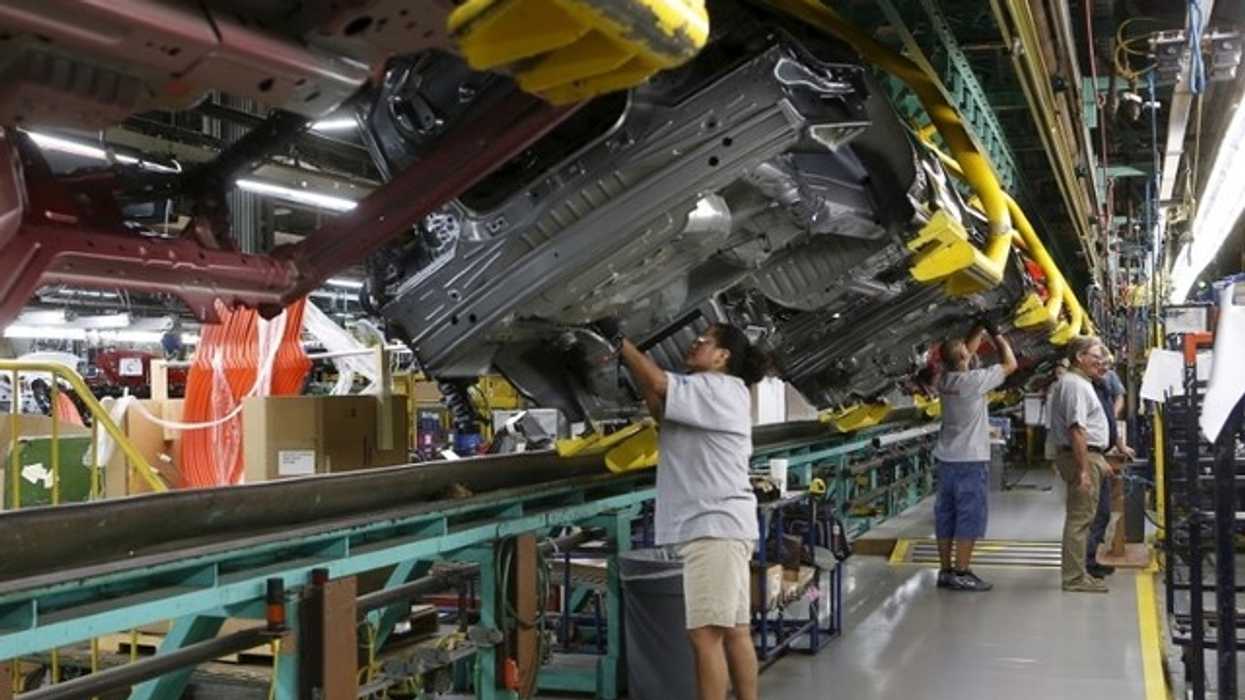
According to the Labor Department, the biggest surge in new unemployment claims was in Michigan, where 8,490 people filed claims—up 3,259 from the week prior. The state’s job losses came from the manufacturing industry, which is being hit hard by President Donald Trump's steel, aluminum, and automobile tariffs.

Indeed, a number of automobile manufacturing companies have announced layoffs, including Stellantis, Ford, General Motors, and a handful of other companies that manufacture car parts.

Ultimately, the increase in jobless claims comes after the payroll company ADP said that just 37,000 private-sector jobs were created in May—a major slowdown and possibly the first tangible signs that Trump's idiotic tariffs are now impacting the job market.

Economists said that Trump’s tariffs would cut into companies’ profit margins, leading to increased prices, layoffs, or both. And the nonpartisan Congressional Budget Office said on Wednesday that the tariffs would cause the U.S. economy to shrink.

“If the president does not reverse course, he will increase the unemployment rate to recessionary levels,” Michael R. Strain, director of economic policy studies at the American Enterprise Institute, told CNBC in April.

All eyes are now on the Bureau of Labor Statistics, which will release its monthly jobs report Friday morning. Should that number come in under economists’ expectations, it will be more proof that their fears of Trump’s tariffs are coming true.

Reprinted with permission from Daily Kos.

America Is Still Great -- But Trump Threatens Our Prosperity And Freedom

America Is Still Great -- But Trump Threatens Our Prosperity And Freedom

After I voted yesterday, I made it a point to thank every poll worker and citizen volunteering at our polling place. In Maricopa County, Arizona, the tabulation center will have snipers on the roof, metal detectors and security at every entrance.

In Colorado, some polling places have installed bulletproof glass and purchased bulletproof vests for election workers. In Gwinnett County, Georgia, public schools will be closed so that resource officers can be redeployed to cover voting. Those are just a sample of the measures being taken nationwide.

The GOP wailed about immigrants supposedly turning America into a Third World nation, but its deliberate, unrelenting lies and threats of violence actually pushed us in that direction.Still, at my polling place and across the nation, the poll workers show up. God bless them all.

The neo-fascist Trump/Vance ticket relies on a doom message. I suppose they have to. In order to convince non-MAGA voters to put aside their dislike of Trump's coup attempt, authoritarian intentions, alarming ignorance and insane hangers on, to say nothing of Trump's clear mental decline, they have to portray Biden's (or now) Harris's America as a hellscape. "They've destroyed the economy," Trump claims. "I've never seen a worse period of time."

Look around you, my friends. We live in the wealthiest country in the world — in the history of the world, for that matter. The reason so many people from supposedly thriving places like China are making the trek across the globe to attempt to cross our southern border and request asylum is because, for all our faults, this country remains a beacon of freedom and a remarkable engine of prosperity.

The Economist lays out some of the details. "America has grown faster than other big rich countries, and it has rebounded more strongly from bumps along the way." In 1990, the United States accounted for two-fifths of the overall GDP of the G7 nations. Today, it's about half.

American productivity leaves others in the dust. "On a per person basis, American economic output is now about 40 percent higher than in western Europe and Canada, and 60 percent higher than in Japan — roughly twice as large as the gaps between them in 1990." And here's a statistic that may make you rub your eyes: "Average wages in America's poorest state, Mississippi, are higher than the averages in Britain, Canada, and Germany." In the past three years, China's GDP has slipped from about three-quarters of America's to two-thirds today.

Nor is it the case — sorry, Bernie Sanders — that all gains have gone to the top one percent. Earners in the bottom quintile of households saw their after-tax and after-transfer income rise by 25% between 2007 and 2019 (some of that attributable to the Affordable Care Act). Sure, the super rich are super rich (and some are dangerous) but if you exclude the top one percent from the calculations, the Economist reckons that the bottom 20 percent of earners made faster gains in the past couple of decades than the top 20 percent.

The middle class saw median real income increase by 57 percent between 1990 and 2019.Inflation (caused by COVID, COVID relief and Russia's invasion of Ukraine) hurt U.S. consumers, and voters may yet punish Kamala Harris for it. There's some irony here because Trump's proposed tariffs would boost inflation right back up. Sadly, or perhaps tragically, many voters don't understand that tariffs are taxes.

Aside from inflation (which has come way down), the U.S. economy is doing remarkably well. Unemployment fell to its lowest rate in 55 years. Growth is strong. Our universities remain magnets for worldwide talent. The United States leads the world in research and development, and thanks to fracking (an American innovation) is the largest producer of oil and gas on the globe. (Fracking has also been a net gain on fighting climate change since the gas it produces is less polluting than the coal it replaces.) Again, inflation has been effectively defeated by the Federal Reserve's interest rate hikes and is now sufficiently tamed to permit rates to decline.

This is no hellscape. Crime rates are declining. Our air and water are clean. Our supermarket shelves are groaning with foods I had never even heard of when I was a child.Politicians are keen not to be seen as representatives of the status quo. The conventional wisdom is that it's poison and that's probably right. But what if the status quo is actually something for which we should say a daily prayer of gratitude and the real danger is that we'll screw it up because we've been misled into thinking things are terrible?

The country has its share of troubles — unsustainable national debt, excessive gun violence, schools that fail to teach civics, fracturing families, and corruption of our information media — but none of those true problems is being addressed by Trump. Instead, he and his minions fill people's heads with fantasies about rampaging criminal immigrants, a failing economy, spiking crime, and some amalgam of "communism" and "fascism."

The truth is that America is already great and the most pernicious threat to that greatness is Trump himself.

Mona Charen is policy editor of The Bulwark and host of the "Beg to Differ" podcast. Her new book, Hard Right: The GOP's Drift Toward Extremism, is available now.

Reprinted with permission from Creators.


GOP Plan: Either Gut The Social Safety Net Or Destroy The US Economy

GOP Plan: Either Gut The Social Safety Net Or Destroy The US Economy

Perhaps the single most consequential story of the midterms season broke this week, and there’s been virtually no coverage from major TV news shows, newspapers, and other mainstream outlets.

On Tuesday, Bloomberg Government produced a bombshell report that points to the massive economic consequences a Republican House would bring for Americans.

If Republicans gain a majority following next month’s elections, the outlet reported, they plan to use a future increase or suspension of the debt ceiling as leverage to force through “top priorities” like seismic cuts to Social Security, Medicare, and other social safety net spending. Failure to act on the debt ceiling would result in an economic catastrophe, experts say.

There has been shockingly little coverage of this development given its significance. It earned a scattering of mentions in publications including New York magazine. And Sen. Elizabeth Warren (D-MA) and MSNBC’s Chris Hayes detailed the stakes on his show Wednesday night.

But the story hasn’t been referenced elsewhere this week on MSNBC, or on CNN, or on Fox News. The nationally broadcast morning and evening news shows on ABC, CBS, and NBC haven’t discussed it. It hasn’t been mentioned in the pages of major newspapers, including The New York Times, The Washington Post, The Wall Street Journal, the Los Angeles Times, and USA Today.

Republican leaders have been cagey about what they will do if they take control of the House of Representatives in November. House Minority Leader Kevin McCarthy (R-CA) produced a vague agenda last month that The New York Times described as an “an innocuous-sounding set of principles” that was “aimed at uniting members” but was “light on details,” particularly on issues where the party’s traditional positions are unpopular.

But the party’s real strategy is quite specific, and it covers ground far from the GOP’s culture war battlefield.

House Republicans will threaten to force the United States to default on its debt — setting off a global economic crisis — unless Democrats agree to such cuts, all four Republicans vying for the chairmanship of the House Budget Committee told Bloomberg Government:

“The debt limit is clearly one of those tools that Republicans — that a Republican-controlled Congress — will use to make sure that we do everything we can to make this economy strong,” said Rep. Jason Smith (R-Mo.) , the ranking member of the House Budget Committee. He’s seeking the top GOP spot on the tax-writing Ways and Means Committee but said if he doesn’t get it, he’ll remain in his Budget Committee position.

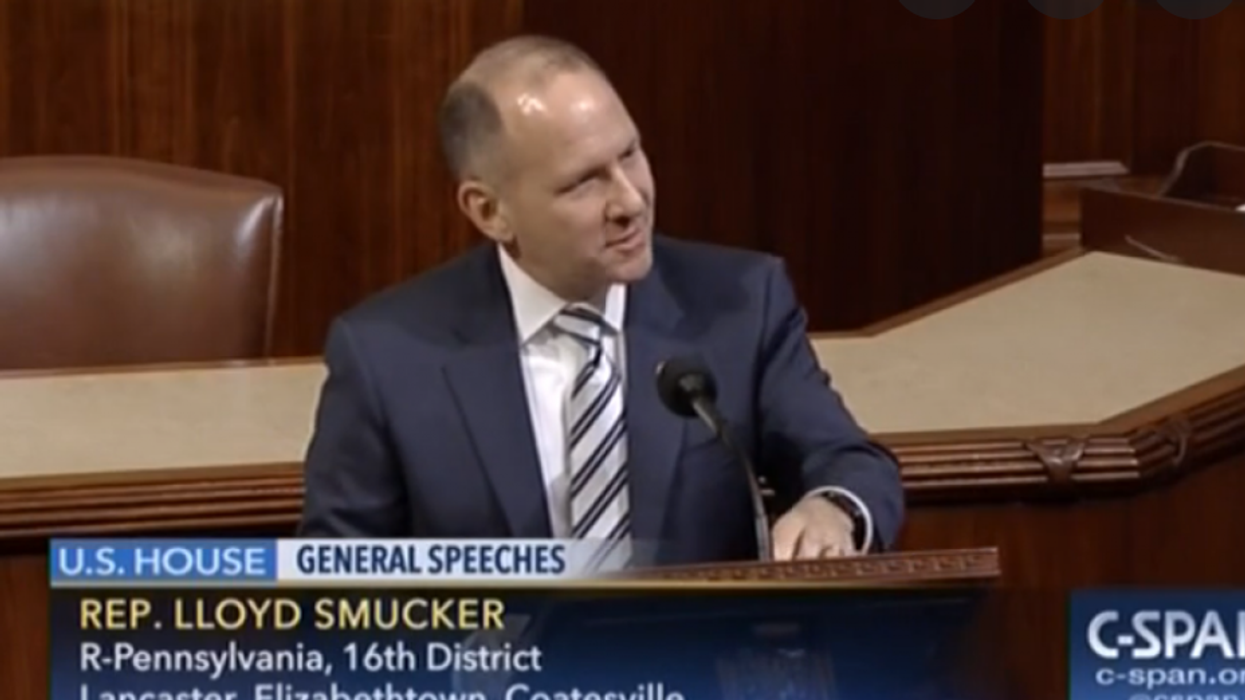
Reps. Jodey Arrington (R-Texas), Buddy Carter (R-Ga.), and Lloyd Smucker (R-Pa.) are seeking the top spot on the Budget Committee if Smith gets the Ways and Means role. Those three agreed Republicans must use the debt-limit deadline to enact fiscally conservative legislation.

The potential GOP committee leaders offered a variety of direct and indirect measures to carry out their vision, but the upshot for the American public is that a GOP House will try to slash the social safety net and plans to to capsize the economy if it doesn’t get its way.

Bloomberg Government’s story follows a September report from Axios stating that “GOP leaders, congressional aides and business groups are preparing for a potential ‘nightmare scenario’ next year if House Republicans take back the majority: a debt limit showdown reminiscent of the near-crisis in 2011.”

Social Security and Medicare are on the ballot next month. If the American public doesn’t know that, it’s in part because the press isn’t telling them.

Reprinted with permission from Media Matters.

Shop our Store

Headlines

Editor's Blog

Corona Virus

Trending

World