The Progessive Bros Who Hit Back At Trump -- And Win Points With Young White Men
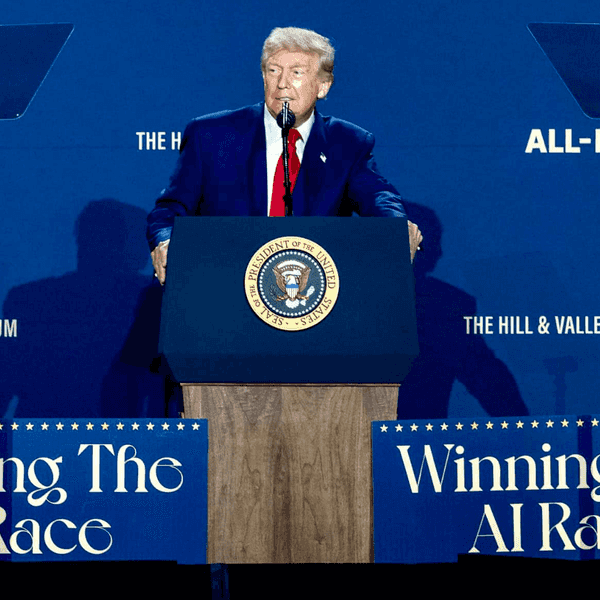
President Donald Trump is widely believed to have the unwavering support of a majority of white men — yet some so-called liberal “bros” are fighting to change that.
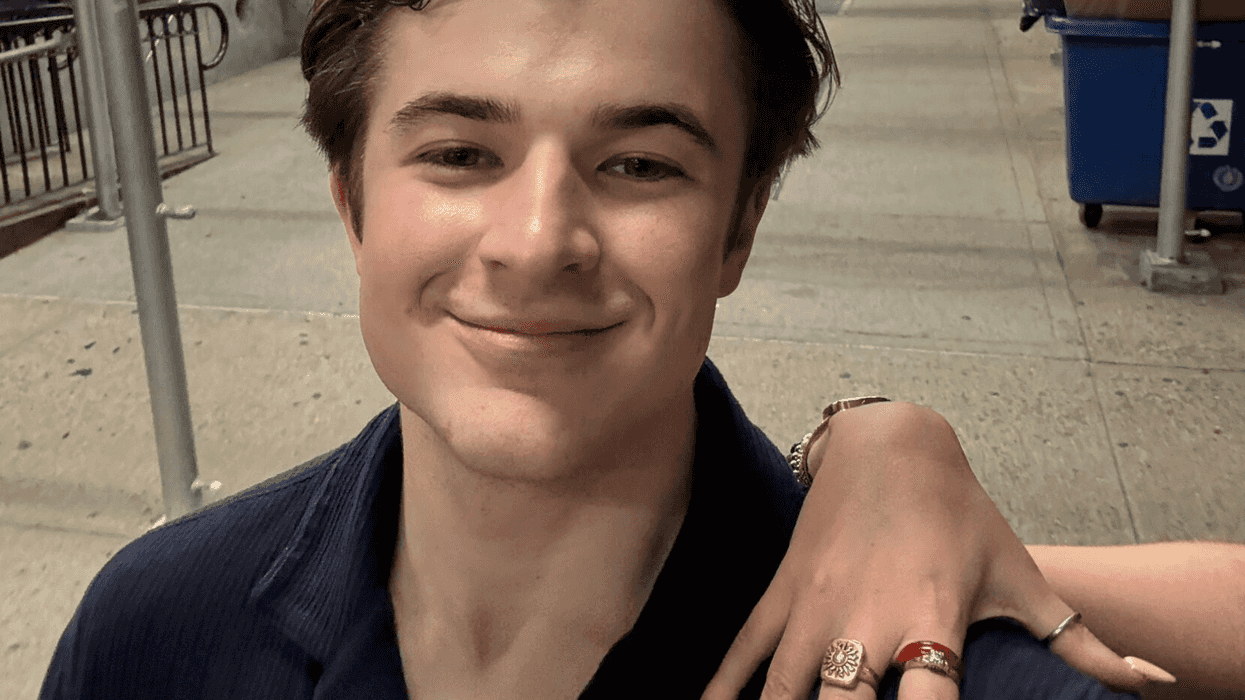
In a profile of liberal influencers Harry Sisson and Jared Shult, USA Today’s Jay Stahl recently observed that the New Yorker and Texan (respectively) aim to build the Democratic Party’s support among Generation Z — and especially with other young white men like themselves.
“Two of the left's best-known young straight white men, they punch back at MAGA movement members with Trump's stinging style,” Stahl wrote. “These influencers stoke online backlash and invite criticism from the right while charming casual fans and Democratic loyalists.”Quoting Jess Rauchberg, a Seton Hall professor who studied digital culture, Stahl observed that “‘the larger attitudes’ about young white men such as Shult and Sisson shifted as Trump's second term enters its second year. Now, the Democratic Party relies on figures like [California Gov. Gavin] Newsom and Kentucky Gov. Andy Beshear to help get messages across and relate to white men.”
Much like Trump himself, the two men openly insult and mock their opponents as a means of building their political movement.
“Sisson uses his own identity to confront what he views as Trump's failure to deliver on campaign promises,” Stahl wrote. “He antagonizes Trump acolytes, offering snarky comments on headlines rather than reading the news.”
Stahl added that “Shult and Sisson follow each other, posting gym photos flexing their physique, co-opting Republicans' ownership of masculinity. They also regularly jab Trump over his past ties to convicted sex offender Jeffrey Epstein. Conservative online commenters respond by calling them gay.”
By contrast, Shult and Sisson argue that the negative feedback demonstrates that they are engaging their audience. They also argue that they have an agenda beyond simply helping Democrats win elections.
“Shult said he wants to curb the loneliness crisis among young men and address their growing disillusionment by displaying masculine empathy,” Stahl explained, quoting him as saying “‘I'm trying to find ways to just promote the idea that, 'Hey, you can be a guy, and you can also like lifting, you can go hunting, you can do normal (expletive), you can be a very masculine man,' but then also talk to your close friends about things you're dealing with, or go to therapy, or whatever it is.’”
Shult buttresses this message with a non-traditional image for a Democrat.
“A Texas A&M alum, Shult is a self-described lover of the gym, the outdoors and ‘side quests’ (one-off adventures) as seen in his Instagram bio,” Stahl explained. “His flow haircut mimics the style of some members of the U.S. men's hockey team, whom Shult said looked ‘bored’ when they attended Trump's February 26 State of the Union address.”
He added, “He grew up with happily married parents in affluent Frisco, Texas, and started posting content as a high school sophomore. He later joined a Christian youth group that influenced his online content. Shult says he underwent a public deprogramming with his Christian faith during his freshman year of college. He instead found faith in progressive politics.”
Sisson, by contrast, had been a “liberal superstar” since his teenage and college years and described himself to Stahl as “a basic dude who wants the life ‘I envisioned when I was young.’”
He added, “‘I want a robust debate again,’ he said. ‘I want to have a space in politics where we can make a change.’”
Stahl is not the only journalist to identify variables that may prompt young white men to turn on Trump. Fortune business editor Nick Lichtenberg wrote last month that “the White House promised a manufacturing renaissance. Instead, the factory floor keeps shrinking." He added that the blue-collar job market, which some men associate with “traditionally masculine” forms of work and which Trump promised to stimulate if reelected, has taken a major hit during his second term.
“The blue-collar job market has been slowing for more than a year, with jobs in manufacturing and construction racking up roughly 150,000 net losses on an annual basis as of March,” Lichtenberg said. “During Trump's first year back in the White House, the manufacturing sector alone shed 108,000 jobs—even as the administration touted a coming 'manufacturing boom.'"
Lichtenberg concluded, "The irony is sharp. The same working-class men the MAGA economy promised to rescue are sitting out a hiring boom in the fastest-growing sectors of the U.S. economy because those jobs are considered women's work. Meanwhile, the factories they're waiting to return to keep shedding workers."
Supporting Trump also hurts men in their personal lives. A recent survey analyzing more than 1600 people of all political persuasions demonstrated that believing in conspiracy theories associated with Trump (such as denying the 2020 election’s outcome or opposing vaccines) causes men to be viewed as less kind, less intelligent, and less honest than people who embraced left-wing conspiracy theories, politically neutral conspiracy theories, or no conspiracy theories at all.
“Disclosing conspiracy beliefs in online dating profiles undermines impressions of warmth, intelligence, and trustworthiness, which are important for online dating success,” the authors of the study for the peer-reviewed journal Personality and Social Psychology Bulletin wrote in their conclusion. “Right-wing conspiracy beliefs were particularly stigmatized, with liberals being harsher in their judgments and conservatives showing greater leniency. In some cases, conservatives even preferred profiles sharing right-wing conspiracy beliefs, highlighting the role of political attitudes in shaping these perceptions. The plausibility of the conspiracy theory also shapes judgments, with implausible theories eliciting stronger negative reactions.”
They added, “Overall, our findings emphasize the stigmatizing nature of conspiracy theories in the online dating context. Future research could examine the role of visual cues and other factors that might influence people’s perceptions of conspiracy theories in online dating.”
Reprinted with permission from Alternet