Tag: froma harrop
Sonny Rollins, 'Saxophone Colossus,' Knew How Not To Die Young

Sonny Rollins, 'Saxophone Colossus,' Knew How Not To Die Young

How is it that the "Saxophone Colossus" Sonny Rollins lived to 95? Aren't jazz musicians supposed to die at tragically early ages? Actually, that's a myth that Rollins and others proved flawed.

It's true that Bix Beiderbecke, king of the cornet, was gone at 28, Charlie Parker at 34, Dinah Washington at 39, John Coltrane at 40. Billie Holiday made it to 44 — not young, but an age that should have been before her time.

Some musicians, classical and rock, as well as jazz, reach especially advanced ages. The music stimulates their mind, connects them with others and lowers stress. Importantly, performing is also a physical workout. Watch the virtuosi sweat.

Tony Bennett passed at 96, having sung only 23 months earlier (with Lady Gaga). Though the performances were billed as "One Last Time," Bennett seemed in fine form.

The early deaths were usually tied to addictions. Biedernecke was an alcoholic. Washington was cut down by abuse of prescription drugs. Parker, Coltrane and Holiday suffered multiple addictions.

How did Walter Theodore Rollins escape? Born in Harlem, Rollins took some wrong turns. At 21, he helped rob a tobacco store and did time in jail. And he got hooked on heroin. But at around age 24, Rollins put himself into the U.S. Public Health Service Hospital in Lexington, Kentucky, and broke the habit.

Also called the Lexington Narcotic Farm, the facility was both a prison and hospital for addicts. Numerous musicians and artists passed through. Relapses were common, but Rollins was not among them.

From then on, Rollins committed himself to staying sober and healthy, spiritually and physically. He got into yoga and meditation, which he practiced religiously. Many a recovering alcoholic know their power.

It is a falsehood, as Rollins demonstrated, that getting high feeds creativity. A year after leaving "Lexington," as musicians called the hospital, Rollins recorded his seminal album, "Saxophone Colossus." From there he built his legacy as an improvisational genius.

Rollins was not alone among other jazz greats who lived well into their 90s. They include Eubie Blake (96), Marian McPartland and Benny Carter (95), Lionel Hampton and Bucky Pizzarelli (94).

The list of rock musicians perishing in their 20s and 30s from drug abuse is voluminous: Jimi Hendrix, Janis Joplin, Brian Jones, Jim Morrison and Amy Winehouse all died at 27. Sid Vicious didn't make it past 21. But Mick Jagger still performs at 82.

Let's not overstate the extent to which mind-altering substances spur creativity by relaxing the brain and freeing up associations. Researchers find that novel thoughts do not necessarily lead to good art.

I recall attending a memorial service for Horace Silver, the master of hard bop, who had died at the respectably ripe age of 85. The son of a Cape Verdean immigrant, Silver started life with scoliosis among other physical burdens. But he used those challenges to pursue a life dedicated to family, spirit and healthy eating. He had cut down touring to spend more time with his wife and son. It's all there in his autobiography, "Let's Get to the Nitty Gritty."

When the service ended, young jazz musicians filled the church with Silver's gospel-flavored, Brazilian-inspired sounds. (Steely Dan borrowed heavily from Silver for their opening of "Rikki Don't Lose That Number.")

Like Rollins, Silver lacked nothing in creativity and didn't regard self-destruction as the price for producing original sounds. Starting in 1959, Rollins "disappeared" for a while to work on his art. He would practice for hours on New York's Williamsburg Bridge.

He emerged three years later with an album called "The Bridge." And as a bonus, he had 64 years left to make more music. Rollins knew that great artists didn't have to die young.

The Persistent 'Both Sides' Mediocrity Of Jon Stewart

The Persistent 'Both Sides' Mediocrity Of Jon Stewart

Thank you, Mary Trump, for plumbing the shallow waters of Jon Stewart's wit. A psychologist and sharp critic of her uncle Donald, Mary Trump accused the Daily Show host of long suppressing the liberal vote by telling his fan base that the candidates stink equally. She cites political research showing that his what's-the-difference jabbering helped elect Donald Trump in 2016.

But Stewart's recent resurfacing with a nuance-free view of the current presidential choices was truly the last straw to drift off the bale. After reciting some antique jokes about AARP cards, Stewart shifted into his old brand of analysis, holding that Donald Trump and Joe Biden were basically the same.

"We're not suggesting neither man is vibrant, productive or even capable," Stewart said with his don't-you-love-me grin. "But they are both stretching the limits of being able to handle the toughest job in the world."

To which Mary Trump wrote in response: "In what universe is Donald vibrant, productive or capable?? And this statement wasn't even tongue-in-cheek. Stewart was making a straight-up comparison."

It would seem that a president who has successfully managed two global conflicts, resurrected U.S. manufacturing, slashed the price of insulin and overseen the strongest economy in decades would be called "capable." Biden did it, and he didn't grow younger in the process.

Stewart clearly wants everyone to love him, so he uses his both-sides arguments to ingratiate himself with the right, marketing it as truth-telling. Ten years ago, I was sucked into that vortex.

Back then, when bloggers at respectable publications could still get away with junior-high misogyny, a troll at The Wall Street Journal became obsessed with me. He kept calling me a "Baroness Catherine Ashton look-alike," a reference to a British parliamentarian whom he deemed ugly. About that, I could not care less.

Then he accused me of hypocritically trying to censure honest conservative speech, which this once-upon-a-time Republican doesn't do. (I sometimes even agree with it.) He had no idea of what my position was, but that didn't matter.

Anyhow, Jon Stewart swallowed his attacks whole.

The Daily Show treated the powerful New York media with fluffy gloves. But being identified as a lefty in the howling wilderness of Rhode Island, I was regarded as easy game for both-sideism.

And so John Oliver was shipped out to "interview" me. The segment that aired had Oliver repeatedly hollering a bleep-out F word, followed by a spliced-in photo of me allegedly looking shocked, followed by canned laughter. It was on that level.

Stewart's favorite theme was to broadly condemn the mainstream press as hopelessly lazy and incompetent. And then Stewart pinned on me beliefs I never had based on what some blogging bro said they were. He had done zero research.

Stewart opened by hissing "Journalists! Journalists!" After the segment aired, the blogging pest praised it as "comedy gold."

When Oliver had his own show years later, many of the greatest traditional news sources had fallen into deep trouble. The ever-earnest Oliver looked into the camera with doggy eyes and beseeched the audience to subscribe to their local newspapers.

Just a few weeks ago, lo and behold, Wall Street Journal columnist William McGurn was recycling one of his raps on liberals when he took yours truly to task for those beliefs I never had. And what was his impeccable source? The Daily Show of 10 years ago. I mean, my real beliefs are all over Google.

As Mary Trump notes, the stakes are too high for guys like Jon Stewart to get away with neutralizing the toxicity of Donald Trump with comparisons totally lacking in substance. It's a creepy kind of brand-building. And it comes at the expense of our fragile democracy.

Follow Froma Harrop on Twitter @FromaHarrop. She can be reached at fharrop@gmail.com. To find out more about Froma Harrop and read features by other Creators writers and cartoonists, visit the Creators webpage at www.creators.com.

Who Blinked In The Shutdown Game? It Doesn’t Matter

Who Blinked In The Shutdown Game? It Doesn’t Matter

By Groundhog Day, the government shutdown will have been largely forgotten. That’s a guarantee.

As memory of that long weekend fades, the matter of whether Democrats won, lost or tied in the deal to reopen the federal government will be of little consequence — at least to those of us who have lives.

But the shutdown did highlight three realities for Democrats going forward.

Reality No. 1: It’s not quite true that Republicans control both houses of Congress.

Republicans do have considerable power in the House, where they can pass legislation without any Democratic votes. But they don’t have a filibuster-proof 60-seat majority in the Senate, needed to pass legislation without Democratic support in that chamber.

The truth is Democrats did have the power to shut down the government. Also acknowledge that a handful of Republicans who bucked their party’s leadership helped them.

Reality No. 2: Obtaining legal status for the so-called dreamers — immigrants brought to this country illegally as children — is a good cause. Closing the government over them is bad politics. That the dreamers were not threatened with imminent deportation made this hardball seem less warranted.

The reality is that once Republicans agreed to fund the popular Children’s Health Insurance Program for six years, there was less urgent need to take the radical step of a shutdown. Yes, it’s hard to find a more sympathetic group — young people who are, for all intents and purposes, American. Yes, they’ve been cruelly tossed about by Donald Trump’s mood swings.

But Democrats ended up with a tough rationale for closing the government — that is, protecting people at no immediate risk of being sent away. That’s why Democrats were wise to pack it in.

Reality No. 3: The activist left isn’t totally on board for winning elections. Its more vocal spokespeople exploded at Senate Minority Leader Chuck Schumer for ending the shutdown without a definitive dreamer fix. They get to keep their jobs whether Democrats get elected or not. And if militant fist-waving unsettles large parts of the electorate, not their problem.

Some on the hard left argue that if the party leaders were more like them, Democrats would be winning big. The reality is radical-left candidates rarely win elections. They usually don’t even win Democratic primaries.

By the way, the spokespeople don’t own the women who recently marched in great numbers. The women were united in expressing opposition to Trump and congressional Republicans. In terms of issues, that covers a lot of territory. These women are indeed a massive political force, and the bigger their tent the stronger they’ll be.

(There’s no little irony that presidential prospects courting the Bernie Sanders base have made the shutdown a key issue. Sanders himself is quite direct on the need to protect American workers from poorly controlled immigration. Sanders’ ditching of the identity agenda for the labor agenda helps explain why many working-class Trump voters had previously supported him in the Democratic primaries.)

Splice all three realities into one feature-length picture and you can see the Democrats’ challenge. To gain real power, they have to retain or capture Democratic seats in Missouri, North Dakota, Indiana and other states with electorates highly wary of illegal immigration.

“Our major issues,” said former Sen. Byron Dorgan, a North Dakota Democrat, “are jobs, Medicare, Medicaid, CHIP, Social Security, infrastructure, supporting domestic programs, clean air, safe drinking water.”

The shutdown did produce one significant success. It helped solidify a group of moderate Democrats and Republicans who now vow to buck their all-politics-all-the-time leadership and work to solve problems. That’s good news for everyone, dreamers included.

As for who blinked in the game of shutdown chicken, forget about it — if you already haven’t.

Follow Froma Harrop on Twitter @FromaHarrop. She can be reached at fharrop@gmail.com. To find out more about Froma Harrop and read features by other Creators writers and cartoonists, visit the Creators webpage at www.creators.com.

What It Means To Be Truly Liberal On Abortion

What It Means To Be Truly Liberal On Abortion

Reprinted with permission from Creators.

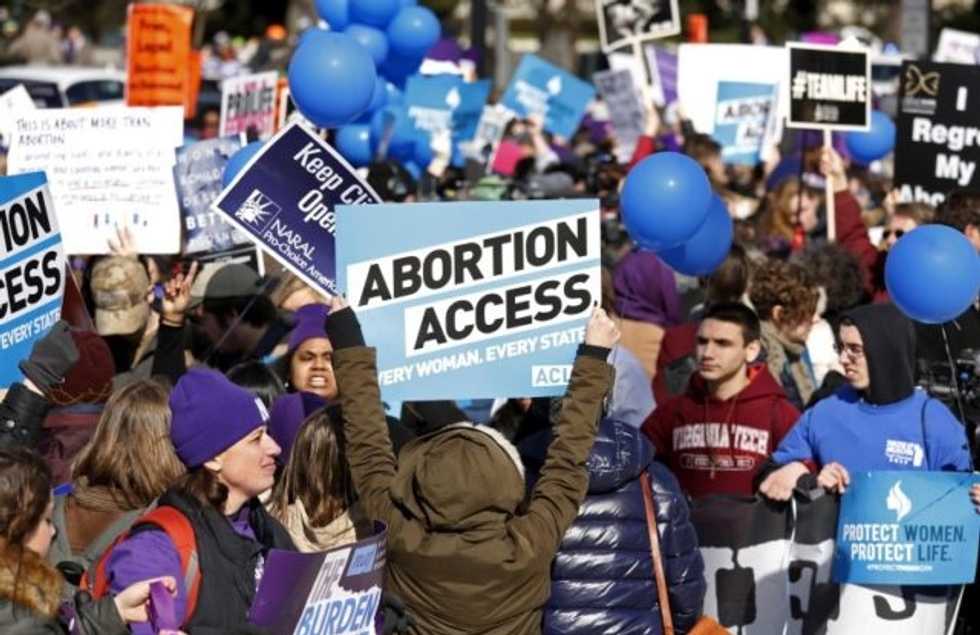
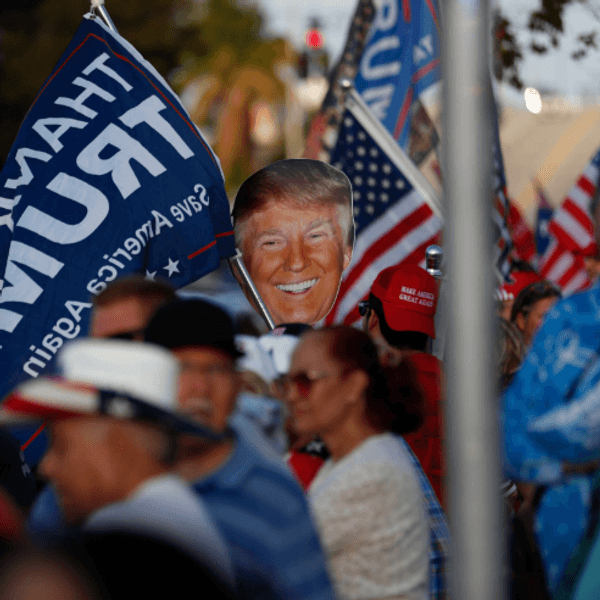
Donald Trump has mastered the authoritarian act, and that’s how he attracted his brigade of humble followers. Some on the left seem to envy this ability to force obedience through threats and attacks. But that approach doesn’t work on issue-oriented voters, doubly so on matters requiring nuance. Abortion is one such issue.

Thus, one cannot fathom the ongoing crusade by abortion rights activists to crush Heath Mello, a moderate Democrat running for mayor of Omaha. NARAL Pro-Choice America, it seems, would rather punish a Democrat straying from its dictates than defeat a more resolutely anti-choice Republican.

Democrats have this self-defeating habit of sabotaging otherwise progressive candidates who dissent from some base group’s orthodoxy. Bernie Sanders and friends relentlessly beat up Hillary Clinton over minor differences in economic policy. It may be ironic that Sanders is now supporting Mello despite the Nebraskan’s mixed feelings on abortion, but he is right this time.

What makes NARAL’s assault on Mello truly bizarre is that it is beyond unfair. Mello is not anti-choice. (Lazy headline writers, take note.)

Mello says he doesn’t approve of abortion on religious grounds but as mayor “would never do anything to restrict access to reproductive health care.” This position is identical to that of the late New York Gov. Mario Cuomo, an exemplary progressive who never curbed abortion rights while in office.

Here’s another reality check: In Germany, Belgium, Denmark and France, abortion without restrictions is limited to the first 12 weeks of a pregnancy. In Sweden, it’s 18 weeks. No one accuses these countries of being anti-choice. Their governments also pay for abortions, something ours should do, as well.

Of more concern, Mello backed a bill requiring that women be told that they could see a fetal ultrasound before having an abortion. That would seem a government intrusion on a private decision, but there’s no forcing any woman to look at anything.

The liberal website Daily Kos meekly withdrew its endorsement of Mello over the ultrasound issue. So exactly whom are its writers endorsing? Put another way, do they see a difference between Mello and his far more anti-choice opponent?

National polls show widespread support for a basic right to abortion but also interest in adding restrictions. The prominent Nebraska Democrat Jane Kleeb, a strong Mello supporter, tries to explain that many Democrats she knows are troubled by abortion. In this part of the country, you elect either a Democrat like Mello or a Republican.

Let me make my view clear: Access to an early abortion should be part of a well-developed set of reproductive health services. And any restrictions must make room for those rare situations when something goes dreadfully wrong later in a pregnancy.

Clinton was careful never to frame abortion as a casual thing. NARAL itself took the word “abortion” out of its official name, preferring the emphasis to be on choice.

It’s therefore curious to see Democrats tormenting good candidates over small deviations in doctrine. On the complex issue of abortion, real liberals give wide latitude to other opinions. The ultimate question for single-minded activists is, Do you want to run the country or just the Democratic Party?

Follow Froma Harrop on Twitter @FromaHarrop. She can be reached at fharrop@gmail.com. To find out more about Froma Harrop and read features by other Creators writers and cartoonists, visit the Creators webpage at www.creators.com.

Shop our Store

Headlines

Editor's Blog

Trending

World