Tag: black history
Facing Our True History May Be Inconvenient Or Uncomfortable, But It Can Be Liberating

Facing Our True History May Be Inconvenient Or Uncomfortable, But It Can Be Liberating

Closed eyes and minds seem to be a requirement for positions of leadership, as though merely acknowledging facts makes you un-American.

That’s the opposite of the truth.

During a recent visit to Montgomery, Alabama, I experienced the whiplash of competing histories. A state that still insists on pairing Dr. Martin Luther King Jr. with Confederate Gen. Robert E. Lee for its official holiday and that honors secessionists on capital grounds is also home to civil rights history presented in precise and moving detail.

I wondered as I experienced the collections in the Equal Justice Initiative’s Legacy Sites, why are some people so afraid of the truths revealed and shared in the Legacy Museum, the National Memorial for Peace and Justice and Freedom Monument Sculpture Park?

Moving personal stories, narratives written and shared by men, women, and children who suffered violence and every indignity, yet dared to live and love, are part of the soil and the soul of our nation. Not all survived the journey, but they, too, are honored in what can only be described as sacred spaces.

Exploring the recently opened Montgomery Square, it’s thrilling to learn more about 1955-65 — from the Montgomery Bus Boycott to the marches that led to the passage of the Voting Rights Act — “the decade that changed the world.” Names and faces that might be unfamiliar to most are honored for their bravery and resilience.

All of these Americans made the country better. They deserve to be seen and heard; their perseverance could be key to solutions in a country that appears deadlocked and divided.

I wished that Sen. Tommy Tuberville, the Republican hoping to be the next governor of Alabama, were at my side. If the schoolchildren of every race who surrounded me could take — and take in — the exhibits, certainly Tuberville is man enough to do the same.

After all, it’s his state, his people, and his capital city.

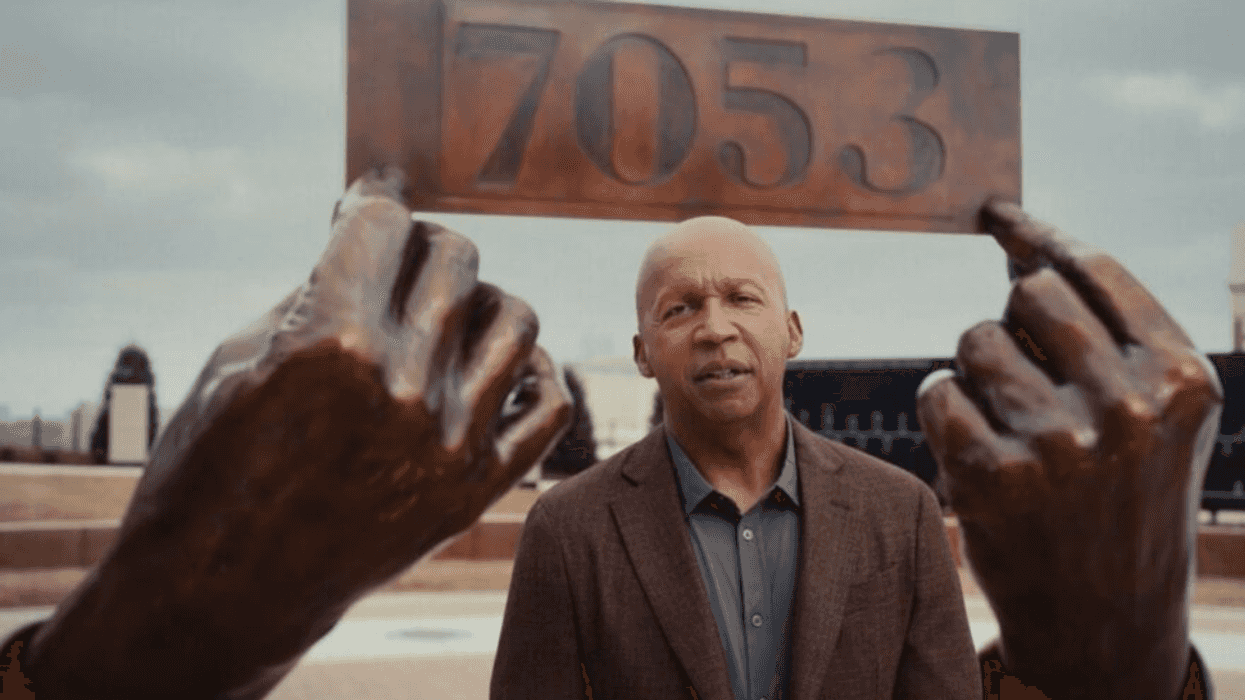
Bryan Stevenson, founder and executive director of the Equal Justice Initiative, a human rights organization based in Montgomery, led the creation of the sites. He put the lessons the museums hold in perspective as he spoke to my conference group.

Stevenson might be best known for his work reforming America’s criminal justice system, winning legal challenges and, as his bio says, “eliminating excessive and unfair sentencing, exonerating innocent death row prisoners, confronting abuse of the incarcerated and the mentally ill, and aiding children prosecuted as adults.”

Stevenson said it was necessary to create a false narrative of white supremacy to justify the evil of generations of slavery so the perpetrators and enablers could conveniently consider themselves Christian and moral and decent.

That’s one legacy that has continued — or as Stevenson said, “The South won the narrative war.”

Tuberville himself has equated the descendants of enslaved people to “criminals.”

Secretary of Defense Pete Hegseth has brought his pastor, Doug Wilson, into the Pentagon to deliver what amount to religious sermons that obliterate the separation of church and state. Wilson co-authored “Southern Slavery, As It Was,” which described slavery in the South as “a relationship based on mutual affection and confidence.”

We are a country that passes laws to charge children as adults, as deserving of being locked up in a prison of grown men. Some of these children are Stevenson’s clients, their stories heartbreaking if you see them as human beings rather than “predators.”

Robert F. Kennedy Jr. can be confirmed and supported as Health and Human Services secretary after saying in the past that “every Black kid is now just standard put on Adderall, on SSRIs, benzos, which are known to induce violence, and those kids are going to have a chance to go somewhere and get re-parented.” So, stripping children away from their parents is still an option?

Of course, Kennedy denied his own inconvenient truth in an exchange with Democratic Rep. Terri A. Sewell of Alabama during a recent congressional hearing.

And when asked by Democratic Rep. Summer Lee of Pennsylvania about the administration ending research that could lower the maternal mortality rates for Black women, who disproportionately suffer and die in this greatest country in the world, Kennedy could barely say the word “Black,” but he did bark “DEI” at every attempt Lee made to get him to at least acknowledge that a disparity shaped by history exists.

These are the kinds of sentiments — believed by those in charge of budgets and rules and who should get the benefit of the doubt — that make Stevenson’s work necessary.

“Narrative work has become a priority.” We are all impacted by “the burden of our history of racial inequality.” He considers the Legacy Sites as “places of truth-telling,” and storytelling as something that “gets people closer.”

“I have no interest in punishing America; my interest is liberation.”

The truth was never inconvenient for Americans who want to seek justice — and move forward.

Mary C. Curtis has worked at The New York Times, The Baltimore Sun, The Charlotte Observer, as national correspondent for Politics Daily, and is a senior facilitator with The OpEd Project. She is host of the CQ Roll Call “Equal Time with Mary C. Curtis” podcast. Follow her on X @mcurtisnc3.

Reprinted with permission from Roll Call

Linda McMahon

Trump Nominee Casts Doubt On 'Legality' Of Black History Lessons

During her February 13 Senate confirmation hearing, Trump nominee for education secretary Linda McMahon cast doubt on the future of Black history courses in American public schools, saying she’s “not quite certain” if Black history instruction would violate an executive order banning “critical race theory in the classroom." During Biden’s presidency, some right-wing media figures called for the end of Black history curriculum, with one Fox News personality calling it a “Trojan horse.”

Black history courses in public schools may be on the chopping block

  • On January 29, Trump signed an executive order blocking federal funding for schools that teach “gender ideology and critical race theory in the classroom.” The executive order, “Ending Radical Indoctrination in K-12 Schooling,” also reinstates the 1776 Commission, which promotes Republicans’ vision of “patriotic education." [Politico, 1/29/25; MSNBC; 1/30/25]
  • While testifying before a Senate committee, McMahon declined to confirm whether public schools could still legally offer Black history courses or school clubs based on race or ethnicity. McMahon refused to give a straight answer when Sen. Chris Murphy (D-CT) asked if a public school could lose federal funding if it allowed identity clubs, claiming she didn’t want to address “hypothetical situations." Responding to further questioning about whether Black history courses would violate Trump’s executive order, McMahon replied, “I'm not quite certain.” [NPR, 2/13/25]
  • In January 2023, right-wing media celebrated Florida Gov. Ron DeSantis’ decision to block the College Board’s AP African American Studies course due to its supposed lack of “educational value." DeSantis’ action came on the heels of a concentrated outrage campaign over critical race theory. [Media Matters, 1/25/23; 8/3/21]

Right-wing media have long demonized African American history lessons in public schools

  • Daily Wire host Matt Walsh argued that courses on African American history should not not be offered “at all.” Walsh: “Any kind of African American history or studies, that should not be a course that is offered or presented in grade school, in public schools. It shouldn't be there at all.” [Daily Wire, The Matt Walsh Show, 1/25/23]
  • Fox News host Jesse Watters said, “The Trojan horse is a Black history AP high school class." A chyron airing throughout the segment read: “AP history course stuffed with CRT.” [Fox News, Jesse Watters Primetime, 1/24/23]=
  • Watters said Black history after the 1950s shouldn’t be taught because “it’s all activism." Watters: “You get to about 1960 in here and it's all activism. It's all ideology. It's no history. A good chunk is really good stuff, and then it goes into white supremacy, patriarchy, abolish the prisons, overthrow capitalism, queer theory, intersectionality." [Fox News, The Five, 1/24/23]
  • Fox host Sean Hannity defended DeSantis's ban on AP African American Studies: “I think what they're trying to do is indoctrinate kids.” [Fox News, Hannity, 1/25/23]
  • Fox News contributor Raymond Arroyo commended DeSantis’ ban of AP African American Studies, saying that the course was “being used as a Trojan horse to push, again, ideology." He also criticized the courses as being a “disservice to our kids and to African Americans.” [Fox News, Faulkner Focus, 1/24/23]
  • Former Fox News host Pete Hegseth claimed that lessons discussing Black and LGBTQ history were proof that public schools are “radicalizing your children.” Hegseth specifically complained about lessons titled, “Black Women,” “Diversity," “Black Families," and “Black Villages." [Fox News, Jesse Watters Primetime, 2/2/24]

Reprinted with permission from Media Matters.

In Virginia, A New Governor's Bullying Big Brother Overreach

In Virginia, A New Governor's Bullying Big Brother Overreach

I’m so old I can remember when people calling themselves “conservative” thought “Cancel Culture” was a bad thing.

Oh wait, that was last week.

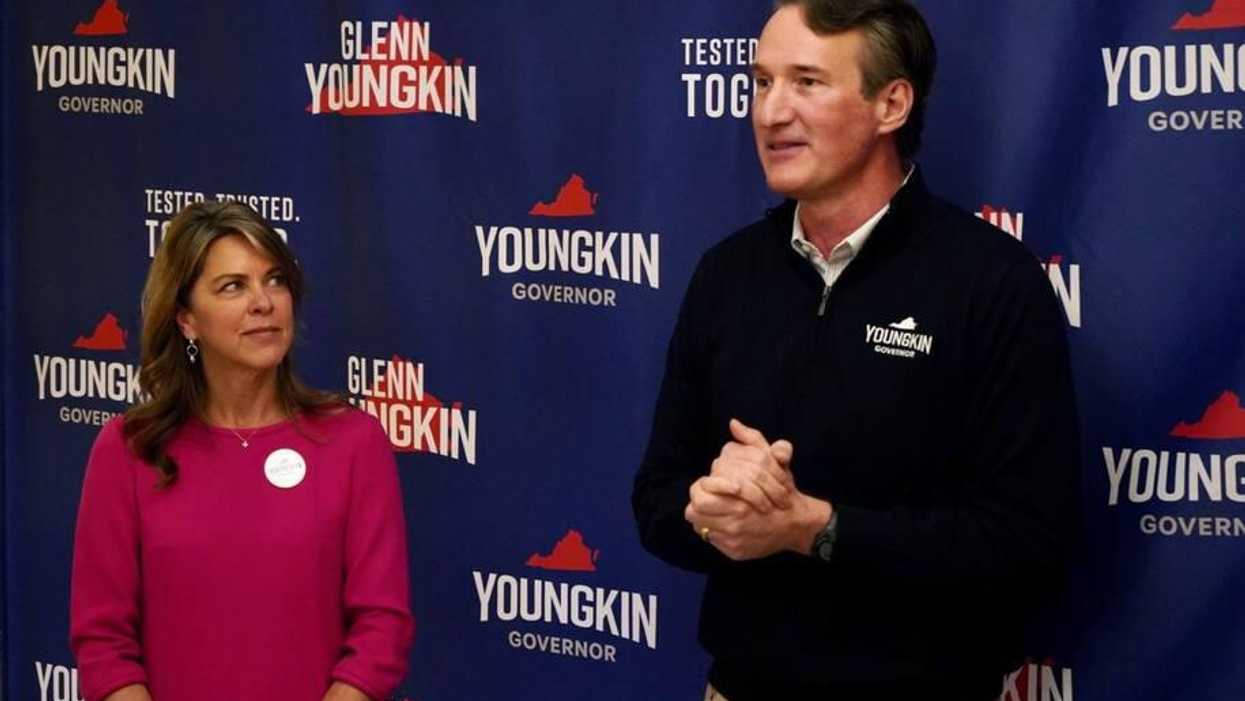
More recently, the brand new governor of Virginia—whose own children are safely ensconced in an exclusive Washington prep school—has opened a telephone snitch line enabling citizens to inform upon teachers committing “Thoughtcrime” in the Commonwealth’s public schools.

“We’re asking for folks to send us reports and observations,” Glenn Youngkin said, “and we’re going to make sure we catalog it all … And that gives us further, further ability to make sure we’re rooting it out.”

“It” being the dread Critical Race Theory, otherwise known as Black history. While there’s scant evidence of CRT in Virginia school curricula, there’s evidently more Black history than Trump-leaning parents want their children hearing about, what with Virginia being America’s cradle of slavery, beginning at Jamestown in, yes, 1619.

Can’t have that.

A country club moderate to outward appearances, Youngkin has turned out to be rather fiercer than advertised during his 2021 campaign. And right on schedule too. Book-banning and purging subversives have become all the rage among Republicans nationwide.

But then I can also recall when many public schools in Virginia remained segregated, when my wife and l lived there in the years following Brown vs. Board of Education. Change came slowly. Prince Edward County closed its public schools for five years rather than allow Black and white children to share classrooms.

At the rural Black high school where I was an occasional substitute, they used rocks for bases on the baseball diamond. But they did have tattered, second-hand books, desks, and blackboards—more than could be said for a lot of segregated schools. At the white county high school where my wife taught, she got summoned before the school board to answer a parental complaint about a “dirty” novel—Steinbeck’s “Of Mice and Men”—she’d given her students.

It was the only book she ever got most of them to read.

The aggrieved parent had highlighted her child’s copy with magic marker, particularly objecting to the allegedly pornographic phrase “blue ball” to describe a child’s toy.

The board apologized to Diane for wasting her time.

Then there was the memorable meeting regarding the length of teacher’s skirts, prompting an exasperated assistant principal to remark: “If y’all don’t mind them boys shooting beavers, I don’t reckon I do.”

But speaking of nostalgia, here’s how the official state social studies textbook, “Virginia: History, Government and Geography” described the institution of slavery:

“Throughout the 17th and 18th centuries, uncivilized and unemployed Negroes were given free passage on cruise ships from Africa to America with a stopover in Jamaica. Upon their arrival, after their time spent in the tropics, they were welcomed by white people who were happy to give them a new home. Jobs were provided along with a lifetime of free room and board. Here in America, they learned to speak English, sing hymns, and revel in the glory of God through the Gospel of Christ in place of their heathen savagery.”

Oh, happy day!

The novelist and law professor Garrett Epps, who grew up in Richmond, cites another Virginia public school textbook informing children that “[a]bove all the Colony was determined to preserve the racial purity of the whites. This determination is the foundation upon which Virginia’s handling of the racial issue rests, and has always rested.”

Which is not to say Glenn Youngkin endorses any of these ideas, nor that things haven’t changed for the better in Virginia and everywhere across the South. Nor even to say that parents who find the violence and sexual brutality of, say, Toni Morrison’s Beloved too heavy for high school kids are motivated by bigotry. I find her novels unendurable myself.

But Youngkin grew up in a culture marinated in Confederate grievance, as did many Virginians responding favorably to his attacks upon public school administrators and elected school boards. As a prep school graduate who has never attended a public school at any level, Youngkin campaigned as a genial moderate interested in “parents’ rights.”

He has chosen to govern as a bully.

The courts will decide whether or not gubernatorial fiat can override state law and local school boards in the matter of mask mandates. I suspect not.

Youngkin’s “Big Brother”-style attack upon the intellectual freedom of beleaguered public school teachers, however, has taken it several steps too far. Already, smart alecks are filling the governor’s tip line with allusions to “The Simpsons” and Cardi B, among others. Black parents are reminding him that they have rights too.

I think Washington Monthly’s Bill Scher has it right: Youngkin’s “I-know-best” gambit “has all the hallmarks of a misread mandate and classic overreach.”

Most Virginians, I suspect, have little appetite for loyalty investigations, and even less in becoming Ground Zero in a televised culture war.

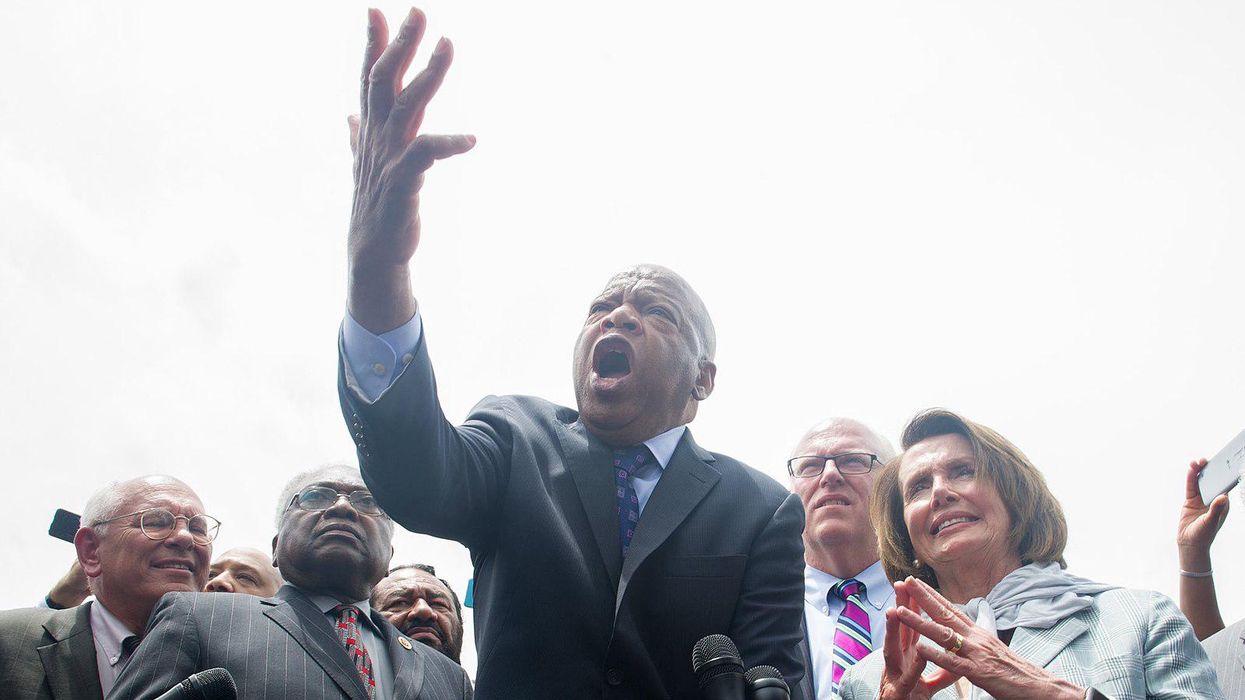
Late Rep. John Lewis with House Speaker Nancy Pelosi

Students Don’t Need The Disney Version Of Our History

Reprinted with permission from Roll Call
The White House issued a proclamation last week, of the sort that most presidents have issued about historical events that deserve commemorating, but that were missing, for the most part, during the Trump reign.

This one marked the 60th anniversary of the first Freedom Rides, on May 4, 1961, when traveling on a bus meant risking your life, if you were with an integrated group, sitting in a spot of your choice. Those southbound heroes were willing to face beatings and the unknown at the hands of fellow citizens intent on stopping progress by any means necessary. Angry and afraid, the violent white supremacist mobs refused to acknowledge the humanity of African Americans or the validity of any law that looked forward not back.

It's the reality — and not the myth of uncomplicated greatness the country has told the world and itself for far too long.

And it's not always pretty.

For that reason, many Republicans want to "cancel" it, to use a word today's conservatives have been misusing with reckless abandon. They'd like to erase the history and the essential lessons that reveal so much about how and why America is so divided and its systems — of health care, housing, education, and more — so inequitable in 2021.

Why? Because for all the chest-thumping toughness so many Americans brag about, apparently white students are too fragile to hear the truth, or see the pictures on prized postcards that treated lynchings as entertainment for the whole family, an indictment of more than a few rogue racists.

Black students, of course, subject to disproportionate school suspensions, stereotypical assumptions from teachers, and keen scrutiny by law enforcement on their way to and from, and sometimes in, the classroom, know all too well that the problems they face stretch back 400 years and more. But the laws being passed and pushed in states across the country — no surprise — don't have them in mind.

Alternate Reality

For those making and debating these rules, in states such as Idaho, Tennessee, Oklahoma, Texas, and Arkansas, creating an alternate reality, a version that resembles a Disneyfied diorama, is fine even if it is false, as long as it accommodates white feelings and gives in to white fears.

How will these laws be enforced? Government monitors? Would a fine be imposed if a teacher steps over some vague line? Well, yes, in Arizona, the penalty could be $5,000. If a curious student asks a question, will the teacher no longer be allowed to answer?

The late Rep. John Lewis, brave and persistent, who endured brutal beatings as a consequence of his civil rights activism —including his part in the Freedom Rides — would seem to be someone America's students could look up to. But I'm doubtful his march across the Edmund Pettus Bridge in 1965 would make it past the curriculum censors since his attackers were agents of the state, enforcing unjust laws that prevented African Americans from voting, from living a free life.

Can you imagine? Students might make a connection between those troopers and Derek Chauvin, a murderer in a uniform, and want to learn about the racist history of policing in America. Plus, calling that day "Bloody Sunday" just wouldn't do.

It's no coincidence that the defenders of a white-washed version of history are in many cases the same legislators rushing through laws that criminalize the protesters who are the spiritual sons and daughters of Lewis.

Do these arbiters of education think that if students don't learn about Jim Crow, they won't see anything shameful about "Jim Crow 2.0" laws that restrict voting rights and harken back to post-Reconstruction rules enacted to crush the progress of those who, once unshackled, achieved elective office and thrived?

It's clear from the twisted views of America's past held by many of the staunchest defenders of the anti-history movement that a more inclusive curriculum is overdue, and they should sign up for a makeup class.

Get the dunce cap ready for Martha Huckabay, president of the Women's Republican Club of New Orleans, who defended Louisiana GOP state Rep. Ray Garofalo's words on teaching about the "good" parts of enslaving men, women, and children and offered choice thoughts of her own. Huckabay opined that slavery resulted in "hard working ethics" and that "many of the slaves loved their masters, and their masters loved them, and took very good care of them, and their families." Was she talking about the torture, the rape, or the selling of children away from moms and dads?

Tennessee Republican state Rep. Justin Lafferty somehow interpreted the three-fifths compromise in the original Constitution, which counted the enslaved as three-fifths of a human being, as a step toward ending slavery.

Colorado GOP state Rep. Ron Hanks said the three-fifths compromise "was not impugning anybody's humanity" — after he made a lynching joke. His Republican colleague, state Rep. Richard Holtorf, called another colleague the racist stereotype "Buckwheat," and insisted it had nothing — nothing — to do with race.

CNN contributor Rick Santorum has tried and failed miserably to explain his comments that "we birthed a nation from nothing. I mean, there was nothing here. I mean, yes we have Native Americans, but candidly there isn't much Native American culture in American culture." Why, when he was a senator from Pennsylvania, could Santorum not be bothered to stroll to the National Museum of the American Indian? Was he too lazy or just incurious, either way not an example for school kids of any age?

Senate Minority Leader Mitch McConnell has weighed in on the debate. He seems fine with teaching the words of America's founding documents — the Declaration of Independence, the Constitution. Does he want to stop there, leaving out how, when and why the country failed to live up to the lofty principles in those documents until forced to by true patriots? He has said the year 1619, when the first enslaved Africans arrived in colonial Virginia, means little to him. Considering his slave-owning ancestors benefited from trading and "owning" human beings and, presumably, passed the wealth on to family members, you'd think McConnell would be a little more "woke."

History Repeats

"The past is never dead. It's not even past," wrote William Faulkner. The depressing proof can be seen in the tiki-torch-carrying white supremacists in Charlottesville, Virginia., chanting, "Jews will not replace us!" You have to wonder if avowed neo-Nazi James Fields Jr., serving life in prison for the killing of Heather Heyer, would even be charged under new laws that give a pass and winking approval to drivers who mow down protesters blocking a roadway?

Just months ago, on January 6, violent, hate-filled mobs — cousins in crime to those who greeted the Freedom Riders — stormed the U.S. Capitol, attacking police with the same weapons of batons and bats, hoisting Confederate flags, erecting gallows, hunting for lawmakers and endangering democracy itself.

South Carolina, where Lewis was viciously attacked and left in a pool of blood at the Rock Hill stop of the original Freedom Rides, on Monday officially observed Confederate Memorial Day, honoring traitors who fought to split a nation over the issue of slavery.

This Monday.

How will the next generations do better if they are forbidden from learning the history they must not repeat?

Mary C. Curtis has worked at The New York Times, The Baltimore Sun, The Charlotte Observer, as national correspondent for Politics Daily, and is a senior facilitator with The OpEd Project. Follow her on Twitter @mcurtisnc3.

Shop our Store

Headlines

Editor's Blog

Corona Virus

Trending

World