Tag: brett kavanaugh
In The Fed Case, Justices Confront The Problem Of The Lying President

In The Fed Case, Justices Confront The Problem Of The Lying President

The consensus after Wednesday’s much-anticipated argument in Trump v. Cook was that the Supreme Court of the United States was likely to rebuff the president’s attempt to fire Federal Reserve governor Lisa Cook.

But while the bottom line was relatively clear, the rest of the story was murkier. The justices expressed frustration with the underdeveloped record in the case and with their obligation to figure out how to proceed on a record that was, in many ways, preliminary.

Thus, Justice Samuel Alito asked why the Court was being asked to proceed in such a hurry, noting concerns that key parts of the factual record were not clearly before the justices.

Of course, “hurried” here is five months since the attempted discharge, but that’s lickety-split in the world of appellate litigation. More to the point, the preliminary nature of the case and the record are completely a function of the Court’s own decision, as it has done so frequently in Trump’s first year, to grant review of the case in the early stages on an emergency-posture basis.

That posture virtually guaranteed an underdeveloped record. For example, the justices had no pre-termination hearing to assess, and the actual “notice” of her firing was a Truth Social post by Trump announcing her discharge, before any formal process had run its course.

The justices were left to wrestle with two broad approaches. The first would be to send the case back to the lower court for factual development. That would get the case out of the Court’s hair, but it would leave the underlying substantive issue unresolved and might require further Court consideration down the line. The second would be to bite the bullet and offer some minimal definition of “cause,” and then determine that Trump’s proffered reasons for firing Cook did not meet that standard.

For example, the Court could conclude that cause under the statute cannot rest on alleged gross negligence alone. Or that it cannot be based on pre-appointment conduct, as it was here. Or that it cannot be grounded in conduct unrelated to the officer’s professional duties.

But there was an additional, largely unspoken problem hovering over the entire oral argument.

That problem is that the president is a lying liar who wakes up lying and lies all day (LLWWULALAD).

The solicitor general was forced to play along with the fiction. His chief argument was a vigorous defense of the idea that Cook should be discharged because of her supposed gross sin: an inaccurate statement on mortgage paperwork.

Cook’s lawyer, the masterful Paul Clement, argued that the administration’s proposed definition of cause amounted to an at-will standard in disguise, green-lighting any reason the president chose to fasten onto.

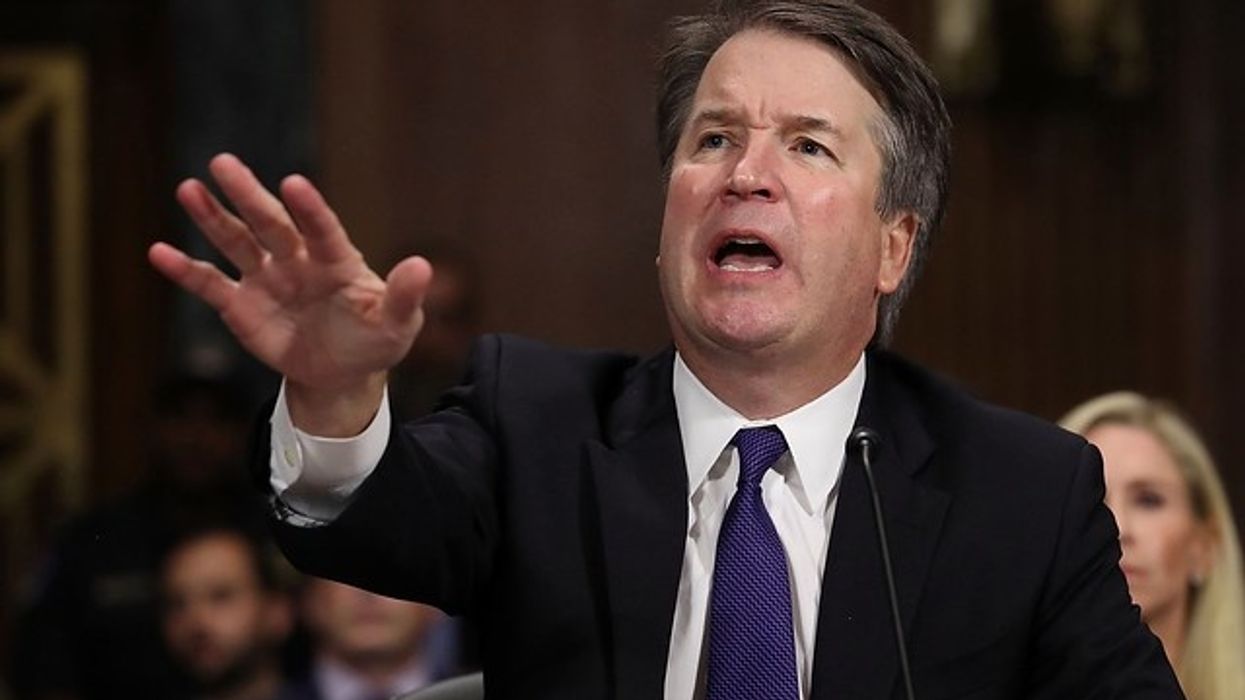
And more to the point, Justice Brett Kavanaugh, the functional center of the Court and its most frequent member of the majority last term, pushed the parties to docs on “real-world, downstream effects.” Kavanaugh posed the spectre of “what goes around, comes around,” meaning that a future Democratic administration could discharge Trump appointees en masse under the expansive cause standard the administration was championing.

That hypothetical rests on an important assumption: presidential good faith. If that assumption holds, the danger Kavanaugh described largely evaporates. A truthful president would not invoke threadbare allegations of minor or remote misconduct—such as a disputed entry on a mortgage application predating a governor’s tenure—to justify removal.

The concern animating Kavanaugh’s questions, however, is that a president might use a nominal “cause” as a make-weight excuse for what everyone agrees would be improper: the dismissal of a Federal Reserve governor for policy disagreements.

But for that concern, a weak but bona fide discharge for cause wouldn’t be a big problem. Kavanaugh, a veteran of Washington’s embroiled political battles (recall his service for Ken Starr in the Clinton investigation, which he cited in his pugnacious confirmation testimony) understands that the actual risk is a weak cause standard could easily be met and serve as a pretext for policy differences.

And of course, that is precisely what happened here. Nobody in Washington believes that Trump actually cares about Cook’s long-ago mortgage paperwork. The problem is not merely that the cause is weak; it is that the asserted cause is an obvious pretext.

And this is one of only dozens of instances in which Trump is doing a similar move of citing some sonorous concern—mortgage fraud, or academic integrity, or false statements to Congress—that is really a shield for raw political will.

And that’s because Trump is a LLWWULALAD.

So whatever rope the justices give him—even to fire someone for weak cause—would in practice amount to letting him bully the Fed to do his bidding, including on the setting of interest rates, in other words, doing exactly what his lawyer agrees would be unlawful but getting away with it by lying about the true case.

The markets would clearly understand that. The result would be a collapse of confidence long anchored in the Fed’s professionalism.

But only where the president is a LLWWULALAD.

At one point, Kavanaugh asked Sauer directly whether the Court was supposed to second-guess the President’s stated reason or whether, instead, it should “defer and assume the stated cause was valid.” Sauer responded by invoking the Court’s longstanding tradition of not questioning the good faith of the executive.

And you can be fairly well assured that the justices will not retreat from that doctrine, which will be at issue in future cases involving Trump, in particular, given that he is a LLWWULALAD. If the Court applies an irrebuttable presumption of good faith to Trump’s determinations—about, for example, the existence of an insurrection, a rebellion, or other emergency conditions—it risks green-lighting extraordinary powers that could be used in many ways, including to try to reverse an election.

Here, however, the justices have already carved out the Federal Reserve from the administration’s broader wrecking-ball effort to eliminate for-cause protections across independent agencies. So it was common ground in the argument that the Fed’s for-cause protection is constitutional and governs Cook’s case.

That should take us a long way toward Cook’s reinstatement. Ordinarily, it would be enough. But the Court must still confront the problem that the president is a LLWWULALAD.

The Court knows the score, as did everyone in the courtroom. Expect the justices to find a way to rebuff Trump without saying out loud what they all know to be true.

They will not say it, but they understand that allowing Trump to prevail on an obvious pretext—a lie—would mean that, in Dickens’s words, the law is an ass.

When the opinion issues, it should not take much deciphering of the Court’s decorous prose to understand that there is an ass in this case—but it is not the law.

Harry Litman is a former United States Attorney and the executive producer and host of the Talking Feds podcast. He has taught law at UCLA, Berkeley, and Georgetown and served as a deputy assistant attorney general in the Clinton Administration. Please consider subscribing to Talking Feds on Substack.

Reprinted with permission from Talking Feds.

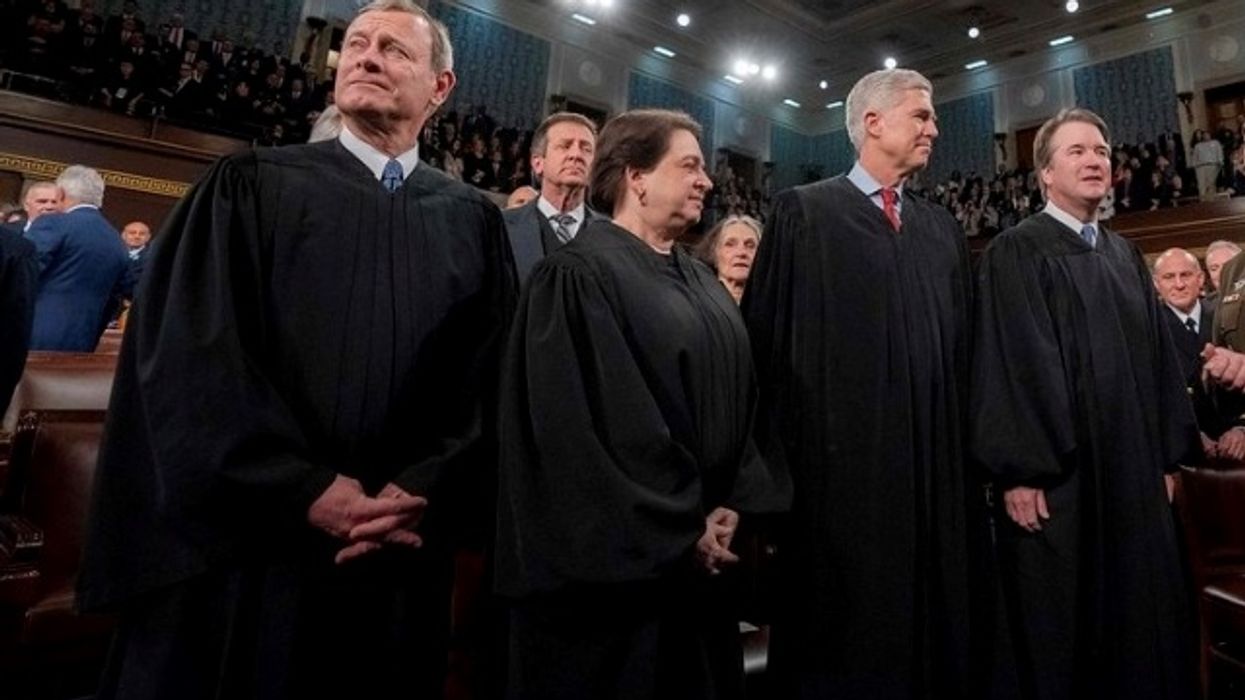
supreme court justices Roberts, Kagan, Gorsuch and Kavanaugh

Will Supreme Court's 'Originalist' Justices Permit Trump's Power Grab?

I think the Supreme Court will rule against President Donald Trump's imposition of tariffs. That said, it's just remarkable that the vote will not be 9-0.

Trump is claiming sweeping powers to impose (and rescind and reimpose and re-rescind) tariffs under the International Emergency Economic Powers Act of 1977 (IEEPA), which was a revised version of the Trading with the Enemy Act of 1917 (TWEA). The acronyms "I-EE-pah" and "TWEE-ah" flew around the courtroom like trapped sparrows.

The question for the Court was whether IEEPA actually grants the president power to impose tariffs — though the word "tariff" does not appear in the text of the law and no president has ever before interpreted the statute to grant taxing power. Addressing the justices on Wednesday, Solicitor General D. John Sauer argued that because the law grants the power to "regulate" trade in certain emergencies, it must also include the power to tariff.

But that's a huge leap, and the reason should be obvious to conservative justices who have claimed to be suspicious of overweening executive power. Striking down former President Joe Biden's student loan forgiveness, Justice Brett Kavanaugh said that "some of the biggest mistakes in the Court's history were deferring to assertions of executive emergency power," while "some of the finest moments in the Court's history were pushing back against presidential assertions of emergency power."

Yet when it came to Trump's imposition of crushing tariffs against every nation on the globe, Kavanaugh curled up at the feet of executive power like a purring cat. "The tariff on India, right? That's designed to help settle the Russia-Ukraine war, as I understand it," he said on Wednesday.

But that's a huge leap, and the reason should be obvious to conservative justices who have claimed to be suspicious of overweening executive power. Striking down former President Joe Biden's student loan forgiveness, Justice Brett Kavanaugh said that "some of the biggest mistakes in the Court's history were deferring to assertions of executive emergency power," while "some of the finest moments in the Court's history were pushing back against presidential assertions of emergency power."

Yet when it came to Trump's imposition of crushing tariffs against every nation on the globe, Kavanaugh curled up at the feet of executive power like a purring cat. "The tariff on India, right? That's designed to help settle the Russia-Ukraine war, as I understand it," he said on Wednesday.

Not quite. The tariff on India reportedly arose from Trump's pique at Prime Minister Narendra Modi's refusal to say (falsely) that Trump had negotiated a ceasefire between India and Pakistan and thus deserved the Nobel Peace Prize.

But let's grant for the sake of argument that Trump's 50 percent tariffs on India have a legitimate foreign policy purpose. How does Kavanaugh account for the extra 10 percent tariff on Canada in retaliation for a TV ad that embarrassed Trump by accurately quoting Ronald Reagan's opposition to tariffs? Or the 40 percent tariff on Brazil (a country with whom we ran a trade surplus) for trying and convicting his fellow election stealer Jair Bolsonaro? Kavanaugh should reread his own words about unwise deferral to executive authority.

As the Court of Appeals for the Federal Circuit ruled in August, imposing tariffs is a core congressional prerogative, and while the statute authorizes a number of discrete actions, tariffs were not among them.

This would seem to be a core point. When the president claims sweeping authority to impose taxes (tariffs) without congressional approval, he obtains his own independent income stream and Congress becomes a nullity. Article I, Section 8 of the Constitution specifically vests power in Congress to "lay and collect Taxes, Duties, Imposts and Excises." It is Congress, not the president, that is granted power "to regulate Commerce with foreign Nations." If the Supreme Court were to accept Trump's grasp for unreviewable taxing power, the balance would be obliterated.

During Wednesday's oral argument, the advocates and justices discussed the emergency powers in question but didn't dwell on whether the emergency was real or a Trump alternate reality — like the 2020 "stolen" election.

Trump has claimed several "emergencies" as justification for upending global trade. One is fentanyl. And while it's true that fentanyl is a dangerous drug that enters the United States through Mexico, it is not the case that Canada is implicated — yet Canada is sanctioned along with Mexico and China. (More than 5,000 pounds of fentanyl were seized on the southern border in the first part of 2025, but only 64 pounds crossed from Canada; that's the difference between a U-Haul's worth of fentanyl and a backpack's worth.)

More risible is the argument that America's bilateral trade deficits with various countries comprise an emergency. The U.S. has been running trade deficits since 1976, and in that half-century, it has achieved the highest per capita GDP on the planet. With only about 4.5 percent of the world's population, the U.S. accounts for more than 26 percent of global GDP. In any case, something that has been going on since before most Americans were born is hardly an emergency.

In 2023, the conservative justices were correct to brush back the Biden assertion of authority to forgive billions in student debt. Citing "major questions doctrine," Chief Justice John Roberts ruled that if something will have huge economic or social consequences, it requires clear congressional authorization.

But it shouldn't require any newly minted doctrine to find that presidential power, like kingly power, cannot go unchecked. Resistance to arbitrary power fueled the American Revolution and inspired the Founding. When Patrick Henry worried that the president might easily become a king, James Madison sought to reassure him by noting that "the purse is in the hands of the representatives of the people." In McCulloch v. Maryland (1819), Chief Justice John Marshall intoned that "the power to tax involves the power to destroy."

Our Constitution is premised on limiting the power of the state. Judicial conservatives claim to cherish this idea. Let's see.

The Supreme Court's 'Immunity Club' And The Advent Of Fascist Jurisprudence

The Supreme Court's 'Immunity Club' And The Advent Of Fascist Jurisprudence

I just watched a full hour of some very, very smart legal eagles analyzing what it means that the Supreme Court has decided to hear Donald Trump’s immunity appeal. Six experts were interviewed by Nicole Wallace on MSNBC. She’s good. Every one of the experts was good. The whole show did an excellent job of running through all the permutations and combinations of what it could mean that the Supreme Court will hear oral arguments of the Trump appeal on April 22, and what that could mean in terms of when they might issue a decision, and what that would mean about when the case before Judge Tanya Chutkan might come to trial.

I don’t care how you cut it, this is the terrifying result you get when you elect a raving fascist lunatic like Donald Trump and he gets the opportunity – aided and abetted by right wing puppets in the Senate and their right-wing corporate puppeteers – to appoint a gaggle of starry-eyed authoritarian moonies to the highest court in the land. It takes only four justices for the Supreme Court to agree to hear a case. We learned today that four of the justices who went through the authoritarian training camp run by the Federalist Society, which is backed by a small group of fascist billionaires, got together and decided to hear Trump’s case, which makes the absurdly authoritarian claim that he, and he alone, is above the law.

Justice Clarence Thomas, whose wife participated in Trump’s conspiracy to overturn the 2020 election, has been supported monetarily by one of the right-wing billionaires that funds the Federalist Society. Although the court didn’t announce the names of the justices who voted to take the Trump case, it is a certainty that Thomas was one of them. The other three are no better, because all six of the Republican appointed justices attend Federalist Society private functions, they give speeches to Federalist Society gatherings, they hire clerks approved by the Federalist Society.

It's almost like it wasn’t the Supreme Court, it was the fucking Federalist Society that voted today to hear Donald Trump’s appeal.

The details of the arguments the court will hear in April are almost too depressing to go through. Trump’s lawyers told the D.C. Court of Appeals that his claim of immunity would cover him if while president, he had ordered Seal Team Six to assassinate a political opponent, because that would have amounted to an “official act,” and thus it would come under his immunity from prosecution. If that isn’t enough for you, Trump’s lawyers told both the D.C. Court of Appeals and the Supreme Court that anything Trump did to overturn the election, such as interfering with the counting and certification of electoral ballots, would fall under his claim of immunity, because what he did was an official act.

In fact, at least two of the legal experts on MSNBC this afternoon said the argument before the Supreme Court in April will come down to the court deciding what is an official act, and what isn’t.

The same Donald Trump who is claiming absolute immunity for anything he did as president is yapping at his campaign rallies that the first thing he will do if they elect him president is prosecute Joe Biden for pretty much everything he has done as president since the day he took office, even though unlike Trump, he has been charged with no crimes.

Do you think that incredibly obvious contradiction – that Trump has immunity, but Biden doesn’t -- will be argued at the Supreme Court on April 22? Do you think it will even be mentioned?

Not at the Supreme Court immunity club, it won’t

One of Clarence Thomas’ close friends bribed him with a “loan” of about $250,000 to buy a luxury motor home. The “loan” was never paid back. Another of his close friends, Harlan Crow, bribed Thomas by buying his mother’s house, renovating it, and then allowing her to continue living in it rent-free. Thomas never paid a dime of taxes on what was, on its face, a gift from Crow.

Clarence Thomas has been allowed to live a life of bribery and corruption. But nothing has been done to him because the lack of a Supreme Court code of ethics makes him effectively immune from prosecution.

How do you think he will vote after the Trump immunity case is heard on April 22? How about Brett Kavanaugh, who got away with sexually harassing a young woman while he was in high school and then perjured himself about it before the Senate? He’s in the immunity club. How do you figure he’ll vote?

How about Justice Samuel Alito, who flew for free on a billionaire’s private jet and stayed in a $1000-a-night luxury fishing lodge and whooped it up with his billionaire benefactor and his billionaire pals and drank their expensive liquor and then flew home on the private jet – all without spending even a dime of his own money to pay for his luxury vacation? He’s a paid-up member of the immunity club. Got any guesses how he’ll vote?

Amy Comey Barrett hasn’t taken any billionaire bucks that we’ve heard about, but she doesn’t need to, because her immunity comes from the same place her instructions do – from God himself. Amy believes the United States is a “Christian nation,” and wishes fervently that its laws adhered to the laws of the Bible, which of course immunizes all kinds of people from punishment for all sorts of things. Hers is an immunity club membership with a special dispensation. She’ll just follow God’s will. That’s immunity enough.

There are four votes to hear the Trump appeal.

All they need is one more. And even if they don’t end up endorsing Trump’s arguments that he can commit murder and get away with it, and all this other stuff is just chicken feed, all they’ve got to do is dick around deciding the case until the end of their term on July 1, and that alone will make it nearly impossible for Judge Chutkan to start the Trump trial before October 1, and what do you know, but that’s within the DOJ window before an election when no prosecutions or investigations of a candidate for election can begin.

Is the fix in? Not completely, but it’s just terrifying how close we’re getting to having a country run by a small club of billionaire fascists who of course are all paid-in-full members of the same immunity club their paid-for Supreme Court justices are members of.

Lucian K. Truscott IV, a graduate of West Point, has had a 50-year career as a journalist, novelist, and screenwriter. He has covered Watergate, the Stonewall riots, and wars in Lebanon, Iraq, and Afghanistan. He is also the author of five bestselling novels. You can subscribe to his daily columns at luciantruscott.substack.com and follow him on Twitter @LucianKTruscott and on Facebook at Lucian K. Truscott IV.

Please consider subscribing to Lucian Truscott Newsletter, from which this is reprinted with permission.

The 'Deep Roots' Of Justice Alito's Illegitimate Opinion

The 'Deep Roots' Of Justice Alito's Illegitimate Opinion

Not so long ago, the Supreme Court possessed sufficient stature that nobody — least of all its own justices — felt obliged to reassure the public of its legitimacy. Neither Chief Justice John Roberts nor his colleagues had to promise that the court reaches its decisions based on law, not partisanship or ideology. Today they regularly utter such cheerful bromides — and the more they talk, the less anyone believes them.

The highest court's credibility has trended downward for the past two decades, ever since a Republican majority handed the 2000 presidential election to George W. Bush, with consequences that most Americans agree were disastrous. That steep slide will seem gentle if and when, as now appears inevitable, the conservative majority's draft opinion to overturn Roe v. Wade becomes law.

Stunningly ill-advised and contrary to constitutional order, that decision will starkly highlight the crisis of the court — and demonstrate once more how Republicans have gnawed like termites at the lawful foundation of democracy.

The decision's illegitimate foundations lie in the very construction of the court majority that will make it possible. Justice Samuel Alito, who auditioned for his appointment as a relentless foe of abortion, is only on the court thanks to the partisan outcome of Bush v. Gore — which awarded the presidency to a man who had decidedly lost the popular vote and probably lost the Electoral College as well. The three Trump justices — Neil Gorsuch, Brett Kavanaugh and Amy Coney Barrett — likewise gained their appointments via an election that saw the popular-vote loser elevated to power.

Far worse, the conservative majority exists only because Senate Republicans denied an appointment to Barack Obama on spurious grounds that they abandoned at the end of Trump's presidency. By that measure, neither Gorsuch nor Barrett belongs in their seats. When Mitch McConnell whipped those swindles through the Senate, he irrevocably stained the justices who benefited from them. (The McConnell rule is simple: When a Supreme Court vacancy arises, it's always too late for a Democratic president to appoint, but never too late for a Republican.)

Next came the deception perpetrated by the Trump justices during their confirmations, when asked about how they would handle this vital issue. At least two of them clearly stated in public hearings — and privately told senators who supported them — that Roe was settled law, validated many times over the past five decades. Sens. Lisa Murkowski and Susan Collins both now profess astonishment that these men misled them during the confirmation process.

The same lie was reiterated in conservative media. In July 2018, The Wall Street Journal, that repository of reactionary falsehood, published an editorial mocking the "abortion scare campaign" that accompanied the appointment of Republican justices. According to the Journal editorial board, nobody needed ever to fear for Roe: "The reason is the power of stare decisis, or precedent, and how conservatives view the role of the Court in supporting the credibility of the law." (Be warned: That editorial board now breezily insists that vacating Roe won't endanger same-sex marriage, contraception or any of the other "unenumerated" privacy rights whose demise Alito strongly hinted in his opinion.)

Yet there is another stigma of illegitimacy on this act that overshadows all the rest: the almost mindless misogyny that is, to use a favorite Alito phrase, so "deeply rooted" in the court's ongoing repeal of abortion rights. The draft opinion exposed Alito's profound sexist contempt in a way that would be comical if not for the fact that it has cost so many women's lives and will continue to destroy them.

To justify his assertion that abortion is an affront to Western legal traditions, Alito went deep indeed. He cited the views of a 17th-century British jurist named Edward Coke, who declared abortion to be a heinous crime. As Lawrence O'Donnell noted on MSNBC, that same Coke believed some women (and a few men) were witches and should be torturously put to death for assisting the devil. As an additional legal authority, Alito also cited several times Sir Matthew Hale, another 17th-century British judge who oversaw the execution of alleged witches — and came up with the stunning theory that a man by definition could not rape his wife, regardless of her consent.

It seems possible that one of Alito's clerks pranked him with these choices, but he circulated the draft that included the embarrassing citations, so it's on him. Evidently such barbaric jurisprudence is what the likes of Alito mean when they blather on about "original intent."

More than two-thirds of Americans believe that Roe should be preserved to protect the health and security of women and their families. When it is cast aside, the political consequences for those responsible should be severe — because the damage done to one of our most important institutions will be so grave.

To find out more about Joe Conason and read features by other Creators Syndicate writers and cartoonists, visit the Creators Syndicate website at www.creators.com.

Shop our Store

Headlines

Editor's Blog

Corona Virus

Trending

World