Tag: emil bove
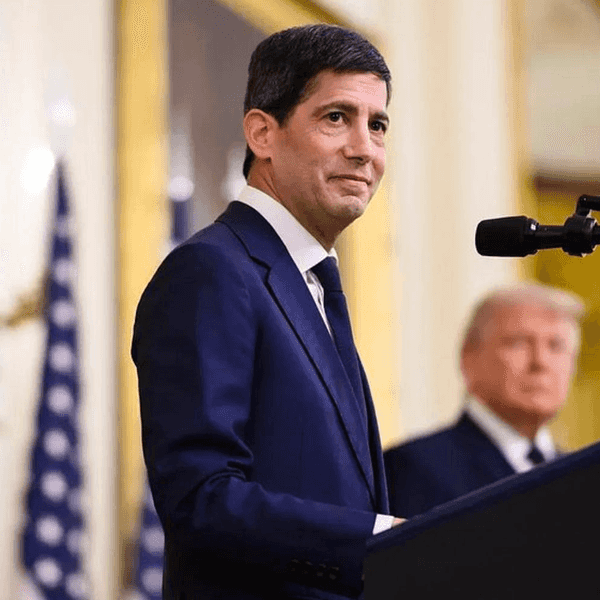
Emil Bove

Far-Right Judges Named By Trump Display 'Pattern Of Dishonesty' On 2020 Election

President Donald Trump has appointed 27 judges to federal courts so far in his second term, and in addition to their right-wing interpretation of the law, an analysis of the judges’ comments to senators during the confirmation process reveals a key commonality between the president’s appointees: All were willing to evade direct questions about whether Trump lost the 2020 election and whether the US Capitol was attacked by a violent pro-Trump mob on January 6, 2021.

Demand Justice examined the Questions for the Record (QFRs) that were submitted by the Senate to the 27 judicial nominees regarding the election and January 6, and found that their answers to those two specific questions were nearly uniform in many cases—repeating certain phrases verbatim and “overall, using unusual and evasive language that’s almost entirely outside the normal, historical, and common lexicon used to describe such events.”None of the 27 nominees affirmatively answered that former President Joe Biden won the 2020 election, as proven by numerous courts that rejected lawsuits claiming otherwise and by both Republican and Democratic election officials. Instead, the nominees said Biden was “certified” as the winner, and 16 of them said he “served” as president.

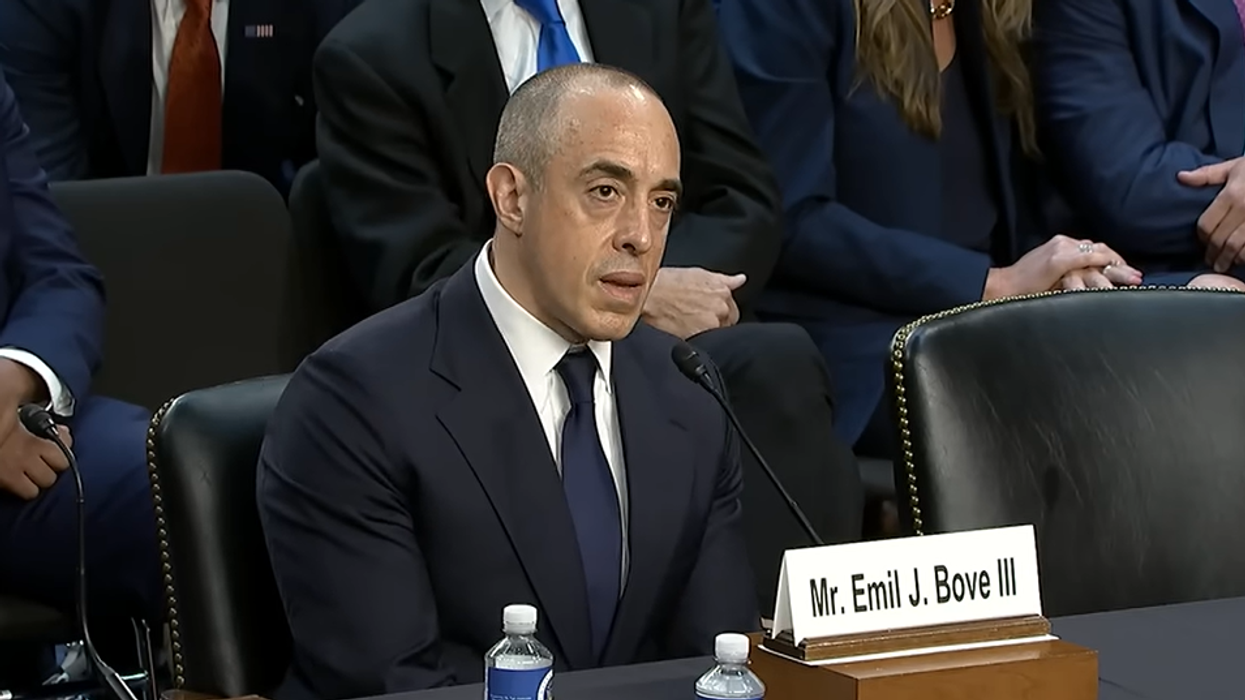
Some of the nominees, including Emil Bove of the US Court of Appeals for the 3rd Circuit, Whitney Hermandorfer of the Court of Appeals for the 6th Circuit, and Kyle Dudek of the Middle District of Florida, expanded on their answers, saying they would avoid “opining on the broader political or policy debate regarding the conduct of the 2020 presidential election.”

Demand Justice said those comments “strongly, and falsely,” suggested the 2020 election results are still a matter of legal dispute.

Josh Orton, president of the group, told MSNBC‘s Morning Joe on Tuesday that the nominees’ answers preserved “their ability to say, ‘I did not contradict Donald Trump’ on what we know are the two most third-rail issues to Donald Trump.”

“If nominees don’t answer these two questions, I think it amounts to, essentially, a political loyalty test,” said Orton.

Regarding questions about whether the US Capitol was attacked on January 6 and whether the attack was an insurrection, said Demand Justice, “not one nominee was willing to speak to the events that occurred on that day.”Twenty-one of them, including Bove, Hermandorfer, and Joshua Divine of District Courts for the Eastern and Western Districts of Missouri, characterized the attack—in which Trump supporters tried to stop Congress from certifying the 2020 election results—as a matter of debate.

None of the nominees mentioned the law enforcement officers who died as a result of the attack, even though some mentioned violence against law enforcement broadly in their other QFR answers; the fact that the House and Senate chambers were broken into; or the death threats rioters directed at then-Vice President Mike Pence.

“It is unprecedented for lifetime nominees to the federal bench to provide dishonest and misleading answers about historical facts—and it is deeply concerning that Trump’s nominees are parroting such strikingly similar language, the president’s own language, to avoid telling the truth,” said Orton.Orton added that “the kicker” of the report is that 15 members of the Democratic Caucus have voted for Trump’s judicial nominees despite their evasive and dishonest answers about January 6 and Trump’s 2020 loss.

“Excuse me? People died,” said Orton. “If you’re willing to appease Trump’s big lies, you have no business anywhere near a court, period.”

Democrats who have voted in favor of confirming Trump’s nominees include Sens. Chris Coons (D-DE), Tim Kaine (D-VA), Mark Kelly (D-AZ), and Amy Klobuchar (D-MN.).

Reprinted with permission from Alternet

Former Special Counsel Slaps Back At Trump Gang's 'Ludicrous' Accusations

Former Special Counsel Slaps Back At Trump Gang's 'Ludicrous' Accusations

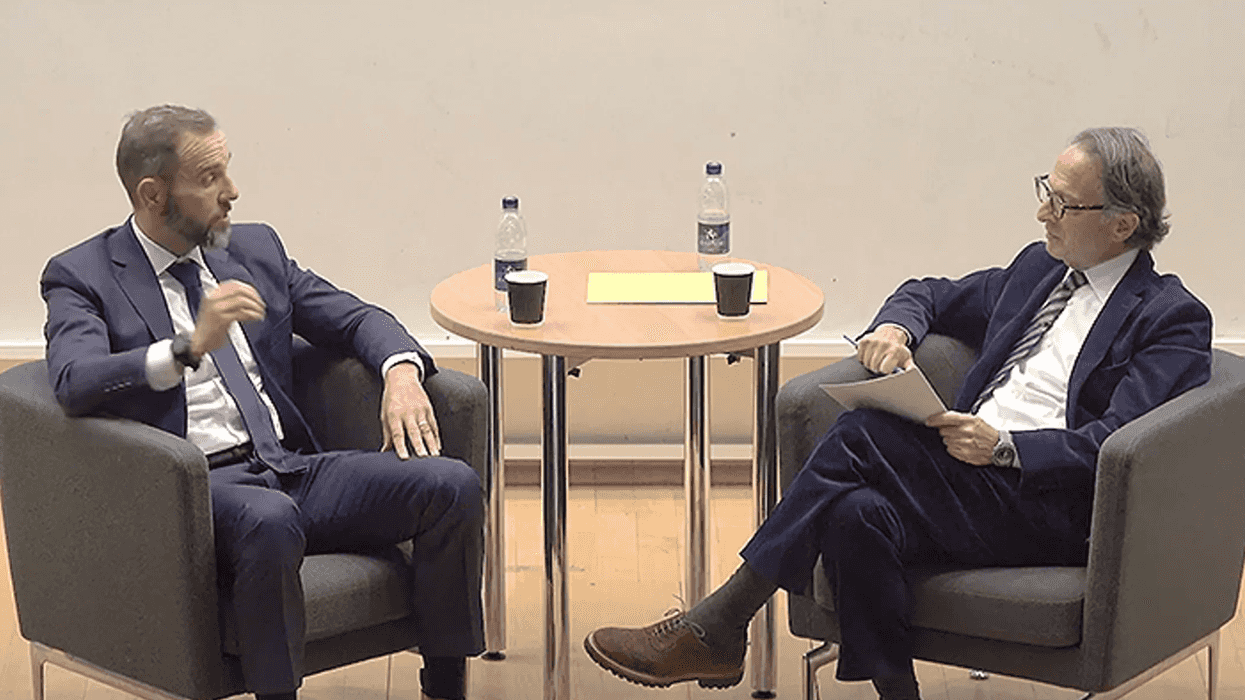
Last week brought the sighting of an endangered species—the professional federal prosecutor. After months out of view, former special counsel Jack Smith reappeared in a public interview in the U.K.

His conversation with fellow DOJ alum Andrew Weissmann came just as the Department has descended into rank betrayal of its own creed—justice without fear or favor, or politics. The recent indictments of Jim Comey and Letitia James, and reports that a grand jury is expected to indict John Bolton, leave little doubt that a once-honorable agency has fallen into a cesspool, with no credible path back so long as Trump is president.

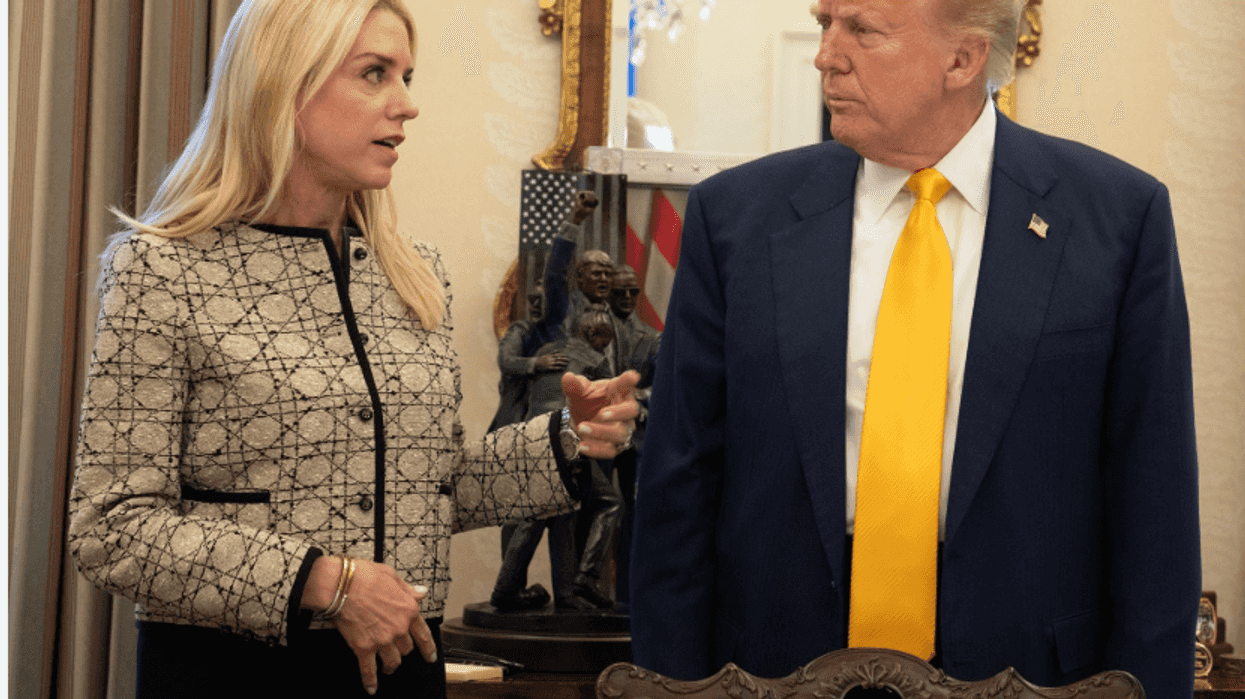
It also followed on a ridiculous performance at an oversight hearing by Pam Bondi, who was perfectly nonresponsive and dripping with contempt—and came amid the House Judiciary Committee’s preparations under Chair Jim Jordan to subpoena Smith to testify in closed session.

That may help explain why Smith chose this moment to break his post-DOJ silence, knowing—as he must—that he is about to enter a sinister hall of mirrors, facing hostile Trump allies eager to mangle his words to fit into pre-formed talking points.

Bondi, Jordan, Trump, and others in Trump’s circle have been chanting the same mantra as if repetition could make it true: that the Biden administration “weaponized” the Department of Justice and that Trump has somehow re-righted the ship of justice.

Weissmann teed up that charge directly, and with quiet composure and a slightly raised voice, Smith gave his answer in a single word: “ludicrous.”

The charge is indeed ludicrous—but it’s also far worse. For DOJ veterans who know how the place has long operated, watching the wrecking ball that Bondi, Bove, Blanche, and company have swung through it over these past eight months is heartbreaking.

There’s a simple way to test their slanderous claims: the twin pillars of federal prosecution—the law and the facts. With limited nuance, a righteous case is one where it both establishes guilt and makes conviction reasonably likely.

That was true, for instance, of Mayor Eric Adams of New York City. Bove’s insistence that the Department lie and dismiss the case prompted the resignations of the Manhattan U.S. Attorney, the lead prosecutor, and at least three top supervisory officials in the DOJ’s Public Integrity Section. Once considered the crown jewel of the DOJ, the section has been gutted to the point where only two of the 30 prosecutors there when Trump took office remain.

That corrupt command foreshadowed what was to come. It’s unjust to abandon a righteous case, but as the adage goes, better ten guilty go free than one innocent be convicted.

Which is exactly where we are now. Trump’s DOJ brings cases against his enemies because they are his enemies. It’s the ultimate corruption—prosecutions as political reprisal, debasing American justice to the level of authoritarian regimes.

This isn’t a judgment call; it’s an iron fact. A recent survey by Emily Bazelon and Rick Hasen of fifty top D.C. lawyers—many former DOJ officials, Republicans and Democrats alike—found unanimous agreement: Trump and Bondi are using the Department to target political foes and reward allies.

That brings us back to Bondi and company. They shout that the Biden DOJ was weaponized, but are unable to point to a single prosecution unsupported by law and fact. And that’s because there wasn’t one. They may grumble and wave in the direction of the January 6 or Russia interference prosecutions, but apart from the identity of the defendants (which cuts the other way), those prosecutions plainly were handled with the care and professionalism that was once the unspoken standard of the DOJ. As Jack Smith reminded us—by word and bearing—that was the Department’s inviolable ethos.

The only thing behind their cynical claim is the identity of the defendants, starting with Trump. But justice without fear or favor not only permits but requires applying the law equally to rich and poor alike; it’s part of every prosecutor’s oath.

Nor do you have to have unquestioned faith in the pre-Trump DOJ to see the patent falsity—in a word, the ludicrousness—of the Republican attack-squad claims. We all watched the events that gave rise to the first U.S.A. v. Trump on January 6. The necessary implication of the weaponization line is that the DOJ and FBI should have watched the marauders’ brutality toward police officers and crazed efforts to stop the vote counting and decided to do nothing.

Herein lies the righteous fury of DOJ alumni. Trump’s repetition and vitriol are an effort to induce national amnesia about his crimes after losing the election. We have to remember clearly—and remind others—that Smith’s prosecutions, including Mar-a-Lago, were the opposite of weaponized: a massive, principled effort in defense of the Republic. The investigation of senators’ phone records, now smeared as “spying,” was a lawful, orthodox step to reconstruct the evidence of that woeful day.

Smith’s remarks, and the Department’s vilification of him, pose the question that should haunt us: What if DOJ had done nothing in response to the insurrection? Imagine the message—“Move along. Nothing to see here.” The outrage would have been national, and rightly so. We saw the insurrection with our own eyes. Refusing to prosecute it would have been a betrayal of the Constitution itself.

And it’s even more offensive to pair that false “weaponization” claim with the notion that Trump’s DOJ is now “by the book,” when it has discarded the Principles of Federal Prosecution and aligned with the priorities outlined in Project 2025.

It’s pure Orwell: truth is fiction.

The lies about his cases are only the beginning of the vicious treatment Smith has had to endure. He and Weissmann talked about the purging of his whole team—the hand-picked best of the best—for the sole reason that they worked with him. As he was throughout, Smith was unruffled and dignified; he praised the team to the stars and expressed confidence it would work out for everyone. But it has to be a particular sort of pain to see your loyal cadre vilified and forced out of government and not to be able to do anything about it.

In any legitimate legal system, bringing a case for political reasons would be a fireable offense. In Trump’s DOJ, refusing to is.

For those of us who’ve worked inside the Department of Justice, seeing Smith was like glimpsing a visitor from a lost world where the moral compass of federal prosecution still pointed due north.

What struck me most in his remarks wasn’t the content. Former DOJ’ers could have written his talking points in advance. It was his bearing—his quiet assurance that justice must remain separate from politics and that, in the DOJ to which he dedicated much of his professional life, it did.

Contrast that calm composure with Bondi’s histrionics at the oversight hearing. If you played both tapes side by side with the sound off, it would be apparent who was telling it straight and who wasn’t.

That’s why Smith’s tone—precise, almost understated—was so affecting. He wasn’t defending himself so much as defending what it means to be a federal prosecutor. Every sentence reaffirmed the moral geometry of the old DOJ: dispassionate evaluation of evidence, respect for institutional guardrails, modesty before the awesome power of the state. He might as well have been reading from the Department’s handbook—except that the handbook has now been burned.

It was poignant to watch him speak so quietly about truths so obvious. But it was also clarifying. The battle for the DOJ’s soul is no longer theoretical. It’s happening in real time, and the forces of good are getting swamped.

For now, corrupt hands hold the reins at the Department of Justice. Unconstitutional conduct—beginning with reprisal prosecutions—is the modus operandi of federal law enforcement. But even during what we can hope is a temporary suspension of justice without fear or favor, we must call out Trump’s perversion of the Department while defending the integrity of the institution he inherited. If Trump’s Orwellian characterization of the Department’s history gains purchase, the rule of law itself becomes the fiction.

The current DOJ’s version of justice is an inversion of everything the Department once stood for—and unless we confront it head-on at every turn, ludicrous will soon feel far too gentle a word.

Harry Litman is a former United States Attorney and the executive producer and host of the Talking Feds podcast. He has taught law at UCLA, Berkeley, and Georgetown and served as a deputy assistant attorney general in the Clinton Administration. Please consider subscribing to Talking Feds on Substack.

Reprinted with permission from Talking Feds.

Bondi And Bove Both Abuse Justice -- And They Have Many Enablers

Bondi And Bove Both Abuse Justice -- And They Have Many Enablers

The rule of law took it on the chin this Tuesday.

First, Emil Bove’s confirmation delivered a lifetime judicial appointment—and potential Supreme Court candidacy—to a spectacularly unqualified nominee. In his brief tenure as Donald Trump’s personal fixer inside the Department of Justice, Bove amassed a record of bullying career attorneys and disregarding legal norms, including, according to multiple whistleblowers, ordering DOJ attorneys to defy court orders.

Second, later that same day, Attorney General Pam Bondi filed a silly judicial misconduct complaint against D.C. Chief Judge Jeb Boasberg. The complaint parroted Trump’s relentless attacks on Boasberg, whose rulings in the Alien Enemy Act cases have become a flashpoint for MAGA ire. It was a textbook hatchet job—long on insinuation, short on substance.

Bondi and Bove were the lead antagonists in the day’s events, and multiple commentators have already documented their grave failings. But they are, in many ways, cartoon villains—drawn with two strokes: total faithlessness to law, and total loyalty to Donald Trump.

I write this dispatch to describe the many other contributors to their assaults on the law. A critical part of the story is the coordinated action—and even more damaging, the passivity—across the federal government that advanced Trump’s authoritarian aims. Bove and Bondi may be the headline grabbers, but an equal scandal lies in the cast of officials who aided and abetted.

My views on Bove are well documented. I’ve called him the least qualified judicial nominee in a generation, and now the least qualified sitting judge in the country. In his short tenure as Trump’s handpicked operator inside DOJ, Bove allegedly pressured career prosecutors to disobey court orders, overrode standard prosecutorial processes, and inserted himself into politically sensitive cases in ways that alarmed veteran attorneys. He left behind not just a trail of ethical breaches, but a blueprint for weaponizing the Justice Department to serve Trump’s personal and political aims. He is a lasting black eye on the DOJ, the Senate, and now the Judiciary.

As for Bondi’s tired screed camouflaged as a complaint letter, several others—Steve Vladeck in particular—have utterly demolished it.

The complaint just repackages MAGA talking points into an official grievance with no cogent factual or legal basis, and—as Vladeck shows—it proves nothing beyond that. Bondi assails Boasberg for making public comments when in fact the Judicial Conference, where the discussion occurred, is not public.

Second, Bondi portrays Boasberg’s concerns about the possibility the Administration would disregard legal rulings as unsolicited personal musings. That’s almost certainly wrong. Boasberg was likely relaying concerns expressed by his colleagues and at the request of the Chief Justice.

Third and most obnoxiously, Bondi asserted that Boasberg was mistaken because “the Trump Administration has always complied with all court orders.” That’s a falsehood out of Orwell: invent a false record and act as if it has always been true. “Oceania was at war with Eastasia: Oceania had always been at war with Eastasia.” Bondi has used the same maneuver to insist that Biden politicized prosecutions while Trump did not—when the exact opposite is demonstrably true.

Bondi and Bove are wicked actors, but drop them into a random democracy in another place and time, and they would never be able to do even a fraction of the damage they have inflicted in the last six months. Their malign deeds are enabled by a federal government as constituted in the age of Trump, in which large chunks of all three branches have been converted into instruments of the president’s personal will.

The Executive Branch—especially the Department of Justice—has been both the source and the signal of the broader corruption within the government. Bondi, Bove, and Deputy Attorney General Todd Blanche—who just took a bizarre two-day trip to interview Ghislaine Maxwell—are each using the immense power of their offices not to serve the public, but to advance Trump’s political and legal interests.

And they’re doing so with an especially ruthless mix of malice and dishonesty. Bondi’s recent complaint is paradigmatic. It would be illegitimate in any case, but the savaging of Judge Boasberg is stunningly off-base. Boasberg is a judge’s judge who enjoys huge respect from Republican and Democratic appointees alike, and who has proceeded cautiously and meticulously in the El Salvador case that Bondi tries to proffer as a sign of his partisanship. More Orwell.

And Bove punched his ticket for the judicial nomination by his service as Trump’s henchman and enforcer within the Department. Other administrations would not have the temerity to nominate someone with Bove’s appalling track record of lawlessness, malice, and deception. For Trump, those were not faults to be overlooked but the most vital credentials—because they provide reassurance that Bove will take his side even if the law and Constitution point the other way.

Just up the street from the Robert F. Kennedy DOJ building sits the Senate, which shamefully voted to confirm Bove. Or more precisely, the Senate Republican caucus did—since Bove received no Democratic votes and all but two Republican ones. The Senators had full knowledge of the allegations against Bove—credible whistleblower accounts, documentary evidence of wrongdoing—and confirmed him anyway with scarcely a pretense of his merit. It was the cynical, sycophantic Senate Republicans at their pusillanimous worst.

Finally, the judicial branch bears some of the responsibility here. Judge Michael Luttig wrote an insightful piece about the Bondi complaint entitled “Where is the Supreme Court of the United States?” Luttig took the Court to task for not defending Judge Boasberg, and lower courts in particular, against the Administration’s benighted viciousness. Luttig wrote, “And with every passing day that the Supreme Court refuses to denounce the President and his Attorney General for these insufferable attacks, out of either fear or favor, the Supreme Court’s own legitimacy is further compromised and the complete corruption of the Rule of Law draws nearer.”

Indeed, the Court has made the lives of district court judges much harder in a number of instances, including the Trump v. CASA decision, which sharply curtailed their authority to issue nationwide injunctions.

Moreover, both Bove’s confirmation and the attack on Boasberg were facilitated by two circuit judges, both Trump appointees, who have imposed an administrative stay on Boasberg’s inquiry into whether the Administration should be held in criminal contempt. This was part of the fallout from the Department’s noncompliance with Boasberg’s orders concerning the illegal deportations to El Salvador’s CECOT prison, which multiple witnesses have ascribed to Bove. Bove’s confirmation prospects might have looked different with a meticulous review and finding by Boasberg that Bove purposely flouted the court’s order. Or, with this go-along, bovine Senate—maybe not.

Bondi and Bove are grotesque figures. But grotesques don’t gain power in healthy democracies. They flourish when institutions falter—when guardrails are removed, norms are shredded, and complicity becomes widespread.

Bove now has life tenure. Bondi continues her know-nothing campaign to delegitimize courts. And they do so with important support—or worse, quiet tolerance—of the branches meant to constrain them.

It’s infuriating. Yet with so many members in government combining to degrade constitutional rule, there are that many targets to push back against. Viewing the Bondi-Bove outrages through the broader prism of federal governance is also a call to redouble resistance—to stand up, speak out, and demand accountability from a wide swath of government officials. If the institutions won’t hold the line, then it falls to the rest of us to call out their complicity and insist that they honor their oaths and defend the rule of law.

Reprinted with permission from Talking Feds

Harry Litman is a former United States Attorney and the executive producer and host of the Talking Feds podcast. He has taught law at UCLA, Berkeley, and Georgetown and served as a deputy assistant attorney general in the Clinton Administration. Please consider subscribing to Talking Feds on Substack.


Emil Bove

The Wrong Man: Naming Trump Lawyer To Bench Affronts The Rule Of Law

The most consequential court of appeals nomination in years comes before the Senate Judiciary Committee today.

Emil Bove, nominated for the Third Circuit, has shown himself a willing henchman for Donald Trump, even when that means betraying the Department of Justice’s most sacred charge: to do justice without fear or favor. If he is confirmed, it would reward his transgressions — and advance Trump’s project of populating the federal courts with judges who put loyalty to him above the dictates of the rule of law.

Bove first emerged in the public eye as Trump’s personal lawyer in the New York criminal case. After Trump’s inauguration, he vaulted into DOJ leadership, handpicked to serve as principal aide to Deputy Attorney General Todd Blanche — one of only a handful of Trump loyalists embedded at senior levels.

Early in his tenure, Bove directed DOJ prosecutors in the Southern District of New York to dismiss charges against Mayor Eric Adams — not because the evidence was lacking, but because the administration wanted Adams pliable. Bove’s own letter conceded the case against Adams was solid. The dismissal was purely political: let Adams off the hook in exchange for cooperation on immigration and other Trump priorities.

This wasn’t just unethical. It was incompatible with DOJ’s core function. A prosecutor may not bring charges lacking legal and factual basis. But where charges are lawfully supported, dismissing them for political reasons constitutes a direct assault on the rule of law.

The fallout inside DOJ was immediate and cataclysmic. Seven senior prosecutors resigned, including the acting U.S. Attorney in Manhattan and the lead prosecutor on the Adams case. Resignations followed across DOJ’s vaunted Public Integrity Unit — long its crown jewel. In a display of breathtaking bullying, Bove assembled the remaining prosecutors, demanded that one sign dismissal orders, and threatened to fire them all if anyone refused. It was an act of raw intimidation, shattering the norms that had governed DOJ for decades.

The federal court ultimately dismissed the case — but with prejudice, blocking any future prosecution. The judge openly criticized what appeared to be a political quid pro quo: dismissal in exchange for Adams’s cooperation on Trump’s immigration agenda.

Bove’s conduct reflected not just an abuse of authority, but a dangerous perversion of DOJ’s mission. He didn’t see the Constitution or even the office of the presidency as his client; rather, and notwithstanding his oath of office, he made Trump’s personal interests paramount.

That alone would be disqualifying conduct. But the case against Bove became more damning with the release of a whistleblower complaint this week from longtime DOJ career attorney Erez Reuveni — a 15-year veteran who had previously been commended for his service under Trump.

Reuveni’s 27-page complaint details serial misconduct by Bove. Among the most chilling episodes: a March 14, 2025, meeting — the eve of a showdown with Judge Jeb Boasberg — in which DOJ leaders discussed the administration’s plan to send undocumented migrants to a high-security prison in El Salvador. The meeting acknowledged that a court injunction was likely. According to Reuveni, Bove floated the option of simply defying any judicial order. “We would need to consider telling the courts ‘fuck you’ and ignore any order,” Bove said. He emphasized that the planes “needed to take off no matter what.”

Soon after, Reuveni himself became a casualty. In court, representing DOJ in the Abrego Garcia case, he told the judge — consistent with his duty of candor — that the removal had been a mistake. Other DOJ officials, including Trump’s Solicitor General, John Sauer, ultimately admitted the same. For his honesty, Reuveni was placed on leave and fired days later. The White House Deputy Chief of Staff dismissed him as a “saboteur, a Democrat.”

Reuveni’s complaint describes a DOJ culture turned upside down: a once-independent institution repurposed as a Trump law firm. The others present at Bove’s meeting, Reuveni writes, were “stunned,” reacting with “awkward nervous glances.” Speaking from personal experience: had the Principal Associate Deputy Attorney General — Merrick Garland, when I last served — ever dared suggest such outright defiance of court authority, stunned silence would have been the mildest of reactions.

This is the DOJ that Bove helped build — a through-the-looking-glass agency where career prosecutors are bullied, the law is weaponized, and loyalty to Trump eclipses any loyalty to the Constitution.

Now, Bove seeks his reward: a lifetime seat on the federal bench. And the Judiciary Committee must decide whether to bless that reward — whether to confer on him the lifetime power to sit in judgment, despite his demonstrated contempt for the rule of law. And should he be confirmed, Bove will immediately be on the short list for Trump’s next Supreme Court appointment.

Predictably, Republicans have already begun their familiar playbook: discredit the whistleblower. Deputy Attorney General Todd Blanche has labeled Reuveni “a disgruntled former employee.” But much of Reuveni’s account is already corroborated in the public record. More than that, Reuveni has receipts: contemporaneous emails, documents, and witness accounts.

Republicans now face a binary choice. They can ignore the allegations altogether — or defend Bove’s suitability for the bench despite his record of contempt for judicial authority, ethical norms, prosecutorial integrity, and the firewall that must separate politics from justice.

And beyond Bove’s personal misconduct looms something larger: a deliberate scheme by the Trump administration to bulldoze the constitutional separation of powers through lawless executive orders and calculated defiance of the courts. Bove was a loyal foot soldier in that campaign. Confirming him would not merely reward one man — it would reward the entire project. It would be as if John Mitchell, instead of going to prison after Watergate, had been elevated to the federal bench.

Like Pam Bondi, Aileen Cannon, J.D. Vance, and others, Bove made his bet: serve Trump’s corrupt and lawless interests for the hope of lifetime professional rewards. That’s not a bet that a healthy democracy should reward.

Harry Litman is a former United States Attorney and the executive producer and host of the Talking Feds podcast. He has taught law at UCLA, Berkeley, and Georgetown and served as a deputy assistant attorney general in the Clinton Administration. Please consider subscribing to Talking Feds on Substack.

Reprinted with permission from Substack.

Shop our Store

Headlines

Editor's Blog

Corona Virus

Trending

World