Tag: enrique tarrio
With Plan For 'Spectacular Trump Rally' In Capital, July 4 May Look More Like January 6

With Plan For 'Spectacular Trump Rally' In Capital, July 4 May Look More Like January 6

President Donald Trump is hijacking America’s 250th birthday to throw a self-congratulatory, partisan political rally—and, in the process, reminding everyone of his failed attempt to incite an insurrection in 2020.

Trump announced on Truth Social that the planned July 4 celebration on the National Mall, dubbed America 250, will be a Trump rally—throwing out the historic, nonpartisan tradition that has been celebrated for centuries.

“On July 4th, at The Lincoln Memorial and Washington Monument, in beautiful and safe Washington D.C., we are going to host the most spectacular TRUMP RALLY of them all, a ‘TRIBUTE TO AMERICA,’” he wrote.

Trump’s announcement comes a few weeks after a series of embarrassments connected to America 250.

A roster of musical artists, including Morris Day, Bret Michaels, and Martina McBride, dropped out of the “Great American State Fair” concert after the event’s partisan roots were revealed.

Similarly, several states—including Oregon, Washington, Massachusetts, Illinois, North Carolina, and Pennsylvania—have declined to participate in the state fair events.

Considering what happened the last time that Trump assembled his fans in Washington, D.C., there are legitimate concerns this time around.

On January 6, 2021, after it was clear that he lost the election to former President Joe Biden, Trump and his allies held “Stop the Steal” rallies to gin up support for the conspiracy that the election was stolen. This was a claim that was entirely untrue.

In promoting the rallies, Trump promised on social media that things would be “wild.” And after Trump’s speech, his supporters proceeded to attack the U.S. Capitol in an effort to stop the certification of the election.

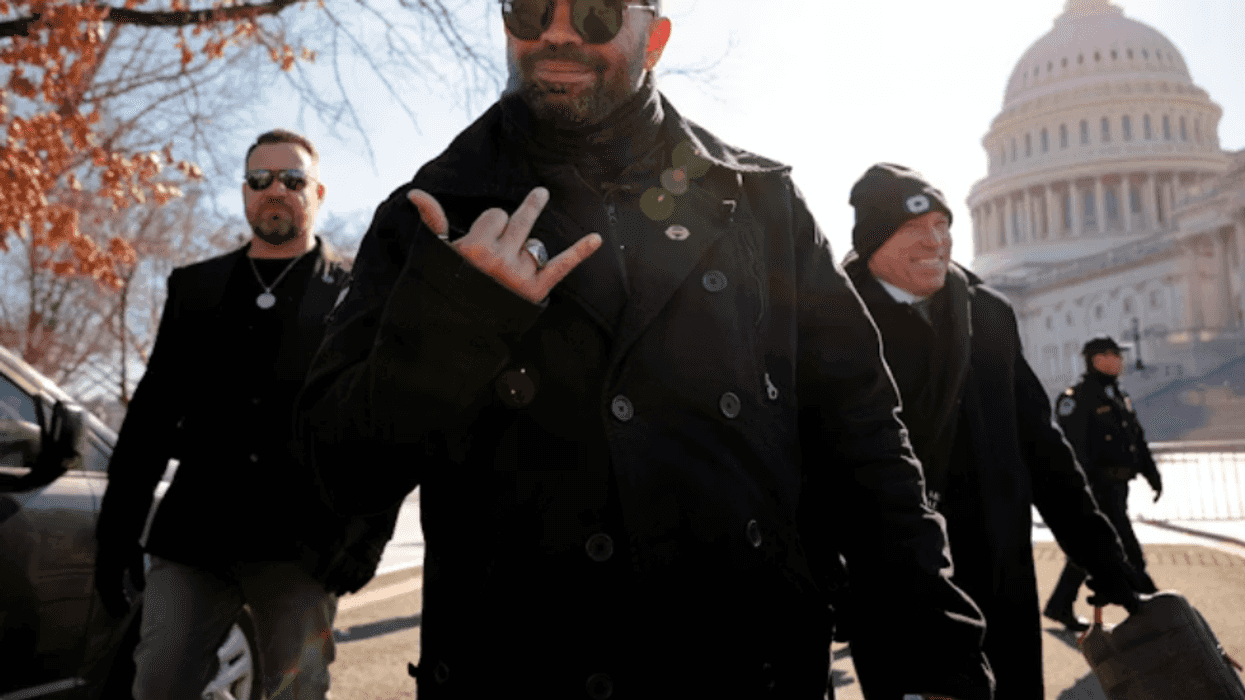
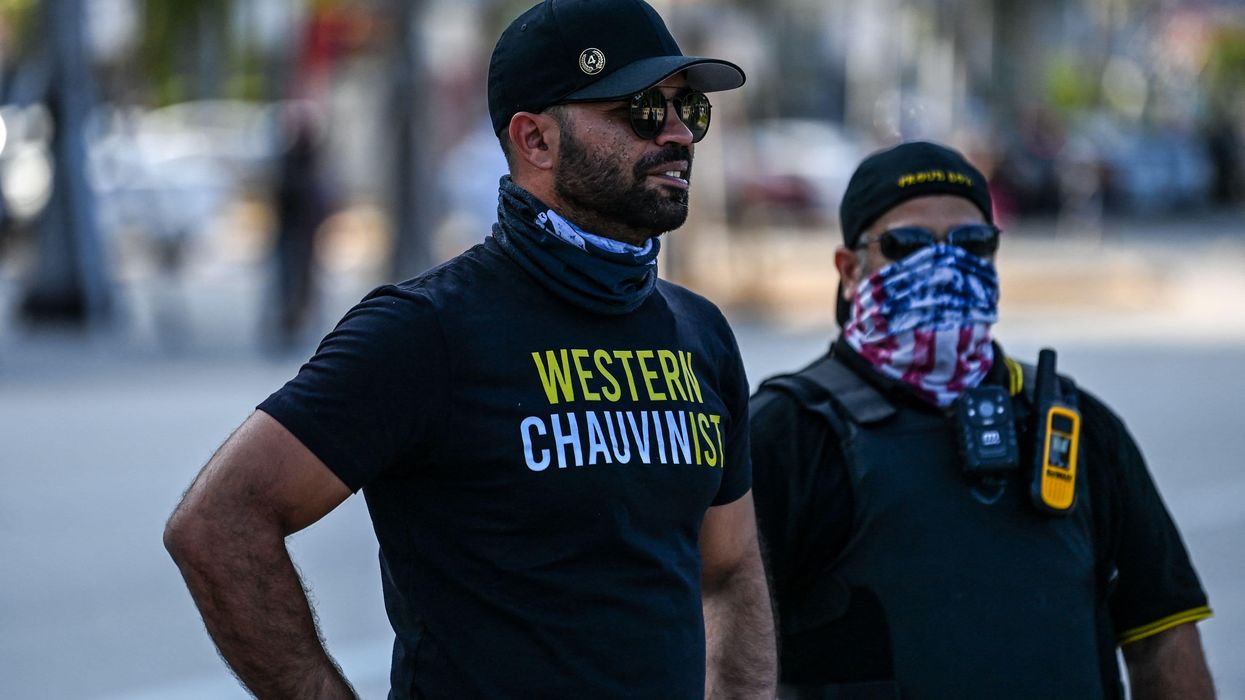
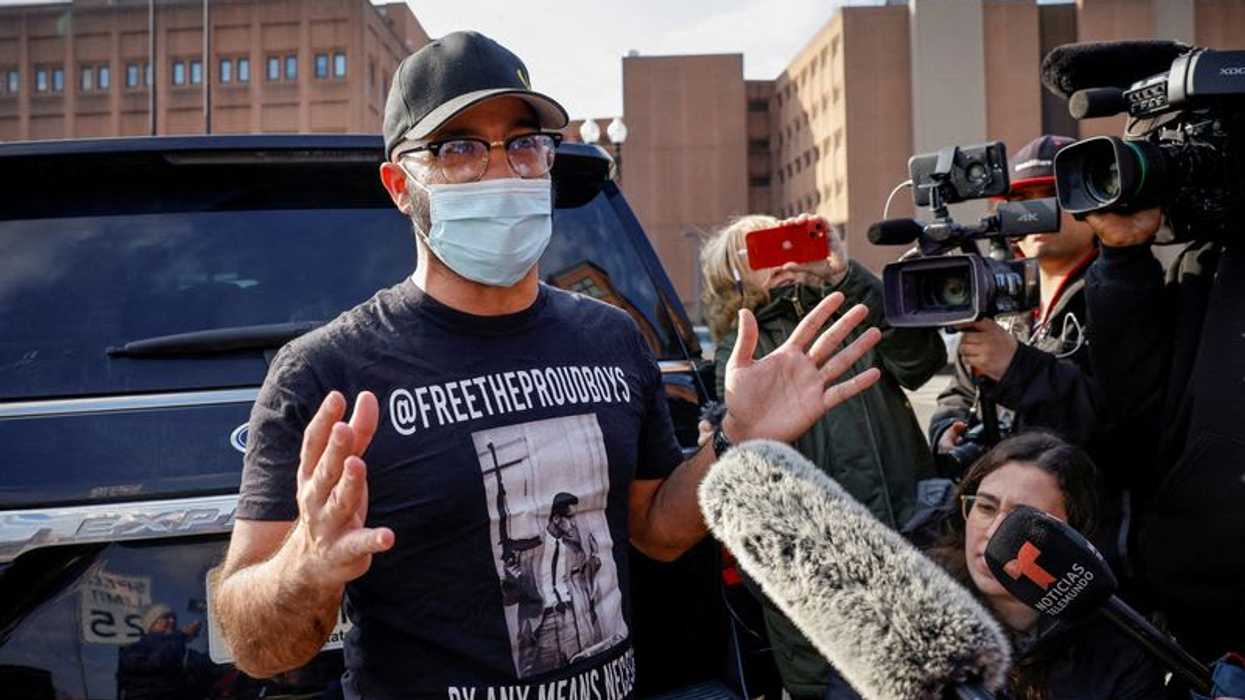
Ultimately, more than 1,500 were charged with federal crimes, and some—like former Proud Boy leader Enrique Tarrio—were convicted of seditious conspiracy against the country. Trump was also impeached for a historic second time for his inciting the insurrection.

At the start of his second term, Trump quickly pardoned the insurrectionists, which unleashed another wave of crime in multiple states. Trump has even pushed for $1.8 billion in taxpayer funds to be paid to insurrectionists and other political allies of his, including people accused of child sexual abuse crimes.

So far, the effort to reward rioters has been unsuccessful—but maybe they’ll show up at Trump’s new D.C. rally to recreate history.

Reprinted with permission from Daily Kos

As Trump Retreats From Slush Fund, Judge Must Probe This Bogus Scheme

As Trump Retreats From Slush Fund, Judge Must Probe This Bogus Scheme

As of this afternoon, President Trump is retreating from the $1.8 billion Anti-Weaponization Fund, according to The New York Times and multiple other reports. The White House communicated the decision to Republican leaders on Capitol Hill today. The decisive moment came earlier Monday, when Speaker Mike Johnson met with Trump and told him bluntly that the fund was torpedoing the $70 billion immigration enforcement bill—the centerpiece of the administration’s legislative agenda.

That conversation, a source says, is what finally convinced the president to drop it. Senate Majority Leader Thune had already told reporters that changes were a “safe bet” and that “the best way to handle it is if the administration decides to shut it down themselves.” House Republicans had been actively looking for ways to kill the fund, and the Senate was already in open revolt—with more than a dozen Republican senators, including Lindsey Graham, privately urging Trump to pull the plug.

Trump and the DOJ waged a similar, strategic retreat a few weeks ago, when his lawyers filed a panicked voluntary dismissal two days before they would have had to walk into Judge Williams’s courtroom and explain, under the solemnity of federal proceedings, how Donald Trump suing an agency he controls, defended by his own former personal criminal defense lawyer, constituted a genuine adversarial lawsuit. Pinned between a rock and a hard place, he bolted.

So Trump blinked. Again. And on an ill-advised move—bogus and illegal on multiple fronts—on which he nevertheless had fully staked his diminishing political capital.

DOJ issued a statement today that it would “abide by the Court’s ruling”—meaning Judge Leonie Brinkema’s temporary restraining order out of Virginia, which froze the fund Friday, not Judge Kathleen Williams’s order reopening the settlement, about which more below.

The DOJ statement defended the fund, said nothing about it being permanently dead, and left conspicuously open the question of whether it could be revived.

So the parameters of the retreat remain unclear as of this writing. It may be a full capitulation. It may be a tactical pause dressed up as a concession. Either way, as a matter of political reality, it is a humiliation—the administration’s biggest self-inflicted wound of Trump 2.0, now compounded by a very public retreat.

In my dispatches on this scandal going back to February, and in my conversations with Representative Jamie Raskin and others, I argued that while the legal avenues for challenging the fund were real but difficult—standing problems, appropriations law hurdles, the fund’s architecture designed specifically to be unreachable—the political blowback would ultimately be too powerful to ignore.

That was because the emotional and political core of the entire scheme was the proposition that the January 6 rioters were victims—“patriots” at a “love-in,” not insurrectionists at a riot designed to hijack the Constitution—entitled to taxpayer-funded compensation. That core was part and parcel of Trump’s relentless and corrupt effort to whitewash history and his own role in trying to steal the 2020 election.

And the political winds, in fact, proved too strong to ignore. The moment Republican Senators and House members had to confront the question—do you support giving money to the people who beat police officers on January 6?—the fund became politically radioactive. Ted Cruz called a meeting with Blanche and Senate Republicans last week one of the roughest he had seen in his Senate career. Another attendee called it the toughest grilling of any administration official they had ever witnessed. Lindsey Graham, of all people, privately urged Trump to drop it.

Thune told reporters that “the best way to handle it is if the administration decides to shut it down themselves.” And Johnson, in his Monday meeting with Trump, delivered the message that finally landed: The fund was killing the immigration bill, and House Republicans were looking for ways to stop it with or without the White House.

Senate Democrats twisted the knife further today, with Schumer releasing a “Dear Colleague” letter vowing a coordinated multi-front assault—floor votes, oversight, appropriations fights—and Senators Schiff, Kelly, and Slotkin introducing the Drain the Slush Fund Act to bar any payouts to those convicted of crimes or connected to January 6. They might not have been positioned to stop the arrangement legally, but they were able, with the foreseeable aid of Republican defectors, to keep the spotlight turned up high enough to make it impossible to look away, as the White House plainly was hoping.

Trump will now take serious lumps from the MAGA base—far more than if he had never embarked on this asinine detour in the first place. The pardoned rioters who were salivating over their anticipated windfalls are going to be furious. Brandon Fellows, who spent three years in prison for his January 6 conduct, had already sought $30 million from DOJ before the fund was even announced and told CNN he was “feeling confident.” The Proud Boys leader expected a $2 to $5 million personal payout. Robert Gieswein—who marched with the Proud Boys, sprayed aerosol irritant at Capitol Police officers, threw a punch at another officer, and served four years in prison—told The Free Press he wants up to $10 million, though he’d be willing to settle for less.

It looks as if all of them, and the roughly 1,600 other January 6 defendants, are going to be left empty-handed and enraged. More, Trump is backing down precisely because the politics of supporting them became untenable—it is they whom Trump is plainly abandoning. All of that amounts to a richly deserved comeuppance for Trump’s staggering audacity in trying to make the American people not just pardon but financially reward the most serious assault on American democracy since the Civil War.

But if Trump, Blanche, and the attorneys involved in the original scheme—including Associate Attorney General Stanley Woodward and Trump private attorney Boris Epshteyn—think that retreat puts an end to the prior misconduct, they may be in for a rude surprise.

Whereas Brinkema’s order froze the fund’s operation going forward, Williams is asking a fundamentally different question: What already happened in her court? She is not interested in where the fund goes from here. She is interested in whether she was deceived, whether her court served as an instrument of fraud, and whether the lawyers who were involved in the bogus settlement violated their most basic obligations to the tribunal.

Last week, a bipartisan group of 35 former federal judges filed a motion urging Williams to reopen the case under Federal Rule of Civil Procedure 60(b)(4). Their filing was blunt: “The Court was deceived.” They argued that Trump and his co-plaintiffs deliberately withheld any mention of the settlement from their dismissal notice—timing the withdrawal to outrun Williams’s scrutiny—and that the resulting arrangement “is a product of collusion and is itself a fraud on the Court.”

Williams did not hesitate to act on the suggestion. On Friday, she issued an order reopening the case, invoking Rule 11—which requires attorneys to certify that any filing serves a legitimate purpose—and citing extensive case law for the proposition that a court may raise Rule 11 violations on its own initiative and that a party cannot avoid sanctions simply by voluntarily dismissing the case.

I expect the administration to try the same move with Williams that it just tried with the fund itself: a strategic retreat dressed up as compliance. He and Epstheyn may try to elude her order altogether, or failing that, to submit on June 12 a filing that treats the whole reckoning as moot: the case is closed, the voluntary dismissal is self-executing under Eleventh Circuit precedent, there is nothing left for her to adjudicate. It is the legal equivalent of a stiff arm: not quite refusing to respond, but responding with nothing of substance.

Williams is unlikely to find that satisfying. We have seen this movie before—most vividly in the Boasberg-Bove-Rao confrontation over deportation flights, where the administration’s combination of contempt and foot-dragging met a judge who simply would not stand down. I don’t think that a dismissive June 12 filing will cause her to close up shop. Nor should it: the retreat from the fund is completely separate from the past potential abuse of the court.

If Williams insists on getting to the bottom of what happened, the various lawyers and participants will look like flies on flypaper, trying to wriggle away from the consequences of their conduct. That would presumably include Trump and the administration’s tried-and-true technique of seeking emergency review in the Eleventh Circuit, and if that fails, the Supreme Court (where the circuit justice for the Eleventh Circuit is Clarence Thomas). But in effect, they’d be doubling down on the whole dubious wager, and risking even greater humiliation.

Williams is not done. She has the record, the legal tools, and clearly the will to press forward, and the 35 former judges have handed her both the doctrinal roadmap and the judicial mandate to act. Political retreat does not erase a fraud on the court. The lawyers who engineered this heist still have a June 12 deadline, and a federal judge waiting for their answer.

The fund may be withering. But the investigation and accountability of the overall constitutional swindle may just be getting started.

Harry Litman is a former United States Attorney and the executive producer and host of the Talking Feds podcast. He has taught law at UCLA, Berkeley, and Georgetown and served as a deputy assistant attorney general in the Clinton Administration. Please consider subscribing to Talking Feds on Substack.

Reprinted with permission from Talking Feds.


How Trump's January 6 Pardons Have Already Emboldened Violent Extremists

How Trump's January 6 Pardons Have Already Emboldened Violent Extremists

This story was originally published by ProPublica.

The day after President Donald Trump’s inauguration, a surprise visitor joined the crowd outside the D.C. Jail, drawing double takes as people recognized his signature eyepatch: Stewart Rhodes, founder of the far-right Oath Keepers movement.

By the cold math of the justice system, Rhodes was not supposed to be there. He’d gone to sleep the night before in a Maryland prison cell, where he was serving 18 years as a convicted ringleader of the attack on the U.S. Capitol on January 6, 2021. The Yale-educated firebrand who once boasted a nationwide paramilitary network had seen his organization collapse under prosecution.

For the Justice Department, Rhodes’ seditious conspiracy conviction was bigger than crushing the Oath Keepers — it was a hard-won victory in the government’s efforts to reorient a creaky bureaucracy toward a rapidly evolving homegrown threat. On his first day in office, Trump erased that work by granting clemency to more than 1,500 January 6 defendants, declaring an end to “a grave national injustice.”

“It’s surreal,” Rhodes said, absorbing the scene.

Rhodes, sporting a Trump 2020 cap, was back in Washington with fellow “J6ers” within hours of his release in the early hours of Jan. 21, 2025 . In the frigid air outside “the gulag,” as the D.C. Jail is known in this crowd, he was swarmed by TV cameras and supporters offering congratulations. Nearby, far-right Proud Boys members puffed cigars. A speaker blared Bob Marley’s “Redemption Song.”

The shock of the moment has continued to reverberate far beyond the jailhouse parking lot.

Trump’s pardons immediately upended the biggest single prosecution in U.S. history and signaled a broader reversal that threatens to create a more permissive climate in which extremists could regroup, weaken the FBI’s independence and revive old debates about who counts as a terrorist, according to current and former federal law enforcement officials and national security experts.

In the whirlwind of the last three weeks, the Trump administration has purged federal law enforcement agencies of prosecutors and investigators who’d been pursuing homegrown far-right groups that the FBI lists as among the most dangerous threats to national security. The Biden administration’s 2021 domestic terrorism strategy — the nation’s first — was removed from the White House website. And some government-funded extremism-prevention programs were ordered to stop work.

“There’s no indication that he engaged in any kind of assessment or has even stopped to think, ‘What did I just unleash on America?’” Mary McCord, a former federal prosecutor who oversaw domestic terrorism cases as a senior Justice Department official, said of Trump’s actions.

Colin Clarke, an analyst at the nonpartisan security-focused Soufan Center, said “far right” and “domestic terrorism” are now “kind of dirty words with the current administration.”

Far-right movements that openly promote violence have suddenly been invigorated, he said. “Does this become a four-year period where these groups can really use the time to strengthen their organization, their command and control, stockpile weapons?” he said.

A Sudden Departure

The changes are a departure even from the first Trump White House, which ramped up attention on domestic terrorism in 2019 after attacks including the deadly white supremacist rampage that August targeting Latino shoppers in El Paso, Texas.

The next month, the Department of Homeland Security issued a report that described domestic terrorism as a “growing threat,” that had “too frequently struck our houses of worship, our schools, our workplaces, our festivals, and our shopping spaces.”

Joe Biden made violent extremism a central theme of his 2020 presidential campaign, saying that he’d been inspired to run for office by a white supremacist rally in Charlottesville, Virginia, that turned violent, leaving one person dead. His administration’s steps borrowed from previous campaigns to combat AIDS and framed radicalization as a public health priority. Biden also made efforts to address extremism in the ranks of the military and Department of Homeland Security.

Experts described the effort as modest, but the moves were welcomed among counterterrorism specialists as an overdue corrective to a disproportionate focus on Islamist militant groups whose threat to the United States has receded in the decades since the Sept. 11, 2001, terrorist attacks by al-Qaida.

A failure of authorities to pivot to the homegrown threat was cited in the findings of a Senate panel that examined intelligence missteps ahead of the Capitol attack. The report called for a reevaluation of the government’s analysis of domestic threats, finding that, “Neither the FBI nor DHS deemed online posts calling for violence at the Capitol as credible.”

This Trump administration has shown no appetite for such measures. Instead, the White House pardons are nudging fringe movements deeper into the mainstream and closer to power, said Cynthia Miller-Idriss, who leads an extremism research lab at American University and has testified before Congress about the threat.

“It creates immediate national security risks from people who are pledging revenge and retribution and who have now been valorized,” Miller-Idriss said.

Within 24 hours of his release, Rhodes had embarked on a comeback blitz. He visited the Capitol and stopped by a Dunkin’ Donuts in the House office building. Three days later, he was in a crowd standing behind Trump at a rally in Las Vegas.

Rhodes was among 14 defendants whose charges were commuted rather than being pardoned. Though he didn’t enter the Capitol on Jan. 6, he was convicted of orchestrating the Oath Keepers’ violent actions that day. At trial, prosecutors played a recording of him saying, “My only regret is they should have brought rifles.”

At the Capitol after his release, he told reporters he plans to seek a full pardon.

Extremists Reconnect, Rejoice on X

Emboldened by the pardons and Trump’s laser focus on mass deportations, which is redirecting authorities’ attention, far-right extremists rejoiced at the idea of having more space to organize.

Chat forums filled with would-be MAGA vigilantes who fantasize about rounding up Democratic politicians or acting as bounty hunters to corral undocumented migrants. Researchers noted one Proud Boys chat group where users had posted the LinkedIn pages of corrections officers who purportedly oversaw January 6 detainees.

Newly freed prisoners, no longer subject to orders to stay away from extremists and co-defendants, gathered for a virtual reunion, hosted on Elon Musk’s X platform the weekend after their release. For hours, they talked about what led them to the Capitol, how they were taken into custody and the harsh jail conditions they faced — a vivid, albeit one-sided, oral history of life at the center of what the Justice Department had hailed as a landmark domestic terrorism investigation.

The reunion on X offered a glimpse of men juggling the thrill of their vindication with the mundane logistics of reintegrating to society. One former defendant called in from a Florida shopping mall where he was buying sneakers with his mom. A Montana man who embraces the QAnon conspiracy theory said he was experiencing the most exciting time of his life.

Some were too flustered to articulate their thoughts beyond a deep gratitude for God and Trump. Others sounded fired up, ready to run for office, join a class-action lawsuit over their prosecution or find others ways to, as one pardoned rioter put it, “fight the hell out of this thing.”

Outside the D.C. Jail, pardoned defendants described the whiplash of their sudden status change from alleged and convicted criminals to freed patriots.

William Sarsfield III, a tall, gray-bearded man in a camouflage cap printed with “Biden Sucks,” sipped coffee outside the jail. Before dawn that morning, he’d been released from a Philadelphia detention center where he was awaiting sentencing on felony and misdemeanor convictions.

Court papers, backed by video evidence, describe Sarsfield as joining other Capitol rioters in trying to push through a police line with such force that “one officer could be heard screaming in agonizing pain as he was smashed between a shield and a metal door frame.” Sarsfield insists the charges were inflated, noting that he also helped officers escape the mob that day.

In the runup to Trump’s inauguration, rumors had swirled about an imminent pardon, though details were fuzzy. Sarsfield said his girlfriend was so certain Trump would deliver that she hopped in a truck and raced from Gun Barrel City, an hour southeast of Dallas, to the jail in Philadelphia, a 22-hour drive.

“She drove all the way from Texas on faith,” he said. “Because we both knew it was going to be right. A man’s word is what his word is.”

After his release, Sarsfield said, he headed straight to the D.C. “gulag” to make sure others were getting out, too. He still wore his jail uniform of sweats and orange slippers. The miracle of his freedom was just beginning to sink in.

“I got pardoned by a felon,” Sarsfield said with an incredulous chuckle, referring to Trump’s distinction as the only U.S. president to serve after a felony conviction.

Sarsfield said he planned to show his appreciation by helping Trump “clean up in local communities,” which he said meant working at the grassroots level to expose prosecutors and politicians he believes have corrupted the justice system.

“When people decide not to use the rule of law, that becomes tyrannical,” Sarsfield said. “And in our Constitution I’m pretty sure it says when tyranny becomes law, rebellion becomes duty.”

An “Inflection Point” for Political Violence

The uncertainty of what comes next is nerve-wracking for longtime monitors of violent extremists. Even in their worst-case scenarios, they said, few foresaw the Trump administration sending hundreds of diehard election deniers back into their communities as aggrieved heroes.

“A lot of these people will have martyrdom or legendary status among extremist circles, and that is a very powerful recruiting tool,” said Kieran Doyle, North America research manager for the Armed Conflict Location & Event Data Project, a global conflict monitoring group.

ACLED research shows extremist activity such as demonstrations and acts of political violence has declined since 2023, which saw a 35 percent reduction in mobilization compared to the previous year. Doyle and other monitors credit the drop in part to the chilling effect of the Justice Department’s post-January 6 crackdown on anti-government and white supremacist movements.

Doyle cautioned that it’s too early to assess the ripple effect of Trump’s clemency on extremist activity. Their ability to regroup depends on several factors, including fear of FBI infiltration, which could subside now that hard-right Trump loyalists are overseeing the Justice Department.

“We’re at an inflection point,” Doyle said.

At the FBI, the Trump administration’s post-clemency vows of payback have sidelined a cohort of senior officials who oversaw the January 6 portfolio of cases, resulting in the loss of some of the bureau’s most seasoned counterterrorism professionals.

Without that expertise, investigators run the risk of violating a suspect’s civil rights or, conversely, overlooking threats because they are assumed to be constitutionally protected, said a veteran FBI analyst who has worked on January 6 cases.

“It has the potential to cut both ways,” the analyst said, speaking on condition of anonymity for fear of retribution.

Many longtime monitors of extremist movements have themselves become targets of threats and violence from January 6 defendants and their supporters, raising anxiety about their release from prison.

Megan Squire, a computer scientist who in 2017 was among the first academic researchers documenting the Proud Boys’ increasingly organized violence, said members are already “saber-rattling and reconstituting dead chapters.”

The group’s former leader, Enrique Tarrio, released from prison in Louisiana, told the far-right Infowars podcast: “Success is going to be retribution.”

All five Proud Boys charged with seditious conspiracy in connection with the Capitol attack were in Squire’s original dataset. Another member who was a January 6 defendant had previously blasted Squire on social media and posted her private information on Telegram.

Squire, who has since joined the civil rights-focused Southern Poverty Law Center, said she finds herself wondering, “Are they going to come after me now?”

ProPublica is a nonprofit newsroom that investigates abuses of power. Sign up to receive our biggest stories as soon as they’re published.


Proud Boys Seek To Subpoena Trump's Testimony At Sedition Trial

Proud Boys Seek To Subpoena Trump's Testimony At Sedition Trial

Attorneys for leaders of the Proud Boys — the violent extremist group accused of conspiring to hinder the transfer of presidential power in January 2021 — said they plan to subpoena former President Donald Trump to appear as a witness in their ongoing sedition trial.

Norm Pattis, an attorney for 37-year-old Proud Boys member Joseph Biggs, announced Thursday that the defendants — Enrique Tarrio, Ethan Nordean, Zachary Rehl, Dominic Pezzola, and Biggs, all of whom were charged with seditious conspiracy — will contact “the government for assistance in serving Mr. Trump."

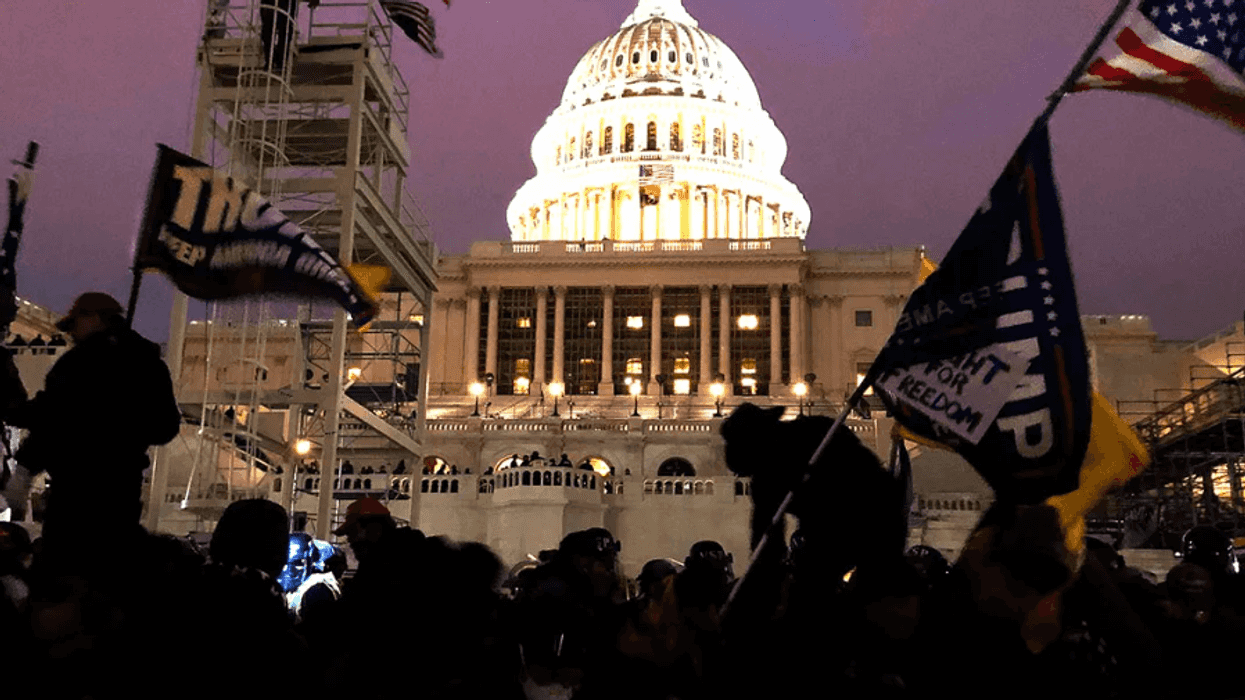
Prosecutors in the trial, which began last month, have accused the defendants of leading the charge on the U.S. Capitol by a mob of Trump supporters on January 6, 2021, to keep the defated president in power, an unprecedented breach that left seven dead and about 150 law enforcement officers injured.

Defense attorneys have argued that it was not the Proud Boys but Trump who claimed that the 2020 election was stolen, asked supporters to gather at the Capitol on January 6, and “unleashed the mob” on lawmakers certifying Electoral College votes that day.

“At all times relevant, Trump was President of the United States, and it’s the government’s obligation to produce him,” Pattis said in court Thursday, according to the Washington Post.

It remains unclear what the defendants hope to learn from Trump, who has continued to insist that the 2020 election was rigged against him despite the availability of overwhelming evidence to the contrary.

Multiple outlets have noted that the move to compel Trump’s testimony is a long shot, as the ex-president — who fought a subpoena for testimony from the House’s January 6 committee — will almost certainly try to derail the Proud Boys' demand with executive privilege claims or, if that fails, assertjons of his Fifth Amendment right.

The defense attorneys drafted the subpoena over the weekend, but U.S. District Court Judge Timothy J. Kelly, the jurist overseeing the case, would have to rule Trump’s testimony admissible before the former president could be served.

“We’re not going to be seeing testimony from the former president,” Lisa Kern Griffin, a law professor at Duke University, told the Post.

Other January 6 defendants have sought to compel Trump to appear in court, but none has succeeded. Such an effort would be time-consuming and bogged down by extensive litigation.

Last year, a federal court judge denied a January 6 defendant’s request to force Trump and his allies to the witness stand to testify.

Judge Reggie B. Walton told the defendant, Ohio exterminator Dustin Thompson, who testified he stormed the Capitol on Trump’s orders, to make do with publicly accessible video and audio recordings of Trump speaking on or before January 6, as opposed to subpoenaing him, reported the Times.

Unlike the others, however, “the Proud Boys may have the clearest case, given Trump’s explicit reference to the group during the debate and the group’s centrality to the riot that unfolded on January 6,” Politico’s Kyle Cheney wrote Thursday.

Trump has made direct references to the group. During the September 2020 presidential debate, Trump, responding to Biden and debate moderator Chris Wallace, told the Proud Boys to “stand back and stand by.”

In an opening statement last month, Sabino Jauregui, an attorney for Tarrio, blasted the U.S. government for making Tarrio its scapegoat because it was “too hard to blame Trump, too hard to bring him to the witness stand with his army of lawyers.”

“Instead, they go for the easy target. They go for Enrique Tarrio, leader of the Proud Boys,” Jauregui said. “If the government takes down Enrique Tarrio, the government takes down the whole Proud Boys organization.”

Prosecutors have since disagreed, arguing — and presenting reams of evidence to the jury they said showed — that the Proud Boys “directed, mobilized and led” the January 6 rioters into the Capitol, breaching Capitol law enforcement barricades to facilitate the unauthorized entry.

Tarrio, a longtime national chairman of the male-only group, was the leader of over 100 Proud Boys, including Biggs, Nordean, and Rehl, who converged on the Washington Monument on January 6. From there they traveled to the Capitol, prosecutors alleged, according to USA Today.

Investigations have revealed deep ties between Tarrio, other right-wing extremist groups, and several Trump allies, including convicted pro-Trump Republican strategist Roger Stone, for whom the Proud Boys have acted as bodyguards.

On Wednesday, prosecutors presented to jurors a string of messages that showed Tarrio receiving internal law enforcement information — including a heads-up of his impending arrest — from a Metropolitan Police lieutenant, Shane Lammond, for weeks before January 6, the Guardian reported Thursday.

Shop our Store

Headlines

Editor's Blog

Corona Virus

Trending

World