Tag: gas prices
Polls: Trump's Support Dwindling Down To His Base Of MAGA Diehards

Polls: Trump's Support Dwindling Down To His Base Of MAGA Diehards

President Donald Trump's approval rating is reaching new lows as Americans grow frustrated with the high cost of living and Trump's choice to mire the country in a new foreign war.

In fact, since Trump launched the boondoggle of a war in Iran, his average net approval rating has fallen roughly five percentage points, according to polling analyst Nate Silver. His approval rating now stands at an abysmally low 39.9 percent.

In fact, the latest Economist/YouGov poll, released Tuesday, finds Trump at just 35 percent approval—the lowest the organization has recorded in Trump's second term. It’s also near his all-time low in the poll, 34 percent, which he recorded in November 2017.

CNN Chief Data Analyst Harry Enten put it like this:

A steady fall into the abyss for Trump's net approval, as it falls into Death Valley. He's now at a term 2 low: -18 pts. Big reason why: Independents. Trump's at -45 pts. The worst for any prez at this point in term 2. Worse than Nixon (-36 pts) at the height of Watergate!

Indeed, the Economist/YouGov poll found Trump's support falling in almost every group. That includes self-identified Republican voters, whose approval has declined by 3 points since last week.

Trump's support from people who voted for him in 2024 also saw a precipitous drop since he launched the Iran war in late February.

In a poll conducted just as he started the Iran "excursion"—as he so eloquently described it—84 percent of Trump 2024 voters approved of the job he was doing as president. Now only 76 percent approve, marking a steep eight-point drop in about one month.

In fact, the only group where Trump's support has held steady is among self-proclaimed MAGA supporters, 92 percent of whom still approve of their Dear Leader. That's virtually unchanged from the 94 percent of MAGA supporters who approved of him as the war began.

That means we are quickly approaching a point where Trump's MAGA base may be the only ones who approve of the job he is doing in office. And that news should horrify Republicans, who were already battling extreme headwinds in the November midterms.

If Trump 2024 voters stay home or vote for Democrats, the electoral consequences for Republicans will be ugly.

And while there's a long way to go until November, Silver's analysis shows that even when Trump's approval rating likely improves after the self-inflicted messes die down, they may never fully recover. After all, Trump's approval rating shows a downward trajectory since Inauguration Day 2025.

Of course, an improvement in Trump’s approval assumes that the war in Iran and the fallout from it won't get worse.

Trump is clearly looking for an off-ramp, though his erratic missives about his plans are impossible to follow.

But even if the war ended today and Iran reopened the critical Strait of Hormuz oil passageway—which it has been blocking for more than four weeks—experts said fuel prices will take months to go back to pre-war levels. That's because it takes time for the commodity to be shipped across the world, as well as for refineries to restart their production and repair the damage they sustained from Iranian missile strikes.

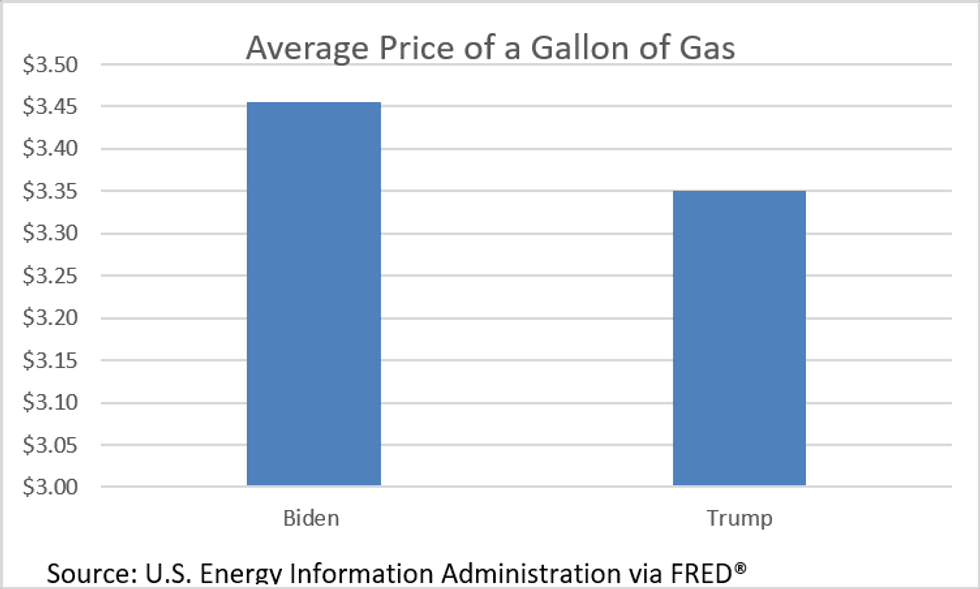
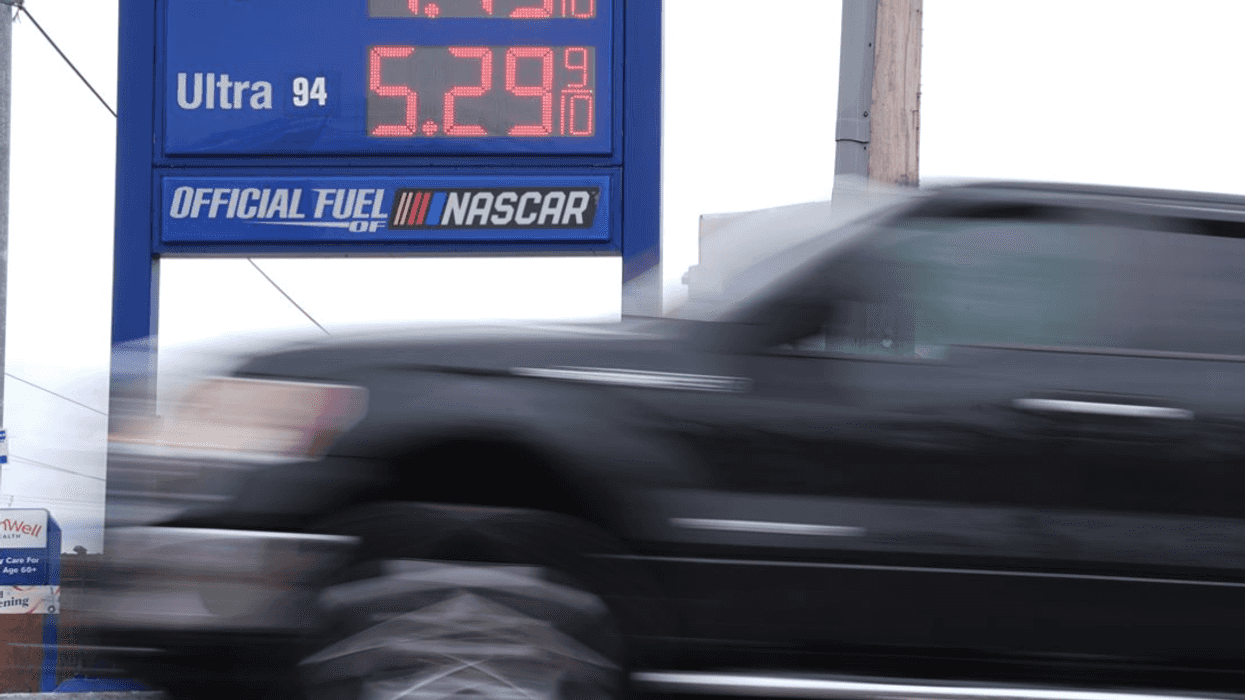
Already, gas prices are now averaging more than $4 per gallon across the country—a high not seen since 2022, when Russia invaded Ukraine. And we all know how that worked out for Joe Biden and the Democratic Party.

And rising fuel prices have negative downstream effects on the economy. Companies and farmers have to contend with higher costs to ship and harvest their crops—costs they then pass down to consumers. Worse is that oil and natural gas are used in many other products, such as plastics, rubber, synthetic fabrics, and more. Thus rising oil prices make it more expensive to produce countless other necessary household items.

Given that inflation and the cost of living are the most important issues to Americans, that should have Republicans shaking in their boots.

Reprinted with permission from Daily Kos

Here's How Gas Prices Will Spike This Year (And Eat Your Tax Refund)

Here's How Gas Prices Will Spike This Year (And Eat Your Tax Refund)

The Stanford Institute for Economic Policy Research team of Caleb Brobst, Ryan Cummings, Neale Mahoney and yours truly has updated our estimate of how much more people will pay, on average, to fill their tanks due to the impact of war on the oil cost. Our model runs off of Goldman Sachs’ predictions of the war’s impact on the oil price and since they just updated that estimate, we can run the new numbers through the model. (Axios featured our original estimate.)

The key figure is below. On the left, you see that GS now expects the price of Brent crude oil to peak at $115 up from $110, and stay higher from there through ‘26. You’ll also see the same “rockets and feathers” problem as in our original forecast, as the oil price falls a good bit faster than the gas price (the reason has to do with retail market power and consumer search costs; see here and related links).

We then multiply the increase in the gas price per gallon times miles driven, finding that the average driver (of a non-EV, of course), will spend about $860 more on gas this year, up from $740 in our original estimate. For reference, note that this swallows the expected larger tax refunds this year from the Republicans' big budget bill.


Based on rumors of talks to dial back the conflict and reopen the Strait, the oil price is down over the past few days, or, more accurately, it’s bouncing around. It’s $102 (Brent) as I write, up from about $70 pre-war; the average gas price is $3.98, up more than a dollar from a month ago. But given the uncertainty about where the war is heading, amplified by the utter non-credibility of Trump and his administration re any public statements about this, there are inevitably wide confidence intervals around our model-based estimates.

But we’re right about the direction of travel, which has, as you know if you’ve filled up lately, gotten a lot more expensive. This represents a hit to disposable income and therefore is likely to ding consumer spending and growth in the months to come. The degree of the hit is proportional to the duration of the war, which runs us headlong into the unfortunate combination of uncertainty and non-credibility.

The problem is we’ve got the usual fog of war amped up on steroids by the fog machine which is team Trump’s communications operation.

Jared Bernstein is a former chair of the White House Council of Economic Advisers under President Joe Biden. He is a senior fellow at the Council on Budget and Policy Priorities. Please consider subscribing to his Substack.

Reprinted with permission from Econjared.

Rising Gas Prices Enraged Republicans Under Biden, But Not Any More

Rising Gas Prices Enraged Republicans Under Biden, But Not Any More

When the price of gas skyrocketed in 2022 after Russia invaded Ukraine, Republicans fell over themselves to blame then-President Joe Biden in hope of hurting his reelection bid as well as Democrats in the midterms—even though Biden was not at fault for the spike.

But now, with President Donald Trump squarely responsible for the exponential increase in oil and gas prices after he launched an ill-conceived war on Iran, Republicans have completely reversed course, claiming that high gas prices are a cost that they're willing to pay.

It’s a message taken directly from Dear Leader, who had the gall to argue this week that higher oil prices are actually good for Americans.

Get a load of Rep. Jim Jordan of Ohio, who said Thursday that he’s totally fine with higher gas prices in order to let Trump wage war in Iran.

"If that means prices go up for a short time, I think Americans understand we can live with that," Jordan said on CNN.

But in 2022, Jordan was one of the loudest voices criticizing rising gas prices.

"Real America doesn’t care about the January 6th Committee,” he wrote on X at the time. “Gas is over $5 per gallon!”

And he was still on a tear about gas prices in 2023.

"Gas prices are up 63 cents this year. Groceries prices are still at record highs. Good luck affording a house with 7% interest rates. Bidenomics!" Jordan wrote on X at the time.

But Jordan is not singing the same tune today, with gas prices up 69 cents over the last month, grocery prices rising, and mortgage rates at more than six percent—all directly thanks to Trump’s war and illegal tariffs wreaking havoc on the economy.

Then there’s Rep. Mark Alford of Missouri, who told CNN this week that “there may be sacrifices to be made at the pump on a temporary basis."

"I think the people in my district are [willing to pay higher prices at the pump],” Alford said. "I'm willing to pay 30 percent or 30 cents more at the pump to make sure Iran doesn't have a nuclear weapon that's going to hit the U.S."

ALFORD: There may be sacrifices to be made at the pump on a temporary basisRAJU: Do you think Americans are willing to make it?A: I think the people in my district are. I'm willing to pay 30%, or 30 cents more at the pump to make sure Iran doesn't have a nuclear weapon that's going to hit the US

[image or embed]
— Aaron Rupar (@atrupar.com) March 11, 2026 at 2:50 PM

Just a few weeks ago, Alford was praising Trump for lowering gas prices.

"President Trump and House Republican’s [sic] America-First energy agenda is working—and it’s working so well that even networks usually quick to criticize are reporting the relief with a smile. When gas prices go down, American families go forward,” he wrote on X.

So then does Alford think that skyrocketing gas prices thanks to trigger-happy Trump make Americans go backward?

Sen. Rick Scott of Florida also said that Americans just have to get over surging gas prices because Trump's war is more important.

“We’d love to get gas prices back down, but the most important thing is [to] destroy Iran’s ability to produce a nuclear weapon, destroy their military, their ballistic missile capability," Scott told CNN. “We all want gas prices to come down. Nobody wants gas prices higher. This president doesn’t want gas prices higher. But we have to be realistic."

Of course, Trump said in June that the United States “obliterated” Iran’s nuclear capabilities, so it’s unclear how in just a few months the country became such a massive threat that war was necessary.

Given that a majority of Americans don't support Trump’s war and only wanted to see prices in the United States come down, it's hard to imagine that being a winning message for the GOP.

But that didn’t stop Sen. Roger Marshall of Kansas from pushing the same message.

"Freedom is not free. Americans are gonna have to make some sacrifices," Marshall said, even though the war in Iran has nothing to do with freedom in the United States.

However, there is one Republican sounding the alarm on Trump's war.

“If we are still bombing Iran with kinetic action—people don’t want to call it war—if there’s still kinetic action that causes oil to be over $100, I think you’re going to see a disastrous election [for Republicans],” Sen. Rand Paul of Kentucky told Fox Business.

Rand Paul: "The 2026 elections, already we are behind the 8 ball. If you add in high gas prices, high oil prices, and if we're still bombing Iran with kinetic action -- people don't want to call it war -- I think you're gonna see a disastrous election."

[image or embed]
— Aaron Rupar (@atrupar.com) March 10, 2026 at 9:00 AM

Paul’s right: Rising gas prices are Trump's fault, and voters will punish the GOP for it come November.

Reprinted with permission from Daily Kos

Wildly Expensive And Unpopular: Scales Of Trump's War Are Far Out Of Balance

Wildly Expensive And Unpopular: Scales Of Trump's War Are Far Out Of Balance

President Trump unilaterally decided to take the nation into war. Congressional Republicans not only failed to undertake what is arguably their most critical role in making this decision. They voted down a war powers resolution to “curb President Donald Trump’s powers in the Iran war…”

It’s the second vote in as many days, after the Senate defeated a similar measure. Lawmakers are confronting the sudden reality of representing wary Americans in wartime and all that entails — with lives lost, dollars spent and alliances tested by a president’s unilateral decision to go to war with Iran.

There has never been a war this unpopular with the American people at this early stage. “About half of registered voters — 53% — oppose U.S. military action against Iran, according to a new Quinnipiac Poll conducted over the weekend. Only 4 in 10 support it, and about 1 in 10 are uncertain.”

It’s of course not the case that Americans are sympathetic to the oppressive Iranian theocracy. Far from it. It’s that the case for war was never made to them. If it’s “regime change” then this appears to have demonstrably failed, as the new leader is as hardline as the last one. If it’s “protecting the Iranian people” who disdain the regime, then that surely requires “boots on the ground” versus an air campaign that’s killed hundreds of innocents.

With no rationale, Americans are faced with two economic challenges: the impact of the war on energy costs, which speaks directly to their affordability concerns, and the cost of the war, both in human and fiscal terms. That is, other than MAGAs who can comfort themselves with “if Trump’s doing it, I’m for it,” the rest of the country is weighing the action on a scale with costs on one side and rationale on the other. But there’s zero on that side of scale.

On the costs side of the scale, however, the evidence is stark. The figure below shows how fast the oil price has gone up relative to past conflicts. Go to the doc and you can click on the same figure for natural gas, which is also shut in due to the war and its impact on shipping through the Strait of Hormuz.

Here's the gas price:


And here’s a new GS Research take on inflation and growth impacts given different duration/adversity scenarios (because core inflation excludes energy and food costs, we see less impact there; as long as you don’t need to eat or go anywhere, you’re good!):


Take a beat and eyeball that figure on the left. Then consider the main, economic stressor facing American families right now, i.e., affordability. Then imagine undertaking a war, with no clear rationale (I know I keep saying that, but it’s crucial—Americans will rally if we understand the need to go there), that is likely to send headline inflation a point higher (their “new forecast”) and could, under the most adverse scenario, send it to five percent.

Their real GDP forecast tracks how higher prices ding growth, though note that none of these forecasts, including the most severe, are recessionary.

We’re just a lot less exposed, in a macro sense, than we use to be to oil shocks. Our trade exposure to the Strait is <5% (percent of our trade flows) and our oil intensity (how much oil we use to generate a dollar of real output) is way down.


That’s good news, of course, but for years now we’ve seen the disconnect between macro and micro, between solid GDP growth and low unemployment and people’s economic experience. And we know that has a lot to do with how far their paychecks are going. I’ve touted real wage growth as recently as yesterday in my write-up of the CPI report, but higher war-induced inflation will cut into that buying power.

Then there’s the fiscal and human costs, both that of our servicemen and women and the victims caught in the crossfire of the air campaign. I urge you to read this powerful memo to Congress from Bobby Kogan and Damian Murphy from the Center for American Progress. Regarding the likely forthcoming request to Congress for more money (I’m hearing $50 billion) to prosecute the war, they write:

While the Trump administration has not yet presented its supplemental request, the White House will likely request funds to replenish stockpiles for which it already has sufficient funding through a mixture OBBBA (an enormous amount of which still remains unobligated) and through its general transfer authority inside the annual defense budget. In other words, the White House seems poised to request more money for weapons for which they already have tens of billions of unused dollars.


Kogan and Murphy also remind us that the Defense Department’s budget “keeps growing without increased accountability (in December, the Pentagon failed its eighth financial audit in a row).” The very least Congress can do is not authorize even more resources for this benighted, unilateral adventurism that’s already hitting Americans in their wallets.

There are just wars, cases where our nation has intervened in ways that have been far more costly to life and treasure than that in any of the figures shown above, but which the majority of Americans have supported because we understood and agreed with what was at stake.

This is not that, and it never will be that. This is the action of a one unhinged man with unlimited power granted to him by the most irresponsible Congressional bloc in our lifetimes. Our founders attempted to build a decision structure that precluded exactly the situation in which we currently find ourselves, but Trump has hacked that system, and the costs in lives and dollars of that hack are building each day.

Jared Bernstein is a former chair of the White House Council of Economic Advisers under President Joe Biden. He is a senior fellow at the Council on Budget and Policy Priorities. Please consider subscribing to his Substack.
Reprinted with permission from Econjared.


Shop our Store

Headlines

Editor's Blog

Corona Virus

Trending

World