Tag: global inflation
France's Rioting Has Nothing To Do With Immigrants -- And Everything To Do With Prices

France's Rioting Has Nothing To Do With Immigrants -- And Everything To Do With Prices

Polls being what they are, Republicans and their supporters must be feeling a bit like the condemned Frenchmen who rode to the guillotine during the Reign of Terror. It's fitting, then, that they are seizing on unrest in France as a desperate campaign gambit. "The Riots in France Are a Warning for America," declared The Federalist. And what is the lesson? "Mass immigration will split your country in two, and the two sides will eventually go to war."

Rep. Keith Self, chairman of the Foreign Affairs subcommittee on Europe, had the script down pat:

"They've been allowing this to happen for years and years, so they are reaping what they sowed. ... We're also trying to get a handle on our mass migration consequences, just like France should have done years ago. That's why I say this is a lesson to America. We are watching the future of America in France and the U.K., frankly."

So did Speaker Mike Johnson:

"France is descending into chaos because they wanted OPEN BORDERS — just like the socialist Democrats in America. What we are witnessing is a chilling warning for all Americans of what happens if the radical Marxist insurgent left gets their way."

JD Vance warned that "This is the future congressional Democrats seek for your country."

Naturally, President Donald Trump picked up the baton, telling reporters that the French protests were about "immigration, not schools," and posting:

"France is burning! The immigration of people from an entirely different world, people with hatred in their hearts, has shattered that once great country. Close your Borders and take control, before it is too late!"

Back in reality, there is no evidence that the French protests and riots have anything at all to do with immigration. There has been Islamist violence in France over the years, perpetrated by immigrants or children of immigrants, perhaps most famously the attack on the Paris offices of the magazine Charlie Hebdo in 2015 and the horrific Nice truck attack the following year that killed 86.

But that's not what's happening today, and no desperate eagerness by American Republicans to hijack these protests for their flailing campaigns can change that. There is no data on the ethnicity or color of the thousands of people arrested in the past week — France doesn't keep such records. Students in the Paris suburbs were protesting for weeks before the violence started. Similar protests have spread to Lyon, Marseilles, Lille, Bordeaux, and many other smaller cities and rural areas — and so did the violence. What originated with students protesting poorly equipped high schools expanded to farmers and labor unions.

Some of the rioters are dissolute young men who were itching to pick a fight with the police, but the original demonstrators were students complaining about the long-running underfunding of French schools. Others who joined are furious about the price of gasoline and diesel, and the high cost of living in general. So a more likely cause of the unrest in France isn't immigration but Trump's half-baked decision to attack Iran without buy-in from Congress. In fact, the high cost of fuel and associated inflation is causing unrest in other European countries including Italy, Portugal, Belgium and Albania. (The Albanians were already displeased by a corruption scandal linked to a resort development project by Jared Kushner and Ivanka Trump.)

The protests in France do bear a lesson for the United States, but it's not the one the GOP prefers. France has a weakness for a la barricade. Princeton's David A. Bell quotes an old saying: "While the United States has three branches of government, France has four: the executive, the legislative, the judiciary, and the street." In 2018, the country was nearly paralyzed by the gilets jaunes (yellow vests) protests over fuel taxes. But today's protests and riots are different. They have an end-of-an-era feel.

People are demanding better services and lower prices but are unwilling to make the trade-offs those things demand. France's finances are in terrible shape, the effect of low growth and high spending on entitlements. France has been a poor place to start a business for decades. A 2012 "millionaire's tax" failed and was abandoned.

Efforts to deal with the crushing burden of pensions for the elderly — for example, Emmanuel Macron's push to raise the retirement age from 62 to 64 — have been met with fierce resistance. France has been borrowing to cover its costs, but the bond markets are having their say, charging France more to borrow than Italy or Greece. France now spends more to service its debt than it spends on defense or education. And because America is stepping back from global leadership, the demands on France's budget for defense will only increase.

Lenders take account not just of a country's debt to GDP ratio but also its political stability and likelihood to repay its debts. When you look at France, you see rising support for Marine Le Pen, a right-wing extremist who is as soft on Putin as she is tough on immigrants. But on the important matter of France's fiscal health, she makes Trumpian promises of cutting aid to immigrants while promising to reverse Macron's increase in the retirement age. Swell. No hope of economic sanity there.

Over on the left, Jean-Luc Melenchon has made noises about repudiating part of France's debt, a fast road to Venezuelan-style collapse. There are more centrist candidates who offer more realistic reforms, but none seems to have political traction at this moment.

The United States is not, for a variety of reasons, in quite as bad shape economically as France, but the GOP, once supposedly the party that at least paid lip service to the problem of our national debt (are you out there, Paul Ryan?) has become utterly blithe about economic realities under Trump. Not only have his tariff and war policies raised prices, but his irresponsible tax cuts combined with ballooning spending have saddled us with unsustainable debt. Like France, we are now spending more on debt service than on defense.

Lenders, by nature or necessity an unsentimental bunch, don't seem to trust us more than they trust France to make sensible governing choices about taxes and spending. In fact, they trust us less. France is on fire, yet their 10-year bond yield only recently surpassed five percent, while as recently as last month we were being charged 5.2 percent. Potential lenders see a nation beclowned by repeated government shutdowns, threats to default on debt (by not raising the debt ceiling), and now in Trump 2.0, attacks on the integrity and independence of the Federal Reserve. It's impossible to say with specificity how threats to conquer Greenland, Iceland and Canada, the reality of abandoning Ukraine and sucking up to Putin, and wild swings of tariff policy play into perceptions of U.S. stability, but it can't be reassuring.

The lessons from France have nothing to do with immigration and irrepressible civil war. The primary lesson is: Don't spend more than you earn. Don't elect idiots who know little of economic reality and care less. Don't impose inflation-triggering tariffs on your allies. Don't start wars you have no idea how to win. Don't tell yourself fairy tales about immigrants causing all your problems when you fail at the most basic tasks of governing.
What Biden Hasn't Done (And What No President Can Do)

What Biden Hasn't Done (And What No President Can Do)

At Joe Biden's Wednesday press conference, a reporter cited a list of recent misfortunes before asking mournfully: "Did you overpromise to the American public what you could achieve in your first year in office?"

He might as well have asked Biden, "Have you been sitting at a desk in the Oval Office?" Overpromising is what presidential candidates do. You don't get 81 million votes, as Biden did, or even 74 million, as his opponent did, by informing people of all the problems you won't be able to solve.

Biden stoutly denied having led people to believe he would lead them to the land of milk and honey. "I didn't overpromise, but I have probably outperformed what anybody thought would happen," he insisted.

Judging from the polls, the president is a chorus of one in making that claim. Presidents rarely exceed expectations, particularly in their first year, and Biden has not smashed the template.

Ronald Reagan saw his approval rating sink steadily in his first year, and again in his second. In Barack Obama's first year, his approval rating dropped by 18 points. Donald Trump didn't suffer as big a decline in popularity only because he was so unpopular from the start.

The notable exception was George W. Bush, who had a gaudy 84 percent approval rating at the end of his first year. But that wasn't because of what he did; it was because of what Osama bin Laden did. The 9/11 attack instantly rallied the country behind Bush, who proceeded to spend the rest of his presidency squandering that support.

Biden's failure to live up to his own hype is not really in dispute. The website PolitiFact provides a list of his 100 most important campaign promises and determines that he has managed to keep just 16 of them — with 70 either "stalled" or "in the works."

Granted, he didn't say he would fulfill them all in his first year, but some promises have evaporated like the morning dew. Decriminalize marijuana? Amend the Constitution to ban private financing of political campaigns? Eliminate cash bail? Not gonna happen.

In some ways, though, Biden has been bolder than anticipated. The generous child tax credit in his American Rescue Plan went beyond anything he proposed as a candidate. His decision to withdraw from Afghanistan came as a surprise because it would have been politically safer to stay.

But presidents are judged less on what they do than on what happens while they happen to be in office. Biden gets blamed for inflation, which is mostly the product of policies fashioned by others, such as Trump and the Federal Reserve. He gets blamed for the persistence of the pandemic, which is equally persistent in countries where he wields no power. He gets blamed for not forging compromises with Republicans who damn him as a power-mad socialist election thief.

Biden is the latest victim of the unrealistic vision many people have of the office he occupies. Presidents don't guide the economy like a pilot flying a plane. Often, they have about as much control over it as a bull rider has over the bull.

Nor do presidents have the means to extinguish a highly contagious virus that has repeatedly confounded the world's most learned medical experts. Presidents can't effortlessly impose their will on Vladimir Putin, Central American migrants or oil-producing nations.

Nor do they command the obedience of Congress, particularly when they barely control either chamber. Biden may bestride the executive branch like a colossus, but it takes just one member of Congress — say, Sen. Joe Manchin (D-WV) — to thwart his legislative plans. The Supreme Court, which doesn't answer to voters or anyone else, has the power to upend his most treasured policies, as it did in striking down his vaccine mandate on large private employers.

Biden, of course, has inflicted some of his own wounds, as when he casually suggested that he could tolerate a "minor incursion" by Russia into Ukraine. The Afghanistan pullout was no one's model of how to end a futile war. His conviction that he could sweet-talk Manchin into supporting his Build Back Better bill rested on fond hope and fairy dust.

But most of the things that have gone wrong in the past year are not Biden's doing — and the same is true of most of the things that have gone right. He's not Superman, Santa Claus or Satan. He's just a president.

Follow Steve Chapman on Twitter @SteveChapman13 or at https://www.facebook.com/stevechapman13. To find out more about Steve Chapman and read features by other Creators Syndicate writers and cartoonists, visit the Creators Syndicate website at www.creators.com.

Inflation Is A Global Dilemma -- So Why Does Press Blame Biden?

Inflation Is A Global Dilemma -- So Why Does Press Blame Biden?

Reprinted with permission from PressRun

News that U.S. inflation inched up 0.5 percent last month set off another round of excited media reports, as news outlets pounded one of their favorite themes in recent months. Convinced that rising prices are the defining economic issue of the day — not huge job gains, record-setting GDP predictions, or boosted wages — the press continues to portray inflation as a uniquely American problem that’s hounding Democrats.

“President Joe Biden suffered a new blow to his economic agenda this week,” Politico announced, pointing to the new inflation figures. “That prompted the Biden White House to scramble to do damage control in the face of attacks by Republicans.” The Associated Press on Wednesday stressed that inflation is “heaping pressure on President Joe Biden and the Federal Reserve to address what has become the biggest threat to the U.S. economy.”

The New York Times: “A troubling development for President Biden.” The Washington Post headline: “Democrats Worry Biden Could Pay the Political Price For Rising Inflation.” (The first person quoted in the piece was a GOP pollster.)

What’s missing from the inflation coverage is the consistent acknowledgement that the trend of rising prices is a global phenomenon, fueled by the pandemic. The Politico report made no mention of worldwide inflation, neither did the Times or Post dispatches; the AP included just one sentence.

Dismissed or downplayed is the fact that systemic, record-setting inflation has taken hold in virtually every major economy:

• “Germany: Annual Inflation Hits Highest Rate Since 1993”

• “Italian Inflation Hits Highest In More Than A Decade On Energy”

• “Mexico Ends Year With Inflation At 7.36%, Most In 20 Years”

• “Russian 2021 Inflation Accelerates To 8.39%, Preliminary Data Shows”

• “Spain's Annual Inflation Jumps To 6.7% At End Of 2021, Highest Since 1989”

• “UK Inflation Hits 10-Year High Ahead Of Key Bank Of England Meeting”

• “Canada's Annual Inflation Rate Matches 18-Year High, Set to Keep Rising"

Thanks to international reporting, we know inflation is on the rise around the world. But news consumers here have to search that information out because it’s rarely included in coverage of the U.S. economy. Most often, domestic inflation is presented in a silo, independent from the global economic trend that has been sparked by a worldwide virus.

Meanwhile, the press eagerly trumpets Republican claims that Biden’s agenda is responsible for inflation, while failing to point out that it wasn’t the infrastructure bill or Covid relief legislation that prompted inflation to jump to 4.7 percent in Canada, 5.1 percent in the U.K and and 6.7 percent in Spain. Inflation is occurring everywhere, so it’s not Biden’s policies that are to blame. The press prefers a more linear narrative, and seems to deliberately leave out the international context. That allows journalists to frame the story as a Dem vs. GOP one, as if policy adjustments from Biden would cure inflation.

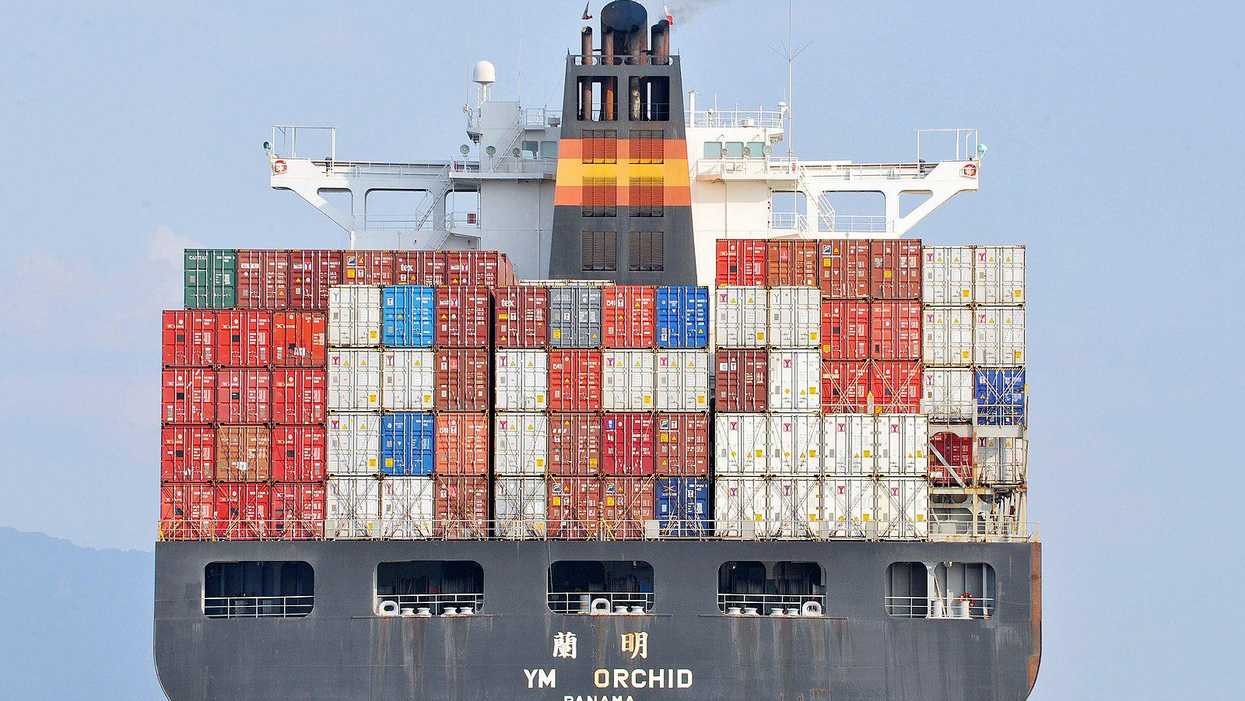
Today’s unfortunate economic trend is clearly caused by the pandemic, which warped global supply and demand patterns, creating a mismatch that has driven prices higher. Energy costs and shipping bottlenecks are two major, driving factors. One reason inflation sprouted so quickly in the U.S. is that consumer demand is booming as the economy has recovered from Covid faster and stronger under Biden than most people ever thought possible.

Still, Republicans claim Biden is driving up prices by passing large spending bills. Government spending is bad because it fuels inflation, the GOP claims over and over in the press.

Yet eager Republicans just helped pass a $768 billion defense budget. When Trump was president, Senate Republicans supported pumping trillions of dollars into the economy in order to battle the effects of the pandemic shutdown. The GOP, with help from the press, is still able to frame inflation as a problem Biden created and must be penalized for. The Post: “Republicans argued the new inflation numbers were another sign that Biden’s policies are not working.”

There’s nothing subtle about what the GOP is doing. Sen. Rick Scott (R-FL) last year told the Wall Street Journal that rising prices were a “gold mine” for Republicans, suggesting the party hopes consumers will continue to have to pay higher prices this year.

The press trumpets that GOP message. Inflation is a “political nightmare for Biden,” CNN recently stressed. The Associated Press, while conceding that consumer spending is way up, claimed inflation was “casting a pall” and that upward prices, not plummeting unemployment, dominated water cooler talk in the U.S. When weekly jobless claims recently fell to a 52-year low, the New York Times ran yet another excited Biden inflation piece on the following day’s front page. News of the historic jobless numbers ran on page B3.

It was no surprise that a recent AP poll found consumers fixated on inflation: “Income Is Up, But Americans Focus on Inflation.” Why is that? Americans are inundated with the media’s constant inflation coverage, most of which omits the fact the trend is now happening all around the world.

Reprinted with permission from PressRun

Shop our Store

Headlines

Editor's Blog

Trending

World