Tag: hakeem jeffries
Hakeem Jeffries

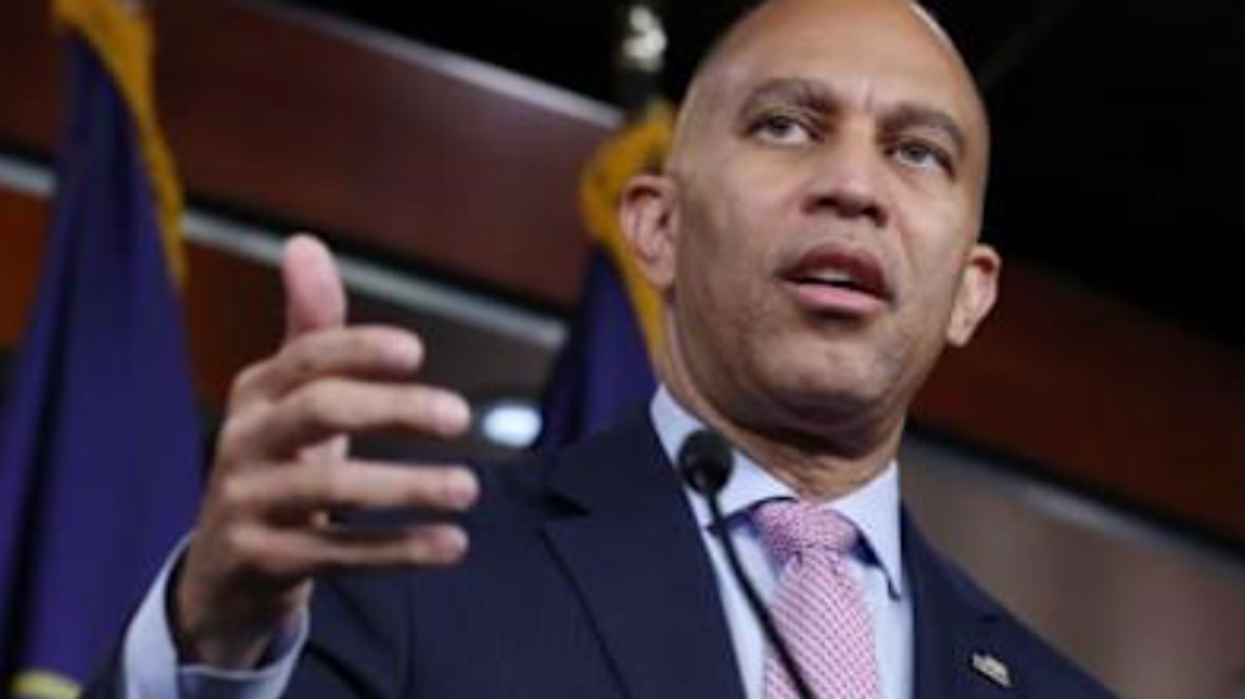
Report: Kushner Met With Jeffries As White House Braces For Democratic Congress

As President Donald Trump continues to claim he will only lose the 2026 midterms if they are rigged against him, Republicans are by contrast starting to distance themselves from him politically, as if anticipating defeat. Now a new report in The New York Times offers another clue into the GOP reading the writing on the wall — namely, a private meeting between Trump’s son-in-law and the Democrat poised to be House Speaker if Democrats retake that legislative chamber.

“Representative Hakeem Jeffries, Democrat of New York and the minority leader, met privately in recent weeks with Jared Kushner, President Trump’s son-in-law and top outside adviser, and discussed potential areas of common ground, according to five people with knowledge of the meeting,” reported The New York Times' Maggie Haberman and Annie Karni on Sunday. “The rare engagement was held in a private space in New York City, offered up by a mutual friend of the two men, according to two people with knowledge of the meeting and a third who was briefed on it. They and others were granted anonymity to discuss a meeting about which they were not authorized to speak publicly.”

Haberman and Karni added, “Through aides, neither man would comment on the session, which was described by one person with knowledge of it as a broad conversation on a range of topics. Still, its timing underscored that those around Mr. Trump were well aware of the likelihood of a Democratic-led House, and trying to foster as much of a working relationship as possible before any change. Mr. Jeffries is in line to be the speaker, were Democrats to win the majority.”

Jeffries and Kushner reportedly discussed a wide range of issues including the cost of living, housing and immigration. Both apparently believe that Trump’s chief of staff, Susie Wiles, is the MAGA insider most amenable to compromising with the other party.

“Throughout this Congress, Republicans have adopted a my-way-or-the-highway approach to governing that has failed the American people,” Jeffries told the Times in a statement that did not explicitly confirm the Kushner meeting.

He added, “In every conversation that we have with the Trump administration, we will continue to make it explicitly clear that the affordability crisis is not a hoax, and nothing short of transformational policy change is acceptable. We are fighting for an affordable America. The question is whether Republicans will join us.”

The Times added that nothing from the meeting is yet official.

“Should Democrats win the House, Mr. Jeffries would have to balance the need to keep the government funded with Democratic calls to defy Mr. Trump at every turn, and possible pleas to impeach him for a third time,” the Times wrote.

The reporters added, “Mr. Jeffries and Mr. Trump have danced around questions about what their relationship could look like next year should Democrats take control.”

Reprinted with permission from AlterNet
Why The 'Democratic Socialists' Have Repelled So Many Black And Latino Voters

Why The 'Democratic Socialists' Have Repelled So Many Black And Latino Voters

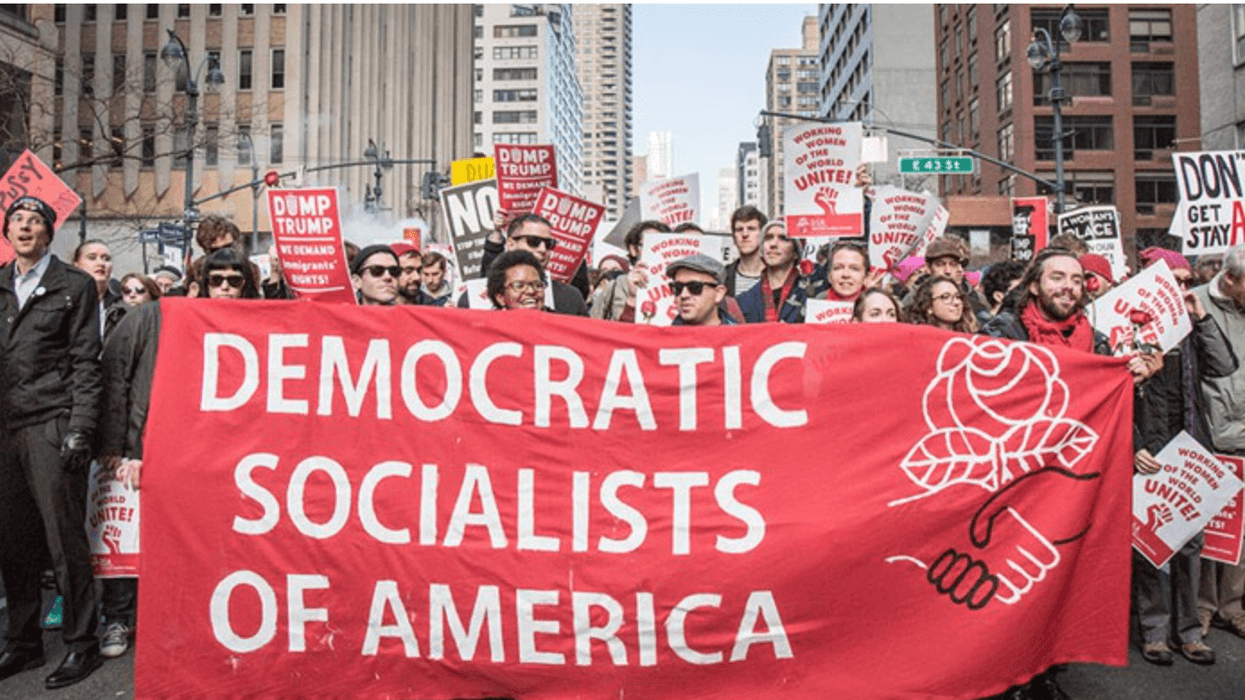
The Democratic Socialists of America use people of color as fashion accessories. Sure, they put black or brown faces on ballots, and they talk a big game about racism. But black and brown voters are not choosing their candidates. The DSA national membership chooses, and it is 85% white.

Look at the crowds. In October 2019, Reps. Alexandria Ocasio-Cortez and Bernie Sanders staged a rally at the Queensbridge housing project, across from Manhattan. Its residents are 47% black, 34% Latino and 10% Asian. News photos showed a nearly unbroken sea of white enthusiasts.

The head of the Queensbridge Resident Association called the organizers "disrespectful." They didn't even bother to place flyers in the buildings.

During the 2020 presidential race, Bernie Sanders rode high in the early Democratic primaries, where voters are mainly comfy whites. But when the primaries moved south, where Democratic voters are overwhelmingly black, he got creamed. In South Carolina, he lost to Joe Biden by 29 percentage points.

Asked to respond to that massive comeuppance, Sanders waved off the importance of those black voters. They were "conservative," he said. "But you know what? We're out of the Deep South now. And we're moving up."

That rankled several prominent black officials. "I was very concerned with that comment," said New York Rep. Hakeem Jeffries. "Black voters in the South are not very conservative" and "essentially dismissing the South was a slight at African American voters."

A recent poll in the Michigan Democratic Senate primary has 67 percent of blacks supporting the white candidate, Rep. Haley Stevens. Only 21 percent back the DSA's Abdul El-Sayed. A prominent El-Sayed supporter, William Lawrence, is on record denouncing black political leaders as a "pillar" of the "capitalist, imperialist" American establishment. Their support of the Democratic leadership, Lawrence said, "defangs the white left."

He really said that.

Sanders has a spotty history on race. He had joined the white flight out of New York City in the 1960s, when a new generation of black activists didn't care to take orders from white liberals. Sanders repaired to Burlington, Vermont, then less than one percent black. There he built a white-dominated socialist movement, using people of color as window dressing from the very start.

In his 2020 presidential campaign, Sanders' chief black intellectual, Cornel West, called Barack Obama a "Rockefeller Republican in blackface." (Also, a "war criminal.")

New York Mayor Zohran Mamdani has followed the playbook. He has an odd character named Gustavo Gordillo defending his city-run grocery stores. Co-chair of DSA's New York chapter, Gordillo is an immigrant from Peru who studied "radical Latin American cinema" in college. He tried to move up in the art world, but after apparently not succeeding, decided to try his hand as a DSA celebrity.

Gordillo is now on TV "explaining" Mamdani's plan for government groceries, one costing taxpayers an amazing $30 million. Asked whether it's OK for publicly owned stores to put nearby bodegas out of business, Gordillo chirped that if bringing down prices in the neighborhood "is enough to put someone out of business, then maybe they shouldn't have been in that business in the first place."

The bodega owners are largely Dominican, Yemeni or from other recent immigrant groups. Their little stores are entrepreneurial ventures that put families on the path of economic advancement. The owners work their tails off long into the night, often confronting criminals bent on everything from shameless shoplifting to armed robbery.

And now Gordillo is on TV arguing that bodega owners who can't compete with stores built with taxpayer dollars — and that don't have to pay rent or property taxes — are somehow deficient businesspeople.

None of the above is made up, I swear.

Froma Harrop is an award winning journalist who covers politics, economics and culture. She has worked on the Reuters business desk, edited economics reports for The New York Times News Service and served on the Providence Journal editorial board.

Reprinted with permission from Creators.

Defying GOP Leadership, House Passes Bill To Extend Obamacare Subsidies

Defying GOP Leadership, House Passes Bill To Extend Obamacare Subsidies

In a remarkable rebuke of Republican leadership, the House passed legislation Thursday, 230-196, that would extend expired health care subsidies for those who get coverage through the Affordable Care Act as renegade GOP lawmakers joined essentially all Democrats in voting for the measure.

Forcing the issue to a vote came about after a handful of Republicans signed on to a so-called “discharge petition” to unlock debate, bypassing objections from House Speaker Mike Johnson. The bill now goes to the Senate, where pressure is building for a similar bipartisan compromise.

Together, the rare political coalitions are rushing to resolve the standoff over the enhanced tax credits that were put in place during the COVID-19 crisis but expired late last year after no agreement was reached during the government shutdown.

“The affordability crisis is not a ‘hoax,’ it is very real — despite what Donald Trump has had to say,” said House Democratic Leader Hakeem Jeffries, invoking the president's remarks.

“Democrats made clear before the government was shut down that we were in this affordability fight until we win this affordability fight,” he said. “Today we have an opportunity to take a meaningful step forward.”

Ahead of voting, the nonpartisan Congressional Budget Office estimated that the bill, which would provide a three-year extension of the subsidy, would increase the nation's deficit by about $80.6 billion over the decade. At the same time, it would increase the number of people with health insurance by 100,000 this year, 3 million in 2027, 4 million in 2028 and 1.1 million in 2029, the CBO said.

Johnson (R-LA), worked for months to prevent this situation. His office argued Thursday that the federal health care funding from the COVID-19 era is ripe with fraud, pointing to an investigation in Minnesota, and urged a no vote.

On the floor, Republicans argued that the subsidies as structured have contributed to fraud and that the chamber should be focused on lowering health insurance costs for the broader population.

“Only 7% of the population relies on Obamacare marketplace plans. This chamber should be about helping 100% of Americans,” said Rep. Jason Smith, the Republican chairman of the House Ways and Means Committee.

While the momentum from the vote shows the growing support for the tax breaks that have helped some 22 million Americans have access to health insurance, the Senate would be under no requirement to take up the House bill.

Instead, a small group of senators from both parties has been working on an alternative plan that could find support in both chambers and become law. Senate Majority Leader John Thune (R-SD) said that for any plan to find support in his chamber, it will need to have income limits to ensure that the financial aid is focused on those who most need the help. He and other Republicans also want to ensure that beneficiaries would have to at least pay a nominal amount for their coverage.

Finally, Thune said there would need to be some expansion of health savings accounts, which allow people to save money and withdraw it tax-free as long as the money is spent on qualified medical expenses.

Sen. Jeanne Shaheen, D-N.H., who is part of the negotiations on reforms and subsidies for the Affordable Care Act, said there is agreement on addressing fraud in health care.

“We recognize that we have millions of people in this country who are going to lose — are losing, have lost — their health insurance because they can’t afford the premiums,” Shaheen said. “And so we’re trying to see if we can’t get to some agreement that’s going to help, and the sooner we can do that, the better.”

Trump has pushed Republicans to send money directly to Americans for health savings accounts so they can bypass the federal government and handle insurance on their own. Democrats largely reject this idea as insufficient for covering the high costs of health care.

Republicans go around their leaders

The action by Republicans to force a vote has been an affront to Johnson and his leadership team, who essentially lost control of what comes to the House floor as the Republican lawmakers joined Democrats for the workaround.

After last year’s government shutdown failed to resolve the issue, Johnson had discussed allowing more politically vulnerable GOP lawmakers a chance to vote on another health care bill that would temporarily extend the subsidies while also adding changes.

But after days of discussions, Johnson and the GOP leadership sided with the more conservative wing, which has assailed the subsidies as propping up ACA, which they consider a failed government program. He offered a modest proposal of health care reforms that was approved, but has stalled.

It was then that rank-and-file lawmakers took matters into their own hands, as many of their constituents faced soaring health insurance premiums beginning this month.

Republican Reps. Brian Fitzpatrick, Robert Bresnahan and Ryan Mackenzie, all from Pennsylvania, and Mike Lawler of New York, signed the Democrats’ petition, pushing it to the magic number of 218 needed to force a House vote. All four represent key swing districts whose races will help determine which party takes charge of the House next year.

Trump encourages GOP to take on health care issue

What started as a long shot effort by Democrats to offer a discharge petition has become a political vindication of the Democrats’ government shutdown strategy as they fought to preserve the health care funds.

Democrats are making clear that the higher health insurance costs many Americans are facing will be a political centerpiece of their efforts to retake the majority in the House and Senate in the fall elections.

Trump, during a lengthy speech this week to House GOP lawmakers, encouraged his party to take control of the health care debate — an issue that has stymied Republicans since he tried, and failed, to repeal Obamacare during his first term.

Reprinted with permission from Daily Kos


'No Violence From Right' Says Don Jr. As J6 Rioter Busted For Threatening To Kill Jeffries

'No Violence From Right' Says Don Jr. As J6 Rioter Busted For Threatening To Kill Jeffries

Just hours after New York prosecutors charged a pardoned January 6 rioter with threatening to kill House Democratic Minority Leader Hakeem Jeffries (D-NY), Donald Trump Jr. told Sean Hannity’s Fox News audience that “there is no violence from the right,” adding, “It is not both sides — it is from one side, and it was from the left alone.”

Fox viewers, however, probably did not experience any cognitive dissonance. The network all but ignored the threats against Jeffries, with its coverage on Tuesday consisting of a single largely nonspecific 36-second news read on its Special Report program, according to a Media Matters review.

CBS News’ Scott MacFarlane reported early Tuesday morning that Christopher Moynihan “was arrested Sunday after saying in text messages that he planned to ‘eliminate’ Jeffries when the top House Democrat spoke at an event in New York City on Monday” and charged with making a terroristic threat. Prosecutors noted in a court filing that Moynihan texted “Hakeem Jeffries makes a speech in a few days in NYC I cannot allow this terrorist to live,” and “Even if I am hated, he must be eliminated, I will kill him for the future." He was arraigned later that day.

Prosecutors previously said Moynihan was one of the first Trumpists to storm the U.S. Capitol during the January 6 insurrection and among those who occupied the Senate chamber that day. He pleaded guilty to five misdemeanors and was sentenced to 21 months in prison but was among the roughly 1,500 January 6 participants to receive a pardon from President Donald Trump on his first day in office.

Political violence does, in fact, target “both sides”

Donald Trump Jr.’s Tuesday night comments reflect a talking point frequently heard in right-wing spaces. In the wake of the shocking murder of Republican activist and podcaster Charlie Kirk, many in MAGA media and President Trump himself baselessly declared the case symptomatic of a terroristic left targeting a nonviolent right.

This argument flies in the face of what we’ve seen the last several years, as right-wing extremists have violently attacked not just the U.S. Capitol but also Democratic politicians and their families as well as Black, Hispanic, and Jewish Americans. Denying that reality derails any hope of a genuine conversation about political violence, a genuine scourge in this country, in favor of what appears to be a Trump administration plan to use Kirk’s death as a pretext to wield state power against its political enemies in a broad crackdown on dissent.

A Trump supporter who rioted against democracy and received a presidential pardon subsequently threatening to murder a leading Democratic politician hammers home the absurdity of the MAGA talking point.

And so Fox is hiding that news from its audience as part of its frequently deployed strategy to downplay or ignore stories that undermine its narratives. The network’s hosts and executives seem to prefer keeping viewers ignorant in order to maintain their fearfulness and fury at their fellow Americans.

Reprinted with permission from Media Matters

Shop our Store

Headlines

Editor's Blog

Trending

World