Tag: jack smith
Bondi Botch: Attorney General's Reveal Clears Jack Smith And Implicates President

Bondi Botch: Attorney General's Reveal Clears Jack Smith And Implicates President

Pam Bondi played the game by her own, illegal rules; and she still managed to completely bungle it.

Last Friday, the Department of Justice (DOJ) shipped to the House Judiciary Committee some documents about the Mar-a-Lago prosecution against Donald Trump led by Special Counsel Jack Smith. Recall that the case was more straightforward than the January 6 prosecution, and by most prosecutors’ assessment, it likely would have resulted in conviction of Trump, but for the 2024 election and the repeated pro-Trump ministrations of Judge Aileen Cannon.

Wait a second. Hasn’t the same Judge Cannon ordered documents from the case to remain sealed and barred from disclosure? And didn’t the DOJ threaten Smith it would prosecute him criminally if he revealed anything about the case in congressional testimony, while refusing to explain what the boundaries of disclosure would be?

Yes. And to be clear, Cannon’s order extends not just to Volume II of the Smith report but also to “any materials that would reveal the substance of Volume II.”

Since the report is an account for the Attorney General of the investigation, a January 13, 2023 memo to the AG laying out the state of the evidence is nothing if not a reveal of part of the substance of that report.

But as part of its campaign to rewrite the history of Trump’s crimes—and in the process discredit Jack Smith, whom Trump continues to smear as “a deranged lunatic” and “political hack”—DOJ made selective disclosures to the House Judiciary Committee of documents, including that January 13 memo. Somebody at 950 Pennsylvania Avenue concluded it would dirty Smith up. That may illustrate the paucity of documents reflecting poorly on the prosecution, which professional prosecutors on both sides of the aisle averred was basically open and shut.

In fact, the memo is replete with demonstrations of Trump’s guilt and Smith’s probity.

Congressman Jamie Raskin, the ranking Democrat on the House Judiciary Committee, seized immediately on the embarrassing revelations. He sent a letter to Bondi on March 24, accusing her of being so consumed by the “frenzied search to find any scrap of evidence” to discredit Smith that she had “quite amazingly, missed the fact that some of the documents you provided include damning evidence about your boss’s conduct and may well violate the gag order your DOJ and Donald Trump demanded from Judge Aileen Cannon.”

Raskin proceeded to call out Bondi’s selective application of the very Cannon order DOJ had argued for. “DOJ appears to view the judicial order as rules for thee—Jack Smith—but not for me,” Raskin wrote. The prosecutors’ own files, he noted, were so damning that even DOJ’s carefully curated production could not fully excise the evidence of what Trump had done.

Here’s what the memo actually revealed about the investigation of Trump for improperly taking sensitive documents from the White House at the end of his presidency and obstructing justice to keep from having to give them back.

  1. One of the documents Trump purloined was so sensitive only six people in the entire federal government could see it. Having spent years as a federal prosecutor and U.S. Attorney, I’ve handled a lot of classified material, and I have never even seen such a close-hold document. The government does not restrict access to six people unless you are dealing with something that can do grave harm to national security. This is the kind of designation reserved for information that, in the wrong hands, could get people killed or destroy critical intelligence operations. That Trump cavalierly included it in his haul was breathtaking.
  2. Trump showed a classified map to friends on his plane. In June 2022, on a flight from Palm Beach to Bedminster, prosecutors identified a classified map chief of staff. No security clearance. No remote basis in law—just, look what I have, isn’t it fun? When Republicans accused Hillary Clinton of accidentally mishandling classified material on a private server, they did cartwheels demanding prosecution. Trump knowingly waved a classified map around a private plane full of political operatives. Same people: not a word.Contrast Trump’s big-shot boastfulness with the potential consequences of his illegal conduct. As Raskin tells Bondi, if the map “is related to our military posture in the Middle East, and it was in fact shown to any foreign official, Saudi or otherwise, that would amount to an unforgivable betrayal of our men and women in uniform who are currently valiantly fighting in President Trump’s disastrous war against Iran.”
  3. The investigation was zeroing in on Trump’s reasons for absconding with national defense information for the most base, and characteristically Trumpian, reason: self-enrichment. The memo makes clear that at this point in the investigation, prosecutors had identified outstanding documents tending to show that Trump selected what he purloined in part because they “would be pertinent to certain business interests.” The prosecution team added, “We must have those documents.”Prosecutors generally don’t have to prove motive, but where they can, it sharpens everything—for the jury, for the public, for history. Watergate became Watergate once we learned that the “third-rate burglary” was undertaken in the service of Nixon’s 1972 reelection campaign.When they wrote the January 2023 memo, prosecutors knew only that the documents Trump retained “would be pertinent to certain business interests”—suggestive, but unnamed.With three years of hindsight, Raskin closes the loop. We now know what “certain business interests” means: LIV Golf, Dar al Arkan, and the $2 billion that flowed from the Saudi sovereign wealth fund into Jared Kushner’s firm within months of Trump leaving office. A month after Trump showed a classified map to passengers on his plane, he was on the golf course with Yasir al-Rumayyan, head of that same Saudi sovereign wealth fund. And Trump had separately brandished to a staffer at Bedminster what he acknowledged was a classified Pentagon plan of attack against Iran—a country whose regional rival was at that very moment positioning itself to pour billions into his family’s business ventures.Raskin’s assessment to Bondi is more than fair; it is urgent: “This glimpse into the trove of evidence behind the cover-up reveals a President of the United States who may have sold out our national security to enrich himself.”
  4. The memo establishes that the classified documents Trump purloined sat commingled with other documents he created after leaving office—a fundamental violation of the protocols governing the handling of national defense information. A 23-year-old Trump aide, now director of Oval Office operations, scanned the contents of one classified box onto her laptop, uploaded the scan to the cloud, and held it for nearly two years before a Trump lawyer retrieved it and flew commercially with a thumb drive containing the material. DOJ redacted what happened next. Nobody knows whether those documents fell into the wrong hands.

And remember, this is the document DOJ thought would damage Smith!

Raskin closes his letter with eight specific questions he asked Bondi to answer by March 31, such as what the classified map depicted and what document Trump stole that was so sensitive only six people in the federal government could see it. He added a demand that “DOJ must cease cherry-picking investigative material and produce all remaining investigative files.”

The response from DOJ and the White House was sadly unsurprising. DOJ took to social media to accuse Raskin of being “blinded by hatred of President Trump,” pronounced the department “the most transparent in history,” and dismissed the letter as “a cheap political stunt, almost as if taking cues from members of the corrupt Jack Smith prosecution team.” The White House called Raskin a Democrat “with zero credibility” who was “clinging to deranged Jack Smith and his lies.”

Notice what’s missing: any denial of the underlying facts. Not a word disputing that the six-person document exists, that Trump showed a classified map on a plane, that the documents pertained to business interests, or that a 23-year-old aide uploaded classified material to the cloud. Bondi and the administration have made name-calling their standard substitution for responses on the merits; it’s the move they reach for every time the facts close in.

Step back and take in the full picture. The Department of Justice has spent the better part of a year threatening Smith with criminal prosecution if he so much as breathed a word derived from Volume II of his report on the Mar-a-Lago documents case. But now DOJ has served up to the House Judiciary Committee hand-picked selections plainly designed to discredit Smith and the prosecution—except it did exactly the opposite. How damning and inculpatory must the rest of the file be?

It is scandalous that Volume II of Smith’s report continues to be hidden from public view, thanks to a lawless decision by Judge Aileen Cannon and the DOJ’s own Trump-serving actions. The question now is whether Bondi responds to Raskin’s letter by March 31, or whether, as her past conduct would indicate, she tries to squirm and stonewall.

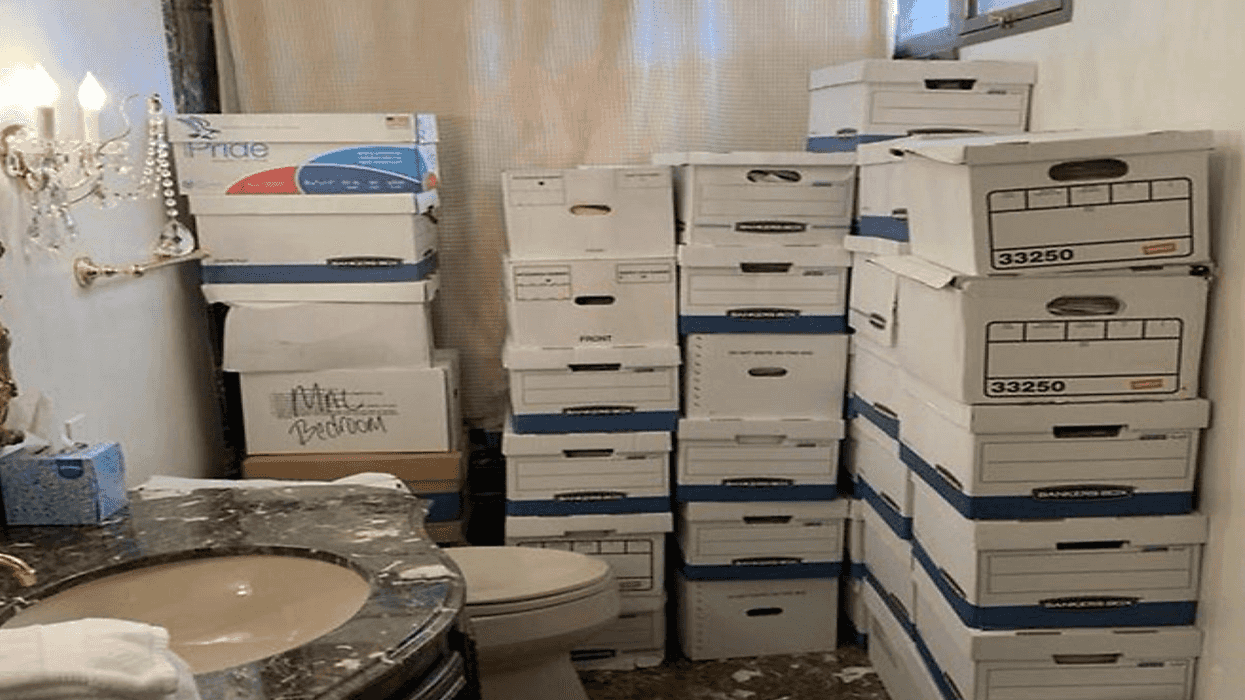
We already know the broad strokes of the crimes, and make no mistake, they were crimes. The president knowingly absconded with some of the most sensitive national security secrets in the government’s possession; he stored them pell-mell in a Mar-a-Lago bathroom and ballroom, showing them to political operatives and quite possibly to foreign interests; and he systematically obstructed every lawful effort to recover, including defying a search warrant.

It’s clear that powerful actors, including Cannon, Bondi, and Trump, will pull whatever levers they can, legal or otherwise, to keep Smith’s report buried. Still, as I’ve said before, I think that it’s likely that one way or another, one day or another, the truth will out. If nothing else, copies of the illuminating report will continue to exist after Trump’s reign of terror ends and a responsible government comes into power understanding the paramount public importance of the report.

Until that happens, it falls to us to keep the drumbeat going. What Bondi, Trump, and their allies are counting on is exhaustion and apathy. The flood of outrages, the relentless pace of scandal, the sheer volume of it—they are banking on the public’s losing the thread. Don’t let them. The record of Smith’s investigation into the most serious crimes by a sitting president in our history belongs to the people. That’s not a political position. It’s the price and privilege of self-governance.

Harry Litman is a former United States Attorney and the executive producer and host of the Talking Feds podcast. He has taught law at UCLA, Berkeley, and Georgetown and served as a deputy assistant attorney general in the Clinton Administration. Please consider subscribing to Talking Feds on Substack.

Reprinted with permission from Talking Feds.
'Damning' Prosecution Memo Suggests Trump Sought Profit From Classified Papers

'Damning' Prosecution Memo Suggests Trump Sought Profit From Classified Papers

New revelations have emerged in President Donald Trump's classified documents case, per a "damning" memo obtained by MS NOW, showing that he seemingly intended to profit from illegally retaining the sensitive materials.

According to the report published Friday, special counsel Jack Smith determined that Trump had retained "secret documents that related to his worldwide business interests," revealing a key potential motive for his dogged efforts to hang onto them.

Trump held the documents, often in questionable places, at his Mar-a-Lago resort, after departing the White House in 2021, later insisting that he had the right to retain them and that he had declassified them with his mind before leaving office. He was indicted on 32 felony counts related to his retention of the materials, and an additional eight charges for conspiracy to obstruct justice, but the case was halted after his reelection.

The revelations about Trump's business motive originate from a January 2023 progress memo produced by Smith's office, though the specific businesses and how they relate to the classified information were not disclosed.

“Trump possessed classified documents pertinent to his business interests — establishing a motive for retaining them,” the memo explained. “We must have those documents.”

As MS NOW's report explained, Trump's motive for retaining the materials had, up until now, been largely uncertain. Trump himself has long insisted that he had every right to retain the documents, likening them to the materials kept on hand by his predecessors for their presidential libraries. Some reports indicated that Trump seemed to show off the documents to impress people who visited Mar-a-Lago, while other critics warned that he may have been attempting to sell the sensitive information.

"Trump’s reason for taking hundreds of pages of classified documents when he left office in January 2021 — and then concealing them when the Justice Department subpoenaed him for their return in May 2022 — has been one of the larger mysteries of the case," MS NOW explained. "FBI agents conducting an unannounced search of Trump’s Mar-a-Lago residence in August 2022 discovered hundreds more pages of top-secret records that Trump and his lawyers had failed to return to the government after claiming they had fully returned all classified materials."

Rep. Jamie Raskin (D-MD) cited this memo in a scathing letter to Attorney General Pam Bondi on Tuesday, accusing the agency of covering up Trump's misdeeds while scrambling to find incriminating evidence against Smith.

“These new disclosures suggest that Donald Trump stole documents so sensitive that only six people in the entire U.S. government had access to them, that the documents President Trump stole pertained to his business interests,” Raskin wrote “This glimpse into the trove of evidence behind the coverup reveals a President of the United States who may have sold out our national security to enrich himself.”

The congressman added: "Apparently blinded by the frenzied search to find any scrap of evidence that could be twisted and distorted to level an attack against Special Counsel Smith (despite constantly coming up empty-handed), you have, quite amazingly, missed the fact that some of the documents you provided include damning evidence about your boss’s conduct and may well violate the gag order your DOJ and Donald Trump demanded from Judge Aileen Cannon."

Reprinted with permission from Alternet


Former Special Counsel Slaps Back At Trump Gang's 'Ludicrous' Accusations

Former Special Counsel Slaps Back At Trump Gang's 'Ludicrous' Accusations

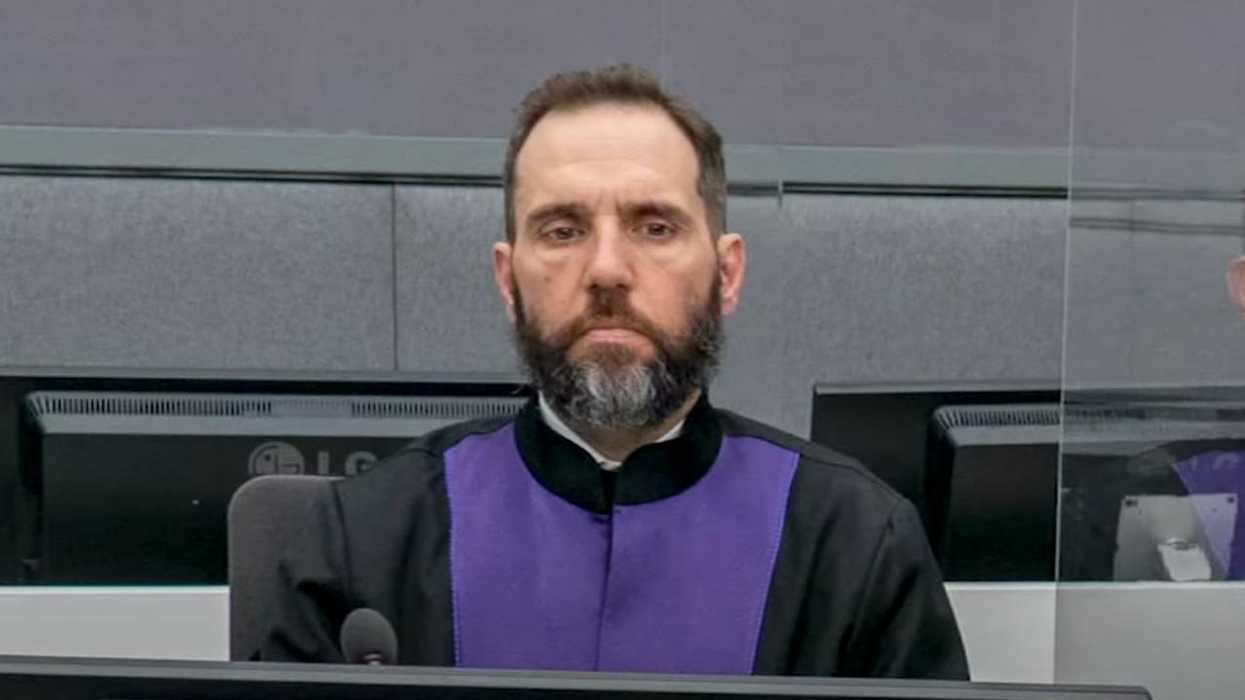
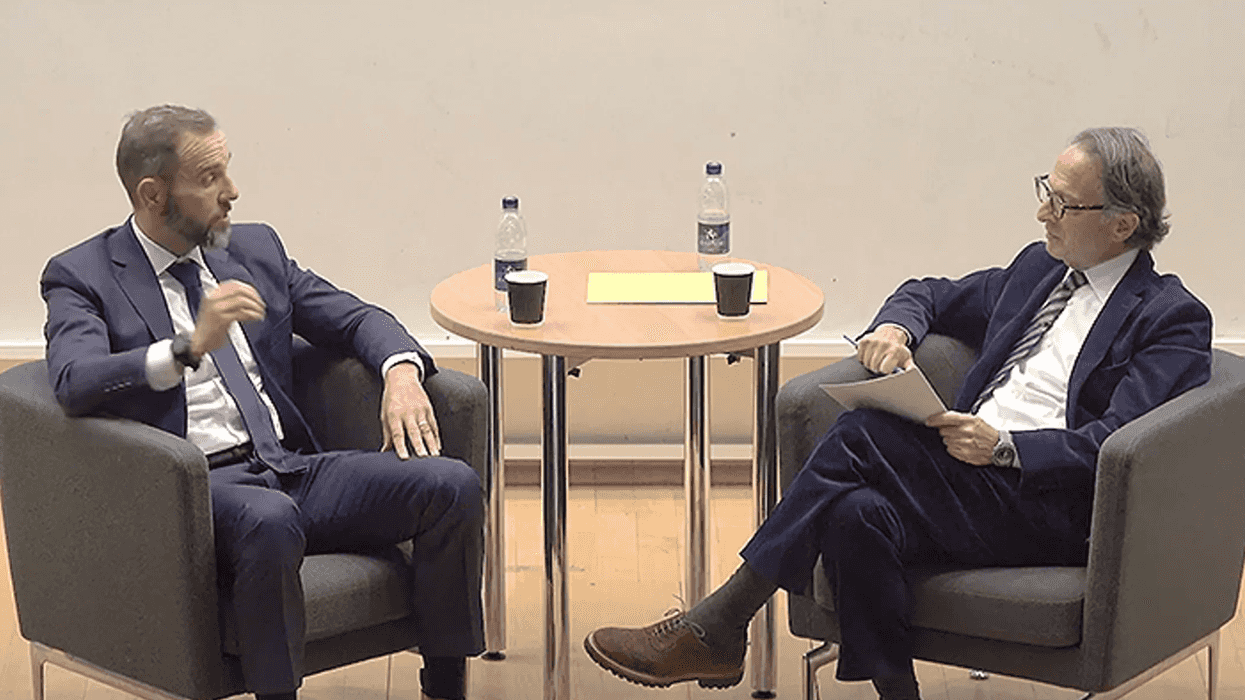
Last week brought the sighting of an endangered species—the professional federal prosecutor. After months out of view, former special counsel Jack Smith reappeared in a public interview in the U.K.

His conversation with fellow DOJ alum Andrew Weissmann came just as the Department has descended into rank betrayal of its own creed—justice without fear or favor, or politics. The recent indictments of Jim Comey and Letitia James, and reports that a grand jury is expected to indict John Bolton, leave little doubt that a once-honorable agency has fallen into a cesspool, with no credible path back so long as Trump is president.

It also followed on a ridiculous performance at an oversight hearing by Pam Bondi, who was perfectly nonresponsive and dripping with contempt—and came amid the House Judiciary Committee’s preparations under Chair Jim Jordan to subpoena Smith to testify in closed session.

That may help explain why Smith chose this moment to break his post-DOJ silence, knowing—as he must—that he is about to enter a sinister hall of mirrors, facing hostile Trump allies eager to mangle his words to fit into pre-formed talking points.

Bondi, Jordan, Trump, and others in Trump’s circle have been chanting the same mantra as if repetition could make it true: that the Biden administration “weaponized” the Department of Justice and that Trump has somehow re-righted the ship of justice.

Weissmann teed up that charge directly, and with quiet composure and a slightly raised voice, Smith gave his answer in a single word: “ludicrous.”

The charge is indeed ludicrous—but it’s also far worse. For DOJ veterans who know how the place has long operated, watching the wrecking ball that Bondi, Bove, Blanche, and company have swung through it over these past eight months is heartbreaking.

There’s a simple way to test their slanderous claims: the twin pillars of federal prosecution—the law and the facts. With limited nuance, a righteous case is one where it both establishes guilt and makes conviction reasonably likely.

That was true, for instance, of Mayor Eric Adams of New York City. Bove’s insistence that the Department lie and dismiss the case prompted the resignations of the Manhattan U.S. Attorney, the lead prosecutor, and at least three top supervisory officials in the DOJ’s Public Integrity Section. Once considered the crown jewel of the DOJ, the section has been gutted to the point where only two of the 30 prosecutors there when Trump took office remain.

That corrupt command foreshadowed what was to come. It’s unjust to abandon a righteous case, but as the adage goes, better ten guilty go free than one innocent be convicted.

Which is exactly where we are now. Trump’s DOJ brings cases against his enemies because they are his enemies. It’s the ultimate corruption—prosecutions as political reprisal, debasing American justice to the level of authoritarian regimes.

This isn’t a judgment call; it’s an iron fact. A recent survey by Emily Bazelon and Rick Hasen of fifty top D.C. lawyers—many former DOJ officials, Republicans and Democrats alike—found unanimous agreement: Trump and Bondi are using the Department to target political foes and reward allies.

That brings us back to Bondi and company. They shout that the Biden DOJ was weaponized, but are unable to point to a single prosecution unsupported by law and fact. And that’s because there wasn’t one. They may grumble and wave in the direction of the January 6 or Russia interference prosecutions, but apart from the identity of the defendants (which cuts the other way), those prosecutions plainly were handled with the care and professionalism that was once the unspoken standard of the DOJ. As Jack Smith reminded us—by word and bearing—that was the Department’s inviolable ethos.

The only thing behind their cynical claim is the identity of the defendants, starting with Trump. But justice without fear or favor not only permits but requires applying the law equally to rich and poor alike; it’s part of every prosecutor’s oath.

Nor do you have to have unquestioned faith in the pre-Trump DOJ to see the patent falsity—in a word, the ludicrousness—of the Republican attack-squad claims. We all watched the events that gave rise to the first U.S.A. v. Trump on January 6. The necessary implication of the weaponization line is that the DOJ and FBI should have watched the marauders’ brutality toward police officers and crazed efforts to stop the vote counting and decided to do nothing.

Herein lies the righteous fury of DOJ alumni. Trump’s repetition and vitriol are an effort to induce national amnesia about his crimes after losing the election. We have to remember clearly—and remind others—that Smith’s prosecutions, including Mar-a-Lago, were the opposite of weaponized: a massive, principled effort in defense of the Republic. The investigation of senators’ phone records, now smeared as “spying,” was a lawful, orthodox step to reconstruct the evidence of that woeful day.

Smith’s remarks, and the Department’s vilification of him, pose the question that should haunt us: What if DOJ had done nothing in response to the insurrection? Imagine the message—“Move along. Nothing to see here.” The outrage would have been national, and rightly so. We saw the insurrection with our own eyes. Refusing to prosecute it would have been a betrayal of the Constitution itself.

And it’s even more offensive to pair that false “weaponization” claim with the notion that Trump’s DOJ is now “by the book,” when it has discarded the Principles of Federal Prosecution and aligned with the priorities outlined in Project 2025.

It’s pure Orwell: truth is fiction.

The lies about his cases are only the beginning of the vicious treatment Smith has had to endure. He and Weissmann talked about the purging of his whole team—the hand-picked best of the best—for the sole reason that they worked with him. As he was throughout, Smith was unruffled and dignified; he praised the team to the stars and expressed confidence it would work out for everyone. But it has to be a particular sort of pain to see your loyal cadre vilified and forced out of government and not to be able to do anything about it.

In any legitimate legal system, bringing a case for political reasons would be a fireable offense. In Trump’s DOJ, refusing to is.

For those of us who’ve worked inside the Department of Justice, seeing Smith was like glimpsing a visitor from a lost world where the moral compass of federal prosecution still pointed due north.

What struck me most in his remarks wasn’t the content. Former DOJ’ers could have written his talking points in advance. It was his bearing—his quiet assurance that justice must remain separate from politics and that, in the DOJ to which he dedicated much of his professional life, it did.

Contrast that calm composure with Bondi’s histrionics at the oversight hearing. If you played both tapes side by side with the sound off, it would be apparent who was telling it straight and who wasn’t.

That’s why Smith’s tone—precise, almost understated—was so affecting. He wasn’t defending himself so much as defending what it means to be a federal prosecutor. Every sentence reaffirmed the moral geometry of the old DOJ: dispassionate evaluation of evidence, respect for institutional guardrails, modesty before the awesome power of the state. He might as well have been reading from the Department’s handbook—except that the handbook has now been burned.

It was poignant to watch him speak so quietly about truths so obvious. But it was also clarifying. The battle for the DOJ’s soul is no longer theoretical. It’s happening in real time, and the forces of good are getting swamped.

For now, corrupt hands hold the reins at the Department of Justice. Unconstitutional conduct—beginning with reprisal prosecutions—is the modus operandi of federal law enforcement. But even during what we can hope is a temporary suspension of justice without fear or favor, we must call out Trump’s perversion of the Department while defending the integrity of the institution he inherited. If Trump’s Orwellian characterization of the Department’s history gains purchase, the rule of law itself becomes the fiction.

The current DOJ’s version of justice is an inversion of everything the Department once stood for—and unless we confront it head-on at every turn, ludicrous will soon feel far too gentle a word.

Harry Litman is a former United States Attorney and the executive producer and host of the Talking Feds podcast. He has taught law at UCLA, Berkeley, and Georgetown and served as a deputy assistant attorney general in the Clinton Administration. Please consider subscribing to Talking Feds on Substack.

Reprinted with permission from Talking Feds.
Eric Trump: Jack Smith 'Planted' Folders At Mar-a-Lago (When He Was Overseas)

Eric Trump: Jack Smith 'Planted' Folders At Mar-a-Lago (When He Was Overseas)

Eric Trump is using a series of right-wing media appearances to baselessly accuse former special counsel Jack Smith of “planting” evidence that the FBI uncovered during its search of President Donald Trump’s Mar-a-Lago resort and residence.

MAGA figures have baselessly accused the FBI of planting evidence since the agency executed its warrant in August 2022. But Eric Trump’s version of the conspiracy theory introduces a glaring new flaw: Smith was prosecuting war crimes overseas at the time of that search and didn’t take over the federal probe of the then-former president’s handling of classified documents until more than three months later.

Trump, who is overseeing his father’s business holdings alongside his brother, Don Jr., theoretically holds no position in the administration. But he has been on a tour of right-wing media in recent days making the case that the politically motivated indictments of Trump enemies are justified and promoting his new memoir, which positions the Mar-a-Lago search as proof that “America itself was under siege.”

The FBI executed a search warrant at Mar-a-Lago on August 8, 2022, after developing evidence countering a Trump lawyer’s statement that all classified documents that had been stored on the premises were turned over in response to a subpoena. The agents reportedly “left with 26 boxes, including 11 sets of material marked as classified, comprising scores of additional documents. One set had the highest level of classification, top secret/sensitive compartmented information.” Trump ultimately faced 32 counts of willful retention of national defense information, among other federal charges, but the case was dismissed by a Trump-appointed judge.

Trumpists have proposed two different versions of a baseless theory that the FBI had “planted” evidence. First, Trump and his right-wing media allies suggested immediately after the search that the FBI might have brought classified documents to Mar-a-Lago to frame Trump for possessing them improperly (a judge ultimately protected him from having to try to prove the charge in court). Then, after the Justice Department included a photo of documents with classification markings seized in that search in an August 30, 2022, filing, Trump’s supporters suggested that it was somehow improper for agents to take the documents out of the boxes in which they were stored and lay them on the floor so that the folders with classified markings could be seen in the photos. (Classified documents were reportedly found at Mar-A-Lago in locations including “a shower, an office, a bedroom and a ballroom.”)

Eric Trump, in three separate interviews with right-wing media figures, seemed to toggle between which interpretation he was trying to get across — but in either case, he specifically blamed Smith.

“These are the biggest criminals in the world, back to Jack Smith — he was planting classified folders on my father’s office at Mar-a-Lago,” he told Steve Bannon on October 7.

“And then in the aftermath, we find out that Jack Smith was planting classified folders, you know, on the carpet,” he said to Megyn Kelly on October 10. “You remember those perfectly orchestrated photo shoots where everything's fanned out? Like my father just leaves classified folders just perfectly fanned out on a beautiful carpet in the middle of his office.”

“Jack Smith, he dug so deep that we found out that he was actually planting classified folders in Mar-a-Lago,” he told Fox News’ Sean Hannity on October 14.

Whichever argument Eric Trump is trying to make, his specific claim that Smith “was planting classified folders” during the August 8, 2022, search, is obviously and absurdly false. Smith did not become special counsel and take over the classified documents case until November 22, 2022. At the time of the Mar-a-Lago search, he was working in the Netherlands as chief prosecutor for a special court investigating war crimes stemming from the 1990s war in Kosovo.

But as we’ve seen over the past few weeks, Republicans are unconcerned with how thin the allegations are as long as they can be used to target their political foes — and Smith is clearly one such target.

Shop our Store

Headlines

Editor's Blog

Corona Virus

Trending

World