Tag: james talarico
Danziger Draws

Danziger Draws

Jeff Danziger lives in New York City and Vermont. He is a long time cartoonist for The Rutland Herald and is represented by Counterpoint Syndicate. He is a recipient of the Herblock Prize and the Thomas Nast (Landau) Prize. He served in the US Army in Vietnam and was awarded the Bronze Star and the Air Medal. He has published eleven books of cartoons, a novel and a memoir. Visit him at jeffdanziger.com.

U.S. Senator Jon Ossoff (D-GA).

What Will It Take For Democrats To Flip The Senate? A State-By-State Cheat Sheet

The House of Representatives will be a Democratic-led institution after this November’s midterm elections. The big question is whether Democrats can also recapture the Senate—a chamber that, under any rational circumstances, shouldn’t be competitive.

It’s a brutal map for Democrats. Yet, thanks to President Donald Trump’s toxic incompetence and his obsequious party, it’s now in play. This is the first in a regular feature tracking the most competitive races throughout this election season.

Republicans hold 53 seats in the Senate, meaning Democrats need to net four to get past Vice President JD Vance’s tiebreaking vote.

1. North Carolina (R-open, Lean D)

Former Democratic Gov. Roy Cooper has led in every single poll so far as he faces former Republican National Committee Chair Michael Whatley in this open-seat race.

Time after time, Democrats have come close in recent Senate contests in the Tar Heel State. In 2020, the race appeared within reach until a late scandal derailed the Democratic nominee, who ultimately lost by less than two percentage points. In 2022, Republicans won again by about three points. Those margins mirror the state’s Republican lean at the presidential level, underscoring just how evenly divided North Carolina is.

Nothing can be taken for granted. But Democrats have shown they can win statewide, and Cooper remains a popular figure after two terms as governor. He also has a shockingly strong record, having run in six statewide races and won all of them.

2. Maine (R-incumbent, Lean D)

How tough is this cycle for Democrats? This is a Republican-held seat in a state won by Democratic presidential nominee Kamala Harris in 2024.

Once again, Republican Sen. Susan Collins is at the center of one of the most competitive races on the map as she seeks a sixth term in a state that consistently leans Democratic at the presidential level.

This is one of Democrats’ best pickup opportunities, but the path isn’t straightforward. Collins has survived tough races before—most notably in 2020, when she won reelection even as Joe Biden carried the state at the presidential level. Collins continues to benefit from a reputation as a moderate willing to break with her party. At the same time, she’s the only Republican senator representing a state that has largely rejected Trump in every election.

The Democratic primary is still taking shape, with Gov. Janet Mills and oyster farmer Graham Platner facing off in an establishment-vs.-insurgent battle. Emerson College’s latest poll of the race shows Platner dominating both the primary and general. But Collins is a survivor, and history says she can’t be counted out.

At this point, if Democrats can win their two best pickup opportunities, it lifts them to 49 seats in the Senate. For a majority, Democrats need to hold the next two seats, in Georgia and Michigan, and then flip two more.

3. Georgia (D-incumbent, Lean D)

Sen. Jon Ossoff is the most vulnerable Democratic incumbent on the map, defending a seat in a reddish-purple state.

Margins here are razor-thin. Ossoff won his 2021 runoff election by just over 1 point, while fellow Democratic Sen. Raphael Warnock won both his races in 2021 and 2022 by less than 3 points.

Republicans are coalescing around Rep. Mike Collins and will invest heavily. The only public poll released this year, from Emerson College, gives Ossoff a lead of 48 percent to Collins’ 43 percent. In this climate, that should be enough—but there’s little room for error.

4. Michigan (D-open, Lean D)

Democratic Sen. Gary Peters’ retirement has created an open-seat race in Michigan, one of the most important battlegrounds in the country.

The Great Lakes State has leaned Democratic in recent cycles, with the party scoring big wins in state-level races, like the governorship. But federal contests remain competitive. Trump carried the state in 2016, narrowly lost it in 2020, and won it back in 2024, the same year that Democrat Elissa Slotkin won her Senate race by 0.3 points.

Both parties have competitive primaries that won’t be settled until Aug. 4, unusually late in the cycle. Three Democrats—state Sen. Mallory McMorrow, U.S. Rep Haley Stevens, and progressive activist Abdul El-Sayed—are polling neck and neck right now. And without clarity on the candidates, this is currently Lean D, largely due to the broader political environment. It’s difficult to see a Republican fully escaping the drag of Trump’s tariffs, wars, and inflation.

If Democrats hold Georgia and Michigan, they remain at 49 seats in the Senate. But to win a majority, they need to pick up two more among Alaska, Iowa, Nebraska, Ohio, and Texas. See how tough this task is? Yet, thanks to Trump, it’s not out of arm’s reach.

5. Alaska (R-incumbent, Toss-up)

Republican Sen. Dan Sullivan is seeking reelection in Alaska, a state that defies easy categorization—solidly Republican on paper but with a strong independent streak. For example, the state legislature is run by a bipartisan coalition that sidelines MAGA hard-liners.

Alaska consistently votes Republican at the presidential level—a Democratic nominee has won it only once since it became a state—but its large independent electorate and political culture reward candidates who distance themselves from party orthodoxy. That’s helped figures like moderate Republican Sen. Lisa Murkowski repeatedly win. Ranked-choice voting also adds another layer of unpredictability.

Former Democratic Rep. Mary Peltola, who defeated former Gov. Sarah Palin in Alaska’s 2022 House race, is the Democrats’ dream candidate. Public polling shows a tight race, with recent surveys giving her a narrow edge. It’s always difficult to defeat an incumbent, especially one aligned with the state’s partisan lean. But Peltola is a strong candidate, and this is a favorable climate.

6. Ohio (R-incumbent, Lean R)

Ohio shouldn’t be in play. Trump has carried this onetime battleground by eight points or more in all three of his campaigns. It was remarkable that liberal Democratic Sen. Sherrod Brown survived as long as he did, holding office for eighteen years. And even in defeat in 2024, he lost by less than four points while Trump won in the state by 11 points.

Brown is thankfully back this year, running in the special election for the seat vacated by Vice President JD Vance. His opponent is appointed Republican Sen. Jon Husted.

Husted’s lack of true incumbency, combined with Brown’s crossover appeal, gives Democrats a real pickup opportunity. Polling shows a tight race, with both candidates in the mid-40s. That’s a dangerous place for Brown since undecided voters tend to break in favor of the state’s partisan lean. He may be strong enough to defy that, and the national environment helps. But for now, this remains the GOP’s race to lose.Republican

7. Texas (R-incumbent, Likely R)

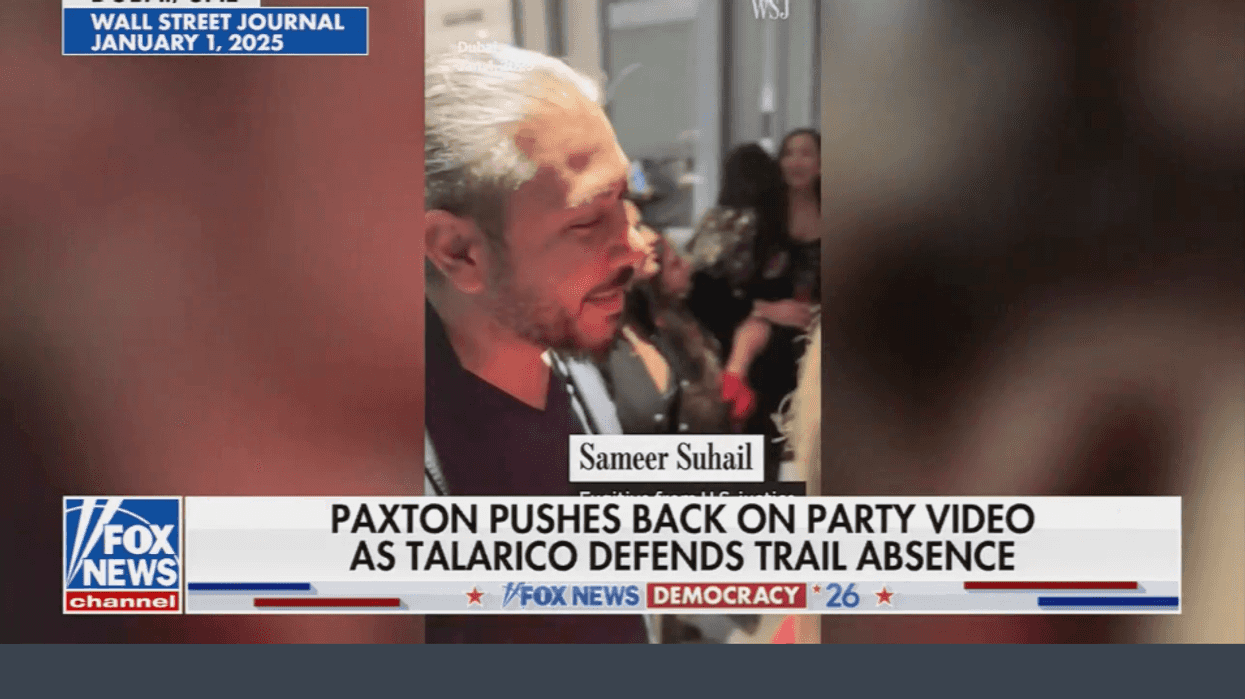
Republican Sen. John Cornyn is seeking reelection in a longtime GOP stronghold. But MAGA has a habit of sabotaging themselves, and Texas Republicans are flirting with exactly that by rallying around Ken Paxton, the unbelievably corrupt state attorney general who was impeached by members of his own party. (The state Senate acquitted him, so he has remained in office.)

Polling shows a familiar pattern: Talarico in the mid-40s. That usually means undecideds will lean Republican. The question is whether the current climate disrupts that pattern. A Paxton nomination would make that more plausible. For now, though, this remains likely Republican.

8. Nebraska (R-incumbent, Likely R)

Dan Osborn, a political independent and former union leader, nearly pulled off a shocker in 2024, coming within 7 points of upsetting Republican Sen. Deb Fischer, even as Trump carried the state by over 20 points. That’s the value of running without a “D” beside your name in a state as red as Nebraska.

Running again, Osborn faces ultrarich Republican Sen. Pete Ricketts, who is an imperfect fit in a moment defined by economic anxiety. Trump’s tariffs, deportations, and cuts are hitting rural Nebraska especially hard.

The only recent poll comes from the Osborn campaign and shows a tight race, as you’d expect it to. In 2024, undecided voters did the thing and broke toward Republicans on Election Day. Osborn faces that same challenge this year. Still, if anyone can make this competitive, it’s Osborn—and this environment gives him a shot.

Other states to watch

Republicans believe they can make the Democratic open seat in New Hampshire competitive. And there’s a plausible scenario where Iowa joins this list as well.


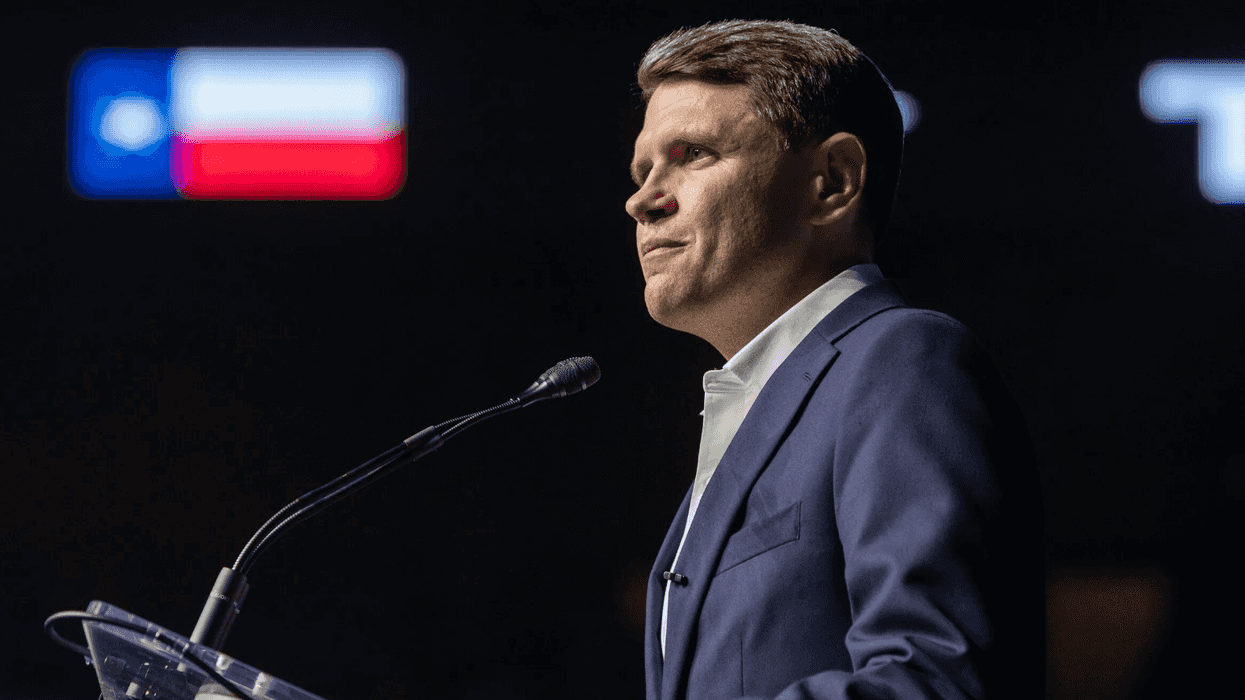
In Texas, James Talarico's Primary Victory Sets Up A Real Senate Race

In Texas, James Talarico's Primary Victory Sets Up A Real Senate Race

There is something afoot in Texas.

In what is likely the most-watched and most-contentious Senate primary of the cycle, for both parties, Democrats nominated state House Rep. James Talarico, while the top two Republicans are headed to a runoff after both failed to hit 50%. That race pits Sen. John Cornyn against crooked Texas Attorney General Ken Paxton. Cornyn’s crime is being a relatively normal conservative Republican at a time when MAGA demands the worst of the worst.

On the Democratic side, Rep. Jasmine Crockett entered the Senate race after she was drawn out of her district by the GOP’s mid-decade redistricting gambit. She has built a strong base of support with her wildly entertaining trolling of President Donald Trump and his lackeys in the Republican Party.

Yet it was that very public and acerbic persona that made her a risk for Democrats in a general election. At a time when Republicans are facing a demoralized and tepid base electorate, Crockett—an outspoken Black woman—threatened to give them new motivation to vote. Talarico looks like a generic white guy and speaks like a preacher (because he’s a Presbyterian seminarian), and that has advantages in a conservative state like Texas.

Yeah, it’s icky to go there, but it’s a political reality. In our discussion this past weekend on the 2028 Democratic presidential field, many of you advocated for white men precisely because it’s the safer bet in our f’d up country. It’s the reason South Carolina’s Black electorate overwhelmingly chose Joe Biden in their 2020 presidential primary: that community knows better than anyone the challenges our country still faces in electing women and candidates of color. In Texas, Latinos, feeling particularly burned by Trump and hungry for blood, went heavily for Talarico.

Crockett was never able to fully neutralize the electability argument, even though polling showed little difference between the two candidates (with Talarico polling only a sliver better). And given the stakes to Texas and our nation, there is real reluctance among Democratic voters to take risks.

Ironically—and despite the efforts of angry stans online—this wasn’t a simple progressive vs. conservadem fight, with race and gender serving as shorthand for ideology. Yes, Crockett is a member of the House Progressive Caucus, but she also had strong detractors on the progressive left who pointed to her donor history, including PAC money from BlackRock and Lockheed Martin. “To call her in any way the progressive or leftist candidate is a misnomer,” Adam Green of the Progressive Change Campaign Committee told NOTUS. “She’s a somewhat effective anti-Trump troll and resistance liberal, but is not one of us when it comes to a progressive populist or anti-corporate warrior.”

That’s a harsh assessment, and probably too simplistic, but it does highlight how messy the ideological lines in this race really were. But given electability concerns, ideology was at best a sideshow.

For his part, Talarico has become a genuine political sensation over the past few years, thanks largely to a style of messaging that Democrats rarely deploy anymore. A former public school teacher and now a seminary student (with a year remaining in his studies), he speaks openly about faith while making an unapologetically progressive case on issues like abortion rights, LGBTQ equality, and economic fairness.

Instead of avoiding religion, he leans into it—quoting scripture while arguing that Christian nationalism has corrupted the faith and that progressive values are closer to the teachings of Jesus than the politics of the religious right. This is stuff you and me both understand intrinsically, but Democrats have failed to effectively message.

That combination—progressive politics delivered in the language of morality and faith—is unusual enough in modern Democratic politics that it’s helped propel Talarico far beyond Texas. It also comes wrapped in a cultural authenticity that resonates in Texas, where he needs actual votes. He’s a teacher, a preacher-in-training, and a guy who can talk about faith, community, and public service in a way that feels natural rather than focus-grouped.

Clips of his speeches and legislative moments have gone viral online, building a national following long before this Senate race took off. The Trump administration sees him as enough of a threat that they are now investigating The View for hosting him, while CBS spiked a Stephen Colbert episode featuring him out of fear of governmental reprisal.

Crockett has it too, but in a different way. Her viral moments come from her willingness to verbally body-slam Republican nonsense, which Democratic voters understandably love after years of watching Democrats bring a spork to a gun fight.

But when it came time for Democratic primary voters to choose between two charismatic candidates, electability loomed large. Both resonate nationally, but all that matters here is what Texans think.

Lone Star Democrats want to win, and they want to win badly. With Paxton a very real possibility on the Republican side, that urgency has only grown.

So when Texas Democrats made their choice, they went with the candidate they believed best fit their state.

In this political climate, Crockett might very well have won.

Talarico certainly can.

Meanwhile, the two noxious Republicans get to blow their cash and beat the crap out of each other for the next three months. Perfect.

Markos Moulitsas is founder and editor of the blogging website Daily Kos and author of three books.

Reprinted with permission from Daily KosReprinted with permission from Daily Kos

Stephen Colbert

Stephen Colbert, Equal Time And The True Public Interest

Stephen Colbert was right to be mad. His bosses at CBS put the kabosh on an interview he wanted to do with a Texas Senate candidate on his late-night talk show. But you can't just blame CBS. The fault lies, as it so often does these days, in the Trump administration, which last month announced new "guidance" from the Federal Communications Commission requiring "equal time" on entertainment-oriented talk shows.

The guidance was clearly aimed at Trump's targets on late-night TV, including of course, Jimmy Kimmel of ABC, who has been targeted as well by Trump's FCC chair, Brendan Carr. It grows out of the longstanding conservative complaints about the late-night liberal conspiracy and the tendency of liberal hosts and guests to dominate. So what do you do? This is not the small government/libertarian crowd. These are big government conservatives. Regulate the hell out of them is what they are doing.

Until now, the broadcast industry — following the FCC's lead — had taken the position that talk shows, like news shows, were exempt from the "public interest" requirement that stations must give rival candidates equal opportunities to buy time and appear on tv. Indeed, the FCC ruled explicitly in 2006 that interviews on The Tonight Show with Jay Leno were exempt. Then came the new guidance. "This major announcement from the FCC should stop one-sided left-wing entertainment shows masquerading as 'bona fide news,'" Daniel Suhr, the president of the Center for American Rights, said at the time the guidance was issued in January.

Or, as Carr himself put it on X: "For years, legacy TV networks assumed that their late-night & daytime talk shows qualify as 'bona fide news' programs — even when motivated by purely partisan political purposes. Today, the FCC reminded them of their obligation to provide all candidates with equal opportunities."

Or no opportunities at all. Forget the banner of free speech. As the Colbert example clearly demonstrates, the consequences of guaranteeing equal time for all candidates are most likely to be no time for any of them. What you're really telling talk shows to do — including daytime shows like The View — is to stay away from politics, which is absolutely the last message that government should be sending.

The FCC has one Democratic member. She issued a statement when the new guidance was issued calling what her fellow Commissioners were doing "an escalation in this FCC's ongoing campaign to censor and control speech. Broadcasters should not feel pressured to water down, sanitize or avoid critical coverage out of fear of regulatory retaliation."

Clearly, that is what happened at CBS. While Colbert said he expected the network to do more to protect him, CBS itself told The New York Times that it had offered him "guidance" (clearly, the word of the day) on how to comply with the new version of the rule, including by offering equal airtime to the two other Democrats in the race.

The larger question — whether the public interest is in fact served by a rule adopted in 1927 to protect against then-powerful radio networks exerting undue influence on politics — is not one CBS alone can easily address. Brendan Carr knows his answer. He's all in for regulation in what he sees as the public interest. Whether the courts and Congress will go along remains to be seen.

Susan Estrich is a celebrated feminist legal scholar, the first female president of the Harvard Law Review, and the first woman to run a U.S. presidential campaign. She has written eight books.

Reprinted with permission from Creators.


Shop our Store

Headlines

Editor's Blog

Corona Virus

Trending

World