Big Oil Funds Project Teaching Judges 'Healthy Skepticism' of Climate Science
This story was originally published by Pro Publica
For many months, conservative lawmakers and political operatives have been targeting the scientists and lawyers behind the Climate Judiciary Project, a program meant to educate the courts about climate science, alleging that their effort constitutes a conspiracy to influence federal judges and persuade them to rule against the oil industry.
Now, just as congressional investigators are escalating a formal inquiry into the project, a separate program closely aligned with the fossil fuel industry and free-market conservatives is hosting a symposium for 150 judges in Nashville, Tennessee. The program, run by the Antonin Scalia Law School at George Mason University, also aims to educate judges, but in a way that prioritizes American business interests and questions climate science.
The dueling efforts come as a number of significant lawsuits seeking to hold fossil fuel companies accountable for climate damages are making their way through the courts and as oil-industry-aligned attacks on climate policies, and the legal arguments supporting them, have been sharply increasing.
ProPublica reported in April that political operatives connected to the conservative activist Leonard Leo were coordinating an effort across 11 states to pass laws shielding fossil fuel companies from liability for climate harm. In the past three weeks, similar liability waiver bills have been introduced federally in both the House and the Senate. Last week the Florida attorney general’s office launched an investigation into alleged judicial influence by the organization that oversees the Climate Judiciary Project, the Environmental Law Institute, a nonpartisan legal scholarship group funded until recently by the Environmental Protection Agency.
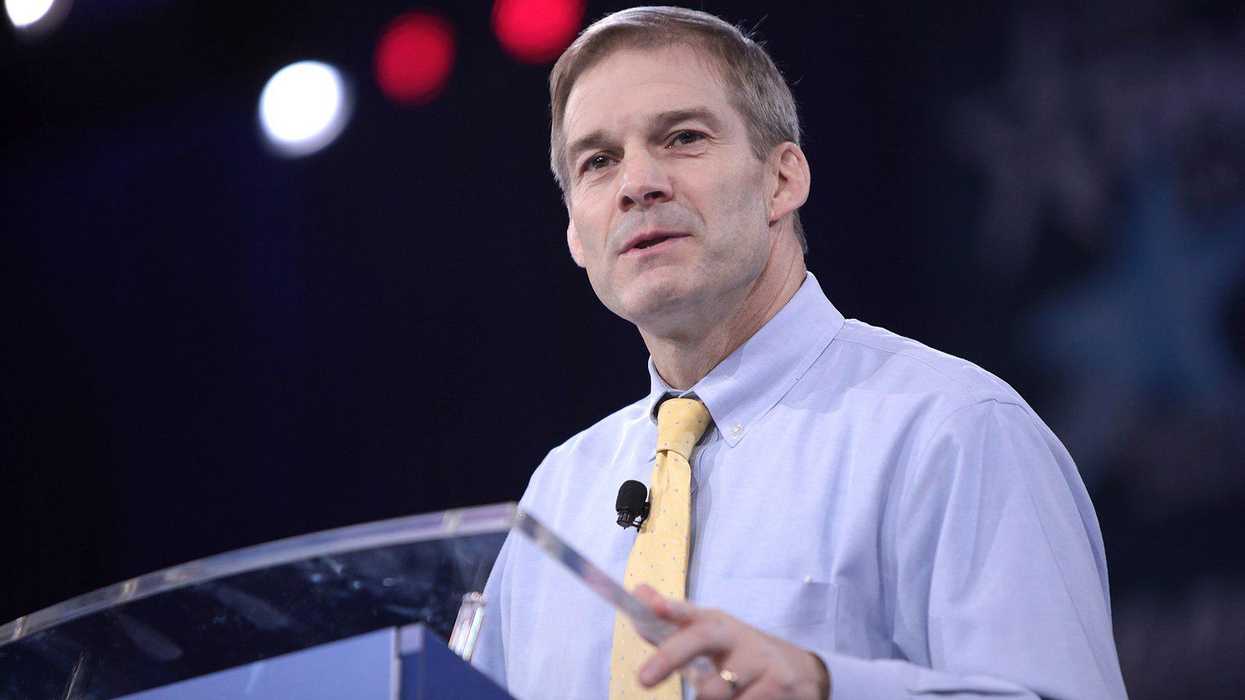
These developments come on the heels of a campaign last winter to get the Federal Judicial Center, the publishing body for the federal court system, to retract a roughly 90-page chapter devoted to climate science from the latest volume of its technical manual for judges. Twenty-two Republican attorneys general wrote to Rep. Jim Jordan of Ohio, the Republican chair of the House Judiciary Committee, demanding that the committee investigate the center’s publication of material about how to weigh scientific evidence about climate and the weather because the chapter’s authors appeared to be biased.
In their letter, they noted the authors work for Columbia University’s Sabin Center for Climate Change Law and alleged the chapter was influenced by Michael Burger, the executive director of the center who works closely with the law firm Sher Edling, which represents several climate plaintiffs. The Republican attorneys general also noted that some staff at the Sabin Center work with the Environmental Law Institute and the Climate Judiciary Project. Although the chapter had been peer reviewed and approved by the Federal Judicial Center, as well as by the National Academies of Sciences, Engineering and Medicine, the center retracted the climate chapter in February.
On April 28, Jordan went a step further, issuing letters accusing Burger, the Environmental Law Institute and Sher Edling of bias, conspiracy and collusion. Jordan demanded that the three parties produce private communications, receipts and records of funding sources, and that the recipients sit for interviews before the committee.
The Sabin Center, Jordan wrote, is “producing materials to be used to bias federal judges about novel climate-related legal theories” and coordinating to bring climate-related litigation to court. The activity raises questions about “the integrity and independence of the judicial process” and “ex parte contact with courts,” Jordan wrote, referring to the improper conduct of contacting a judge without opposing counsel present to argue issues related to a pending case.
Neither Sher Edling, the Sabin Center nor Burger responded to a request for comment. A representative for the Environmental Law Institute stated in an email that the Climate Judiciary Project “does not participate in litigation, coordinate with any parties related to any litigation, or advise judges on how they should rule on any issue or in any case. The goal of CJP is to provide judges with the tools they need to understand climate science and how it arises in the law.”
Jordan’s office replied to a request for comment by reasserting the statements in the letters it sent, and it did not respond to a detailed list of questions.
Amid the allegations of impropriety and conflicts of interest though, the program at George Mason University has scarcely been noticed.
The George Mason conference, called the “Judicial Symposium on Scientific Methodology, Expert Testimony, and the Judicial Role,” opened the day after Jordan sent out his letters and will continue through Saturday, May 2. It is run by the university’s Law and Economics Center, which oversees a project called the Judicial Education Program. The center is funded in part by ExxonMobil, which is a defendant in several of the climate lawsuits. ExxonMobil did not respond to a request for comment.
The conference includes speakers who have filed amicus briefs — filings by people who aren’t part of the case but have a strong interest in its outcome — in favor of the oil industry in several of those cases, as well as at least one lawyer who has represented fossil fuel companies in court. The reading assignments prepared for the judges include a Substack post by a notable climate contrarian accusing the authors of the retracted climate chapter in the federal court’s reference manual of including material by Burger and hiding his authorship. They also include a law journal argument that a key tenet of climate science used to identify the cause of disasters should be inadmissible in their courtrooms. One session, titled “Debates on the trustworthiness of tools to evaluate science in the courtroom,” focuses entirely on the federal courts’ reference manual.
In an emailed response to ProPublica, Donald Kochan, the executive director of George Mason’s Law and Economics Center, which organized the event, presented the symposium as a robust and objective discussion. The program’s advisory board, he wrote, is a politically and jurisprudentially diverse group including “some of the most progressive jurists in the country, including on climate issues.” Kochan, who did not respond to a list of specific questions, added that lectures are by leading academics on science and law and that he invited the authors of the judicial reference manual to speak but they declined, as did several others who he suggested would have represented more centrist viewpoints on the climate issue.
The conference is one of dozens of meetings, retreats and “intimate weeklong gatherings” that are regularly hosted by the Law and Economics Center as part of an initiative to instill free-market values and greater knowledge of the economic consequences of policy in judicial decision-making. In 2016 the law school renamed itself after the former Supreme Court Justice Antonin Scalia and the center expanded with $30 million in gifts, adding faculty and scholarships and launching additional “colloquia.” The center today runs several parallel initiatives under the umbrella of the Judicial Education Program, each aimed at gathering judges together and educating them. The symposium on science and evidence is one of these events.
According to an internal fundraising document from 2020 obtained by ProPublica, the gatherings are often luxurious all-expenses-paid affairs, created to foster lasting relationships and opportunities to network with judges. The document included a solicitation for more than $930,000 sent by the center to the Charles Koch Foundation, a libertarian organization that provides grants to universities and scholars. At the time of the proposal, more than 5,000 judges representing all 50 states had attended at least one of the organization’s programs, the document stated.
The goal of the symposium, according to the document, is to sway judges toward a libertarian economic viewpoint in their rulings — the very sort of “biasing” that Jordan accused the Sabin Center and the Climate Judiciary Project of.
“The goal of this project is to expose judges to the intellectual history of the role of capitalism, economic freedom, and a constitutionally limited government as fundamental features of a liberal society,” the document says. It is also to establish a community of like-minded justices “with synergistic effects on the judiciary as a whole” and to influence the outcome of cases that come before the courts. Judges, the fundraising proposal continues, “urgently need to cultivate an understanding” of economic analysis and its relevance to the legal system if they “are to issue decisions that advance the rule of law and America’s free enterprise system.”
According to the George Mason University website, the Law and Economics Center’s 2025 funders include DonorsTrust, a dark money pass-through organization meant to shield the identity of contributors. DonorsTrust is often used by organizations tied to Leo, who brought George Mason a $20 million gift, in addition to $10 million from the Charles Koch Foundation, that made expansion of the law school’s program possible.
This weekend’s symposium in Nashville is one of the most significant parts of the center’s outreach to justices. According to the 2020 fundraising letter, the goal of such gatherings is to challenge the status quo on science. The conference “will give judges a rounded understanding and healthy skepticism of the invocations of ‘science’ that lurk in the background of lawsuits they are hearing,” the center’s then-director wrote, and it will help judges understand that “so much of what passes as ‘science’ for leverage purposes never has to face tests for rigor, reliability and quality in front of a neutral arbiter.”
One of the symposium’s events prominently features Philip Goldberg, a managing partner at the law firm Shook, Hardy & Bacon and the special counsel to the National Association of Manufacturers’ policy lobbying arm, the Manufacturers’ Accountability Project, which the group describes as “the leading voice of manufacturers in the courts.” MAP, as it is called, has publicly rejected the claims in a landmark case that the city of Honolulu brought against Shell, ExxonMobil and other oil companies alleging they misrepresented the risks of using their fuels and are responsible for the damages they have caused. Goldberg authored a brief for the group that was submitted to the Supreme Court on the case in 2024.
Goldberg, who did not respond to a request for comment, has also authored briefs in climate liability cases brought by the city of Baltimore against BP and other fossil fuel companies — a case won by the defendants in March — as well as a case brought by Boulder County in Colorado against Suncor Energy and ExxonMobil, which alleges the companies misrepresented the risks of using fossil fuels. Lawyers from Shook, Hardy & Bacon are also present at the conference. Other lawyers at the firm wrote a brief in favor of Chevron in a case brought by Plaquemines Parish, Louisiana. (The oil companies dispute the allegations and each of these cases is ongoing.)
For its assigned reading for a session on the judicial manual, the symposium offered an article by the political scientist Roger Pielke Jr., a senior fellow at the conservative American Enterprise Institute. Pielke wrote that he found evidence that the true authorship of a significant part of the climate chapter in the reference manual was obscured. He used the Claude artificial intelligence program to run an analysis comparing the chapter’s text to a paper co-authored by Sabin’s Burger and said he found a correlation.
“Michael Burger did not write any of the text in the climate science chapter nor did he have any control over the content and scope,” one of the chapter’s two authors, Jessica Wentz, who has denied the chapter was biased, wrote to ProPublica. The other author did not respond, and Burger declined to comment.
The conference did not offer readings from the climate chapter of the manual itself, which is still available on the website of the National Academies of Sciences, Engineering and Medicine. Nor did it offer readings from the United Nations climate science authorities or climate-related readings from any other peer-reviewed scientific journal.
In its final session, the symposium features attorney Matthew Wickersham of the firm Alston & Bird, which has served as counsel for Chevron in several lawsuits. Wickersham did not respond to a request for comment. The only reading assigned to justices for that session is a paper Wickersham wrote in the Rutgers Law Record in 2025 about why attribution science — the field of study that makes it possible to link climate disasters to specific amounts of pollution and their sources — should never be admitted in court.