Tag: #maga
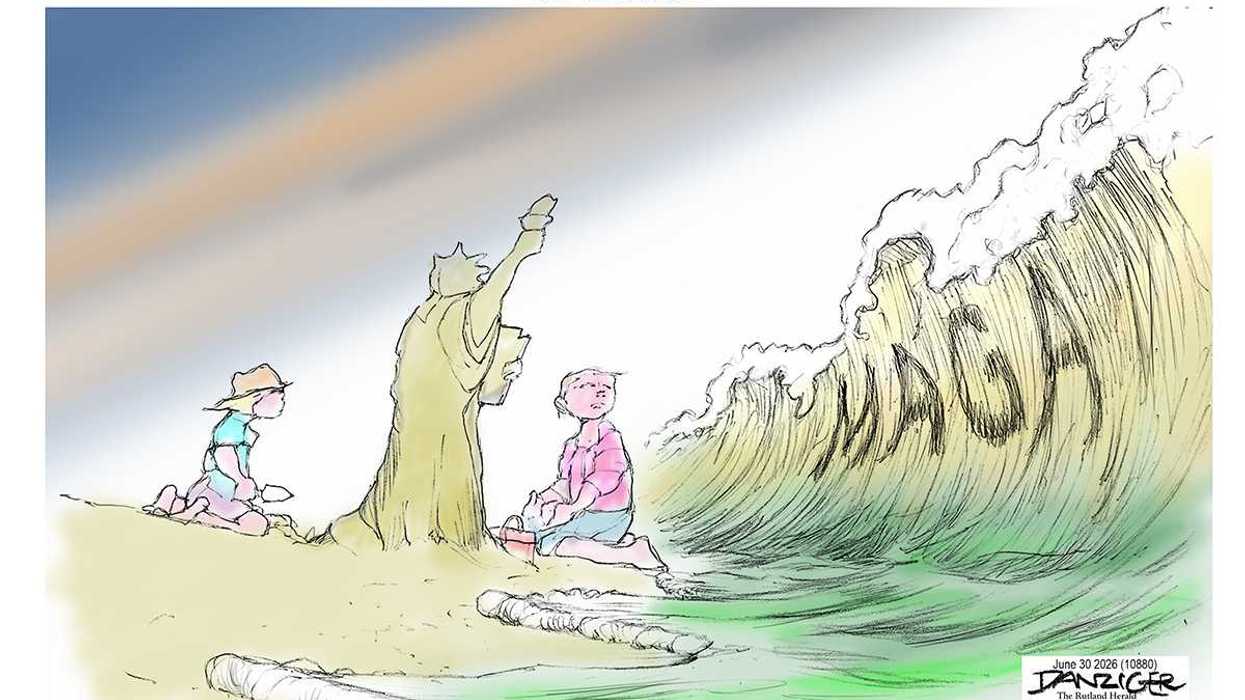
Danziger Draws

Danziger Draws

Jeff Danziger lives in New York City and Vermont. He is a long time cartoonist for The Rutland Herald and is represented by Counterpoint Syndicate. He is a recipient of the Herblock Prize and the Thomas Nast (Landau) Prize. He served in the US Army in Vietnam and was awarded the Bronze Star and the Air Medal. He has published eleven books of cartoons, a novel and a memoir. Visit him at jeffdanziger.com.

The Progessive Bros Who Hit Back At Trump -- And Win Points With Young White Men

The Progessive Bros Who Hit Back At Trump -- And Win Points With Young White Men

President Donald Trump is widely believed to have the unwavering support of a majority of white men — yet some so-called liberal “bros” are fighting to change that.

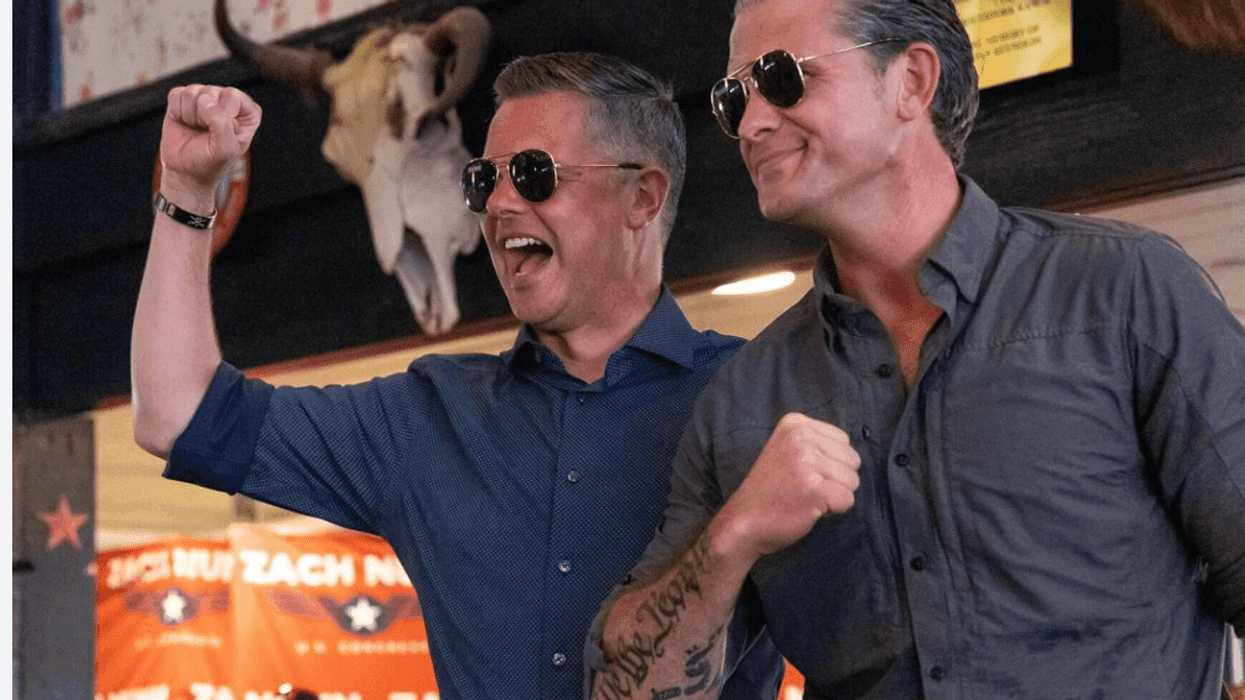
In a profile of liberal influencers Harry Sisson and Jared Shult, USA Today’s Jay Stahl recently observed that the New Yorker and Texan (respectively) aim to build the Democratic Party’s support among Generation Z — and especially with other young white men like themselves.

“Two of the left's best-known young straight white men, they punch back at MAGA movement members with Trump's stinging style,” Stahl wrote. “These influencers stoke online backlash and invite criticism from the right while charming casual fans and Democratic loyalists.”Quoting Jess Rauchberg, a Seton Hall professor who studied digital culture, Stahl observed that “‘the larger attitudes’ about young white men such as Shult and Sisson shifted as Trump's second term enters its second year. Now, the Democratic Party relies on figures like [California Gov. Gavin] Newsom and Kentucky Gov. Andy Beshear to help get messages across and relate to white men.”

Much like Trump himself, the two men openly insult and mock their opponents as a means of building their political movement.

“Sisson uses his own identity to confront what he views as Trump's failure to deliver on campaign promises,” Stahl wrote. “He antagonizes Trump acolytes, offering snarky comments on headlines rather than reading the news.”

Stahl added that “Shult and Sisson follow each other, posting gym photos flexing their physique, co-opting Republicans' ownership of masculinity. They also regularly jab Trump over his past ties to convicted sex offender Jeffrey Epstein. Conservative online commenters respond by calling them gay.”

By contrast, Shult and Sisson argue that the negative feedback demonstrates that they are engaging their audience. They also argue that they have an agenda beyond simply helping Democrats win elections.

“Shult said he wants to curb the loneliness crisis among young men and address their growing disillusionment by displaying masculine empathy,” Stahl explained, quoting him as saying “‘I'm trying to find ways to just promote the idea that, 'Hey, you can be a guy, and you can also like lifting, you can go hunting, you can do normal (expletive), you can be a very masculine man,' but then also talk to your close friends about things you're dealing with, or go to therapy, or whatever it is.’”

Shult buttresses this message with a non-traditional image for a Democrat.

“A Texas A&M alum, Shult is a self-described lover of the gym, the outdoors and ‘side quests’ (one-off adventures) as seen in his Instagram bio,” Stahl explained. “His flow haircut mimics the style of some members of the U.S. men's hockey team, whom Shult said looked ‘bored’ when they attended Trump's February 26 State of the Union address.”

He added, “He grew up with happily married parents in affluent Frisco, Texas, and started posting content as a high school sophomore. He later joined a Christian youth group that influenced his online content. Shult says he underwent a public deprogramming with his Christian faith during his freshman year of college. He instead found faith in progressive politics.”

Sisson, by contrast, had been a “liberal superstar” since his teenage and college years and described himself to Stahl as “a basic dude who wants the life ‘I envisioned when I was young.’”

He added, “‘I want a robust debate again,’ he said. ‘I want to have a space in politics where we can make a change.’”

Stahl is not the only journalist to identify variables that may prompt young white men to turn on Trump. Fortune business editor Nick Lichtenberg wrote last month that “the White House promised a manufacturing renaissance. Instead, the factory floor keeps shrinking." He added that the blue-collar job market, which some men associate with “traditionally masculine” forms of work and which Trump promised to stimulate if reelected, has taken a major hit during his second term.

“The blue-collar job market has been slowing for more than a year, with jobs in manufacturing and construction racking up roughly 150,000 net losses on an annual basis as of March,” Lichtenberg said. “During Trump's first year back in the White House, the manufacturing sector alone shed 108,000 jobs—even as the administration touted a coming 'manufacturing boom.'"

Lichtenberg concluded, "The irony is sharp. The same working-class men the MAGA economy promised to rescue are sitting out a hiring boom in the fastest-growing sectors of the U.S. economy because those jobs are considered women's work. Meanwhile, the factories they're waiting to return to keep shedding workers."

Supporting Trump also hurts men in their personal lives. A recent survey analyzing more than 1600 people of all political persuasions demonstrated that believing in conspiracy theories associated with Trump (such as denying the 2020 election’s outcome or opposing vaccines) causes men to be viewed as less kind, less intelligent, and less honest than people who embraced left-wing conspiracy theories, politically neutral conspiracy theories, or no conspiracy theories at all.

“Disclosing conspiracy beliefs in online dating profiles undermines impressions of warmth, intelligence, and trustworthiness, which are important for online dating success,” the authors of the study for the peer-reviewed journal Personality and Social Psychology Bulletin wrote in their conclusion. “Right-wing conspiracy beliefs were particularly stigmatized, with liberals being harsher in their judgments and conservatives showing greater leniency. In some cases, conservatives even preferred profiles sharing right-wing conspiracy beliefs, highlighting the role of political attitudes in shaping these perceptions. The plausibility of the conspiracy theory also shapes judgments, with implausible theories eliciting stronger negative reactions.”

They added, “Overall, our findings emphasize the stigmatizing nature of conspiracy theories in the online dating context. Future research could examine the role of visual cues and other factors that might influence people’s perceptions of conspiracy theories in online dating.”

Reprinted with permission from Alternet


'Crashing Out': Why Trump Runs When Asked About Orban's Landslide Defeat

'Crashing Out': Why Trump Runs When Asked About Orban's Landslide Defeat

On Sunday, far-right Hungarian strongman Viktor Orban was voted out of office after 16 years of dictatorial rule. His defeat not only spelled significant change for the nation of Hungary, but was widely interpreted as a major blow against far-right movements around the world, including MAGA in the United States. As a result, President Donald Trump is “crashing out” in the face of a bad sign for his authoritarian political project.

Following Orban’s loss, Trump — usually not shy about sharing his thoughts on any subject — declined to answer questions from reporters about the election, making a quick escape to board Air Force One. Many who watched this exit online were struck by the typically wordy president’s lack of response.

"You can tell he’s so close to crashing out lmao,” wrote one commenter on a NewsNation broadcast of the moment. "He can't handle the truth," said another, with a third still declaring, "LOL. This has been a week of huge losses in the life of this big loser."

It may seem strange for an American president to hang so much importance on a Hungarian election, but not only has Orban been a longtime “illiberal” ally of Trump and Russian President Vladimir Putin, but he had become something of a superstar within the MAGA movement, garnering headline appearances at events like CPAC due to the popularity of his conservative, anti-immigrant, authoritarian policies within the Republican Party.

Orban’s election or lack thereof was viewed as so symbolically vital to MAGA that Vice President JD Vance was sent to Hungary during the final days of the race in an attempt to help build support. Vance’s appearance did not have the desired effect, as Orban’s party was defeated by a landslide.

For many within the MAGA-sphere, the rise of figures like Orban and Trump has been embraced as a signal of the growing power of the far-right movement and its righteous if not outright fated assumption of power around the globe. But Orban’s loss suggests that history is not as inevitable as they thought.

As Ivan Krastev, chair of the Center for Liberal Strategies in Sofia, Bulgaria, explained, Orban’s loss will have “an incredible psychological impact” on the far-right. Or as Orban biographer Pal Daniel Renyi put it, the election is proof to Orban, Trump, and their followers that “nothing lasts forever.”

Reprinted with permission from Alternet

Peter Magyar

Massive Rejection By Hungarian Voters Shows How To End MAGA-Style Politics

Hungary’s strongman Viktor Orban has lost reelection in stunning fashion, an absolute electoral wipeout that presages what his MAGA allies in the U.S. will be facing this November.

The brand-new opposition Tisza party won around 53 percent of the vote, to just 37 percent for Orban’s Fidesz. Tisza is projected to secure around 138 seats in the 199-seat parliament, comfortably above the 133 needed for a supermajority, giving it the power to rewrite Hungary’s constitution and begin dismantling the autocratic system Orban spent 16 years building. Fidesz currently holds 135 seats.

The victory came despite Orban rigging the playing field: gerrymandering the country so the opposition needed about a 5-point margin just to break even, and turning public media into government mouthpieces.

MAGA and Orban have long been tied at the hip. The right-wing CPAC conference has hosted an annual Hungary edition since 2022. There, he’s fed the MAGA faithful red meat like: “Progressive liberals, neo-Marxists intoxicated by the dream of wokeness, those in the pay of George Soros, they want to abolish the Western way of life that you and we love so much.”

He’s also leaned hard into culture war paranoia, telling the CPAC Hungary crowd in 2023: “Gender and woke also divide the nation into classes, and proclaim that class is more important than nation, taking precedence over belonging to the nation and taking precedence over national identity.”

So you can see why the MAGA crowd loves him so much. For many on the American right, Orban isn’t just an ally—he’s a blueprint, with influential voices openly arguing for “Orbanizing” U.S. institutions by using state power to reshape media, universities, and the civil service. Tucker Carlson helped cement that relationship, broadcasting a week of shows from Budapest in 2021.

For millions of MAGA viewers, Hungary wasn’t some distant country—it was a working model of what conservative power could look like in practice, a model Orban actively marketed. “Hungary is actually an incubator where experiments are done on the future of conservative policies,” he said in 2023. “Hungary is the place where we didn't just talk about defeating the progressives and liberals and causing a conservative Christian political turn, but we actually did it.”

Yeah, he and his party did it. And on Sunday, two-thirds of his country rebelled against it.

Adding to the schadenfreude, Vice President JD Vance actually traveled to Hungary and campaigned for Orban. “What the United States and Hungary represent under Viktor’s leadership and under President Trump’s leadership is the defense of Western civilization,” Vance declared at one rally. At another, he went full sermon: “Will you stand for Western civilization and for the God of our fathers?”

The god of our fathers? Vance is so weird.

His overt meddling drew backlash across Europe, including from Germany, which rejected Vance’s claims that the European Union was the real outside influence in Hungary’s election. But really, everyone should be happy at Vance’s visit, as his “kiss of death” record (literally with the last Pope) remains unvarnished:

President Donald Trump, meanwhile, tried his own version of election interference—dangling U.S. economic support if Hungarians kept Orban in power. It worked in Argentina, where Trump gave his pal Javier Milei a $20 billion taxpayer giveaway in the weeks before his reelection campaign.

“My Administration stands ready to use the full Economic Might of the United States to strengthen Hungary’s Economy, as we have done for our Great Allies in the past, if Prime Minister Viktor Orbán and the Hungarian People ever need it,” Trump posted on Truth Social. “We are excited to invest in the future Prosperity that will be generated by Orbán’s continued Leadership!”

Can’t wait to see how “excited” he is now.

Trump’s support was just the latest in a long line of backing for Orban, whom he praises in the same breath as Russian dictator Vladimir Putin. And the alignment isn’t just rhetorical. Orban has consistently acted as a spoiler inside the European Union, delaying or weakening sanctions on Russia and complicating efforts to support Ukraine. In practice, that’s made him Vladimir Putin’s most reliable ally inside the EU, a bridge between Moscow’s interests and the MAGA movement that has long admired him.

There is, however, one way Orban appears to be better than Trump or Putin: He has reportedly respected the outcome of this election, calling opposition leader and Prime Minister-elect Péter Magyar to concede and congratulate him.

It’s a low bar, but one Trump couldn’t manage to clear.

The geopolitical implications are immediate. Ukraine, in particular, stands to benefit. While Slovakia’s Robert Fico remains aligned with Putin and hostile to EU support for Ukraine, he will now be far more isolated. Without Orban to share the burden, it becomes much harder for a single leader to block aid to Kyiv without facing serious consequences for his poor nation from the rest of Europe.

And for Trump, it’s one less strongman ally. If MAGA wants to keep pointing to the Hungarian model, let them. Voters there just showed how that story ends.

Markos Moulitsas is founder and editor of the blogging website Daily Kos and author of three books.

Reprinted with permission from Daily Kos


Shop our Store

Headlines

Editor's Blog

Trending

World