Tag: marjorie taylor greene
Feeling Bullied By Trump, Margie Says She Regrets 'Taking Part In Toxic Politics'

Feeling Bullied By Trump, Margie Says She Regrets 'Taking Part In Toxic Politics'

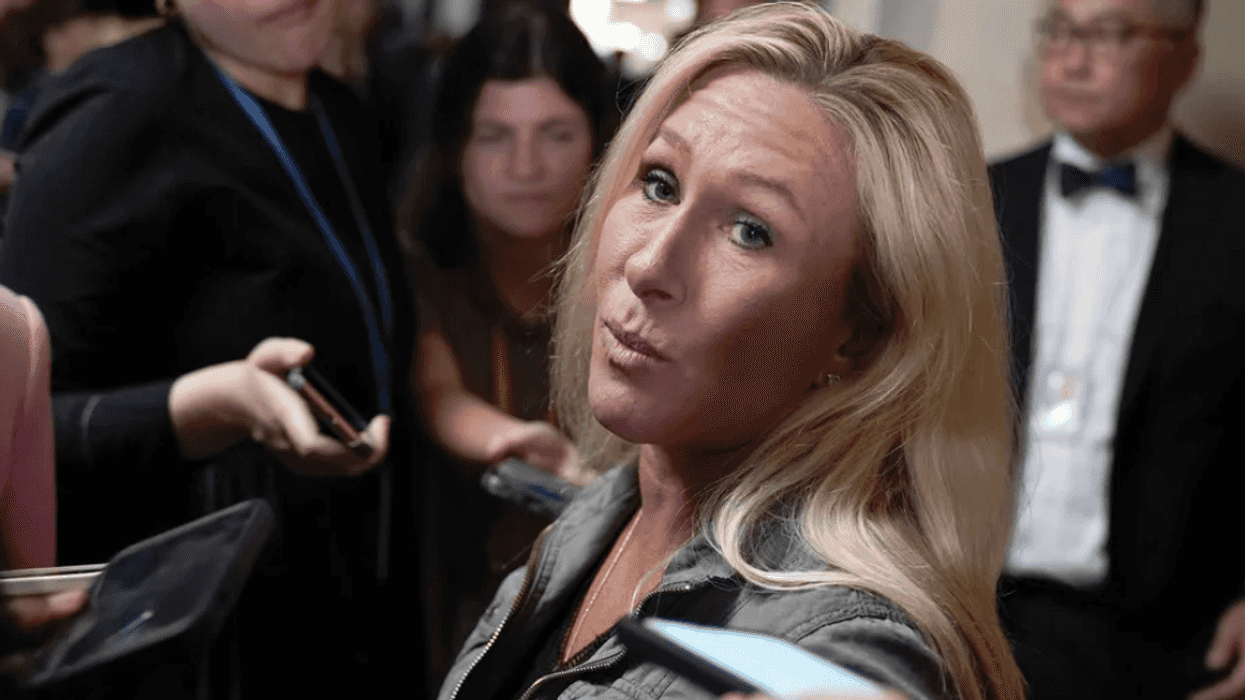
Arch-conservative Rep. Marjorie Taylor Greene was once one of President Donald Trump’s biggest allies. Now she is the subject of Trump’s scorn and ire, as he turns on her for breaking with Republican leadership and pursuing the release of the Jeffrey Epstein files.

Daily Kos’ Alex Samuels has already dug into the Georgia Congress member’s about-face, concluding, “Whether Greene is actually breaking from MAGA or simply navigating a particularly messy public rupture remains an open question. What’s clearer is that the man who once empowered her is now targeting her—and Greene is discovering that stepping away from Trumpism can be far more dangerous than embracing it.”

That question does remain open, but let’s look at Greene’s transformation from a different angle. And to do so, let’s go back to her Sunday interview on CNN.

“The most hurtful thing [Trump] said, which is absolutely untrue, is he called me a traitor, and that is so extremely wrong,” Greene told Dana Bash. “Those are the types of words used that can radicalize people against me and put my life in danger.”

Bash countered by asking: Wasn’t that language that Greene herself had used for years against her political enemies?

“I would like to say, humbly, I’m sorry for taking part in the toxic politics; it’s very bad for our country,” Greene answered somewhat surprisingly. “It’s been something I’ve thought about a lot, especially since Charlie Kirk was assassinated.”

Great, she learned! We will accept steps toward civility wherever we can. But let’s note for a moment that Greene didn’t fear for her life when it was the left that hated her. It was only when Trump went after her that she was suddenly scared about her safety. Maybe we can dispense with the “left is violent” nonsense the right has been trying to sell.

More importantly, we’re once again watching a conservative discover a moral principle only after it landed directly on her own head. This is the defining pattern of modern conservatism: Empathy arrives only when the pain becomes personal.

Conservatives aren’t exactly quiet about their disdain for empathy. World’s richest man Elon Musk has said, “The fundamental weakness of Western civilization is empathy.” Conservative podcaster Josh McPherson declared, “Empathy is dangerous. Empathy is toxic. Empathy will align you with hell.”

Before he became a right-wing political martyr, Charlie Kirk said, “I can’t stand the word empathy, actually. I think empathy is a made-up, new age term that—it does a lot of damage.”There is even science behind this. One Finnish study that scanned participants’ brains while they conducted an empathy evaluation concluded that “this neural empathy response was significantly stronger in the leftist than in the rightist group.”

Conservatism has always reserved its compassion for the in-group and weaponized fear against everyone else. Outsiders must be othered, vilified, dehumanized—immigrants are cast as invaders, trans people as threats, and anyone unfamiliar as an existential danger. It’s the same playbook every time.Those tactics were devastatingly effective against gay people for decades, until the marriage equality movement’s breakthrough: coming out. Suddenly conservatives discovered their children, siblings, and coworkers were the very people they had been taught to despise. And once it touched them personally—once the “outsiders” became insiders—public opinion shifted. Not because the right found empathy, but because their self-interest finally collided with reality.

Liberals, for all the caricatures about “coastal elites,” never balked at their tax dollars flowing to rural communities or to disaster relief in red states battered by hurricanes, floods, or tornadoes. Blue states have subsidized red states for generations without resentment, because the instinct is simple: They’re our fellow Americans, and we don’t abandon people in need. That’s what empathy looks like—giving help even when the people you’re helping might never vote like you, think like you, or thank you. It reflects a worldview grounded in the idea of a shared national community, not a transactional one.

Rural America, frankly, only exists at the scale it does because of that empathy. Decade after decade, Democratic-led states and urban taxpayers have propped up rural hospitals, rural schools, rural infrastructure, rural broadband, and the postal routes no private company would ever bother to serve.And in return, rural voters handed power to Trump—the man who is gutting the Affordable Care Act subsidies keeping medical clinics open, threatening the Postal Service their communities rely on, dismantling the Department of Education that funds their schools, and killing the broadband investments that keep their towns connected to the modern economy.

In a striking twist, Greene recently signaled a break with her own party’s anti-ACA agenda because “when the tax credits expire this year my own adult children’s insurance premiums for 2026 are going to DOUBLE,” she wrote. Her concern wasn’t about principle—it was about her kids’ pocketbooks.

Empathy is what kept those rural communities afloat. By embracing Trumpism, they’ve endangered the very lifelines they depend on. Only now, when the cuts land on their own doorsteps, do they suddenly rediscover concern.

They say, “This isn’t what I voted for,” and they’re right—they voted for other people to get hurt, not them. Now everyone else is supposed to care.didntvoteforthis.pngAnd that brings us back to Marjorie Taylor Greene. Because what we’re watching with her isn’t just a political rupture or a messy MAGA divorce: It’s the same dynamic playing out yet again. She didn’t care when Trump’s attacks were aimed outward at immigrants, Democrats, journalists, LGBTQ+ people, or anyone else in his long parade of supposed enemies. She didn’t care when the threats, the dehumanization, and the violence were directed at someone else’s family, someone else’s community, someone else’s life. She was an enthusiastic participant.

But now that Trump has turned the machine on her, suddenly the stakes are different. Suddenly the rhetoric is “dangerous.” Suddenly she fears for her safety. Suddenly she wants civility and responsibility. Because it affects her.

This is the core difference between our politics and theirs. Empathy doesn’t require experiencing personal harm in order to kick in. Empathy doesn’t wait until the wound is on your body. Empathy doesn’t need the fire to reach your house before you grab a hose. They only care when it affects them; we care because it affects anyone.

And so Greene has stumbled into the truth the hard way: The cruelty she once championed was never a tool she controlled—it was a force she fed. And once you unleash a movement built on vengeance and grievance, you don’t get to choose its targets. Not even if you were once favored by it.

What she’s experiencing now isn’t an aberration. It’s the logical end of a political philosophy that believes empathy is weakness, cruelty is strength, and community is something that only applies to the people in your own corner. This is what happens when a movement defines “us” so narrowly that eventually everyone becomes “them.”

In the end, Greene finally found the right answer: dial down the hate, tone down the threats, stop treating politics like a blood sport. But she arrived there due to the only reason her party’s movement ever changes—because it finally hurt her. Empathy wasn’t the revelation. Self-preservation was.

Danziger Draws

Danziger Draws

Jeff Danziger lives in New York City and Vermont. He is a long time cartoonist for The Rutland Herald and is represented by Counterpoint Syndicate. He is a recipient of the Herblock Prize and the Thomas Nast (Landau) Prize. He served in the US Army in Vietnam and was awarded the Bronze Star and the Air Medal. He has published eleven books of cartoons, a novel and a memoir. Visit him at jeffdanziger.com.

Will Epstein Files Vote Become 'Crack In The Dam' That Splits MAGA Apart?

Will Epstein Files Vote Become 'Crack In The Dam' That Splits MAGA Apart?

President Donald Trump's ironclad grip on the Republican Party may be weaker than it's ever been due to the ongoing fallout over deceased child predator Jeffrey Epstein.

That's according to commentator Scott Morefield, who writes for the conservative website Townhall. Morefield told New York Times columnist Michelle Goldberg that Trump's handling of the Justice Department's unreleased evidence pertaining to its two Epstein-related investigations has caused widespread disillusionment among the MAGA movement. He particularly focused on Trump's attacks on Reps. Marjorie Taylor Greene (R-GA) and Thomas Massie (R-KY), who have both pressured him to release all of the DOJ's remaining evidence on Epstein.

Trump called Greene a "ranting lunatic" on his Truth Social platform last week, and called Massie a "loser" and remarked that his recent marriage was "quick" (Massie's first wife, Rhonda, died last June). Massie shrugged off Trump's attacks and shared a joke that he and his new wife made at Trump's expense.

"She said, 'I told you we should have invited him to the wedding!'" Massie told reporters on Monday.

"Trump’s denunciations of MTG and especially Thomas Massie last night were unnecessary, over the top, and cruel in a way that should make any human with basic empathy question what kind of human he is," Moreland posted to X. "If anyone is responsible for the fracturing of MAGA, it’s the top dog himself. The buck stops there."

In her Monday essay, Goldberg marveled at how Trump used to dispatch his political opponents within the GOP with relative ease. She pointed to past examples like former Vice President Mike Pence, former Rep. Bob Good (R-VA) and Sen. Jeff Flake (R-AZ). However, she observed that Trump's failure to cow Greene and Massie into submission suggested that "something has changed." When Goldberg asked Moreland how much Trump's movement had split, the conservative writer didn't mince words.

“I think it’s pretty serious,” he said. “Epstein really started it. It was like the crack in the dam, I think.”

Reprinted with permission from Alternet


Democrats Must Address Looming Cost Spike In Private Health Insurance

Democrats Must Address Looming Cost Spike In Private Health Insurance

Here’s the good news. The Democratic Party’s demand that Congress extend the Affordable Care Act premium subsidies in exchange for helping end the government shutdown is fracturing the GOP monolith.

In recent social media posts, Rep. Majorie Taylor Greene (R-GA) articulated what every legislator on the GOP side of the aisle knows but won’t admit. Out-of-pocket costs for ACA plans will skyrocket next year if the enhanced subsidies passed by the Biden administration during the pandemic are allowed to expire.

“This is a major crisis in America,” she said this week on NewsNation, a conservative cable news network. “We’re looking at a massive spike in health premiums. It’s going to crush people. They’re going to have to drop their health insurance. That will put a lot of people in danger of becoming bankrupt with health care bills, with hospital bills,” she said.

Even Donald Trump, ever the prevaricator, has begun toying publicly with opening negotiations with Democrats after Greene made her comments.

But she went further. It is not just the 24 million people on ACA plans who will get hit hard with average premiums more than doubling to more than $1900 a month (before subsidies) without the enhanced premium subsidies. “People with regular or private plans, their premiums are looking to go up a median of 18 percent. That’s brutal,” she said.

Always fast and loose with her facts, Greene’s claim that private health plan premiums will rise 18% is more than double what employer benefits consultants are predicting. But there’s no doubt huge spikes in employer premiums and employee co-premiums are coming. Both will likely to see near double-digit increases.

That’s the issue I want to address in today’s post because it represents a messaging minefield for Democrats, even if they win an extension of the ACA plan subsidies.

Where’s the rest of us?

During September, there was an interesting debate within the Democratic Party about what to demand from the GOP majority before giving them the votes needed to keep the government running beyond September 30th. Progressives wanted to focus on limiting the Trump regime’s flagrant violations of the law and constitution. Centrists, led by Senate Minority Leader Chuck Schumer (D-NY) and House Minority Leader Hakeem Jeffries (D-NY), preferred putting health care — usually a winning issue for Democrats — front and center. The centrist majority won the day.

The political wisdom of the leaders’ decision now seems vindicated. As Jonathan Cohn wrote yesterday in The Bulwark (his post was headlined “The Democrats Are Winning the Shutdown Fight”):

“A big premium spike can be a political nightmare for the party in charge, as anybody who lived through the Obamacare rollout can attest. That’s the whole reason Republicans seem so uncertain about their current position—and why now even MAGA stalwarts like Greene are suggesting Republicans sign on to an extension. If nothing else, that would seem to give Democrats leverage to demand even more…
“Democrats actually do care passionately about making health care more affordable. If the subsidy boost lapses, the higher costs will mean real hardship for many millions, and 4 million more Americans with no insurance at all. Extending the subsidy boost would prevent most or all of that from happening. And insofar as Republicans are bound to support some kind of extension eventually—precisely because the blowback to the spike could be so strong—forcing a deal now, in this high-profile debate, would allow Democrats to claim (legitimately) it was their doing.”

Nowhere in his lengthy article did Cohn discuss the employer-based insurance market, which covers 164 million working Americans and their families. If the Democrats say nothing about their looming health care cost increases, it will be a huge mistake.

Should Democrats win on the ACA issue, it will no doubt be great news for the 24 million Americans whose health insurance comes through plans sold on the exchanges. Just seven percent or about 1.7 million purchasers pay the full cost of their plans. The rest receive subsidies based on income that limit their out-of-pocket premiums. The lowest wage workers pay nothing at all.

For most, the total cost of the plan is irrelevant. The federal government picks up most if not all of any increase in the total cost of the plan.

But that won’t be true for the far larger employer-based insurance market — the half of all Americans whose health plans come through an employer, group or union. Their plans receive no direct subsidy. The employer share — on average about 75 percent of a family plan — is tax deductible as is any employee premium, usually deducted from paychecks. But the employee share paid through co-pays and deductibles is not unless their medical expenses exceed 7.5 percent of adjusted gross income; they itemize deductions; and their total deductions exceed the standard deduction. Even then, the deduction is only the amount over 7.5 percent of AGI.

Both employers and employees will bear the full upfront cost of the expected large increases in premiums on tap for next year. A month ago, Mercer, a leading benefits consulting firm, projected average employer premiums could rise nine percent next year based on preliminary results from its annual survey of nearly 2,000 employers. It predicted actual increases would be closer to 6.5 percent because of steps employers will take to hold those costs in check. That’s still twice the overall inflation rate.

Smaller employers will be hit hardest of all. A recent issue brief from the Kaiser Family Foundation found the median proposed premium increase for 318 small group insurers who offer ACA-compliant plans was 11 percent.

What’s behind rising costs?

Mercer health research director Beth Umland cited the usual suspects for the biggest increase in health care costs since 2010: The high cost of cancer treatments and weight-loss drugs; higher-than-usual price increases enabled by provider consolidation; higher health care worker wages driven by rising inflation in the general economy; and the “buildout of AI-based platforms that help providers optimize billing.”

The KFF brief echoed that analysis. It cited higher prescription drug costs and utilization, rising labor expenses, and overall economic inflation. “Some insurers also note declining enrollment and worsening risk pool morbidity as factors leading to higher projected costs next year,” the brief said.

The daily news in the health care trade press is filled with stories of insurers and providers battling over who should be forced to absorb some of those rising costs. Insurers are increasingly resorting to the “just say no” form of prior authorization and receiving pushback from both providers and patients. Modern Healthcare (where I used to be editor) reported this morning that insurers Aetna and Cigna are imposing their own version of the two-midnight rule (don’t ask) by forcing hospitals to accept out-patient rates for emergency room visits deemed routine care, no matter how long they stay in the hospital.

There’s going to be a lot more of those ER visits next year should the ACA subsidies not be extended, since an estimated four million people are expected to drop coverage. That will force many folks to use hospital ERs instead of primary care physician practices for their routine care. And, given that those dropping coverage will be fairly low income, most will postpone or fail to pay those ER bills, which leads to higher prices for everyone else who uses hospital services. Hospitals invariably raise prices to make up for uncompensated care.

And how will employers mitigate some of those rising costs (thus whittling the expected nine percent increase down to 6.5 percent), according to Mercer? “The survey found that 59 percent of employers will make cost-cutting changes to their plans in 2026 — up from 48 percent making changes in 2025 and 44 percent in 2024,” Umland wrote. “Generally, these involve raising deductibles and other cost-sharing provisions, which can lead to higher out-of-pocket costs for plan members when they seek care.”

In other words, workers will see their out-of-pocket co-pays and deductibles rise sharply in addition to a 6.5% average increase in their co-premiums, which are taken directly out of their paychecks. Workers with chronic health care needs could see their annual medical expenses rise at three times the overall inflation rate — perhaps even into double digits.

Only a tiny share of those increased costs will be mitigated by a Democratic win on ACA subsidies. Nor will a win do anything to help the millions of people who will be thrown off Medicaid, whose uncompensated expenses when they also show up in ERs for routine care will also be reflected in higher private employer/employee insurance bills.

For a majority of Americans, any Democratic Party claim that they “saved” health care by their strong stance during the shutdown negotiations will ring hollow in the face of their still rising out-of-pocket expenses.

Merrill Goozner, the former editor of Modern Healthcare, writes about health care and politics at GoozNews.substack.com, where this column first appeared. Please consider subscribing to support his work.

Reprinted with permission from Gooz News

Shop our Store

Headlines

Editor's Blog

Corona Virus

Trending

World