Tag: markwayne mullin
In North Carolina, Republicans Activate Trump's Voter Suppression Scheme

In North Carolina, Republicans Activate Trump's Voter Suppression Scheme

What’s next? Asking how many jelly beans are in the jar?

That was a question election workers, particularly in the South, used to ask voters. Not surprisingly, Black voters, who wanted simply to exercise their rights as American citizens to cast a ballot, always managed to guess wrong.

How many bubbles in a bar of soap was another favorite riddle, an example of Jim Crow at its finest, using an impossible, ridiculous yet on the surface neutral test to weed out those the powerful felt did not deserve to choose the politicians who would represent them.

The Voting Rights Act of 1965 outlawed such practices, insidious tactics employed with an obvious though unstated intent. The current Supreme Court in the session that just ended suggested the impact of such policies cannot be considered, unless you come right out and state that race is the reason you’re asking about those jelly beans.

An exaggeration? Maybe. But the majority on the current court did say that voting policies that intended to remedy discrimination were themselves discriminatory.That the Supreme Court has been chipping away at what was once called the “crown jewel” of the civil rights movement should come as no surprise. Chief Justice John G. Roberts Jr. wrote as a young lawyer in the Reagan administration that the law represents “the most intrusive interference imaginable by federal courts into state and local processes.”

Now, in North Carolina, which trends a reddish purple but because of redistricting and a defanged Democratic governor looks crimson much of the time, Republicans are gazing backward.

The GOP majority on the State Board of Elections feels secure in its spots since the state Supreme Court blessed Republican lawmakers’ move to shift appointment power from Democratic Gov. Josh Stein to the Republican state auditor. The vote-restricting schemes they’ve come up with make the Trump administration’s push for a federal law largely unnecessary, at least in North Carolina.While the president’s SAVE Act meets obstacles in Congress and his recent speech rehashing disproven assertions about vote-rigging in 2020 fell flat, Republican-controlled states are sending a different signal: That’s OK, we’ve got this.

In South Carolina, a Trump-backed redistricting plan that probably would have cost Democratic U.S. House member James E. Clyburn his seat failed in the state legislature for now because of self-interest and, one hopes, a sense of decency.

In North Carolina, the elections board has proven neither of those reasons is a deal-breaker.

New rules would make it easier to toss ballots during the 2026 midterms and beyond if a voter’s stated reason for requesting an exemption to the state’s photo ID rules was judged false. It previously required unanimous agreement of a bipartisan election board before someone’s vote was not counted. With the shift, a simple majority would make the call, and Republicans hold majorities on each board in every one of North Carolina’s 100 counties.

A GOP-controlled Rules Review Commission isn’t likely to object.

Republican board member Angela Hawkins seems to think a lot of people lie. As reported by WRAL, “she supported lowering the threshold and allowing boards to throw out people’s votes even if there’s disagreement over their eligibility.”

“It’s very difficult to find falsity in what someone says,” Hawkins said.

Furthermore, if your excuse for requesting an ID exemption is judged a lie when you try to cast a ballot and you complain about it, you’d better keep the ruckus down. Another rules change would allow volunteers to remove any voter, campaigner, politician or protester judged too noisy.

Hawkins sounded absolutely giddy at the thought of giving a thumbs-up or thumbs-down to voters who believe it’s more important than ever to be heard.

There is pushback, however toothless it may prove to be. “Partisanship has no business in the counting of eligible voters’ ballots,” Common Cause NC said in a statement and a warning about the latest moves by an elections board that has mail-in ballots next in its sights.

Of course, the board’s answer is that any new rules would apply to anyone of any party.

But if you don’t believe having a “D” or “R” after your name will matter in a state with a close U.S. Senate race that might determine control of Congress, in a state with a history of being sued over voting restrictions that a federal court said targeted African American voters “with almost surgical precision,” then you don’t know North Carolina.

If it seems like the fix is in, it’s because no one is hiding.

After the president’s evidence-free speech about fraudulent elections that seemed a warm-up for 2026 election denialism, Homeland Security Secretary Markwayne Mullin’s follow-up doubled down on Trump’s delusions, threatening local election officials with prison time if they did not comply with the administration’s meddling efforts.

Clearly Mullin’s not familiar with the U.S. Constitution, which gives Congress and the states, not the federal government, the power to govern elections. As administration officials and their lackeys across the country try to undo the will and voice of “we the people,” Mullin should brush up on that document, the same one that Black prospective voters in some states in pre-Voting Rights Act days had to quote, from memory, only to be rejected for a misplaced “a” or forgotten “the.”

The arbitrary tests imposed by clerks and bureaucrats making a mockery of the voting process are not ancient history and seem as unsavory as present-day North Carolina election officials telling someone who loves America enough to make their way to the polls that they’re noisy liars before ushering them out.

A country determined to live up to the ideals of its founding documents should not have to worry about a comeback of the worst policies of the past.

But here we are.

My advice? Election officials thinking of bringing back the soap test instead need to use it to scrub away the dishonor, if they can find a bar big enough.

Mary C. Curtis has worked at The New York Times, The Baltimore Sun, The Charlotte Observer, as national correspondent for Politics Daily, and is a senior facilitator with The OpEd Project. She is host of the CQ Roll Call “Equal Time with Mary C. Curtis” podcast. Follow her on X @mcurtisnc3.

Reprinted with permission from Roll Call

Foul Smell Arises From ICE Killing Of Longtime Houston Resident

Foul Smell Arises From ICE Killing Of Longtime Houston Resident

There was a time when the federal government’s record justified withholding judgment, when, in the wake of another gut-wrenching killing by ICE agents, a fair-minded person could count on the Department of Justice to investigate its own officers and bring charges if the facts warranted them.

That time is long past. ICE is now a rogue agency. It has lied about and obstructed the investigation of previous killings, and it has been regularly contemptuous of court orders. As the chief judge of the federal district of Minnesota wrote, “ICE has likely violated more court orders in January 2026 than some federal agencies have violated in their entire existence.” The presumption of regularity—the baseline courtesy we once extended to the government’s account of what its agents did—has been put through a wood chipper.

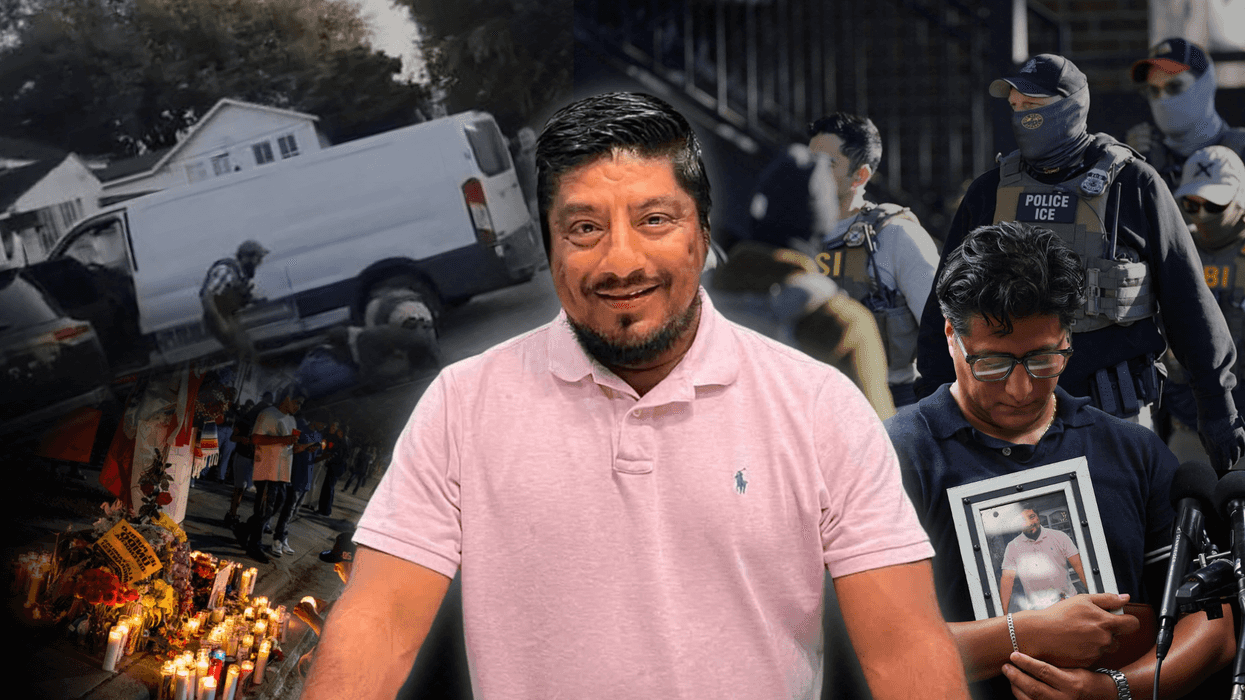
So when word emerged of another ICE killing—this one in Houston, of a longtime resident named Lorenzo Salgado Araujo—and ICE immediately claimed that the victim had “weaponized his vehicle” to run down an officer who fired only in self-defense, there was every reason to expect the worst.

And the worst is just what we’ve gotten—not just in the facts of the killing itself, but in the federal government’s apparent determination to circle the wagons and smother any effort to achieve justice.

It is a fetid, still-unfolding scandal, and it has come in four stages: the killing; the official excuse; the evidence that gives that excuse the lie; and the wagon-circling to foreclose any accountability.

Lorenzo Salgado Araujo was, by every measure, what our political leaders all claim to prize. 52 years old, he had lived in the country for 35 years, raising 3 sons—all U.S. citizens—whom he sent to college while running a construction business that gave dozens of other people jobs. He was diligently in the process of legalizing his immigration status.

As Bill Kristol put it, Salgado Araujo was a better American than the people leading our country.

Last Tuesday, July 7, Salgado Araujo woke up at his normal five a.m., got in his work van, and picked up his crew, comprising 3 other men, including his younger brother, Victor.

As he was on his way to work, at around 6:50 a.m., ICE agents confronted the van and delivered the fatal shots. The details remain murky but are coming into focus.

One particular heart-rending detail: That morning, Salgado Araujo’s wife, worried that something had gone wrong, called their eldest son, Ronaldo. Ronaldo drove to the site, found his father’s white van, but no sign of him. Then a video surfaced on his social-media feed: a man on the ground, shot, struggling. Ronaldo recognized his father instantly: not by his face, he said, but by his voice, crying for help as he lay bleeding out in the street.

Salgado Araujo arrived at Ben Taub Hospital, where all three of his sons had been born, carrying no identification. At the family press conference, a community leader asserted ICE agents removed all his personal identification. He therefore was logged in as a John Doe. He died hours later.

As we were learning about the killing, the Department of Homeland Security (DHS) issued an official statement. It cited no actual sources other than “information we are receiving.” People familiar with the ICE playbook could probably recite the account with their eyes closed.

DHS reported that Salgado Araujo had refused commands and “weaponized his vehicle in an attempt to run over an ICE law enforcement officer,” who fired “in self-defense.”

That’s more or less the identical account, down to the use of the word “weaponized,” that they proffered after the killing of Renée Good. But video evidence showed that the shot that killed Good was fired through her open driver’s side window, with the agent standing out of the vehicle’s path—severely undermining the claim that the shooter was defending himself from Good’s car plowing into him.

So Salgado Araujo’s killing and the official defense repeated the same rotten pattern as in the Good case. The third stage, as with Good, was the revelation of facts that make the official claims of self-defense look like a bald lie.

Good’s killing arose in the context of a robust, lawful demonstration. Consequently, there was a lot of video that rolled in. The 6:50 a.m. shooting on their way to a construction site is harder to piece together. Moreover, the ICE agents were not wearing body cameras, notwithstanding the promise in February in the wake of the Minnesota tragedies that DHS would “rapidly acquire and deploy body cameras to DHS law enforcement across the country.”

But there were three eyewitnesses: the three workers in the van with Salgado Araujo. Their accounts would be central to any bona fide investigation.

That makes ICE’s treatment of them particularly reprehensible. Instead of trying to elicit the facts from them, ICE put all three in immigration detention, apparently facing removal. The agency reportedly has imposed pressure on them to self-deport.

Fortunately, an attorney for the surviving passengers, Hugo Balderas-Ibarra, was able to speak to all of them, separately, in detention. Each of them flatly contradicts ICE’s self-defense scenario.

According to the lawyer’s account, all three passengers report that they were heading to work around 6:30 a.m. when an unmarked car pulled up behind them at a stoplight. When the light turned green, the unmarked car swung onto the shoulder, cut in front of them, and tapped its brakes. At that point, Salgado Araujo made a U-turn, and then the officers switched on their lights. According to the passengers, Salgado Araujo was on a road with heavy construction and crawling along at about five miles per hour.

One of the three, Jose Trinidad Rojas, wrote out his denunciation of ICE’s version by hand. “That is a lie,” Rojas wrote. “It is impossible for them to say that they were going to get run over … there were no officers in front of or behind the vehicle. They were on the sides.”

The ICE car rammed the van, not the other way around. Another ICE vehicle then pulled up on the other side, hemming them in.

An ICE officer proceeded to jump out of the unmarked car and ran at the van from the side, yelling “stop.” He began firing through the front passenger window. A shot hit Salgado Araujo in the abdomen. Victor, the brother, was in the passenger seat and said that when the officer fired the fatal shot, “the gun was in front of my face.”

If the witnesses’ unanimous and separate accounts are accurate, the ICE “weaponized vehicle” yarn fails outright. Salgado Araujo was not bearing down on the shooter, who shot through the front passenger window, so obviously was not in danger from the car.

One final wrenching detail. ICE was not even looking for Salgado Araujo or any of his passengers. Their target was a Guatemalan national who had nothing to do with Salgado Araujo, and who was nowhere in the vicinity. But supposedly someone in the van “resembled the target,” at least to the ICE agents.

Not so the aftermath. The feds appear to be waist-deep, and getting deeper, in a conspiracy to prevent the investigation of Salgado Araujo’s killing and stonewall any efforts to determine if a crime occurred.

A straight-shooting Department of Justice would initiate an investigation in the Civil Rights Division into whether the agents deprived Salgado Araujo of his civil rights in violation of 18 U.S.C. § 242. It’s the same charge that the officers who killed George Floyd were convicted of. The Department has employed it against law enforcement officers.

If the feds chose not to move forward, the assumption would be that the state authorities, who have a strong interest in possible homicide charges under state law, would get the baton, and that the feds would cooperate with their efforts, starting with the sharing of evidence.

With Todd Blanche’s DOJ, this normal approach is a pipedream.

First, the federal authorities appear to be undertaking efforts to prevent the most important evidence we now have, the eyewitness accounts, from ever seeing the light of day. All three witnesses were immediately taken into immigration detention and are now facing removal. If they are deported, the evidence walks out of the country with them.

As for the state of Texas’s efforts to look into the killing, the feds are actively trying to squelch it. Harris County DA Sean Teare revealed that “federal authorities continue exclusively handling all aspects in this case,” and that “access to key evidence remains under federal control.” The Houston Police Department issued a carefully worded statement: local law enforcement has “no independent jurisdiction to investigate federal agencies or federal law enforcement personnel who are acting in the course and scope of their official duties.”

That hedged account significantly understates Houston PD’s independent role. It incorporates the legal standard for federal immunity, roughly whether the federal agents’ conduct was necessary and proper. If a court were to determine that was the case, Houston law enforcement would be stymied; but that’s the whole issue that a state prosecution would take on. There is no law that strips a state of the power to investigate a killing within its borders simply because the killer wore a federal badge.

And most gallingly, the feds are not even pretending to undertake an investigation of the killing. They have announced a two-part inquiry. The DHS Inspector General—Joseph Cuffari’s office, currently sitting on more than six hundred open misconduct complaints against DHS employees—will “lead” the inquiry. But the Inspector General has no criminal jurisdiction over a homicide; at most, it can find that some internal deadly-force protocol was broken.

But never fear, the FBI is also on the case. Actually, never mind and start fearing: the FBI’s Houston office has announced that its inquiry will focus on whether Salgado Araujo assaulted a federal officer. They have opened a file on the victim and aren’t even looking into the killing. It’s akin to a kick to the dead victim’s stomach.

Even the most benign reading of the facts of Salgado Araujo’s killing screams out for a thorough investigation. The more sinister versions—fully warranted by ICE’s recent track record—present a litmus test for any Department of Justice.

A government that violates the Constitution, then lies about it, then circles the wagons to keep the lies from coming out, is failing that test in real time; worse, it gives every indication of indifference to, if not pride in, its derelictions. The deeply bitter irony is that the victim’s humility and dedication to the American dream were matched, point for point, by the government’s hubris and indifference to the rule of law.

It all doesn’t pass the smell test, meaning, in this case, it stinks to high heaven.

Harry Litman is a former United States Attorney and the executive producer and host of the Talking Feds podcast. He has taught law at UCLA, Berkeley, and Georgetown and served as a deputy assistant attorney general in the Clinton Administration. Please consider subscribing to Talking Feds on Substack.

Reprinted with permission from Talking Feds.

DHS Nominee Quizzed In Secret Session Over Bizarre 'Classified Mission' Claims

DHS Nominee Quizzed In Secret Session Over Bizarre 'Classified Mission' Claims

Nominated to serve as Secretary of Homeland Security, Sen. Markwayne Mullin (R-OK) was caught in a "discrepancy" in his biography on Wednesday, which left lawmakers scratching their heads during his confirmation hearing. The decision was ultimately to go to a classified setting, where Mullin said he could answer their questions about his "special assignment," which he told the Senate he couldn't talk about.

Mullin's tale dates back to the January 6 attack, when he told C-SPAN he was able to spring into action because “I’ve been in those situations before overseas." He claimed, “I recognized that there was an issue really quick.” When asked for specifics, he refused to go into it.More recently, Mullin described the “smell of war.”

“War is ugly, it smells bad, and if anybody’s ever been there and been able to smell the war that’s happened around you and taste it and fill it in your nostrils and hear it, it’s something that you’ll never forget, and it’s ugly,” he said.

Mullin has never been to war nor has he been in any kind of military service. He was a UFC wrestler. As The New Republic's Edith Olmsted noted Wednesday, his comments have raised questions about "stolen valor."

Mullin was forced into a secure setting where the senators could discuss classified matters about what he said was a secret. After leaving, Sen. James Lankford (R-OK), who nominated Mullin officially, said that what Mullin called "classified" was actually more of a nondisclosure agreement (NDA). Mullin was never recruited by any government agency for any overseas mission.

"There’s still a lot of unanswered questions about what 'special missions' Sen. Markwayne Mullin (R-OK) was engaged in such that he could not disclose to the committee in a public setting," wrote Politico's Homeland Security reporter Eric Bazail-Eimil. Lankford, he said, made it clear the issue is not classified.

"Democrats are confused," Bazail-Eimil said. "Sen. Richard Blumenthal (D-CT) said it was a 'weird' situation and said he has more questions."

"Lankford also told us the trip was related to a follow up on a whistleblower. But Mullin said earlier he received SERE training," wrote Courthouse News Congress reporter Benjamin S. Weiss. SERE stands for Survival, Evasion, Resistance, and Escape (SERE) training, according to the U.S. Air Force.

Weiss recalled that Mullin also told the Senators he would only talk to people in the classified setting with "top secret" or "SCI clearance." What he did, Lankford said, was under an NDA.

"Things look even less clear," Weiss assessed.Mullin backed himself into a corner once Sen. Gary Peters (D-MI) began questioning him on which agency classified his trips. Mullin answered that the House did, but the House doesn't have that power.

NBC News reporter Melanie Zanona reported that former Speaker Kevin McCarthy was in the hearing audience to support Mullin in his nomination.

She relayed that McCarthy said Mullin's claims about being approved to take a classified trip to an undisclosed location in 2016 as a House member are '100% true.'"

McCarthy further said he checked with then-Speaker Paul Ryan (R-WI) at the time and "former staff." Mullin testified that only four people in the House knew about the mystery mission.Weiss noted that after the classified questioning, Lankford tried to dismiss the matter about the SERE training as a “mountain and molehill” situation. When pressed on it, however, Lankford's account contradicted Mullins', and he refused to go into more details discussed in the classified setting.

“If you knew more of the story, which is small, in this point, then it would make more sense, on it," said Lankford, according to Weiss.

Politico legal reporter Kyle Cheney said that the discrepancy between top secret classified information and an NDA "makes a lot more sense, but raises the question of why Mullin kept describing it as some kind of classified venture."

"Whether Trump’s DHS pick gets confirmed before 3/31 could come down to whether Senate Homeland Security Chair Rand Paul (R-Ky.), who has a bone to pick with Mullin over comments Mullin made about the 2017 assault against Paul, will proceed with tomorrow’s markup as planned," wrote Bazail-Eimil on X.

The Washington Post reported ahead of the hearing that Mullin has been telling this story for at least five years. The story is one that "most laymen would assume meant he served in foreign battle," wrote the Post's congressional reporter Paul Kane.

David J. Bier, the Cato Institute's director of immigration studies, noted that while in her role, Secretary Kristi Noem's "biggest problems were that she and her staff were habitually dishonest, deceptive, and unaccountable. If you want to see how Sen. Mullin will be exactly the same, watch this 8-second exchange: Dishonest. Evasive. No accountability."

Reprinted with permission from Alternet

War On Iran Is Still A War Even When Gutless Republicans Insist It Isn't

War On Iran Is Still A War Even When Gutless Republicans Insist It Isn't

Republican lawmakers spent the past week trying to defend their refusal to give congressional approval for President Donald Trump's poorly planned and ill-conceived war in Iran, insisting that it’s merely a "conflict" that doesn't require a vote—or a spine.

It is painfully obvious that the Trump administration's extended bombing campaign—which may even lead to boots on the ground—to effect regime change in an adversarial country is a war.

Hell, Trump himself even called it a war when he brushed off the deaths of U.S. soldiers as something "that often happens in war."

But because a war would require congressional authorization, GOP lawmakers have twisted themselves into knots to explain why Trump can do whatever he wants in the Middle East—even though the public doesn't support it and it is already destroying the economy.

Indeed, both House and Senate Republicans blocked bills that would have curtailed Trump's war powers this week.

Take a gander at what the likely future Homeland Security secretary and current contender for dumbest U.S. senator Markwayne Mullin (R-OK) said on Tuesday:

Reporter: You'll concede this is war?Mullin: We haven't declared war. They declared war on us
Reporter: The president called it war and Secretary Hegseth called it war
Another reporter: When you walked up just now, you called it war
Mullin: Okay. That was a misspoke.

RAJU: You'll concede this is war?MARKWAYNE MULLIN: We haven't declared war. They declared war on usRAJU: The president called it war and Secretary Hegseth called it war REPORTER: When you walked up just now, you called it warMULLIN: Okay. That was a misspoke.

[image or embed]
— Aaron Rupar (@atrupar.com) March 3, 2026 at 6:14 PM

Fellow moronic Sen. Tommy Tuberville of Alabama also walked into the same trap.

“This is not your Democrat war. This is President Trump’s war, and he’s not going in to be politically correct. He’s going in to protect, first of all, Americans first and then our allies and the people around the world,” he told NewsNation Monday.

Tuberville: "This is not your Democrat war. This is President Trump's war. And he's not going in to be politically correct."

[image or embed]
— Aaron Rupar (@atrupar.com) March 2, 2026 at 10:29 PM

But when CNN later asked why such a war wouldn't need congressional authorization, Tuberville tried to backtrack.

“I wouldn’t call this a war as much as I’d call it conflict that should be very short and sweet, if you can put it that way," he told CNN’s Manu Raju Wednesday.

Similarly, Rep. Anna Paulina Luna of Florida also performed some mental gymnastics to defend Trump’s war, saying that it's not a war because there are no "boots on the ground."

"Strategic strikes are not war," she said on MS NOW.

And the virulently racist Rep. Randy Fine of Florida had the excellent argument that Trump’s war isn’t a war because Congress didn’t say so.

“It’s not a war,” he told The New York Times. “The way you are officially at war is Congress declares war, and we haven’t declared war.”

Anna Paulina Luna: “It is not the intention of the U.S. Government to invade…Targeted strategic military strikes and invasions are two totally different things.”@crampell.bsky.social: “They’re calling it a war. The President called it a war.”Luna: “Strategic strikes are not war.”

[image or embed]
— The Bulwark (@thebulwark.com) March 1, 2026 at 8:38 PM


That’s not how definitions work, Randy.

Meanwhile, Rep. Ken Calvert of California said that the war in Iran couldn’t possibly be a war because it hasn’t gone on long enough.

“This has been about 72 hours,” he told the Times. “I would call it an operation at this point.”

Of course, length of time is not what defines a war either.House Speaker Mike Johnson (R-LA) also tried to thread the same needle, saying that whether it's a war or a conflict is "semantics."

“We’re not at war right now,” Johnson said during a news conference, describing the actions as defensive.

“We’re four days into a very specific, clear mission—Operation Epic Fury,” he added.\

Johnson: “We're not at war right now.”

[image or embed]
— The Bulwark (@thebulwark.com) March 4, 2026 at 10:41 AM

If by “clear” he means not at all clear and by “mission” he means totally conflicting objectives, then sure.

Even MAGA loyalists have slammed GOP leaders for their spinelessness.

“It’s not a war unless it comes from the war region of France, otherwise’s [sic] it’s just sparkling combat,” The Federalist co-founder and CEO Sean Davis wrote on X, mocking Johnson’s sorry attempt to explain away the war.

Ultimately, Republicans will do anything to let their Dear Leader get his way—even light the Constitution on fire to let Trump wage a war they didn't authorize.

When the country is a smoldering heap of ashes by November as gas prices surge, inflation spikes, and the economy craters, good luck defending this “conflict” to voters.

Reprinted with permission from Daily Kos

Shop our Store

Headlines

Editor's Blog

Trending

World