Tag: reproductive rights
'Harlots And Sluts': Why This Ex-Cop Walks The Gauntlet To Protect Abortion Rights

'Harlots And Sluts': Why This Ex-Cop Walks The Gauntlet To Protect Abortion Rights

If you want to know how you can fight back against the Trump and Republican war on abortion and all of women’s reproductive healthcare, you can donate to Planned Parenthood or an independent abortion clinic like the one that Jenny escorts at. Jenny along with her husband William (not their real names), gets up every Saturday with the mission of protecting pregnant patients who need abortion care. Here, Jenny shares with me what it’s like to do her courageous work.

“I’ve been a volunteer abortion clinic escort every Saturday at an independent clinic in Milwaukee for six years. So instead of having my Saturdays off, I go and get screamed at by anti-abortion protesters.

I’d wanted to be a clinic escort for a long time, but I was finally freed up on weekends after my son turned 16 and was able to drive himself places, so he wasn’t reliant on me.

My husband joked that I would need to find a “hobby” now that my son was more independent, and I wanted to do something to help other people. I grew up Catholic, but I had always questioned things, including religion.I remember seeing protesters outside abortion clinics on the news and feeling like I wanted to help the patients trying to get inside, because I don’t like bullies.

My husband doesn’t like bullies either, and he also feels strongly about reproductive rights. When I signed up to do clinic escorting work, I asked him if he wanted to do it too, and he said, “Heck, yes!”

So now we go together every Saturday for a four- to five-hour shift. If I were a trust-fund baby, I would do this work full-time.

‘No matter what their journey was to make that choice, I’m proud of our patients’

There is one woman that I think about often and hope that she is safe. I remember seeing her walking down the street with a companion toward our clinic, and I could tell that she was really upset.

I walked toward her and asked, “Do you mind if I put my arm around you?” And I told her, “We’re going right in the door. I’ll get you inside. Try not to cry in front of the group of anti-abortion protesters on the sidewalk, because that’s what they want to see. We’re going to keep our heads high and we’re going to walk in there together.”

Once I got her inside and the door closed, she began to sob hysterically, and I gave her a hug. She told me that she was escaping a domestic violence situation. The man she was with was physically abusive to her.

She was also afraid that she might have an ectopic pregnancy, and she knew that ectopic pregnancies could be deadly.

Thankfully, her pregnancy turned out not to be ectopic, and she was able to get an abortion. After the procedure, I walked her back to her car, and we were followed by one of the anti-abortion protesters, who kept harassing her.

When we finally arrived at her car, she gave me one of the longest hugs I’ve ever had as a clinic escort. It makes me emotional just thinking about it, because I think about how she’s safe now.

If she had not been able to have that abortion, she might have been trapped with that guy, unable to leave because they had a child together.

If I was able to play even a small part in her being safe, that’s a reason for me to do this work.

I’m able to help patients who are in difficult situations—and also for those who may not have faced a tough decision to have an abortion. No matter what their journey was to make that choice, I’m proud of them.

‘Why the name-calling doesn’t bother me’

I feel very strongly that every person who is going to see a medical provider for reproductive healthcare—whether it’s for an abortion, a Pap smear or IVF—should be able to do that without harassment or fear, just like anybody else going to any other kind of healthcare appointment.

My first day at the clinic in Milwaukee was a surprise. I didn’t think in a million years that I would be shoved as much as I was out there.

But I think that even if I had been warned that I would be shoved, elbowed in the back of the head, or pushed onto the road, I still would not have been deterred.

I wasn’t actually freaked out by the situation. My background has helped me prepare for chaos—both my current work in social services and the fact that I used to be a member of the military police force for eight years.

I was a police officer on a military base in Washington state, and as part of my job, I trained other law enforcement officers in de-escalation techniques. Because of that training, it has helped me with both protesters and patients when they are upset.

I’m really good at talking with them and grounding them so I can bring them back down.At our clinic’s old location, there was nowhere for patients to park, so they would have to walk three or four blocks to and from the clinic. There also wasn’t much space between the protesters, the clinic escorts, and the door into the clinic.

Fortunately, we moved over a year ago to a new location with its own parking lot, so the situation is much easier for patients and escorts.

But at the old clinic, we escorts would often have to form a wall with our bodies to prevent aggressive protesters from getting inside the door of the clinic. Or we would form walls around patients, holding hands, so there would be a small group of us surrounding a patient so we could safely get them inside the door.

It was the Wild West out there.

Protesters yell disgusting things at patients, like, “Mommy, mommy, please don’t kill me,” or, as patients leave the clinic, “You’re still a mom, but the mom of a dead baby.”

They’ll shove rosaries in their faces and call them “whores and murderers.”

They call us female escorts “Jezebels, Nazis, harlots and sluts.” But the name-calling doesn’t bother me at all.

When I bring patients into the clinic past the protesters, I’ll ask them how they are doing and try to give them strength and confidence as they enter the building.

‘Patients have told me horrific stories’

I’ve heard so many things from patients that I will never forget. There are patients I walked into the clinic years ago that I still think about and wonder how they’re doing. I hope that they’re living their best lives. What they went through that day with those protesters should never happen to anyone.

There are stories that patients have told me that are horrific. Some had been raped. There are women with a wanted pregnancy, but for a particular reason the pregnancy can’t continue, and they are very emotional.

There are people who are in a good mood because the abortion will be a relief.

We’ve had patients who have come in and their cars are barely running, and there are two kids’ carseats in the back, and you’re thinking that this is probably the best thing for them. It’s an investment in the future of their family.

But no matter what a patient’s circumstances are—even if getting an abortion was an easy decision for them—the fact that they’re getting screamed at as they come into the clinic isn’t easy. I try to better their day in any way possible.

When I would walk patients out to their cars three or four blocks away after their appointments, we would often be followed by a protester. I would ask them about their plans for the rest of the day or crack a joke about the protester following us and say, “Yeah, that guy’s still a virgin.”

I’d be trying to take their mind off the protester screaming at us and make my patients feel as comfortable as possible. After walking patients to their cars, I’d get a lot of hugs and thank-yous. Sometimes they would say, “I couldn’t have done this without you.”

Many of the same protesters have been here for years. It’s like it’s their full-time job. The majority are men, and they tend to be the “angry” ones. The women tend to be friendlier to the patients and say, “Oh mama, can I talk to you?”

They call themselves “sidewalk counselors” and try to convince patients to go to a crisis pregnancy center instead of coming into the clinic.

But I doubt these “sidewalk counselors” have had any formal training.

Crisis pregnancy centers are not actually staffed by licensed medical professionals, they aren’t legally obligated to provide accurate information, and the people there try to convince pregnant women to continue their pregnancies.

‘I was at the Supreme Court when they overturned Roe

When the Supreme Court decision to overturn Roe v. Wade came out, I happened to be in Washington, DC on a preplanned vacation. It was rumored that the decision would be released that day, so I went to the front of the Supreme Court building, and I was there when the court’s ruling came out.

I was devastated.

On one hand, there was a group of Students for Life supporters in front of the courthouse, and they cheered. But they were outnumbered 3 or 4 to 1 by pro-choice supporters.

I remember hugging a young woman who shared with me that an abortion had saved her life, and she couldn’t imagine that young people weren’t going to have that choice anymore.

There were a lot of tears and many very sad people. Rights had been stripped away, and we knew what this would mean for some states, including Wisconsin.

The moment that decision came down, abortion was deemed illegal in Wisconsin by a preexisting 1849 Criminal Abortion Statute, and the clinic was closed for a year and a half.

We’re lucky here because abortion is legal again (since December 2023), but in many other states there are abortion bans.

We knew that Roe being overturned would kill pregnant people, and it has.

Editor’s Note: A major study reports that pregnancy-related deaths have increased by 21% in abortion ban states.

I was very angry and sad about the Supreme Court’s decision. I wanted to cry. But I also told myself that I had to use my anger, and I went into “we’ve got to fix this” mode.

I wanted to work toward restoring access. I also donated to abortion funds so they could help people travel to states where abortion was still legal to get care.

‘We want to be a comfort to the community as a whole’

Once abortion became legal again in Wisconsin, I was back at the clinic as an escort. I always wear a medical mask, and I go by a pseudonym so that none of the protesters know my true identity.

You have to be brave physically and mentally to do this work. It can be mentally draining because you are in a state of hyper vigilance the entire time you’re there.

We all know about the history of violence at abortion clinics. Eleven abortion doctors and an abortion clinic escort have been murdered.

Editor’s Note: Since 1973, 11 abortion providers and clinic staff have been murdered in the US and Canada, and another 26 have been wounded by gunshots, nail bombs, and arson attacks. Snipers have targeted physicians in their homes and even churches. One doctor and his wife were kidnapped and held hostage for a week in 1982.

I am watching every car that drives by, and if one drives by in any unusual way, I’ll catch the eye of the closest escort—usually my husband—and we ask each other, “Did you see that?”

You’re also absorbing the patients’ emotions—their sadness or anger—and the anger of the protesters. If a patient walks out looking happy, it angers the protesters.

They’ll yell at patients getting into a car to leave, they yell at us, they yell at cars driving by and at people just walking down the street. I will listen to music and dance so I don’t hear the protesters screaming all the time.

I tell people that if you drive by an abortion clinic, you can tell who the escorts are because we’re the ones with friendly body language. We wave at people. We dance to music that we bring.

We’re not the ones yelling at people and telling them that they are “murderers.”

We’re not just out there as a comfort for patients but also for passersby. I’ll say, “Good morning” to people walking by. If they have a dog, I’ll ask if I can pet it. I always try to bring dog treats with me.

We want to be a comfort to the community as a whole because we don’t want people to feel as if having an abortion clinic in their neighborhood is a threat.

The protestors don’t care what happens to babies once they are born

There are four or five protesters out of the dozen or so there most days that I say good morning to and ask, “How are you?” when I arrive. We do talk to the protesters because you are out there with them for hours.

Some of them have never been married and some have never had kids. I’ll ask them, “Why not?” They will say things like, “The time wasn’t right,” and I point out the hypocrisy that they made a choice, yet they are out here yelling at patients who are also making a choice.

One couple that was protesting said they wanted to adopt a baby, but that there aren’t many babies to adopt unless they went overseas.

I asked them, “Why does it have to be a baby? Toddlers still need love. Preteens and teenagers who are in foster care need love.

“Why don’t you love those children as much as you love babies or the ‘preborn’ babies who are not here yet?”

I haven’t gotten a good answer to that question yet, or to another question I’ve asked anti-abortion protesters.

I’ll say, “You support these ‘moms,’ but you vote against social services. You don’t support universal healthcare, affordable daycare, SNAP, or affordable housing. How is that helping moms?”

I’ve had some say, “That’s not my problem,” or “The government shouldn’t pay for that,” or “I took care of my kids. They should take care of theirs.”

They try to get into debates with us, and I let them know, “You’re not going to change my mind, and I’m not going to change yours.”

Often they will tell me, “I wish you would repent.”

I have to reply to that: “I probably won’t. I’m still here. I’m here every week. You’re not going to get rid of me. I’m still going to be here.”

Here’s a link to Planned Parenthood if you want to help protect access to abortion care or to the Abortion Coalition for Telemedicine, which is fighting to protect national access to the abortion pill.

Bonnie Fuller is the former CEO and editor-in-chief of HollywoodLife.com and former editor-in-chief of Glamour, Cosmopolitan, Marie Claire, and USWeekly. Follow her substack, Bonnie Fuller: Your Body Your Choice. from which this is reprinted with permission.


A Tennessee Mom Fought Back On Abortion -- By Running For Legislature

A Tennessee Mom Fought Back On Abortion -- By Running For Legislature

A rallying cry has gone up across America over the past few months, with people gathering in cities large and small to protest the influence of Elon Musk, DOGE, and Project 2025 on the federal government. In Austin, Texas, a group of more than 200 people came together in late February for a similar reason — but this gathering had a very specific goal at its core. The first-of-its kind conference was designed to strategize ways to fight the extreme right-wing attack on women’s reproductive rights.

In what’s been described as a pivotal moment for the abortion rights movement, the conference — titled “Abortion in America” and co-founded by author Lauren Peterson, activist Kaitlyn Joshua, and former Planned Parenthood president Cecile Richards (who died in January) — included panelists like Amanda Zurawski and Samantha Casiano, two of the 20 women who sued the state of Texas after being denied abortions, and Texas radio DJ Ryan Hamilton, who found his wife unconscious after being denied treatment for a miscarriage.

And it invited people from out of state to talk about their experiences, both the dangerous situations they and their loved ones have faced due to abortion bans, and the ways they’re fighting back.

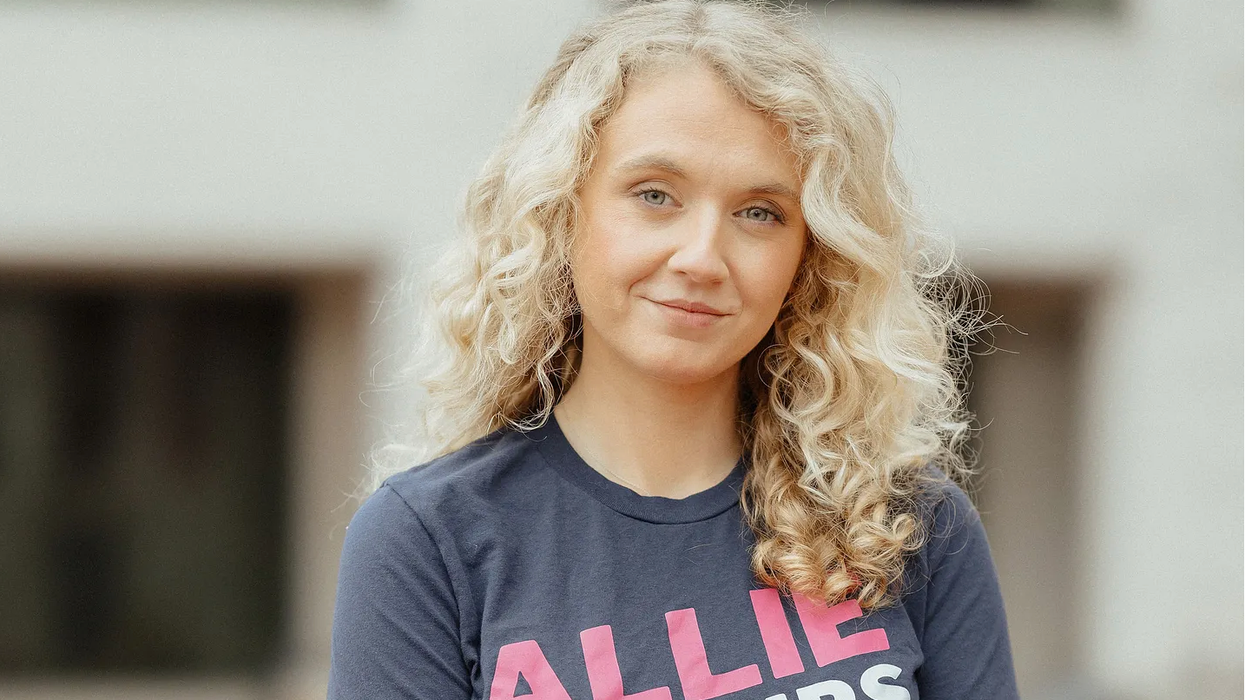
“The aha moment that made me finally decide to go ahead was when I learned about the 10-year-old girl in Ohio, who was raped and had to travel to Indiana to obtain an abortion,” said Allie Phillips, a panelist at the event from Tennessee. “That was the last straw. I had a six-year-old daughter and I was like, ‘That’s it. Nobody is going to protect my daughter like I would, so I’m going to do it.’”

That was the moment, Phillips said, that made her decide to run for office.

The now 30-year-old announced her campaign at the end of 2023, but it took a year of heartache — and a very disturbing conversation with her state representative — to get her to that point.

Phillips and her husband, Bryan, found out they were expecting a daughter at their 15-week sonogram appointment in 2022. Allie said the pregnancy was a celebration for their whole family.

“I remember that I handed Bryan the positive pregnancy test and he was really excited,” she said. “He picked me up and twirled me around, he was so happy.”

Adalie, Phillips’ 6-year-old daughter from a previous relationship, was excited, too. “She told everyone who asked her that she was going to be a big sister,” Phillips said.

The family joyfully named the baby Miley Rose.

‘She only had half a heart working’

But then, a few weeks later, Phillips’ pregnancy took a turn.

“During my 20-week sonogram, Bryan and I were crushed by devastating news,” Phillips said. “Miley’s brain hadn’t developed properly and neither had her kidneys, her stomach, and her bladder. Even though her little heart was beating, she only had half a heart working.”

The fetus had a brain malformation called semilobar holoprosencephaly — a condition that was so severe that it was incompatible with life.

“Not only that, the doctor warned that she could die inside me at any time, and the longer I remained pregnant, the greater the risk would be to my own future fertility and even to my life,” Phillips said.

In Tennessee, abortions are banned after fertilization with very limited exceptions. And while those exceptions allow for saving the life of the mother, Phillips would have to get to the point where her life or a major bodily function required immediate saving before she’d be able to have an abortion.

In states with such extreme abortion bans, like Texas, doctors have left in droves due to the uncertainty around when they can step in to help their patients. There are also countless stories of women dying while waiting for an abortion.

“It was the thought of Adalie motherless that cemented my decision to find a medical facility somewhere that would perform an abortion on me at 20 weeks,” Phillips said. “My mom and I eventually were able to make an appointment at a clinic in New York City that could take me in the next week. But since my husband and I live paycheck to paycheck, I had to appeal to strangers on TikTok to help me raise the $5,000 I needed for the procedure and travel to New York.”

Phillips said that after she had her abortion, she knew she wanted to do something to help people in situations like hers, “regardless of their political views.”

“Shortly after I was back home, I was contacted by the Center for Reproductive Rights, asking if I would join a lawsuit against the Tennessee abortion law. I thought, ‘That’s how I could be of help.’”

Phillips joined the lawsuit, but said she also wanted to work on more immediate change.

A disturbing meeting with her elected official

“I decided to meet with my district representative in the state legislature,” she said. Her idea was a bill she’d called “Miley’s Law,” which would create an exception in Tennessee’s abortion ban allowing for the termination of pregnancies when the fetus has a fatal diagnosis.

She said the meeting with her lawmaker — state Rep. Jeff Burkhart, a Clarksville Republican — was disturbing.

“I quickly learned that these (Republican) lawmakers don’t know anything about reproductive care,” she said. “He was confused because I had had a healthy first pregnancy, and then lost my second one. He told me, ‘I thought only first pregnancies could go bad.’”

Burkhart, a 63-year-old father, told Phillips he’d set up a meeting for her with the state’s attorney general — but never followed through, Phillips said.

“After that, my mom said, ‘Maybe you should run against him,’” Phillips said. “And then my TikTok followers started to say the same thing.”

Burkhart did not respond to a request for comment from Courier Texas.

Fighting back by running for office

Phillips announced her campaign for District 75 in the Tennessee House of Representatives in late 2023. She was 28 years old.

“When I was door-knocking, a lot of people just wanted somebody to listen to them,” she said. “There were times I would stand at someone’s door for an hour, and they would talk about the struggles they had and they would thank me.”

Phillips said she learned that she and the people of her district had more in common than not. Her husband Bryan, a forklift mechanic, and she, a daycare provider, knew what it was like to live paycheck to paycheck, like many of the folks she talked to. And like them, she and her husband cared about their public schools and preventing vouchers from sending tax dollars to private schools.

“There were people who told me, ‘I’ll vote for you for the simple fact that you came and knocked on my door, and that had never happened before,’” Phillips said. “One gentleman told me that he had voted for Republicans for his entire life, and he said he didn’t agree with a lot of things that I was running on.”

But “he said that what was going on in our state and across the country is not okay.”

He cast his ballot for Phillips.

In the summer before the November 2024 election, Phillips and her husband found out they were expecting again. They’d been trying, knowing that it might take some time for her body to fully heal after losing Miley, but not without some hesitation.

“It’s scary to be pregnant in Tennessee,” Phillips said. “It’s scary to be pregnant in this country in general. But I took the risk because I’m not going to let some lawmakers take away the dream that I’ve had since I was a little girl.”

“I got tired of letting them control my brain and my fear. I made the decision to get pregnant again because I want to be — not because JD Vance wants more babies in America, but because it was my dream,” she said.

Phillips announced her pregnancy during her concession speech on Election Night. With just over 11,000 votes, Burkhart won reelection.

Phillips had earned 45 percent of the vote in her district, though — the closest margin of any Democrat in Tennessee trying to flip a seat in the state legislature in 2024.

Moving on

Phillips and her husband learned that the baby they’re expecting is a boy, and they’ve named him Archie. But they’ve worried throughout the whole pregnancy.

“All along I’ve known that if something were to happen to my baby, I wouldn’t be able to get care in Tennessee,” Phillips said.

She had to close her daycare business to campaign, and said if she runs for office again, it’ll be for something more local — like the county commission, city council, or school board. A place “where I could make more of an impact on my local community,” she said.

Phillips said no matter what comes next, she’ll keep sharing her abortion story.

“A lot of the Republican voters I talked to while campaigning didn’t even know we had an abortion ban,” she said. “I will share my story for 20 years if I have to, because it does make a difference.”

Like Phillips, women across the country are increasingly turning their experiences with abortion bans and their passion for reproductive justice into action by running for office. Women like Gina Ortiz Jones, whose lead in the May 3 race for mayor of San Antonio is currently growing.

“As a candidate, I found that what was most effective in connecting with voters was to remain authentic,” Phillips said. “I didn’t change who I was or lie about who I was. I was very open and honest about what I was going through.”

It’s that strategy — along with the determination to stand up and do something — that Phillips shared with the audience in Austin. And as the horror stories about what’s happening to women’s health across the country continue to be shared, it’s becoming more and more likely that women will go into the 2026 election cycle looking for leaders like them.

Reprinted with permission from Courier Texas.

US Attorney General Pam Bondi

How Pam Bondi Could Curtail Abortion And Contraception Access

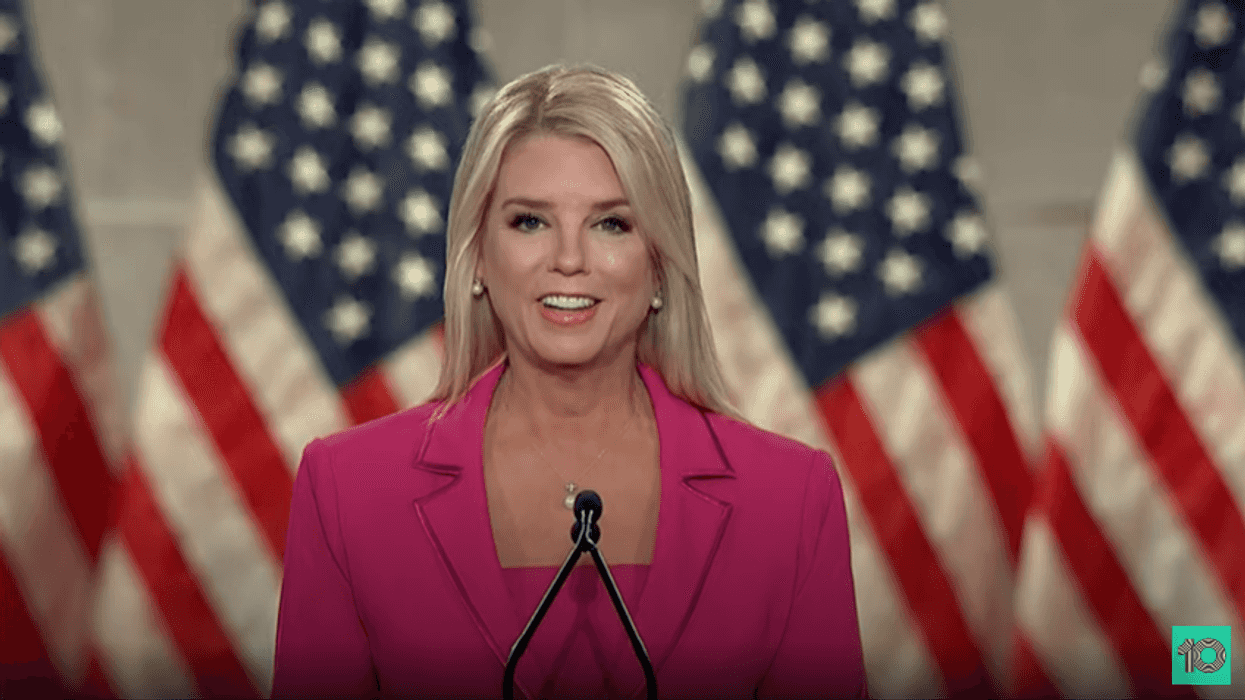
Pam Bondi was sworn in on February 5 as the 87th U.S. attorney general.

Bondi, who served as Florida’s first female attorney general from 2011 to 2019, is now responsible for advising President Donald Trump on legal matters and oversees the Department of Justice.

As Florida attorney general, Bondi supported and argued for restrictions and bans on abortion and contraception. She now has the power to enforce federal laws, including the Comstock Act.

The Comstock Act has been part of the U.S. Code since 1873. The so-called anti-vice law criminalizes the distribution through the U.S. mail of “obscene, lewd, lascivious, indecent, filthy or vile article, matter, thing, device, or substance; and— Every article or thing designed, adapted, or intended for producing abortion, or for any indecent or immoral use.” The punishment for violating the law is a fine, imprisonment for up to five years, or both.

While the scope of the law has been restricted over the years, and it has not been regularly enforced since the 1930s, anti-abortion activists and politicians see it as a tool for blocking the distribution of abortion medications. Bondi has not directly discussed her position on enforcing the Comstock Act, but her record of opposing abortion in Florida indicates the direction she is likely to go.

Bondi supported 24-hour mandatory waiting periods for patients seeking abortions. She joined amicus briefs against access to contraception, arguing the mandate that employers provide insurance coverage for it under the Affordable Care Act was a violation of religious freedom. She also joined with other state attorneys general in filing a brief defending a law in Alabama prohibiting abortion clinics from operating near schools and criminalizing abortion providers over the disposal of fetal tissue. She signed on to an amicus brief in support of Texas Senate Bill 8, which banned abortion after 14-16 weeks of pregnancy.

More recently, when Sen. Cory Booker asked Bondi during her January 14 confirmation hearing whether she would commit to continuing the U.S. Department of Justice’s defense of the U.S. Food and Drug Administration’s approval in 2000 of the abortion medication mifepristone as safe and effective, she said: “I will look at that policy. I am personally pro-life. I have always been pro-life,” adding, “I will not let my personal beliefs affect how I carry out the law.”

However, Bondi recently told Louisiana 18th Judicial District Attorney Tony Clayton, after he issued an indictment against a New York abortion provider on charges of mailing abortion pills to patients in the state, “I would love to work with you,” a possible indication that she might be willing to enforce Comstock or stop shield laws, legislation that protects medical providers from investigation, subpoenas, warrants, and demands for extradition from another state.

On January 22, 13 anti-abortion leaders sent a letter to acting Attorney General James McHenry asking the Department of Justice to begin enforcing Comstock, referring to it as a “trafficking” law.

“Enforcement of the federal anti-abortion trafficking law is crucial to ensuring that abortion pills are not distributed in violation of federal and state laws,” reads the letter, posted online by the anti-abortion group Americans United for Life. “Blatant violations of the federal Act expose women to dangerous and unsafe drugs and undermine the integrity of the medical profession. We ask that the DOJ prioritize investigations and enforcement against those who are involved in the illegal distribution of abortion pills.”

Reprinted with permission from Wisconsin Independent.

RFK Jr.

RFK Jr. Appears In Trump Ad For Catholic Group That Calls IVF 'Evil'

Anti-vaccine commentator and former presidential candidate Robert F. Kennedy Jr., who former President Donald Trump said will have a “big role in healthcare” if Trump wins, recently appeared in an ad for CatholicVote urging people to support the Republican nominee. RFK Jr. was helping a group that works to oppose IVF, which it has labeled “evil” and “immoral.”

CatholicVote is a conservative organization that is supporting Trump. The organization’s president has appeared in right-wing media outlets, including Fox News, Newsmax, and Steve Bannon’s program. The group also posts media content that attacks Democrats and IVF.

It released an October 24 video featuring Kennedy, who stated that “President Trump has promised to take bold action on our economy, on the border, and on restoring children’s health” and said, “I hope you’ll join me in supporting Donald Trump.”

In addition to supporting Trump, CatholicVote also works to end IVF. It has a supposed explainer page on its website that criticizes IVF as unethical. It writes:

At first glance, IVF seems innocuous – simply a procedure to help parents conceive a child. However, the morality and ethics of the procedure begin before the embryos are created.

To help stimulate egg production, women have to take various steps to increase the fertility of their eggs and facilitate ovulation. During retrieval, eggs are removed from the ovaries with a suctioning device or needle that harvests more than one egg at a time, with no guarantee that any of the eggs will be healthy or able to be used to create embryos.

For men, the process is different. Sperm can be collected at any time and even frozen for use at a later date and is often collected through unorthodox means.

The page adds: “During fertilization and implantation, embryos that are considered to be unviable are either ‘discarded,’ used for scientific research, or frozen indefinitely. These standard practices violate the dignity of the human person, whose life begins at conception.”

The group then urges readers to reconsider IVF.

CatholicVote also shares numerous anti-IVF materials on its website, including “Catholic Woman Who Struggled With Infertility for Years: IVF Is Not the Answer” and “Lila Rose Praises Decision of Alabama Judge to Affirm Life at Fertilization.”

In one piece, CatholicVote attacked former first lady Michelle Obama for promoting and using IVF. One section of the piece was titled “Suffering leads to evil means to create God’s children.” The piece added: “IVF is an immoral process which treats humans like chattel and often ends in their deaths. It is therefore important that pro-life advocates be ready to articulately and compassionately stand against Obama’s contribution to the anti-life problem which IVF represents.”

As a candidate, Kennedy made contradictory remarks about abortion. And while saying he is not against IVF, he claimed that there are more important factors to consider regarding “the alarming decline in fertility” and that “this issue is so much bigger than IVF.” He also picked running mate Nicole Shanahan, who called IVF “one of the biggest lies that’s being told about women’s health today.”

Reprinted with permission from Media Matters.

Shop our Store

Headlines

Editor's Blog

Trending

World