Tag: roe v. wade
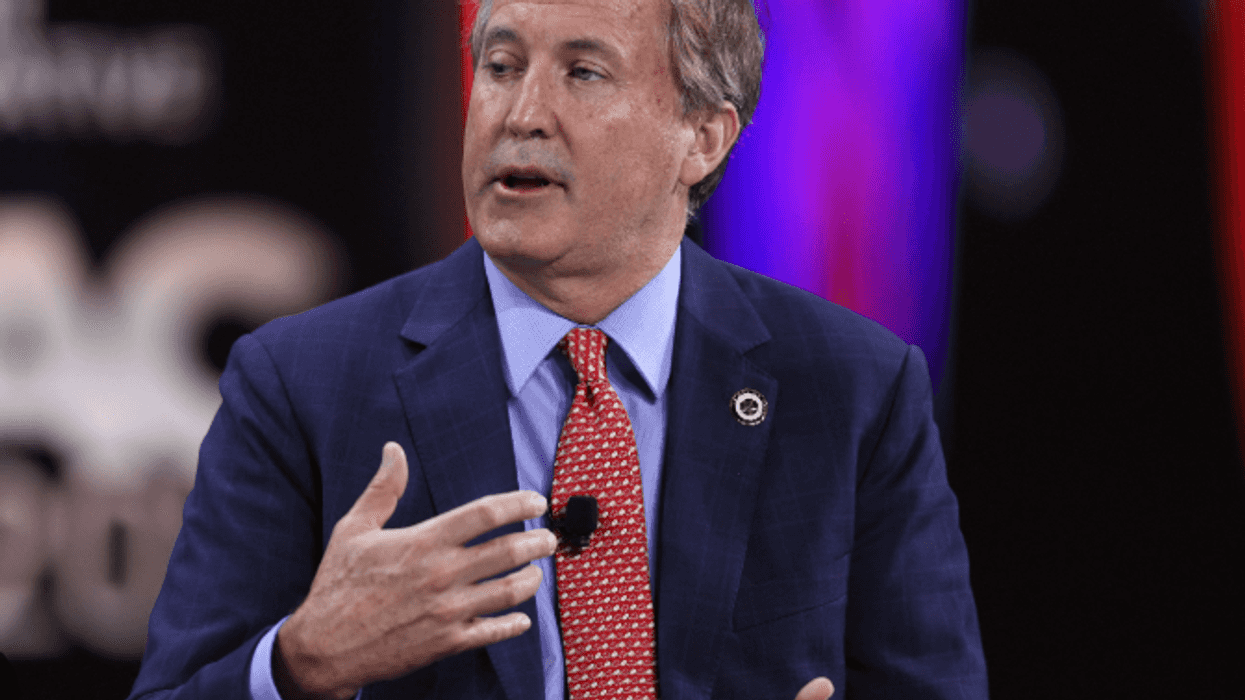
Ken Paxton

How Ken Paxton Expanded His Anti-Abortion Crusade Far Beyond Texas

Early in his tenure as Texas attorney general, Ken Paxton issued a statement commemorating what he believed was a national tragedy.

“It’s impossible to fill the void of more than 50 million missing human beings,” he said in 2016. He was marking the 43rd anniversary of Roe v. Wade, the Supreme Court ruling that protected abortion rights — and had long stood in the way of efforts to ban terminations in early pregnancy, when most abortions occur.

Paxton spent the years that followed testing Roe’s limits and ultimately prevailed where others had failed: In 2021, he defended a near-total abortion ban that Texas legislators had designed to evade conventional legal challenges. The U.S. Supreme Court allowed it to take effect while Roe remained in force.

After the justices overturned Roe the following year, Paxton kept pushing, pursuing new ways to extend the reach of Texas’ restrictions. He prevailed against the Biden administration, picked fights with states that protect abortion access and pioneered strategies that his peers later adopted or expanded.

While Paxton’s tenure as attorney general has drawn criticism from across the political spectrum for his personal scandals and alleged misuse of the office, detractors and allies alike agree that his signal achievement as the state’s top legal official has been advancing restrictions on abortion.

A close look at his record shows a clear pattern in his successes: He relentlessly tests the limits of the law and employs novel legal strategies to advance his goals.

Paxton’s national role as an anti-abortion warrior would change if he wins his U.S. Senate race. As Texas attorney general, he has been able to act largely on his own authority. If he prevails in November, he would become one of 100 senators in a chamber where most legislation needs 60 votes to overcome a filibuster.

But allies who have witnessed his victories see an opening.

“He’ll have the ability to use some of the laws that he’s defended in Texas as influence to draft legislation in the U.S. Senate,” said Mary Elizabeth Castle, director of government relations at Texas Values, a Christian advocacy group that supports a national abortion ban.

Legal experts and advocates on both sides expect he could join colleagues who are pressuring the Food and Drug Administration to revoke its approval of the abortion drug mifepristone.

Anti-abortion activists at the state and federal level are also trying to secure legal rights for fetuses, which could have implications for reproductive care like birth control and in vitro fertilization. Paxton, who has called himself a strong supporter of IVF, recently said he was open to restrictions intended to prevent the loss of fertilized eggs.

His litigation has also raised questions that experts expect the Supreme Court to confront, including whether a federal law, which mandates hospitals provide stabilizing care to patients having an emergency, overrides state abortion bans; whether to treat a fetus as a separate patient that has its own emergency care rights; and how far states can go in pursuing out-of-state doctors who prescribe abortion medication to patients in states where it’s banned.

During the current race, abortion has played a far smaller role than questions about Paxton’s ethics. His Democratic opponent, James Talarico, has said that he supports restoring a federal right to abortion and that his Christian faith calls for an end to “extreme” laws that Paxton has defended and that have forced women to flee the state for emergency abortion care.

Lately, Paxton has said little about abortion — an issue on which he has defended restrictions more stringent than many Texans say they want.

But those who have watched Paxton extend the reach of Texas law beyond its borders are paying close attention to his Senate bid.

Dr. Jennifer Villavicencio, an abortion provider, said she has felt compelled to move her family twice to states with strong laws shielding doctors from out-of-state litigation, partly out of concern that Paxton is creating a blueprint for targeting providers like her.

“It’s very disheartening and scary to think that it’s maybe coming to the U.S. Senate,” she said.

Paxton successfully defended a near-total abortion ban before Roe v. Wade was struck down.

When Paxton became Texas attorney general in 2015, there was no ambiguity about where he stood on abortion.

Raised by an anti-abortion activist, he married his sweetheart from a Christian college, who spoke proudly about the fact that she was adopted, saying her birth mother “chose life.” She campaigned for Paxton, but he had his own bona fides. A law he’d co-sponsored as a state senator banned almost all abortions after 20 weeks.

Similar 20-week bans had taken root across the country as decades of court rulings chipped away at Roe, but no state had managed to enforce a ban as early as six weeks. More than a dozen tried, passing laws that prohibited abortion when cardiac activity could be detected. One after another, they were blocked by judges.

Then, in 2021, a Texas lawyer named Jonathan Mitchell worked with legislators to craft a law that would withstand similar challenges. Instead of having state officials enforce their “heartbeat law,” the new act, referred to as Senate Bill 8, allowed citizens to sue physicians they suspected were providing abortions. The law offered up to $10,000 if they won.

When abortion providers and President Joe Biden’s administration separately challenged the law in federal court, Paxton’s office argued that state officials couldn’t be ordered to stop enforcing it because they had no power to do so in the first place. Only private citizens could.

“Because the executive officials are expressly prohibited from enforcing SB 8,” his office wrote to the Supreme Court, “there is nothing for a federal court to enjoin.”

The Supreme Court agreed that Paxton couldn’t be sued because “the petitioners have not identified any enforcement authority the attorney general possesses in connection with S. B. 8 that a federal court might enjoin him from exercising.”

The law remained in effect, becoming the first enforceable six-week ban under Roe.

Legislators in Idaho and Oklahoma subsequently passed similar laws.

For Dr. Sam Dickman, who worked at a San Antonio Planned Parenthood, the implications were clear: “I was going to need to either entirely change the type of medicine I was providing or leave the state,” he said. He opted for the latter, moving to Montana, where abortion is legal until viability, or roughly 24 weeks.

Days after the Texas ban took effect, Josseli Barnica arrived at a Houston hospital in the midst of a miscarriage. She was 17 weeks pregnant and her fetus’s head was pressed up against her dilated cervix. Because the situation put her at high risk of developing an infection, medical experts said doctors should have offered to speed up delivery or empty her uterus; the fetus was not viable, and losing the pregnancy was inevitable.

But the fetus’s heart was still beating.

Barnica relayed to her husband what she said her medical providers had told her: “They had to wait until there was no heartbeat,” he told ProPublica in Spanish. “It would be a crime to give her an abortion.”

For 40 hours, Barnica waited, her uterus exposed to bacteria.

She died days later of sepsis. Medical experts told ProPublica her doctors did not follow the proper standard of care and that Barnica’s death was preventable.

In a statement, HCA Healthcare, the hospital chain that treated her, said “our responsibility is to be in compliance with applicable state and federal laws and regulations” and said that physicians exercise their independent judgment.

Paxton blocked federal guidance for emergency abortion care, doing harm far beyond Texas

When the Supreme Court overturned the constitutional right to abortion on June 24, 2022, Paxton dismissed his staff at noon to celebrate. He would later designate the date as a paid office holiday, Sanctity of Life Day.

The Texas Legislature had prepared for the occasion, passing a law that went into effect shortly after the overturning of Roe. The ban threatened doctors with up to 99 years in prison if they performed an abortion. But soon came what Paxton framed as a federal attempt to thwart the state law.

The Biden administration issued a memo to doctors in states with abortion bans saying that a federal emergency care law protected their medical judgment, “regardless of the restrictions in the state.”

The federal Health and Human Services secretary at the time said doctors had an obligation to follow the Emergency Medical Treatment and Active Labor Act, better known as EMTALA. The law requires hospitals that accept federal funding to screen and stabilize every patient who arrives.

For those with complications such as severe preeclampsia, a potentially fatal, pregnancy-related blood pressure disorder, stabilizing a patient might require performing an abortion, even if the state forbids it, the guidance said. “The physician must provide that treatment,” it said, bolding the word “must.”

Paxton sued, accusing the administration of an attempt to use federal law “to transform every emergency room in the country into a walk-in abortion clinic.”

He argued EMTALA was created to make sure hospitals didn’t dump uninsured patients back on the street without treatment, not to override state laws. He took the argument a step further, suggesting that under EMTALA, doctors might need to consider “the life of the unborn child.”

The argument was novel, six legal experts told ProPublica.

“He’s basically suing the federal government to protect Texas’ right to force pregnant women to not get abortions, even when their health is threatened,” said Greer Donley, a law professor at the University of Pittsburgh. “I remember thinking, ‘Wow, that’s radical.’”

Medical groups warned patients would die.

But a federal judge sided with Paxton that August, and the 5th U.S. Circuit Court of Appeals affirmed the decision in January 2024.

The ruling did more than keep the administration from enforcing its EMTALA interpretation in Texas.

It barred the federal government from pursuing cases against members of two anti-abortion medical organizations that had joined Paxton’s suit as plaintiffs, the American Association of Pro-Life Obstetricians and Gynecologists and the Christian Medical & Dental Associations. This effectively exempted them from having to follow the federal guidance, regardless of where they worked.

It also served as immediate litigation fodder for another state fighting to enforce its own abortion ban.

Idaho had not had the same success in court as Texas. After the Biden administration sued, arguing the state’s ban conflicted with EMTALA, Idaho lost in lower and appellate courts, leaving its ban effectively frozen in emergency cases, with doctors instructed to follow the federal guidance.

But Paxton’s 5th Circuit win on Jan. 2, 2024, gave Idaho’s ban a lifeline. The ruling conflicted with the 9th Circuit’s decision in Idaho, creating the kind of disagreement between federal appeals courts that the Supreme Court often steps in to resolve.

The following day, attorneys representing Idaho asked the high court to do just that, saying Paxton’s success showed they were “likely to prevail.” In the meantime, they asked the court to unfreeze the ban.

On Jan. 5, the Supreme Court allowed Idaho to fully enforce its ban while the case proceeded.

Emergency doctors began hesitating over when they could legally provide abortions, Dr. Jim Souza, chief physician at St. Luke’s Health System, said on a press call at the time, according to NPR. “Is she septic enough for me to do this abortion and not risk going to jail and losing my license?”

In the three months that followed, St. Luke’s, the state’s largest hospital system, said it had to airlift six patients out of the state for abortions.

In Texas, ProPublica has documented the consequences for women experiencing pregnancy emergencies.

When Tierra Walker sought care later that year in San Antonio, she developed preeclampsia and ultimately died from it, ProPublica previously reported. None of the 90 physicians involved in her care offered her the option of terminating her pregnancy, even after she asked if doing so might keep her safe.

Her family sued Paxton in September, along with state medical officials and several healthcare providers, alleging that Texas’ abortion restrictions and the care Walker received led to her death. Paxton has not responded to the suit and did not respond to a request seeking comment.

ProPublica has identified at least two other pregnant Texas women who died without what experts said was appropriate emergency care. Paxton has not publicly commented on any of their deaths and did not respond to ProPublica’s questions about them. Our analysis also found worsening outcomes across the state for patients experiencing pregnancy complications.

The reach of Paxton’s legal victory may not end there.

The Supreme Court still hasn’t resolved the conflict between the circuit rulings. It declined to do so in the Idaho case, and after President Donald Trump took office, his administration dropped the suit and rescinded the EMTALA guidance.

But legal experts told ProPublica the Supreme Court has yet to resolve core questions that Paxton’s litigation raised: whether EMTALA preempts state abortion laws and whether a fetus also has a right to emergency treatment that could conflict with the mother’s interests in cases where her health is at risk.

To guard against future rulings, a reproductive rights advocacy group called All* Above All is pushing state-level legislation to safeguard emergency care. “We’re seeing the chaos right now and the confusion,” said its president, Nourbese Flint.

Paxton tested expansive new ways to pursue abortion providers. Other states are following his lead.

On December 7, 2023, a state judge in Austin issued a ruling that Paxton immediately moved to stop.

A 31-year-old mother named Kate Cox wanted permission to get an abortion. She was 20 weeks pregnant and carrying a fetus diagnosed with trisomy 18, a genetic condition that kills the vast majority of babies born with it.

Texas doesn’t allow abortions for fatal fetal anomalies, but Cox’s doctor argued that if she was forced to give birth, it could imperil her ability to get pregnant again. It was also medically risky: Cox had already had two children by cesarean section, and the chances of complications increase with each procedure.

The day a Travis County district court judge granted her request, Paxton took a step legal experts told ProPublica they had not seen another state attorney general take:

He sent letters to three hospitals where Cox’s doctor had admitting privileges, threatening legal action if the doctor performed the abortion a judge said she could have. The court order, he wrote, did not insulate hospitals, doctors, or anyone else from civil and criminal liability for violating Texas’ abortion laws.

At the same time, he appealed the case to the Texas Supreme Court, saying that Cox did not face the kind of threat to her life that fell under the law’s exception. If legislators had wanted to write an exception for fatal fetal anomalies, he said, they would have done so.

“The Texas Legislature did not intend for courts to become revolving doors of permission slips to obtain abortions,” he said.

The Texas Supreme Court agreed with Paxton and reversed the lower court’s ruling. By that time, Cox had sought an abortion out of state.

“It was incredibly scary,” Cox told ProPublica. “We saw in my case that Texas will go after doctors.”

Paxton was also the first — and, so far, the only — attorney general to criminally prosecute a provider in his state for violating an abortion ban.

According to court documents, investigators got an anonymous tip alleging that abortions were being performed at a medical clinic that catered to low-income, Spanish-speaking patients, managed by Maria Rojas, a licensed midwife.

Rojas was arrested and charged with practicing medicine without a license and violating the state’s abortion ban. Paxton also moved to temporarily shut down the clinic and others she ran while the case progressed through court. Months after her arrest, Paxton announced he had arrested and indicted eight other clinic staffers for practicing medicine without a license.

Rojas has pleaded not guilty to the charges. Her attorneys have accused Paxton’s office of a shoddy investigation and argued that at least one case prosecutors were treating as an abortion was actually the management of a patient’s miscarriage.

A trial has not yet been scheduled, but an appeals court this summer overturned the order shuttering the clinics, finding the state had not presented sufficient admissible evidence to justify a temporary injunction. Paxton said he is appealing the ruling. The court did not rule on whether Rojas had actually performed illegal abortions.

Paxton has not stopped at the state border in his pursuit of doctors.

In December 2024, he sued Dr. Margaret Carpenter, a New York-based physician, accusing her of violating multiple Texas laws when she treated a patient via telehealth who lived in Plano, a suburb north of Dallas, and prescribed her abortion medication.

Because the patient was based in Texas, he argued, Carpenter was subject to laws there that banned abortion and required a license to practice in the state.

Carpenter didn’t respond to the suit, so Paxton won by default. But Texas was unable to collect on more than $100,000 in civil fines and court fees that resulted; a New York county clerk refused to register the judgment, invoking a “shield law” that protects providers of abortion care that is legal in New York from certain out-of-state investigations, prosecutions and judgments. At least 22 states have passed shield laws since Roe was overturned, and New York’s is among the strongest. Carpenter did not respond to a request seeking comment and has not publicly responded to the case.

A New York judge dismissed Paxton’s case seeking to enforce the judgment, but Paxton didn’t give up, filing two more civil suits this year against practitioners and organizations in Delaware and California that mail abortion medication to Texas.

Three other state attorneys general have now expanded on the strategy. Last month, Louisiana Attorney General Liz Murrill — who brought criminal charges against Carpenter after Paxton sued her (and has faced similar obstacles in New York) — joined the attorneys general of Arkansas and Alabama in filing a sweeping federal civil suit against out-of-state providers of abortion pills. The case names some of the same providers Paxton pursued; they have challenged the suits. The three attorneys general filed a separate action directly with the Supreme Court asking it to strike down shield laws in New York, Massachusetts and California.

Paxton has moved beyond doctors to target other entities that help patients obtain abortions. Mary Ziegler, an abortion historian and professor of law at University of California, Davis, called him “an innovator in terms of broadening the network of people who were seen as culprits or aiders or abettors.”

He sent cease-and-desist letters to organizations that ship abortion medication into Texas; the attorney general of Alabama subsequently used similar tactics. And Paxton sued cities in his state to stop them from disbursing funds to help women travel for abortions — a move the Legislature followed with a law banning such funding.

Following his legal victory against the city of San Antonio early this year, in which it was forced to end the $100,000 program, Paxton made a vow:

“I will always do everything in my power to prevent radicals from manipulating the system to murder innocent babies.”

Reprinted with permission from ProPublica

Declaring War Against Abortion Pills, Kennedy Jeopardizes Women's Health

Declaring War Against Abortion Pills, Kennedy Jeopardizes Women's Health

If you thought that Donald Trump and his Republican enablers were finished with with their attacks on abortion now that 18 Red states have extreme abortion bans with no exceptions for rape or incest, you would be wrong.

Anti-abortion organizations which funnel big bucks to Republican campaigns are furious that strict abortion bans have not stopped American women from making their own decisions about if and when they want children.

That’s why Robert F. Kennedy Jr., Trump’s health and human services secretary, has taken his first shot in what will be a war against the pill, mifepristone, which is an essential drug in the safe and effective two-pill medication abortion regimen.

He announced that he would be doing a “complete review” of the “safety”of mifepristone during a Senate committee hearing in May.

He is basing his review, which he ordered his FDA Commissioner Marty Makary to undertake after publication of a recenr study by the Ethics & Public Policy Center ( the EPPC), which claimed that almost ‘11% of the patients who took mifepristone ‘ experienced a severe adverse event.’

That’s way out of wack with dozens of other studies which show that serious complications from mifepristone occur just 1% of the time and in general, a pregnancy ending in any abortion is 14 times less likely to result in a mother dying, than in actual childbirth.

Neverthess, the politically -motivated Kennedy, who wants to stay in line with Trump’s anti-abortion goals, told the Senate committee that he found the EPPC study, called ‘The Abortion Pill Harms Women’, “alarming.”

Furious and frustrated women’s reproductive health experts have strenuously disputed the results of that study which Kennedy now using for the basis of his review of mifepristone.

They have condemned this study as “flawed”, the data “distorted”, “junk science”and have called out the source of the data used in the study as not “transparent.”

It’s important to know that the organization which produced the report, the Ethics & Public Policy Center ( EPPC) isn’t any disinterested, non partisan player in the anti-abortion battles.

It’s a right-wing think tank which lists its top priority on its website as: “Pushing back against the extreme progressive agenda while building a consensus for conservatives.”

And guess what, one of its board members is the infamous reactionary and anti abortion activist Leonard Leo, who is co-chairman of the Federalist Society’s board of directors.

The Federalist Society, an exceedingly conservative legal group, just happened to have recommended Neil Gorsuch, Brett Kavanaugh, and Amy Coney Barrett to Donald Trump as potential justices for the Supreme Court.

Those three Trump nominees were confirmed to the Supreme Court along with Federalist Society members Clarence Thomas and Samuel Alito and they overturned Roe v Wade along with Chief Justice John Roberts in June 2022.

Mission accomplished by the Federalist Society.

So this ‘study’ was produced by an organization with ties to Leonard Leo, who has led a decades- long campaign to roll back women’s reproductive rights and to shut down Planned Parenthood.

Based on the EPPC study, just recently this September, Kennedy and Makary wrote a letter to 22 Republican state attorneys general announcing that the FDA is conducting its own review of mifepristone claiming that the Trump administration ”will ensure that women’s health is properly protected.”

Proof that Trump and Kennedy don't give a rat's ass about women's health

However this is total B.S. The Trump administration, including HHS Secretary Kennedy, don’t really give a rat’s ass about the health of American women.

This is the same administration that deliberately decided by passing Trump’s Big ‘Ugly’ Bill, not to ensure that women’s health is being properly protected when it comes to childbirth.

He and the Congressional Republicans massively cut funding for Medicaid which covers the cost of childbirth for 41 percent of women in the U.S.. Yes, that’s what’s in the so-called ‘Big Beautiful Bill.’

Now 41 percent of the women in this country will be lucky to be admitted to a hospital’s emergency department to give birth but will then be handed a bill for thousands of dollars. If they can’t afford that, they will be giving birth in hospital parking lots all over America.

So yah, Kennedy and his ilk are not investigating mifepristone because they claim that they want to ‘protect’ all of America’s delicate womenfolk.

On top of this, Trump’s administration is putting the reproductive health of 24 million American women who rely on Medicaid for their birth control, cancer screening, and vaccinations in jeopardy, according to a ‘Women’s Health and Reproductive Care’ study by the Commonwealth Fund in 2024.

American obstetricians and gynecologists now fear that Kennedy's “review” could be the first step in a plan to withdraw mifepristone from use in the U.S.

After all, Project 2025 calls for eliminating all access to mifepristone as a key step in its overall plan to obliterate access to all abortions in the U.S. And Donald Trump has been quickly implementing a multitude of Project 2025’s proposals.

The American College of Obstetricians ( ACOG ) fired back at Kennedy’s review of ‘mifepristone,’ issuing a statement that “mifepristone is safe, effective and an integral part of the medical care that our members provide to their patients.”

“We urge availability of mifepristone that is equitable, is free from needlessly burdensome restrictions and that reflects the full body of reputable, peer-reviewed, and scientifically valid medical literature demonstrating that mifepristone is an incredibly safe medication.”

Mifepristone was approved in the United States for use in abortions in 2000 and studies have shown it to be safer than penicillin and Viagra.

The doctors that I interviewed had even stronger words for Kennedy than ACOG.

.“This ( the study) is meant to take things away from us purely for political reasons,” charged Dr. Kristin Lyerly, a Wisconsin obstetrician-gynecologist, who practices across the state border in rural Minnesota. “Mifepristone is incredibly safe, incredibly well studied. We have years and years of data from the US and and beyond.”

“There’s even more data from outside the United States where they don’t have this political interference. Mifepristone is safe, it’s effective. It is necessary and RFK Jr has no business re-examining this data just to take away effective treatment from my patients.”

Dr. Alhambra Frarey, the chief medical officer of Planned Parenthood Southeastern Pennsylvania, asserts that it is “absolutely clear that RFK Jr. is not interested in promoting the health and safety of Americans.”

“Instead he is trying to promote the anti abortion agenda to continue to threaten access to what is in fact life saving, safe and effective medications for abortion.”

Doctors fire back at plans to ban abortion and the most effective contraceptives

Dr. Lou Rubino agrees.”It’s not out of the realm of possibility that he will do what he does with other things, which is ignore the science,” says Rubino, the medical director of the Meadow Reproductive Health and Wellness clinic in Virginia.

“That seems to be something this administration does repeatedly”, she adds about Kennedy and Trump, who just asserted without any scientific evidence that autism is caused by acetaminophen, the active ingredient in Tylenol.

Dr. Lyerly is disgusted and contends that Kennedy “is not a scientist and is entirely political." She says, “ it’s hard to watch someone with such an important role in this country, who is in charge of some of the most vulnerable people in this country, have a complete lack of respect for the things they hold dear.”

“Their healthcare, their lives and their families. And here he is as the nation’s highest health officer.”

Kennedy and his FDA Commissioner Marty Makary, who has a history of spouting abortion disinformation on Fox News, are no doubt under intense pressure by anti-abortion groups that are on a crusade to roll back access to abortion pills.

In 2024, two years after Roe v Wade was overturned, the number of abortions in the U.S. actually increased to 1.14 million up from 1.05 million in 2023, despite the extreme state bans. Included in that were the number of pregnant women who crossed state lines for an abortion -- 155,000 in 2024, double the number since 2020.

Not only that, abortions using the FDA approved two-pill regimen to terminate pregnancies, have increased in states that have banned abortions.

In fact, there are now three times as many medication abortions using the two drugs, mifepristone and misoprostol, in states that have tried to prevent women from having abortions by enacting strict bans, according to a study by the University of Texas at Austin.

Sixty- three per cent of the abortions in the country are now done by women in the privacy of their own homes using the two-pill regimen. That’s up from 53 percent in 2020.

That’s why infuriated Republican legislators in Texas just passed the first law - HB7 - in the country, banning abortion pills from even entering their state.

They had a “temper tantrum” because they have not been able to stop Texas women from using abortion pills which they have been able to access through doctors in abortion-legal states, says Nimra Chowdhry, a senior state legislative counsel with the Center For Reproductive rights.

Now South Caroline Republicans are also trying to push through a cruel anti abortion bill -- Senate Bill 323 -- which would make it illegal to possess abortion pills in that state.

Not only that, Senate Bill 323, if passed, would also be the most extreme ban in the country and the first to criminally prosecute women who have an abortion as committing the felony of murder.

Women could be executed for having an illegal abortion since South Carolina law carries the death penalty for murder. If they escape the death sentence, they would still face 30 years in prison for that crime.

So much for Republicans desperately trying to ‘protect’ women. They are itching to kill them.

They are also itching to get them pregnant with lots of unwanted pregnancies. The proposed South Carolina law would also ban most forms of contraception and in vitro fertilization (IVF).

If RFK Jr decides after his “safety review to make abortion pills difficult or impossible to access, doctors Rubino, Frarey and Lyerly, say that they and other OBGYNs will be prevented from providing necessary reproductive healthcare to American women.

Women living in states with abortion bans will be forced to travel hundreds of miles for a surgical abortion at a clinic in a state where abortion is still legal.

Miscarriages will become deadly if mifepristone is banned

However, many pregnant women won’t be able to afford to travel to a clinic hundreds of miles away, something which can cost thousands of dollars, points out Dr Rubino. They may be forced to give birth to a baby that they can’t afford to care for or be mentally prepared to raise.

“We know that people who want to access an abortion and are not able to, consistently have worse outcomes over the rest of their lives,” says Dr. Rubino. “Worse outcomes in terms of their health - mental and physical - and these people over time will do worse economically.”

“We know that these people will have fewer opportunities over the rest of their lives.”

Restricting access to mifepristone won’t just harm women who need abortions, it will also make far more miscarriages dangerous and painful, points out Dr.Frarey.

That’s because doctors prescribe the same two pill regimen used in abortions - mifepristone and misoprostol - to help women safely manage miscarriages.

Without mifepristone and just using misoprostol, it means more bleeding and cramping for miscarrying women, she explains . It also means there’s a greater potential for tissue from the pregnancy being retained in the uterus, instead of expelled.

That puts women at much greater risk of developing an infection inside their uteruses, even a life-threatening case of sepsis.

Three women have already been documented to have died in Texas hospitals when they retained pregnancy tissue in their uteruses and developed deadly sepsis infections or they hemorrhaged and hospitals waited far too long to treat them.

Have I made my case, that if RFK Jr bans mifepristone, it’s absolutely has zero to do with ‘protecting’ the health of women? That’s the very least of their concerns.

It makes no sense to ban mifepristone, which is so safe and effective, points out Dr. Lyerly. “The data tells us that the chance of a serious complication is much less than one percent and that’s been my personal experience as well with patients.”

“If we can’t provide the most effective treatment for our patients ( who need abortions or miscarriage care ) that’s frankly, just a crime”, she asserts.

Kennedy, Donald Trump, and Republican lawmakers have no business interfering in women’s reproductive healthcare, agrees Dr. Frarey.

“Reproductive healthcare needs to be determined by patients and their doctors,” she insists. ”Patients don’t need politicians presenting more barriers and more legislation on how to manage something that should be bread and butter OBGYN miscarriage management.”

“You can’t legislate healthcare. It is more nuanced and complicated than that.This is why people die when you place bans and restrictions around lifesaving care.”

Yes, that is true , but sadly it won’t stop Trump or RFK Jr from doing the work demanded by their billionaire anti abortion donors and the powerful anti abortion organizations, who also fill Republican campaign coffers!

Only you can stop them by voting all Republicans out of office at your local, county, state and also federal elections, because they are uniformly anti-abortion and now anti-birth control, on top of it all.

If your live in Virginia or New Jersey or in New York City, make sure you vote early or get out and vote on Election Day, November 4, for the Democratic candidates running for office. Your uterus will thank you!

Bonnie Fuller is the former CEO and editor-in-chief of HollywoodLife.com and former editor-in-chief of Glamour, Cosmopolitan, Marie Claire, and USWeekly.

Reprinted with permission from Your Body, Your Choice Substack. Please consider subscribing.

Two Georgia Moms Were The First Women Killed By Abortion Bans

Two Georgia Moms Were The First Women Killed By Abortion Bans

Amber Thurman was a beautiful 28 year-old single mom in Atlanta with a beaming smile and an adorable six year -old son. She was a medical assistant with big plans to become a nurse.

But on August 20, 2022 she was dead, her uterus ravaged by a sepsis infection from an incomplete abortion. For 20 hours doctors at an Atlanta hospital delayed providing her with a life-saving dilation and curettage (D&C) procedure. By the time surgeons got her into the operating room, they were racing to try to save her life.

Just two weeks before that, Georgia’s Governor Brian Kemp had. signed the state’s new “Heartbeat” abortion ban into law and announced that he was “overjoyed” that the ban would keep Georgia women “safe” and “healthy.”

Abortions could no longer be practiced in the state after a fetal heartbeat was detected, usually around six weeks, unless a woman was a victim of rape or incest or at risk of dying. The criminal penalty for medical providers who didn’t adhere to the strict guidelines was up to 10 years in prison and the revocation of their medical licenses.

The result for for Amber who arrived by ambulance after vomiting up blood and passing out at home, was that she didn’t didn’t quickly receive what had just recently been a routine D & C to clear her uterus. Her case was now a frightening hot potato for the doctors at the hospital.

Was she close enough to death to meet the new law’s requirement when her white blood count and her blood pressure fell dangerously low? How about when antibiotics weren’t enough to curb her “acute sepsis’ infection? Or when she became at risk for bleeding out? Or when her vital organs began to fail?

When was she close enough to death to qualify for a legal abortion under Georgia’s ban?

By the time the hospital physicians believed they were meeting the new law’s standard, Amber died on the operating table.

This loving young mother tragically became the first known American woman to die from a Trump abortion ban less than two months after Roe v. Wade was overturned on June 24, 2022 by the Supreme Court’s conservative majority.

It only took two months.

However, her “preventable” death has just now became public more than two years later, when the ProPublica news outlet published the news after they obtained a report from the official Georgia state committee which investigates maternal deaths.

The committee which reports to the state’s Department of Health conducted a two year examination of the circumstances of Amber’s death which followed a rare complication from her two-pill abortion medication regime.

She received the pills when she drove to a North Carolina clinic four hours away, where abortion was still legal. Only 32 deaths have been linked to medication abortion pills between 2000 and 2022 and almost 6,000,000 American women have used them. They are considered safer than Viagra.

Unfortunately in Amber’s case, the pills failed to expel all the fetal contents from her uterus. It’s because the young woman didn’t receive the known standard of care -- the D & C -- quickly for her dire condition that the committee ruled that her death was “preventable.”

Now make no mistake -- this is what America’s women and those who love them must accept. Abortions bans cause young, healthy women to die. Death is now a risk for ANY pregnancy in the 22 states that have enacted the Trump bans.

And if the former president is re-elected on November 5, death will be a chance that every woman of reproductive age will take in America every time she decides to get pregnant or accidentally becomes pregnant.

That’s because Donald Trump -- no matter how many times he tries to confuse you about his stance on abortion -- WILL end it nationally, just as his Christian nationalist and evangelical followers have demanded.

You must have noticed how Trump is proudly crowing that HE’s The One who was able to “kill Roe V Wade” after 50 years. HE’s the one who appointed the three ultra right ring judges that he knew would do it. He promised to do it and he did!

If Trump and ‘pro life’ zealot JD Vance are elected, abortion in America is over.

If the pair can do it legislatively they will. If not, they’ll follow their Project 2025 handbook and ‘backdoor’ their ban. Their compliant Justice Department will enforce the 1873 Comstock Act, preventing the transportation of any abortion medications or surgical equipment across state lines.

Then on top of that, Trump’s obedient appointed FDA chief will withdraw the abortions pills as well as several forms of popular birth control from the market.

Done.

Women like Amber and Texans Amanda Zurawski, Kate Cox, Dr. Austin Dennard, and Madysyn Anderson, Tennessean Allie Phillips and Floridian Anya Cook and millions of women in the 22 Trump abortion ban states already know what it’s like to have no right to make decisions about their bodies.

They’ve been forced to flee to other states for abortions of unviable babies to save their own lives. They’ve lost their fertility after sepsis ravaged their reproductive organs when their water broke at 18 weeks. They’ve been left to bleed out in public restrooms after miscarriages until they were close enough to death for doctors to legally treat them .

Meanwhile in Amber’s state of Georgia, OBGYNs are practicing “under an element of fear," as Dr. Didi Saint Louis, an Atlanta OBGYN, confirms to me. “You don’t know what situation you might encounter that could land you in jail or cause you to lose your medical license.”

“I shouldn’t have to be fearing that I will go to jail when I’m treating patients. I can see why women would be afraid to seek care and to be honest about their situations so we can treat them as effectively as possible,” says the doctor, who has been practicing for more than 20 years. “Some women don’t know what the law is. It’s confusing.”

She stresses that since Georgia’s abortion ban was enacted, doctors feel like “we have our hands tied behind our backs.” And while she doesn’t understand why the hospital and doctor who treated Amber delayed urgent care for so long, she explains that after the law was enacted “we were uncertain and confused about how to interpret the law and how we could provide care.”

“We were scrambling to understand it.”

She says the abortion ban adds delays to the care of patients with complications, miscarriages, incomplete abortions, and other conditions which require consultations with hospital leadership, risk managers, and lawyers before proceeding.

“Sometimes it makes it difficult to practice medicine.” in Georgia admits the doctor who is a member of the Committee to Protect Health Care’s National Reproductive Freedom Task Force.

And sometimes she has to tell pregnant patients with serious health risks that they may have to leave the state to get an abortion.’

An Atlanta mom of three, 41, Candi Miller, didn’t leave the state when she accidentally got pregnant again. She suffered from debilitating lupus, diabetes and hypertension. To save her life, she ordered abortion pills online, but like Amber she tragically didn’t expel all he fetal tissue from her uterus.

When the excruciating pain set in from an infection she was too terrified by the state’s new abortion ban to see a doctor. She suffered for days taking strong painkillers until on November 12, her husband found her dead in her bed, next to her three year-old daughter.

An autopsy ruled that her death was caused by the combination of painkillers she consumed as she suffered.

Her son told ProPublica that the family believes she could have gotten “jail time “ if she was caught “trying to do anything to get rid of the baby.”

JD Vance just told a rally that the Supreme Court’s decision to overturn Roe v. Wade was a “victory” and that “the Republican Party is proud to be the ‘pro life’ and ‘pro family’ party."

Tell that to Amber and Candi’s children who lost their mothers.

When it takes two years to investigate the deaths of pregnant women, we should be prepared -- how many American women have already died?

Donald Trump asked his followers at a Long Island, New York rally on September 18, “What the hell do you have to lose?” if you vote for him.

If you’re a woman of reproductive age, the answer is clear: It could be your life.

Bonnie Fuller is a contributing writer to Courier Newsroom, Ms. magazine. and The Free Press covering politics and reproductive freedom. She is the former CEO of HollywoodLife.com and former editor-in-chief of US Weekly, Glamour, Cosmopolitan, Marie Claire and YM magazines. This is reprinted with permission from Your Body, Your Choice, her free Substack newsletter.

Donald Trump Can't Undo The Damage He Did To Abortion Rights

Donald Trump Can't Undo The Damage He Did To Abortion Rights

Try as he might, Donald Trump can't blur the hard reality he forced upon American women. He vowed in 2016 to get rid of Roe v. Wade and succeeded. As a result, American women lost a half-century right to end an unwanted or dangerous pregnancy.

Some of the harsh truths turn into nightmares. When Nicole Miller, mother of two and 20 weeks pregnant, started to bleed heavily, her husband rushed her to an emergency room in Boise, Idaho. She needed a life-saving abortion, but the ER staff refused to perform one. Instead, they loaded her onto a plane for Utah, where the doctors could do what she needed to survive.

One of the Idaho doctors reportedly told her, "We need to get you to a place where you have all of your options."

This story isn't a freakish exception. At least six women in similar situations have been airlifted out of Idaho, a scene you'd expect in an impoverished country with bare-bones health care.

Trump argues that ending Roe simply left rulemaking on abortion to the states. Some conservative states would have restrictive laws, he said. Some would be more relaxed. That pitch was not without its appeal.

Until you looked at the states. Idaho had put such a strict ban on abortion that its doctors wouldn't do the procedure for fear of losing their licenses and facing jail time if some ignoramus second-guessed their decision to end even a catastrophic pregnancy.

Miller recalls thinking, "I'm standing in front of doctors who know exactly what to do and how to help and they're refusing to do it."

After Roe went down, the Biden administration told ER doctors that they must perform emergency abortions when necessary to protect a pregnant woman's health. The U.S. Supreme Court — Trump's court — recently declined to decide on whether states had to comply with that federal law. Abortion foes claim that the ER exception was written to turn emergency rooms into "abortion havens." Oh, please.

There is now a nationwide migration of OB-GYNs from states that ban abortion to states that permit it. These specialists also deliver babies, and their departures are creating health care deserts for local women. Since its radical ban was put in place, Idaho has lost nearly a quarter of its doctors in obstetrics and gynecology and more than half its maternal fetal medicine specialists.

Trump tries to cover the damage he's done to women's health care with outlandish claims. The toxins in his brain recently formulated this assertion: "They will take the life of a child in the eighth month, the ninth month and even after birth."

Taking the life of a viable newborn is murder and was murder in the days of Roe. Trump doesn't say — and might not even know — that he was referring to the rare late-term abortions where the fetus has severe deformities and is nonviable.

Late-term abortions take place at or after 21 weeks of pregnancy, when something has gone terribly wrong. Fewer than one percent of abortions happen at that stage. Tests often don't reveal whether a fetus or the mother's health are in great danger until well into a pregnancy.

Trump is trying to appease his anti-abortion constituency while, wink-wink, struggling to make the pro-choice majority think his dismantling of Roe v. Wade isn't the disaster it's become.

Trump's "pro-life supporters" needn't worry. He has put them in charge. And he probably thinks he can lie his way out of the terrible consequences for women who need to end a pregnancy.

Who ever thought an American bleeding out from a disastrous pregnancy would have to be flown to safety in her own country?

Reprinted with permission from Creators.

Shop our Store

Headlines

Editor's Blog

Trending

World