Tag: supreme court decisions
Justices Gut Voting Rights To Shield GOP Majority -- And Their Own Disgrace

Justices Gut Voting Rights To Shield GOP Majority -- And Their Own Disgrace

What a happy coincidence for House Republicans that the Supreme Court's conservative bloc found a way to help preserve their party's Congressional majority, apparently just in time for the 2026 midterm elections. Without the timely intervention of the right-wing justices, a Democratic wave loomed over the White House and Capitol Hill -- which threatened not only the plans of the Trump administration, but the corrupt conduct of the High Court itself.

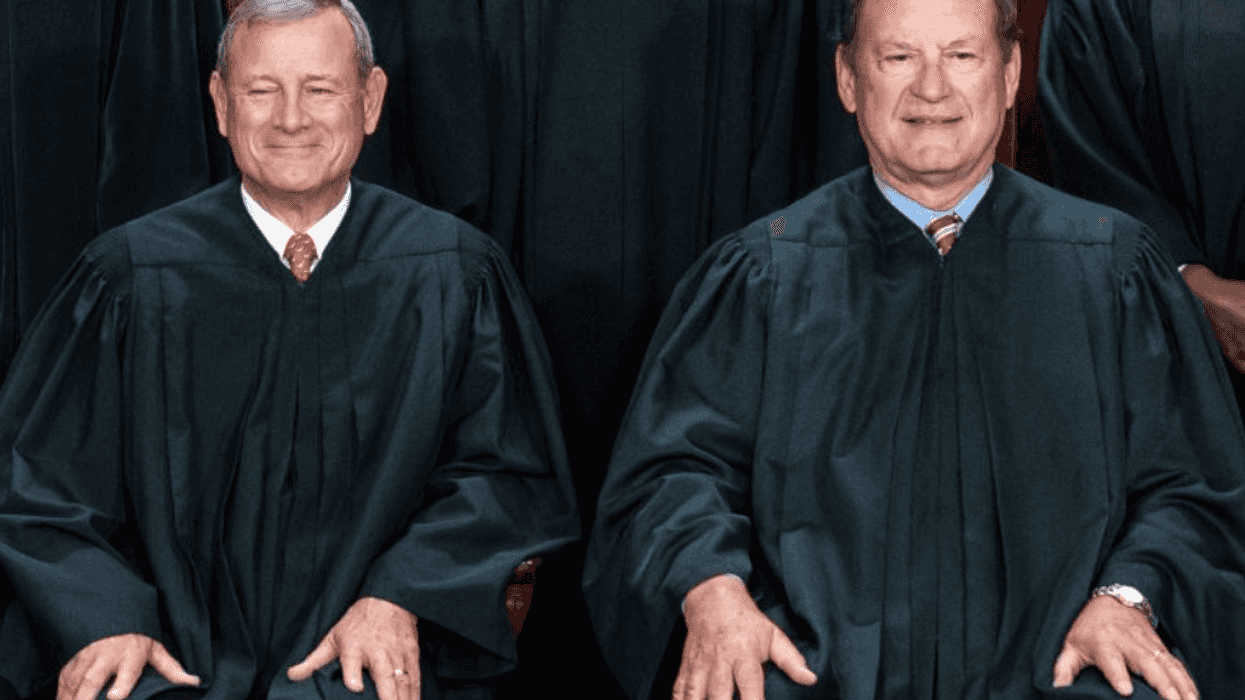
Masterminded by Chief Justice John Roberts and written by his ideological sidekick Justice Samuel Alito, last week's decision in Louisiana v. Callais not only eviscerated the last remaining protections of the 1965 Civil Rights Act, but immediately propelled a fresh wave of partisan redistricting across the South. This was the entirely predictable result of a series of Supreme Court decisions that have undermined racial equality while encouraging white majority legislatures to redraw Congressional maps as a means to ensure perpetual power for the GOP.

And all this was done with self-righteous zeal in the name of "racial neutrality," good government, and Constitutional jurisprudence.

The court's critics have noted how little remains of those traditional values after two decades of the Roberts court. Since the majority overturned Roe v. Wade, women saw yet another step in the diminution of their control over their own bodies and health, an attack on their autonomy that is already costing innocent lives in the most backward states. Now in Callais, Black and Latino Americans see the razing of minority political power in the most segregated regions and the return of Jim Crow, delivered by a party that countenances unabashed racism in its ranks.

Alito's justification for abandoning decades of precedent -- and the clear textual purpose of the 1965 Voting Rights Act -- made little logical sense. Rather than determining whether a state's Congressional district map imposed the effect of a racial hierarchy on state voters, he ruled, the court would demand proof of racist intent on the part of legislators who drew that map. As Justice Elena Kagan pointed out in her dissent, the impossibility of knowing or proving what was in the minds of those legislators is obvious. It is also a completely invented standard.

Alito claimed wrongly that recent presidential elections show that the nation has progressed beyond the remedies imposed by the Voting Rights Act, because Black voter turnout was higher than white turnout in two of the most recent presidential elections. Of course, turnout for Congressional elections is different in midterms -- and the years that Alito cherrypicked to make his argument happened to be those when Barack Obama, America's first Black major-party presidential nominee, was on the ballot.

But with their ire provoked by what Alito described as an "unconstitutional racial gerrymander" in Louisiana, the justices feel justified in even the most dishonest discourse. That is why both Roberts and Associate Justice Brett Kavanaugh could support this devastating decision, despite having voted precisely the opposite way only three years ago. In the case of Allen v. Alabama, court found that state legislators had discriminated against the state's Black voters by dividing them up among seven districts to prevent the election of more than one Black member of Congress. Kavanaugh and Roberts, along with the court's liberal minority, rejected the state's argument -- identical to Alito's argument now -- that the plaintiffs had to prove racist intent to trigger the Voting Rights Act's protections.

The result was a new Congressional map in Alabama, drawn by a special master, that offered Black voters the opportunity to elect two members -- who both happen to be Democrats.

What has changed since Kavanaugh and Roberts endorsed that wholly just outcome? Only two things: The 2024 election of Donald Trump and Republican majorities in both the House and Senate, which Republicans on the court plainly aim to preserve against increasingly long odds in this year's midterm election -- and the likelihood that if Democrats regain the majority in either or both chambers, then this historically corrupt Supreme Court majority will find itself confronting investigative scrutiny, legislative challenge, and a strong possibility that Trump, the authoritarian they have so brazenly empowered, will not be able to nominate any more constitutional vandals of their ilk.

These right-wing justices, despite their whine about "racial gerrymandering," showed that they have no problem with partisan gerrymandering that has an undeniable racial impact on minority voters. It is fair to assume that among the reasons, beyond their own ideological loyalties, is the urge to protect their own misconduct from the embarrassing oversight that will surely ensue when power changes hands again.

Joe Conason is founder and editor-in-chief of The National Memo. He is also editor-at-large of Type Investigations, a nonprofit investigative reporting organization formerly known as The Investigative Fund. His latest book is The Longest Con: How Grifters, Swindlers and Frauds Hijacked American Conservatism (St. Martin's Press, 2024). The paperback version, with a new Afterword, is now available wherever books are sold.


Trump's Supreme Court States The Obvious: He Owns Them

Trump's Supreme Court States The Obvious: He Owns Them

Yesterday morning the Supreme Court ruled on the Colorado case striking Donald Trump from its election ballot because, as the Colorado Supreme Court held, he is an insurrectionist as defined under paragraph 3 of the 14th Amendment. As expected, they threw the case out, effectively deciding for Trump and against Colorado. The decision was interpreted as a huge win for Trump practically everywhere: “A massive victory for Trump” screamed CNN; “The U.S. Supreme Court handed Donald Trump a major victory,” chorused Reuters.

Donald Trump himself, like the megalomaniac he is, cruised over to his social media lie-factory and yelled from whatever rooftop it’s under, “BIG WIN FOR AMERICA!!!”

The vote on the court was 9-0, meaning that all nine justices voted for Trump’s position that a single state, Colorado, cannot throw a candidate off its ballot under the 14th Amendment. The decision for the court as a whole was unsigned, but there were two concurrences disagreeing with the decision on a somewhat less than subtle ground we’ll get to in a moment.

One of them, written by Justice Amy Comey Barrett of all people, uttered the quiet part out loud. She openly said what the whole court wouldn’t – that the case was so terrifying, they just pushed it off their desks. “In my judgment, this is not the time to amplify disagreement with stridency. The Court has settled a politically charged issue in the volatile season of a Presidential election. Particularly in this circumstance, writings on the Court should turn the national temperature down, not up.”

She may as well have begun with “Oh, my goodness!”

You have to wonder what it would take to shock this Supreme Court into taking action -- maybe a decision by a court in a state like Alabama ruling that in some circumstances it’s okay to murder Black people in cold blood?

I guess what Justice Barrett said was a version of Bush v. Gore, another “politically charged issue in the volatile season of a Presidential election,” when the Supreme Court told the world they didn’t really mean it as they installed George W. Bush as president even though Al Gore was ahead in the vote count. Remember how, having injected themselves into the election, the Supreme Court said that’s not what they were doing by trying to limit the damage when it held that the case was not to set a precedent? That was like saying, “Oh, that body over there with democracy on its forehead? Whatever you do, don’t pay attention to that.” Barrett’s concurrence did something of the same thing. She said she agreed with the result of the decision – her favorite president gets to stay on the ballot – but not with the, uh, methodology of how the majority got there.

What the five justices in the majority did was this: they, and the rest of the court for that matter, utterly ignored the finding by the Colorado Supreme Court that Donald Trump had committed insurrection. How could they do that when the whole purpose of paragraph 3 of the 14th Amendment was to deal with the results of the insurrection which had just taken place, namely the Civil War? Well, the Supreme Court said it’s not our job to enforce the 14th Amendment. That’s up to Congress.

Which is like saying, oh, we’ll just leave that problem up to the snarling pack of rabid dogs over there. They’ll get together and do it for us.

To call this position taken by the court bullshit isn’t sufficient. It’s a gigantic, muciferous, glob of a lie. Besides dealing with the scourge of insurrection, the 14th Amendment was written after the Civil War to confer citizenship rights on former slaves and to ensure that the Southern states, which had treated them like property, afforded former slaves and every other citizen “equal protection under the laws.” Brown v. Board of Ed is just one example of when the Supreme Court enforced the 14th Amendment’s guarantee of equal rights under the law, and many, many other similar cases have addressed the rights guaranteed by the 14th Amendment without the help, if it could be called that, of Congress.

So, why is the court at this juncture pointing over there across First Street on Capitol Hill and saying, in effect, “it’s their problem"? Because they know the Congress can’t get itself together to keep the fucking government open by passing a budget, much less address the issue of the damn insurrection that took place right there in front of them and forced them from their offices and chambers and left five dead.

Donald Trump did that, and the three justices on the court appointed by him, along with the other three Republican justices in his thrall, will not be the ones who uphold the law in the Constitution which so clearly disqualifies him from holding a federal office. They’re scared of offending Trump and his violent followers. Why, if they did that, it might interrupt the vacation they’re planning this summer at one billionaire’s Adirondack camp or another billionaire’s salmon fishing stream.

I have become accustomed to reading these appeals court decisions. Hell, it has become a major part of my job. But I have trouble finding the words to describe what a profile in cowardice this Supreme Court decision is. If they use this decision as precedent and continue washing their hands of enforcing the 14th Amendment, it spells the end of equal enforcement of the laws in this country. To leave enforcement of basic rights up to the Congress is to disavow the responsibility the Supreme Court took upon itself in Marbury v. Madison to be the final arbiter of what the Constitution says and what the law means. Leaving those decisions up to the band of yahoos who are running things in the nation’s legislature is like asking the thieves who just robbed the bank to toss us a few pennies as they divide up their ill-gotten gains.

This decision negating the insurrection clause in the 14th Amendment, raises the question of whether the three post-Civil War amendments -- ending slavery, conferring the right to vote, and ensuring equal protection of the laws without regard to race, creed, or national origin -- will have any force at all in the coming years. The Supreme Court already eviscerated the rights of Black people to vote with Shelby County v. Holder. What is next on the right-wing agenda? Allowing segregated schools? Enforced labor for immigrants seeking citizenship?

Steel yourselves. I’m afraid this is just the beginning.

Lucian K. Truscott IV, a graduate of West Point, has had a 50-year career as a journalist, novelist, and screenwriter. He has covered Watergate, the Stonewall riots, and wars in Lebanon, Iraq, and Afghanistan. He is also the author of five bestselling novels. You can subscribe to his daily columns at luciantruscott.substack.com and follow him on Twitter @LucianKTruscott and on Facebook at Lucian K. Truscott IV.

Please consider subscribing to Lucian Truscott Newsletter, from which this is reprinted with permission.

When Will Americans Push Back Against Tyranny Of The Minority?

When Will Americans Push Back Against Tyranny Of The Minority?

In the immortal words of Yogi Berra, “It's tough to make predictions, especially about the future.” Even so, I’m willing to go on record as saying people predicting an impending civil war or the imminent breakup of the United States are quite mistaken.

For all the turmoil and bad feeling abroad in the land, not to mention on the Internet, the things that bind Americans together as a people are far stronger than the things that divide us. Which is the main reason I believe that a partisan Supreme Court’s efforts to impose what amounts to a “tyranny of the minority” upon the nation as a whole are destined to fail.

One way or another, people just aren’t going to have it.

Now my own sense of patriotism may differ from yours. If I never again hear that dreadful, chest-beating Lee Greenwood song, it will be too soon. I’ve come to dislike the unholy racket of July Fourth celebrations almost as much as my poor terrified dogs. (Even Martin, my orange tabby sleeping companion, came running in around midnight, slinking about two inches off the floor.) The infernal noise went on for another hour.

It doesn’t help that here in Arkansas the temperature’s always somewhere between 95 and 100 on Independence Day — the absolute worst time of year.

So, when do I experience patriotic zeal? Well, March Madness, the opening weekend of the NCAA men’s basketball tournament, never fails to inspire me with Woody Guthrie-style emotion. All those striving teams from all those far-flung American places. What a wonderful country!

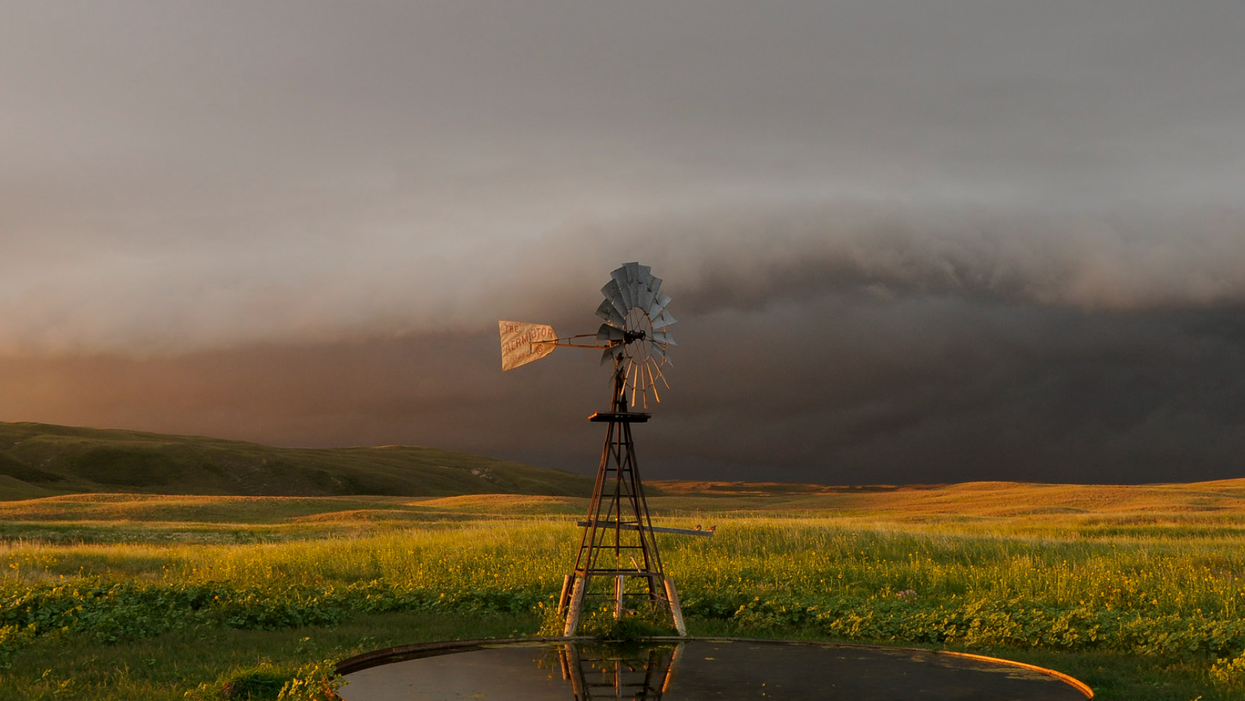
It’s been a while, but I used to drive every summer from Arkansas to an old friend’s ranch outside Livingston, Montana— 26 hours each way, intoxicated by the beauty of the unfolding landscape. Nothing made me happier than stopping for a greasy truck-stop breakfast somewhere in western Nebraska. Have you seen the remote beauty of the Sand Hills? You should.

Having grown up in overcrowded New Jersey, I’ve always loved wide open spaces. Accompanied by a couple of slumbering basset hounds, I’d be singing to myself all the way:

This land is your land, this land is my land.

From California to the New York island.

This land was made for you and me.

One year, I rented a cassette tape of Larry McMurtry’s Lonesome Dove from a bookstore in Cody, Wyoming for the drive home. Pulling into Little Rock two days later with a couple of hours remaining, I was tempted to roll on to Memphis just to learn how the story ended.

But here’s the problem: The seven states I drove through--Arkansas, Oklahoma, Kansas, Nebraska, Wyoming, South Dakota and Montana—have a combined 14 U.S. Senators: thirteen conservative Republicans, and Montana Democrat Jon Tester.

Their combined populations add up to roughly 12 million, give or take.

California and New York alone have around 60 million citizens between them, and just four U.S. Senators, all Democrats.

The Founding Fathers couldn’t have anticipated that any more than they could AR-15 assault rifles. There are small states that lean Democratic, yes. But the power imbalance between what H.L. Mencken called “The Cow States” and the nation’s urban population has created sustained partisan gridlock in Washington. Add the undemocratic filibuster, and it becomes increasingly difficult to get anything useful done.

Hence the tyranny of the minority.”

“Our current system,” writes Jamelle Bouie in the New York Times, “favors geography over people and the interests of the minority over those of the majority.” The January 6 insurrection along with “the partisan lawmaking of the Supreme Court have thrown those counter-majoritarian features of the American system into sharp relief.”

By overturning Roe v. Wade, the court has created a crisis of legitimacy, Bouie adds, where “the fundamental rights of hundreds of millions of Americans are functionally overturned by an unelected tribunal whose pivotal members owe their seats to a president who won office through the mechanism of the Electoral College, having lost the majority of voters in both of his election campaigns.”

As I write, several Cow State Republican governors have found themselves unable to answer reporters’ questions about whether a ten-year-old girl in Ohio should be forced to deliver her rapist’s child. Children having children.

The tyranny of the minority, indeed.

Actually, there’s no real constituency anywhere in America for such a grotesque policy. But it’s amazing none of these politicians had thought up a sensible answer. They haven’t had to, partly because the Supreme Court’s Roe ruling was written by partisan hothouse flowers with little experience of the outside world.

So now the Supreme Court has announced its intention to delve into what’s called the “independent state legislature theory,” according to which GOP-dominated legislatures could override their own states’ voters in presidential elections—pretty much what soon-to-be-disbarred Trump lawyer John Eastman tried to pull off in 2020.

One way or another, the American people won’t let that happen.

Supreme Court Strikes Down Constitutional Right To Abortion

Supreme Court Strikes Down Constitutional Right To Abortion

Washington (AFP) - The US Supreme Court on Friday ended the right to abortion in a seismic ruling that shreds half a century of constitutional protections on one of the most divisive and bitterly fought issues in American political life.

The conservative-dominated court overturned the landmark 1973 Roe v Wade decision that enshrined a woman's right to an abortion, saying that individual states can now permit or restrict the procedure themselves.

"The Constitution does not confer a right to abortion; Roe and Casey are overruled; and the authority to regulate abortion is returned to the people and their elected representatives," the court said.

In the majority opinion, Justice Samuel Alito said "abortion presents a profound moral issue on which Americans hold sharply conflicting views.

"The Constitution does not prohibit the citizens of each State from regulating or prohibiting abortion," he said.

Dissenting were the three liberals on the court.

The ruling will likely set into motion a cavalcade of new laws in roughly half of the 50 US states that will severely restrict or outright ban and criminalize abortions, forcing women to travel long distances to states that still permit the procedure.

The opinion shredded the 1973 Roe v. Wade ruling by the nation's highest court that said women had the right to abortion based on the constitutional right to privacy over their own bodies.

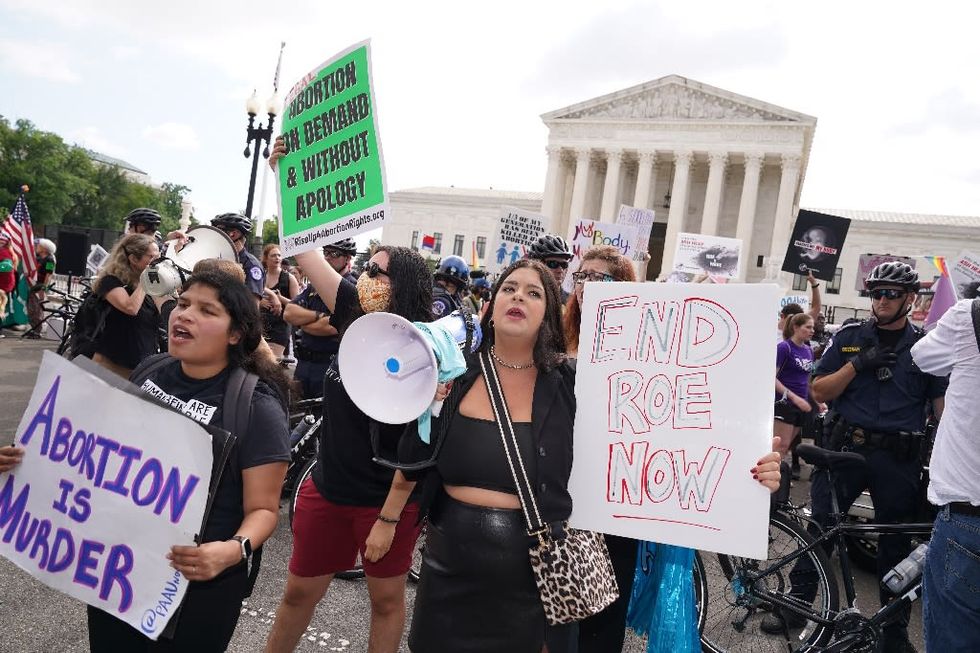
Alito's opinion largely mirrors his draft opinion that was the subject of an extraordinary leak in early May, sparking demonstrations around the country and tightened security at the court in downtown Washington.

Barricades have been erected around the court to keep back the protesters gathered outside -- after an armed man was arrested on June 8 near the home of conservative justice Brett Kavanaugh.

The court's ruling goes against an international trend of easing abortion laws, including in such countries as Ireland, Argentina, Mexico and Colombia where the Catholic Church continues to wield considerable influence.

Victory For Religious Right

It represents a victory of 50 years of struggle against abortion by the religious right but the anti-abortion camp is expected to continue to push for an outright nationwide ban.

The ruling was made possible by the nomination of three conservative justices to the court by former Republican president Donald Trump -- Neil Gorsuch, Kavanaugh and Amy Coney Barrett.

The case before the court was a Mississippi law that would restrict abortion to 15 weeks but during the hearing of the case in December several justices indicated they were prepared to go further.

According to the Guttmacher Institute, 13 states have adopted so-called "trigger laws" that will ban abortion following the move by the Supreme Court.

Ten others have pre-1973 laws that could go into force or legislation that would ban abortion after six weeks, before many women even know they are pregnant.

Women living in states with strict anti-abortion laws will either have to continue with their pregnancy, undergo a clandestine abortion or obtain abortion pills, or travel to another state where the procedure remains legal.

Several Democratic-ruled states, anticipating an influx, have taken steps to facilitate abortion and clinics have also shifted their resources.

Travel is expensive, however, and abortion rights groups say abortion restrictions will severely impact poor women, many of whom are Black or Hispanic.

Shop our Store

Headlines

Editor's Blog

Corona Virus

Trending

World