Tag: trump ballroom
As Trump Losses Accelerate, Are Republicans Finally Backing Away From Him?

As Trump Losses Accelerate, Are Republicans Finally Backing Away From Him?

In a brief respite from the usual econonic analysis on this page, let us count the recent losses for our benighted president:

—With a 215-208 vote, the House passed a measure instructing the president to either withdraw U.S. forces from Iran forthwith or win Congressional approval to continue the conflict.

—Enough Republicans came out publicly against his $1.8 billion slush fund for January 6 rioters that the measure appears to be dead.

—His ballroom funding appears to be in trouble.

—His preferred candidate in Iowa’s Republican primary lost.

—He’s got to take his name off of the Kennedy Center.1

—Senate Republicans appear to be balking at his nominating “little Trump”—Bill Pulte—to be his Director of National Intelligence as the man has zero experience in such intelligence. Or any other kind of intelligence. His sole qualification is that he’s been Trump’s bulldog; this is the guy that cooked up the attack strategy on former Fed chair Jerome Powell, which, for the record, totally backfired on the administration.

I’m sure this is a partial list—it’s just off the top of my head (and I didn’t even mention all the artists who dropped out of his July 4th concert). Head over to the Contrarian for a much deeper dive. What I’d like to do here is noodle a bit on what it all means.

First, let’s recognize that something has changed. I just noted that Senate Republicans are balking at a terrible nominee. But they’ve confirmed dozens of terrible nominees. Has Trump become some kind of lame duck? Has the Republican party found its spine?!

No, on the spine thing. Part of what we’re seeing is truly pathetic opposition to some of Trump’s agenda from Republicans who lost their primaries due to Trump’s endorsement of their opponent. I give zero spine points for standing up to Trump’s grift, lawlessness, and incompetence only now that it is costless to you.

But there’s perhaps something to the lame-duck condition. The root of Republicans’ fealty to Trump is their belief that he can primary them, and that still clearly holds in more than a few districts (his Iowa endorsement loss is an exception). But revealed behavior being what it is, a few Republicans—and to be clear, there are just a few of them—calculate that they’ve got more to lose by aligning with Trump on everything than by showing some independence. Sen. Thom Tillis (R-NC) put it this way: “I feel like there are people advising the president as if there is no election in November.”

Trump has said he doesn’t care about the midterms, but he’s never seen a vote he didn’t want to rig, and his gerrymanders and proposed voting-rule changes suggest he cares plenty about that outcome. For what it’s worth, which is probably not much at this point, Polymarket has the Democrats at 82 percent to win the House and 47 percent to win the Senate.

Let’s say those odds hold, what can we learn about this recent spate of Trump losses and defections that’s relevant to the back half of his second term wherein Democrats control the House? I’m already too far out of my political economy lane, but I’ll briefly offer the following.

I’d argue that when you add a Democrat-controlled House to these dynamics, and likely even a narrower Republican lead in the Senate, to the at least meager evidence of Republicans recognizing that maybe this Trump guy isn’t great for them and their party’s future, you get an even more insulated Trump for the rest of his term.

Outside of extending his first-term tax cuts, he never had any use for Congress in the first place and views them as a largely irrelevant buzzing in his ears as he and his cabinet pursue their unitary goals whims. That wouldn’t necessarily be a political problem for Trump if his whims weren’t so economically destructive. Yes, he’ll always have the always-Trumpers and never have the never-Trumpers, but the decisive group in the middle that determines election outcomes has realized that, when it comes to their living standards, they bet on the wrong pony. And Republican politicians can only ignore that reality for so long.

So, under the scenario I’m describing, Congress gets nothing done while the Democrat-controlled House holds endless hearings prosecuting the misdeeds of the admin. That won’t be pretty, but I’ve long argued that if we want to begin tacking back towards good governance, Trump’s enablers must be relentlessly prosecuted.

Trump himself doubles down on his personal grift, focusing even more on kickbacks and crypto, and becomes increasingly irrelevant. With greater Democratic control and less unchecked power, he is less able to disrupt on the scale of his first two years in office.

I admit this may be wishful thinking and it is too soon to tell if I’m correct that some Rs are recognizing they need some distance from Trump—as the New York Times put it: “The president’s unilateral and retributive style of governing is starting to hit a wall in both chambers of Congress.” And, especially with SCOTUS mostly behind him, there’s no telling what greater damage he can do. We must especially worry about his attack on the electoral infrastructure.

But it is also important not to let one’s doomerism preclude one from seeing these cracks. A bad day for Trump is a good day for America and the rest of the world. A bad week, quarter, year or two are even better.

Jared Bernstein is a former chair of the White House Council of Economic Advisers under President Joe Biden. He is a senior fellow at the Council on Budget and Policy Priorities. Please consider subscribing to his Substack, from which this is reprinted with permission.

New Court Filing 'Obviously Written By Trump' Cites Shooting To Boost Ballroom

New Court Filing 'Obviously Written By Trump' Cites Shooting To Boost Ballroom

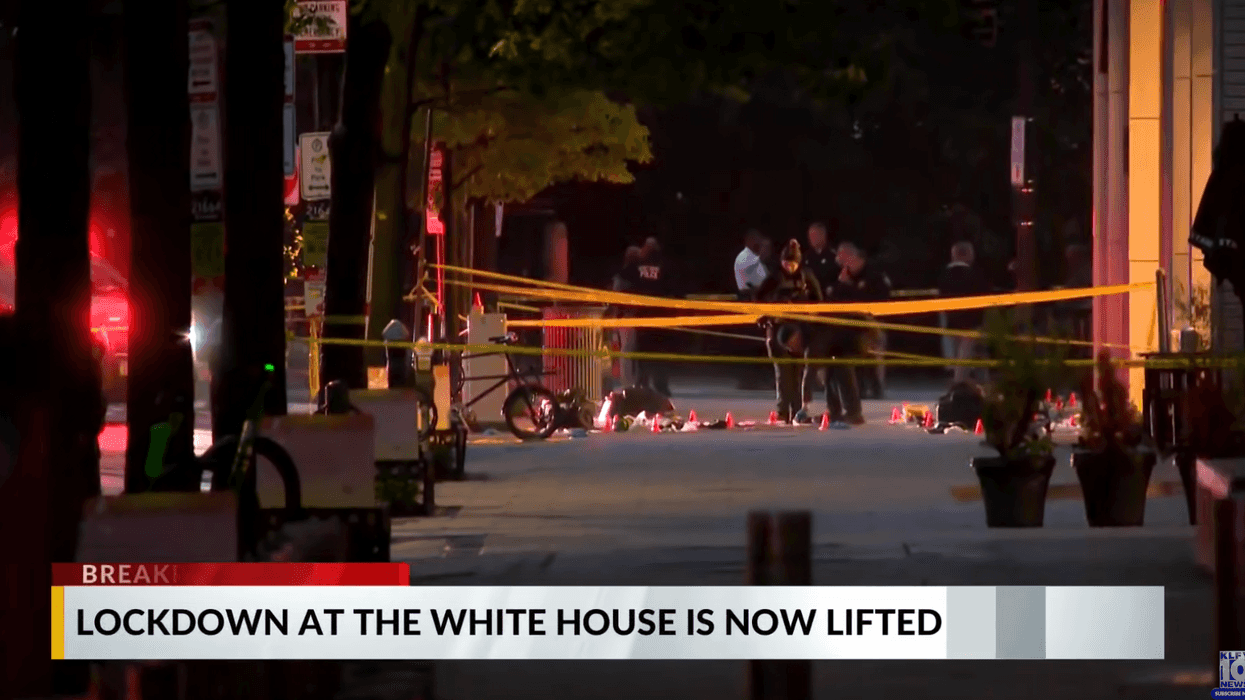
Early Saturday evening, during Memorial Day Weekend on May 23, Secret Service agents exchanged fire with a gunman who was approaching a White House security checkpoint in Washington, DC. The gunman was killed, and President Donald Trump is responding to the incident by arguing that it makes a case for his White House ballroom. And Trump's legal team makes that argument in a court filing posted online the day after the incident.

Politico legal affairs reporter Josh Gerstein posted the six-page legal document on X, formerly Twitter, noting how decidedly Trumpian the language in the filing is.

Gerstein tweeted, "JUST IN: Another court filing obviously written by Trump, seeks to leverage shooting Saturday to end litigation over WH ballroom project. Calls latest episode 'assassination attempt.' Cites news reports, but no other proof/legal cases. Ends w/a '!"

The filing in National Trust For Historic Preservation, Plaintiff, v. National Park Service, as Gerstein points out, is full of Trump Administration talking points.

"On Saturday night, May 23rd," the document reads, "a shooter once again sought to murder the President, his family, and his staff at the historic White House complex. We submit this urgent filing to update the Court on a second attempted assassination on the President within a single month. Last night, shortly after 6:00 p.m., an armed assassin approached a White House security checkpoint near 17th Street and Pennsylvania Avenue, professionally pulled a high caliber gun from a bag, and opened fire in the exact direction of the White House. Brave Secret Service officers returned fire. The gunman was killed and an innocent bystander was seriously wounded in the shooting."

Many of Trump's critics are attacking the proposed ballroom as a vanity project that will cost taxpayers a fortune. But the court filing claims that the ballroom is necessary from a national security standpoint.

"This second attack on the President this month underscores the critical need for top level, state of the art security at the White House, including the Ballroom, a knitted, unified, cohesive part of the East Wing Project, which is vital for National Security, and is being constructed to ensure that the President can perform his constitutional duties in a safe and heavily secured facility," the filing states.

"This court's unlawful injunction has wrongfully cast a cloud of uncertainty around the future of the entire East Wing Project, which is being constructed for the physical safety and security of all Presidents, their families, staff, Foreign Dignitaries, and guests. When completed, this highly knitted, integrated, and unified Project, which is a singular and vital National Security facility, will provide a 'SAFE HAVEN' from attackers such as the one last night, and on April 25th. It will provide a highly secure space for future Inaugurations, and other major events, such as the recent visit of the King and Queen of the United Kingdom, and the coming visit in September of President Xi of China."

The document also states that the "under construction East Wing Project, which is on time and under budget, includes state of the art security features to repel all attacks against the President, his family, his staff, and esteemed visitors."

"These include a heavy steel, drone proof roof, missile resistant and drone proof columns, bullet, ballistic, and blast proof glass, Military grade venting for air conditioning and heating, and much more," the Trump Administration writes. "Together, the entire Facility, which includes bomb shelters, a state of the art hospital and medical facilities, Top Secret military installations, structures, and equipment, protective partitioning, and other features, is a single integrated, complex unit that is vital for the National Security of the United States."

Reprinted with permission from Alternet


Pollster: Even Trump Supporters Dismiss Assassination Attempt As 'Staged'

Pollster: Even Trump Supporters Dismiss Assassination Attempt As 'Staged'

President Donald Trump was the target of an assassination attempt at the White House Correspondents Dinner in April — but many of his own supporters seem unwilling to believe the official story.

“It turns out that Trump supporters, already swimming in a sea of other conspiracy theories, don’t necessarily trust the WHCD shooting story presented by the feds, either,” wrote The Bulwark's Will Sommer on Monday, juxtaposing widespread liberal skepticism about the shooting attempt with the comparatively more surprising right-wing response. “That’s one of the big findings of a recent focus group conducted by Bulwark publisher Sarah Longwell’s Longwell Partners of nine people who voted for Trump at least twice (in 2020 and 2024). Those nine people were picked for the focus group because they all now say they disapprove of his presidency.”

Sommer added,” As for the WHCD attack, six participants said they believed the assassination attempt attributed to California teacher Cole Tomas Allen was ‘a psyop.’”

Sommer proceeded to quote some of the ex-Trumpers who expressed doubt about the assassination attempt story. One focus group member observed that “it doesn’t make sense that somebody should be able to get that close this many times in that way to the President of the United States,” while another pointed out that “I can’t even go to a baseball game and bring in a can of Diet Coke . . . or a concert without a metal detector or them emptying my pockets.”

A third, noting how Trump and his supporters immediately began calling for a White House ballroom (one of Trump’s longtime and controversial projects) very shortly after the assassination attempt occurred.

“I feel like it was a ploy to get his ballroom that he wants, and that’s his reason,” the commenter explained. Still another participant expressed doubt about the assassination attempt during the 2024 election in Butler, Penn., comparing it to Nazi propaganda and speculating that there was “a paintball or something in his hand that he squished on his ear because I think he wanted to gain some support.”

Longwell, speaking with former Republican speechwriter David Frum, argued last week that people are overall distrustful of Trump and American leaders in general.

“It just doesn't make sense to me that we have our leader — who is supported/protected by what is supposed to be the … the most dominant military force on the planet,” one Trump voter told Longwell. It doesn't make sense to me that there have been this many close attempts on his life when we have all these other presidents recently who haven't really had that issue.”

Last month The Telegraph’s Ed Cumming also reported widespread doubt among Trump’s own supporters that the assassination attempt even happened.

“In recent months, former Trump supporters, such as Tucker Carlson, have suggested the FBI was involved in the Butler attack. Joe Kent, the former US National Counterterrorism Center director who resigned over the Iran war, used an interview with Carlson to raise his own doubts, including claiming – without evidence – that investigations into the Butler shooting were shut down prematurely,” Cumming reported. “Some prominent right-wing accounts have suggested that Saturday’s incident may have been staged, too, possibly in order to facilitate Trump’s ballroom.”

He continued, “Despite the rapid destruction of the old building, the new facility has run into trouble recently. In March, Judge Richard Leon temporarily halted construction, upholding a complaint by the National Trust for Historic Preservation (NTHP) that Trump’s planned improvements required congressional approval. Work has resumed after an appeal, but is only allowed to continue until another hearing — due to take place on June 5 — is held.”

Reprinted with permission from Alternet


Trump's 'Donor-Funded' Ballroom Is Quickly Turning Into A Scam On Taxpayers

Trump's 'Donor-Funded' Ballroom Is Quickly Turning Into A Scam On Taxpayers

Some years ago, I was president of an organization called the Association of Opinion Journalists. Every year we would run a convention in a different city and end it with a celebration in the hotel's ballroom space. Our speaker on that closing night was usually some well-known political opinionator.

Members often talked about inviting the president to give that address, as had happened before. In 1947, Harry Truman spoke to the group (formerly called the National Conference of Editorial Writers), as did Lyndon Johnson in 1966. Other prominent government officials included Vice President Richard Nixon, then-Gov. Ronald Reagan and former Secretary of State Henry Kissinger.

In later years, however, members argued against having the president as speaker because it would subject the attendees to oppressive security checks. After slogging through days of seminars, they wanted to cut loose. The party was for us.

Now consider the recent White House Correspondents' Association Dinner, cut short by an apparent assassination attempt. The target appeared to be the evening's speaker, President Donald Trump, who used the fiasco to hawk his controversial $400 million White House ballroom as a more secure alternative to the Washington Hilton.

A federal judge has frozen the construction for lacking clear legal authority and congressional approval. Congress now has an opportunity to ditch the grandiose plan, saving taxpayers hundreds of millions.

Yes, Trump said it would be paid for by donations, not the taxpayers. The known donor list is heavy with big Wall Street, tech and law firm names. All have business before the federal government. Trump repaying their "kindness" could end up costing taxpayers a great deal. More troubling, some donor identities have been kept secret.

Of course, any events at a palatial White House ballroom would require extra security, and who would pay for that? The taxpayers, of course.

Enter Sen. Lindsey Graham. The South Carolina Republican is pushing a bill to tack another $400 million to the national debt to finish what donors were to pay for — and build a security infrastructure, a Secret Service annex, underneath the ballroom.

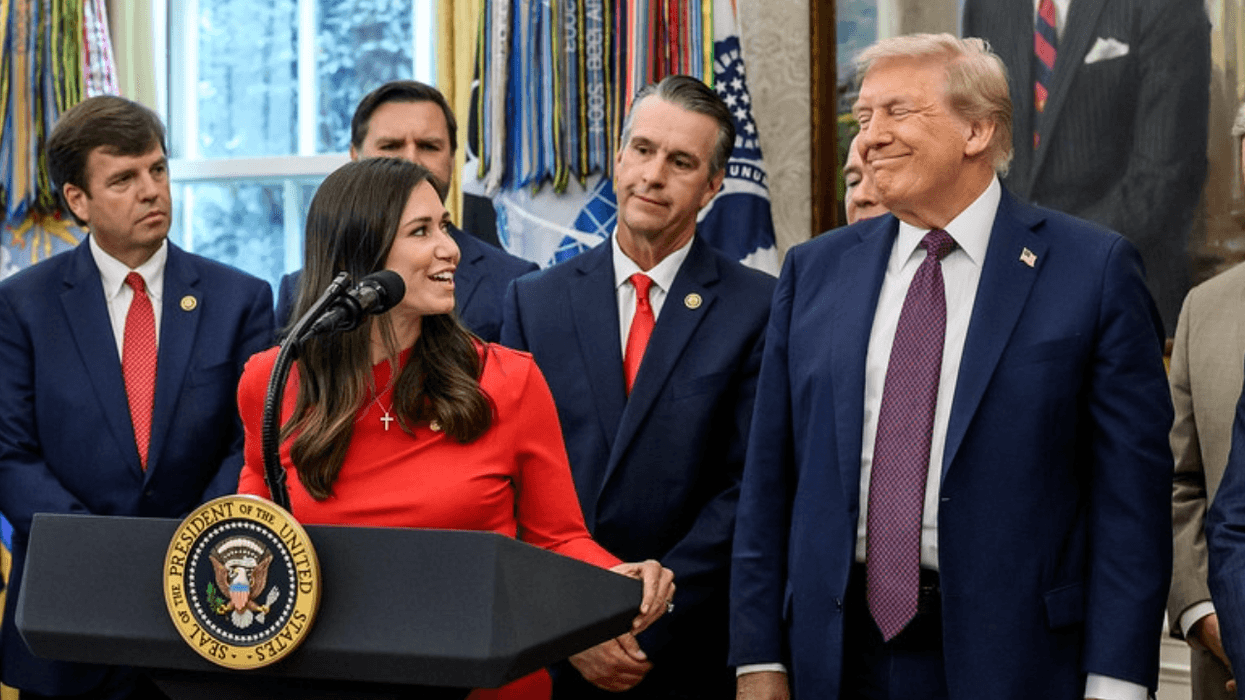
As Alabama Republican Sen. Katie Britt, a co-sponsor, explained unconvincingly, "This is about our nation having a place to gather."

The White House already has a State Dining Room that seats about 140 guests, and if more room is needed, the East Room can accommodate as many as 300. Why must the president's residence include a ballroom able to hold, according to Trump, nearly 1,000?

The biggest indoor banquet space at the French royal palace of Versailles — the Gallery of Battles — can serve "only" 650 diners max. That happens to be a lot of people.

Meanwhile, why must taxpayers be billed to provide a catering hall big enough for the White House correspondents' annual bash? They are an independent organization, just like the Association of Opinion Journalists was. We paid for our convention space, the big dinner and, yes, security, through dues, contributions, and participation fees. Had the taxpayers funded us, I'm sure several members would have written editorials or columns and nowadays produce TikToks condemning the use of public money for a private group.

A word about the correspondents' dinner itself. Over the years, it's morphed into a red-carpet event crafted to glamorize what should be working journalists who cover the president. Now there's a ton of "pregame" coverage of who is going, who is not, who got invited to the Vanity Fair magazine party. And don't leave out the Hollywood celebrities.

In his 1678 Christian allegory, The Pilgrim's Progress, John Bunyan introduced Vanity Fair as an unseemly marketplace for pleasure, status and worldly ambition. "The name of that Town," Bunyan wrote, "is Vanity."

Sounds a lot like Washington, D.C.

Froma Harrop is an award winning journalist who covers politics, economics and culture. She has worked on the Reuters business desk, edited economics reports for The New York Times News Service and served on the Providence Journal editorial board.

Reprinted with permission from Creators.

Shop our Store

Headlines

Editor's Blog

Corona Virus

Trending

World