Will Surging Tide Of Uninsured And Spiking Hospital Costs Trigger A Recession?
All of the health care sector’s major economic indicators are headed in the wrong direction.
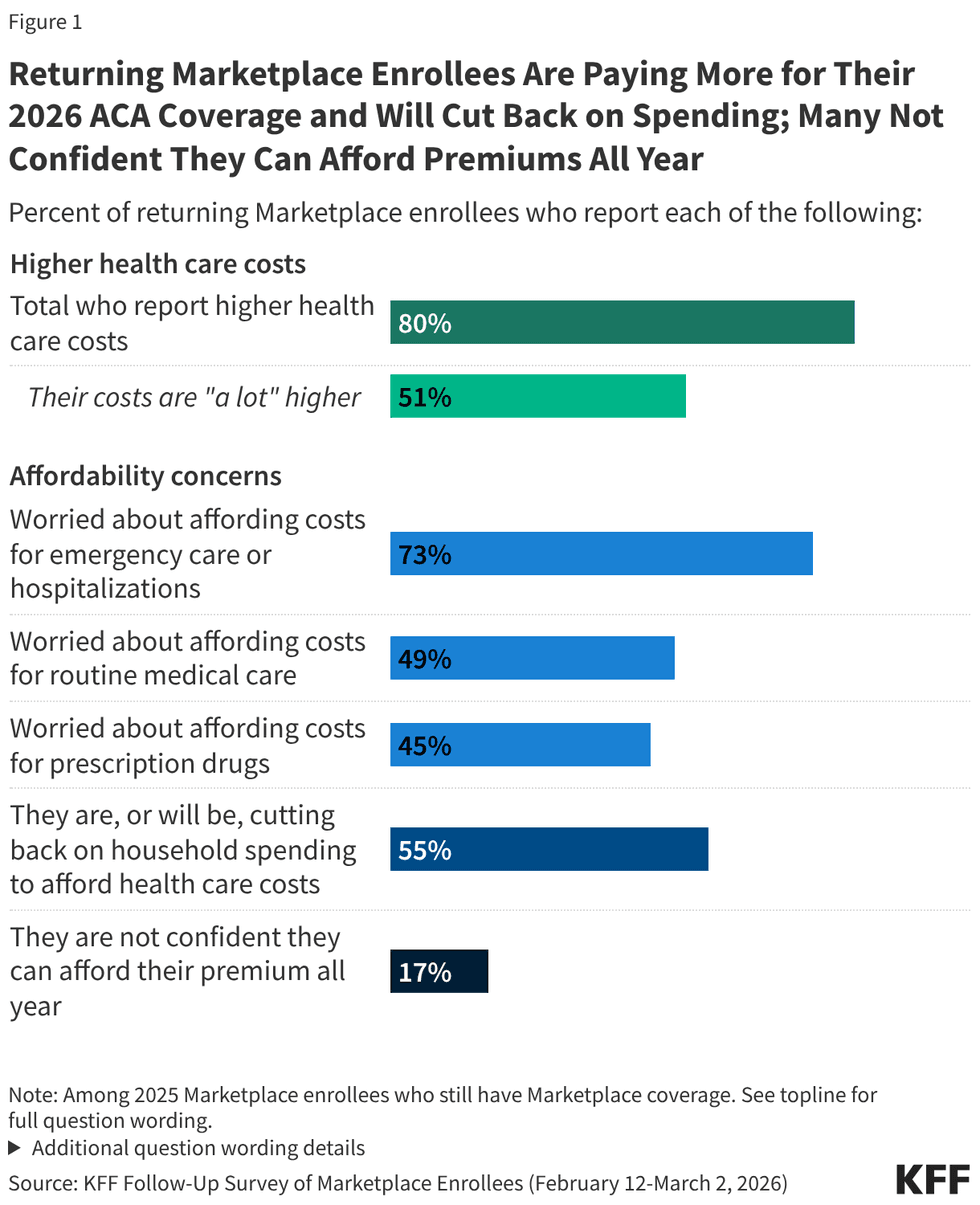
Major hospital chains last week began reporting a substantial rise in their uncompensated care costs after millions of people dropped health insurance. The Republican Party’s refusal to retain the Biden administration’s expansion of Affordable Care Act subsidies has already forced at least three million people into the ranks of the uninsured.
Meanwhile, the Centers for Medicare and Medicaid Services under Dr. Mehmet Oz announced Friday it will grant hospitals a 2.3 percent increase for their 2027 in-patient Medicare rates. That’s well below the general inflation rate (3.5 percent over the past 12 months) and a half percentage point behind the Bureau of Labor Statistics' measure of inflation in overall medical services (2.9 percent).
If you’re sitting in the chief financial officer’s seat at one of the nation’s hospitals, the next 12 months look bleak. Private insurers have already announced they will seek double-digit rate increases for individual and family plans sold on the exchanges later this year. Those rates are usually finalized in late October, just ahead of the start of open enrollment, which this year falls on the day before the mid-term election. Rate-shock will likely force millions more people to drop coverage.
Then there’s the One Big Ugly Bill’s imposition of work requirements in Medicaid, which will go into full effect next January (some states have already begun winnowing their roles). That’s expected to lead to nearly 12 million poor people losing coverage over the next few years, mostly due to eligible enrollees’ failure to leap over the bureaucratic hurdles established by the law.
The coming huge increase in the ranks of the uninsured — the first since passage of the Affordable Care Act in 2010 — is certain to raise the uninsured rate well into double digits. It reached an historic low of eight percent during the Biden years. The accompanying sharp rise in uncompensated care delivered by hospital emergency rooms and other providers will inevitably lead to major spikes in premium costs for employer-provided health plans, which covers an estimated 160 million workers and their family members.
A recent survey of major insurers’ actuaries found the cost of employer-based health insurance prices is expected to rise nine percent on average next year. That increase — more than two percentage points greater than this year and nearly twice the rate of economic growth — will sharply increase both employer premiums and their employees’ co-premiums, co-pays and deductibles.
Given the price pressure in other household necessities, many more workers will opt for high-deductible plans to hold down their out-of-pocket expenses. Some will decide to drop out of their employers’ plans. That’s a viable if risky option for the young and healthy, who use far less health care on average than older workers. But it’s a disaster for older, sicker employees and their families, who will see their premiums rise even faster than anticipated because the young and healthy have left the pool.
Labor costs are rising
Major health care institutions are no doubt formulating plans now for how to deal with their deteriorating financial position. Given that labor costs generally account for about half of all hospital spending, hiring freezes and job cuts will probably be on the agenda.
We’ll know more on Friday this week when the July jobs report comes out. There is a high likelihood that the central role that health care has played in U.S. job creation over the past decade, and especially in the past year, is coming to an end. Should that happen due to the sudden shock to the system from the soaring uninsured rate, it could prove devastating for the rest of the U.S. economy, where job growth has slowed dramatically this year due to the Trump regime’s tariffs, the war against Iran, and government job cuts.
The overall jobs numbers tell an interesting tale if we look at the past year and compare that to the past decade. Over the last ten years, the entire health care sector added 3.1 million new jobs. That was one in every five new jobs in the economy (roughly commensurate with a health care sector that makes up 18 percent of GDP). Hospitals alone accounted for 758,000 of those new jobs or just a shade under 25 percent of the total new health care jobs.
But in the past year, the overall economy added just 506,000 new jobs as manufacturing declined (so much for Trump’s claim he is bringing back goods-making industries). Overall service job growth couldn’t keep pace. Indeed, just one sector kept the unemployment rate from leaping into recessionary territory.
What sector was that? Health care, which added 437,000 new jobs over the past year, accounting for fully 86 percent of the new jobs total. Hospitals accounted for 118,000 or 27 percent of those new jobs.
The only way hospitals have been able to keep adding jobs is by using their market power to raise prices on the privately insured. According to the most recent Kaufman Hall National Hospital Flash Report (May), hospital expenses are up seven percent from a year ago while average patient days are down two percent.
The higher expenses are being driven mostly by the need to raise pay for physicians, nurses and support staff to keep pace with inflation, which is rising at one-and-a-half to two times the rate the Federal Reserve Bank considers optimal. Yet even with those price increases (which are angering everyone), hospital margins and profitability are shrinking compared to a year ago.
Given those numbers, there’s no way that hospitals or health care will be able to maintain its recent role as the U.S. economy’s main job generator. Given the Trump regime’s mismanagement of the rest of the economy, one can’t rule out the possibility that the emerging health care financing crisis will trigger a recession.
Merrill Goozner, the former editor of Modern Healthcare, writes about health care and politics at GoozNews.substack.com, where this column first appeared. Please consider subscribing to support his work.
Reprinted with permission from Gooz News