Tag: ukraine war
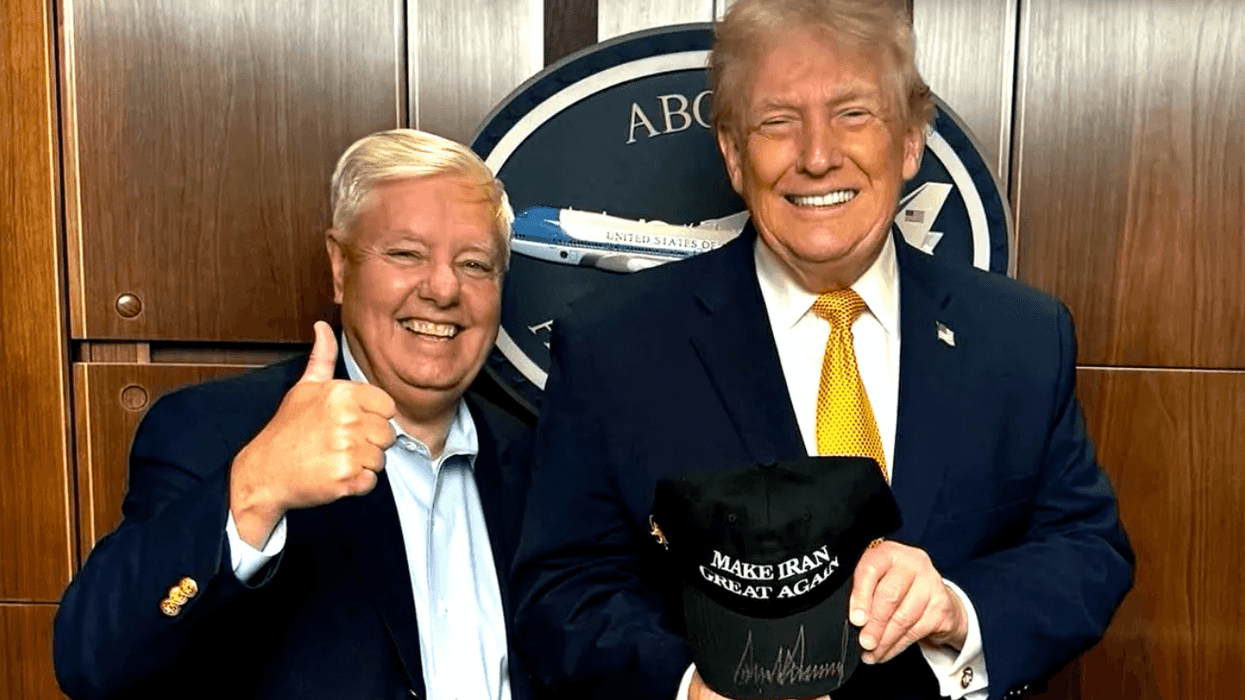
Lindsey Graham and Donald Trump  with make iran great again cap

American Amnesia: Why Did We Ever Listen to Lindsey Graham?

"De mortuis nil nisi bonum," said my father whenever a political adversary passed away, repeating the ancient admonition to speak only good of the dead. So, in assessing the career of Lindsey Graham, lately deceased senator from South Carolina, let's note in fairness that he spoke passionately and often in support of Ukraine's struggle against its Russian oppressor, a righteous cause he shared with liberals and progressives in the opposing party.

However much Graham did for Ukraine, what his career shows most clearly is how powerful conservatives routinely escape the memory of their ruinous decisions — and go on to promote further destruction with every breath. Most of them never express regret for the chaos and death they help to cause, and instead persistently attempt to justify the wreckage left behind.

Today, and no doubt for years to come, America will continue to live with the consequences of Graham's blundering and blithering — and our failure to ignore him after the first time around.

Very few American politicians would still seek to justify or excuse the momentously bad judgment that led us to invade Iraq more than two decades ago. Many of the senators who voted for the Authorization for Use of Military Force Against Iraq Resolution in 2002, including Democrats and Republicans, have expressed at least a degree of remorse for that lethal error. More than once, Hillary Clinton has said it is her deepest regret.

But on that ill-fated vote's 20th anniversary, Graham waved off any pangs of guilt for the thousands of Americans and hundreds of thousands of Iraqis killed. "Intelligence was faulty," he dismissively told a reporter, referring to the comic-book depictions of an arsenal of mass destruction hidden somewhere by the Iraqi dictator Saddam Hussein. According to the late senator, we should be grateful that Iraq — now governed by Iranian-backed warlords and militias — is a "democracy," kind of. Freedom House still rates it as "unfree."

Keep that troubling history in mind as we turn our attention to the present, in the months before Graham passed away. Contrary to the promises of President Donald Trump — who wanted everyone to believe he had opposed the Iraq fiasco — the United States is again enmeshed in a kinetic Mideast conflict with no discernible strategy, no end game, no possible gain for American interests, and a vast and wasteful expenditure of money if not yet lives.

The Trump White House entered this grossly stupid war of choice for a number of reasons, from the president's animus against former President Barack Obama, whose nuclear deal with Iraq he scuttled, to his childish confidence in his own infallible instincts. But somewhere in that policy miasma lurked Graham.

It is now widely understood that in starting his war on Iran, Trump acceded to years of lobbying by Israeli Prime Minister Benjamin Netanyahu — and that the chief conduit for Netanyahu's message was Graham, who surely slathered every argument with obsequious praise for the president. The senator boasted that he had "coached" Netanyahu in moving Trump toward war and — where have we heard this before? — said that it was "intelligence" from Israel that ultimately drove the U.S. to begin bombing.

Nor did Graham publicly hesitate to offer terrible hawkish advice for Trump. "When this regime goes down, we are going to have a new Middle East, and we are going to make a ton of money," he crowed shortly after the war commenced last February. "This regime is in a death throe now; it is going to be on its knees, it's going to fall, and when it falls, we're going to have peace like no other time. We're going to have prosperity unlike anyone could ever imagine."

The regime in Tehran did not fall. We have squandered a fortune and will spend a lot more before this debacle ends. Worse, we may yet lose more brave Americans. And what's hard to imagine is a decent outcome that serves American interests or world security.

I suppose the nation will miss Lindsey Graham, as his colleagues keep telling us, but at least we still have Trump to tell us all those blustering lies.

Joe Conason is founder and editor-in-chief of The National Memo. He is also editor-at-large of Type Investigations, a nonprofit investigative reporting organization formerly known as The Investigative Fund. His latest book is The Longest Con: How Grifters, Swindlers and Frauds Hijacked American Conservatism (St. Martin's Press, 2024). The paperback version, with a new Afterword, is now available wherever books are sold.

Rising Gas Prices Enraged Republicans Under Biden, But Not Any More

Rising Gas Prices Enraged Republicans Under Biden, But Not Any More

When the price of gas skyrocketed in 2022 after Russia invaded Ukraine, Republicans fell over themselves to blame then-President Joe Biden in hope of hurting his reelection bid as well as Democrats in the midterms—even though Biden was not at fault for the spike.

But now, with President Donald Trump squarely responsible for the exponential increase in oil and gas prices after he launched an ill-conceived war on Iran, Republicans have completely reversed course, claiming that high gas prices are a cost that they're willing to pay.

It’s a message taken directly from Dear Leader, who had the gall to argue this week that higher oil prices are actually good for Americans.

Get a load of Rep. Jim Jordan of Ohio, who said Thursday that he’s totally fine with higher gas prices in order to let Trump wage war in Iran.

"If that means prices go up for a short time, I think Americans understand we can live with that," Jordan said on CNN.

But in 2022, Jordan was one of the loudest voices criticizing rising gas prices.

"Real America doesn’t care about the January 6th Committee,” he wrote on X at the time. “Gas is over $5 per gallon!”

And he was still on a tear about gas prices in 2023.

"Gas prices are up 63 cents this year. Groceries prices are still at record highs. Good luck affording a house with 7% interest rates. Bidenomics!" Jordan wrote on X at the time.

But Jordan is not singing the same tune today, with gas prices up 69 cents over the last month, grocery prices rising, and mortgage rates at more than six percent—all directly thanks to Trump’s war and illegal tariffs wreaking havoc on the economy.

Then there’s Rep. Mark Alford of Missouri, who told CNN this week that “there may be sacrifices to be made at the pump on a temporary basis."

"I think the people in my district are [willing to pay higher prices at the pump],” Alford said. "I'm willing to pay 30 percent or 30 cents more at the pump to make sure Iran doesn't have a nuclear weapon that's going to hit the U.S."

ALFORD: There may be sacrifices to be made at the pump on a temporary basisRAJU: Do you think Americans are willing to make it?A: I think the people in my district are. I'm willing to pay 30%, or 30 cents more at the pump to make sure Iran doesn't have a nuclear weapon that's going to hit the US

[image or embed]
— Aaron Rupar (@atrupar.com) March 11, 2026 at 2:50 PM

Just a few weeks ago, Alford was praising Trump for lowering gas prices.

"President Trump and House Republican’s [sic] America-First energy agenda is working—and it’s working so well that even networks usually quick to criticize are reporting the relief with a smile. When gas prices go down, American families go forward,” he wrote on X.

So then does Alford think that skyrocketing gas prices thanks to trigger-happy Trump make Americans go backward?

Sen. Rick Scott of Florida also said that Americans just have to get over surging gas prices because Trump's war is more important.

“We’d love to get gas prices back down, but the most important thing is [to] destroy Iran’s ability to produce a nuclear weapon, destroy their military, their ballistic missile capability," Scott told CNN. “We all want gas prices to come down. Nobody wants gas prices higher. This president doesn’t want gas prices higher. But we have to be realistic."

Of course, Trump said in June that the United States “obliterated” Iran’s nuclear capabilities, so it’s unclear how in just a few months the country became such a massive threat that war was necessary.

Given that a majority of Americans don't support Trump’s war and only wanted to see prices in the United States come down, it's hard to imagine that being a winning message for the GOP.

But that didn’t stop Sen. Roger Marshall of Kansas from pushing the same message.

"Freedom is not free. Americans are gonna have to make some sacrifices," Marshall said, even though the war in Iran has nothing to do with freedom in the United States.

However, there is one Republican sounding the alarm on Trump's war.

“If we are still bombing Iran with kinetic action—people don’t want to call it war—if there’s still kinetic action that causes oil to be over $100, I think you’re going to see a disastrous election [for Republicans],” Sen. Rand Paul of Kentucky told Fox Business.

Rand Paul: "The 2026 elections, already we are behind the 8 ball. If you add in high gas prices, high oil prices, and if we're still bombing Iran with kinetic action -- people don't want to call it war -- I think you're gonna see a disastrous election."

[image or embed]
— Aaron Rupar (@atrupar.com) March 10, 2026 at 9:00 AM

Paul’s right: Rising gas prices are Trump's fault, and voters will punish the GOP for it come November.

Reprinted with permission from Daily Kos

Danziger Draws

Danziger Draws

Jeff Danziger lives in New York City and Vermont. He is a long time cartoonist for The Rutland Herald and is represented by Counterpoint Syndicate. He is a recipient of the Herblock Prize and the Thomas Nast (Landau) Prize. He served in the US Army in Vietnam and was awarded the Bronze Star and the Air Medal. He has published eleven books of cartoons, a novel and a memoir. Visit him at jeffdanziger.com.

Kushner And Witkoff Secretly Consulted Kremlin In Drafting Ukraine 'Peace Plan'

Kushner And Witkoff Secretly Consulted Kremlin In Drafting Ukraine 'Peace Plan'

The peace plan that President Donald Trump's administration offered to end the ongoing war in Ukraine has been widely criticized for being overly accommodating to Russia. Now, a new report shows that Russia may have been even more intricately involved in its composition than previously known.

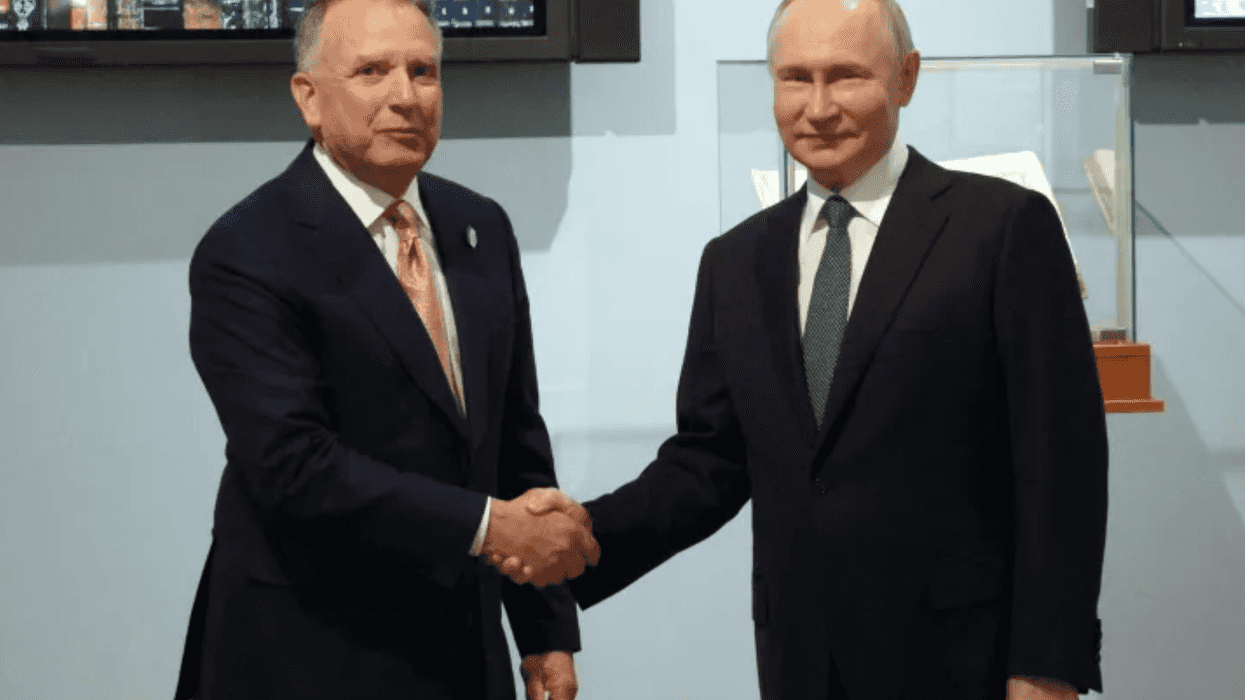
The Wall Street Journal reported Monday that the proposal — which Trump administration special envoys Steve Witkoff and Jared Kushner (who is also the president's son-in-law) — relied heavily on input from a "Kremlin insider." Kushner, Witkoff and the Kremlin advisor huddled behind closed doors in multiple "secret meetings" in Miami, Florida, according to the Journal.

That Kremlin advisor was identified as Kirill Dmitriev, who the Journal described as an envoy of Russian President Vladimir Putin who also has ties to Kushner. Witkoff also met Dmitriev during his April trip to Moscow. The 28-point plan has been described as a "framework" to end the war, though multiple senators allege Secretary of State and National Security Advisor Marco Rubio described it as "essentially the wish list of the Russians." (Rubio has denied making that comment)

The three men reportedly met for three days in late October at Witkoff's home in Miami, where Dmitriev communicated multiple items the Kremlin demanded in order to agree to end hostilities with Ukraine. The Journal reported that Dmitriev called for Ukraine to never be allowed to join the North Atlantic Treaty Organization (NATO), pull all troops out of the eastern Donbass region and other territory Russia wanted to control (like the Crimean Peninsula, which it illegally invaded in 2014). The Kremlin also wants Ukraine's military to be capped at a much lower number than its current 900,000-member force.

Dmitriev also specifically called on the Trump administration to engage in multiple economic agreements in the areas of artificial intelligence, energy and other industries. The Journal also reported that the bulk of the plan was written by both Kushner and Witkoff before they even engaged with Russia or Ukraine.

When Witkoff and Kushner attempted to engage senior Ukrainian officials to get their input on the peace plan, one told the two Trump administration envoys that the deal was better for Russia than for Ukraine. Ukrainian President Volodymyr Zelenskyy thanked the two men for working toward ending the war, but also said their plan needed revisions.

Trump administration officials maintain that the final version of the plan will be more accommodating to Ukraine, and suggested amending it to raise the cap on the size of the Ukrainian military beyond what Russia wanted, and that language permanently barring Ukraine's membership in NATO could be removed.

Reprinted with permission from Alternet


Shop our Store

Headlines

Editor's Blog

Trending

World