@peterelkind

Inside Trump's Chaotic And Failed Attempt To Prosecute Noncitizen Voters

It was late March when Joe Teirab, the second-in-command at Minnesota’s U.S. attorney’s office, received an urgent email from Washington.

The federal government was scrambling to find criminal cases to back up President Donald Trump’s claims that illegal voting by noncitizens was tipping the scales in American elections. Agents from Homeland Security Investigations, a massive federal law enforcement agency, had been dispatched to work leads across the country, including hundreds in Minnesota.

Teirab was already under pressure. In an earlier missive, Nick Davis, a high-ranking Justice Department appointee helping to lead the election fraud crusade, had reminded him the cases were so high priority that Teirab and his staff couldn’t decline to move forward on them without express approval from agency higher-ups. On March 24, Davis demanded a status report — within hours.

Teirab, a former Marine and a Harvard Law graduate who’d run unsuccessfully for Congress as a Republican, responded with a blunt reality check.

“Bottom line up front,” he replied in an email reviewed by ProPublica. After subpoenaing records on about 130 people, only one had been referred for prosecution, his staff had told him. Agents had deluged local election offices with calls and demands for voting histories, demonstrating “a complete lack of understanding” of illegal voting investigations.

“The HSI task force has been disjointed and disorganized,” Teirab wrote. The entire process, he said, had been “dysfunctional.”

Since Trump regained the White House, his administration has launched a series of unprecedented initiatives to find and prosecute voting by noncitizens, which he’s long claimed, without evidence, is rampant.

He’s stepped up this push in recent weeks, saying in a nationally televised speech that the American election system was “so vulnerable that no one can possibly defend it.” To support that assertion, the Department of Homeland Security, HSI’s parent agency, released documents asserting it had found more than 250,000 noncitizens on voter rolls in just four states, all led by Democrats. The documents included no explanation of how that number was calculated.

It’s well known the administration has tasked HSI — a force established to combat drug cartels, terrorism and other cross-border criminal enterprises — with leading the campaign to find election fraud cases in the United States.

But an investigation by ProPublica reveals for the first time how the Trump administration came to harness HSI’s personnel, technology and sweeping legal authority in service of its election agenda — and how meager the results have been, despite the prodigious resources sunk into the effort.

According to interviews and internal emails reviewed by ProPublica, career staffers at the Justice Department warned that transferring voter rolls to HSI to enable it to search for noncitizen voters could violate federal privacy laws. Similarly, longtime HSI insiders cautioned that using the agency’s databases and tools to search these lists would yield mismatches and wildly inflated results.

The administration plowed forward anyway.

HSI’s involvement in the hunt for election fraud traces at least to summer 2025, when agency supervisors embraced a proposal from a midlevel agent who’d publicly echoed Trump’s claims about elections. He argued the agency’s powerful databases and tools could find noncitizens even on the voter lists that states make publicly available, from which the most confidential information has been redacted. Under Trump, the Justice Department had collected many public voter rolls as part of a controversial effort to compel states to turn over the unredacted versions.

Those searches went forward, ProPublica’s reporting shows, helping to generate tens of thousands of leads regarding illegal voting across the country. But when HSI agents were sent to investigate them, the results were similar to what Teirab reported from Minnesota.

Between January 2025 and May 2026, a ProPublica analysis of Justice Department data shows, fewer than 150 alleged noncitizen voters were referred for prosecution. Even fewer — 41 — were charged with voting illegally or other election-related crimes. (More than 150 million people voted in the most recent presidential election.)

In response to questions from ProPublica, administration officials insisted the effort spearheaded by HSI was producing meaningful results.

“President Trump is committed to ensuring that Americans have full confidence in the administration of elections, and that includes totally accurate and up-to-date voter rolls free of errors and unlawfully registered non-citizen voters,” Abigail Jackson, a White House spokesperson, said in response to ProPublica’s request for comment. “Noncitizens voting is a crime. Anyone breaking the law will be held accountable.”

A DHS spokesperson didn’t answer questions about why so few prosecutions have resulted from HSI’s work. The agency wouldn’t specify what tools or techniques HSI had used, but confirmed it had cross-referenced “publicly available data” from state voter rolls with information on “known illegal aliens” in its systems. “It’s not rocket science,” the spokesperson wrote of this initiative in a response to ProPublica’s questions. “It’s an easy step to secure our elections.”

Teirab and the U.S. attorney’s office in Minnesota declined to comment.

There’s an array of reasons why Trump’s campaign to document claims of widespread voter fraud hasn’t succeeded. Most obviously, it’s exceedingly rare, as countless studies and state audits have found. Noncitizens often get on voter rolls by accident or when government officials make errors. Last month, New Jersey disclosed that a mistake involving its Motor Vehicle Commission caused 6,600 noncitizens to be registered (fewer than 400 voted).

The administration’s critics say its hunt for noncitizen voters aligns with Trump’s attempts to seek more federal control over elections while stoking doubt and fear about the voting process. Since taking back the Oval Office, Trump has tried to impose new restrictions on voter registration, mail-in ballots and voting machines, though judges have shut down most of these efforts.

Former officials at DHS and the Justice Department called the move to involve HSI a further escalation and questioned the propriety of aiming the agency’s muscle and technology at individual cases of illegal voting.

“It’s one thing if you’re going after Pablo Escobar,” said Steve Bunnell, a former DHS general counsel and senior intelligence adviser who handled voting fraud prosecutions during more than a decade at the Justice Department. “It’s another thing if you’re going after some cleaning lady who’s been working in the United States for 20 years and taking care of her 80-year-old mother and taking her little kids to church.”

“The Swiss Army Knife of Federal Law Enforcement”

Trump’s enlistment of HSI in his election fight is no accident. Cobbled together in the aftermath of 9/11, the agency has 7,100 armed, highly trained agents and another 800 criminal analysts, as well as access to troves of confidential data about hundreds of millions of Americans.

Though part of Immigration and Customs Enforcement, the agency has historically stayed out of immigration cases. During the first Trump administration, leaders of 19 HSI regional offices — virtually its entire top field hierarchy — signed a letter calling for HSI to become a standalone agency, arguing that ICE’s deportation work dissuaded people from cooperating with its investigations. But when Trump returned to the White House, it swiftly became clear that the agency would play a central role in investigations related to the president’s twin obsessions, illegal immigration and noncitizen voting.

Trump picked his field general for repurposing HSI even before taking the oath of office. In December 2024, he named Anthony Salisbury, a 50-year-old career agent who’d run the agency’s Miami office, as a deputy homeland security adviser, reporting to White House policy chief Stephen Miller. He was also given a dual appointment as head of HSI.

Salisbury was colorful: A mixed martial arts enthusiast, he once appeared at the agency’s headquarters with his face bruised and eye blackened from a recent bout. He’d sometimes entertain colleagues by pulling out a bridge that covers his missing front teeth.

To agency veterans, however, he was forever linked to a 2011 operation he’d overseen in Mexico in which one agent was killed and another wounded in a highway ambush by a drug cartel. An agency review submitted to Trump in April 2020 concluded that errors by HSI supervisors, including Salisbury, contributed to the outcome; it urged the administration to consider disciplinary action. None was taken against Salisbury, however.

Salisbury did not respond to requests for comment from ProPublica. A White House official called him “a critical member of the Trump administration” who was “cleared” in every review of the Mexico incident and was subsequently “promoted six times under multiple administrations.”

“It’s one thing if you’re going after Pablo Escobar. It’s another thing if you’re going after some cleaning lady who’s been working in the United States for 20 years and taking care of her 80-year-old mother and taking her little kids to church.”
Steve Bunnell, a former DHS general counsel and senior intelligence adviser

Once elevated to his new posts, Salisbury took charge of carrying out the second Trump administration’s agenda for HSI, personally issuing staffing directives, reassignments and promotions, current and former agency officials told ProPublica. (A number of them spoke on condition of anonymity out of fear of retribution.)

Starting in early 2025, Salisbury oversaw the unprecedented reassignment of more than 6,000 agents to immigration enforcement, diverting most of the agency from its normal duties. He then also pointed HSI at noncitizen voting, presiding over multiple meetings with officials at DOJ and Homeland Security focused on election fraud, according to emails reviewed by ProPublica and agency supervisors who worked with him.

“Stephen Miller has an HSI deputy for a reason,” said Eric Balliet, a high-level HSI manager who retired in 2024 after 23 years with the agency. (Like many HSI veterans, Balliet has remained in close contact with former colleagues.) “Salisbury is going to salute and execute, and he is going to make sure that from the HSI side, they fall in line, and there’s going to be no resistance or pushback. HSI has been turned into the Swiss Army knife of federal law enforcement.”

In early July 2025, Frank Quiñones, an HSI special agent who’d worked under Salisbury in Florida, approached leaders at the HSI Innovation Lab with an idea for using the agency’s technology to find noncitizen voters on state voter rolls, sources at the agency told ProPublica. Quiñones had been transferred to Washington to oversee a unit that had previously handled cases involving the theft of government benefits but that had been enlisted into voting investigations.

The lab, housed in an unmarked office in a D.C. suburb, had access to the government’s most sensitive databases, from suspicious activity reports to arrest records. Staffed by a combination of HSI experts and outside consultants, it developed software tools to comb the data for information that could help agents pursue criminal suspects.

Quiñones was a true believer in Trump’s claims about election fraud: In multiple Facebook posts and reposts, ProPublica found, he promoted claims that the 2020 presidential vote had been stolen. At a meeting with the Innovation Lab’s overseers, according to sources who worked in the lab, he pitched using the lab’s technology to identify illegal voters — even though the agency lacked voter rolls that included identifiers such as partial Social Security numbers. (Quiñones did not respond to ProPublica requests for comment.)

For proof of concept, Quiñones proposed using a February 2021 public voter list he’d obtained for New Jersey and running it through HSI’s databases. The lab staff viewed his idea as “a little insane,” one recalled — both unreliable and improper. Since the public rolls don’t include voters’ unique identifiers, people at the lab also knew linking them to HSI’s data would produce mismatches — what the staffer called an “ungodly” number of false positives. The lab team also worried about violating longstanding safeguards limiting use of private citizen data. They “didn’t want to touch this,” the staffer added. Quiñones defended his idea, repeatedly declaring: “The president wants this!”

Tom Hodge, an HSI data analyst at the meeting, proposed running the voter information through the Athena Toolbox, an analytical platform developed by the Sandia National Laboratories that had access to all of HSI’s databases. (Hodge did not respond to ProPublica requests for comment. Sandia referred ProPublica’s questions to the facilities’ parent agencies, including the Department of Energy, which did not respond to our requests.)

Hodge and the Sandia team spent the next six weeks on the project, reporting they’d found large numbers of noncitizens on Quiñones’ 2021 New Jersey list. According to one former HSI official, they said they’d found “5,000 high-confidence illegal voters” in just a single New Jersey county. (Officials at the New Jersey secretary of state’s office, which oversees the state’s voter rolls, declined to comment on the claim. Beth Thompson, head of a group for local New Jersey election officials, called the number impossibly high, even accounting for the mistake disclosed by the state.)

The apparent breakthrough couldn’t have come at a better time.

The Trump administration’s other efforts to identify noncitizens on state voter rolls were running into a variety of roadblocks.

The administration had hoped to persuade states to check their voters’ citizenship status using a system called the Systematic Alien Verification for Entitlements, or SAVE, but many didn’t. Most states also refused the Justice Department’s demands to turn over their unredacted voter rolls, including partial Social Security numbers, which thwarted the agency’s plan to run them through SAVE. Courts have stymied the DOJ’s attempts to sue for the records, citing the Constitution, which gives primary control over elections to the states.

In an Aug. 21 email to a half dozen administration officials, Quiñones touted the solution he’d brought to the HSI Innovation Lab: using HSI’s platform to search voter rolls. The results, Quiñones noted, could fuel both criminal and immigration investigations.

By the end of the month, those in top election-related roles at DHS and the Justice Department were actively promoting what they dubbed the “HSI Tool” as a preferred alternative to SAVE, according to people familiar with the matter. Among them was Heather Honey, the prominent election denier appointed as a senior counselor at DHS, who is helping lead the government’s efforts to identify noncitizens on voter rolls. (Honey did not respond to ProPublica’s requests for comment. In an email responding to questions to her, DHS said Honey’s “expertise in election administration” was “invaluable to the Department’s efforts to protect critical infrastructure.”)

The White House, too, got behind the idea. In a November email, J. Brian Sikma, special assistant to the president, excitedly noted that the New Jersey trial cross-checking voter rolls with DHS data appeared to have identified a “very significant number” of “potential non-citizens.” (Sikma didn’t respond to a request for comment.)

The DOJ, Sikma reported, had already obtained public voter rolls for many other states. He included a list of them, adding: “It is of paramount importance that these also be reviewed expeditiously.”

Running “Roughshod” Over Privacy

As the push to use HSI’s tech to search voter information gained momentum, a new problem emerged.

Career attorneys at the Justice Department, including specialists on privacy law, raised concerns that transferring voter rolls wholesale from the agency to DHS might not be legal, according to internal emails reviewed by ProPublica and interviews with several former officials.

The voter rolls the DOJ had collected contained sensitive information on millions of Americans. Even the public versions, which political parties and candidates routinely obtain to target ads and messages, included voters’ addresses, birth dates and party affiliations. For the 16 states that have agreed to share their unredacted voter lists, the DOJ had citizens’ partial Social Security numbers or driver’s license information, too.

Federal laws, particularly the Privacy Act, dictate what data government agencies can collect, what it can be used for, how it can be shared, and how it must be protected. Agencies have to disclose their plans in advance, gathering public comment. A person’s information can’t be released or shared without their consent, subject to limited exceptions.

From the outset, the Trump administration’s effort to combine data across federal agencies has repeatedly drawn criticism from courts and whistleblowers for failing to adhere to restrictions meant to keep data private and secure. In June, for example, a judge prohibited the government from using SAVE for mass searches, ruling the administration had violated federal privacy laws by giving DHS access to Social Security data to enhance the tool. The administration has appealed that ruling.

In July 2025, as word got around that the DOJ might hand over voter data to DHS, a half dozen career attorneys who had been reassigned into the voting section voiced their unease to supervisors, according to two former DOJ lawyers. Their concerns were disregarded, prompting most to resign.

Instead, the DOJ’s office of legal counsel pushed forward with plans to share the public voter rolls, claiming a Privacy Act exception allowed HSI to receive such data without public notice as long as it was for law enforcement purposes. DHS just needed to submit a letter officially requesting the data for those purposes, an attorney in the legal counsel’s office explained, according to internal emails.

But this exception was meant to be used to get information on individual criminal suspects, not to gain mass access to data on people suspected of no wrongdoing, according to Nikhel Sus, chief counsel for Citizens for Responsibility and Ethics in Washington, which has sued the Trump administration on behalf of voter and pro-privacy groups, filing the case that eventually limited SAVE’s use.

“[Anthony] Salisbury is going to salute and execute, and he is going to make sure that from the HSI side, they fall in line, and there’s going to be no resistance or pushback. HSI has been turned into the Swiss Army knife of federal law enforcement.”

Eric Balliet, a former high-level HSI manager

Peter Winn, a 29-year Justice Department veteran who had served as the agency’s acting privacy chief for nearly a decade, drafted a letter to set out the data-sharing agreement between the DOJ and DHS, according to internal documents reviewed by ProPublica.

In a Feb. 12 email to two top DOJ officials, he said he’d rewritten an initial draft memo to “make the information sharing arrangement far easier to defend, if and when it is challenged in court.”

Rather than simply handing over the voter rolls, Winn proposed having DHS request “pertinent and relevant” information about specific people from the DOJ, then having technical staff at Justice and Homeland Security “coordinate” to fulfill the requests.

“Having slept on it,” Winn wrote, “I ended up deciding that our initial idea of sending a huge amount of raw unprocessed voter registration data to DHS, involved taking far too much unnecessary legal risk, given that 99% of the data would implicate the privacy and civil liberties of United States Citizens, and would risk adding to the false narrative in the establishment press of DOJ and DHS being unconcerned with the privacy and civil liberties of Americans.”

Winn attached his proposed letter, to be signed by Todd Lyons, then the acting director of ICE.

Winn’s suggested restrictions were quickly abandoned, however. A second draft of the letter, dated March 4, contained altered language providing that the voter information would be “transferred” to HSI, with one exception: Voters’ party affiliation would be redacted, if possible, it said.

The final letter, signed by Lyons and sent to the DOJ just two days later, abandoned even that limitation. Just three paragraphs long, it permitted HSI to use the voter rolls to pursue any “appropriate investigation of potential violations of federal election law.”

In response to questions from ProPublica, Winn said “I can’t really comment on internal drafts of correspondence.”

A Justice Department spokesperson defended the government’s actions, saying “no one should oppose intergovernmental data sharing and coordination that enable swift investigations and prosecution of illegal alien voting.” DHS echoed the DOJ’s view, calling such information sharing “essential to protecting America’s election process by keeping noncitizens off voter rolls” and “an easy step to secure our elections.”

Sus said that by pooling voters’ sensitive personal identifiers, along with their party and voting histories, the administration has “run roughshod” over privacy laws and is creating a “1984-style database” that could be used to surveil political participation.

CREW filed a lawsuit in April on behalf of the nonprofit advocacy group Common Cause that argues it’s illegal for the administration to use the law enforcement exception to justify mass sharing of voter information.

Balliet, the former HSI agent, expressed similar concerns, saying that handing over voter rolls to run through DHS’ systems amounted to “a mass data-collection effort by the government against its own citizens in a non-criminal setting.” On a practical level, he added, the data sharing increased the risk of breaches that can open law-abiding citizens up to identity theft.

“As a citizen, I want the government to take seriously the protection of my private data,” he said. “If it falls into the wrong hands, it’s not the government that suffers. It’s me.”

Collapsing Claims

By January 2026, scores of HSI agents were fanning out across the country to investigate thousands of leads about illegal voting.

About 25,000 of them involved people SAVE had identified as potential noncitizens on state voter rolls. Another 15,000 were given to HSI’s cross-border financial crimes unit, which was told to prioritize them over money laundering and fraud cases, a former high-level HSI official said. Quiñones’ unit led a separate effort to find additional cases by reviewing whether people who’d recently become citizens had voted before they were naturalized, then lied about it in naturalization interviews.

Still more leads came from running public voter rolls through the HSI lab’s databases, though it’s not clear how many. Agency sources told ProPublica that the rolls of New Jersey and Pennsylvania were searched using the Athena Toolbox. When DHS announced it had found more than 250,000 noncitizens on the registered voter lists of four Democrat-led states, it said that included “as many as” 35,152 in New Jersey and 14,576 in Pennsylvania. Both states have asked DHS to provide the source of the numbers.

Once federal investigators started digging into these cases, however, they often fell apart.

Through May, prosecutors had charged fewer than four dozen people with crimes related to noncitizen voting, ProPublica’s analysis of DOJ data and federal court filings shows, getting convictions or guilty pleas in 14 cases.

The largest cluster of cases was brought in the Southern District of Florida, headed by Jason Reding Quiñones (no relation to the HSI agent), a staunch Trump ally who has led investigations of the president’s political opponents. Voters have been sentenced in eight of the office’s cases; seven others are pending.

Prosecutors have initiated a total of seven noncitizen voting cases as of May in the four states where DHS claimed to have found more than a quarter million noncitizens on the rolls. Collectively, these states have more than 40 million registered voters.

Overall, the paltry numbers reflect the realities HSI investigators confronted on the ground as they tried to convert leads into cases, a ProPublica review of records obtained by voting-advocacy groups Campaign Legal Center and Democracy Forward shows.

Emails between agents and local election officials in Texas and Ohio indicate much of the federal information on purported noncitizens was inaccurate, the consequence of flawed data matching. When agents demanded voting histories and registration forms, they often discovered people weren’t registered in the counties where HSI thought they were. When voters register, they must attest that they are U.S. citizens; agents found some, however, who’d been put on voter rolls in error after disclosing they weren’t citizens. Many had never voted.

“Our initial idea of sending a huge amount of raw unprocessed voter registration data to DHS, involved taking far too much unnecessary legal risk, given that 99% of the data would implicate the privacy and civil liberties of United States Citizens.”

Peter Winn, a Justice Department veteran, in an email urging limits on data sharing that were not adopted

Most HSI agents, steeped in pursuing complex international crimes, had no experience in pursuing voting fraud. In his email to Nick Davis at the Justice Department, Teirab, the top deputy in Minnesota’s U.S. attorney’s office, described the chaos that ensued when the state and at least six counties got subpoenas for voters’ records. The demands “presented a host of issues,” Teirab wrote to Davis. (Davis did not respond to a request for comment.)

“An unknown number of agents are constantly arriving in Minnesota without any knowledge of the investigation, the issues already discussed and decided, and the processes they need to follow,” Teirab complained. “Instead of getting up to speed and learning, they have demanded many calls and subpoenas, most of which demonstrate a complete lack of understanding of the investigation.”

In Stearns County in central Minnesota, HSI agents subpoenaed voting histories on 13 people, county officials told ProPublica. Only six turned out to live there.

Minnesota Secretary of State Steve Simon, a Democrat, said the effort revealed federal investigators’ ignorance about “the nuance of elections administration.” The rate of purposeful election crime is “microscopic,” he said. “The very human errors that can happen are not some sort of plot or scheme to dirty up the voting rolls, but are just everyday human beings making mistakes, not intending at all to violate any law.”

As of May, only one illegal voting case has been referred for prosecution in Minnesota. The state has more than 3.8 million registered voters.

Even Republican-led states like Ohio, which has shared its unredacted voter rolls with the DOJ and run them through the SAVE system, have struggled to meet Trump administration demands to deliver cases.

In October, the Ohio secretary of state referred more than 1,000 voters identified as possible noncitizens to the federal government, claiming 167 had voted at least once since 2018. At least nine HSI agents in Cincinnati and Cleveland began to investigate, emails obtained by Campaign Legal Center and shared with ProPublica show.

The agents bombarded local election officials with requests for voting histories and other records, some dating back decades. “Sorry again for piecemealing these to you,” one agent wrote to an official in Butler County, outside Cincinnati, after making five separate requests over two weeks. Mohamed Al-Hamdani, a Democratic member of Montgomery County’s Board of Elections, which received similar inquiries, said they amounted to “witch hunts” that ate up staff time.

In February, Davis sent an email pressing Ohio’s two U.S. attorneys’ offices for an “election integrity” update, asking: “How close are we to complaints/indictments, how many subjects, what issues you’ve run into, how many referrals have been closed and why, how helpful HSI has been.”

As of May, just two voting cases had been referred for prosecution in Ohio and no one had been charged, federal data shows. The state has nearly 8 million voters.

In the past, it was uncommon for federal prosecutors to pursue charges against noncitizen voters who didn’t understand that it was against the law for them to vote. Without evidence of a coordinated effort or plot, it didn’t make sense to put resources into such prosecutions, a former DOJ official who oversaw election cases said.

Now, however, U.S. attorneys’ offices are taking a different approach, pursuing prosecutions that could result in prison terms or deportation.

In May 2025, federal prosecutors in Florida filed illegal voting charges against a mother and daughter, both Ukrainian citizens, who’d registered after becoming permanent U.S. residents, then voted in the 2024 presidential election. They’ve pleaded not guilty, with the mother saying in an interview with investigators that she thought having a green card meant she could vote. They and their attorneys didn’t respond to requests for comment from ProPublica. The prosecutor handling the case for the Southern District of Florida also didn’t respond to questions. The mother and daughter are scheduled to go to trial in September.

“Far-Reaching Consequences”

Experts on both elections and national security warn there may be profound longer-term costs to unleashing the federal government’s investigative and prosecutorial might to try to prove the president’s claims about noncitizen voting.

Current and former HSI agents say critical investigations — including task forces aimed at drug rings, human trafficking and money laundering — have languished as the agency has pivoted to take on noncitizen voting and immigration enforcement.

In February 2026, according to court files and emails reviewed by ProPublica, an HSI agent in Ohio who’d been leading a multistate child sex abuse investigation was abruptly assigned to pursue dozens of leads on suspected noncitizen voters, work that took months. It wasn’t until May that he made an arrest in the other case. Prosecutors have filed child exploitation and pornography charges against the man, 38, in connection with acts involving at least five 14-year-old girls.

Cases like this “don’t just stop,” said Balliet, the 23-year HSI veteran. “When you pull people off them for an extended period of time, those criminal networks will adapt, and people get killed and kidnapped.”

Federal data hints at a broader slowdown in what had been HSI’s most urgent work. According to an annual government report, the number of wiretaps obtained by DHS — often to investigate drug trafficking — plummeted to 23 in 2025, from 133 the previous year. In the report, DHS attributed the decline to several factors, including “changes in administration enforcement and prosecutorial priorities.”

“It’s never been a better time to be involved in transnational organized crime,” said John Tobon, a high-ranking HSI official who retired in early 2025.

“The very human errors that can happen are not some sort of plot or scheme to dirty up the voting rolls, but are just everyday human beings making mistakes, not intending at all to violate any law.”
Minnesota Secretary of State Steve Simon

In its statement, DHS denied HSI has neglected its core mission, saying the agency has increased its efforts to combat criminal cartels, gangs and drug traffickers in response to multiple Trump executive orders.

Though HSI’s voting-related investigations have yielded only a small number of prosecutions, voter advocacy groups worry the Trump administration will use them to justify more extreme interventions.

Its latest tactics include threatening to withhold funds from states it says are refusing to check their voter rolls for noncitizens and saying it will prosecute state election officials who “knowingly” fail to remove noncitizens. Trump has also continued to press Congress to enact the SAVE America Act, which would require people to provide proof of citizenship when registering to vote, a measure advocates have criticized as a barrier to voting. Democrats are preparing for the prospect of federal troops being sent to the polls to intimidate voters.

“Those concerns are playing out in real time, with far-reaching consequences,” said Dax Goldstein, a director at the States United Democracy Center, a nonprofit group that works to build confidence in elections. “When federal agencies are misused and weaponized, people lose trust in government itself.”

How The IRS Failed To Curtail Much-Abused Fat-Cat Loophole

How The IRS Failed To Curtail Much-Abused Fat-Cat Loophole

Reprinted with permission from ProPublica.

In March 2019, the IRS added a scheme to its annual “Dirty Dozen” list of “the worst of the worst tax scams.” That same scheme was targeted, just weeks earlier, when the U.S. Department of Justice filed a fraud lawsuit against a handful of promoters allegedly responsible for generating more than $2 billion in improper tax write-offs. And the Senate Finance Committee has been investigating that very same racket, recently demanding thousands of pages of documents from six promoters. Lawmakers from both parties have introduced legislation to halt the same practice.

The scheme they’re all trying to kill is what’s called a “syndicated conservation easement,” which the IRS calls “abusive” and says has resulted in bogus deductions for the rich that have cost the U.S. Treasury billions in revenues.

A conservation easement, in its original, legitimate form, is granted when a landowner permanently protects pristine land from development. In that scenario, the public enjoys the benefit of undeveloped land and the taxpayer gets a charitable deduction. By contrast, the syndicated form, created and packaged by profit-seeking middlemen known as “promoters,” involves buying up land, finding an appraiser willing to declare that it has huge development value and thus is worth many times the purchase price, then selling stakes in the deal to wealthy investors who extract tax deductions that are often five or more times what they put in. (ProPublica investigated syndicated easements in the 2017 article “The Billion-Dollar Loophole.”)

But the multifront crackdown seems to be having, at best, a limited effect. There were signs that the pace of syndicated deals has eased, according to an IRS letter to Congress in July 2018 that cited incomplete data; that’s the most recent official statement from the agency, which declined to comment for this article. And some entities doing syndicated projects have seen their business drop or have even left the field. But IRS commissioner Chuck Rettig offered a different picture to the Senate Finance Committee this spring. “Syndicated transactions have absolutely not declined,” he testified. “They’re still there.”

In November, Rettig announced an escalation — including the launch of criminal investigations — in the agency’s attempts to stymie syndicated easements. “We will not stop in our pursuit of everyone involved in the creation, marketing, promotion and wrongful acquisition of artificial, highly inflated deductions based on these aggressive transactions,” he said in a statement at the time. Three IRS divisions are now conducting coordinated examinations of syndication deals after identifying 125 “high-risk cases,” and outside contractors have been hired to assist with the investigative load. More than 80 tax court cases are now pending against partnerships that used the syndicated easement deduction.

The imperviousness of the scam’s promoters and investors has left tax experts flummoxed. “Boy, it isn’t like the old days, when people were fearful of the IRS,” said Steven Miller, who oversaw enforcement and tax-exempt organizations during his 25 years at the IRS and is now national tax director with consulting firm Alliantgroup. “I’m worried people aren’t afraid of the cop on the beat any more.”

Another IRS veteran offered a similar view. “I thought by now they would have put these guys out of business,” said former agency commissioner John Koskinen, who took steps against syndicated easements before he left in late 2017. “Obviously, if you can get four to seven times your investment back in deductions, that’s a good deal. But you really have to have a lot of chutzpah to pull it off.”

Some promoters continue to flaunt their sales pitches. In November, for example, an Alabama promoter (which was not sued by the Justice Department) solicited high net-worth clients with an ad in Barron’s, promising, in capital letters, “TAX DEDUCTIONS AVAILABLE THROUGH CONSERVATION EASEMENTS…100,000 INVESTED YIELDS UP TO 600,000 IN DEDUCTIONS.”

And sizable deals are still being struck, including by an Atlanta firm called EcoVest Capital, a chief target of the Justice Department lawsuit. According to a private placement memorandum dated Oct. 24, which was obtained by ProPublica, EcoVest was planning as many as three new syndicated deals on 1,549 acres in rural Calhoun County, Texas. One, touting a deduction of $4.10 for every $1 invested, was completed by year-end. (The Justice Department suit, which is still in its early stage, asserted that EcoVest has been involved in 51 syndication easement deals since 2009, generating $1.7 billion in federal tax deductions.)

On their face, the risk disclosures to potential investors in a syndicated deal seem daunting. For example, the private placement memo for EcoVest’s Texas offering warned of a “very high likelihood that the Property Entity or the Company will be audited by the IRS.”

But experts cite several reasons for the stubborn survival of this tax-avoidance scheme. The first is that the IRS, which Congress has starved for funding, chiefly wields its clout through individual audits and tax court cases, which invariably take years. And even the dozens of tax court cases the IRS is pursuing target only a fraction of syndicated deals.

More important, the syndicated deals are structured in a way that insulate the wealthy individual investors, leaving the promoters and outside lawyers to do battle with the IRS. Their fight is fueled with “audit reserves” of as much as $1 million that are set aside as part of every syndication partnership. Some deals even offer “audit insurance” from Lloyds of London to offset disallowed write-offs.

“The way the structure works is pretty buttoned up,” Miller said. “The investor sits there and doesn’t see immediate pain. You’re not going to be bothered by the IRS at the front end. Some of them say: ‘Well, let me do the math. What’s the likelihood of that 40% penalty?’ That’s the calculation people are making.”

Miller believes the deterrent effect will kick in only if more cases personally target individual promoters and deal consultants with tough penalties and professional sanctions. “Ultimately,” he said, “they need to crush a few appraisers like a grape.”

The “linchpin” of the syndicated easements, Miller said, is the inflated appraisal. “How do I buy something today for a dollar and magically everything I buy is truly worth $10? That belies rational thought. You just scratch your head.”

Here’s how the appraisal worked in one syndicated deal described in the Justice Department complaint. In 2015, an EcoVest entity acquired 28 acres in North Myrtle Beach, South Carolina, for $1.1 million. The firm raised about $9 million from investors who bought the property, then made an easement donation based on a claimed value for what the land would be worth if developed as a multifamily resort. That projection, made by an appraiser hired by the promoters, produced a tax deduction of about $39.7 million. The tax writeoff for investors: $4.12 for every $1 invested.

In a written response to ProPublica’s questions, an EcoVest spokesperson called the government’s charges “baseless” and insisted that “none of the appraisals associated with EcoVest sponsored investments are abusive or fraudulent.”

One appraiser regularly retained by EcoVest and other syndicators also looms large in the Justice Department suit: Claud Clark III, based in Magnolia Springs, Alabama. The complaint notes his involvement in at least 58 syndicated easement deals and alleges that Clark, 66, “continually and repeatedly” generated “grossly overvalued appraisals.”

In January 2019, the Alabama state real estate appraiser board brought a formal complaint against Clark, after a detailed review of one of his easement appraisals found an inflated valuation riddled with errors and omissions. Threatened with loss of his Alabama license, Clark voluntarily surrendered it in April instead. He faces a second complaint filed with state regulators in Louisiana, regarding a 2018 appraisal he did for syndicators in Jefferson Davis Parish.

EcoVest has continued to use Clark. Its October private placement memorandum, which raised $19.3 million from investors, did not disclose that he had surrendered his appraisal license in his home state. (A spokesperson for EcoVest said Clark’s relinquishment of his Alabama license wasn’t disclosed “because, under securities laws, it was not material to whether Mr. Clark was authorized to issue an appraisal in Texas — a state with different appraisal rules, regulations, and practices.”)

Clark did not respond to requests for comment. On Christmas Eve, however, his attorneys filed a 130-page response and counterclaim to the Justice Department complaint, denying any inflated appraisals and accusing government officials, including the IRS commissioner, Rettig, of making “unlawful disclosures” of appraisal information from his tax returns in public statements about the litigation.

Promoters of syndicated conservation easements have long been at war with the supporters of traditional easements, who worry that abusive deals will prompt Congress to eliminate the tax break altogether. The traditional conservation community, embodied by the Land Trust Alliance, the Washington, D.C., association of nonprofit land trusts, began pressing the IRS to crack down nearly a decade ago. (Land trusts are a key part of the process: The rules for conservation easements require that any property donated to seek an easement deduction must be accepted and maintained by a land trust or government entity.) The Land Trust Alliance later refused to accredit any trust accepting syndicated deals.

The IRS’ attempt to crack down on syndicated easements dates back to December 2016, when the agency took the rare step of designating profit-making syndicated easements as abusive “listed” transactions. The IRS demanded special paperwork identifying everyone involved in such deals — from promoters and tax advisers to appraisers and investors — and warned that continued involvement would brand them for investigations and audits.

The agency next took its campaign to tax court, after refusing to back down on dozens of audits rejecting the fat write-offs and demanding back taxes, interest and penalties of up to 40%.

But with millions at stake, promoters have fought back fiercely. In 2016, they formed a Washington, D.C.-based advocacy group, called Partnership for Conservation, which has spent more than $3 million to date on lobbyists. EcoVest has spent another $2.5 million.

The Partnership for Conservation defends the legitimacy of syndicated deals, arguing that the profit motive produces “tremendous opportunities” for conservation, according to Robert Ramsay, executive director of the organization. He said that the IRS should limit enforcement to cases of appraisal and valuation abuse, which he calls rare. “You have to stop with the premise that all of these are egregious and over the top,” Ramsay said. “I don’t think that’s the case.”

Among the syndicators’ most fervent supporters is Robert Keller, a conservation biologist who runs the Atlantic Coast Conservancy, a land trust in Jasper, Georgia, and has accepted more syndicated easements than anyone. Keller acknowledged in an interview that his business has slowed, declining from 56 easements in 2017 to 22 in 2019. His land trust is itself now also under IRS audit for 2014 through 2016. (One of the reasons for the decline in volume for Keller: Atlanta-based Ornstein-Schuler, among the most prolific syndicated-easement promoters, announced last January that it was abandoning the business, citing “recent developments and the uncertainty related to the conservation and gifting of property.”)

Keller’s land trust displays the slogan “Saving the world — One small piece at a time.” He is unapologetic about accepting syndicated easements. “For me, as a conservation biologist, this allows me to put away vast pieces of property,” Keller said. “I want to save the world.”

Keller asserts the campaign against syndicated easements resulted from an unholy political deal between the Land Trust Alliance and IRS. In September, he filed a Freedom of Information Act lawsuit against the IRS to force the release of correspondence between the two groups that he claims will provide smoking-gun evidence.

Land Trust Alliance CEO Andrew Bowman called the notion of such a conspiracy “absurd.” As he put it: “Taxpayers are being bilked. The intent of Congress is being violated. And the future viability of land conservation is endangered. The egregious profiteering the IRS has tracked … must end.”

At the urging of Bowman’s group, bipartisan congressional sponsors have, for the past three years, proposed legislation that would kill most syndications by limiting their profitability. It would bar deductions that exceed two and a half times the investment for any easement partnership that owned the land for less than three years.

In July, Congress’ Joint Committee on Taxation projected that passage of the latest incarnation, the “Charitable Conservation Easement Program Integrity Act of 2019,” would, if enacted, produce $7.1 billion in additional tax revenue through 2021. The bill has yet to get out of committee.

Paul Kiel contributed to this report.

Correction: This story originally misstated the founding year for the Partnership for Conservation. It was 2016, not 2017.

Prosecutors Focused On Trump CFO Weisselberg

Prosecutors Focused On Trump CFO Weisselberg

Reprinted with permission from ProPublica.

Manhattan District Attorney Cyrus Vance Jr.’s criminal investigation of the Trump Organization is scrutinizing the actions of one of the president’s oldest and most trusted deputies, ProPublica has learned.

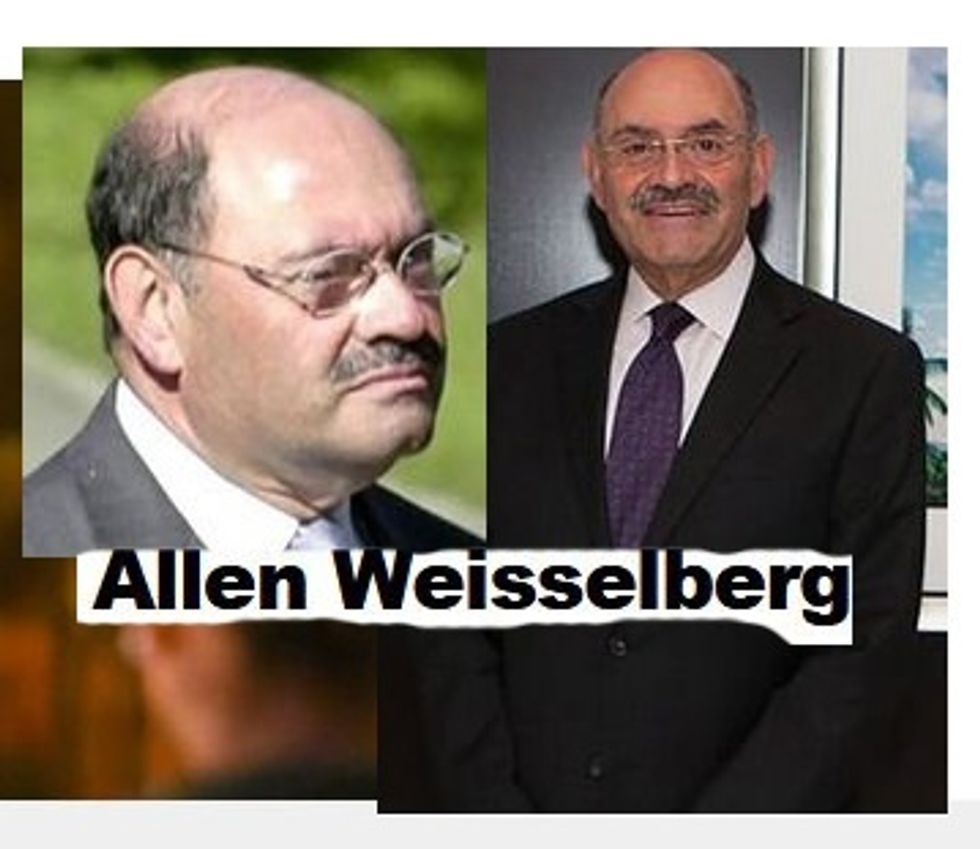
The focus on Trump Organization CFO Allen Weisselberg, a 72-year-old accountant now running the business with Trump’s two adult sons, stems from his involvement in arranging a payment to porn actress Stormy Daniels in exchange for her silence about an alleged sexual encounter with Trump (which Trump has denied).

Federal prosecutors from the Southern District of New York, or SDNY, contended that the Trump Organization had improperly booked reimbursements for the hush-money scheme as “legal expenses,” with the aid of sham invoices. They granted legal immunity to Weisselberg and later closed their 18-month investigation with the guilty plea of one Trump associate, Michael Cohen. But Weisselberg’s immunity deal applied only to federal proceedings.

Now Vance’s state grand jury is examining whether Weisselberg, among others — and even the Trump Organization — should face state criminal charges for falsification of business records, according to a source familiar with the investigation. Neither Weisselberg nor the Trump Organization responded to requests for comment. Vance, through a spokesman, declined to comment.

A handful of lawyers and investigators from Vance’s office, led by Chris Conroy, chief of the DA’s major economic crimes bureau, traveled to the federal minimum-security prison camp in Otisville, New York, on Oct. 30 to meet for the third time with Cohen, who is serving a three-year prison sentence, according to two sources knowledgeable about the matter. Much of the discussion involved Weisselberg.

Neither the president nor his sons appear to be in Vance’s crosshairs at this point in the investigation, which is at an early stage, according to the source familiar with the investigation. But, the source added, New York prosecutors are far from ruling that out.

The investigation is playing out amid an unusually public conflict between the offices of the Manhattan DA and the U.S. attorney, which are headquartered across the street from each other in Lower Manhattan.

Vance originally launched his investigation back in August 2018, after Cohen’s guilty plea and public testimony revealed the Trump Organization’s deceits.

But when one of Vance’s staffers placed a courtesy call to inform the federal prosecutors of their investigation, according to the source familiar with the investigation, the DA was asked to “stand down.” The reason: The U.S. attorney’s office said it was still investigating the Trump Organization, pursuing additional targets. (A spokesperson for the SDNY declined to comment.) Vance agreed to put his investigation on hold.

As late as May 2019, federal prosecutors told U.S. District Judge William Pauley that their investigation was “ongoing.” For months before that, the SDNY seemed to be gathering evidence for possible charges against people beyond Cohen. At least, that was the public impression created by the prosecutors’ decision to grant immunity and non-prosecution agreements, respectively, to Weisselberg and executives with the National Enquirer, who collaborated with Cohen on a second hush-money payoff, to former Playboy centerfold Karen McDougal. (Trump denied that relationship, too.)

Vance’s probe remained on hold for nearly a year — until July 18, 2019 — when Pauley revealed that federal prosecutors had informed him their investigation was “effectively concluded.”

With that, the Manhattan DA quickly restarted his state investigation. On Aug. 1, a grand jury subpoenaed an array of records from the Trump Organization involving the hush-money payments and Cohen’s work for Trump. The DA contended that the subpoena applied to Trump’s tax records.

Over the next few weeks, Trump’s business turned over 3,376 pages of documents, court filings show. Those documents did not include tax records. A subsequent filing by the DA asserted that “approximately two-thirds” of those 3,376 pages consisted of “non-substantive Google alerts.”

On Aug. 29, the DA subpoenaed Mazars USA, Trump’s accounting firm, demanding Trump’s personal and business tax returns dating back to 2011, as well as work papers and financial statements. Lawyers for the president then filed suit in federal court on Sept. 19 to quash the Mazars subpoena.

The U.S. Department of Justice intervened in the case, backing Trump’s request to keep the dispute in federal, rather than state, court. The DOJ supported further delays to consider Trump’s claims in federal court, but it did not then take a position on the merits of the underlying dispute.

The DOJ pleadings were co-signed by the SDNY. Privately, SDNY representatives, wary of appearing to do Trump’s bidding, insisted that their office’s role was limited, likening it to merely serving as local counsel.

That’s when the tensions between the federal and state prosecutors surfaced — but they were largely ignored by the press, which focused on the bigger issue of whether the president can quash the subpoena for his taxes. Vance’s office bristled at the DOJ’s unusual decision to jump in with support from the SDNY.

The Manhattan DA’s office argued in court that the delay caused by the SDNY’s request to stand down has harmed its ability to bring a case. The clock is now running out on the DA’s ability to bring misdemeanor false-records charges. Because the last disguised reimbursement payment, signed by Trump, is dated Dec. 5, 2017, the two-year statute of limitations expires next month. (Convicting a person of a misdemeanor fake-records charge requires proving an “intent to defraud,” according to lawyers. The charge can also be prosecuted as a felony, which has a five-year statute of limitations. Proving the felony requires not only establishing an intent to defraud, but also that the intention was aimed at committing or concealing a second crime, such as claiming improper deductions on a tax return or making a false representation on a financial statement.)

At a hearing in federal court on Sept. 25, Carey Dunne, general counsel for the DA’s office, complained that the feds were aiding Trump’s efforts to run out the clock: “It is what they want in the end. … What that means, if they get further delay, basically they win and we lose, without an adjudication by this court, and that’s not what should happen today.”

Dunne made a similar argument in an Oct. 3 letter to the federal judge overseeing the subpoena battle. As he put it, “delaying enforcement of the subpoena will likely result in the expiration of the statutes of limitation that would apply to some of the transactions at issue in the grand jury investigation.” Dunne called the DOJ’s involvement “all the more audacious in view of the fact that, until quite recently and for more than a year, DOJ prosecutors in this very district conducted a highly publicized grand jury investigation into some of the very same transactions and actors that have been reported to be at issue in this matter.”

Federal district and appeals courts quickly rejected Trump’s claim of blanket immunity from criminal investigation, and he has now petitioned the Supreme Court to hear his case. If the court refuses to hear it, Vance’s investigators could be combing through Trump’s tax records by year-end. A decision to hear the case would push any resolution well into 2020.

The scrutiny of Weisselberg stems from his reported role in hiding the hush-money payments. Cohen gave congressional committees a detailed account of how, at Trump’s direction, he strategized with Weisselberg in October 2016 about how to fund the $130,000 payment to Daniels.

The adult-film actress was then threatening to go public. It was a fraught moment, immediately after the broadcast of the “Access Hollywood” tape, in which Trump talked about grabbing women by their genitals, and just one month before Election Day.

Cohen testified that he and Weisselberg argued over which one of them should come up with the hush money. Eventually, Cohen tapped a home-equity line of credit, a funding source that would be hidden from his wife. According to government filings, it was decided the Trump Organization would reimburse Cohen through monthly payments disguised as a legal retainer, and Cohen submitted sham invoices to paper over the deceit. Along with Donald Trump Jr., Weisselberg signed two of the monthly checks for Cohen. Trump signed six others.

Prosecutors said Cohen carried out his actions “in coordination with and at the direction” of Trump, who they identified in filings as “Individual-1.” Those filings identified two other Trump Organization figures — “Executive-1” and “Executive-2” — as processing Cohen’s phony monthly invoices. Those two executives were the Trump Organization’s controller, Jeff McConney, a 32-year veteran of the company, and Weisselberg, according to a source familiar with the matter. (Previous published reports incorrectly identified Weisselberg as “Executive-1” and McConney as “Executive-2.”) McConney did not respond to an emailed request for comment.

One of Cohen’s lawyers later released a surreptitious recording Cohen made of a September 2016 conversation with Trump discussing the arrangement to pay McDougal. In it, Cohen is heard telling Trump: “I’ve spoken to Allen Weisselberg about how to set the whole thing up.”

Cohen was the only identified participant in the scheme to be charged in the federal investigation. (In addition to federal tax and false-statement crimes, he pleaded guilty to illegal campaign contributions for the payoffs, which benefited Trump’s campaign by silencing the women through Election Day.) A DOJ policy memo barring federal prosecution of a sitting president protected Trump.

That shield, however, doesn’t apply in state court, making the president, Trump Organization executives including Weisselberg (whose federal immunity, as noted, also doesn’t apply in state proceedings) and even the Trump Organization itself potential targets.

A company can be charged if a high-ranking officer with authority to “bind” the business engages in illegal conduct, according to Adam Kaufmann, a white-collar attorney and former investigations chief for the Manhattan DA’s office.

Weisselberg’s employment dates back to the era of Fred Trump, the president’s father, and he has a reputation as the ultimate company man. In deposition excerpts filed by the New York attorney general in her case against the Trump Foundation — which resulted in its shutdown, admissions of wrongdoing and an order to pay $2 million to charity — Weisselberg, who served as the foundation’s treasurer, was questioned about Trump’s use of the charity for a political event before the Iowa presidential primary.

He described receiving a phone call one morning in January 2016, as he was preparing for a dental appointment, asking him to fly to Iowa that night to write “some checks.” What did he think about this request “to bring the checkbook,” an assistant attorney general asked. “It doesn’t matter what I thought,” Weisselberg replied. “He’s my boss. I went.”

As for Cohen, he has been attempting to insert himself into the investigation as a witness. His lawyers have been laboring to reduce his three-year term, offering the carrot of Cohen’s cooperation regarding what they claim is a litany of Trump Organization crimes. Recently, word was conspicuously leaked that he had stories to tell about his own contact with Lev Parnas and Igor Fruman, the Rudy Giuliani associates indicted for using foreign funds to influence U.S. elections.

Federal prosecutors, who last year declined to urge a major reduction in the range for Cohen’s projected prison term, citing “a pattern of deception that permeated his entire life,” among other things, have rebuffed repeated entreaties from Cohen’s lawyers to reengage. Cohen’s lawyers had hoped such cooperation would prompt federal prosecutors to request a special post-sentence “Rule 35” reduction in his prison term before the one-year window for such a request expired.

The Manhattan DA’s team, with different targets and no power to urge a sentence reduction, has been more receptive. At the team’s last meeting with Cohen and his lawyers, they discussed the possibility of obtaining a trove of evidence that federal agents seized in the raids on Cohen’s apartment, office and hotel suite in April 2018. The feds recently returned a flash drive containing the evidence — including files, contracts, notes and tape recordings — to Cohen’s legal team.

Cohen’s legal team, which includes Lanny Davis, has also urged congressional leaders to intervene on his behalf. Cohen’s team is promoting a new, albeit improbable, image for the man who once was proud to call himself Trump’s fixer: “the John Dean of his generation.”

Revelations About FBI’s Handling Of Clinton Emails Show No Coverup Or Misconduct

Revelations About FBI’s Handling Of Clinton Emails Show No Coverup Or Misconduct

Media reports this week have focused fresh attention on how the Federal Bureau of Investigation managed the dramatic discovery — five weeks before the 2016 presidential election — of what seemed to be a fresh trove of Hillary Clinton emails and the delay in investigating them that ensued. The articles are fueling Republican charges of an FBI cabal, intent on protecting the Democratic nominee.

Yet the latter view is contradicted by the evidence gathered in a multi-month ProPublica investigation last year that examined the FBI’s Clinton investigation. That article found that, indeed, crucial weeks dribbled away before the FBI took action — but there was no sign that any particular individual was intentionally stalling or that the delay was politically motivated.

This week’s stories, by The Washington Post and The Wall Street Journal, have zeroed in on the FBI’s then deputy director, Andrew McCabe, who reportedly took three weeks or a month (depending on which account you believe) to order an examination of the new emails after an agent stumbled across them during a sex crimes investigation of Anthony Weiner, then the estranged husband of Clinton deputy Huma Abedin. Both stories report that the Justice Department inspector general — in the midst of a broad investigation of how the FBI and Justice Department managed the probe — is examining McCabe’s role.

The Post, quoting unidentified sources, reported that the inspector general is “focused” on why McCabe “appeared not to act for about three weeks on a request to examine a batch of Hillary Clinton-related emails…” The Journal notes that “Republicans and critics of the FBI have suggested the bureau may have sat on the emails to avoid hurting Mrs. Clinton” and are “especially suspicious of Mr. McCabe.”

McCabe, who did not provide comment for either article, was already under fire before they appeared. He recently resigned after becoming the target of President Donald Trump and congressional Republicans. One key complaint: McCabe’s wife ran unsuccessfully for a Virginia state Senate seat as a Democrat, and received a reported $700,000 from entities linked to Virginia governor and longtime Clinton ally Terry McAuliffe. McCabe, who was head of the FBI’s Washington field office at the time, played no role in the Clinton probe before his wife’s defeat in November 2015, then assumed an oversight role in the case after being named deputy FBI director in February 2016.

Yet the response to the new articles in some circles — to view the delay as proof of an anti-Trump conspiracy at the FBI — misunderstands what has long been known. The FBI’s snail’s-pace handling of the Weiner-laptop emails isn’t news.

ProPublica’s detailed examination of how then FBI Director James Comey handled — and mishandled — the entire Clinton investigation noted that the bureau’s top hierarchy, including Comey, was alerted to the discovery of the Clinton emails within days. Here’s how we described what happened:

On Sept. 26, after federal prosecutors in New York obtained a search warrant, the FBI collected Weiner’s iPhone, iPad and laptop. Agents began examining the computer — a silver, 15.6-inch 2015 Dell Inspiron 7000 — for any pictures, videos or other evidence involving Weiner’s teenage sexting partner. An agent sorting through the contents of the hard drive came across a jolting find: a State Department memo and some emails between Abedin and Hillary Clinton. The documents were not covered by the sex-crimes warrant, which meant that the FBI had no legal right to examine them.

The presidential election was five weeks away.

The agent went to the office of the U.S. Attorney for the Southern District of New York for guidance. Prosecutors there wanted no part of the email case, which had been staffed by a special team of agents, FBI analysts, and Justice Department lawyers working out of FBI headquarters, in Washington. The New York prosecutors told the agent to seek advice from that team. They said nothing to their own bosses at Justice Department headquarters.

By Oct. 3, senior officials at the FBI — including Comey — had been alerted that the Weiner laptop contained an unknown number of Clinton emails.

This week’s stories raise the prospect of a deliberate McCabe effort to stall examination of the Clinton emails to protect Clinton. But that’s at odds with what our reporting showed.

It’s important to note that we don’t know what evidence the inspector general — who has broad access to internal emails, text messages and officials that reporters don’t — has gathered so far, or what he will ultimately find and conclude about McCabe’s motivation. (His report isn’t expected until March or April.)

But there are important points to consider, nonetheless. For starters, McCabe wasn’t ultimately responsible for how to proceed and what to disclose; Comey was.

More important, the crucial question inside the FBI at the time wasn’t whether Comey (and McCabe) should publicly disclose the discovery immediately. It was whether it was correct to do so at all so close to the election. The notion of revealing anything with such profound consequences for a presidential race violated both written and unwritten Justice Department guidelines against interfering with elections.

At the time top FBI officials were alerted, agents hadn’t examined the new evidence or assessed whether it would change anything in a case that had already been definitively closed.

Certainly, our reporting found that in many ways the FBI stumbled through the month between its discovery of the Clinton emails and its notification to Congress on Oct. 28, 2016. There were troubling judgments and misjudgments — fueled by excessive caution, bureaucratic considerations and turf issues — which unnecessarily left the emails unexamined for weeks, leaving open the question of whether they might reveal something new.

In late October, senior FBI officials — newly fearful of leaks about their discovery that might damage the bureau’s reputation — decided they had to disclose. It’s worth remembering that at this point the FBI was already investigating the Trump campaign’s potential collusion with Russia. Comey and his team chose to reveal the reopening of the Clinton investigation but to say nothing about the Trump probe.

In our reporting (keeping in mind, again, that the inspector general may be privy to evidence at odds with this), there was no sign that McCabe particularly resisted the Clinton announcement.

In testimony to a Senate committee, Comey later publicly offered a moral argument for the decision: He’d previously told Congress the case was closed, so the decision to examine the new emails required public disclosure. As Comey told the Senate, “I could see two doors and they were both actions. One was labelled ‘speak’; the other was labelled ‘conceal.’ … I stared at ‘speak’ and ‘conceal.’ ‘Speak’ would be really bad. There’s an election in eleven days — lordy, that would be really bad. Concealing, in my view, would be catastrophic, not just to the FBI but well beyond. And, honestly, as between really bad and catastrophic, I said to my team, ‘We got to walk into the world of really bad.’ I’ve got to tell Congress that we’re restarting this, not in some frivolous way — in a hugely significant way.”

And with that, in the view of many, the hierarchy of the FBI — far from assuring Hillary Clinton’s election as president — took a step that helped torpedo it.

ProPublica is a Pulitzer Prize-winning investigative newsroom. Sign up for their newsletter.

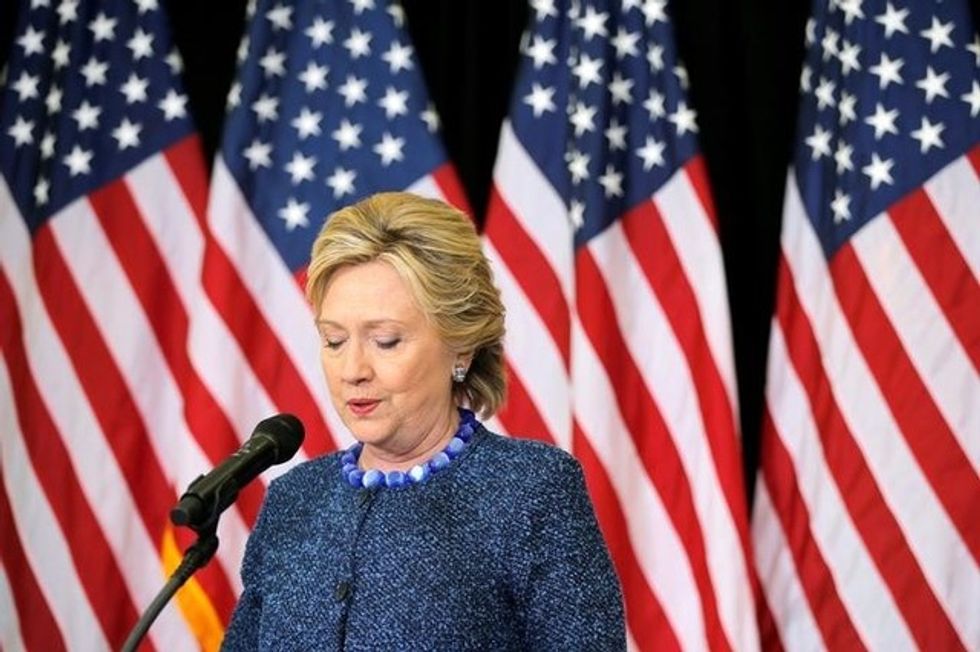
PHOTO: Hillary Clinton holds an unscheduled news conference to talk about FBI inquiries into her emails after a campaign rally in Des Moines, Iowa, October 28, 2016. REUTERS/Brian Snyder