

Trump Officials Direct Funding To White South Africans and Europe's Far Right
Reprinted with permission from ProPublica
For decades, the U.S. Department of State gave money to groups protecting free speech, human rights and persecuted minorities in poor and authoritarian countries.
To decide what to fund, staffers with deep expertise typically pored over reams of information on abuses under the most repressive regimes and held an open competition to fund groups to work in those countries.
This year, Trump administration officials presented State Department workers with their own list of organizations that should be funded. To the shock of many staffers and lawmakers, they proposed at least a dozen grants that would bypass the normal open bidding process. They also sought to give taxpayer dollars to groups aligned with conservative and anti-immigration movements in Europe as well as advocates for white South Africans, according to interviews and documents reviewed by ProPublica.
Among the organizations appointees have considered funding in recent months are a British free-speech organization that has fought against bans on “gay conversion therapy” and an Afrikaner group run by a controversial figure who has called for self-governance of the white ethnic minority within South Africa.
This type of giving would mark a stark departure from the traditional aid that helped torture victims and documented rapes, political violence and other abuses in some of the most oppressive countries in the world, according to more than a dozen former State Department employees. One new program with $4.9 million of competitive funding available to groups to develop “civilizational self-confidence in Europe” is slated for “research, conferences, cultural engagements, and support for civil society” in wealthy democracies. The call for proposals says recipients should “not attempt to reform the legislative processes,” but experts and lawmakers have expressed concern that the U.S. is seeking to influence politics in allied countries.
That emphasis on Western nations was evident in a grant the State Department has been working on for months to a fledgling British American think tank dedicated to “renewing our Judeo-Christian culture and civilisational mission.” After pushback from Congress, the State Department abandoned those plans in recent days.
“I’ve never before seen U.S. government funding for such groups,” said William Allchorn, a senior research fellow at Anglia Ruskin University and an expert on radical-right extremism in the United Kingdom. “It’s crossing the Rubicon, isn’t it?”
A review of proposed grants shows several are being directed to more traditional human rights purposes, but even some of those have raised concerns in and outside the State Department.
Strict agency rules have long required an open bidding process whenever possible to guard against waste, fraud and abuse. Generally, the State Department is allowed to offer awards directly to a single entity or to a small group of potential grantees in rare instances, such as when only one organization is capable of the work or an emergency necessitates providing money so quickly that open competition is impossible. It has also used such “sole-source” and “limited-source” awards, which are not publicly announced, in highly sensitive countries where openly working on human rights can be dangerous.
None of those justifications appear to apply here, according to contracting experts and former staffers consulted by ProPublica. The situation is all the more concerning, they said, because Trump officials handpicked the potential recipients, decisions previously made by a panel of government experts who evaluated applicants based on the organizations’ experience and qualifications.
“It’s not good governance to have political appointees give grants to individuals for unknown reasons,” one former bureau staffer said.
Directing awards to organizations in high-income countries further complicates the funding. The practice is so unusual that an internal waiver justifying the choice is typically required.
The State Department did not answer when asked whether it had sought waivers for the grants to high-income countries.
During private briefings this month, members of Congress expressed concern over both the list of potential recipients and the plan to award no-bid or limited-bid grants, according to officials familiar with the closed-door meetings who weren’t authorized to publicly discuss them.
In response to a detailed list of questions about this story, the State Department sent a short written response, noting that “programs are still in active deliberation and receipt of a grant is not guaranteed to any organization that does not meet all requirement and standards for federal grants.” A State Department official who declined to be named stressed that the process for awarding grants was ongoing and that multiple offices provide input. They also said the administration has serious concerns about the human rights situation in South Africa that need to be addressed.
Asked about the potential grants, Sen. Jeanne Shaheen, a Democrat from New Hampshire and the ranking member of the Senate Committee on Foreign Relations, said Congress expects the State Department “to invest resources to advance human rights, democratic institutions, civil society, freedom of expression and worker rights” and that the proposals are “an appalling departure from that practice and an affront to our democratic allies.”
“These awards suggest that the Department intends to select awardees for federal funding based on their political ideology,” Shaheen said, “not in the interest of American taxpayers or national security.”
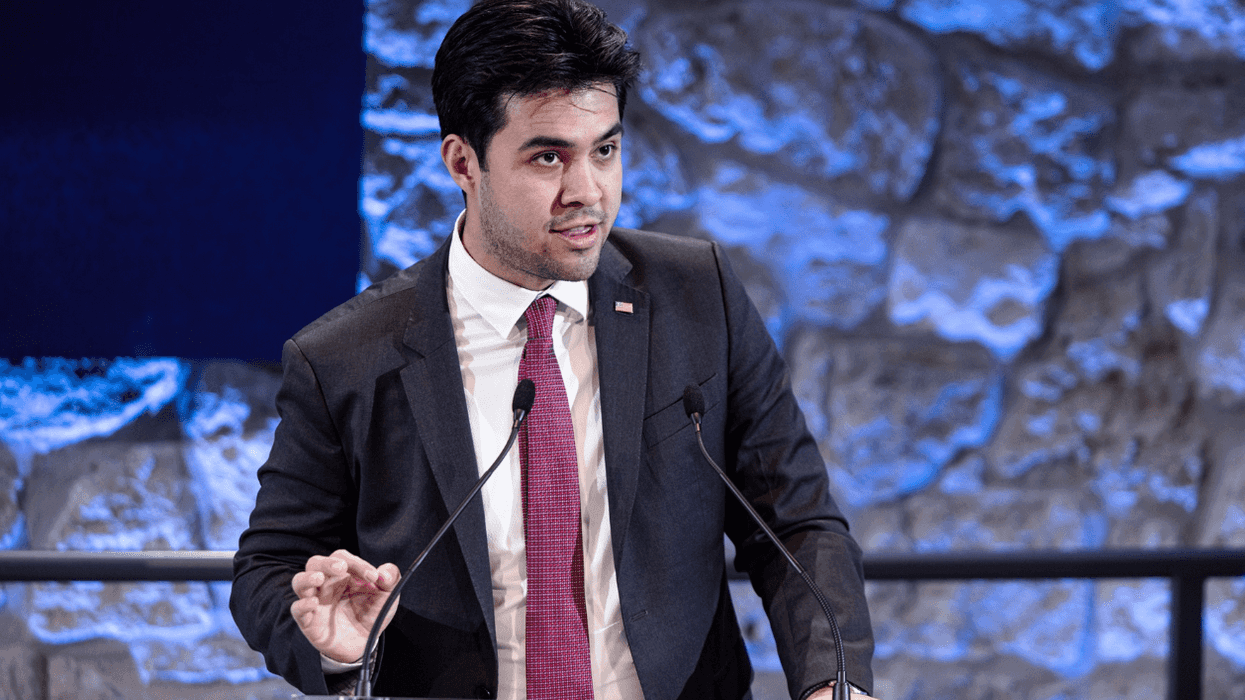
Internal records and interviews show one of the key figures involved in the grants is Samuel Samson, a 27-year-old deputy assistant secretary of state who previously worked as a fundraiser for a group that aims to bring people with an “America first” worldview into government.
On the day of President Donald Trump’s second inauguration, Samson started work as a senior adviser to the Bureau of Democracy, Human Rights and Labor, also known as DRL, the State Department unit that selects and distributes the human rights grants.
Over the past 18 months, he has courted far-right leaders in Europe, an area with which he believes the U.S. shares a “common civilizational struggle.” In recent weeks, Samson has defended the agency’s grantmaking plans during private meetings with lawmakers.
One group expected to receive a no-bid grant is the Free Speech Union, a British organization founded in 2020 to counter “cancel culture.” The group often steps in to defend people accused of being transphobic and has created a petition opposing the U.K.’s proposed ban on discredited therapy practices that attempt to convert gay people to heterosexuality. It’s unclear if the grant would go to the British-based organization or its international offshoot. The $5 million grant is to be used to combat “digital overregulation,” provide support for individuals facing “deplatforming” and advocate against “restrictive online safety and hate speech laws,” according to a document reviewed by ProPublica. Trump officials met with the group during a European tour late last year, according to Politico.
Scholars said the U.S. government’s support for these groups could give them a layer of legitimacy they wouldn’t otherwise have.
“We see them as intellectualizing or sanitizing radical-right ideas that are then taken up by the parties in power,” said Allchorn, the U.K. extremism expert.
The Free Speech Union’s website says it is nonpartisan and does not take government funds. In response to questions from ProPublica about the potential grant, the organization’s founder, Toby Young, said, “We have neither applied for nor been awarded a grant from the US State Department or any other branch of the US Government.” He did not respond to criticisms about the award or his organization.
The largest award the bureau has put forward this year, $40 million, is for the Victims of Communism Memorial Foundation, which was created by Congress and signed into law by President Bill Clinton. The foundation’s goal is to memorialize those killed by communist regimes and pursue freedom for people still living under totalitarian rule.
The proposed sum is staggering to people familiar with the State Department’s allocation practices and would dwarf the organization’s budget. Victims of Communism has received a handful of government grants in the past, but for much smaller sums. Its most recent publicly available tax forms, from 2024, show its total assets come to about $12 million. Four sources familiar with the foundation’s previous U.S.-funded work questioned its ability to manage such a large award.
Samson has a personal connection to the organization. The foundation’s board chair, Elizabeth Spalding, is a visiting fellow at a graduate school branch of Hillsdale College in Washington, D.C.; Samson was enrolled in the same small graduate program of the Christian conservative college as recently as this year, according to his LinkedIn profile (which is no longer publicly available). Spalding’s husband, Matthew, is that graduate school’s dean, and Samson has taken classes with one or both of them, according to a State Department official.
The State Department official who declined to be named said Samson’s relationship with the Spaldings had nothing to do with the grant.
The foundation’s proposed award is to “amplify the voices of dissidents and political prisoners while educating global audiences about the dangers of communist and authoritarian regimes,” according to a document reviewed by ProPublica.
In response to questions from ProPublica about the award and concerns about its ability to manage it, the foundation said it was not aware of the proposed funding, but “if true, the 100 million victims murdered by communism in the past, and another 1.5 billion men, women, and children still enduring communism today will rejoice.”
The State Department declined to comment on awards in process but noted that Victims of Communism has long worked with the State Department. “As President Trump has said, communism is a mortal threat to American liberty — and as Secretary Rubio has repeatedly emphasized, America will not allow radical extremists to undermine our sovereignty and national security,” the agency said in a statement. “Our foreign assistance programming is aligned to support our strategic priorities.”
Trump officials are also planning to finance at least one organization to research crime and atrocities against minority populations in South Africa. This spring, DRL staff were initially told to begin the process of awarding funds to Lex Libertas, a South African organization founded by a prominent member of the nation’s white Afrikaner movement. The group, which claims that white South African farmers are victims of racial discrimination and violence, is fundraising to place 3,000 white crosses on the National Mall in remembrance of attacks on South African farmers.
The proposed award to fund the South African crime research was later widened to allow other invited groups to apply for a $1 million grant, according to people with knowledge of the process. The State Department declined to say whether Lex Libertas will be among those invited to compete, saying the grant is still under deliberation.
Extensive research shows white South African farmers are not victims of crime at higher rates than other groups. But Trump has argued there is a genocide of white South Africans and is using claims that white people are subjected to disproportionate violence to justify cutting off South Africa’s funding for HIV treatment and research.
Former diplomats told ProPublica that it makes little sense to focus on the victimization of white South Africans given the enormous suffering elsewhere in the region. “It’s laughable to suggest that on the African continent, the prime issue of human rights concern is whites in South Africa,” one former agency official told ProPublica.
Lex Libertas did not respond to questions.
One of the most controversial grants that officials singled out for funds was recently dropped, the State Department official told ProPublica. The decision came after Democratic lawmakers raised objections during briefings last week about the months-old organization and its agenda. That grant was to 878, a British American think tank created this year focused on “existential threats to Britain, to America, and to our shared Judeo-Christian civilisation,” according to its website. The sole-source $7 million grant aimed to advance “Anglo-American values” in the U.K., Europe and “allied partner countries,” according to a document ProPublica reviewed.
878 did not respond to questions.