Tag: oil industry
mike johnson and jim jordan

Big Oil Funds Project Teaching Judges 'Healthy Skepticism' of Climate Science

This story was originally published by Pro Publica

For many months, conservative lawmakers and political operatives have been targeting the scientists and lawyers behind the Climate Judiciary Project, a program meant to educate the courts about climate science, alleging that their effort constitutes a conspiracy to influence federal judges and persuade them to rule against the oil industry.

Now, just as congressional investigators are escalating a formal inquiry into the project, a separate program closely aligned with the fossil fuel industry and free-market conservatives is hosting a symposium for 150 judges in Nashville, Tennessee. The program, run by the Antonin Scalia Law School at George Mason University, also aims to educate judges, but in a way that prioritizes American business interests and questions climate science.

The dueling efforts come as a number of significant lawsuits seeking to hold fossil fuel companies accountable for climate damages are making their way through the courts and as oil-industry-aligned attacks on climate policies, and the legal arguments supporting them, have been sharply increasing.

ProPublica reported in April that political operatives connected to the conservative activist Leonard Leo were coordinating an effort across 11 states to pass laws shielding fossil fuel companies from liability for climate harm. In the past three weeks, similar liability waiver bills have been introduced federally in both the House and the Senate. Last week the Florida attorney general’s office launched an investigation into alleged judicial influence by the organization that oversees the Climate Judiciary Project, the Environmental Law Institute, a nonpartisan legal scholarship group funded until recently by the Environmental Protection Agency.

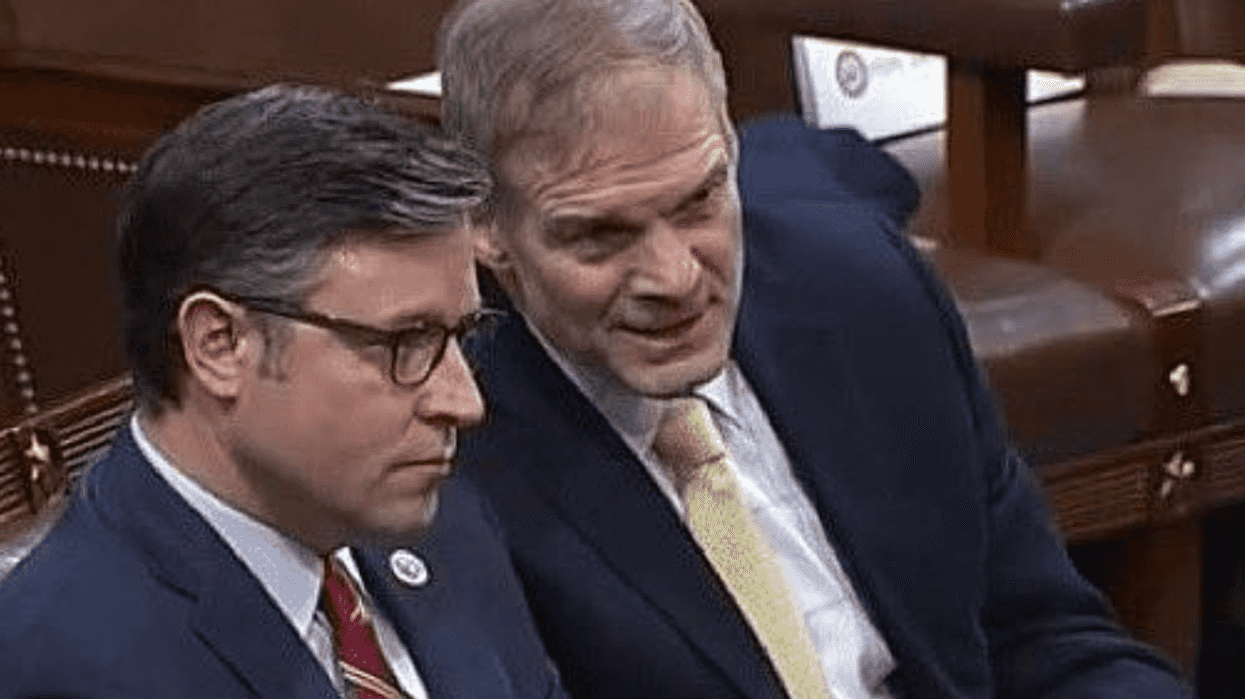
These developments come on the heels of a campaign last winter to get the Federal Judicial Center, the publishing body for the federal court system, to retract a roughly 90-page chapter devoted to climate science from the latest volume of its technical manual for judges. Twenty-two Republican attorneys general wrote to Rep. Jim Jordan of Ohio, the Republican chair of the House Judiciary Committee, demanding that the committee investigate the center’s publication of material about how to weigh scientific evidence about climate and the weather because the chapter’s authors appeared to be biased.

In their letter, they noted the authors work for Columbia University’s Sabin Center for Climate Change Law and alleged the chapter was influenced by Michael Burger, the executive director of the center who works closely with the law firm Sher Edling, which represents several climate plaintiffs. The Republican attorneys general also noted that some staff at the Sabin Center work with the Environmental Law Institute and the Climate Judiciary Project. Although the chapter had been peer reviewed and approved by the Federal Judicial Center, as well as by the National Academies of Sciences, Engineering and Medicine, the center retracted the climate chapter in February.

On April 28, Jordan went a step further, issuing letters accusing Burger, the Environmental Law Institute and Sher Edling of bias, conspiracy and collusion. Jordan demanded that the three parties produce private communications, receipts and records of funding sources, and that the recipients sit for interviews before the committee.

The Sabin Center, Jordan wrote, is “producing materials to be used to bias federal judges about novel climate-related legal theories” and coordinating to bring climate-related litigation to court. The activity raises questions about “the integrity and independence of the judicial process” and “ex parte contact with courts,” Jordan wrote, referring to the improper conduct of contacting a judge without opposing counsel present to argue issues related to a pending case.

Neither Sher Edling, the Sabin Center nor Burger responded to a request for comment. A representative for the Environmental Law Institute stated in an email that the Climate Judiciary Project “does not participate in litigation, coordinate with any parties related to any litigation, or advise judges on how they should rule on any issue or in any case. The goal of CJP is to provide judges with the tools they need to understand climate science and how it arises in the law.”

Jordan’s office replied to a request for comment by reasserting the statements in the letters it sent, and it did not respond to a detailed list of questions.

Amid the allegations of impropriety and conflicts of interest though, the program at George Mason University has scarcely been noticed.

The George Mason conference, called the “Judicial Symposium on Scientific Methodology, Expert Testimony, and the Judicial Role,” opened the day after Jordan sent out his letters and will continue through Saturday, May 2. It is run by the university’s Law and Economics Center, which oversees a project called the Judicial Education Program. The center is funded in part by ExxonMobil, which is a defendant in several of the climate lawsuits. ExxonMobil did not respond to a request for comment.

The conference includes speakers who have filed amicus briefs — filings by people who aren’t part of the case but have a strong interest in its outcome — in favor of the oil industry in several of those cases, as well as at least one lawyer who has represented fossil fuel companies in court. The reading assignments prepared for the judges include a Substack post by a notable climate contrarian accusing the authors of the retracted climate chapter in the federal court’s reference manual of including material by Burger and hiding his authorship. They also include a law journal argument that a key tenet of climate science used to identify the cause of disasters should be inadmissible in their courtrooms. One session, titled “Debates on the trustworthiness of tools to evaluate science in the courtroom,” focuses entirely on the federal courts’ reference manual.

In an emailed response to ProPublica, Donald Kochan, the executive director of George Mason’s Law and Economics Center, which organized the event, presented the symposium as a robust and objective discussion. The program’s advisory board, he wrote, is a politically and jurisprudentially diverse group including “some of the most progressive jurists in the country, including on climate issues.” Kochan, who did not respond to a list of specific questions, added that lectures are by leading academics on science and law and that he invited the authors of the judicial reference manual to speak but they declined, as did several others who he suggested would have represented more centrist viewpoints on the climate issue.

The conference is one of dozens of meetings, retreats and “intimate weeklong gatherings” that are regularly hosted by the Law and Economics Center as part of an initiative to instill free-market values and greater knowledge of the economic consequences of policy in judicial decision-making. In 2016 the law school renamed itself after the former Supreme Court Justice Antonin Scalia and the center expanded with $30 million in gifts, adding faculty and scholarships and launching additional “colloquia.” The center today runs several parallel initiatives under the umbrella of the Judicial Education Program, each aimed at gathering judges together and educating them. The symposium on science and evidence is one of these events.

According to an internal fundraising document from 2020 obtained by ProPublica, the gatherings are often luxurious all-expenses-paid affairs, created to foster lasting relationships and opportunities to network with judges. The document included a solicitation for more than $930,000 sent by the center to the Charles Koch Foundation, a libertarian organization that provides grants to universities and scholars. At the time of the proposal, more than 5,000 judges representing all 50 states had attended at least one of the organization’s programs, the document stated.

The goal of the symposium, according to the document, is to sway judges toward a libertarian economic viewpoint in their rulings — the very sort of “biasing” that Jordan accused the Sabin Center and the Climate Judiciary Project of.

“The goal of this project is to expose judges to the intellectual history of the role of capitalism, economic freedom, and a constitutionally limited government as fundamental features of a liberal society,” the document says. It is also to establish a community of like-minded justices “with synergistic effects on the judiciary as a whole” and to influence the outcome of cases that come before the courts. Judges, the fundraising proposal continues, “urgently need to cultivate an understanding” of economic analysis and its relevance to the legal system if they “are to issue decisions that advance the rule of law and America’s free enterprise system.”

According to the George Mason University website, the Law and Economics Center’s 2025 funders include DonorsTrust, a dark money pass-through organization meant to shield the identity of contributors. DonorsTrust is often used by organizations tied to Leo, who brought George Mason a $20 million gift, in addition to $10 million from the Charles Koch Foundation, that made expansion of the law school’s program possible.

This weekend’s symposium in Nashville is one of the most significant parts of the center’s outreach to justices. According to the 2020 fundraising letter, the goal of such gatherings is to challenge the status quo on science. The conference “will give judges a rounded understanding and healthy skepticism of the invocations of ‘science’ that lurk in the background of lawsuits they are hearing,” the center’s then-director wrote, and it will help judges understand that “so much of what passes as ‘science’ for leverage purposes never has to face tests for rigor, reliability and quality in front of a neutral arbiter.”

One of the symposium’s events prominently features Philip Goldberg, a managing partner at the law firm Shook, Hardy & Bacon and the special counsel to the National Association of Manufacturers’ policy lobbying arm, the Manufacturers’ Accountability Project, which the group describes as “the leading voice of manufacturers in the courts.” MAP, as it is called, has publicly rejected the claims in a landmark case that the city of Honolulu brought against Shell, ExxonMobil and other oil companies alleging they misrepresented the risks of using their fuels and are responsible for the damages they have caused. Goldberg authored a brief for the group that was submitted to the Supreme Court on the case in 2024.

Goldberg, who did not respond to a request for comment, has also authored briefs in climate liability cases brought by the city of Baltimore against BP and other fossil fuel companies — a case won by the defendants in March — as well as a case brought by Boulder County in Colorado against Suncor Energy and ExxonMobil, which alleges the companies misrepresented the risks of using fossil fuels. Lawyers from Shook, Hardy & Bacon are also present at the conference. Other lawyers at the firm wrote a brief in favor of Chevron in a case brought by Plaquemines Parish, Louisiana. (The oil companies dispute the allegations and each of these cases is ongoing.)

For its assigned reading for a session on the judicial manual, the symposium offered an article by the political scientist Roger Pielke Jr., a senior fellow at the conservative American Enterprise Institute. Pielke wrote that he found evidence that the true authorship of a significant part of the climate chapter in the reference manual was obscured. He used the Claude artificial intelligence program to run an analysis comparing the chapter’s text to a paper co-authored by Sabin’s Burger and said he found a correlation.

“Michael Burger did not write any of the text in the climate science chapter nor did he have any control over the content and scope,” one of the chapter’s two authors, Jessica Wentz, who has denied the chapter was biased, wrote to ProPublica. The other author did not respond, and Burger declined to comment.

The conference did not offer readings from the climate chapter of the manual itself, which is still available on the website of the National Academies of Sciences, Engineering and Medicine. Nor did it offer readings from the United Nations climate science authorities or climate-related readings from any other peer-reviewed scientific journal.

In its final session, the symposium features attorney Matthew Wickersham of the firm Alston & Bird, which has served as counsel for Chevron in several lawsuits. Wickersham did not respond to a request for comment. The only reading assigned to justices for that session is a paper Wickersham wrote in the Rutgers Law Record in 2025 about why attribution science — the field of study that makes it possible to link climate disasters to specific amounts of pollution and their sources — should never be admitted in court.

On Trial For Campaign Crimes, Trump Brazenly Solicits A Very Big Bribe

On Trial For Campaign Crimes, Trump Brazenly Solicits A Very Big Bribe

Nobody likes Big Oil, a monopolistic and heavily polluting industry with a legendary history of abusing its excessive power that can be traced back over the past hundred years.

But Donald Trump has promised to be the oil industry's best friend — if its bosses give him a billion dollars.

In the latest instance of the former president's mind-blowing corruption, he is reported to have entertained a group of two dozen top U.S. oil company executives at Mar-a-Lago. Over dinner at his Palm Beach sanctum, Trump is quoted as telling the chiefs of Chevron, ExxonMobil, and Occidental Petroleum and their colleagues that if they collectively coughed up $1 billion to ensure his reelection, he would take very good care of their corporate needs.

According to The Washington Post, he promised to toss out all of President Joe Biden's efforts to mitigate climate change, including new rules aimed at reducing automotive exhaust and promoting electric vehicles. For that measly billion bucks, he vowed to increase oil drilling in the Gulf of Mexico, where we have already seen catastrophic well blowouts, rescind restrictions on drilling in the Alaskan wilderness, pull down the windmills that he hates, and cancel the recent White House decision to pause new natural gas export permits.

"You'll get it on the first day," said Trump, according to someone who was present and blabbed to the Post. Speaking as crudely as any gangster, he informed the oilmen that they and their companies can easily raise that kind of money, and that paying him off would be "a deal" because of the high return on their investment.

No doubt they found it hard to argue with Trump's logic, since oil lobbyists are already writing dozens of executive orders that they want him to rubber-stamp if and when he returns to the Oval Office.

So is anybody surprised?

Only perhaps by the audacity of Trump explicitly soliciting a gigantic bribe, before a large group of witnesses, at a time when he is in fact on trial for campaign finance offenses and facing scores of additional criminal charges. But he has never felt abashed in displaying his venality. He lives in a world of miscreants who behave much the same way, from his son-in-law Jared Kushner, who sought and obtained an even bigger payoff from the Saudi dictator, to his adviser Steve Bannon, who will face criminal charges next fall for swindling the dopey donors to his fake "We Build the Wall" outfit.

As the eminent journalist Laurie Garrett observed on social media, Trump's attempt to extort the oil industry echoes one of the greatest government scandals in American history, under another Republican president owned by corporate power. Beginning in 1921, the Teapot Dome affair implicated officials of President Warren G. Harding's administration in the crooked leasing of public lands for oil exploration. Harding's Interior secretary Albert B. Fall ultimately went to prison for bribery, although none of the oilmen who paid him off did any time.

What we can expect from a second Trump administration is the most naked orgy of swindling and boodling that this country has ever seen. He thoroughly exploited the presidency during his first term, as outlined in my forthcoming book, The Longest Con. But his second term, should such a disaster occur, would be the conman's last big chance to score, and he can be expected to enrich himself to the maximum — at ruinous cost to the rest of us.

Joe Conason is founder and editor-in-chief of The National Memo. He is also editor-at-large of Type Investigations, a nonprofit investigative reporting newsroom formerly known as The Investigative Fund, and a senior fellow at Type Media Center. His new book, The Longest Con: How Grifters, Swindlers and Frauds Hijacked American Conservatism, will be published by St. Martin's Press in July 2024.

We Must Stop Killing Wildlife Before No Animals Are Left

We Must Stop Killing Wildlife Before No Animals Are Left

Wild animals never kill for sport. Man is the only one for whom the torture and death of his fellow creatures is amusing in itself. --James Anthony Froude, Oceana,1866

On an entirely manmade earth there can no room for man either. All that will be left of us is robots. -- Romain Gary, The Roots of Heaven 1956

The latest act of debauchery and murder happened in Botswana several days ago, where one of the last great tuskers on earth was killed for its eight foot long tusks as a trophy. This elephant bull, more than 50 years old with magnificently huge teeth that grazed the ground when it walked, will now lifelessly stare into the void -- and into the soul of the monster in some men, as an inert mantel object somewhere in South Africa or perhaps Texas. For $50,000 one of the titans of the world is no more.

Botswana used to have a conservation ethos worth admiring under its former president Seretse Khama.'The pressure on the world’s natural resources is immense and not sustainable without change,” Seretse Khama once said. “The short-term approach that leaves nothing for the future. We will not let this happen here.”

Well it is happening -- and next door the oil group ReconAfrica from Canada has undertaken tests to drill right next to the greatest refuge left on earth for the African elephant, the miraculous Okavango Delta in Botswana. This is sheer madness. And now under the new president of Botswana, Africa’s greatest treasure, the elephant, is being yearly sacrificed in the hundreds. Over the last decade 130,000 were destroyed for their ivory. Now 300 elephants will be sacrificed annually to appease the bloodlust of killers. It is not what the late Julius Nyerere of Tanzania had in mind when he vowed in that country’s constitution to protect the natural splendors that make his country unique on earth.

Then why build the Uganda-Tanzania pipeline? Why invade the peat bogs in the northern Congo for oil? Africa will be lost if it is turned into the world’s last repository for the industrial north, with its fauna and indigenous peoples sacrificed for short-term gain. Even India , now undergoing a monstrous heat wave due to climate change, had a hero and tiger champion, in Jim Corbett who said,” A country’s fauna is a sacred trust and I appeal to you not to betray your trust.”

All over the world trophy hunters continue to ransack the unique fauna of the world, many of them endangered species. In the United States, 90 percent of the trophy hunters are believed to be Republicans. A bill introduced in 2019 by Rep. Sheila Jackson Lee (D-TX) to amend the Endangered Species Act, along with seven fellow Democrats and one Republican, would have gone a long way to prohibit the slaughter of the great tusker in Botswana that was just destroyed.

So far that bill, HR 4804, has not passed. Who is holding back this urgent piece of legislation? Special interests, including those who willfully continue to persecute innocent species for vainglory, and those in the oil and tobacco industries who have donated to major conservation organizations to influence them.

If there is corruption among top conservation groups, how can we hold onto the wildlife? Ranchers who senselessly trap and kill wolves by the hundreds in Montana and Idaho, and the trophy seekers who go to Africa and lure lions to blow their brains out are of the same ilk. In a time when the earth has already lost 70 percent of its wild animal population, America must act. A recent report showed that 700,000 animal trophies were brought into this country between 2016 and 2020.

We are acting as if we didn’t like life, as if life were expendable. But it is not just the United States that is seeking to stop the maddening pace of the cruelty we have forced on the non human world. Eduardo Goncalves has led the charge in his Campaign to Ban Trophy Hunting in the UK which will soon be voted on in Parliament. Ninety percent of the UK public is against trophy hunting and if the Goncalves bill passes it will have repercussions throughout the world. The murder of the innocent wildlife cannot be tolerated anymore. Africans never killed big game for fun. Native Americans didn’t destroy the great buffalo herds for fun.

There have been arguments justifying animal trophies from trophy-hunting groups throughout the world, none more financially endowed than the ones here in America. But the favors bestowed by the oil and tobacco industries on trophy-hunting groups beg the question, how much longer do we accept the lie that trophy hunting benefits the protection of species? Native people derive almost nothing from the billion-dollar trophy industry, which is all about revenue. As Rene Ebersole of Nat Geo writes,” It appears that the United States is the only country in the world where wild animals are killed by the tens of thousands strictly for prizes and entertainment.”

In a time when an enormous number of children are depressed about the future, this continued onslaught on the innocent is something the young among our own species can no longer countenance .

Passing HR 4804 in Congress and safeguarding all life for future generations should be something not to ponder but to act on immediately . It is why the Biden administration with bipartisan support is planning the Recovering America’s Wildlife Act, which, if passed, would provide $1.4 billion to protect our most endangered species. We ignored the Cop21 Paris Climate Agreement almost completely -- and now on the eve of the Kunming Biological Diversity Conference in China later this year, humanity needs to act. This is the final decade in which we can reverse the apocalyptic scale of biological degradation all over the world.

With all eyes on Ukraine, we nevertheless have been warned: The pandemic now upon is entirely due to how we have treated the animals and the forests of the world, the original true wealth of this planet. We have to stop killing ourselves and the planet’s innocent inhabitants before Earth becomes another Mars. Passage of HR 4804 in tandem with the UK bill to ban trophy imports would allow the wildlife of the world to live on this blessed planet.

Cyril Christo and Marie Wilkinson have been bearing witness to the interaction between tribal people and wildlife in Africa for over a generation. They have published four books on Africa including the latest with their son Lysander, Lords of the Earth -The Entwined Destiny of Wildlife and Humanity. Their most recent film is Walking Thunder- Ode to the African Elephant.

Biden Urges Federal Trade Commission To Probe High Gas Prices

Biden Urges Federal Trade Commission To Probe High Gas Prices

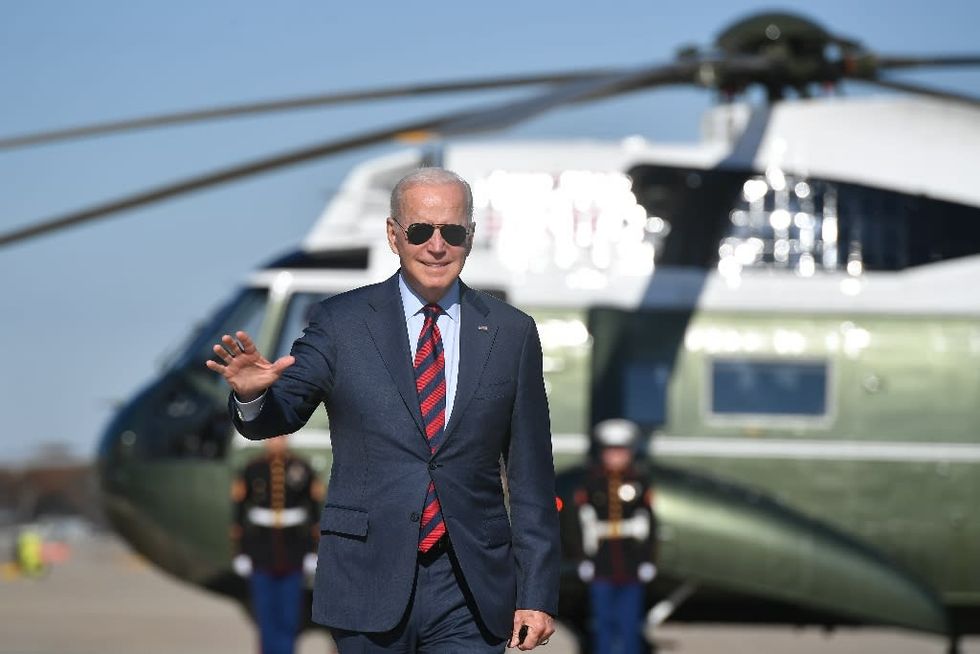
Washington (AFP) - President Joe Biden called on US regulators Wednesday to look into the causes of the nationwide spike in gasoline prices, which he said is hurting workers.

The president last week made fighting inflation a top priority after data showed consumer prices hit a 30-year high in October, fueling a slump in his public approval.

In a letter to the Federal Trade Commission (FTC), Biden took aim at oil companies he says are raising prices at the pump even as their expenses decline and profits soar.

He instructed the agency to look into whether "illegal conduct" is behind the energy price spike.

"I do not accept hard-working Americans paying more for gas because of anti-competitive or otherwise potentially illegal conduct," Biden said in the letter.

Despite signs the US economy has bounced back strongly from the damage inflicted by the Covid-19 pandemic, Biden has paid a political cost as global supply chain snarls caused shortages and drove an uptick in prices of everything from cars to food to gasoline.

The president said the high pump prices are not justified, noting that while the cost of unfinished gasoline has dropped more than five percent over the past month, retail prices rose three percent.

At the same time, oil companies "are generating significant profits," with the two largest on track to nearly double net income compared to 2019 and planning major stock buybacks, he said in the letter.

No 'Nefarious' Actions?

Average US gas prices were at $3.41 a gallon as of Monday, 11 cents higher than a month ago, according to the American Automobile Association (AAA).

That average is 81 cents more than in 2019, before the pandemic hit and kept most Americans at home.

A White House spokesman told reporters that if the gap between refined fuel costs and pump prices were at typical pre-pandemic levels, "We'd be looking at prices at the pump that are 25 cents less a gallon."

Patrick De Haan, head of petroleum analysis at GasBuddy, a price tracking company, said Biden is implying "nefarious" actions are to blame, but energy is a global market where prices have been volatile for weeks.

The wild swings mean there is no trend, so retailers cannot pass on any cost savings when oil prices fall, he said.

"I think the president is just trying to come out with some positive optics... to insinuate that he will take control the situation," De Haan told AFP, noting that relief could be on the way as oil production rises.

Frank Macchiarola of the American Petroleum Institute (API) called Biden's initiative "a distraction," and blamed "ill-advised government decisions that are exacerbating this challenging situation."

Biden instructed the FTC to "bring all of the commission's tools to bear if you uncover any wrongdoing."

The agency declined to comment on its investigations, but spokesman Peter Kaplan told AFP, "The FTC is concerned about this issue, and we are looking into it."

In response to a previous request over the summer from Biden to examine gas prices, FTC Chair Lina Khan pledged to investigate any collusion that might be fueling the inflation, as well as take a closer look at mergers in the industry that reduce competition.

In June, the regulator ordered 7-Eleven and Marathon Petroleum to sell off nearly 300 gas stations after saying their $21 billion merger violated antitrust rules by leaving hundreds of communities without alternatives to buy fuel.

Shop our Store

Headlines

Editor's Blog

Corona Virus

Trending

World